Our readers keep the lights on and my smoothie glass nicely filled. As an Amazon Associate, I earn from qualifying purchases.
Cedar siding is a statement of natural beauty, but its worst enemy isn’t the weather—it’s the wrong stain. A film-forming coating that sits on the surface will crack, peel, and trap moisture, turning your investment into a maintenance nightmare. The right cedar stain penetrates deep, breathes with the wood, and offers a rich, lasting color that weathers gracefully rather than failing catastrophically.
I’m Mohammad Maruf — the founder and writer behind WellFizz. I’ve spent years analyzing wood finish formulations, comparing acrylic technologies with oil-based penetration, and parsing what makes a stain truly protect vertical grain cedar from UV degradation and moisture infiltration.
Navigating the dozens of options available can be overwhelming, but this guide cuts through the marketing to focus on the measurable specs that matter for cedar siding, helping you select the best cedar siding stain for your home’s exterior.
How To Choose The Best Cedar Siding Stain
Choosing a stain for cedar siding is different than picking one for a deck. Vertical surfaces face less foot traffic but more direct sun exposure and rain sheeting, which changes the performance priorities. You need a formulation that resists fading, breathes to release moisture, and bonds well to the wood’s natural oils without creating a plastic-like layer on top.
Penetrating vs. Film-Forming Technology
The single biggest factor in long-term satisfaction is whether the stain penetrates the wood or sits on top as a film. Penetrating stains (often oil-based or alkyd) soak into the cedar’s pores, providing protection from within without cracking or peeling. Film-forming stains (usually acrylic) create a protective layer on the surface. While acrylics offer excellent UV resistance, they are prone to peeling on cedar if applied over an old finish or if the wood wasn’t perfectly prepared. For siding, a hybrid or a quality acrylic with a proven track record on vertical surfaces is often the safest choice.
UV Resistance and Color Retention
Cedar is naturally UV-sensitive, and without protection, it will gray within months. Look for stains that explicitly list UV absorbers or inhibitors in their formulation. Zinc nano-technology, as used in some premium acrylic blends, offers superior protection against color shift. For vibrant, long-lasting color on a south-facing wall, a stain with a high solid content and advanced UV package is non-negotiable. Remember that semi-transparent stains will offer less UV protection than solid colors because they contain less pigment.
Coverage and Application for Vertical Surfaces
Coverage rates vary widely—from 100 to 400 square feet per gallon—depending on the wood’s porosity and the stain’s viscosity. A thicker stain may require back-brushing to prevent drips on siding, while a thinner, self-leveling formula is easier to spray but may need a second coat for even color. For vertical siding, a stain that doesn’t run or sag is crucial. Models with “no lap mark” formulations are invaluable for larger jobs where you have to stop and restart along a wall.
Quick Comparison
On smaller screens, swipe sideways to see the full table.
| Model | Category | Best For | Key Spec | Amazon |
|---|---|---|---|---|
| DEFY Ultra Semi-Transparent | Hybrid Acrylic | All-around premium protection | 200-300 sq. ft./gal (per coat) | Amazon |
| PPG ProLuxe SRD Wood Finish | Alkyd Oil | Log homes & rough-sawn cedar | Up to 300 sq. ft./gal | Amazon |
| General Finishes Exterior 450 | Water-Based | Vertical furniture & trim | 250-350 sq. ft./gal | Amazon |
| Vermont Natural Coatings PolyWhey | Bio-Based | Eco-friendly projects | 200-400 sq. ft./gal | Amazon |
| Ready Seal Stain & Sealer | Oil-Based | Easy one-coat application | 125-150 sq. ft./gal | Amazon |
| KILZ Waterproofing Wood Stain | 100% Acrylic | Budget-friendly siding refresh | 250-500 sq. ft./gal | Amazon |
| SaverSystems #1 Deck Stain | Water-Based | Fence & shed matching | Applies on damp wood | Amazon |
In‑Depth Reviews
1. DEFY Ultra Semi-Transparent Outdoor Wood Stain and Sealer

The DEFY Ultra is a true hybrid performer, combining an acrylic/alkyd base with zinc nano-technology UV blockers. This gives it the water cleanup of an acrylic with the deep penetration of an oil-based stain. It covers 200-300 square feet per gallon per coat, and you have the flexibility of a flat finish with one coat or a satin sheen with two. The silicone/siloxane additive provides serious water beading, which is critical for siding exposed to rain.
Users report consistent color tone and a forgiving application—it levels well without lap marks even when using a roller on long runs of siding. Reviews highlight its durability on vertical surfaces, with many noting that it holds up for over two years without needing a re-coat, even in wet climates like New Jersey. One user did report peeling after six months in South Carolina, but that was after using the brand’s own cleaner, which may have compromised adhesion.
The DEFY Ultra dries in one to two hours, allowing for two coats in a single afternoon. It resists mold and mildew without emitting harsh fumes, and the soap-and-water cleanup makes it accessible for DIYers. For a premium formulation that balances ease of use with long-term durability on cedar siding, this is the most consistent performer on the list.
Why it’s great
- Zinc nano-tech for superior UV defense against graying
- Dual finish flexibility (flat or satin) in one product
- Excellent water beading due to silicone/siloxane blend
Good to know
- Some users report adhesion issues when using the brand’s cleaner as prep
- Coverage is somewhat lower per gallon compared to thinner stains
2. PPG ProLuxe SRD Wood Finish

The PPG ProLuxe SRD is a translucent, non-film forming wood finish that penetrates deep into the cellular structure of cedar. It uses alkyd oil technology, which is essentially a modernized oil-based resin that cures harder than traditional linseed oil while maintaining breathability. This is the same technology trusted for log homes and rough-sawn siding, where adhesion and resistance to moisture trapping are paramount.
One coat is all it takes—this is a true one-coat system, covering up to 300 square feet per gallon. The matte finish enhances the natural texture of cedar without creating a plastic-looking surface. Users consistently report that a single application lasts years, with one reviewer noting that their covered deck went eight years between re-coats. It is designed for siding, railings, shakes, and even boat docks, making it incredibly versatile.
The main trade-off is the solvent-based cleanup, which requires mineral spirits. It also needs thorough stirring because the pigments settle. But for anyone who wants the deepest possible penetration and the most natural look for their cedar siding, this is the professional’s choice. The price reflects its premium positioning, but the longevity often makes it cheaper per year than cheaper alternatives.
Why it’s great
- Non-film forming—will never peel or crack on cedar
- Proven longevity, with users reporting 8-year durability in covered applications
- Single coat application saves labor time
Good to know
- Solvent-based cleanup requires mineral spirits
- Pigment settles fast—aggressive stirring is mandatory before and during use
3. General Finishes Exterior 450 Water Based Wood Stain
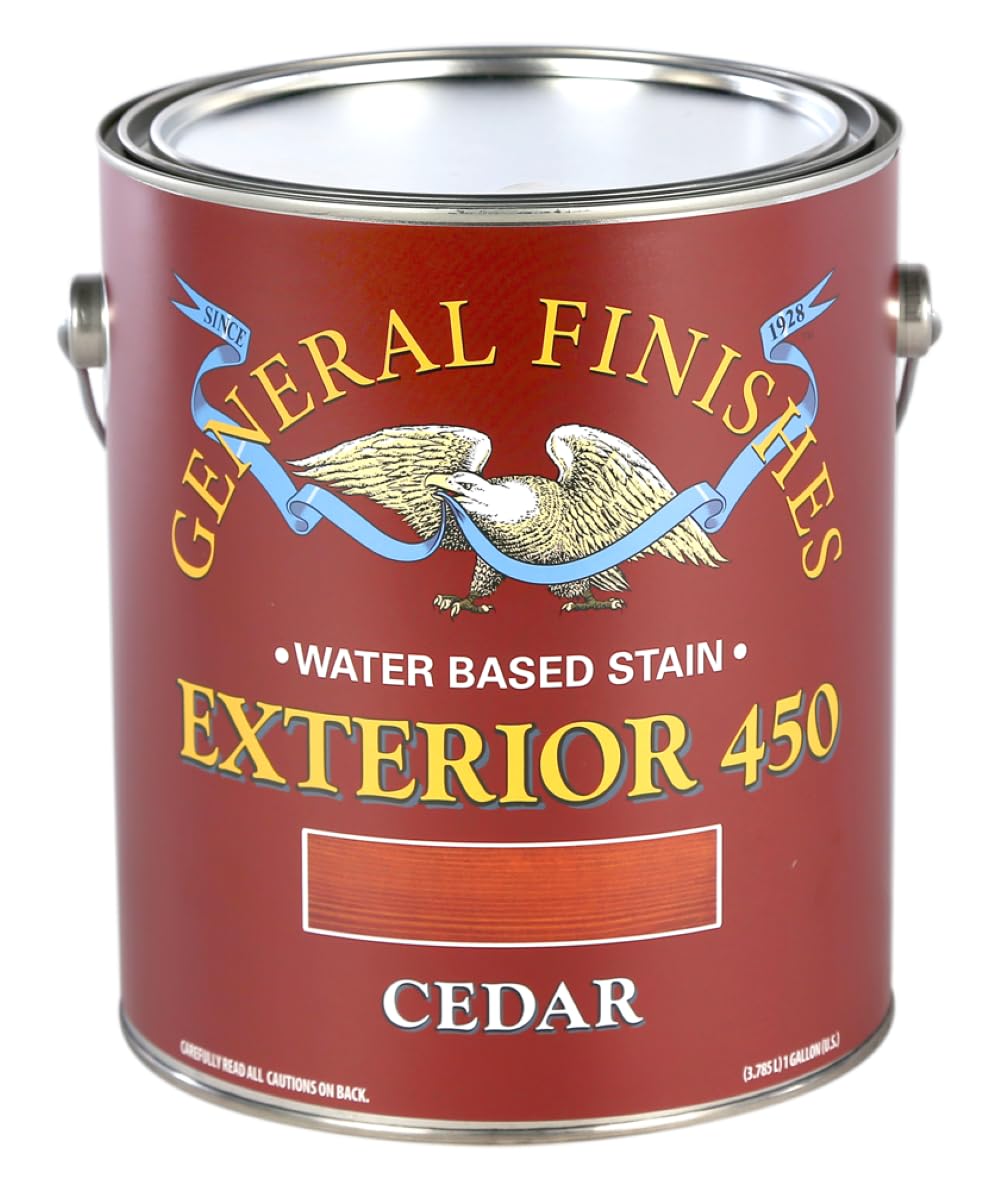
General Finishes has been manufacturing water-based coatings since 1928, and the Exterior 450 formula is their best work for vertical surfaces. It is specifically not recommended for horizontal decking, which is actually a green flag for siding use—it means the formulation was optimized for how gravity and water interact on a wall. It contains UV absorbers to protect the film integrity, though the wood itself will still patina with sun exposure.
The coverage is generous at 250-350 square feet per gallon, and the stain can be brushed, rolled, or sprayed. The Cedar color is a rich, warm tone that enhances wood grain without obscuring it. One user noted that it took three coats to completely hide brush overlap on a fir door, but that is more of a concern for solid-color applications than semi-transparent ones. It dries in about two hours, making it feasible to apply two coats in a day.
Made with plant proteins and renewable resources, it is VOC compliant in all 50 states, making it a top choice for environmentally conscious homeowners. The clean-up is simple soap and water. For those staining vertical shakes, garage doors, or outdoor furniture with a premium finish that also supports American manufacturing, this is a standout selection.
Why it’s great
- Specifically formulated for vertical surfaces—no sagging
- Made with renewable resources and low VOCs
- Excellent color range with 14 options including natural base
Good to know
- Not recommended for horizontal surfaces like decks
- May require multiple coats to achieve uniform color on porous cedar
4. Vermont Natural Coatings PolyWhey Exterior Penetrating Stain
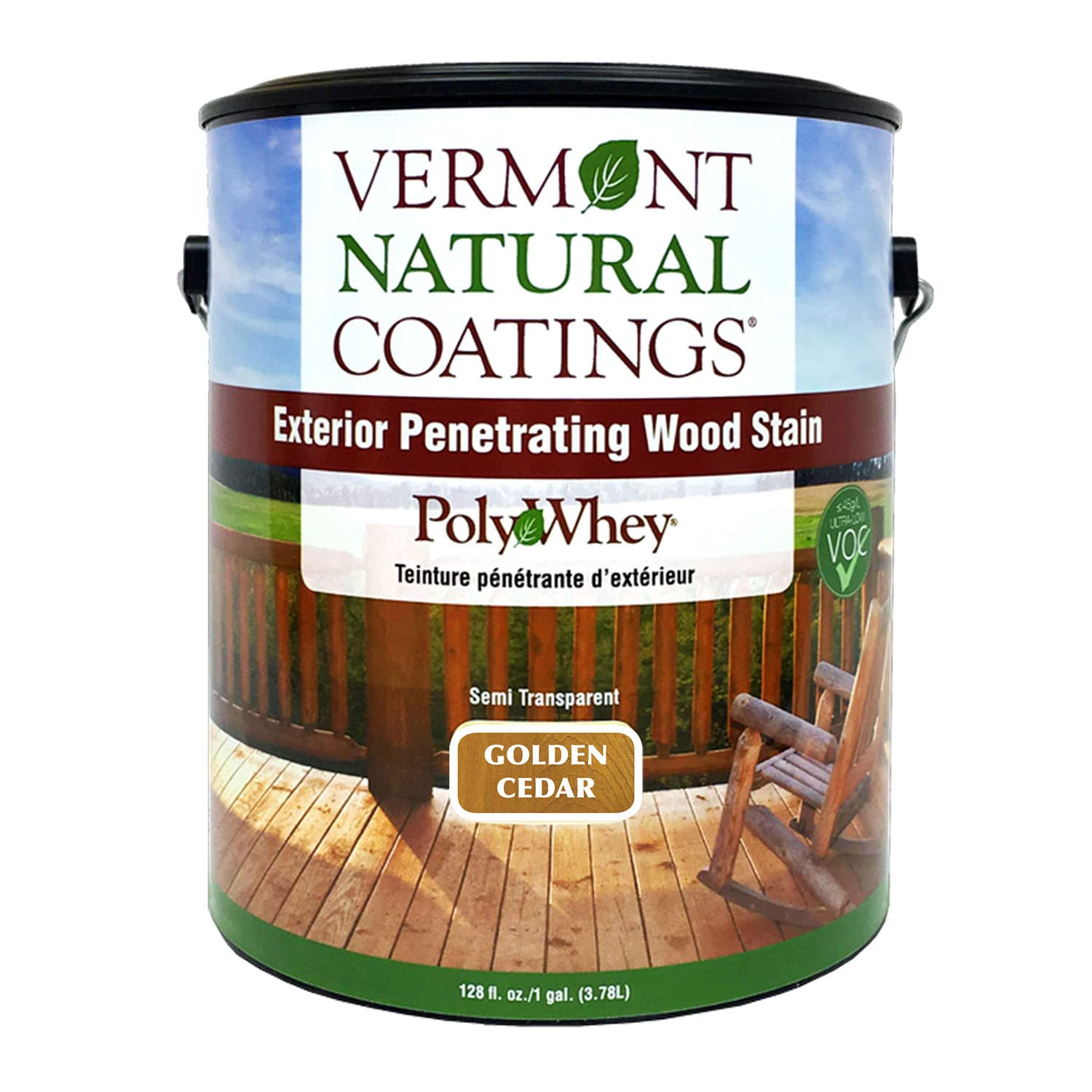
The Vermont Natural Coatings PolyWhey stain is unlike anything else on this list—it uses whey protein as a co-binder, a renewable byproduct of cheese production. This bio-based formulation delivers a penetrating stain and waterproofing barrier that is non-toxic and nearly odorless. The Golden Cedar color is vibrant and natural-looking, and it is safe to use around vegetable gardens, which many users appreciate.
With coverage of 200-400 square feet per gallon, it is competitive with the best in class. Drying time is about 48 hours between coats, which requires more patience, but the results are impressive. Users report that the stain penetrates deeply, preserving wood grain while providing excellent water resistance. The low odor is a significant advantage for anyone sensitive to paint fumes or for projects near living spaces.
The thin, watery consistency can be a surprise—it needs careful stirring and will not hide imperfections. It may require two coats for full color development. One user reported that a single gallon was enough for an 8×16 garden bed with leftover for touch-ups. For the eco-conscious homeowner who wants a durable, non-toxic stain that performs on cedar siding, this is a unique and effective solution.
Why it’s great
- Non-toxic and nearly odorless—safe around food gardens and pets
- Deep penetration that does not form a surface film
- Uses renewable whey protein for a sustainable formula
Good to know
- Long dry time of 48 hours between coats requires patience
- Watery texture can be runny; careful spraying or brushing technique needed
5. Ready Seal Stain & Sealer for Wood

The Ready Seal is a favorite among DIYers and pros alike because of its self-blending formula that completely eliminates lap marks. This oil-based stain and sealer requires no primer, no thinning, and—most importantly—no back brushing. You spray or roll it on and move on, which makes it one of the fastest stains to apply on large siding projects. It enhances the wood’s natural beauty while providing durable waterproof protection.
The coverage is lower than most acrylics at 125-150 square feet per gallon, which means a single gallon covers less surface area. However, users consistently report that the color depth and evenness are superior, and the sealer holds up well against sun and rain. One reviewer noted that after a year on a deck in full southern exposure, there was no fading. Another used it on a utility trailer deck and got two full coats on a 16×7 foot surface.
The thin consistency can be a surprise for first-time users, but it is precisely this viscosity that allows it to self-level and avoid drips on vertical surfaces. It dries to a flat finish that looks very natural. For anyone who values speed and ease of application over maximum coverage per gallon, the Ready Seal is an excellent choice for cedar siding.
Why it’s great
- Self-blending formula—no lap marks, no back brushing needed
- Excellent UV resistance with no fading reported in full sun
- Easy application that speeds up large projects significantly
Good to know
- Lower coverage per gallon compared to most acrylic stains
- Thin consistency may feel runny compared to thicker acrylics
6. KILZ Waterproofing Semi-Transparent Wood Stain

KILZ is a household name in coatings, and their Waterproofing Wood Stain is a solid entry-level option for cedar siding. It is a 100% acrylic formula that provides UV protection and a waterproof barrier. The Cedar Naturaltone color is a warm, reddish-brown that mimics the appearance of natural cedar heartwood. It is warrantied for up to 5 years on siding and fences, which is competitive for the price point.
The coverage is impressive at 250-300 square feet for the first coat and up to 500-600 square feet for the second. This means one gallon can cover a large section of siding with two coats. Cleanup is easy with soap and water, and the satin finish provides a subtle sheen that makes the wood look rich without being glossy. Users report that it beads water effectively and holds up well even on 15-year-old wood that was properly prepared.
The main compromise is durability on high-exposure vertical surfaces. Some users in harsh sun climates report fading after two years. The acrylic film can also trap moisture if applied too thickly, so following the recoat window of 1-2 hours is critical. For budget-conscious homeowners who need a reliable stain for a siding refresh, the KILZ offers a strong value proposition.
Why it’s great
- Excellent coverage per gallon—up to 600 sq. ft. with second coat
- Easy soap and water cleanup for quick projects
- Proven brand with 50+ year reputation for reliability
Good to know
- Acrylic film can peel if applied too thickly or on damp wood
- Color fade more noticeable in high-UV areas after two years
7. SaverSystems #1 Deck Premium Wood Fence Stain

The SaverSystems #1 Deck Stain is a water-based, dual-purpose stain and sealer that offers a unique advantage: it can be applied to damp wood. This minimizes the wait time between pressure washing and staining, which is a huge convenience for large siding or fencing projects. It comes in a Cedar color that dries to a flat, natural finish, allowing the wood grain to show through clearly.
The formula has a VOC content under 50 g/L, making it environmentally friendly, and cleanup is simple with soap and water. Users report that it applies smoothly without drips or runs, and the color is consistent across the surface. The main durability feedback is that on high-traffic deck floors, it lasted about one year, but on vertical surfaces like railings and fences, it held up much longer. For siding specifically, this performance profile is appropriate.
One user noted that two gallons covered five 8-foot fence panels, which is respectable coverage. The stain requires a mask during application as the mist can irritate lungs. For those who need to stain a large area quickly without waiting days for the wood to dry, or for those matching existing stained fencing, SaverSystems delivers a practical, no-fuss solution.
Why it’s great
- Can be applied to damp wood—reduces project wait time
- Low VOC formula is better for the environment and user
- Good color consistency and easy soap/water cleanup
Good to know
- Durability on high-exposure vertical surfaces is around 1-2 years
- Respirable mist during spraying; mask and ventilation recommended
FAQ
Can I use a deck stain on my cedar siding?
How often should I re-stain cedar siding?
Is oil-based or water-based stain better for cedar?
Final Thoughts: The Verdict
For most users, the best cedar siding stain winner is the DEFY Ultra Semi-Transparent Wood Stain because it delivers the winning combination of deep penetration, advanced UV protection via zinc nano-technology, and flexible finish options in one easy-to-apply gallon. If you want a true, non-film-forming finish that will never peel, grab the PPG ProLuxe SRD Wood Finish. And for an eco-friendly, low-odor alternative that still performs beautifully, nothing beats the Vermont Natural Coatings PolyWhey.

Mo Maruf
I created WellFizz to bridge the gap between vague wellness advice and actionable solutions. My mission is simple: to decode the research and give you practical tools you can actually use.
Beyond the data, I am a passionate traveler. I believe that stepping away from the screen to explore new environments is essential for mental clarity and physical vitality.