Our readers keep the lights on and my smoothie glass nicely filled. As an Amazon Associate, I earn from qualifying purchases.
The line between a shoe built for the road and one built for the rest of your day has blurred. You need something that can handle a quick three-mile jog without punishment, then look natural while you’re grabbing coffee or running errands. The modern shoe buyer isn’t picking a single-purpose tool—they need a hybrid that balances responsive cushioning, a comfortable upper, and a profile that doesn’t scream “race day.”
I’m Mohammad Maruf — the founder and writer behind WellFizz. I’ve spent countless hours analyzing foam compounds, outsole rubber patterns, and midsole geometries from brands like Brooks, ASICS, and adidas to determine which models actually deliver that dual-purpose blend of performance and everyday wearability.
This guide breaks down the top contenders across different needs and budgets to help you find the best casual running shoes for your specific lifestyle and foot shape.
How To Choose The Best Casual Running Shoes
Finding the right pair isn’t just about grabbing the most cushioned or the lightest model. You need to match the shoe’s internal structure to your foot’s natural mechanics and your primary use case. Consider these three critical factors before you click buy.
Midsole Foam Density and Responsiveness
The midsole is the heart of the shoe. Soft foams (like EVA blends) feel plush underfoot for walking but can bottom out during a hard run, leaving your knees and hips to absorb the impact. Firmer foams (like polyurethane or nitrogen-infused compounds) offer better energy return and durability but may feel stiff for all-day wear. A dual-density midsole that combines a soft core with a firmer perimeter provides the best of both worlds for casual runners.
Lacing System and Heel Lock
Heel slip is one of the most common complaints in this category. Look for shoes with an internal heel counter and a lacing system that allows you to perform a runner’s lock (using the top eyelet). A secure heel lock prevents blisters during running and keeps your foot planted during lateral movements like walking or standing. Flat laces hold knots better than round ones, which tend to loosen over time.
Outsole Rubber Coverage
Partial rubber coverage saves weight but sacrifices grip and durability. You want a continuous rubber strip at the heel and forefoot, especially if you run on pavement. Open-channel treads shed water and mud but reduce surface contact on smooth floors. A blown rubber compound delivers better wet-road traction than carbon rubber, though it wears faster on abrasive surfaces.
Quick Comparison
On smaller screens, swipe sideways to see the full table.
| Model | Category | Best For | Key Spec | Amazon |
|---|---|---|---|---|
| New Balance Men’s 608 V5 | Cross Trainer | All-day wear & stability | Leather upper, 12mm drop | Amazon |
| Brooks Men’s Revel 8 | Neutral Running Shoe | Soft landings on pavement | BioMoGo DNA midsole | Amazon |
| Brooks Women’s Trace 4 | Neutral Running Shoe | Plush comfort for long shifts | Memory foam insole, 10mm drop | Amazon |
| ASICS Women’s GT-1000 13 | Support Running Shoe | Flat feet & overpronation | LITETRUSS stability system | Amazon |
| adidas Women’s Duramo SL 2 | Road Running Shoe | Lightweight treadmill runs | Cloudfoam midsole, 8mm drop | Amazon |
| adidas Men’s Kaptir 4.0 | Active Lifestyle Sneaker | Wide toe box & breathability | Rope laces, stretch mesh upper | Amazon |
| Skechers Women’s Go Run Consistent 2.0 | Road Running Shoe | Wider feet & easy cleaning | Ultra Go cushioning, 8mm drop | Amazon |
In‑Depth Reviews
1. New Balance Men’s 608 V5 Casual Comfort Cross Trainer

The New Balance 608 V5 sits at the top of this list because it nails the fundamental challenge of a casual running shoe: it provides genuine structural support without feeling like a medical device. The genuine leather upper and internal shank create a stable platform that holds up under heavy daily use—reviewers report surviving 20,000 steps per day on concrete for roughly a year before the sole begins to separate. That kind of durability is rare in a shoe that also delivers immediate out-of-box comfort.
Its 12-millimeter heel-to-toe drop is higher than most dedicated running shoes, which shifts more impact absorption to the heel cushioning and reduces calf strain during standing. The blown rubber outsole offers solid wet-pavement grip, and the synthetic leather upper resists scuffs and water better than typical mesh models. Multiple reviews mention that the shoe fits true to size for normal to slightly wide feet, which reduces the guesswork when ordering online.
Some users note the mint logo accents are less visible than shown in product photos, which is a minor styling quibble. The midsole foam, while supportive, is firmer than the plush memory foam found in some competitors, so it won’t suit anyone wanting a cloud-like step-in feel. But for a premium-tier model that pulls double duty as a light jogger and a heavy-duty daily driver, the 608 V5 is unmatched.
Why it’s great
- Genuine leather upper is durable, scuff-resistant, and semi-water-repellent.
- High 12mm drop reduces Achilles strain during long standing shifts.
- Internal shank provides genuine arch support for flat feet.
Good to know
- Midsole foam is firm compared to memory-foam alternatives.
- Leather upper limits breathability in hot weather.
- Logo color may differ slightly from product images.
2. Brooks Men’s Revel 8 Neutral Running & Walking Shoe
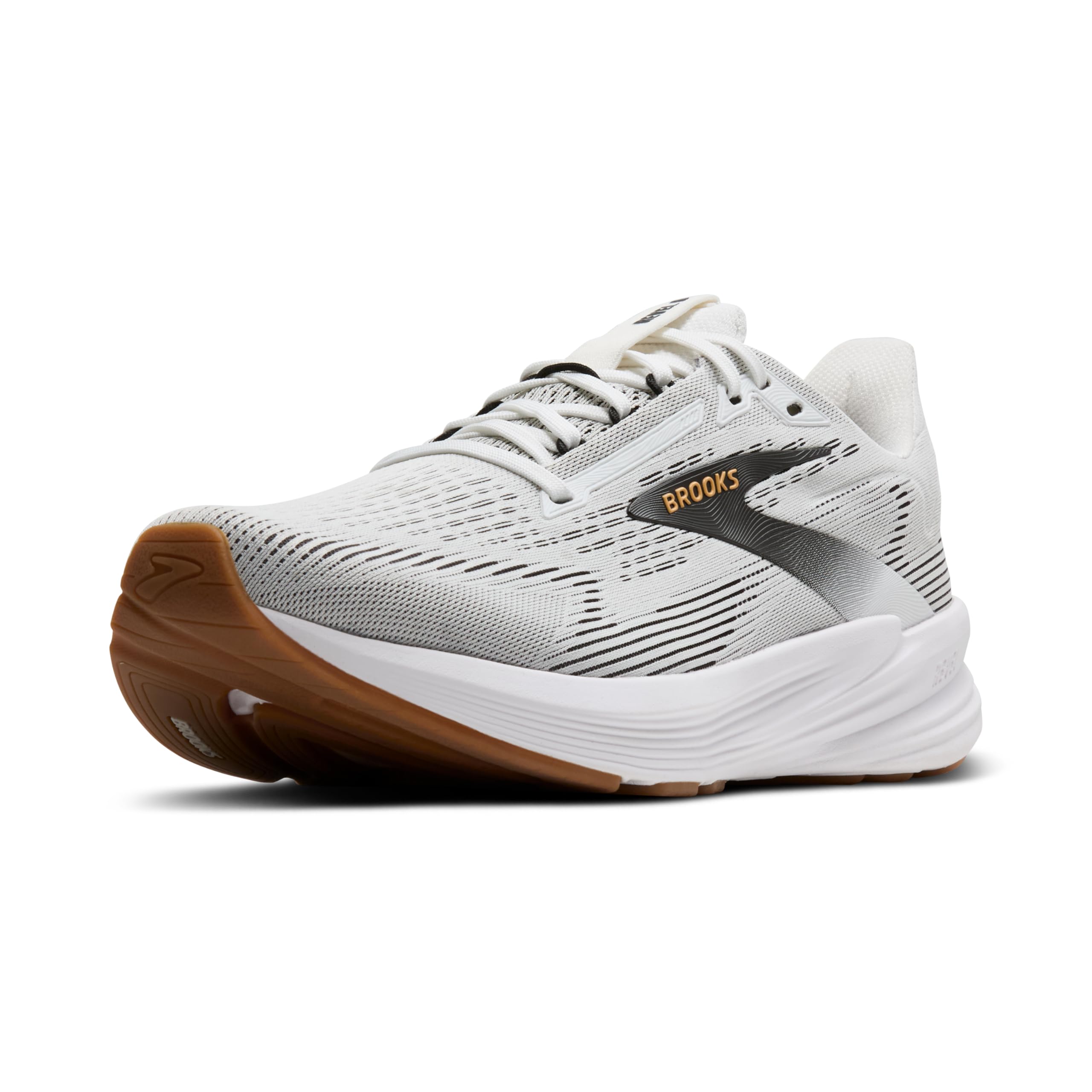
The Brooks Revel 8 is a neutral-cushioning shoe built specifically for runners who pound pavement but don’t want a bulky, high-stack platform. The BioMoGo DNA midsole adapts to your stride by adjusting its density based on impact force—softer on slow jogs, firmer during faster paces. A soccer referee who logged 274 miles over three months reported zero issues with bloody toenails or foot pain, a common problem with stiffer trail runners. ER workers wearing it for 12-hour shifts describe it as feeling like “no shoes at all” while still providing enough support to reduce lower back strain.
The blown rubber outsole covers a wide surface area at the heel and forefoot, giving you reliable traction on wet roads and gym floors. The upper uses a lightweight engineered mesh that breathes well and wraps the midfoot without pinching. Most importantly, the Revel 8 runs true to size, though a few reviewers suggest ordering a full size larger if you’re switching from a different brand like Merrell or New Balance. The heel counter is rigid enough to lock the foot in place without causing irritation.
One consistent complaint is the shoelaces: they are described as very short, which makes a runner’s lock difficult to execute. If you prefer to tie your laces loosely, it won’t matter, but for those who want a snug heel fit, plan to swap in longer laces. The Revel 8 also lacks deep arch support, so users with high arches may need to add an orthotic. That minor inconvenience aside, this is the shoe for anyone wanting a barely-there feel with genuine running pedigree.
Why it’s great
- BioMoGo DNA midsole adapts density to your pace and impact force.
- Extremely lightweight construction reduces fatigue during long shifts.
- Wide blown rubber outsole provides stable grip on varied surfaces.
Good to know
- Stock laces are too short for a runner’s heel lock.
- Neutral platform offers minimal arch support for high arches.
- May require sizing up a full size from hiking or boot sizes.
3. Brooks Women’s Trace 4 Neutral Running Shoe
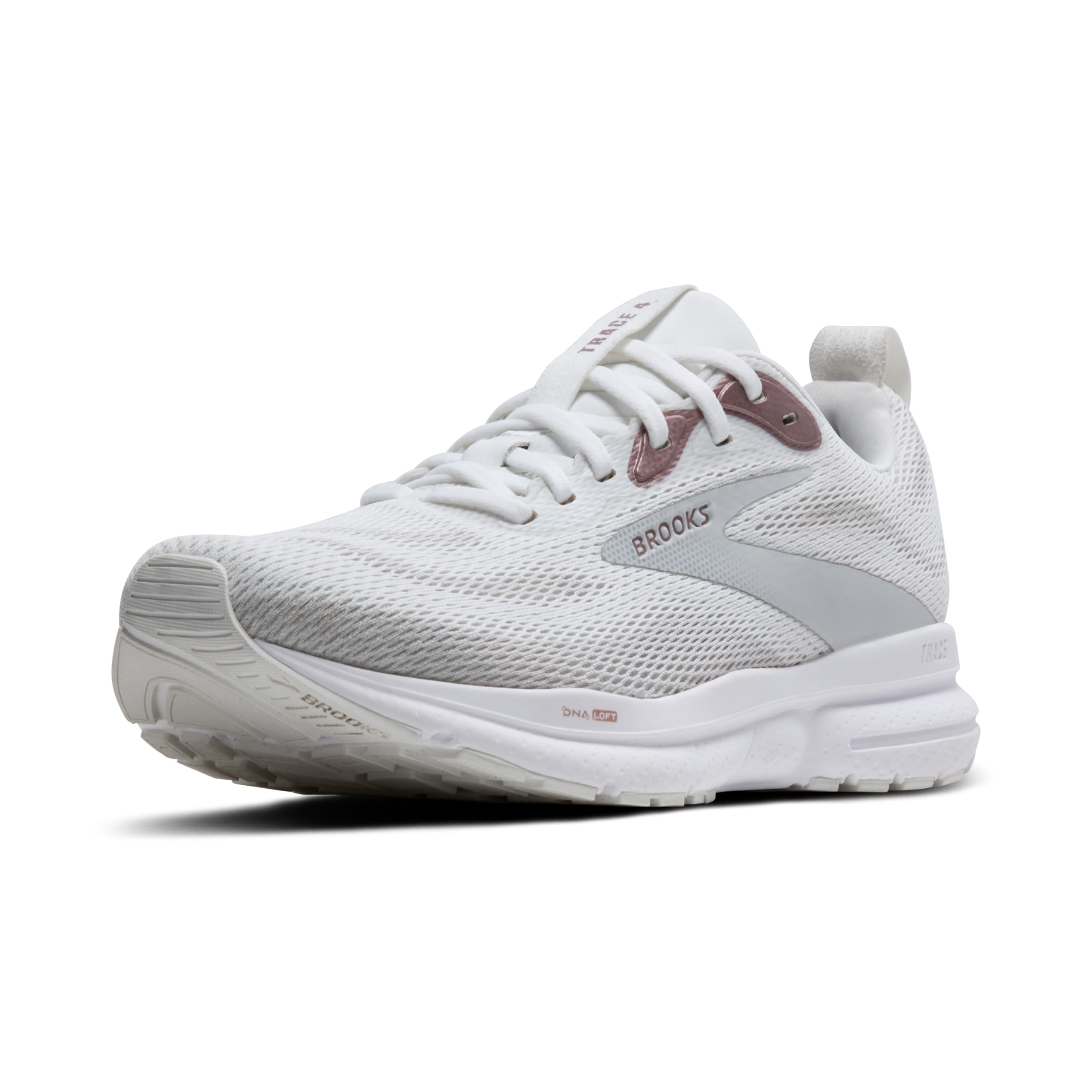
The Brooks Trace 4 is designed for runners who prioritize step-in comfort above all else. Its memory foam insole conforms to the shape of your foot over the first few wears, creating a custom-like feel that supports the entire footbed. This is a huge advantage for people who spend 8-9 hours standing at work—multiple reviewers report that the Trace 4 holds up well for months of daily standing without the foam packing out or losing its shape. The 10-millimeter drop keeps your weight evenly distributed, reducing pressure on the metatarsal heads during prolonged standing.
The midsole uses Brooks’ standard DNA foam, which is softer than the BioMoGo compound found in the Revel 8. This makes the Trace 4 feel more plush during walking and light jogging, but less responsive during hard intervals. The segmented crash pad at the heel disperses impact smoothly, which runners with heel-strike gaits will appreciate. The engineered mesh upper is flexible and wraps the foot naturally, with enough volume for medium-width feet without feeling sloppy.
The biggest drawback is the arch support—or lack thereof. The memory foam insole essentially replaces the arch support, and some users report that the shoe feels flat under the midfoot. If you have medium to high arches, you’ll likely need to swap the insole for an aftermarket orthotic. The sizing runs true to length, but the toe box is not especially wide, so runners with bunions may prefer a different model. For plush, all-day comfort without a break-in period, the Trace 4 is a top contender.
Why it’s great
- Memory foam insole molds to your foot for a custom fit.
- Segmented crash pad smooths heel-strike impact.
- No break-in period required—comfortable straight out of the box.
Good to know
- Memory foam insole provides minimal arch support.
- Toe box is standard width; not ideal for bunions.
- DNA foam is softer than BioMoGo, less responsive for speed work.
4. ASICS Women’s GT-1000 13 Running Shoes
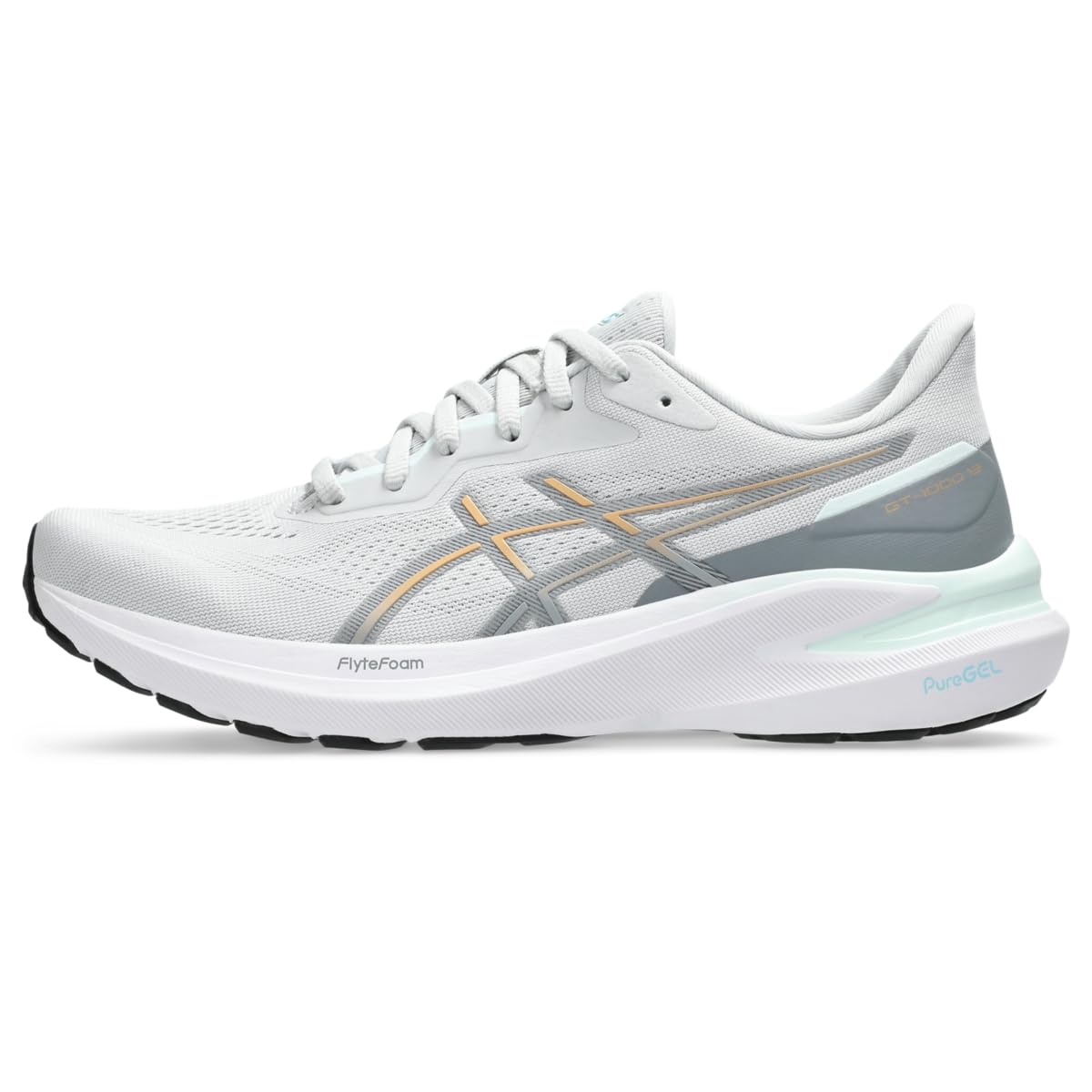
The ASICS GT-1000 13 is the go-to choice for runners who overpronate or have flat feet. The LITETRUSS medial post provides structured support that guides the foot through a more efficient gait cycle without the rigid feeling of a traditional motion-control shoe. This is especially valuable for post-injury recovery—one reviewer recovering from an ankle fracture reported that the GT-1000 13 was the only shoe they could survive long hours in, thanks to the stable platform and soft cloth upper that accommodated swelling without pinching.
The midsole uses a combination of FlyteFoam and AmpliFoam, which together deliver a lightweight, durable ride that doesn’t pack out over time. At roughly half the weight of the New Balance 608 V5, the GT-1000 13 feels nimble for daily runs but doesn’t sacrifice the stability that heavier runners need. The blown rubber outsole covers the high-wear zones well, and the flex grooves at the forefoot encourage a smooth toe-off. The toe box is notably roomy, with several reviewers mentioning that it comfortably accommodates wide feet and even bunions.
Some users note the laces are on the short side, similar to the Brooks Revel 8, which can make achieving a secure heel lock frustrating. Additionally, runners who are forefoot strikers may wear through the outsole rubber faster than expected, as the rubber coverage is thinner in the ball-of-foot area. The GT-1000 13 is not a budget beater—it sits squarely in the mid-range—but for anyone needing genuine pronation support in a lightweight package, it’s a standout.
Why it’s great
- LITETRUSS medial post corrects overpronation without feeling stiff.
- Roomy toe box accommodates wide feet and bunions.
- Lightweight FlyteFoam midsole doesn’t pack out over time.
Good to know
- Laces are short, making a heel lock challenging.
- Outsole rubber is thin in the forefoot, prone to faster wear for toe-strikers.
- Support grade may not suit severe overpronators.
5. adidas Women’s Duramo SL 2 Running Shoe
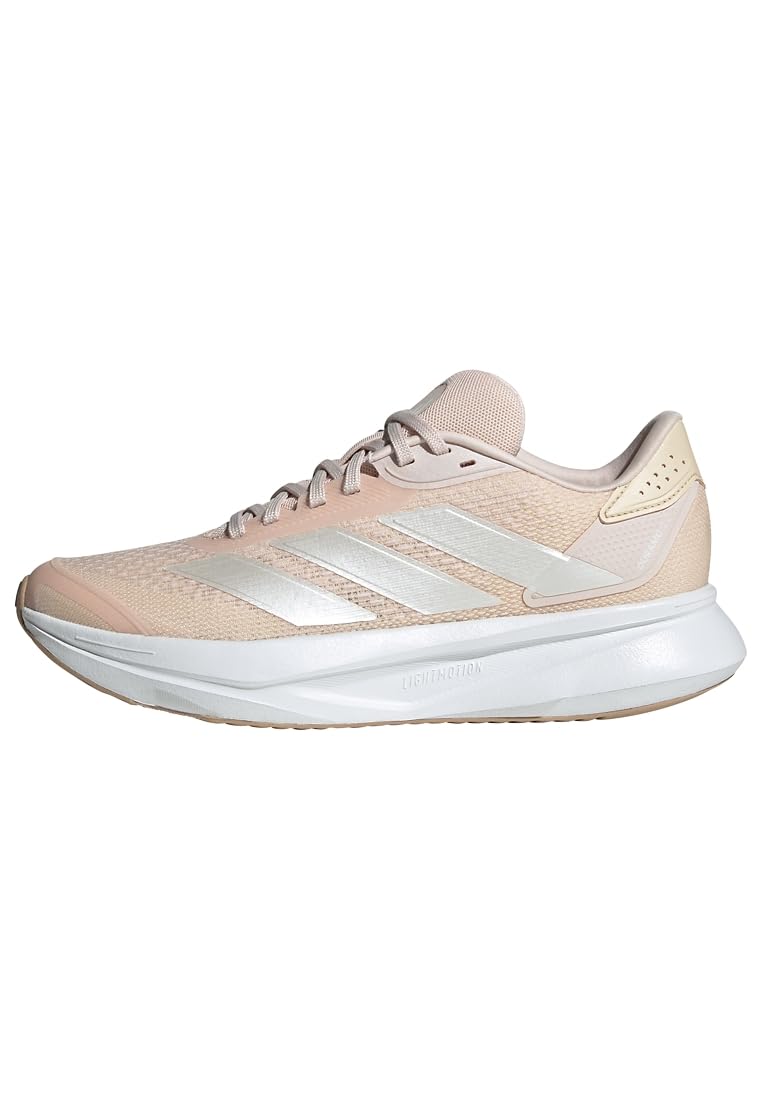
The adidas Duramo SL 2 is a no-nonsense road shoe designed for runners who spend most of their miles on a treadmill or smooth pavement. The Cloudfoam midsole offers moderate cushioning that strikes a balance between plush and responsive—it’s not as soft as the Brooks Trace 4, but it doesn’t feel dead either. Several reviewers mention wearing it for full work shifts without foot pain, and one buyer owns three different colorways because the comfort is consistent across all pairs. The 8-millimeter drop is lower than the premium picks, which encourages a more natural midfoot strike.
The upper uses a stretchy mesh that conforms well to the foot, with a synthetic toe cap for added structure. The fit runs true to size for most users, but some recommend sizing up half a size if you plan to wear thicker running socks or have a slightly wide forefoot. The Duramo SL 2 is also easy to clean—a quick scrub with soap and water restores the upper to near-new condition. The rubber outsole uses a Continental-inspired tread pattern that grips well on both dry pavement and slightly damp gym floors.
Where the Duramo SL 2 falls short is in arch support. The Cloudfoam insole is flat, and users with high arches will need to add an orthotic. The tongue is unpadded and can feel thin against the top of the foot if you cinch the laces tight. The shoe also lacks the durability of the New Balance 608 V5—the midsole foam may show visible compression marks after several months of heavy use. For a mid-range treadmill companion that doesn’t demand a premium budget, it’s a solid value.
Why it’s great
- Cloudfoam midsole offers balanced cushioning for walking and light running.
- Stretchy mesh upper conforms comfortably to the foot.
- Easy to clean and maintain over time.
Good to know
- Flat insole provides minimal arch support for high arches.
- Unpadded tongue can cause pressure when laces are tight.
- Midsole foam may show compression with heavy use.
6. adidas Men’s Kaptir 4.0 Sneakers
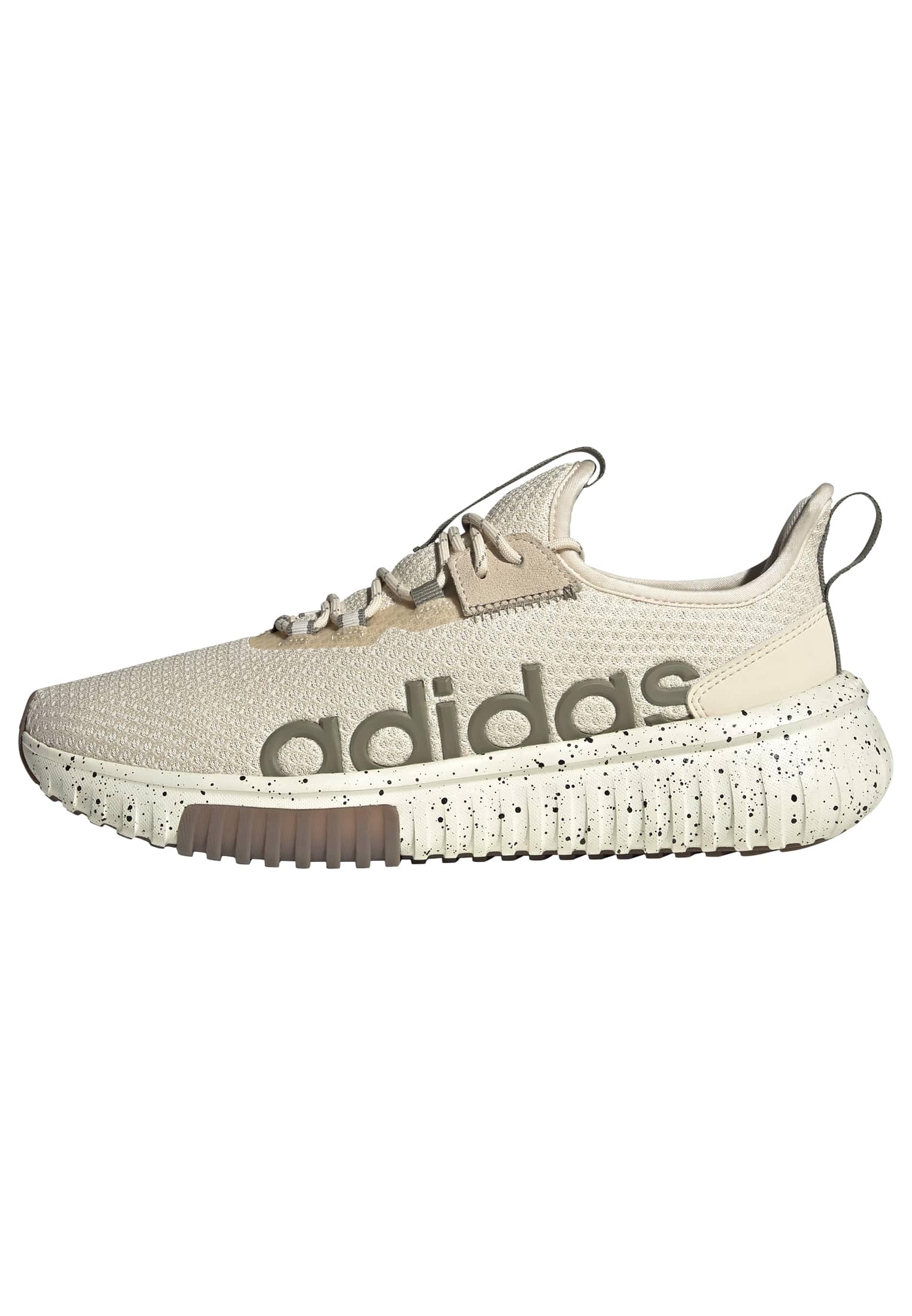
The adidas Kaptir 4.0 is an active lifestyle sneaker that leans more toward casual comfort than dedicated running performance, making it a great entry-level option for people who walk more than they run. The updated rope lacing system and stretchy mesh upper create a sock-like fit that breathes well and accommodates wide feet easily. Reviewers with bunions specifically praise the roomy toe box, noting that it fits better than the previous Kaptir 2.0 and 3.0 versions, as well as some Brooks models that caused foot pain.
The lightweight construction shines for everyday activities like errands, commuting, and treadmill jogging. The cushioning is moderate—firmer than the Duramo SL 2 but softer than the New Balance 608 V5. One reviewer reported that sizing up 1.5 sizes prevented blisters during longer runs, which is a notable inconsistency. The rubber outsole uses a minimal tread pattern that grips well on smooth surfaces but lacks the aggressive traction needed for wet trails or loose gravel.
Arch support is a common concern: several users note that the Kaptir 4.0 lacks substantial arch support for all-day wear. If you have normal to low arches, you’ll likely be fine, but high-arched runners will want to swap the insole. The rope laces are a stylistic touch but can be tricky to tighten evenly. For the budget-conscious buyer who values breathability and a relaxed fit over advanced running technology, the Kaptir 4.0 is a comfortable choice.
Why it’s great
- Stretchy mesh upper provides excellent breathability and a sock-like fit.
- Roomy toe box accommodates wide feet and bunions comfortably.
- Lightweight construction is ideal for casual daily wear.
Good to know
- Minimal arch support may require an aftermarket insole.
- Rope laces are difficult to tighten evenly.
- Outsole tread is shallow, limiting wet-weather traction.
7. Skechers Women’s Go Run Consistent 2.0 Mile Sneakers
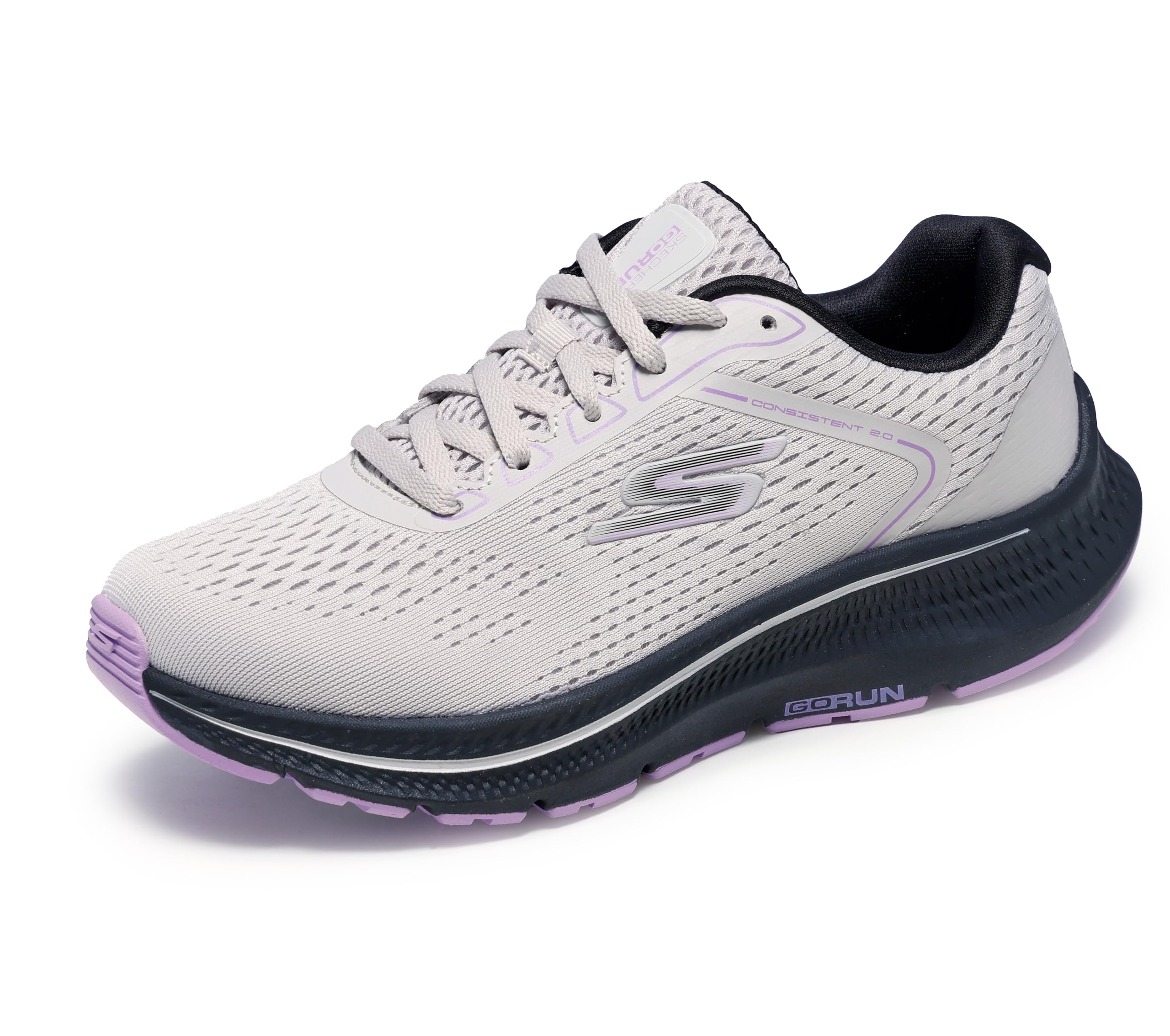
The Skechers Go Run Consistent 2.0 is the most budget-friendly option in this lineup, but it punches above its price point thanks to a well-designed Ultra Go cushioning system. The midsole foam provides ample plushness without feeling unstable, making it a strong candidate for walkers and casual joggers. Multiple reviewers highlight that the shoe is easy to clean—spots and stains lift with a bit of Dawn and light brushing—which is a practical advantage for daily use. The outsole uses a solid rubber tread that grips well on pavement and indoor surfaces, though it’s not designed for trail use.
The fit runs true to size, with a generous volume that works well for wider feet. Several users with flat feet report that the shoe provides excellent arch support straight out of the box, which is unusual at this price point. The upper uses a synthetic mesh that breathes adequately and resists dirt accumulation. The design is simple and understated, making it easy to pair with jeans or athletic wear without looking overly technical.
There’s a catch: the Go Run Consistent 2.0 is not built for serious running mileage. The Ultra Go foam, while comfortable for walking and short jogs, lacks the energy return and long-term durability of the premium midsole compounds used in Brooks or ASICS shoes. The sole quality is adequate but not exceptional—forefoot strikers may notice wear after a few months. For a dedicated entry-level shoe that prioritizes comfort and value for light activity, this Skechers model is a worthy consideration.
Why it’s great
- Ultra Go cushioning provides plush, immediate comfort for walking.
- Excellent arch support for flat feet right out of the box.
- Easy to clean with mild soap and water.
Good to know
- Ultra Go foam lacks energy return for serious running.
- Outsole rubber may wear faster for forefoot strikers.
- Limited color options compared to premium models.
FAQ
Should I size up in casual running shoes for wider feet?
How do I know if I need neutral or stability shoes?
Can I use these shoes for both running and lifting at the gym?
Final Thoughts: The Verdict
For most users, the best casual running shoes winner is the New Balance 608 V5 because it offers a rare combination of genuine leather durability, a supportive high-drop platform, and proven longevity for both daily wear and light running. If you want plush, cloud-like comfort for standing and walking, grab the Brooks Trace 4. And for flat-footed runners needing genuine pronation support in a lightweight package, nothing beats the ASICS GT-1000 13.

Mo Maruf
I created WellFizz to bridge the gap between vague wellness advice and actionable solutions. My mission is simple: to decode the research and give you practical tools you can actually use.
Beyond the data, I am a passionate traveler. I believe that stepping away from the screen to explore new environments is essential for mental clarity and physical vitality.