Our readers keep the lights on and my smoothie glass nicely filled. As an Amazon Associate, I earn from qualifying purchases.
The slick black patina that makes a cast iron skillet non-stick isn’t magic—it’s chemistry. The right oil polymerizes into a durable layer that bonds with the iron, creating a surface that repels food and resists rust. But the wrong oil leaves you with a sticky, gummy mess that burns off during the next cook. Choosing the right cast iron seasoning oil means understanding smoke points, fatty acid profiles, and how each oil behaves under high heat.
I’m Mohammad Maruf — the founder and writer behind WellFizz. I analyze the chemical composition and thermal thresholds of plant-based oils to find which ones deliver the hardest, most resilient seasoning for cast iron and carbon steel cookware.
After cross-referencing smoke points, polymerization rates, and real-world user seasoning results, I narrowed the field to the five oils that consistently produce a smooth, non-stick finish. Here is my detailed guide to the best cast iron seasoning oil for restoring and maintaining your cookware.
How To Choose The Best Cast Iron Seasoning Oil
A quality seasoning oil must hit three targets: a smoke point above 400°F, a fatty acid profile that promotes hard polymerization, and zero additives that turn sticky under heat. The wrong oil creates soft seasoning that flakes or smokes during cooking.
Smoke Point and Polymerization Threshold
Oils with a smoke point below 350°F burn before they polymerize, leaving carbon deposits instead of a smooth layer. For oven seasoning at 450°F to 500°F, choose oils rated for that range. Safflower and refined avocado oils excel here; flaxseed oil requires a lower oven temperature to avoid burning.
Drying vs. Non-Drying Oil Chemistry
Flaxseed oil is a drying oil—it absorbs oxygen and forms a hard film as it cures. Non-drying oils like olive oil remain tacky and never fully harden, leading to sticky seasoning that attracts dust. Drying oils create the glass-like surface cast iron enthusiasts aim for.
Rancidity Resistance
Oils high in polyunsaturated fats (like grape seed or flaxseed) can go rancid if stored improperly or if the seasoning layer is thin and exposed to humidity. Saturated fats like coconut oil resist rancidity but require higher heat to polymerize. A blend approach gives the best of both.
Quick Comparison
On smaller screens, swipe sideways to see the full table.
| Model | Category | Best For | Key Spec | Amazon |
|---|---|---|---|---|
| Walrus Oil Safflower | Safflower Oil | High-heat oven seasoning | 500°F smoke point | Amazon |
| Heritage Products Avocado | Avocado Oil Blend | Low-smoke stovetop touch-ups | 8 fl oz bottle | Amazon |
| Crisbee Cream | Beeswax + Sunflower | Quick daily maintenance | 6 oz cream format | Amazon |
| Clark’s Refined Coconut | Coconut Oil | Rust prevention & freshness | 12 oz volume | Amazon |
| Kuche Chef Organic Flaxseed | Flaxseed Oil | Hard glass-like patina build | 4 oz small bottle | Amazon |
In‑Depth Reviews
1. Walrus Oil – Cast Iron Oil, Safflower

Walrus Oil uses high-oleic safflower oil with a smoke point that reaches 500°F, placing it well above the typical oven seasoning temperature of 450°F. This thermal headroom means the oil polymerizes cleanly without burning, forming a hard, even layer that resists flaking. The NSF food-contact certification confirms its purity—no mineral oils or petroleum distillates.
The 8 oz dropper bottle delivers controlled application, though the wide cap design has drawn criticism for causing spills. Users report restoring rusted skillets to usable condition after a single oven cycle, with repeat purchasers praising its low odor during seasoning. The oil remains stable in storage and does not go rancid between uses.
For anyone seeking a one-bottle solution for both initial restoration and ongoing maintenance, this safflower-based formula offers the highest smoke point in the lineup. The natural composition means zero chemical residue on the cooking surface, and the NSF certification backs up its claim to 100% food-contact safety.
Why it’s great
- Very high smoke point prevents burning during oven seasoning
- NSF certified for food-contact safety
- Minimal odor during application
Good to know
- Wide cap design causes spills if handled carelessly
- 8 oz bottle may need frequent refills for heavy users
2. Heritage Products Cast Iron Seasoning Oil

Heritage Products blends avocado oil with other plant-based ingredients to create a seasoning conditioner that produces very little smoke during application. This makes it suitable for stovetop touch-ups where ventilation is limited. The formula builds a non-stick patina without the flakiness associated with animal-based fats like bacon grease or lard.
The non-rancid formula addresses a common pain point—oils that turn smell sour inside the seasoning layer over time. Users report that the conditioner leaves cookware smelling fresh even after weeks of storage. The 8 fl oz bottle covers multiple rounds of seasoning, and the plant-based composition aligns with vegan and vegetarian cooking preferences.
Where this oil particularly shines is on outdoor griddles and camp cookware exposed to humidity. Several reviews highlight its effectiveness in restoring rusted Blackstone griddles after flood damage, with one coat delivering a noticeably renewed surface. The low-smoke characteristic also makes it a better choice for apartment kitchens without range hoods.
Why it’s great
- Low-smoke formula ideal for stovetop seasoning
- Non-rancid blend stays fresh in storage
- Works well on outdoor griddles exposed to moisture
Good to know
- Price per ounce is higher than single-oil options
- Some users note it works similarly to standard cooking oils
3. Crisbee Cream – Cast Iron and Carbon Steel Seasoning

Crisbee Cream combines non-GMO sunflower oil with beeswax into a semi-solid cream that stays put on the pan without dripping. Unlike liquid oils that run off vertical surfaces, the cream clings to the skillet walls, allowing for an even, thin coat with less waste. The beeswax component raises the viscosity and adds a protective barrier against moisture.
The cream format simplifies daily maintenance—users apply a few drops, spread it across the warm pan, and let it polymerize. Several reviews from owners of vintage Griswold and Wagner skillets report that Crisbee restored a glass-like finish after years of neglect. The formula does not contain water or silicones, so it will not cause seasoning to peel.
One trade-off is that the cream requires a warm pan to spread evenly, and some users find it less forgiving than liquid oil for initial oven seasoning. But for between-cook touch-ups, the convenience of a no-drip cream that builds seasoning with each application is hard to beat. A 6 oz tin lasts several months for most households.
Why it’s great
- Semi-solid cream clings to pan surfaces without dripping
- Beeswax adds moisture protection
- Excellent for restoring vintage cast iron
Good to know
- Requires warm pan for even application
- Higher cost per ounce than liquid oils
4. Clark’s Cast Iron Seasoning Oil
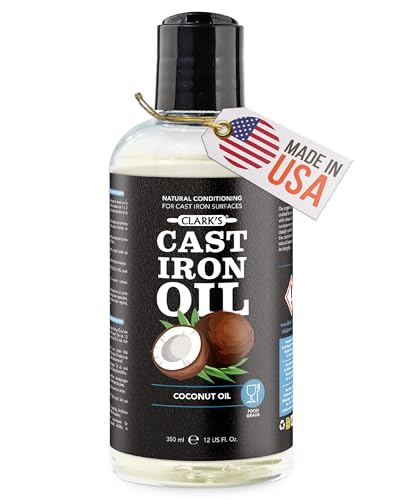
Clark’s uses highly refined food-grade coconut oil to create a seasoning layer that repels moisture better than most polyunsaturated oils. The 12 oz bottle offers the highest volume in this roundup, making it the most economical choice for users who season multiple pans or griddles regularly. The refined coconut oil has a smoke point around 400°F, suitable for moderate oven seasoning.
The formula is specifically designed to resist rancidity—a common issue with flaxseed and grape seed oils. Users report that a light coating after washing keeps skillets rust-free for weeks, even in humid environments. The oil does not transfer flavor to food, which is critical for baking cornbread or searing steaks on the same surface.
For best results, the manufacturer recommends applying after washing and drying, then heating the pan briefly to set the layer. Some users note that coconut oil produces a slightly less hard surface than high-smoke-point oils like safflower, but the moisture resistance and lower cost make it a practical choice for everyday maintenance rather than initial restoration.
Why it’s great
- Large 12 oz bottle offers excellent value
- Repels moisture and resists rust effectively
- Will not go rancid in storage
Good to know
- Moderate smoke point limits oven seasoning temperature
- Produces a slightly softer finish than high-smoke oils
5. Kuche Chef Organic Cast Iron Oil

Kuche Chef’s flaxseed oil is a true drying oil—it absorbs oxygen and cures into a hard, glass-like film that mimics the appearance of Teflon. The oil is grown and cold-pressed in North Dakota, giving it a traceable supply chain and high omega-3 content that drives the polymerization reaction. The 4 oz bottle is small by design; flaxseed oil is potent and a little goes a long way.
Users who followed the recommended six oven cycles reported a near-mirror finish that improved food release significantly. The oil works exceptionally well on stripped bare iron, filling micropores and creating a smooth surface even on rough-textured skillets. Because it is a drying oil, the seasoning continues to harden over the first few days after application.
The main trade-off is the baking commitment: achieving the advertised finish requires four to eight oven cycles, which can be time-consuming. Some users also noted that the oil degraded existing seasoning on previously seasoned pans, making it better suited for fully stripped cast iron. For dedicated enthusiasts building a pan from scratch, however, the results are unmatched.
Why it’s great
- Creates the hardest, most glass-like seasoning finish
- Organic and domestically sourced flaxseed
- Excellent for initial seasoning of stripped bare iron
Good to know
- Requires 4-8 oven cycles for optimal results
- May degrade seasoning on already-seasoned pans
FAQ
Can I use olive oil for seasoning my cast iron?
How many coats of seasoning oil do I need?
Why does my seasoning look patchy after using flaxseed oil?
Final Thoughts: The Verdict
For most users, the best cast iron seasoning oil winner is the Walrus Oil Safflower because its 500°F smoke point and NSF certification deliver reliable, odor-free seasoning for both restoration and daily care. If you want a low-smoke formula for stovetop touch-ups, grab the Heritage Products Avocado Oil. And for building a glass-like finish from scratch, nothing beats the Kuche Chef Organic Flaxseed Oil.

Mo Maruf
I created WellFizz to bridge the gap between vague wellness advice and actionable solutions. My mission is simple: to decode the research and give you practical tools you can actually use.
Beyond the data, I am a passionate traveler. I believe that stepping away from the screen to explore new environments is essential for mental clarity and physical vitality.