Our readers keep the lights on and my smoothie glass nicely filled. As an Amazon Associate, I earn from qualifying purchases.
A carving board that slides across the counter while you slice into a roast is not a tool—it is a hazard. The real test of a great carving board is not just the wood species or the thickness data on the spec sheet, but whether the juice groove actually keeps turkey drippings off your stovetop and whether the surface grip holds a prime rib steady through the final cut. After spending weeks analyzing edge-grain geometry, groove depth, wood hardness ratings, and real-world feedback from hundreds of home cooks who carve weekly, the differences between a board that works and one that frustrates become painfully clear.
I’m Mohammad Maruf — the founder and writer behind WellFizz. I have spent over 15 years analyzing kitchen tool specifications, comparing wood densities, and cross-referencing user fatigue patterns to separate marketing fluff from measurable performance.
This guide breaks down the design choices that matter most for carving large cuts of meat, so you can confidently pick the best carving board for your kitchen without guessing.
How To Choose The Best Carving Board
Selecting a carving board involves more than just picking the largest rectangle you can find. The board’s grain orientation, juice management system, and dimensional stability all determine how well it performs when a heavy roast lands on it. Here are the factors that separate a true carving board from a generic cutting board.
Juice Groove Depth and Reservoir Design
A shallow groove is a cosmetic feature. A functional groove for carving must be at least a quarter-inch deep and terminate into a corner well or a pour spout that can hold several ounces of liquid without spilling onto the counter when you tilt the board. Boards that only have a perimeter groove often overflow when carving a resting brisket or a turkey that releases trapped juices under the knife.
Wood Density and Grain Orientation
End-grain boards have a checkerboard-like surface that the blade passes between, which keeps your knife sharp longer, but they are softer and will show cut marks over time. Edge-grain boards are harder, more resistant to deep scoring, and require less frequent oiling. For carving—where you apply downward pressure with a long blade—a minimum wood density equivalent to hard maple or walnut is essential to prevent the surface from splintering.
Board Weight and Non-Slip Feet
If your board weighs less than six pounds, it will shift when you bear down on a large cut of meat. Heavier boards, in the eight- to thirteen-pound range, provide natural stability. Non-slip rubber feet or silicone dots further anchor the board, but make sure the feet are removable or positioned so you can use both sides of the board without sacrificing flatness.
Quick Comparison
On smaller screens, swipe sideways to see the full table.
| Model | Category | Best For | Key Spec | Amazon |
|---|---|---|---|---|
| John Boos Prestige 22″x16″ | Edge-Grain Maple | Large turkey and brisket carving | 22″x16″x1.25″, 13 lb | Amazon |
| Ironwood Gourmet Kansas City | Acacia End-Grain | Roast carving with juice reservoir | 22″x15″x2.5″, 7.2 lb | Amazon |
| John Boos Prestige 18″x12″ | Edge-Grain Maple | Mid-size carving and daily prep | 18″x12″x1.25″, 8 lb | Amazon |
| WoodForChef Maple Edge-Grain | Edge-Grain Maple | Value-conscious cooks who want thick maple | 16″x12″x1.5″, 8 lb | Amazon |
| THETCHRY Walnut End-Grain | End-Grain Walnut | Knife-friendly surface for frequent slicing | 16.5″x11.6″x0.8″, 3.5 lb | Amazon |
| Greener Chef 24″ Bamboo | Organic Bamboo | Oversized carving with spikes | 24″x18″x0.75″, 6.8 lb | Amazon |
| Socisen XXL Bamboo 24″x18″ | Layered Bamboo | Budget-friendly extra-large surface | 24″x18″x1″, 10.7 lb | Amazon |
In‑Depth Reviews
1. John Boos Prestige Series 22″x16″ Maple Cutting Board
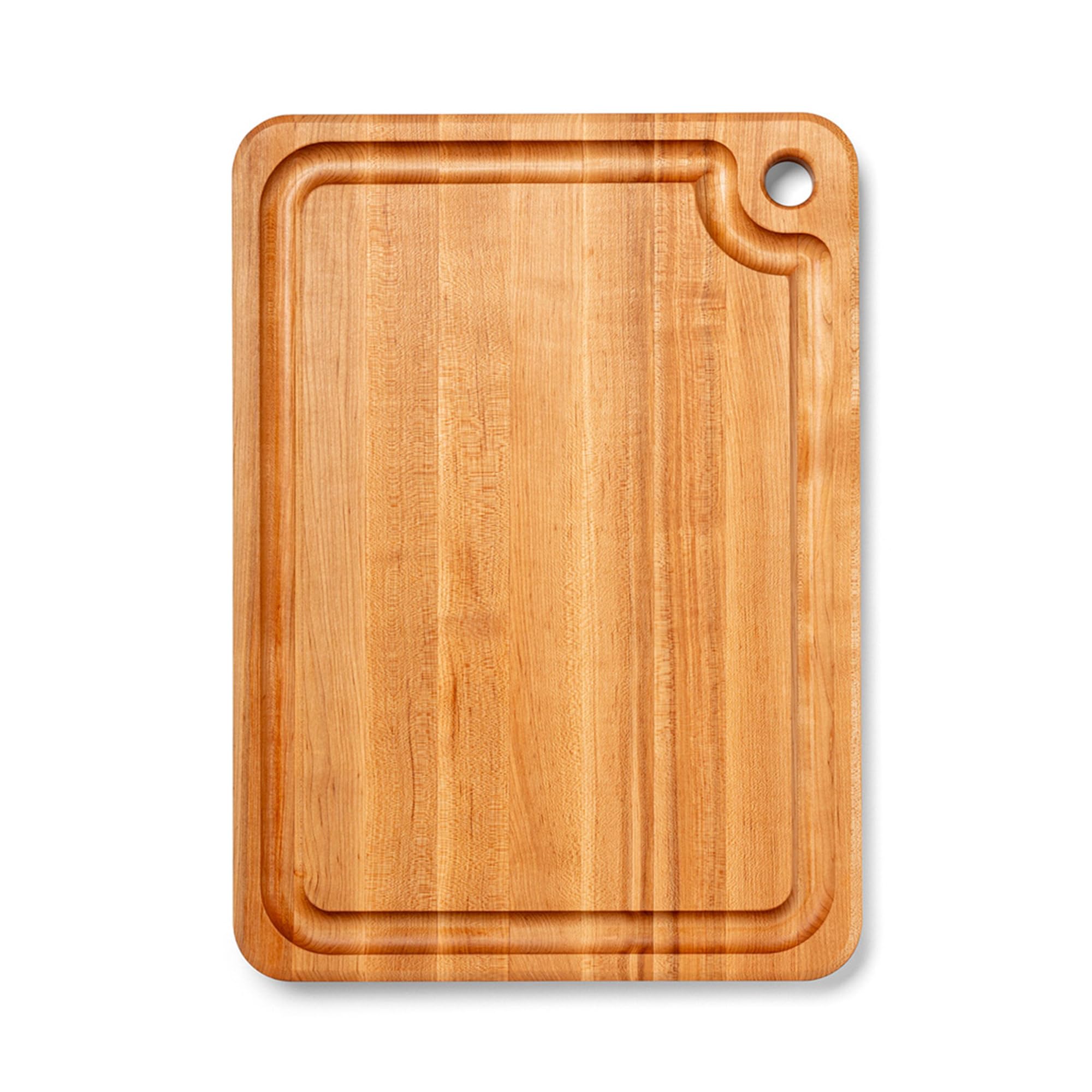
The 22×16-inch John Boos Prestige is the benchmark for serious home cooks who carve large turkeys or multiple briskets at once. The 1.25-inch thick edge-grain rock maple gives you a 13-pound slab that does not budge, and the finger-grip hole makes moving it between counter and sink manageable even at that weight. The juice groove is deep enough to capture a full bird’s worth of released drippings without spilling over the edges during carving.
Edge-grain construction means this board resists warping better than end-grain alternatives of the same thickness, and the kiln-dried maple is hard enough to prevent deep gouges from repeated knife strikes. You will need to oil it regularly with Boos Mystery Oil to keep the wood from drying out, especially if you live in a low-humidity environment. The reversible design gives you a flat side for prep and a grooved side for carving, which extends the usable life of the board considerably.
Some users have reported splitting within the first few months, typically when the board was not oiled frequently or was left to dry standing upright in a warm area. The 11-year warranty against defects covers workmanship, so register your board immediately and follow the care instructions to the letter. For pure carving capability on a massive scale, this board is the reference standard.
Why it’s great
- 13-pound weight eliminates sliding during heavy carving
- Deep juice groove captures full turkey drippings cleanly
- Reversible edge-grain surface resists warping and deep cuts
Good to know
- Requires frequent oiling with Boos Mystery Oil to prevent splitting
- Reported splitting in some units; warranty registration is essential
- At 22 inches long, it requires significant counter space
2. Ironwood Gourmet Kansas City Large Carving Board
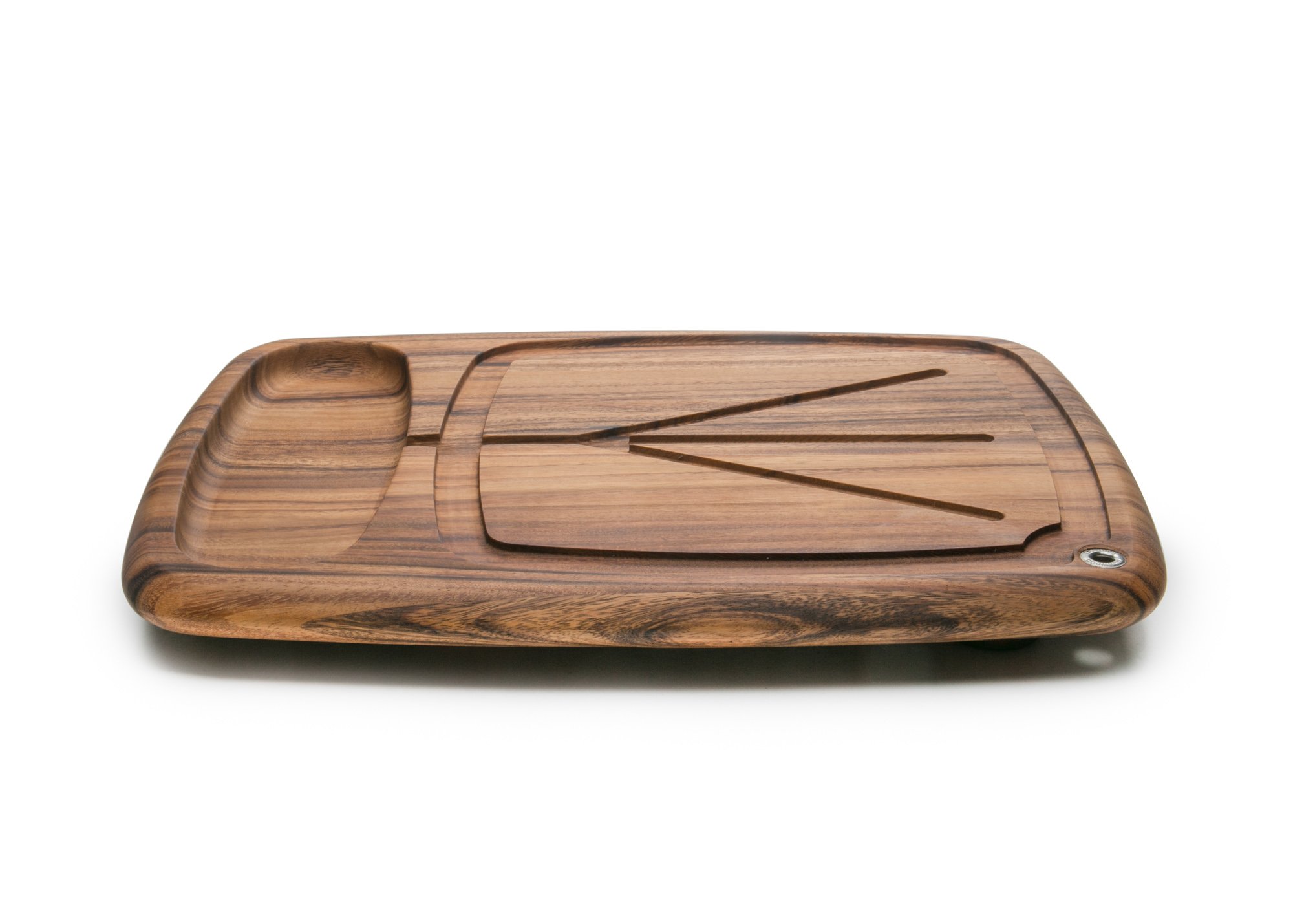
The Ironwood Gourmet Kansas City board stands apart because of its sloping design: the surface angles slightly so that juices naturally collect in a corner reservoir rather than just a perimeter channel. This is not a gimmick—when you carve a resting prime rib, the trapped juices that release under the knife flow directly into the well, keeping the carving surface relatively dry and the counter perfectly clean.
Acacia is one of the hardest domestic hardwoods available, with a Janka rating around 1,800 lbf, which means it resists scratches far longer than walnut or cherry. The 22×15-inch surface is generous enough for a 20-pound turkey, and the neoprene-coated feet prevent the board from creeping. The stainless steel grommet lets you hang it for drying, which is critical for preventing mildew in the end-grain pores.
Because the reservoir cuts into the carving area, you lose about three inches of usable surface near the corner. If you frequently carve sideways across the full board, the well gets in the way. The raised grain on the acacia surface also requires an initial sanding with fine grit and a heavy mineral oil treatment before first use. Once conditioned, however, this board develops a smooth patina that lasts for decades with minimal annual care.
Why it’s great
- Sloped surface and corner reservoir hold juices better than a standard groove
- Acacia wood is extremely hard and scratch-resistant
- Neoprene feet provide solid counter grip during heavy carving
Good to know
- Corner reservoir reduces the effective carving surface
- Raised grain requires sanding and heavy oiling before first use
- Not reversible due to the sloped design
3. John Boos Prestige Series 18″x12″ Maple Cutting Board
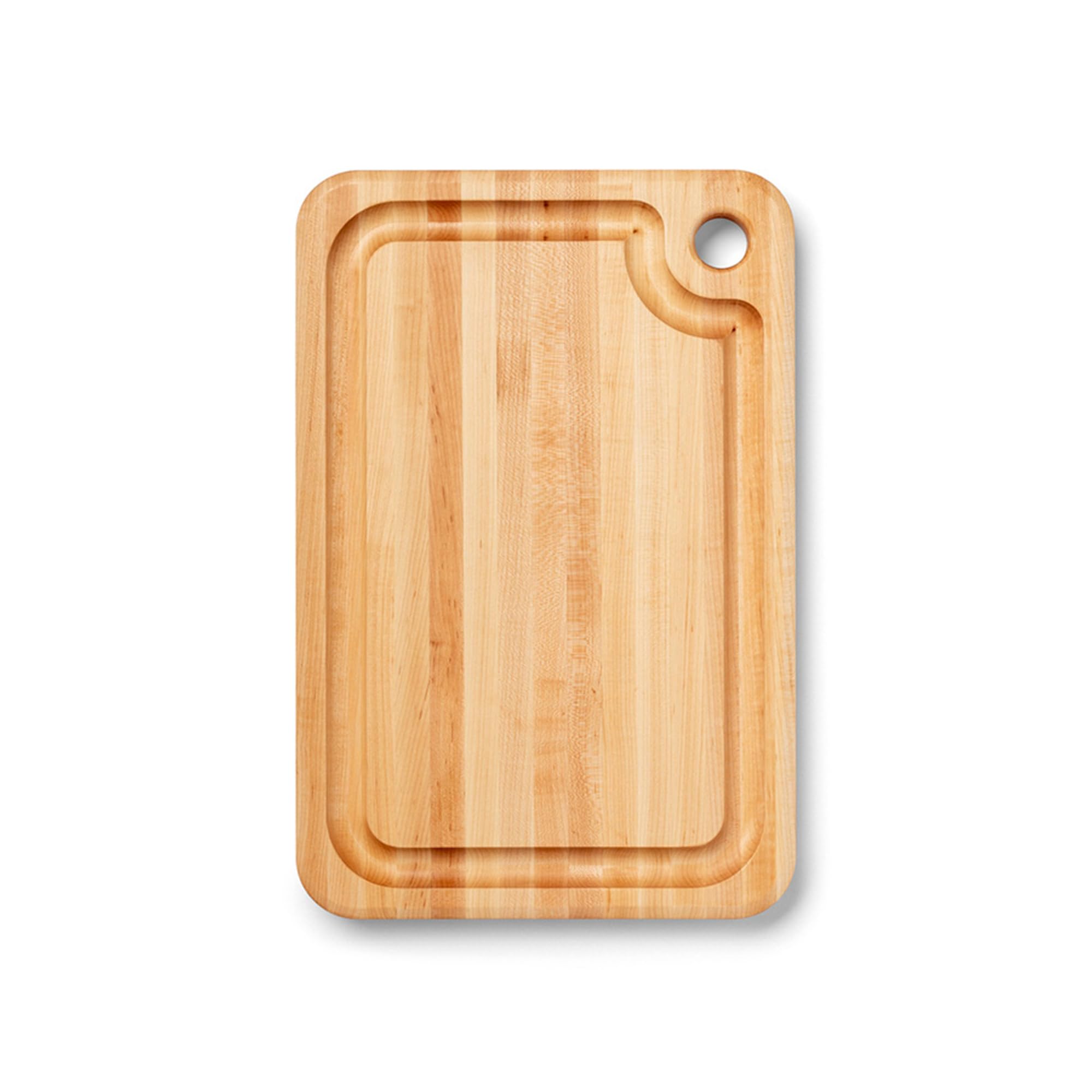
The 18×12-inch John Boos Prestige is the Goldilocks size for most home kitchens—large enough to carve a whole chicken, a rack of lamb, or a small standing rib roast, but not so oversized that it monopolizes your counter. The edge-grain hard maple construction delivers the same rock-solid stability as its larger sibling, and the finger-grip hole still lets you lift and tilt the board with one hand despite its 8-pound weight.
The juice groove is positioned close to the edge, which works well for carving since the drippings flow inward rather than pooling under the board. The reversible feature means you can use the flat side for slicing vegetables or bread without the groove interfering. The oil-finished surface arrives ready to use, but you should apply a coat of Boos Block Cream within the first week to build up moisture resistance.
The 1.25-inch thickness is the sweet spot for edge-grain maple: thick enough to resist warping in normal kitchen conditions, yet light enough to move to the sink for washing. The primary complaint from users is that the board can split along the glue lines if it is ever submerged in water or left in direct sunlight. Hand wash, dry immediately, and oil monthly, and this board will outlast your knives.
Why it’s great
- Ideal mid-size for most carving tasks without dominating counter space
- Edge-grain maple provides excellent knife edge retention
- Reversible with juice groove on one side only
Good to know
- Must be oiled regularly to prevent glue-line splits
- Juice groove is shallow compared to dedicated carving boards
- At 8 pounds, it may slide slightly without a damp towel underneath
4. WoodForChef Maple Edge-Grain Cutting Board 16″x12″

The WoodForChef maple board offers a full 1.5 inches of edge-grain thickness at a price point that undercuts most North American maple boards by a significant margin. The deep juice groove is cut with a rounded profile that makes it easier to wipe clean than sharp-cornered grooves found on cheaper boards. The 8-pound weight keeps the board stable for cutting through a roast chicken or deboning fish.
This board arrives pre-seasoned with mineral oil and beeswax, so you can use it immediately without conditioning. The FSC-certified Canadian hard maple is kiln-dried, which reduces the risk of warping during seasonal humidity changes. The surface is smooth to the touch but provides enough friction to hold a turkey steady without a damp towel underneath.
Some users report that the board requires several initial coats of oil to fully saturate the wood, especially in dry climates. The 16×12-inch size is adequate for a small to medium turkey, but a large tom turkey may overhang the edges. If you carve only occasionally and want a thick maple board that does not break the bank, this is the strongest contender in its class.
Why it’s great
- 1.5-inch thick edge-grain maple provides excellent dimensional stability
- Pre-seasoned with mineral oil and beeswax for immediate use
- Deep juice groove with rounded edges is easy to clean
Good to know
- 16-inch length may be too small for very large turkeys
- Requires multiple initial oil coats in dry climates
- No finger grip hole; handling requires two hands
5. THETCHRY Walnut End-Grain Cutting Board 16.5″x11.6″
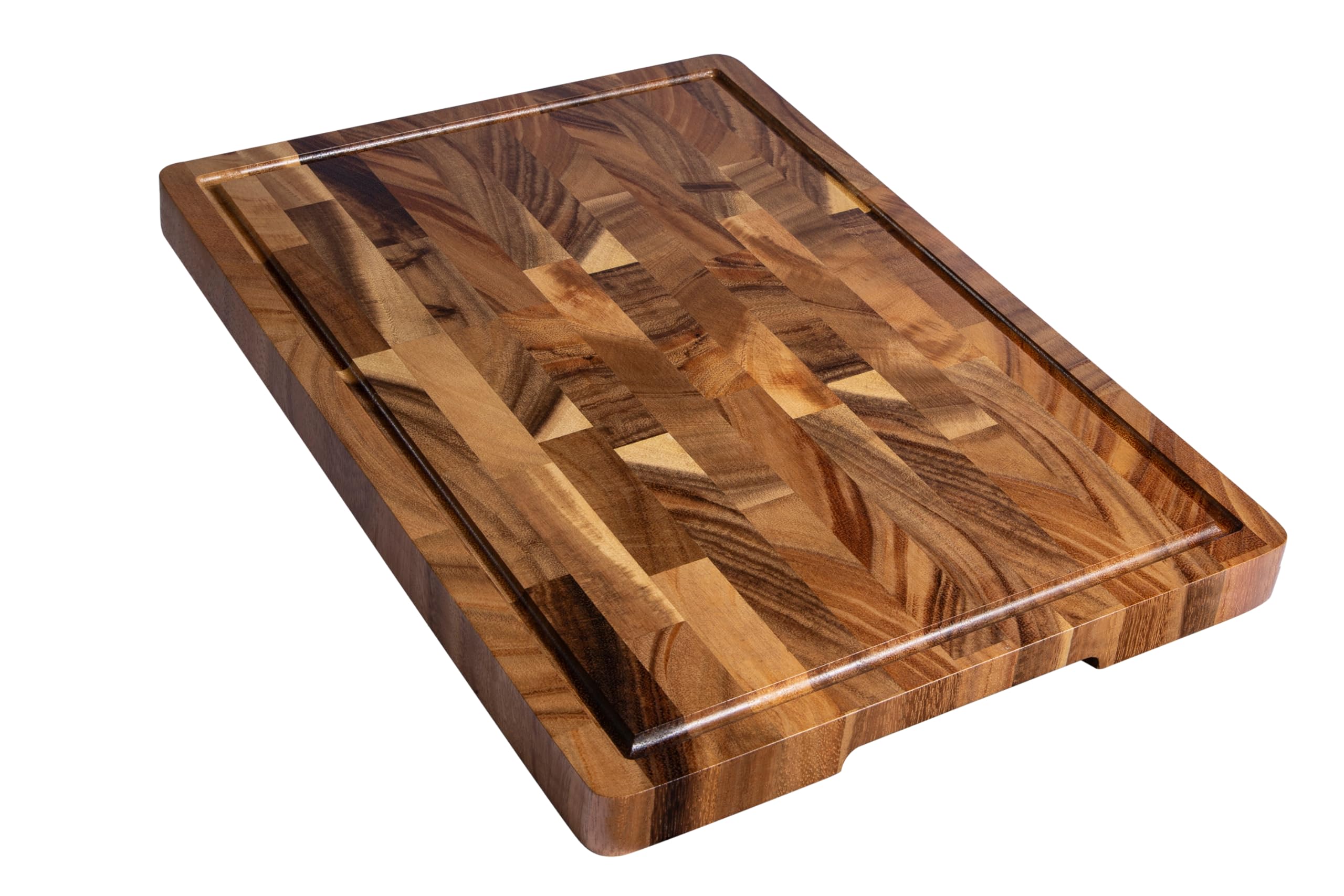
The THETCHRY walnut board uses true end-grain construction, which means the fibers run vertically and the knife blade passes between them rather than cutting through them. The result is a surface that self-heals from shallow knife marks and keeps your edge sharper for longer. The 16.5×11.6-inch size is compact enough for everyday use but can handle a large roast chicken with careful placement.
The juice groove is cut on both sides, which doubles the carving functionality but creates a cleaning challenge: small food particles can get trapped in the groove and require a brush to dislodge. The included beeswax paste and brush make initial conditioning straightforward, and the natural walnut color resists staining better than lighter woods. The 0.8-inch thickness is the board’s main limitation—it is light enough to slide if you carve aggressively without a damp towel underneath.
One reviewer noted that the groove on both sides is overkill: everything chopped fine collects in the groove, and you have to dig it out. If you primarily carve meat and do not mince garlic or herbs directly on the board, this is less of an issue. The walnut has a warm, rich appearance that works well for table-side serving of a carved roast or a charcuterie spread.
Why it’s great
- End-grain walnut is extremely gentle on knife edges
- Self-healing surface hides shallow cuts over time
- Comes with beeswax paste and brush for conditioning
Good to know
- Juice groove on both sides traps food particles
- 0.8-inch thickness makes the board slide during heavy carving
- Compact size limits use for large cuts of meat
6. Greener Chef 24″ Organic Bamboo Extra Large Carving Board
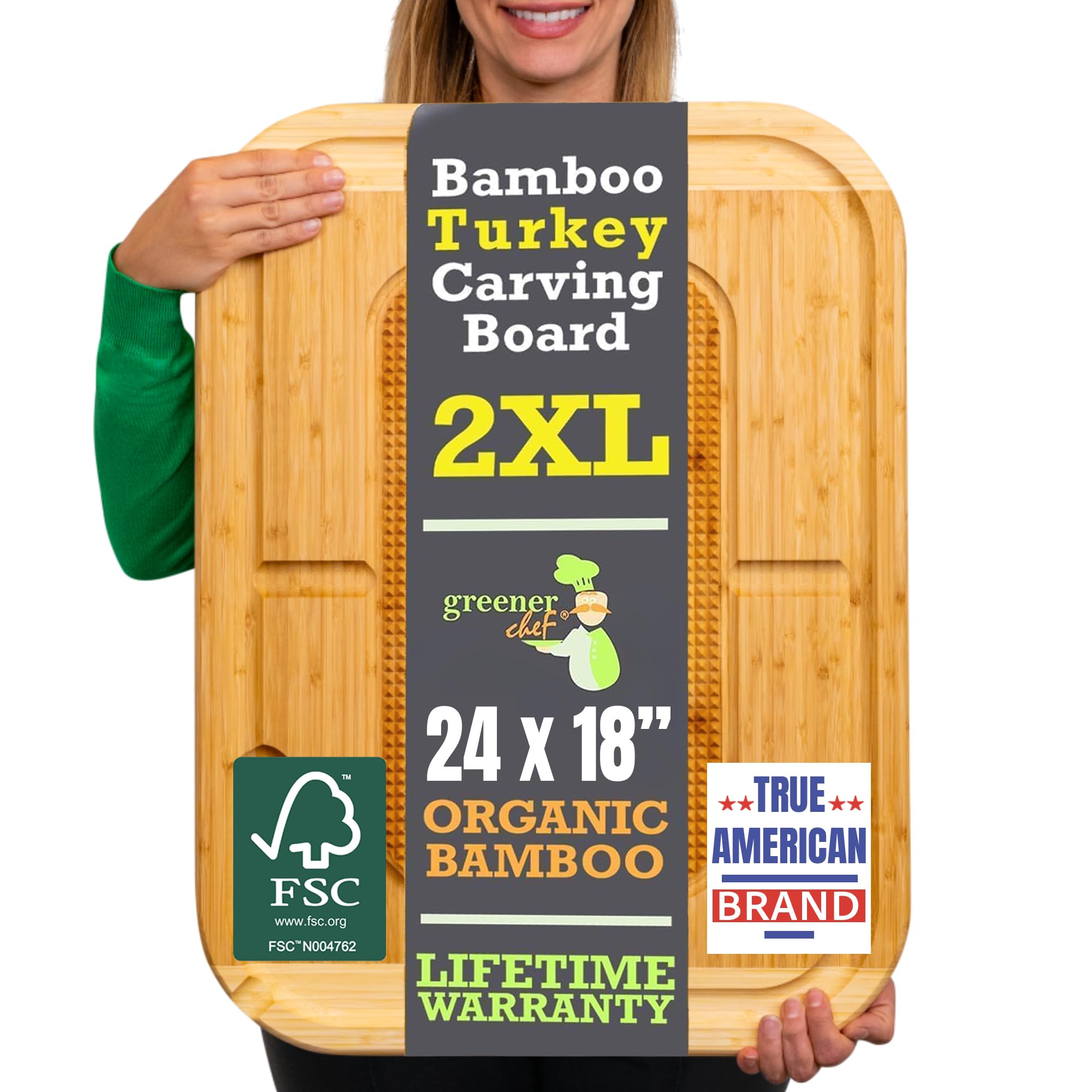
The Greener Chef board is built around a specific job: carving a holiday turkey. At 24×18 inches, it is the largest board in this comparison, and the integrated meat-holding spikes lock the bird in place so it does not rotate when you slice. The two-tone bamboo construction is lightweight at 6.8 pounds, which is remarkable for a board this size—you can carry it from the counter to the dining table without struggling.
The juice management system includes a deep channel that feeds into a corner well with a pour spout, so you can pour collected drippings directly into a saucepan for gravy. The diamond-textured surface provides good grip on the meat but makes cleaning annoying: the texture catches sponge fibers and requires a stiff brush to clear. The board needs to be oiled upon arrival because bamboo can dry out quickly and develop surface checks if left untreated.
The non-porous bamboo surface is naturally antimicrobial, which is a plus for raw meat carving. Some users report that the diamond pattern wears down after six months of heavy use, leaving a smoother surface that still works fine for carving but loses its visual texture. The lifetime replacement warranty is a genuine safety net—if the board cracks or warps, Greener Chef sends a replacement with no questions asked.
Why it’s great
- Massive 24×18-inch surface handles extra-large turkeys and briskets
- Meat-holding spikes prevent rotation during carving
- Corner well with pour spout simplifies gravy preparation
Good to know
- Diamond texture makes cleaning difficult and retains sponge debris
- Bamboo requires immediate oiling upon arrival
- Thin 0.75-inch profile may warp over time in humid kitchens
7. Socisen XXL Bamboo Cutting Board 24″x18″
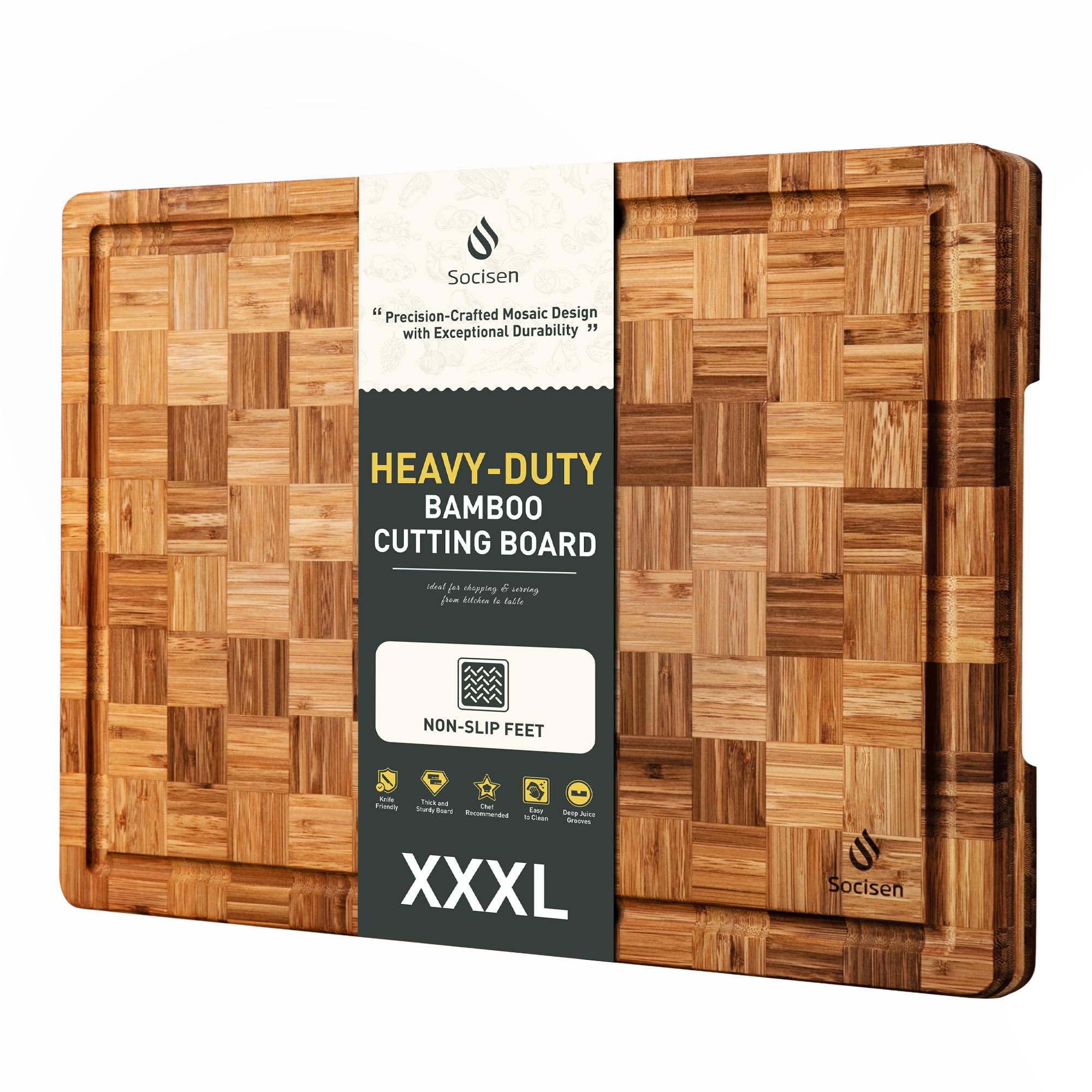
The Socisen XXL board delivers a 24×18-inch surface at a weight of 10.7 pounds, which gives it the gravity of a much more expensive hardwood board. The 5-layer bamboo splicing technique produces a dense, crack-resistant slab that remains flat on the counter without any wobble. The built-in handles on each side make it easy to lift and transfer, even at this weight.
The juice groove is cut into the bamboo surface with rounded corners that do not collect debris as aggressively as the Greener Chef board. Non-slip rubber feet keep the board stable during heavy chopping, and the FSC-certified bamboo construction is a sustainable alternative to tropical hardwoods. The board is pre-finished with food-grade mineral oil, but regular re-oiling every two to three weeks is necessary to maintain the surface seal.
Some users note that the juice groove overflows when you rest a medium-rare steak because the released juices exceed the groove’s capacity. For dry-aged roasts or briskets that release significant liquid, you may need to blot the surface mid-carve. The layered bamboo also shows cut marks more readily than solid maple, but the marks do not affect performance. For cooks who need an enormous surface at a low entry cost, this board provides exceptional value.
Why it’s great
- Massive carving surface at a very accessible price point
- 5-layer bamboo construction resists cracking and warping
- Built-in handles make moving the heavy board easier
Good to know
- Juice groove overflows with high-moisture roasts
- Bamboo shows cut marks more readily than hard maple
- Requires frequent oiling to maintain surface integrity
FAQ
Is a juice groove necessary on a carving board?
How often should I oil my wood carving board?
Can I use a carving board for raw meat?
Final Thoughts: The Verdict
For most users, the best carving board winner is the John Boos Prestige 22″x16″ because its 13-pound edge-grain maple construction provides unmatched stability for large cuts and its deep juice groove handles a full turkey’s worth of drippings without overflow. If you want a board with a superior juice reservoir and a harder surface, grab the Ironwood Gourmet Kansas City. And for a budget-friendly oversized carving surface that delivers surprising performance per dollar, nothing beats the Socisen XXL Bamboo.

Mo Maruf
I created WellFizz to bridge the gap between vague wellness advice and actionable solutions. My mission is simple: to decode the research and give you practical tools you can actually use.
Beyond the data, I am a passionate traveler. I believe that stepping away from the screen to explore new environments is essential for mental clarity and physical vitality.