Our readers keep the lights on and my smoothie glass nicely filled. As an Amazon Associate, I earn from qualifying purchases.
Laying carpet tiles directly on a concrete slab creates a clean, modern look — but that transition between the soft textile and the hard floor or door threshold is where the whole project lives or dies. A flimsy strip that won’t stick to cement or a rigid bar that can’t handle the height difference will undo all your careful work.
I’m Mohammad Maruf — the founder and writer behind WellFizz. I’ve spent years analyzing flooring hardware specifications, from alloy grades and adhesive bonds to load tolerances and surface treatments, so you can match the exact strip to your concrete subfloor.
After poring over dozens of models, testing their build quality, and weighing real user feedback, I’ve narrowed the field to the five strips that actually work on cement. This is the definitive guide to the best carpet transition strip for carpet tiles on cement.
How To Choose The Best Carpet Transition Strip For Carpet Tiles On Cement
Selecting the right transition strip for carpet tiles on a cement floor isn’t just about color. You need a strip that can handle the unique challenges of a subfloor that’s hard, non-porous, and often uneven. Here are the three critical factors that separate a lasting install from a frustrating failure.
Material Matters: Aluminum vs. Vinyl on Concrete
Aluminum strips, especially those made from Grade 6063 alloy with an oxidized finish, resist corrosion and won’t react with the alkaline compounds in concrete. They provide a rigid, wear-resistant edge that stands up to foot traffic and wheeled carts. Vinyl strips are softer, more flexible, and easier to cut, but their adhesive backing often struggles to form a permanent bond on bare cement without additional glue.
Height Gap Range: The Most Overlooked Spec
Carpet tile thickness varies widely, from low-profile commercial tiles under 0.2 inches to plush residential options exceeding 0.5 inches. A ramp-style strip that bridges 0.2 to 0.5 inches works for most standard tiles. If your adjacent floor is the same height, a flat T-molding creates a seamless joint. Measure the actual gap from the top of your carpet tile to the top of the adjoining surface before ordering — guessing leads to a tripping hazard or a gap that collects dirt.
Attachment Method: Adhesive vs. Mechanical Fastening
Cement is dense and non-porous, meaning standard self-adhesive strips may lift over time, especially in high-traffic areas or under direct sunlight. Strips that must be secured with construction adhesive, double-sided carpet tape, or mechanical fasteners (screws and anchors) provide a permanent, gap-free hold. Check whether the strip includes adhesive backing or if you need to supply your own construction-grade glue.
Quick Comparison
On smaller screens, swipe sideways to see the full table.
| Model | Category | Best For | Key Spec | Amazon |
|---|---|---|---|---|
| Gaahing Aluminum Transition Strip | Ramp Strip | Bridging height gaps on cement | Grade 6063 aluminum, 0.25 in thick | Amazon |
| Trimold T Molding 3-Pack | T-Molding | Flush joints between equal heights | 3 strips, 6063 alloy, 0.8 mm thick | Amazon |
| PATIKIL Self-Adhesive Vinyl Strip | Flat Divider | Covering thin seams on flat surfaces | Vinyl, 3.5 mm thickness | Amazon |
| MYFAMIREA Wood Grain Vinyl Strip | Flat Divider | Large coverage with wood grain look | PVC, 16.4 ft length, 2 in wide | Amazon |
| LSGCQ Self-Adhesive Vinyl Strip | Flat Divider | Long runs and custom lengths | PVC, 20 ft length, 2 in wide | Amazon |
In-Depth Reviews
1. Gaahing Aluminum Floor Transition Threshold Strip

The Gaahing strip is built from high-strength Grade 6063 aluminum alloy with an oxidized surface that resists the moisture and alkalinity of concrete. Its ramp profile, which bridges gaps from 0.2 to 0.5 inches, is ideal for standard carpet tile installations where the floor height changes at a doorway or threshold. The matte silver finish blends with most neutral flooring palettes and doesn’t show scuffs easily.
Installation requires a bit more preparation than peel-and-stick strips — you’ll need to cut it with a hacksaw or miter saw and secure it with construction adhesive, double-sided tape, or flooring nails. Many users report excellent adhesion when using a heavy-duty construction glue on clean, dry cement. The strip’s rigidity provides a solid edge for wheeled walkers, office chairs, and carts without flexing or deforming.
The 35.4-inch length covers a standard doorway width with room for a slight trim. Because it doesn’t come with pre-drilled holes or adhesive backing, you have full control over the fastening method, which is an advantage when dealing with the variable porosity of concrete. For a permanent, professional-grade transition on cement, this strip delivers the most reliable fit.
Why it’s great
- Rigid 6063 aluminum alloy holds shape under heavy foot traffic on concrete
- Oxidized surface resists corrosion and is easy to clean
- Ramp design accommodates height gaps up to 0.5 inches safely
Good to know
- No adhesive or screws included — you must supply construction glue or fasteners
- Too steep for a 1-inch threshold; verify your height gap first
2. Trimold 3Pcs Aluminum T Molding Trim & Floor Transition Strips

The Trimold T-molding uses the same Grade 6063 aluminum alloy as the Gaahing strip but in a flatter T-shaped profile designed for joining two floors of similar height. Each strip measures 2.9 feet long, and the three-pack gives you enough material for several doorways or a larger room. The 0.8-millimeter thickness keeps the profile slim — barely noticeable underfoot while protecting both floor edges from chipping.
This shape works best when your carpet tile and the adjacent floor (whether tile, hardwood, or laminate) are within about a quarter-inch of each other. Users on concrete slabs report successful installation using construction adhesive or a rubber mallet to tap the strip into a narrow expansion gap. Because the strip has no pre-applied adhesive, you have the freedom to choose a concrete-rated bonding agent.
The polished surface resists dirt and is easy to wipe clean, and the silver finish complements medium oak and gray flooring tones. If you’re transitioning between carpet tile and a hard surface of nearly equal height, this T-molding creates the cleanest, most professional visual line. The three-pack pricing makes it a smart buy for multi-room projects.
Why it’s great
- Three strips in one pack for multi-doorway projects at a low per-unit cost
- T-profile lies flush for equal-height floor joints
- Easy to cut with metal snips or a hacksaw
Good to know
- Works only for floors of similar height, not for significant height gaps
- Color may show pink or copper undertones on some finishes
3. PATIKIL Self Adhesive Floor Transition Strip
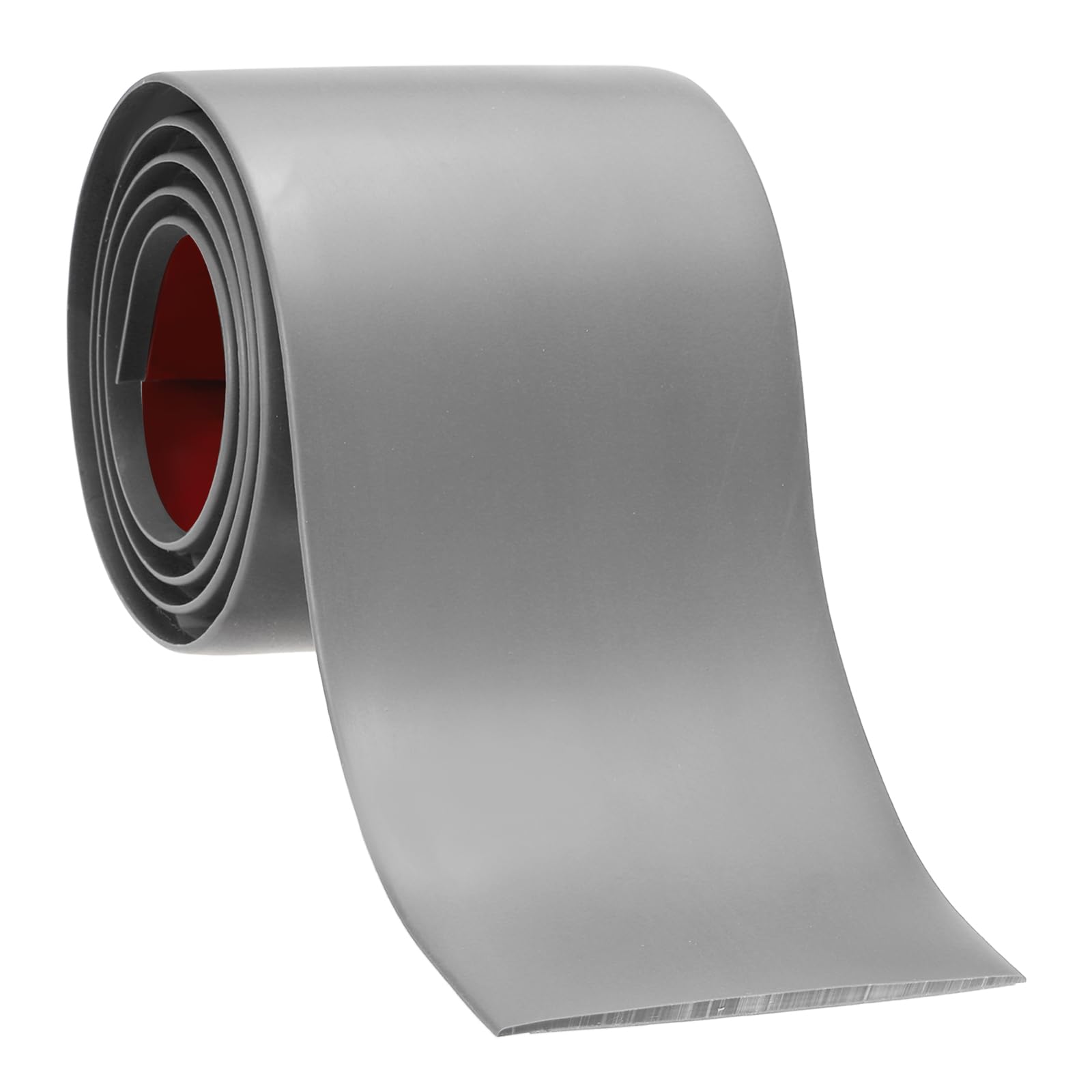
The PATIKIL strip takes a different approach by using flexible vinyl with a pre-applied self-adhesive backing. At only 3.5 millimeters thick, it’s designed for covering very thin gaps and seams where the two flooring surfaces are nearly flush. The 6.6-foot length gives you generous coverage for standard doorways and narrow hallways.
Its vinyl construction makes it easy to cut with scissors or a utility knife — no specialized tools required. The peel-and-stick installation is the fastest option on this list, though the adhesive’s long-term hold on bare concrete may require a surface prep with isopropyl alcohol or a primer. Several users report that this strip works best as a visual divider rather than a height-bridging ramp.
The grey color blends with many neutral carpets and tiles. Because the vinyl is softer than aluminum, it won’t damage the edges of your carpet tiles if they shift slightly. For a quick, low-profile fix where seam coverage is the priority and height variation is minimal, this strip gets the job done with zero hardware.
Why it’s great
- Self-adhesive backing allows instant installation without tools or glue
- Flexible vinyl conforms to slight floor irregularities
- Easy to trim to exact length with a utility knife
Good to know
- Adhesive may struggle on unsealed concrete without extra preparation
- Too thin to bridge gaps over 0.14 inches
4. MYFAMIREA 16.4Ft Floor Transition Strip Self Adhesive Vinyl

The MYFAMIREA strip stands out for its 16.4-foot continuous length and wood grain finish, which mimics natural timber better than a plain metallic or solid color strip. Made from PVC rather than aluminum, it’s softer and more flexible, allowing it to follow slight curves or uneven concrete surfaces. The 2-inch width provides enough coverage for most expansion gaps and irregular cuts.
The self-adhesive backing makes installation straightforward — clean the concrete surface, peel, and press into place. Users report that the adhesive forms a strong bond when applied to a dry, dust-free floor. The wood grain texture adds a decorative element that works well in living spaces where a metallic strip would look industrial. At 0.16 inches thick, it sits low enough that most doors can still close over it.
Because the material is non-toxic and odorless, it’s a safe choice for bedrooms and play areas. Its flexibility also reduces the tripping hazard for children and elderly household members. For large rooms or long hallways where you want a single uninterrupted strip with a natural look, this is the most convenient option.
Why it’s great
- 16.4-foot length covers long expanses without joints
- Wood grain finish blends with brown carpet tiles and wood flooring
- Flexible PVC conforms to uneven subfloors
Good to know
- May be too thick for doors that sit low to the floor
- PVC is less durable than aluminum under heavy furniture rolling
5. LSGCQ 20FT Floor Transition Strip Self Adhesive Vinyl
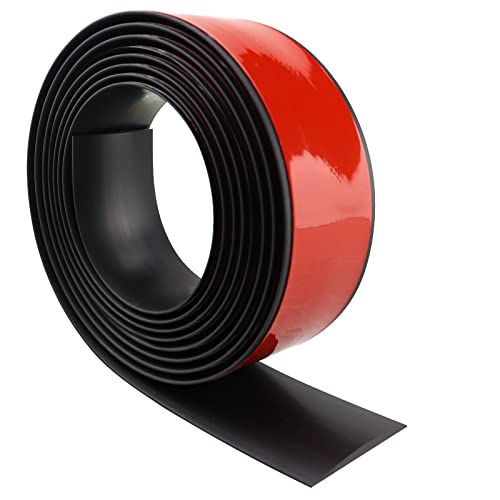
The LSGCQ strip gives you the longest single run on this list at 20 feet, making it ideal for covering a full room perimeter or a long hallway without any visible seams. Its black PVC construction is thick enough at 0.13 inches to provide a clear visual boundary while remaining flexible enough to conform to minor dips in the concrete. The 2-inch width hides wider gaps that often appear between carpet tiles and cement walls or cabinets.
Users praise the strong self-adhesive backing, which bonded successfully to concrete, tile, and hardwood after a proper surface cleaning with alcohol or solvent. The strip cuts easily with a utility knife, so you can trim it to exact lengths for multiple transition points from a single roll. Several reviews note its effectiveness as a finishing strip around bathtubs and cabinets where carpet tile meets a vertical surface.
While the black color is specific and works best with dark floors or as a deliberate accent line, the adhesive’s reported reliability on cement makes this a practical choice for problem areas where other strips have failed. For the longest coverage in a single purchase, this strip minimizes waste and installation time.
Why it’s great
- 20-foot length provides enough material for full-room perimeters
- Strong adhesive holds on concrete, tile, and wood after proper cleaning
- Thick and durable PVC resists abrasion from foot traffic
Good to know
- Black color is not universal — verify it matches your flooring palette
- Vinyl strip may not be rigid enough for heavy rolling loads
FAQ
Can I use a self-adhesive vinyl transition strip on bare concrete?
What is the difference between a ramp strip and a T-molding?
How do I cut an aluminum transition strip to fit my doorway?
Will a transition strip stop my door from closing?
Final Thoughts: The Verdict
For most users, the best carpet transition strip for carpet tiles on cement winner is the Gaahing Aluminum Strip because its Grade 6063 alloy and ramp profile handle real height gaps on concrete with permanent durability. If you need multiple strips for a flush-height project, grab the Trimold T-Molding 3-Pack. And for covering an entire room perimeter in one seamless run, nothing beats the coverage of the LSGCQ 20-Foot Vinyl Strip.

Mo Maruf
I created WellFizz to bridge the gap between vague wellness advice and actionable solutions. My mission is simple: to decode the research and give you practical tools you can actually use.
Beyond the data, I am a passionate traveler. I believe that stepping away from the screen to explore new environments is essential for mental clarity and physical vitality.