Our readers keep the lights on and my smoothie glass nicely filled. As an Amazon Associate, I earn from qualifying purchases.
The sound of a carpenter bee boring into your wooden siding is unmistakable—a low, rhythmic vibration that signals structural damage below the surface. Unlike social wasps, these solitary drillers don’t sting in swarms, but they chew through fascia boards, decks, and porch rafters, laying eggs in galleries that can last for years. Stopping them before they tunnel deep requires a targeted application of a specialized insecticide, not a general-purpose aerosol.
I’m Mohammad Maruf — the founder and writer behind WellFizz. I’ve spent countless hours analyzing insecticide formulations, application methods, and active-ingredient profiles to determine which carpenter bee sprays actually penetrate galleries and stop the reproductive cycle.
This guide cuts through the marketing noise to compare residual dusts, foaming aerosols, and contact-kill sprays, helping you pick the most effective defense for your home. Whether you need to treat active holes or prevent new ones, we’ve researched the best carpenter bee spray options available today.
How To Choose The Best Carpenter Bee Spray
Carpenter bees demand a different treatment strategy than social wasps. Because they carve tunnels into wood and remain inside, the insecticide must either expand to fill the cavity or transfer onto the bee as it enters. Choosing the wrong spray means only killing the surface bees while the nest survives.
Foam vs Dust vs Liquid Aerosol
Foam aerosols are the most effective for active galleries because they expand upon contact, filling the tunnel and coating the bee directly. Dusts like those containing Cyfluthrin or Permethrin work by residual contact—bees walk through the powder and carry it deeper. Standard liquid aerosols work well for immediate strikes on visible bees but rarely penetrate beyond the entrance hole.
Active Ingredient and Residual Time
The active ingredient dictates how long the treated area remains lethal. Pyrethroid-based compounds such as Permethrin (.25% in Bonide) provide fast knockdown with moderate residual, while Cyfluthrin (1% in Tempo Dust) offers weeks of protection even in dusty conditions. Plant-based formulas are safer around pets but often require repeat applications.
Application Distance and Reach
Some sprays reach 27 feet—critical for eaves and high soffits—while others rely on close-range foam injection. If your carpenter bee activity is on a second-story gable, a long-range aerosol saves you from ladder gymnastics. For ground-level fascia, a foaming spray with a snorkel tube gives you precise gallery access.
Quick Comparison
On smaller screens, swipe sideways to see the full table.
| Model | Category | Best For | Key Spec | Amazon |
|---|---|---|---|---|
| Tempo Dust | Residual Dust | Long-term gallery protection | Cyfluthrin 1%, covers 1000 sq ft per lb | Amazon |
| Spectracide Carpenter Bee Foam | Foaming Aerosol | Deep gallery penetration | 48 fl oz total, expanding foam | Amazon |
| Bonide Spider & Ground Bee Killer | Dust | Ground bee elimination | Permethrin .25%, snorkel tube | Amazon |
| Spectracide Wasp & Hornet Killer | Aerosol Jet | Reaching high eaves at distance | 27 ft spray reach | Amazon |
| STEM Plant-Based Spray | Botanical Aerosol | Pet-friendly treatment | 10 fl oz, no added dyes or fragrances | Amazon |
In‑Depth Reviews
1. Tempo Dust Insecticide Powder
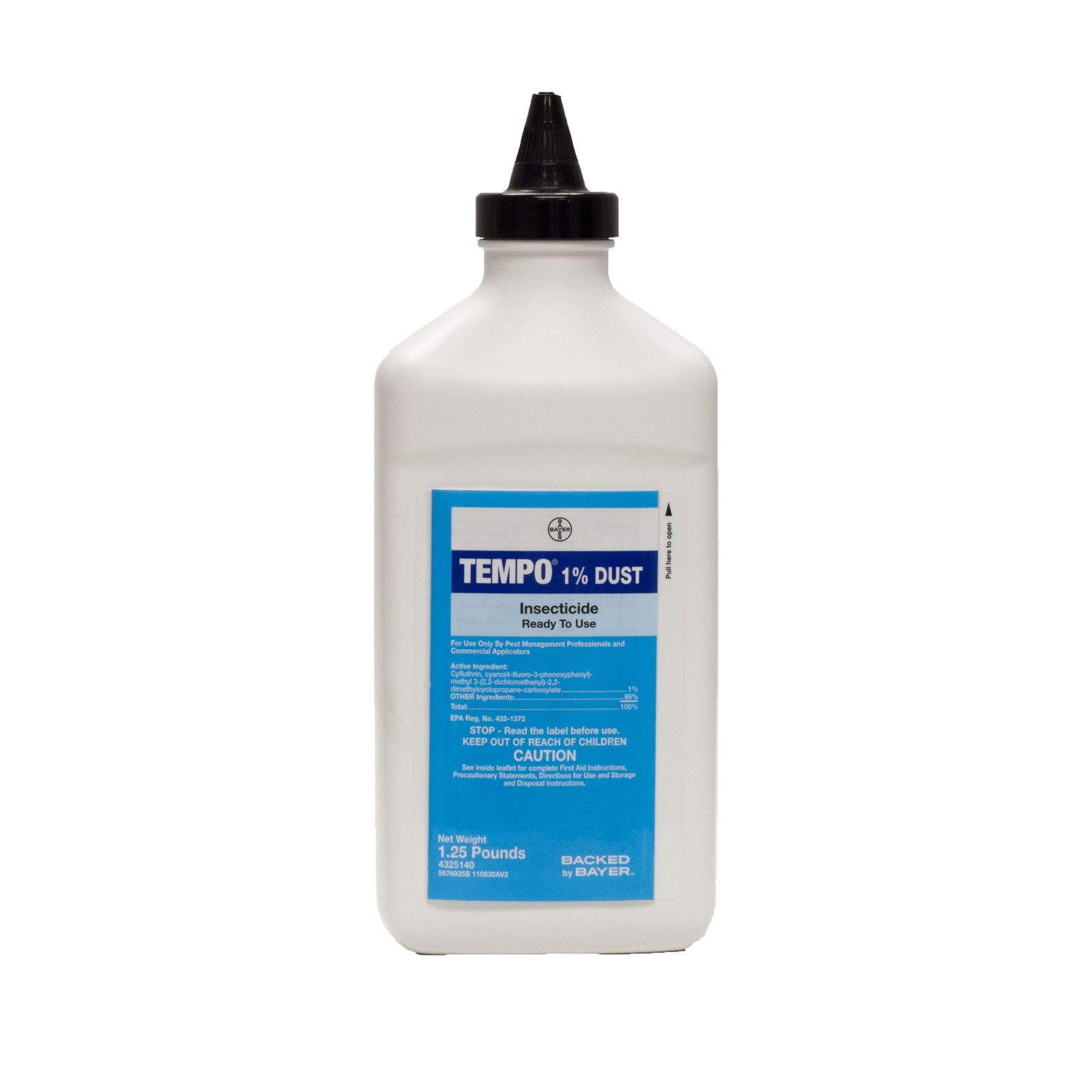
Tempo Dust uses Cyfluthrin at 1% concentration—a synthetic pyrethroid that remains active for weeks even in the dusty environment of a carpenter bee gallery. A single pound covers up to 1,000 square feet, making it economical for treating multiple holes across a large structure. Users report that one generous puff from a bulb duster completely eradicated wood bee activity, with no signs of return.
This is not an instant knockdown product; its strength lies in residual transfer. When the bee crawls through the treated gallery, it picks up the powder on its body and carries it deep into the nest, killing larvae and newly emerged adults. Some reviewers mixed it 50/50 with another dust for ground-nesting yellow jackets, but it worked alone on carpenter bees after direct injection into each entrance hole.
The main limitation is availability—Tempo Dust cannot be shipped to California, New York, South Carolina, or Connecticut due to local regulations. You also need a separate bulb or bellows duster to apply the powder into the tunnel. For those in unrestricted states, this is the most cost-effective long-term solution on the list.
Why it’s great
- 1% Cyfluthrin provides weeks of residual protection
- Covers 1,000 sq ft per pound—low cost per treatment hole
- Highly rated for eliminating entire carpenter bee colonies
Good to know
- Not available in CA, NY, SC, or CT
- Requires a separate duster for application into galleries
2. Spectracide Carpenter Bee & Ground-Nesting Yellowjacket Killer Foaming Aerosol (3-Pack)

The Spectracide formulation is specifically designed for carpenter bees and ground-nesting yellow jackets. The key differentiator is the foam that expands inside the tunnel, filling the gallery and coating the bee from all sides. Users report that it instantly disabled and killed yellow jackets at the entrance, with no bees escaping out the back of the nest.
With a total of 48 fluid ounces across three cans, you have enough foam to treat multiple infestation sites in a single season. The extension tube lets you inject foam directly into the ½-inch round entrance hole, ensuring the active ingredient reaches the brood chamber. Reviewers noted that for carpenter bees, three applications over a week were sometimes necessary for full elimination, but it outperformed prior liquid sprays every time.
One trade-off: the foam does not kill on contact as instantly as a pyrethroid jet. Some bees shook off the initial foam and returned before the residual took effect. For immediate knockdown of visible bees, you may want a secondary jet spray, but for gallery treatment, this foam is a top-tier choice.
Why it’s great
- Foam expands to fill carpenter bee galleries completely
- Three-pack offers great volume for multiple treatment sites
- Extension tube allows precise injection into entrance holes
Good to know
- May require repeated applications for stubborn colonies
- Not instantaneous—residual effect takes time
3. Bonide 363 Spider and Ground Bee Killer (2-Pack)

Bonide 363 is a dust formulation containing .25% Permethrin, packaged with a snorkel tube applicator that lets you puff powder into crevices and ground holes without getting too close. Unlike liquid sprays that evaporate or wash away, this dust stays in the tunnel and transfers onto the bee’s exoskeleton upon contact. User reviews confirm that a single application to ground bee holes eliminated all activity within a day—some treatments required only one-eighth of the bottle.
This product is ideal for ground-nesting yellow jackets and carpenter bees at ground level. The snorkel tube reaches into the entrance hole, and the dust settles onto the tunnel walls, creating a lethal barrier that remains active as long as it stays dry. Several reviewers noted they had tried multiple sprays before, but the dust solved the problem instantly when applied at dawn before bees emerged.
The only downside is the dustiness—if you over-puff, a cloud can drift onto surrounding surfaces and appear unsightly. It also works best when the entrance is sheltered from rain. For outdoor surface applications where rain is a concern, a liquid aerosol may be a better fit, but for dry, sheltered galleries, this value-packed 2-pack is tough to beat.
Why it’s great
- Dust stays in galleries for extended residual control
- Snorkel tube targets holes without direct contact
- Cost-effective two-pack covers many infestation points
Good to know
- Dust may drift if applied too forcefully
- Best for dry, sheltered galleries—rain can reduce effectiveness
4. Spectracide Wasp and Hornet Killer Aerosol (3-Pack)

Spectracide’s classic aerosol is built for distance—it sprays up to 27 feet, letting you hit carpenter bees and wasps on high soffits, gables, and eaves from ground level. Users consistently report that it kills on contact: the jet stream soaks the insect in a toxic foam that drops it almost instantly. The three-pack is a solid value for treating multiple exterior hot spots.
This is not a gallery-treatment product; it is designed for direct strikes on visible bees. If a carpenter bee is hovering near its entrance hole, a quick blast immobilizes it before it retreats inside. However, because the aerosol doesn’t expand inside the tunnel, bees that are already in the gallery will not be reached. Many buyers pair this with a dust or foam for comprehensive control.
The toxic foam leaves a visible residue that can stain light-colored siding, so careful aim is required. The chemical odor is also stronger than botanical alternatives. For immediate knockdown of visible bees at a safe distance, this aerosol remains a top choice, but it is not a standalone solution for established nests.
Why it’s great
- 27-foot spray reach eliminates ladder risk for high nests
- Contact kill drops bees instantly
- Three-pack at this tier delivers strong value
Good to know
- Does not penetrate into existing galleries
- Foam may stain light-colored wood or siding
5. STEM Kills Wasps, Hornets and Yellow Jackets (Plant-Based)

STEM is a plant-based botanical spray from SC Johnson that kills wasps, hornets, and yellow jackets using botanical extracts rather than synthetic pyrethroids. It is formulated without added dyes or fragrances, with a fresh botanical scent that is significantly less harsh than traditional insecticides. Many users specifically choose this for areas around pets because when used as directed, it poses less risk of chemical exposure.
On carpenter bees specifically, this spray works best as a direct-contact weapon. The jet stream reaches up to 15 feet after removing the safety tab, allowing you to strike bees from a moderate distance. Reviewers found it effective on paper wasp nests and leaf-footed bugs, but the oil-based formulation leaves a greasy residue on surfaces, which can stain camera lenses or light-colored wood if overspray occurs.
The small 10-ounce can covers roughly three medium-sized nests before running out, making it less economical for large infestations. Some users noted a mild allergic response to the botanical oils, so skin sensitivity is a consideration. For those who prioritize a non-toxic option for pet-friendly yards with only occasional bee activity, STEM is a solid entry-level pick.
Why it’s great
- Plant-based formula is safer around pets when used as directed
- No harsh chemical odor or added dyes
- Works on contact for immediate bee immobilization
Good to know
- Oily residue can stain surfaces
- Small can capacity may require multiple units for large areas
FAQ
Does carpenter bee spray damage my painted wood siding?
How soon should I seal the hole after treatment?
Can I use a wasp foam for ground-nesting yellow jackets?
Is Tempo Dust safe to apply around vegetable gardens?
Final Thoughts: The Verdict
For most users, the carpenter bee spray winner is the Tempo Dust because its 1% Cyfluthrin powder offers the longest residual protection and kills the entire colony through gallery transfer. If you want a foam that fills tunnels instantly, grab the Spectracide Carpenter Bee Foam 3-Pack. And for budget-conscious treatment of ground-level holes, nothing beats the Bonide 363 2-Pack with its snorkel tube applicator.

Mo Maruf
I created WellFizz to bridge the gap between vague wellness advice and actionable solutions. My mission is simple: to decode the research and give you practical tools you can actually use.
Beyond the data, I am a passionate traveler. I believe that stepping away from the screen to explore new environments is essential for mental clarity and physical vitality.