Our readers keep the lights on and my smoothie glass nicely filled. As an Amazon Associate, I earn from qualifying purchases.
Waking up to a rustling sound in the wall or spotting a pile of sawdust under a wooden beam signals one thing: carpenter ants are actively excavating tunnels inside your home’s structure. Unlike common pavement ants, these large black or reddish insects carve smooth galleries into damp or sound wood, slowly compromising framing, fascia boards, and deck supports. The wrong spray merely kills a few workers on contact without reaching the hidden queen, allowing the colony to rebuild within days.
I’m Mohammad Maruf — the founder and writer behind WellFizz. Over the years, I’ve analyzed hundreds of pest control formulas across bait types, aerosol knockdown speeds, residual durations, and active-ingredient profiles to separate the products that truly eradicate entire colonies from those that only offer temporary surface relief.
Rodent sprays fail against wood-boring ants because they lack the delayed toxicity or residual barrier needed for nest eradication. This guide evaluates the five most reliable formulations currently available to help you find the best carpenter ant spray for your specific infestation severity and household situation.
How To Choose The Best Carpenter Ant Spray
Selecting the right formulation requires matching the product’s delivery method and active ingredient to the specific stage of infestation you are dealing with — surface foragers, a single nest, or multiple satellite colonies.
Spray vs. Bait: The Colony Elimination Trade-Off
Aerosol sprays that kill on contact are excellent for immediate knockdown of foraging workers but rarely reach the queen hidden deep inside a gallery. Baits containing a delayed-action poison like indoxacarb or borax are eaten by workers and carried back to the nest, where trophallaxis spreads the toxin to the queen and larvae. The most effective approach uses both: a perimeter spray for immediate relief and a gel or liquid bait for long-term colony destruction.
Residual Activity Duration
Products that leave a non-repellent barrier on treated surfaces continue killing ants that walk across the area for weeks after application. A residual period of 2–4 weeks is ideal for outdoor perimeters and entry-point treatments. Sprays with no residual require frequent reapplication and are best reserved for direct-contact use on visible ants.
Pet and Family Safety Profile
If you have children or pets that roam treated floors, a plant-based formula using essential oils like lemongrass and geraniol offers a safer alternative to synthetic pyrethroids. However, natural sprays typically break down faster and may require more frequent reapplication. For heavy infestations in inaccessible areas like crawl spaces or attics, synthetic options with EPA registration often provide more dependable control.
Quick Comparison
On smaller screens, swipe sideways to see the full table.
| Model | Category | Best For | Key Spec | Amazon |
|---|---|---|---|---|
| Advion Ant Gel Bait | Gel Bait | Total colony elimination | 0.05% indoxacarb, 4 x 30 g tubes | Amazon |
| Wondercide Ant & Roach Spray | Natural Aerosol | Pet-safe indoor use | Plant-based, 10 oz 2-pack | Amazon |
| TERRO T1700 Outdoor Spray | Outdoor Aerosol | Long-range perimeter barrier | 19 oz, sprays 10–15 ft | Amazon |
| REVENGE Termite & Carpenter Ant Killer | Dual-Action Spray | Immediate contact kill & residual control | 15 oz, residual up to 4 weeks | Amazon |
| TERRO Liquid Ant Killer II | Liquid Bait | Budget-friendly indoor baiting | 2 oz per bottle, 2-pack | Amazon |
In‑Depth Reviews
1. Advion Ant Gel Bait
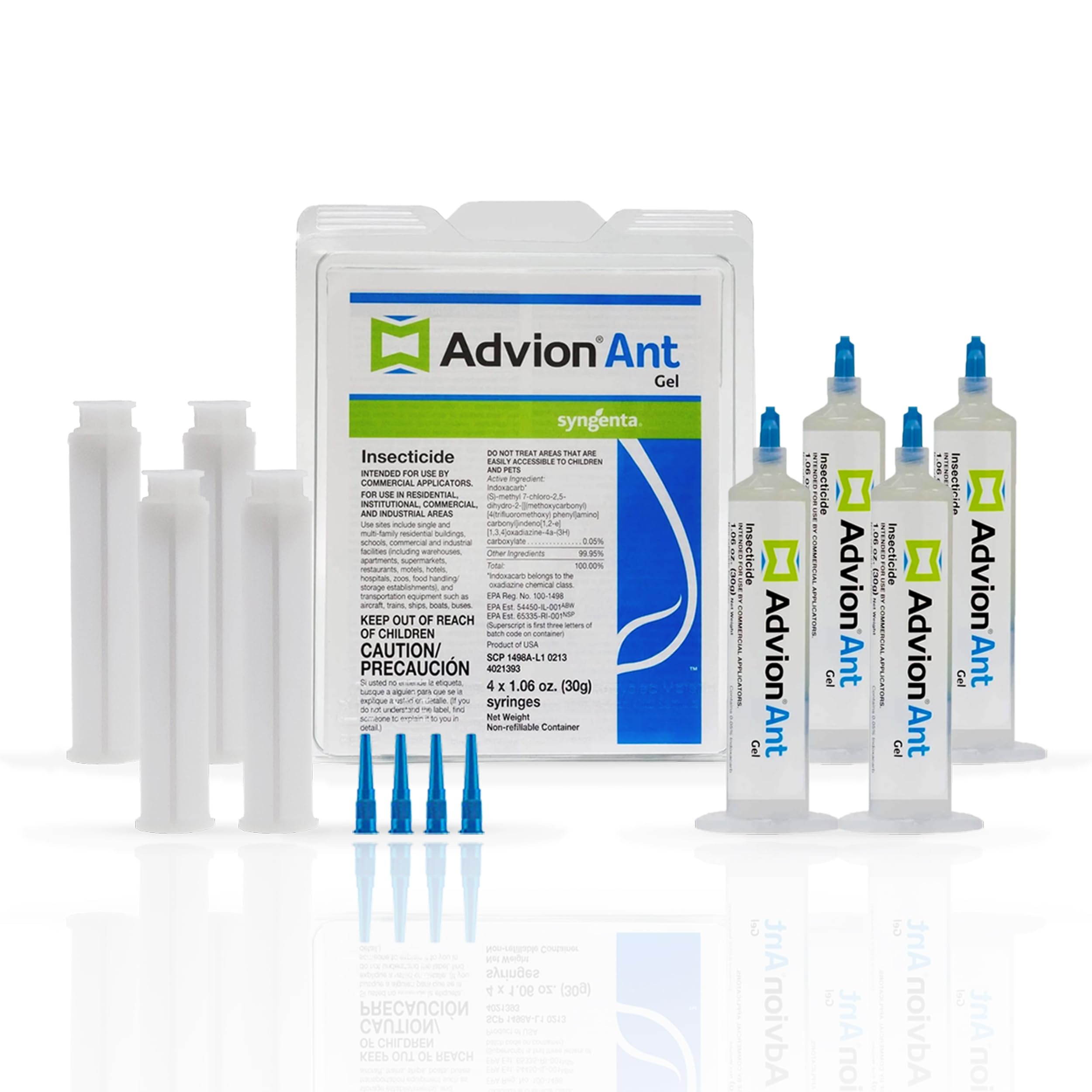
This gel bait from Syngenta uses 0.05% indoxacarb, a non-repellent active ingredient that workers ingest and then spread to the entire nest through trophallaxis. Unlike contact sprays that only kill surface ants, this formulation targets the queen directly — reviews from former exterminators confirm that a single application often eliminates multi-floor infestations within 48 hours. The MetaActive effect ensures indoxacarb remains inactive in non-target organisms while proving highly toxic to ants.
Application is straightforward: place small dabs of gel every 8 inches along foraging trails, cracks, and behind appliances. The odorless formula works on surfaces without staining and remains attractive to sugar-seeking carpenter ants for several days. Each 30-gram tube delivers enough bait for multiple applications, making the four-tube pack suitable for large properties or recurring seasonal treatment.
The primary limitation is that the gel requires ants to be actively foraging to work — if you seal off all access points before baiting, the colony may not encounter the poison. It also must be kept dry; excessive moisture can degrade the gel’s consistency and reduce its attractiveness. Indoor placement near sinks, dishwashers, and baseboard cracks yields the most consistent results.
Why it’s great
- Delayed-action poison eliminates entire colony including the queen
- Non-repellent formula prevents ant avoidance behavior
- Each tube lasts multiple treatments; 4-tube pack offers exceptional coverage
Good to know
- Requires active foraging to work; ineffective if entry points are sealed prematurely
- Gel can degrade in high-moisture environments like leaky crawl spaces
- Must be kept away from children and pets during application
2. Wondercide Ant & Roach Aerosol Spray

Wondercide uses plant-powered active ingredients — lemongrass and geraniol oil — to kill carpenter ants on contact without introducing synthetic pyrethroids into your living space. The formula is lab-proven effective against over 20 household pests including spiders, fleas, and stink bugs, and it is formulated to be safe around pets and children when used as directed. The 10-ounce 2-pack provides two full cans for treating multiple rooms or for keeping one can in the kitchen and one in the garage.
The spray delivers a quick knockdown on contact, but its residual activity is shorter than synthetic alternatives — users report needing to reapply every 24 hours in areas with heavy traffic. The scent is mild and fades within minutes, making it suitable for indoor use near food preparation areas. Direct application on visible ants works best; for hidden colonies behind walls, consider pairing this spray with a bait strategy.
One consistent feedback note is that the nozzle can clog mid-can, wasting product toward the end of the canister. The spray also leaves a slightly oily residue on hard floors that becomes slippery — it is best used on concrete or ceramic surfaces rather than wood or laminate. For households with small dogs or children who frequently contact treated floors, this remains the safest contact-kill option available.
Why it’s great
- Plant-based active ingredients safe around pets and children
- Kills on contact without harsh chemical odor
- Effective against a broad spectrum of crawling and flying insects
Good to know
- Short residual life requires frequent reapplication for persistent infestations
- Nozzle prone to clogging after repeated use
- Leaves oily residue that can make smooth floors slippery
3. TERRO T1700 Outdoor Ant Killer Spray
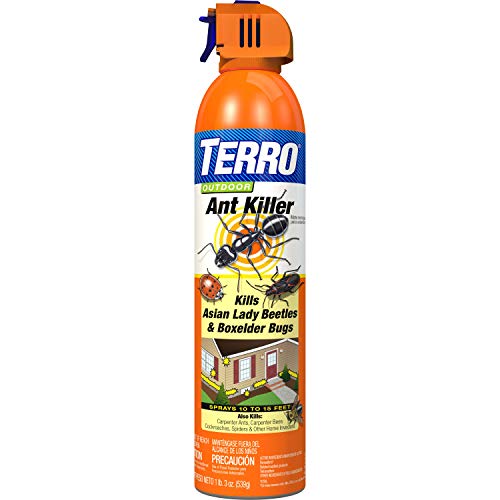
Designed primarily for outdoor use, the TERRO T1700 delivers a powerful stream that reaches 10 to 15 feet, making it ideal for treating carpenter ant nests located in high eaves, deck undersides, or between patio pavers without requiring a ladder. The 19-ounce aerosol can hold enough product for treating multiple entry points around a typical home, and the formula provides rapid knockdown with effective long-term residual control for outdoor species.
The adjustable spray nozzle lets you switch between a wide fan pattern for perimeter barriers and a narrow stream for injecting directly into crack openings or behind siding. Users camping in RVs have reported success spraying around jacks, tires, and slide-out seals to prevent ants from entering during overnight stops. For carpenter ant infestations that originate from a tree stump or firewood pile near the home, this spray provides a perimeter barrier that intercepts foraging workers.
The main drawback is the nozzle design — the trigger mechanism can be difficult to lock into position, and some users note that the propellant may run out before all liquid is dispensed, leaving up to 2–3 ounces trapped inside the can. The formula contains borax and is not intended for indoor use near pets or livestock. For outdoor-only perimeter treatments where long range and immediate knockdown are the priority, this option performs reliably.
Why it’s great
- Jet stream reaches up to 15 ft for hard-to-access nests
- Adjustable nozzle for targeted crack injection or wide-area barrier
- Effective residual control for outdoor foraging trails
Good to know
- Nozzle mechanism can be finicky to operate initially
- Some product remains trapped in can after propellant depletes
- Not intended for indoor use or near pets/livestock
4. REVENGE Termite & Carpenter Ant Killer

The REVENGE spray offers dual-action control: it kills carpenter ants on contact while leaving a residual film that remains active for 2 to 4 weeks after application. This makes it particularly effective for treating satellite nests in wall voids, crawl spaces, and around foundation perimeters where you cannot spray every ant directly. The 15-ounce aerosol includes a snorkel tube attachment that lets you inject spray deep into holes and nest cavities without removing trim.
Users report that visible ant activity disappears within two days of treatment, with the residual barrier preventing re-infestation for weeks. The formula also targets termites and carpenter bees, making it a versatile tool for properties dealing with multiple wood-destroying pests. The non-repellent nature of the active ingredient means ants do not avoid treated areas — they walk through the residue and carry poison back to the nest.
Because the residual effect lasts up to a month, you will see fewer return visits compared to standard contact sprays, but the strong chemical odor requires ventilation during and immediately after application. The spray may leave a faint white residue on dark surfaces, so it is best applied to unfinished wood, concrete, or brick rather than painted or finished trim. For a mid-range product that bridges contact kill and persistent barrier protection, this is a strong all-rounder.
Why it’s great
- Residual activity lasts 2–4 weeks after a single application
- Snorkel tube attachment allows direct treatment of hidden nest cavities
- Effective against termites, carpenter bees, and carpenter ants
Good to know
- Strong chemical odor requires ventilation during application
- May leave visible residue on painted or finished surfaces
- Not a colony-eliminating bait; works best as a barrier supplement
5. TERRO Liquid Ant Killer II (2-Pack)
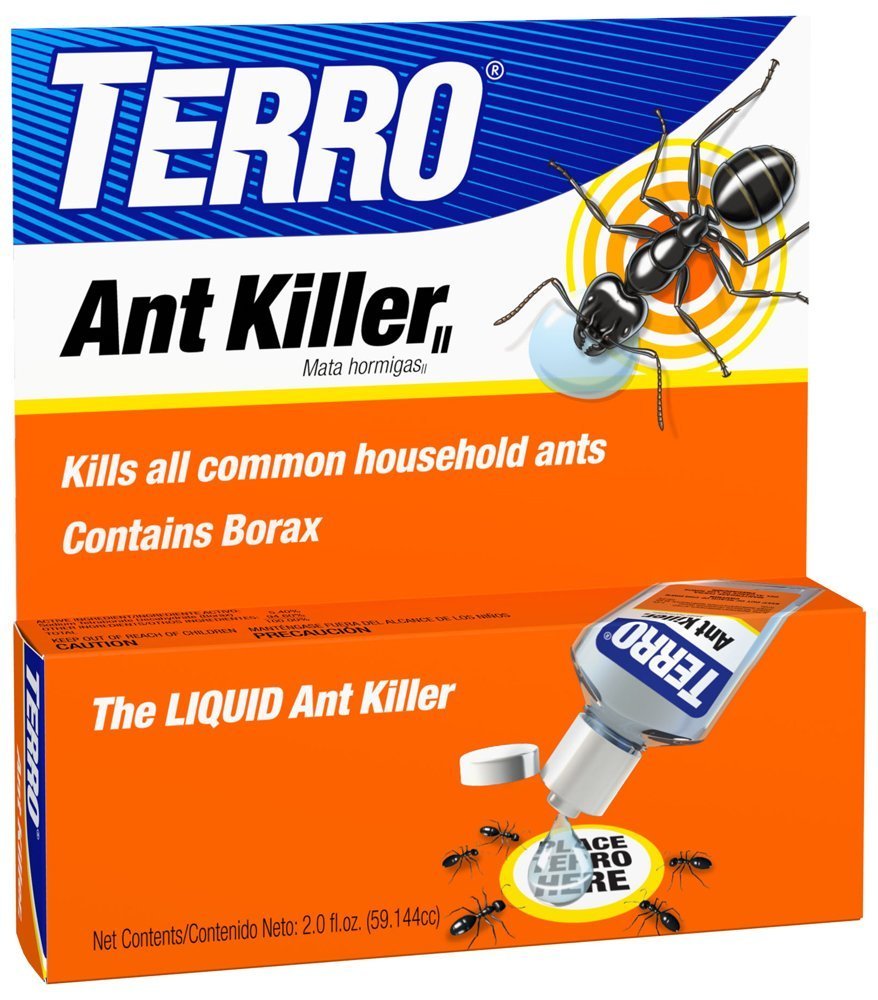
The classic TERRO liquid bait uses a borax-based formula that attracts ants within minutes of opening. Workers drink the liquid and return to the nest, where the delayed-action poison spreads through the colony over 1–2 days. Users consistently report that ants disappear completely within 48 hours and do not return for a year or more after a 2–3 day treatment window. The 2-pack includes two 2-ounce bottles, enough for treating multiple rooms or for placing one indoors and one in the garage.
This product excels as a pure bait rather than a spray — you simply open the bottle and place it on a flat surface where ants are trailing. The liquid formulation attracts both sugar-seeking and protein-seeking species, making it effective against carpenter ants as well as pavement ants and odorous house ants. The bait stations are designed to keep the liquid contained, though the open design can pose a risk if tipped over near children or pets.
The primary limitation is that this is a liquid bait without any contact-kill capability — it relies entirely on ants feeding and returning to the nest. For immediate knockdown of foraging workers, you will need to pair it with a spray. Additionally, the bait may need a few days to fully eliminate a large colony; impatience can lead to switching treatments prematurely. For a budget-friendly colony elimination strategy, this remains one of the most proven options available.
Why it’s great
- Attracts ants within minutes and eliminates colonies in 1–2 days
- Proven borax formula effective for over a decade with consistent results
- 2-pack provides good value for multi-room or multi-season treatment
Good to know
- Open bait design can spill if knocked over; requires careful placement
- No contact-kill capability; relies solely on colony feeding behavior
- May take 2–3 days for full colony elimination; not instant results
FAQ
Will carpenter ant spray kill the queen if I only spray the workers?
Is there a difference between carpenter ant spray and regular ant spray?
Final Thoughts: The Verdict
For most users, the carpenter ant spray winner is the Advion Ant Gel Bait because its non-repellent indoxacarb formula eliminates the entire colony, including the queen, in under 48 hours with minimal effort. If you need a pet-safe contact spray for indoor use, grab the Wondercide Ant & Roach Spray. And for long-range outdoor barrier treatments around decks and eaves, nothing beats the TERRO T1700 Outdoor Ant Killer Spray.

Mo Maruf
I created WellFizz to bridge the gap between vague wellness advice and actionable solutions. My mission is simple: to decode the research and give you practical tools you can actually use.
Beyond the data, I am a passionate traveler. I believe that stepping away from the screen to explore new environments is essential for mental clarity and physical vitality.