Our readers keep the lights on and my smoothie glass nicely filled. As an Amazon Associate, I earn from qualifying purchases.
Nothing kills a game night faster than a deck that drags on or a rulebook that takes longer to read than the first round. When you have exactly four people around the table, the game needs to hit a sweet spot: fast to teach, quick to play, and chaotic enough to keep everyone locked in. The wrong card game leaves two players bored and one player explaining the rules for the fifth time.
I’m Mohammad Maruf — the founder and writer behind WellFizz. I’ve spent over a decade analyzing tabletop product data, breaking down mechanics, and filtering through thousands of customer reviews to find the games that actually deliver on their promises for specific player counts.
The best card games for four people reward fast thinking, create real tension, and wrap up in under 30 minutes. After digging through hundreds of decks and real user feedback, I’ve narrowed the list to five that consistently deliver a great four-player experience. This guide covers the card games for four people that actually keep the table engaged.
How To Choose The Best Card Games For Four People
The biggest mistake buyers make is grabbing a 2-6 player game without checking how it scales to four. Many games feel amazing with three but drag with a fourth player. For four people, you want a game that forces interaction — not a free-for-all where everyone plays alone. Look for mechanics that create shared chaos: simultaneous play, reactive cards, or sabotage elements.
Player Count Flexibility
A 2–6 player range doesn’t guarantee a good time at four. Some games are designed for even numbers, others for odd. Read reviews that specifically mention “plays well with 4.” Games with a sweet spot at four often have elimination mechanics or limited-deck pressure that forces direct conflict without dragging.
Round Length and Table Energy
For a four-player group, 5–20 minute rounds are ideal. That keeps the energy high and lets everyone cycle through wins and losses without anyone sitting out for 45 minutes. Simultaneous play games (everyone moves at once) create a completely different vibe than turn-based games. For four people, simultaneous play often produces the loudest, most memorable nights.
Quick Comparison
On smaller screens, swipe sideways to see the full table.
| Model | Category | Best For | Key Spec | Amazon |
|---|---|---|---|---|
| Elimino Family Card Game | Strategy/Sabotage | Multi-generational game nights | 2–5 players; 15-min rounds | Amazon |
| Exploding Kittens Original Edition | Elimination | High-stakes casual play | 56 cards; 2–5 players | Amazon |
| QUOKKA Family Board Games | Speed/Reaction | Mixed-age groups (7 to 87) | 72 cards; 10-20 min rounds | Amazon |
| Tapped Four Original Card Game | Fast Strategy | Competitive friends & groups | 5-15 min rounds; 2–8 players | Amazon |
| Perpetual Commotion | Simultaneous Play | Chaotic, high-energy sessions | 6 decks; 2–6 players; no turns | Amazon |
In‑Depth Reviews
1. Elimino Family Card Game
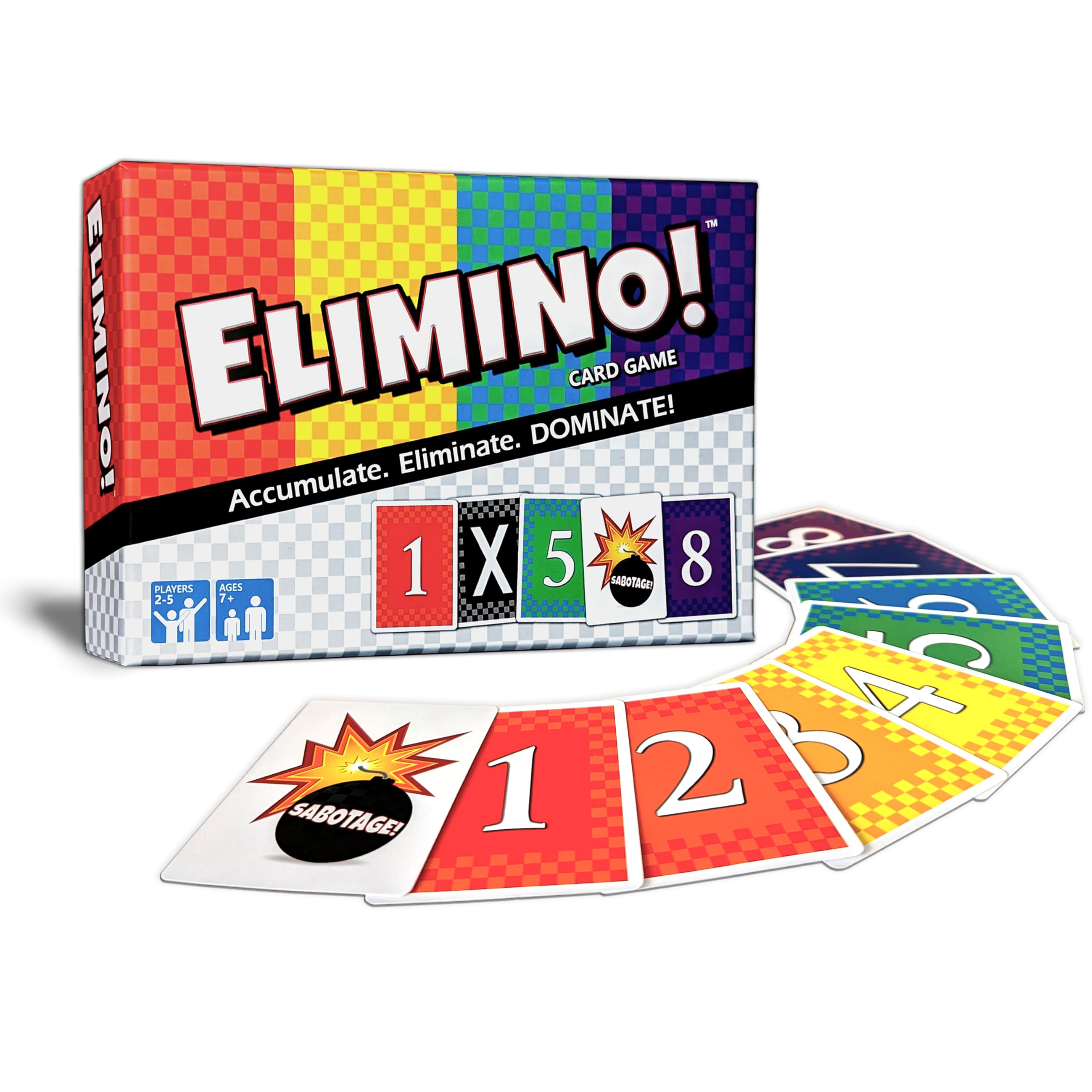
Elimino rides the perfect line between classic Garbage/Trash and modern interactive gameplay. The core mechanic — race to complete card layouts while stealing and sabotaging — creates immediate tension at a four-player table. Every hand you hold matters, and every card you play can be disrupted. The 15-minute rounds mean no one gets stuck watching others play for too long, and the portable box (6.25 x 4.5 inches) slides easily into a backpack or glovebox.
What makes this exceptional for four people is the target pressure. With exactly four, the sabotage cards create dynamic alliances and rivalries that keep the entire table engaged. The rulebook is genuinely simple — most players grok the flow within one round. The cards themselves feel dense and well-laminated, surviving repeated shuffles without edge fraying.
Customer feedback consistently highlights its cross-generational appeal. Grandparents, parents, and kids can all play at the same table without anyone feeling lost. The designer (a family-run company) focused on inclusivity, and it shows in the accessibility of the mechanics. For a four-player group looking for something fresh that isn’t another Exploding Kittens variant, this is the smart pick.
Why it’s great
- Sabotage mechanics keep all four players fighting for the win
- Compact box makes it genuinely travel-friendly
- Zero elimination — everyone plays to the end
Good to know
- Younger children (under 7) may struggle with the strategy elements
- Not a simultaneous-play game; turns are sequential
2. Exploding Kittens Original Edition

Exploding Kittens became a phenomenon for good reason: its rules fit on a napkin, and every round builds toward a single explosive moment. The deck contains 56 cards illustrated by The Oatmeal, each one packed with absurd humor that lands well with adults and older kids. At four players, the tension is real — the player count sits right in the sweet spot where the exploding kitten cards feel dangerous but not unfair.
The game plays in roughly 15 minutes per round, which is ideal for four people who want to cycle through multiple games in an evening. The defuse cards (laser pointers, catnip sandwiches) give players agency to survive, while the shuffle and skip actions add layers of bluffing. The box dimensions (4.41 x 6.38 inches) are almost identical to a standard deck box, making it easy to slip into a bag.
One subtle downside: the elimination format means the first player blown up can sit out for the rest of the round. At exactly four players, this is less painful than at larger player counts, but it’s still worth noting. The cards themselves are high-quality glossy stock that holds up well to repeated use. Customer reviews frequently mention the hilarious artwork and the instant replayability.
Why it’s great
- Extremely simple rules — teach it in 60 seconds
- Humor and art quality make it a memorable gift
- Compact and highly portable
Good to know
- Eliminated players may wait 5–10 minutes for the next round
- Text on cards is small; might be hard to read in dim light
3. QUOKKA Family Board Games
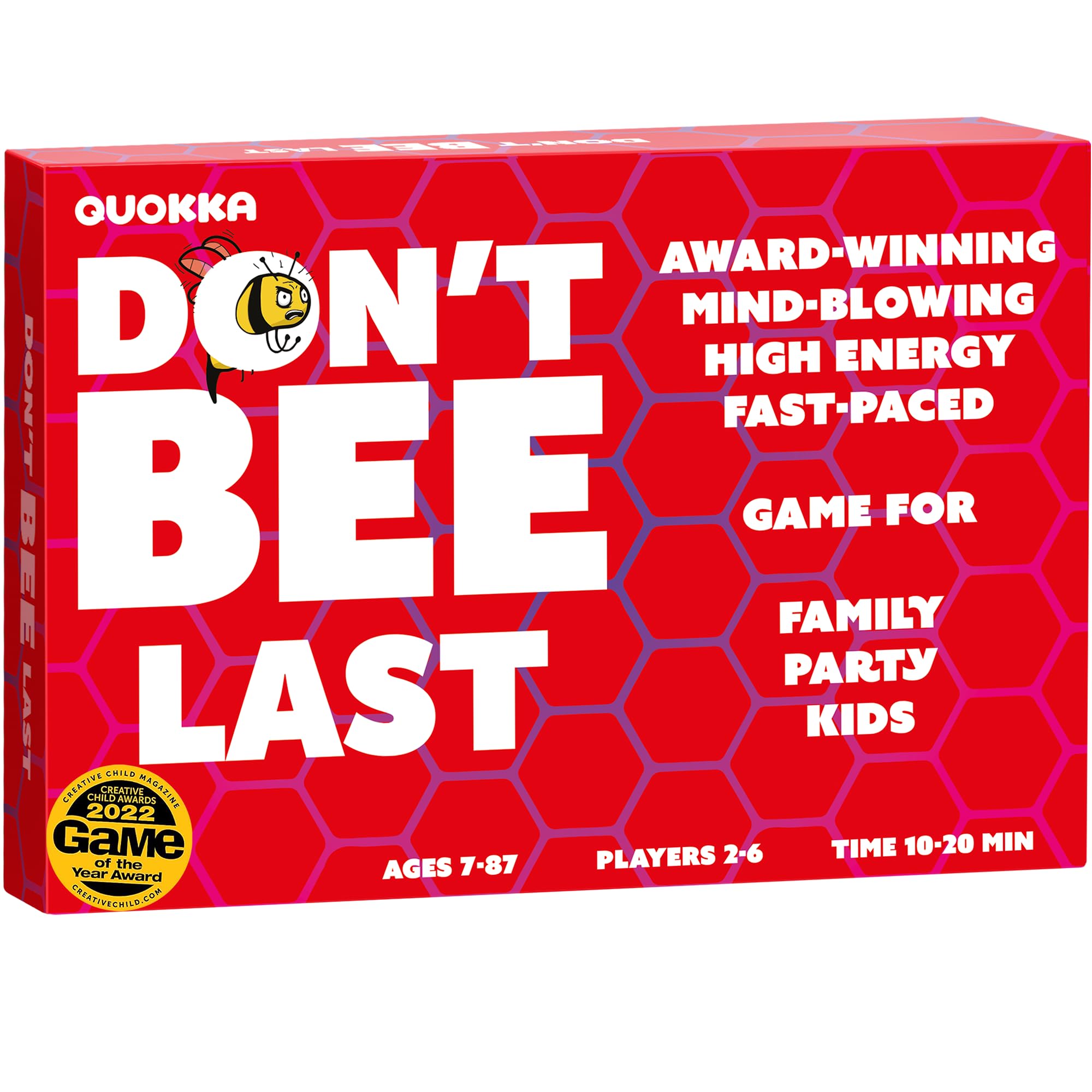
QUOKKA flips the script from “take a turn” to “react or lose.” Players place cards down simultaneously, shouting out colors and slapping the BEE card before anyone else. The reflexes required are genuine — it’s not a memory game; it’s a pure speed test. With four players, the slap mechanic creates a physical, loud, chaotic energy that fills a room. The 72-card deck provides enough variety for multiple rounds without sameyness.
The learning curve is basically flat: teach it in under a minute. Each round runs 10–20 minutes, which means you can fit 3–4 rounds into a standard game night session. The rules are designed so that messing up means starting over, adding a frustrating (in a good way) risk-reward element. The box is lightweight (0.28 pounds) and thin (0.1 inch card thickness), making it one of the most portable options in this list.
The card stock is thin — a common observation from customer reviews — but they’ve held up well during regular play. The game supports players aged 7 to 87 according to the brand, and real reviews confirm that adults often play it after their kids go to bed. For groups that prioritize speed and physicality over deep strategy, this deck delivers a genuinely unique experience.
Why it’s great
- No turns — everyone plays at the same time
- Extremely accessible for very young players (6+)
- Physical slap mechanic adds visceral excitement
Good to know
- Card stock feels slightly thin despite holding up well
- Best with a larger table surface to avoid collisions
4. Tapped Four Original Card Game
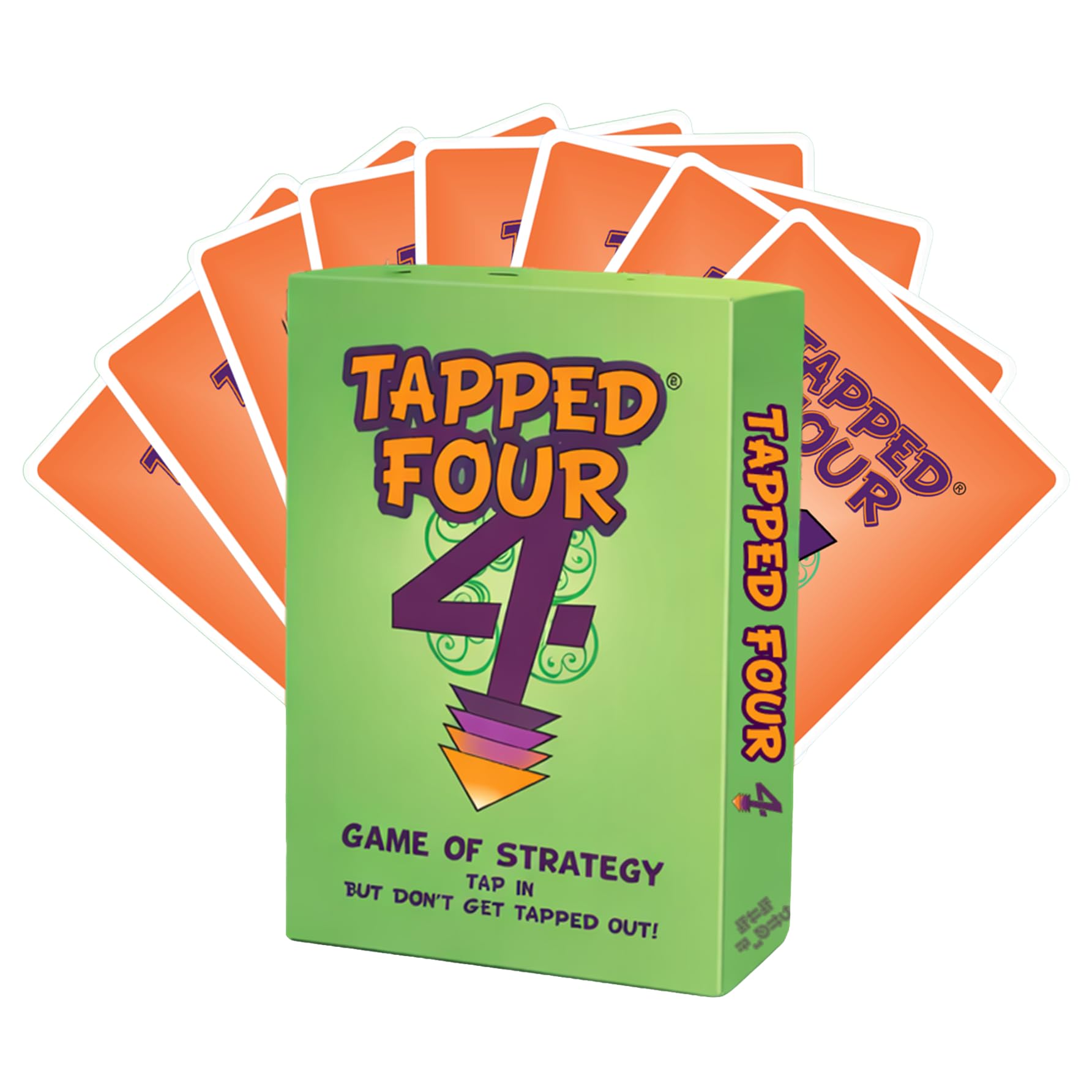
Tapped Four plays like UNO but with sharper edges and faster pacing. The objective is simple: don’t get tapped out. The strategy comes from when to play bonus cards and when to hold them — a miscalculation can hand the win to someone else. At four players, the game hits a rhythm where every move creates immediate consequences, and rounds wrap up in 5–15 minutes depending on player aggression.
The game supports 2–8 players, but the sweet spot is definitely 4 to 5. With four players, the “tap out” mechanic creates a natural end condition that prevents the game from dragging. The rules are easy to learn in minutes, and the card quality is solid for a game in this tier. The box is standard size and fits nicely on a coffee table without dominating the space.
Customer reviews consistently describe it as addictive and highly replayable. Multiple buyers mentioned buying extra copies specifically for different groups — a strong sign of genuine engagement. The bonus cards add creative variety without overcomplicating the rules. For groups that want fast, competitive rounds with clear winners and losers, Tapped Four delivers reliable value.
Why it’s great
- Extremely fast setup and teardown
- High replay value from creative bonus cards
- Works well with mixed skill levels
Good to know
- Can feel similar to UNO for experienced card players
- Best with competitive groups — not ideal for casual talkers
5. Perpetual Commotion

Perpetual Commotion abandons the concept of turns entirely. All four players play simultaneously, scrambling to stack same-colored cards in number order in the center arena. The result is pure organized chaos — cards flashing, wrists flicking, players shouting. The game includes six decks of cards, an eight-sided die (used for scoring), and supports 2–6 players. At four players, the table energy is maxed out, and rounds average 5–10 minutes.
The biggest differentiator here is the speed floor. Unlike turn-based games where a slow player can drag out the round, Perpetual Commotion forces everyone to react continuously. This makes it a poor fit for groups that want a calm, conversational game, but ideal for groups that thrive on high-energy competition. The game has won multiple awards (iParenting Media, National Parenting Center, Parent’s Choice Foundation) that validate its design quality.
The box is larger than most card games (10 x 2 x 8 inches) due to the six included decks, so it’s not a travel-friendly option. Customer reviews frequently note that it’s a “go-to gift” game because people always want to play another round. The game supports younger players (8+), but the speed can overwhelm kids under 10. For a four-player group looking for maximum noise and minimal downtime, this is the pick.
Why it’s great
- No turns — every player is active 100% of the time
- Award-winning design with proven replayability
- Rounds are extremely short (5 min average)
Good to know
- Requires a large table space for all six decks
- Too fast for younger or easily overwhelmed players
FAQ
Which type of card game works best for a four-player group?
What makes Perpetual Commotion different from other fast card games?
How do I choose between Exploding Kittens and Elimino for my family?
Final Thoughts: The Verdict
For most four-player groups, the best card games for four people winner is the Elimino Family Card Game because it balances strategy, sabotage, and accessibility for all ages. If you want chaotic simultaneous action with no downtime, grab the Perpetual Commotion. And for a quick, hilarious game that takes 60 seconds to learn, nothing beats the Exploding Kittens Original Edition.

Mo Maruf
I created WellFizz to bridge the gap between vague wellness advice and actionable solutions. My mission is simple: to decode the research and give you practical tools you can actually use.
Beyond the data, I am a passionate traveler. I believe that stepping away from the screen to explore new environments is essential for mental clarity and physical vitality.