Our readers keep the lights on and my smoothie glass nicely filled. As an Amazon Associate, I earn from qualifying purchases.
Finding a card game for a seven-year-old that holds attention, doesn’t require a 30-minute rules explanation, and survives more than one session is tougher than it sounds. Most decks end up scattered, forgotten, or too complex for a child to play without constant adult intervention. The best options hit a specific sweet spot: simple enough for independent play, but strategic enough to keep the whole family engaged.
I’m Mohammad Maruf — the founder and writer behind WellFizz. I’ve spent years analyzing family game markets, studying card stock durability, and reviewing rule complexity across dozens of kids’ games to find the ones that actually get played.
After sorting through the noise, I’ve narrowed down the top contenders that deliver real replay value. This guide will help you find the best card games for 7 year olds that balance fun, learning, and longevity.
How To Choose The Best Card Games For 7 Year Olds
Not all card games are created equal when the target audience is a second-grader. The factors that matter most are different from what you’d look for in an adult game. Here’s what separates the winners from the dust-collectors.
Readability & Card Size
Seven-year-olds aren’t known for their fine motor control. Standard poker-size cards (2.5 x 3.5 inches) can be awkward for small hands. Look for decks that are slightly larger or use thick, coated card stock that doesn’t bend on the first shuffle. The text and images should be bold enough to read without squinting — tiny rules text on cards is a dealbreaker for this age group.
Playtime & Attention Span
A game that drags past 20 minutes will lose a seven-year-old’s focus. The sweet spot is 10–15 minutes per round. Games with quick rounds encourage replay and let kids experiment with strategy without getting bored. If the box says “30+ minutes,” it’s likely designed for older kids or requires heavy adult mediation.
Teaching Real Skills (Without Preaching)
The best games for this age group teach turn-taking, pattern recognition, and basic strategy by making them fun — not by spelling out the lesson. A game that forces a child to read ingredient names, count cards, or adapt their plan mid-round builds cognitive skills naturally. Avoid games that feel like homework disguised as a card deck.
Quick Comparison
On smaller screens, swipe sideways to see the full table.
| Model | Category | Best For | Key Spec | Amazon |
|---|---|---|---|---|
| Upgraded Kids Card Games Pack | Multi-Deck Set | Variety & early learning | 54 cards per deck, 6 games | Amazon |
| Asmodee Brick Like This! | Building Party Game | LEGO fans & teamwork | 92 model cards, 15-min rounds | Amazon |
| Exploding Kittens Original | Strategic Bluffing | Family game night | 56 cards, ages 7+ | Amazon |
| Hasty Baker | Recipe Collection | Learning strategy & sportsmanship | 2-6 players, 15-min rounds | Amazon |
| QUOKKA Party Game | Fast-Paced Slap Game | Quick reflex & group play | 72 cards, slap mechanic | Amazon |
In‑Depth Reviews
1. Upgraded Kids Card Games Pack
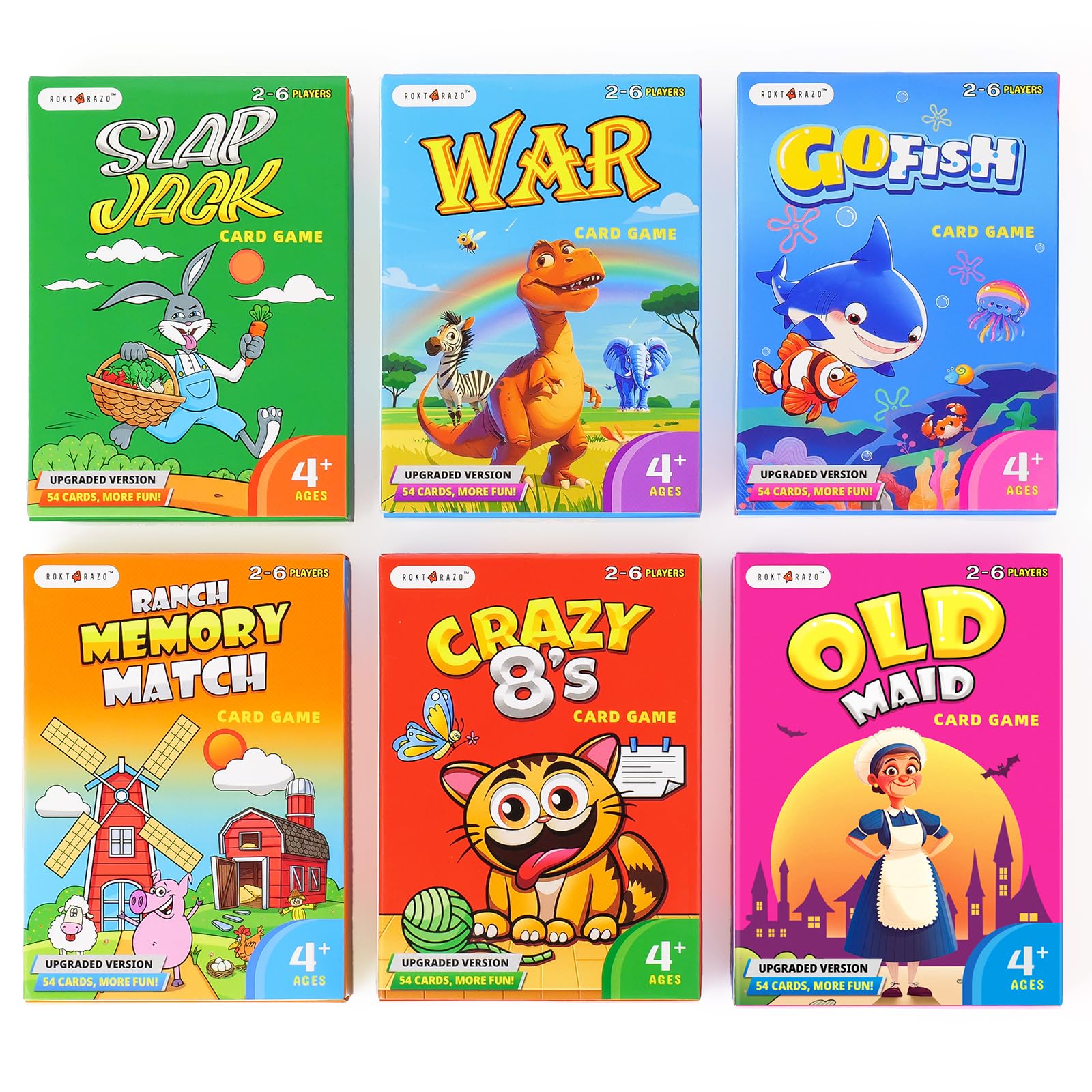
This set bundles six classic games — Go Fish, Old Maid, Crazy Eights, Memory Match, Slap Jack, and War — into one package, each with its own 54-card deck. The cards are 30% thicker than standard poker decks, which makes a real difference when a seven-year-old is learning to shuffle or gripping cards tightly. The coated paper resists the edge-peeling that cheap decks suffer after a few rounds.
Each deck uses a different theme (grassland animals, sea life, vegetables, fruits, occupations) which subtly introduces vocabulary and categorization skills while kids play. The individually packed decks mean you can hand one to a child without losing the rest of the set, making it practical for car trips or classroom play.
The included “senior versions” add function cards that introduce an extra layer of strategy, so the same game can grow with the child. Parents report that younger siblings as young as four can play the simpler games while older kids enjoy the variant rules. For the sheer volume of playable content, this pack delivers the most mileage per investment.
Why it’s great
- Six different games in one purchase — no need to hunt for individual decks
- Thick card stock stands up to repeated use by young children
- Themed decks keep kids engaged and subtly teach new vocabulary
Good to know
- Box is compact but storing 6 decks can get messy without a dedicated organizer
- Some function cards in the senior versions may be tricky for first-time players
2. Asmodee Brick Like This!
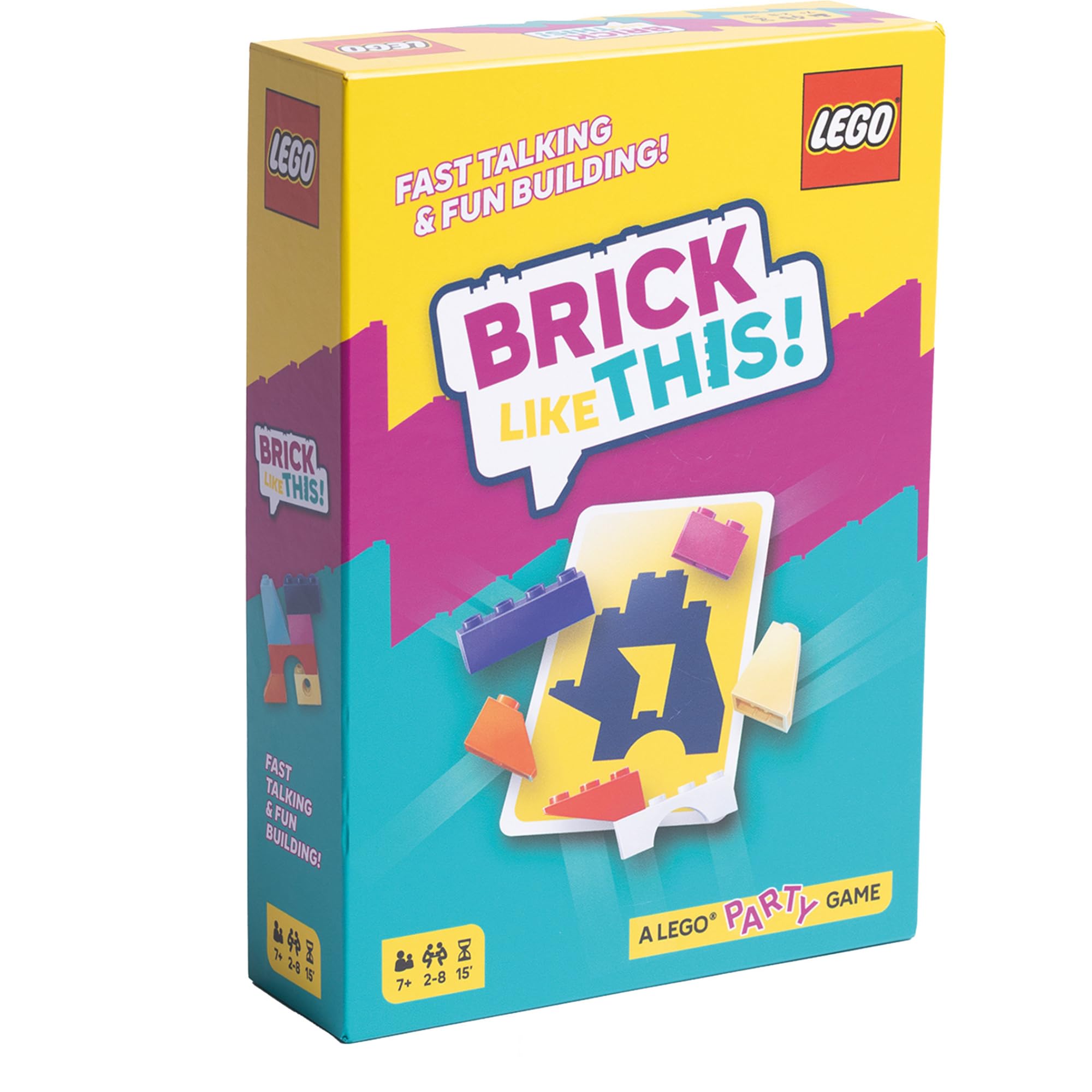
Brick Like This! turns LEGO building into a communication challenge. Players work in pairs — one is the Builder, the other is the Instructor — and race to construct abstract models using 48 included LEGO bricks. The catch: the Instructor can’t see the model and the Builder can’t see the instruction card. The result is a hilariously chaotic scramble of crossed wires and rapid-fire directions.
The 92 model cards and 20 challenge cards ensure no two rounds feel the same. Challenge cards add constraints like building with one hand or with a silent Instructor, which forces kids to adapt their strategy on the fly. For a seven-year-old, this teaches spatial reasoning and precise verbal communication without feeling like a lesson.
Rounds are capped at 15 minutes, with a 30-second sand timer that adds pressure when the first team finishes. The game supports 2-8 players, meaning larger families or playdates can join without splitting into separate groups. Parents note that even Lego-obsessed kids stay engaged because the abstract builds are unlike anything in a standard set.
Why it’s great
- Encourages real teamwork and communication skills without being preachy
- High replay value with 92 distinct model cards and 20 challenge variants
- 15-minute rounds keep energy high and attention focused
Good to know
- Requires at least 4 players for optimal fun (2-player mode is less dynamic)
- Some models are genuinely tricky for younger kids — adults may need to pair with a child
3. Exploding Kittens Original Edition

Exploding Kittens is a staple for a reason. The premise is simple: draw a card. If you draw an Exploding Kitten, you’re out — unless you have a Defuse card. The entire game revolves around using action cards to manipulate the deck, skip turns, or force opponents into dangerous draws. The rules fit on two pages, and most seven-year-olds grasp the core loop within the first round.
The cards feature illustrations by The Oatmeal, which adds a layer of absurd humor that appeals to kids and adults equally. Characters like Tacocat and Rainbow-Ralphing Cat keep the tone light even when the stakes are elimination. The compact box (4.4 x 6.4 inches) slides into a backpack easily, making it a go-to for restaurants or waiting rooms.
One subtle strength of this game is that it teaches probability and risk assessment. As the deck shrinks, the chance of drawing a kitten increases, and kids learn to weigh whether to play a Skip card or take a gamble. Rounds last about 15 minutes, and the elimination format means the last player standing gets a clear victory — no ambiguous scoring.
Why it’s great
- Extremely easy to learn — most kids understand the rules after one demo round
- Hilarious artwork keeps both kids and adults entertained through repeat plays
- Portable box makes it easy to bring anywhere
Good to know
- Elimination means early losers may need a secondary activity while waiting for the next round
- Card text is small — some children may need help reading action cards initially
4. Hasty Baker Family Card Game
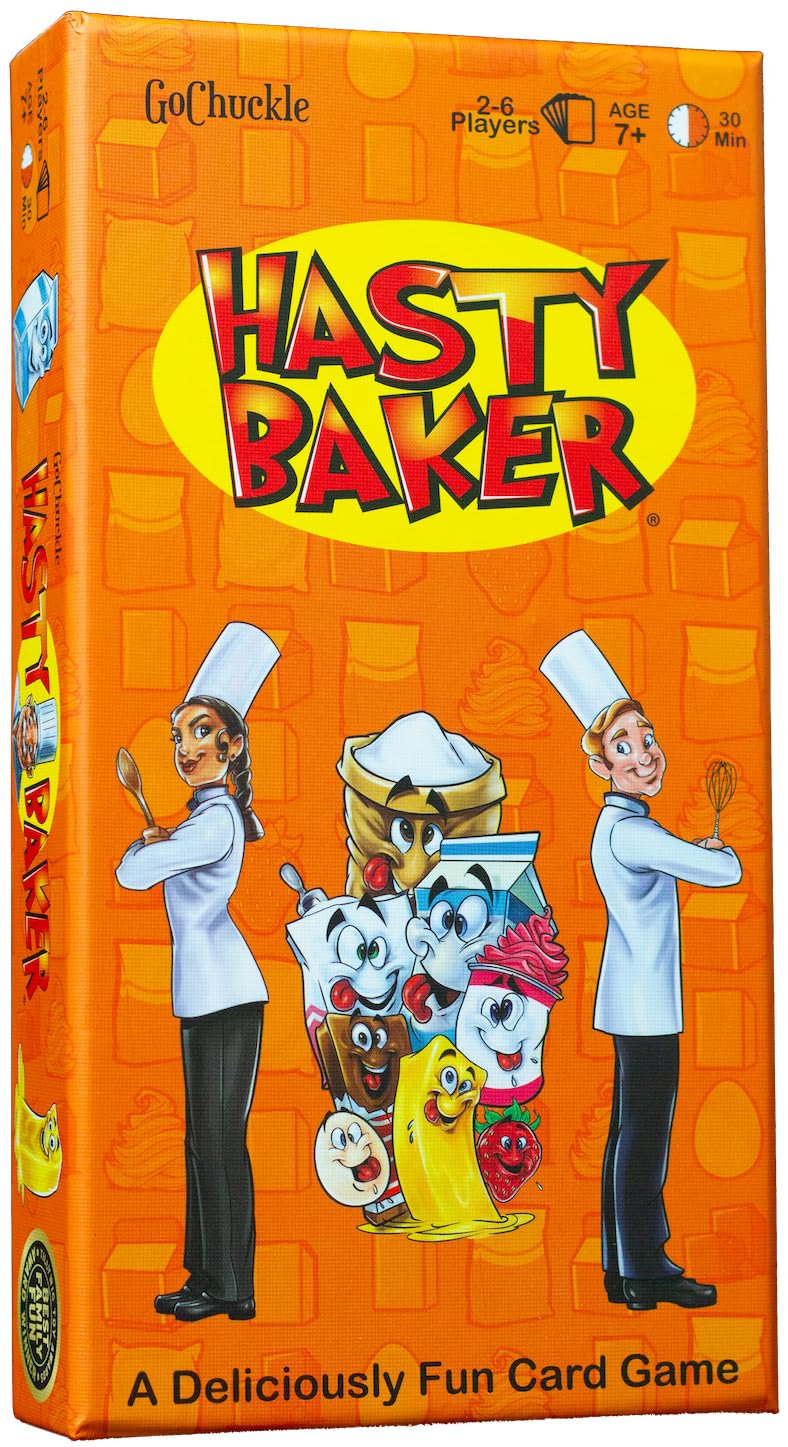
Hasty Baker wraps a recipe-collection mechanic in a baking theme that feels natural, not forced. Each player races to collect four ingredients — flour, eggs, butter, sugar — to complete a recipe card and win. The twist is that action cards let you steal ingredients from opponents or force them to discard, adding a layer of strategic sabotage that kids find thrilling without being mean-spirited.
The game has won the Tillywig Best Family Fun award and Creative Child’s Game of the Year multiple years running, which backs up its design credentials. The artwork is bright and clear, with large ingredient icons that even non-readers can identify. This removes a common barrier in card games where kids get stuck trying to decode text while other players wait.
For a seven-year-old, Hasty Baker teaches sportsmanship in a concrete way. You can be happy when you complete a recipe, but you also learn to handle the frustration of having your butter stolen. Rounds are quick enough that a loss doesn’t sting long, and the 2-6 player range accommodates both small families and larger playdate groups.
Why it’s great
- Large, clear icons eliminate reading barriers — non-readers can play independently
- Multiple awards validate the design and educational value
- Strategic sabotage adds depth without becoming overly competitive
Good to know
- Card quality is decent but may show wear after frequent play sessions
- Theme may not appeal to children who aren’t interested in baking or cooking
5. QUOKKA Family Board Games for Kids 8-12
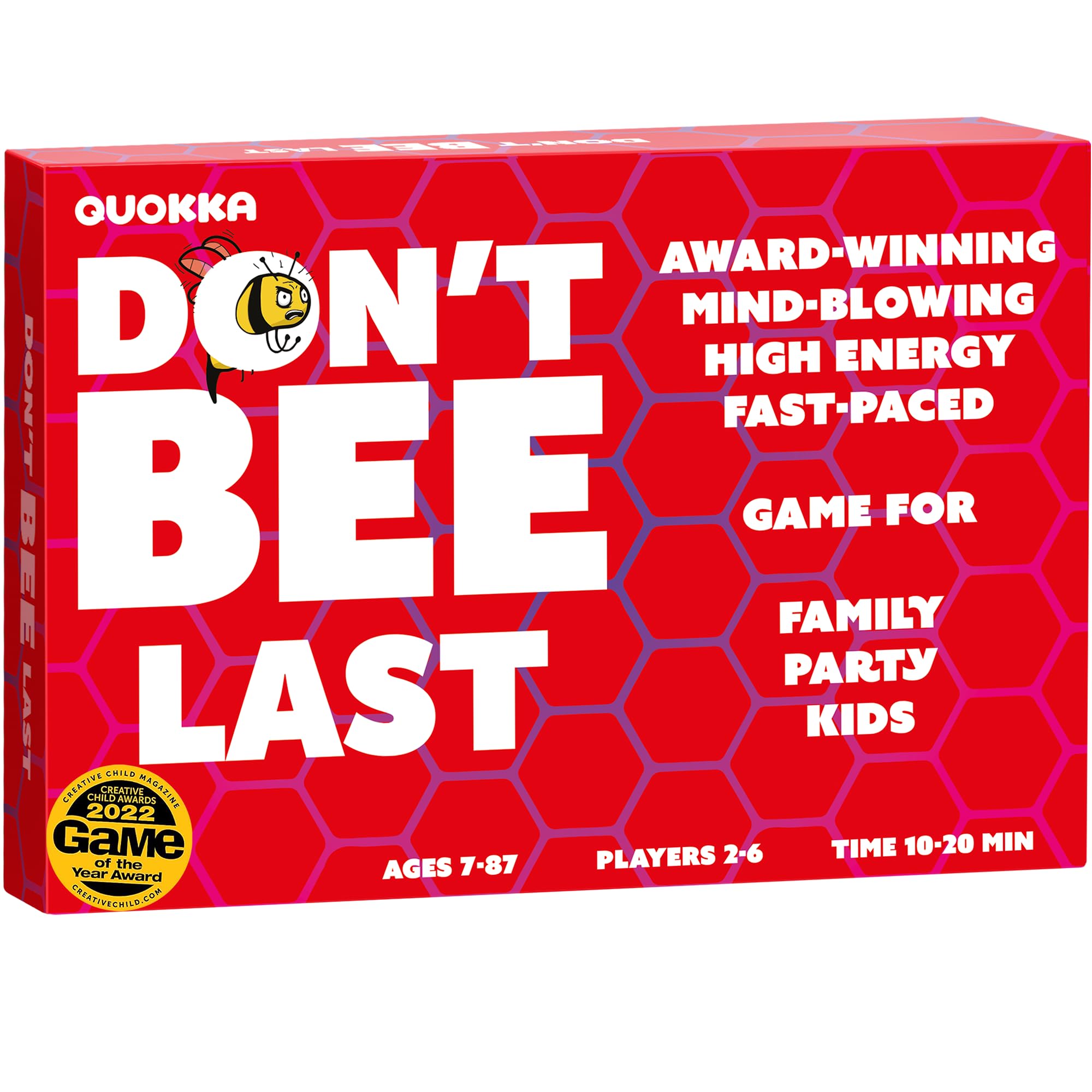
QUOKKA’s entry is a pure reflex game disguised as a brain challenge. Players take turns placing cards and shouting out the correct color based on a shifting rule set. Get it wrong and you pick up the pile. The BEE card adds a slap mechanic where everyone must hit the center pile — the last to slap gets “stung” and adds the pile to their hand. The chaos is genuine and infectious.
Designed for ages 6 and up, the game teaches hand-eye coordination and quick decision-making under pressure. The rules are simple enough to explain in under a minute, which is a huge advantage for parents who don’t want to spend prep time reading dense manuals. Rounds run 10-20 minutes, and the game works with 2-6 players, making it flexible for different group sizes.
That said, the cards are on the thinner side, which some users note, though they report the cards hold up well in practice. The slap mechanic can get rowdy — younger kids may need a gentle reminder to keep slaps controlled. For groups of mixed ages, the game naturally levels the playing field because reaction time matters more than reading skill or prior knowledge.
Why it’s great
- Learn-to-play time under 60 seconds — no rules fatigue before starting
- Slap mechanic creates bursts of laughter and physical energy
- Levels the playing field between kids and adults since reflex trumps knowledge
Good to know
- Cards feel thinner than premium decks — handle with care during enthusiastic slapping
- Can get loud and physical, so it may not suit calm or quiet settings
FAQ
How many cards per deck is ideal for a 7-year-old?
Can a 7-year-old play these games without adult help?
What do I do if my child gets frustrated losing?
Final Thoughts: The Verdict
For most families, the card games for 7 year olds winner is the Upgraded Kids Card Games Pack because it delivers six distinct games with durable card stock at an accessible entry point, covering everything from early matching to strategic play. If you want a game that builds communication and teamwork, grab the Asmodee Brick Like This! — its LEGO-based challenges create genuinely funny moments. And for a portable, high-laugh-count option that works in mixed-age groups, nothing beats the Exploding Kittens Original Edition.

Mo Maruf
I created WellFizz to bridge the gap between vague wellness advice and actionable solutions. My mission is simple: to decode the research and give you practical tools you can actually use.
Beyond the data, I am a passionate traveler. I believe that stepping away from the screen to explore new environments is essential for mental clarity and physical vitality.