Our readers keep the lights on and my smoothie glass nicely filled. As an Amazon Associate, I earn from qualifying purchases.
Car camping is supposed to be the comfortable alternative to backpacking, yet most gear setups still leave you tossing on a thin pad, waking up stiff, and spending the morning regretting your choices. The real issue isn’t the outdoors—it’s the equipment you’re trusting to deliver restful sleep after a long day of driving and exploring. A proper car camping rig should bridge the gap between rugged adventure and genuine comfort, and that starts with understanding what makes gear truly effective for vehicle-based trips.
I’m Mohammad Maruf — the founder and writer behind WellFizz. I’ve spent years analyzing market data, reading through thousands of verified reviews, and dissecting the technical specifications of outdoor gear to identify which products actually perform for real-world campers.
This buying guide distills that research into actionable recommendations to help you find the best car camping gear for your next trip, whether you prioritize sleeping comfort, tent versatility, or cold-weather insulation.
How To Choose The Best Car Camping Gear
Car camping gear differs from backpacking gear primarily in its emphasis on comfort over weight. You have the luxury of vehicle transport, so you can prioritize thickness, durability, and space. The two most important categories to focus on are your sleeping system and your shelter.
Mattress Thickness and Foam Composition
Thickness is the single most critical factor for sleeping comfort in a car camping mattress. A pad under 3 inches often leaves side sleepers feeling the ground through their hips and shoulders. Look for 4 to 4.5 inches of combined foam and air layers. Memory foam on top of a support foam base (often 30D/40D combinations) provides pressure relief without sacrificing stability. Waterproof, removable covers add longevity and easy cleaning after muddy trips.
SUV Tent Connectivity and Freestanding Design
An SUV tent extends your living space into your vehicle’s hatch, creating a protected pathway between the car and tent. The key spec here is the adjustable vehicle sleeve — it should fit different hatch sizes and seal tightly to keep bugs and rain out. A freestanding frame is invaluable because it allows you to use the tent independently when you want to park and explore without the attachment. Also consider pole material: aluminum poles are lighter and more durable than fiberglass, especially in windy conditions.
R-Value and Insulation for Four-Season Use
If you camp in spring, fall, or winter, the R-value of your sleeping pad determines how warm you stay. Standard car camping pads have R-values between 4 and 8. Higher numbers block more ground cold, which is essential for cold-weather comfort. Self-inflating foam pads naturally offer better insulation than pure air mattresses, making them the safer choice for unpredictable weather. Some premium foam and air hybrid pads achieve R-values above 10, suitable for freezing temperatures.
Quick Comparison
On smaller screens, swipe sideways to see the full table.
| Model | Category | Best For | Key Spec | Amazon |
|---|---|---|---|---|
| Lost Horizon Air & Foam Mattress | Air + Foam | All-Season Comfort | R-Value 13 | Amazon |
| Exped MegaMat Duo Queen | Self-Inflating | Luxury Car Camping | 4” Cored Foam | Amazon |
| Gaialoop 4-Inch Memory Foam | Memory Foam | Side Sleepers | 4” Total Thickness | Amazon |
| HEST Foamy Mattress Pad | Memory Foam | Compact Footprint | 8.8” Thickness | Amazon |
| UNP SUV Tent | SUV Tent | Family Camping | 10’ x 9’ x 78” | Amazon |
| JOYTUTUS SUV Tent | SUV Tent | Freestanding Needs | Double-Layer Rainfly | Amazon |
| Timber Ridge SUV Tent | SUV Tent | Tall Occupants | 7.1’ Center Height | Amazon |
In‑Depth Reviews
1. Lost Horizon Air & Foam Camping Mattress
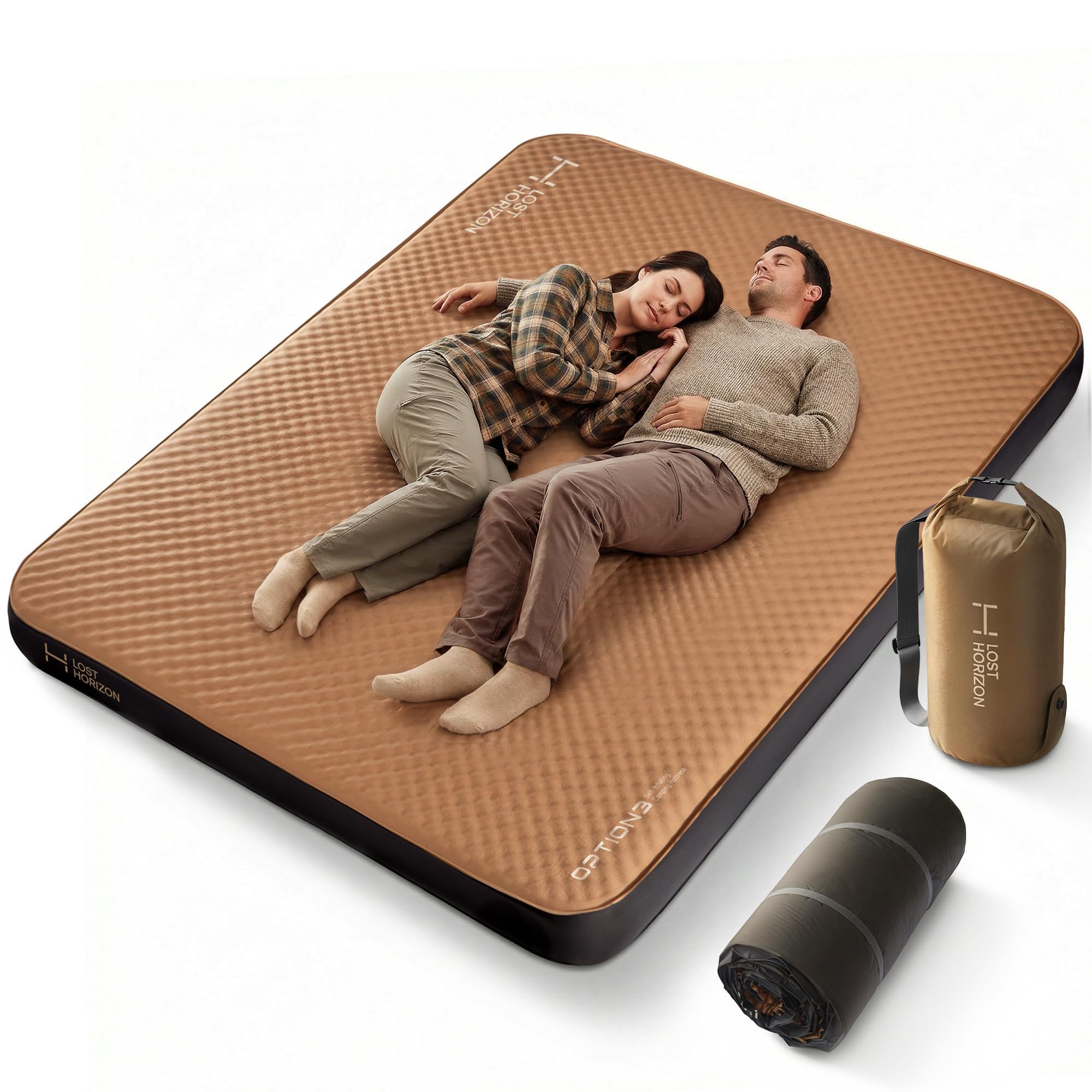
The Lost Horizon Air & Foam Mattress bridges the gap between a home bed and a camp pad with a 4.5-inch thick hybrid design that combines 13 pounds of foam filling with air chambers for adjustable firmness. The R-value of 13 is exceptionally high — most car camping pads top out around 8, making this one of the best insulated options for winter and shoulder-season camping. The queen size (80″ x 60″) offers enough room for two sleepers or one plus gear, and the 440-pound weight capacity accommodates a variety of body types without bottoming out.
The included portable air pump inflates the mattress in about one minute, and the valve system allows you to fine-tune the softness by adding or releasing air. The 30D stretch fabric cover feels soft rather than plasticky, and the foam core provides a silent sleeping surface — no crinkling or squeaking when you shift positions. Users consistently report that setup is fast and the mattress holds air for the entire trip without needing a top-off.
It is bulky when packed and weighs 17.6 pounds, so this is strictly vehicle-based camping gear, not for backpacking. Rolling the mattress back up takes more effort than a pure air pad, but the pump helps suck out air for a tighter roll. For anyone who values genuine sleep quality while car camping, this mattress delivers performance that rivals a budget home mattress.
Why it’s great
- R-Value 13 provides exceptional cold-weather insulation.
- Adjustable softness via air and foam combo suits all sleep positions.
- Silent surface without crinkling or squeaking.
Good to know
- Heavy and bulky — not suitable for backpacking.
- Rolling up requires effort; pump helps with deflation.
2. Exped MegaMat Duo Queen
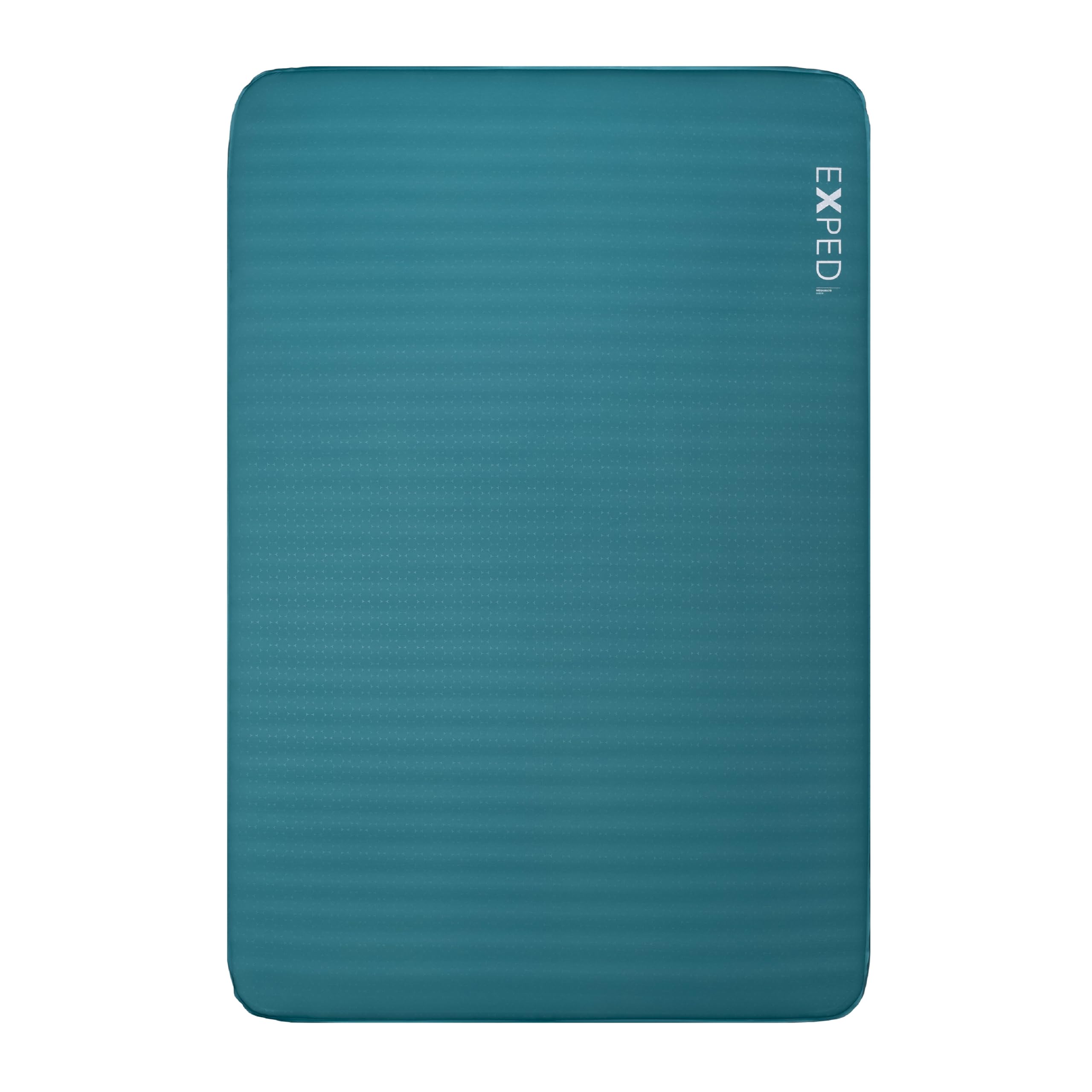
Exped is a heavyweight name in the camping mattress space, and the MegaMat Duo Queen lives up to that reputation. It uses a 4-inch open-cell polyurethane foam core with 30% more foam coring than previous versions, which prevents bottoming out even for larger side sleepers. The 3D vertical sidewall construction eliminates the tapered edges common on other pads, so you get the full sleeping surface without feeling like you might roll off. The R-value of 8.1 is solid for three-season use and can handle cold nights down to the teens with proper insulation underneath.
The 100% recycled 4-way stretch tricot fabric top feels soft and less sweaty than standard nylon, and the self-inflating design means you simply open the valve and let the foam expand. The included Top-Up Pump lets you dial in firmness easily — add a few pumps for more support, or let some air out for a softer feel. Two welded side handles make carrying the inflated mattress simple, and the oversized stuff sack accepts the roll without a fight.
At 11.9 pounds for the queen size, it is not ultralight, but it packs smaller than a full foam mattress like the HEST Foamy. Some users have reported durability issues with punctures from sharp objects (keys, rocks), so using a ground tarp is recommended. Overall, if you want a premium, home-bed feel that self-inflates quickly and holds air for a week, this is the gold standard for car camping sleep systems.
Why it’s great
- Self-inflating saves time and effort at camp.
- 3D sidewalls eliminate edge tapering for full surface use.
- Soft stretch tricot fabric feels like a real bed sheet.
Good to know
- Expensive — a major investment for occasional use.
- Some reports of punctures; a ground sheet is recommended.
3. Gaialoop 4-Inch Memory Foam Camping Mattress
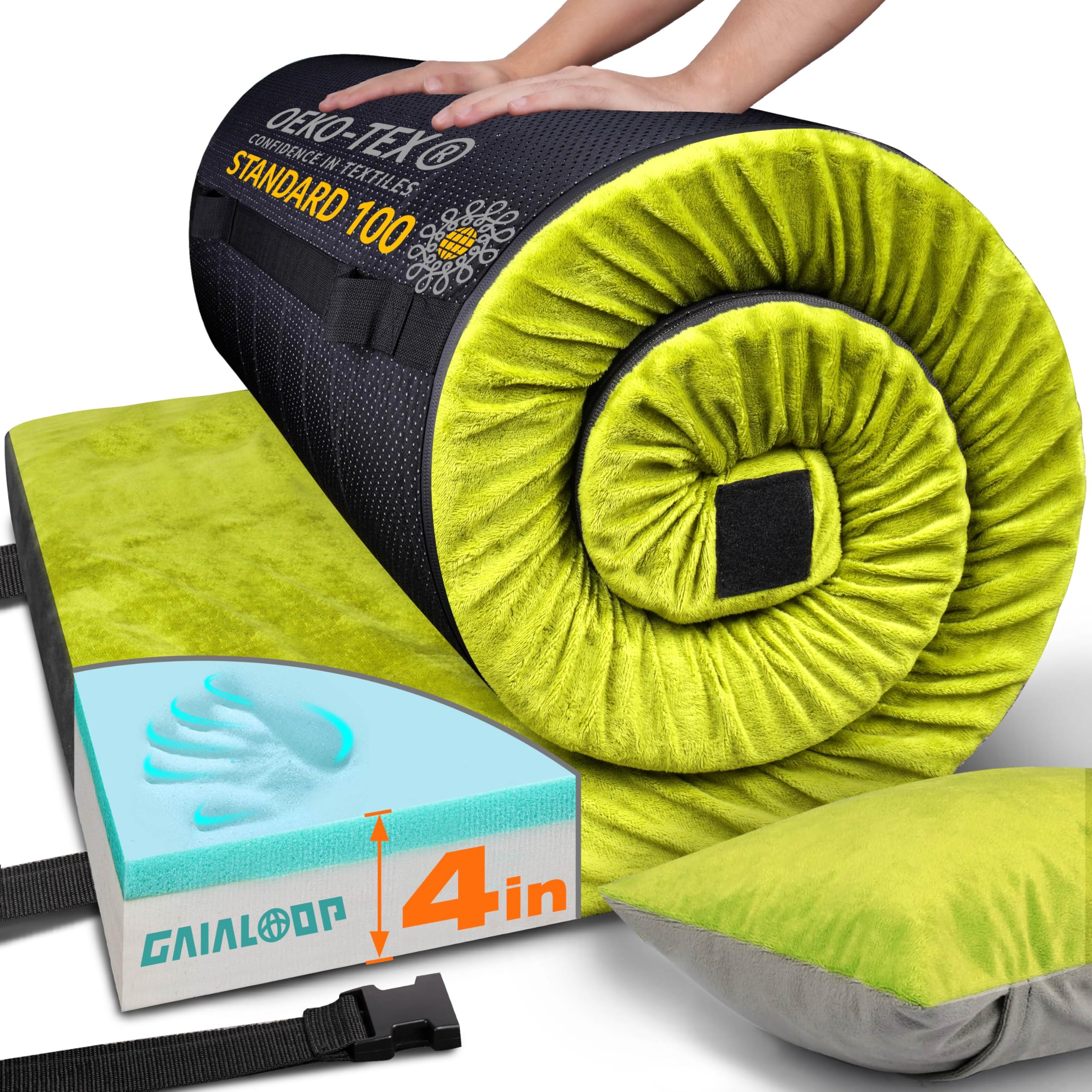
The Gaialoop 4-Inch Memory Foam Mattress proves you don’t need to spend a fortune for solid sleep support in a car camping setup. It combines a 30D support foam base with a 40D memory foam top layer, creating a 4-inch thick pad that fully supports side sleepers and eliminates the feeling of rocks or roots underneath. The avocado green color is a nice aesthetic departure from the sea of blue and gray, and the velvet-like plush fabric cover is removable and washable. The inner side of the cover includes a waterproof coating to protect the foam from ground moisture and rain.
At 13 pounds, it is substantial, and the rolled dimensions are roughly 2 feet in diameter and 5.5 feet long — it will take up a noticeable amount of trunk space. Multiple user reviews highlight that rolling the mattress back up is a two-person job, especially when trying to fit it into the included carrying case. The built-in compression straps help, but the foam’s memory properties make it spring back unless you apply body weight while rolling.
The pad comes with two foam chunk pillows that are basic but functional. The mattress is rated for car camping, road trips, and use in vans or RVs, and it can also double as a guest bed or floor mattress at home. For a budget-friendly entry point into comfortable car camping sleep, this pad offers the best thickness-to-price ratio in this guide. Just be prepared for the bulk and rolling challenge.
Why it’s great
- Excellent 4-inch thickness for side sleepers at a value price.
- Removable, washable, waterproof cover extends lifespan.
- OEKO-TEX certified materials — safe and odor-free.
Good to know
- Very bulky to store; requires two people to roll up tightly.
- Stuff sack zipper durability has been questioned by some users.
4. HEST Foamy Camping Mattress Pad

The HEST Foamy takes a different approach from air-and-foam hybrids by offering a solid memory foam block with an 8.8-inch thickness that delivers a truly plush sleeping experience. It uses two layers of high-performance memory foam engineered for body alignment and pressure point relief, and there is no pump, no valve, and no inflation step — just unroll and sleep. The integrated compression strap and durable handle make it relatively easy to transport despite the bulk, and the strap doubles as a welcome mat when unrolled, which is a clever design touch.
The 78″ x 30″ size fits most adults, but taller users or those over 215 pounds may find the 25-inch-wide version slightly restrictive for side sleeping — shoulders can overhang the edge. The moisture-resistant base prevents ground dampness from soaking into the foam, but you should let it air dry before rolling back up to avoid mildew. Pocket on the top edge is useful for stashing your phone or small items overnight.
This mattress is notably expensive for a pure foam pad without any air adjustment, and it is one of the bulkiest options here when rolled. It is ideal for car campers, van lifers, and overlanders who prioritize instant setup and maximum comfort over packability. Users consistently report sleeping better on this pad than on their home mattress, which is the highest compliment you can give a camping sleep system.
Why it’s great
- 8.8 inches of memory foam rivals a real bed.
- Zero setup — unroll and sleep, no pump needed.
- Integrated storage pocket and multi-use compression strap.
Good to know
- Very bulky when rolled — requires significant cargo space.
- High price point for a non-adjustable foam-only pad.
5. UNP SUV Tent for Camping

The UNP SUV Tent is designed for families who want the convenience of attaching their tent directly to the back of their vehicle. It measures 10 feet by 9 feet with a 78-inch center height, providing enough room for two queen air mattresses or multiple sleeping bags, and tall enough for most adults to stand and change comfortably. The adjustable vehicle sleeve fits a wide range of SUVs, hatchbacks, and crossovers, and the attachment is secured with elastic loops and a weather flap that seals the connection against rain and drafts.
Setup is straightforward — the tent uses a standard pole structure (fiberglass) that clicks into place with color-coded sleeves, and most users report assembly times under 15 minutes. Four mesh windows plus a mesh roof provide excellent ventilation, and the rainfly covers the top to keep dew and light rain off. The tent can also be used as a freestanding standalone unit, which adds flexibility if you want to park separately for day trips.
Reviewers consistently praise the space, easy assembly, and compatibility with popular vehicles like the Chevy Traverse and various SUVs. The main downsides are that the nylon mesh windows are relatively thin and can be punctured by wildlife (raccoons have been reported), and the instructions are somewhat sparse. At this price point for a 6-person SUV tent, it offers strong value for families looking for a tailgate camping solution.
Why it’s great
- Spacious 10’x9′ floor fits the whole family comfortably.
- Adjustable sleeve fits most SUVs and hatchbacks.
- Usable as a standalone tent when disconnected from the vehicle.
Good to know
- Thin mesh windows may not withstand animal interactions.
- Instructions are sparse; setup requires some intuitive assembly.
6. JOYTUTUS SUV Tent with Rainfly

The JOYTUTUS SUV Tent distinguishes itself with a true freestanding frame that lets you set it up anywhere, attach it to your car, or even leave it standing while you drive away. The 7.7-foot square footprint fits 4-6 adults comfortably, and the 6.9-foot center height is adequate for most people to stand upright. The double-door eave design expands the lighting surface and helps rainwater drain quickly, while the PU2000 waterproof coating on the 210D polyester oxford fabric provides reliable protection in moderate rain.
Aluminum poles are a step up from fiberglass — they are lighter, resist bending in wind, and won’t corrode over time. The double-layer construction with a full-coverage rainfly adds privacy and UV protection. Two mesh storage bags inside the tent keep small items organized, and the tent packs down into a carry bag that is manageable for car camping. Compatibility with Tesla Model Y and other popular hatchbacks is frequently mentioned positively by users.
There are some reality checks: the vehicle sleeve attachment can leave gaps that let ants or small bugs in, especially on vehicles with contoured hatches. Some waterproofing issues have been noted at the sleeve attachment point during heavy rain. The setup is easier with two people, and solo setup can be awkward given the freestanding pole design. For campers who want the ability to drive away from their tent without taking everything down, this is a strong mid-range option.
Why it’s great
- Freestanding design allows drive-away capability.
- Aluminum poles are lighter and more durable than fiberglass.
- Double-door eave design aids ventilation and rain drainage.
Good to know
- Gaps at vehicle sleeve can let insects inside.
- Some water intrusion reported at sleeve connection in heavy rain.
7. Timber Ridge SUV Camping Tent
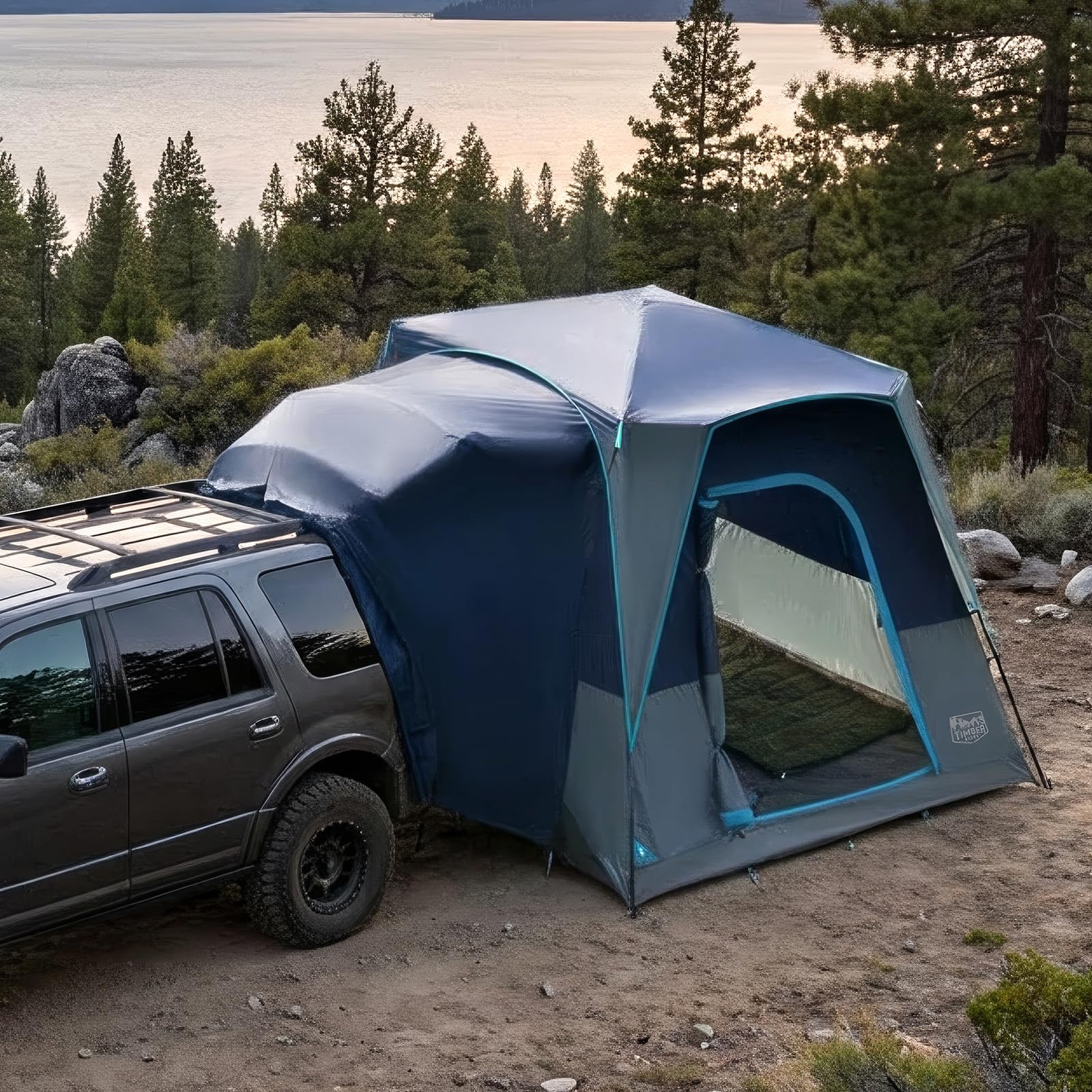
The Timber Ridge SUV Tent prioritizes vertical space with a 7.1-foot center height that comfortably accommodates tall campers who hate crouching. The 10-foot by 8-foot floor area sleeps up to 5 people, and the tunnel-style shape provides an elongated interior that works well for cots or arranging gear along the sides. The adjustable vehicle sleeve uses elastic clips and suction cups to create a sealed connection to your SUV or hatchback, and the integrated E-port lets you run an extension cord inside for charging devices.
The tent body is made from PU2000 waterproof-coated polyester taffeta, and the included rainfly adds an extra layer of protection. Two mesh windows and a top mesh skylight provide decent airflow, though the ventilation is not as generous as some competition with side mesh panels. Setup involves assembling separate pole sets for the tent body and the rainfly, and the process takes about 30 minutes the first time — labeling the poles helps speed future setups.
User feedback highlights excellent weather resistance, with the tent standing firm in heavy wind and rain when properly staked and guyed out. The spacious interior is praised by families and couples bringing gear, and the ability to detach the tent and use it standalone is a plus. The main drawback is that the tunnel design can sway in strong winds until fully anchored, so guylines are essential. For tall campers or families wanting a roomy basecamp with vehicle access, this tent delivers well above its price class.
Why it’s great
- 7.1-foot center height suits tall individuals.
- Excellent weather resistance with PU2000 coating and rainfly.
- E-port for power cord access inside the tent.
Good to know
- Tunnel design requires proper guylines in windy conditions.
- Initial setup takes around 30 minutes; pole identification could be better.
FAQ
Can I use a backpacking sleeping pad for car camping?
How do I attach an SUV tent to a vehicle with a spoiler?
Final Thoughts: The Verdict
For most users, the best car camping gear winner is the Lost Horizon Air & Foam Mattress because its hybrid air-and-foam design delivers adjustable comfort, an R-value of 13 for all-season use, and a home-bed feel without the bulk of a solid foam block. If you want unmatched vertical space and vehicle connectivity for family trips, grab the UNP SUV Tent. And for the ultimate no-hassle setup where comfort is the only priority, nothing beats the HEST Foamy Mattress Pad.

Mo Maruf
I created WellFizz to bridge the gap between vague wellness advice and actionable solutions. My mission is simple: to decode the research and give you practical tools you can actually use.
Beyond the data, I am a passionate traveler. I believe that stepping away from the screen to explore new environments is essential for mental clarity and physical vitality.