Our readers keep the lights on and my smoothie glass nicely filled. As an Amazon Associate, I earn from qualifying purchases.
Canvas sleeping bags trade pack weight for unparalleled durability, natural breathability, and a quiet, non-plastic feel against the skin. Unlike nylon or polyester shells, a tight-weave cotton canvas resists punctures, snags, and the morning condensation that leaves synthetic bags clammy. For car campers, truck hunters, and cabin owners who drive to their campsite, a canvas bag delivers a thicker, warmer, and far more rugged sleep system than any ultralight alternative.
I’m Mohammad Maruf — the founder and writer behind WellFizz. I’ve spent hundreds of hours analyzing outdoor gear specifications, comparing insulation densities, shell fabric weights, zipper gauge ratings, and real-world temperature performance across dozens of canvas sleeping bags to find the models that truly earn their place in your duffel.
My goal is to help you cut through the noise and identify the right canvas sleeping bag for your specific camping style, whether you need extreme winter warmth, a classic cowboy bedroll for base camp, or a budget-friendly flannel-lined workhorse that can take a beating season after season.
How To Choose The Best Canvas Sleeping Bag
Picking a canvas bag is different from picking a backpacking mummy bag. You’re optimizing for toughness, warmth, and comfort near the vehicle — not grams in your pack. Focus on these factors first.
Canvas Weight and Shell Durability
Canvas is measured in ounces per square yard. A 12 oz cotton duck is standard for most car-camping bags — strong, breathable, and moderately heavy. Bags using 15 oz or 16 oz canvas (like the Montana Canvas bedrolls) are built for decades of abuse, often with waxed finishes for weather resistance. Heavier canvas also chills less against your skin in cold air, adding a passive thermal layer to the system.
Insulation Type and Temperature Rating
Most canvas bags use synthetic polyester or hollow-fiber insulation. Look for two-layer offset construction, which staggers the insulation seams so heat can’t leak through a stitch line. The weight of the fill (often 6 to 9 pounds) matters more than a single temperature number. A bag rated to -10°F with 9 pounds of fiberfill will generally outperform a thinner -20°F bag with only 4 pounds of fill, but expect a significant weight penalty.
Zipper Quality and Draft Management
Canvas bags demand heavy-duty zippers — look for #8 or #10 gauge metal or reinforced plastic zippers that won’t bind in the thick fabric. Draft tubes (insulated flaps behind the zipper) and shoulder draft collars prevent heat from escaping through the closure. If you plan to zip two bags together for shared sleeping, check whether the zipper is side-specific or compatible with identical models.
Size, Shape, and Weight Trade-Offs
Canvas bags are almost always rectangular or oversized rectangular, offering far more legroom and elbow space than mummy bags. Expect lengths of 80 to 94 inches and widths up to 42 inches. The trade-off is bulk: a typical canvas bag weighs 8 to 13 pounds and often requires a dedicated duffel or compression straps. If you have to carry it more than 100 yards from the truck, consider a lighter option.
Bedroll vs. Traditional Sleeping Bag
Bedrolls (cowboy-style) are essentially weatherproof canvas covers that wrap around your own sleeping bag or wool blankets. They provide a waterproof or water-resistant outer layer, protect your bag from dirt and wear, and can be used in warm weather as a standalone ground sheet. Traditional canvas sleeping bags have fixed insulation sewn in — simpler to use, but less modular for temperature layering.
Quick Comparison
On smaller screens, swipe sideways to see the full table.
| Model | Category | Best For | Key Spec | Amazon |
|---|---|---|---|---|
| AGEMORE 0° Canvas | Mid-Range | Flannel comfort with removable liner | 12 lb total weight, 94.5″ x 35.5″ | Amazon |
| Stansport Grizzly -10°F | Mid-Range | Wet-weather reliability | 6 lb fill, 81″ x 39″ | Amazon |
| TETON Sports Deer Hunter | Premium | Extreme cold hunting (tested to -20°F) | 8.5 lb, 90″ x 39″, SuperLoft fill | Amazon |
| Guide Gear -30°F | Mid-Range | Maximum fill for deep cold | 12.7 lb, 90″ x 39″, 9 lb fill | Amazon |
| ALPS OutdoorZ Redwood -10°F | Premium | Zip-together two-person setup | 11.5 lb, 80″ x 38″, #8 zipper | Amazon |
| ALPS OutdoorZ Redwood -25°F | Premium | Arctic-grade winter camping | 13 lb, 80″ x 38″, TechLoft fill | Amazon |
| Montana Canvas Bedroll | Premium | Classic cowboy bedroll, 15 oz canvas | 8 lb, 80″ x 42″, dual YKK zippers | Amazon |
| TrailMax Cavalry Bedroll | Premium | Lightweight bedroll for motorcycle/horse camping | 5 lb, 84″ x 33″, 12 oz duck canvas | Amazon |
| 1844 Helko Werk Waxed Bedroll | Premium | Waterproof waxed canvas, heirloom build | 16 oz waxed canvas, 80″ x 40″ | Amazon |
In‑Depth Reviews
1. TETON Sports Deer Hunter Sleeping Bag

The TETON Sports Deer Hunter is the benchmark for canvas bag warmth. Users consistently report comfort in temperatures as low as -20°F, relying on the SuperLoft Elite Single Channel Hollow Fiber insulation and double-layer offset construction that eliminates cold spots at the stitch lines. The 8.5-pound bag uses a 90-inch long, 39-inch wide rectangular cut that gives tall sleepers enough legroom without wasting heat the way some overstuffed bags do.
What separates this bag from budget options is the half-circle mummy-style hood with a drawstring — a feature rarely found on canvas bags. It cinches around your face to trap radiant heat, and the zipper and shoulder draft tubes prevent the cold leakage that plagues simplified designs. The canvas shell is described as “Teton Tough,” with owners reporting over five years of heavy truck-camping and hunting use with no fabric tears.
The main trade-off is packability: this bag is bulky and heavy, requiring a large duffel or the included compression straps. It’s not suitable for backpacking. A few users note that the zipper can occasionally catch on the flannel lining if you’re not careful. But for a vehicle-based winter bag tested by thousands of hunters and cold-sleepers, this is the most reliable canvas option on the market.
Why it’s great
- Proven warmth in sub-zero conditions with no cold spots
- Mummy-style hood with drawstring for heat retention
- Durable canvas shell survives years of truck-bed and tent-floor abuse
Good to know
- Very bulky; not suitable for backpacking or carrying more than 100 yards
- Zipper can snag on flannel lining if rushed
2. Stansport Grizzly -10°F Canvas Sleeping Bag

The Stansport Grizzly is a classic rectangular canvas bag built around one standout claim: its 6 pounds of Poly-Therm insulation retains insulating efficiency even when wet. That’s a critical advantage for hunters and campers who face rain, melting snow, or tent condensation. The cotton canvas shell and 100% cotton flannel liner combine for a breathable sleep environment that resists the clammy sweat-out common in unbreathable synthetics.
At 81 inches long and 39 inches wide, the Grizzly fits a 6-foot-1 adult comfortably, with the flannel lining laying flat and resisting the twisting that can happen inside slicker nylon shells. The double-layer offset construction adds another thermal barrier. Multiple verified owners have used this bag nightly in a truck cab through two winters, noting that the heavy-duty zipper doesn’t snag on the lining — a common failure point in mid-priced canvas bags.
The Grizzly lacks a mummy hood and doesn’t have a standard EN temperature rating, so it’s not the lightest or most technical option. But for the price, it offers exceptional durability and moisture resilience. Some users recommend adding a warm hat at 20°F since the open rectangular hood lets heat escape from the top. If you camp in damp conditions and need a bag that keeps working when wet starts creeping in, this is a solid choice.
Why it’s great
- Poly-Therm insulation stays warm when damp
- Heavy-duty zipper that doesn’t snag on flannel
- Large rectangular cut prevents twisting and provides comfort for taller sleepers
Good to know
- No mummy hood; heat can escape from the top in colder temps
- No standardized temperature rating for precise comparison
3. Guide Gear -30°F Canvas Sleeping Bag

Guide Gear packs more raw insulation than nearly any other canvas bag at its price point. With 9 pounds of fiberfill inside a cotton duck canvas shell, this bag is rated to -30°F and has been verified by users sleeping comfortably in sub-zero conditions. The rectangular shape is unusually generous at 39 by 90 inches, giving side-sleepers room to shift without compressing the insulation in the chest and hip areas.
The attached hood uses a drawstring to seal in heat, though some users note the head area is cut wide, so the drawstring does most of the thermal work. The two-way zipper allows you to vent from the foot end if temperatures rise during the day, and the included sleeping bag straps simplify rolling the massive 12.7-pound bag into a transportable cylinder. Several reviews from tall campers (6-foot-8) report a perfect fit, which is rare for cold-weather canvas bags.
The main downside is aesthetic stitching that can fray on the exterior after extended use, though this doesn’t affect the bag’s thermal performance. The overall bulk means you need a car or truck to move it. At this price for this much fill, the Guide Gear bag is the most affordable way to get genuine -30°F-rated canvas protection for stationary winter camps.
Why it’s great
- 9 pounds of fiberfill for extreme cold at a budget-friendly price
- Attached hood with drawstring for head warmth
- Generous 39″ width provides room for side-sleepers and taller users
Good to know
- Very heavy at 12.7 pounds; requires vehicle transport
- Exterior stitching aesthetics may deteriorate over long-term use
4. AGEMORE 0° Canvas Sleeping Bag
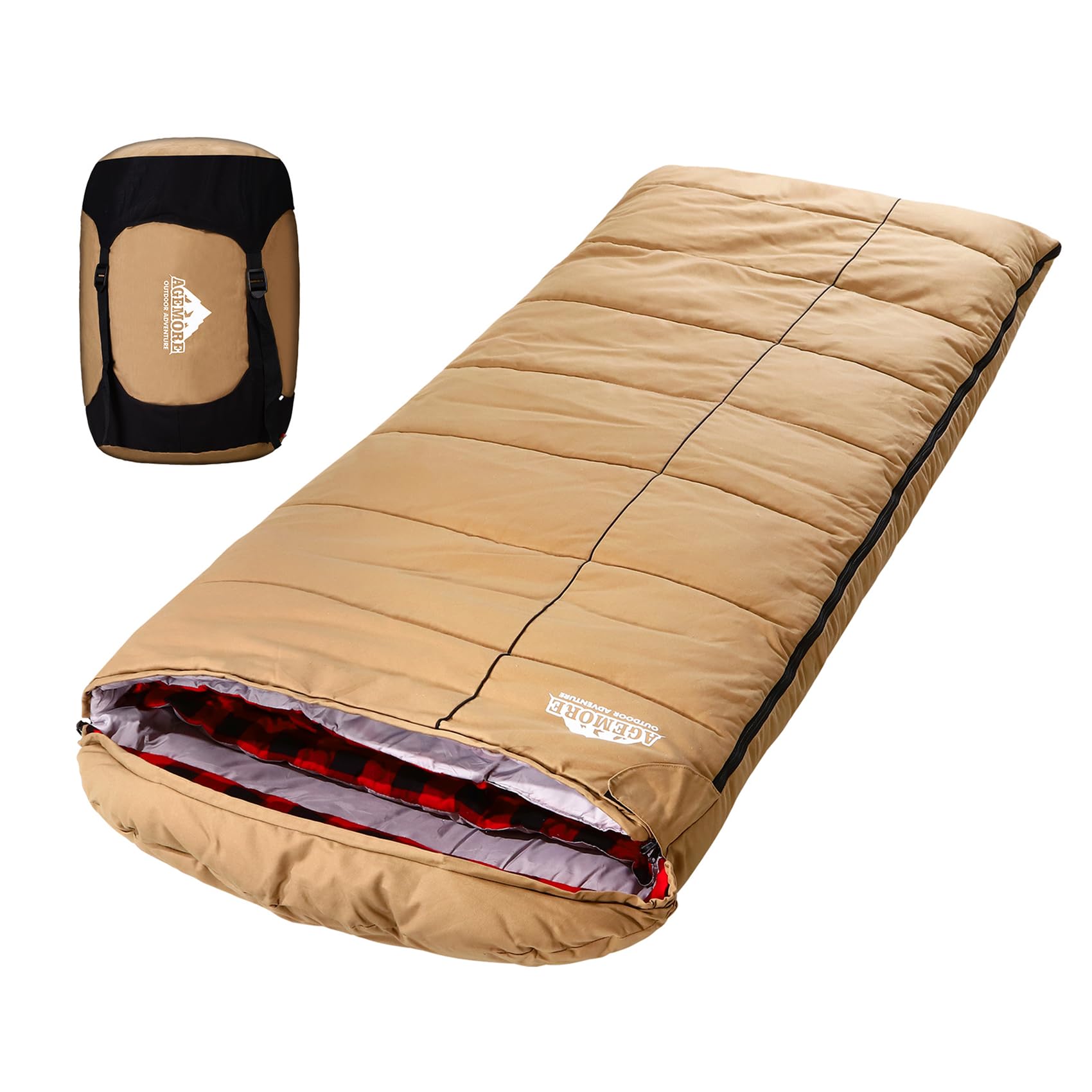
The AGEMORE 0° canvas bag stands out for its convertible system: the 145 GSM cotton flannel inner layer is a separate bag that can be removed and used as a stand-alone sleeping bag in warmer seasons. This gives you two-season utility from a single purchase. When combined, the two-layer offset construction keeps you warm down to 14°F, with the heavy-duty 270 GSM canvas exterior providing excellent scratch and moisture resistance.
At 94.5 inches long and 35.5 inches wide, this is one of the longest canvas bags available, accommodating tall sleepers who often find their feet pressed against the bottom of standard 80-inch bags. The drawstring at the shoulder cinches down to prevent warm air from escaping, and the foot-vent zipper allows you to stick one or both feet out on milder nights without unzipping the entire bag.
Some users report that the zipper can be loose, sliding down slightly during sleep if not positioned at the very top of its track. This is a minor annoyance rather than a failure, but if you toss and turn, you may need to re-zip occasionally. The bag weighs about 12 pounds, making it another dedicated car-camping piece. For the price, the dual-liner versatility and size are hard to beat.
Why it’s great
- Removable flannel liner works as a separate warm-weather sleeping bag
- Extra-long 94.5″ length for tall sleepers
- Foot vent zipper for temperature regulation
Good to know
- Zipper can shift slightly during sleep if not fully secured
- Heavier than some competitors at 12 pounds
5. ALPS OutdoorZ Redwood -10°F Sleeping Bag

ALPS OutdoorZ redesigned the Redwood line to address a common complaint with canvas bags: zipper failure. The heavy-duty #8 zipper on the Redwood -10°F is robust enough to survive years of frequent use, and the dual full-length zippers allow two identical Redwood bags to zip together into a massive two-person sleeping system. For couples who winter camp in a van, truck, or tent, this feature alone adds enormous value.
The cotton canvas shell has a smooth burlap-like texture that’s quiet and doesn’t rustle like nylon. Inside, the 100% cotton flannel liner is thick and soft, and the oversized rectangular shape at 38 by 80 inches provides ample room for a single plus-size user or two average-sized adults zipped together. The -10°F rating has been verified in field tests down to 18°F, with users noting they felt warm even without a furnace.
At 11.5 pounds, the Redwood is heavy but not the heaviest in this category. The included compression straps help manage the rolled size. Some users note that the bag is too warm for summer use above 50°F — the heavy canvas and thick insulation trap heat aggressively. If you need a mid-range canvas bag that can share warmth on cold nights, the Redwood’s zip-together capability makes it a category standout.
Why it’s great
- Two identical bags can zip together for shared warmth
- Heavy-duty #8 zipper resists snagging and binding
- Quiet canvas exterior with soft flannel lining
Good to know
- Too warm for summer use above 50°F
- Heavy at 11.5 pounds; car camping only
6. ALPS OutdoorZ Redwood -25°F Sleeping Bag
The -25°F version of the ALPS OutdoorZ Redwood pushes the canvas bag concept to its thermal limit. It uses TechLoft Silver Insulation — multi-hole micro-denier fibers with a siliconized finish that provides higher loft per gram than standard polyester fill. Combined with the two-layer offset construction, this eliminates the stitch-line cold spots that often plague heavily insulated bags. Users have reported comfort at 18°F and trust it to perform down to its -25°F rating with proper layering.
Construction quality is a step above the cheaper canvas options. The zipper is a thick, chunky plastic model that glides smoothly without catching on the flannel, and the foot-vent zipper allows quick cooling without full unzip. The canvas outer is rugged but not wax-coated, so it’s water-resistant rather than waterproof. At 13 pounds, the Redwood -25°F is heavy — the rolled package is about 21 inches long and 17 inches tall, which will dominate your vehicle’s cargo area.
This is not a bag for mild conditions. It’s specifically designed for northern winter camping, ice fishing, and power-outage emergencies where ambient temperatures stay below freezing for days. If you need a -25°F-rated canvas bag, the Redwood delivers reliable warmth, but be sure you actually need that rating: it’s overkill for any temperature above 20°F.
Why it’s great
- TechLoft Silver insulation delivers high-loft warmth at a manageable weight
- Two-layer offset construction eliminates cold spots at seams
- Rugged canvas shell and chunky zipper built for winter abuse
Good to know
- Extremely bulky and heavy at 13 pounds
- Overkill for temperatures above 20°F; can cause overheating
7. Montana Canvas Outfitter Bedroll

The Montana Canvas Outfitter Bedroll is built from Grade A 15 oz cotton duck canvas, making it one of the most durable fabric choices in this lineup. At 80 by 42 inches, it’s extremely wide, providing maximum sleeping space when you unroll it. This is a bedroll, not a traditional sewn-in sleeping bag — it’s designed to wrap around your existing sleeping bag or wool blankets, adding a rugged, weather-resistant shell that protects your insulation from dirt, campfire sparks, and morning dew.
Dual full-length YKK zippers allow you to enter and exit from either side or open the bedroll completely flat to use as a ground pad. The oversized hood can be rolled up for warmer nights or cinched tight when temperatures drop. Three buckle straps make storage easy, and the natural untreated canvas can be waxed later if you want additional water resistance. Users have paired this with everything from army surplus wool blankets to modern 0°F down bags, consistently praising the quality of the stitching and the heft of the zippers.
Because it’s a shell rather than self-contained insulation, you must provide your own sleeping bag or blankets. That modularity is a pro for experienced campers who want to customize their sleep system by season, but a con for beginners who just want to unzip and climb in. It also requires more setup time — you need to lay the bedroll flat, position your pad and bag inside, then zip it closed around you.
Why it’s great
- 15 oz Grade A canvas is among the toughest shell materials available
- Dual YKK zippers allow left, right, or flat-open configuration
- Modular design accepts any sleeping bag or blanket combination
Good to know
- Requires a separate sleeping bag or blankets — not a standalone insulated bag
- Setup takes longer than a traditional sleeping bag
8. TrailMax Canvas Cavalry-Style Cowboy Bedroll

TrailMax’s Cavalry-Style Bedroll uses a lighter 12 oz pre-shrunk cotton duck canvas to shave pack weight compared to the heavier 15 oz Montana Canvas bedroll. At just 5 pounds for the shell itself, this is the lightest canvas sleep system cover in our list, making it a reasonable choice for motorcycle campers, horse packers, or anyone who has to strap gear to a vehicle’s exterior. The 84-by-33-inch size with a deep 8-inch gusset provides plenty of room for a sleeping pad plus your bag.
One of the best design choices is the flannel lining “pocket” that holds your sleeping pad in place — this prevents the common annoyance of a pad sliding sideways overnight. The 36-inch head flap provides generous coverage for your pillow or a stuffed jacket, and the dual heavy-duty zippers run the full length of the bedroll. Owners have used this setup on multi-day motorcycle trips, rolling it up with pad and bag inside for a self-contained sleep system that straps directly to the bike.
The 12 oz canvas is less abrasion-resistant than the 15 oz Montana Canvas option, and the bedroll has no built-in waterproofing — you may want to add a wax treatment if you regularly camp in rain. The flannel inner is soft but should be kept reasonably clean to prevent mold growth in humid climates. For a lightweight, packable canvas bedroll that holds everything together, this is a well-thought-out piece of gear.
Why it’s great
- Lightest canvas bedroll at 5 pounds — packs well for motorcycles and horses
- Flannel pad pocket keeps sleeping pad from sliding during the night
- 36-inch head flap offers generous pillow and face coverage
Good to know
- 12 oz canvas is less durable than heavier canvas options
- Not pre-treated for water resistance; may need wax application
9. 1844 Helko Werk Waxed Canvas Cowboy Bedroll

Helko Werk’s Cowboy Bedroll is the apex of canvas sleep systems. The shell is made from 16 oz heavy-duty waxed cotton canvas — the heaviest, most weather-resistant fabric in our review. The beeswax finish makes this bedroll genuinely waterproof, not just water-resistant. Users have reported standing under a shower with the bag and staying dry. The full-grain leather straps are handmade in Germany and adjustable for different packed volumes, adding a level of craftsmanship rare in outdoor gear.
The dimensions (80 by 40 inches) fit a person up to 6-foot-2 comfortably. Dual full-length zippers include a rain fly that blocks insects and prevents moisture from seeping through the zipper track. Because this is a bedroll (not a sewn-in insulated bag), you must add your own wool blanket or sleeping bag. The stiff waxed canvas requires a break-in period — initial use may feel rigid, but the canvas softens and develops character over time. Many owners consider this a lifetime purchase that can be passed down.
The biggest barrier is the high investment. There’s no budget alternative to this product; it competes with handmade bedrolls from small Montana shops and European outfitters. It’s also heavy and very stiff when new. But if you want a waterproof, breathable, nearly indestructible canvas sleep system that can function as a ground tarp, picnic blanket, and bed roll for decades, the Helko Werk bedroll is the definitive choice. It’s the last canvas sleep system you’ll buy.
Why it’s great
- 16 oz waxed cotton canvas is genuinely waterproof, not just resistant
- Handmade German full-grain leather straps with secure hardware
- Rainfly over zipper blocks insects and moisture entry
Good to know
- Very high investment — a true heirloom purchase
- Waxed canvas is stiff when new and requires break-in period
- Requires separate sleeping bag or wool blankets
FAQ
Can a canvas sleeping bag be used for backpacking?
How do I clean and maintain a canvas sleeping bag?
What is the difference between a canvas bedroll and a canvas sleeping bag?
Do canvas sleeping bags need waterproofing?
Are canvas bags warmer than synthetic nylon bags?
Final Thoughts: The Verdict
For most buyers, the canvas sleeping bag winner is the TETON Sports Deer Hunter because it combines a proven sub-zero-ready insulation system, a genuine mummy-style hood, and a tough canvas shell that has survived years in the field without failure. If you need a wet-weather workhorse that retains warmth even when damp, the Stansport Grizzly -10°F is the smart pick. And for the ultra-cold hunter or ice-fisher who demands the maximum fill weight at a budget-friendly price, nothing beats the Guide Gear -30°F’s 9 pounds of fiberfill insulation.

Mo Maruf
I created WellFizz to bridge the gap between vague wellness advice and actionable solutions. My mission is simple: to decode the research and give you practical tools you can actually use.
Beyond the data, I am a passionate traveler. I believe that stepping away from the screen to explore new environments is essential for mental clarity and physical vitality.