Our readers keep the lights on and my smoothie glass nicely filled. As an Amazon Associate, I earn from qualifying purchases.
Opening a can of minestrone and finding a pale broth with three beans and a single piece of pasta is a disappointment no lunch deserves. The best canned minestrone soup balances a rich tomato base, tender vegetables, hearty beans, and enough pasta to feel like a proper meal—not a sad starter. After combing through labels, sodium levels, and real customer feedback, I’ve sorted the options that actually deliver on that promise.
I’m Mohammad Maruf — the founder and writer behind WellFizz. My research focuses on analyzing nutrition panels, ingredient sourcing, and long-term shelf stability for shelf-stable pantry items that families actually rely on.
Whether you need a quick workday lunch, a campfire meal, or a vegan-friendly pantry staple, this guide covers the top choices for canned minestrone soup that tastes closer to homemade.
How To Choose The Best Canned Minestrone Soup
Not all canned minestrone is created equal. The difference between a watery disappointment and a satisfying bowl comes down to a few key factors you can check in seconds on the label.
Check the protein and fiber content first
Minestrone is supposed to be a hearty vegetable soup with beans and pasta. If a can delivers less than 6 grams of protein or under 4 grams of fiber per serving, you’re mostly paying for salted water and tomato paste. The beans are your main protein source in most versions, so look for kidney beans, chickpeas, or white beans near the top of the ingredient list.
Sodium: the hidden gotcha
Canned soup is convenient, but many brands push sodium past 800 mg per serving — that’s over a third of your daily recommended limit. If you’re watching your blood pressure or just prefer not to feel bloated after lunch, aim for cans under 600 mg per serving. Some organic and premium brands do better here, though you may trade a bit of shelf life for the lower salt.
Consider the pasta texture and size
Overcooked, mushy pasta ruins the texture of an otherwise decent minestrone. Larger pasta shells and ditalini tend to survive the canning process better than tiny or fancy shapes. Reading recent reviews about pasta texture gives you a direct window into how the manufacturer handles cooking and retorting.
Know your use case: pantry staple vs. camping meal
If you’re stocking a home pantry, standard 19-ounce cans from Progresso or Campbell’s Chunky work well. For camping, backpacking, or emergency kits, freeze-dried pouch options like ReadyWise save weight and require no can opener — just add hot water. The trade-off is a slightly different texture, but the shelf life measured in years makes them worth considering.
Quick Comparison
On smaller screens, swipe sideways to see the full table.
| Model | Category | Best For | Key Spec | Amazon |
|---|---|---|---|---|
| Campbell’s Chunky Minestrone with Italian Sausage | Chunky | High-protein lunches | 17g protein per can | Amazon |
| Pacific Foods Organic Tuscan-Style White Bean Minestrone | Organic | Clean-label everyday meals | 10g protein + 8g fiber | Amazon |
| Progresso Minestrone Vegetable Classics | Classic | Reliable pantry staple | 19 oz cans, no artificial colors | Amazon |
| Amy’s Organic Hearty Minestrone | Vegan | Plant-based, gluten-free meals | USDA Organic, vegan, gluten free | Amazon |
| ReadyWise Simple Kitchen Soup Sampler | Freeze-Dried | Camping and emergency kits | 40 servings, 25-year shelf life | Amazon |
In‑Depth Reviews
1. Campbell’s Chunky Minestrone With Italian Sausage Soup
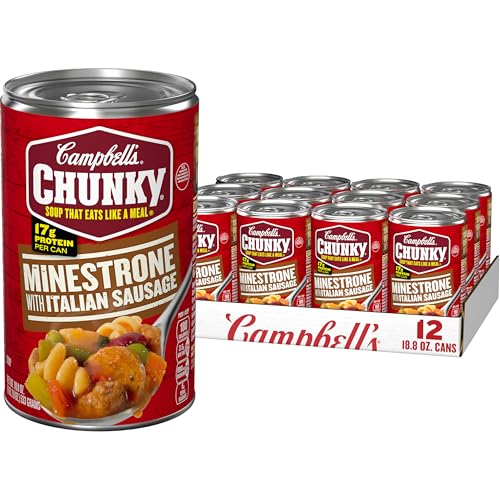
Campbell’s Chunky Minestrone with Italian Sausage stands out for one simple reason: 17 grams of protein per 18.8-ounce can. That makes it a legitimate meal replacement rather than a side dish. The Italian sausage adds a savory depth that most canned minestrones lack, and the chunky vegetable-to-broth ratio is generous enough that you rarely feel shortchanged.
The case of 12 cans works well for families, office lunches, or cold-weather camping trips where weight isn’t your primary concern. Customers consistently mention that this variety is hard to find in local stores, which makes the bulk Amazon purchase a practical workaround rather than a luxury. The soup heats quickly in a microwave-safe bowl or on a camp stove.
One recurring note from negative feedback: occasionally a case arrives short a can, so checking the contents upon delivery is wise. For a filling, protein-forward minestrone that actually tastes like sausage and vegetables rather than salt water, this is the benchmark.
Why it’s great
- 17g protein per can satisfies hunger for hours
- Italian sausage gives real flavor depth, not just broth
- Hard to find locally, making the case price a valuable option
Good to know
- Case count isn’t always accurate — verify all 12 cans upon arrival
- Higher sodium than organic alternatives — check label if you’re sensitive
2. Pacific Foods Organic Tuscan-Style White Bean Minestrone Soup
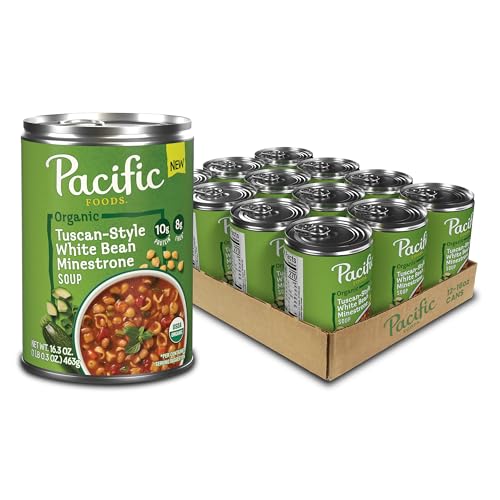
Pacific Foods takes a different approach from the chunky Italian sausage crowd. This Tuscan-style version swaps red kidney beans for white beans and builds its broth from mushrooms and caramelized onions rather than a heavy tomato base. The result is a lighter, more herbaceous minestrone that feels closer to something you’d get at a farm-to-table cafe than a vending machine.
Each 16.3-ounce can delivers 10 grams of protein and 8 grams of fiber — an impressive ratio for a plant-based soup. The USDA Organic and non-GMO certifications matter to buyers who prioritize clean labels and ingredient transparency. Customers describe the texture as hearty without being mushy, and the broth as savory without being overly salty.
The only catch is that some buyers find the flavor slightly spicy, thanks to the Tuscan seasoning profile. If you’re accustomed to mild, tomato-heavy minestrone, this white bean version may surprise you. For anyone looking to eat more organic, vegetable-forward meals without sacrificing convenience, this case is worth the pantry real estate.
Why it’s great
- 10g protein and 8g fiber per can — filling and nutritious
- USDA Organic with no artificial ingredients or GMOs
- Unique mushroom-and-onion broth sets it apart from standard minestrone
Good to know
- Seasoning is noticeably spicier than traditional minestrone
- 16.3 oz cans are smaller than Progresso or Campbell’s Chunky options
3. Amy’s Organic Hearty Minestrone Soup

Amy’s Organic Hearty Minestrone has been a staple in vegetarian and vegan pantries for decades, and the formula holds up well. The tomato broth is rich and clean-tasting — reviewers specifically note the absence of metallic “canned” flavor — and the organic vegetables, beans, and pasta create a balanced, satisfying bowl. With 6 grams of plant-based protein and 6 grams of fiber per serving, it lands in a respectable middle ground between the protein-heavy Campbell’s and the lighter Pacific Foods.
The 14.1-ounce can size is noticeably smaller than the 19-ounce Progresso cans, a trade-off for the certified organic and gluten-free production. Customers who buy the 12-pack appreciate the bulk pricing versus single cans at grocery stores. The soup heats in about two minutes in a microwave, making it one of the fastest options on this list for a workday lunch.
One consistent complaint from long-time buyers: the price has climbed significantly in recent years, and some feel the vegetable-to-broth ratio has thinned. Still, for anyone who needs a gluten-free, vegan, organic minestrone that tastes homemade, Amy’s remains the gold standard — just budget accordingly.
Why it’s great
- Gluten-free, vegan, USDA Organic — accommodates multiple dietary needs
- No metallic aftertaste, clean tomato broth
- Two-minute microwave prep is genuinely convenient
Good to know
- Price has risen; wait for sales or bulk discounts
- Smaller 14.1 oz cans compared to some competitors
4. Progresso Minestrone Soup, Vegetable Classics
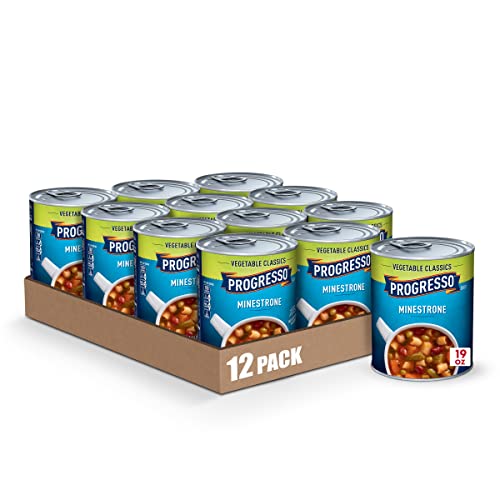
Progresso Vegetable Classics Minestrone is the most recognizable name on this list, and it earns its reputation through consistency rather than flash. Each 19-ounce can contains a straightforward mix of beans, pasta, and vegetables in a savory tomato broth. No artificial flavors or colors from artificial sources — just the standard minestrone experience that has been a pantry staple for generations.
The 12-can case is practical for households that go through soup quickly. At roughly two servings per can, one case covers about 24 bowls. Customers who have eaten Progresso Minestrone for years report that the recipe has remained stable in both taste and texture, with the pasta holding up better than some premium brands that use more delicate shapes.
The biggest risk with buying canned soup in bulk is shipping damage. Multiple reviews mention crushed cans upon arrival, so inspect the case immediately. The soup itself is excellent — just ensure the packaging survives the journey. For a no-nonsense minestrone at a reasonable per-can cost, Progresso is the safe bet.
Why it’s great
- Classic minestrone recipe that hasn’t changed — reliable taste
- 19 oz cans are the largest standard size on this list
- No artificial colors or flavors, clean ingredient list
Good to know
- Shipping can crush cans; inspect every case on arrival
- Lower protein content than Campbell’s Chunky or Pacific Foods
5. ReadyWise Simple Kitchen Soup Sampler Variety Pack
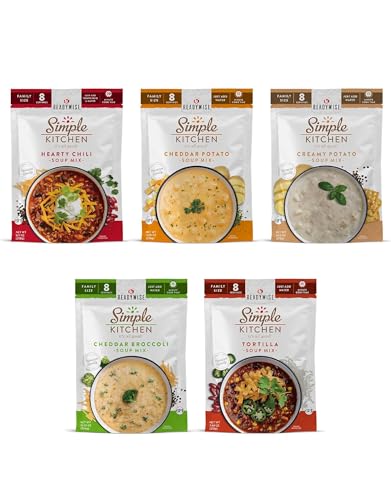
ReadyWise Simple Kitchen takes an entirely different approach from the canned options above. This is freeze-dried soup mix designed for long-term storage, camping, and emergency preparedness — not a ready-to-eat can. Each pouch contains 8 servings, and the pack of 5 pouches totals 40 servings. You simply add hot water and wait a few minutes.
The big advantage here is the 25-year shelf life. You can stash these pouches in a bug-out bag, camping bin, or basement and forget about them until you need them. The texture of freeze-dried soup is slightly different from canned — the vegetables are less soft, and the pasta has a firmer bite — but customers report the flavor is surprisingly good for a dehydrated meal. One chef mentioned using the mix as a quick base for sauces.
The trade-off: you need a heat source and water to prepare it, which makes it less convenient than popping open a can and microwaving. Also, the variety pack includes several soup flavors, not just minestrone. If you want straight minestrone, this sampler may not satisfy. For campers, backpackers, and preppers, this is the most practical option by a wide margin.
Why it’s great
- 25-year shelf life for emergency kits and long-term storage
- Lightweight and portable compared to canned soup
- Just add water preparation is simple in the field
Good to know
- Variety pack includes several soup types, not all minestrone
- Requires hot water and a heat source — less instant than canned options
FAQ
How much sodium is in most canned minestrone?
Can I eat canned minestrone without heating it?
Which canned minestrone is best for camping or backpacking?
Is organic canned minestrone worth the higher price?
Why does my canned minestrone taste metallic?
Final Thoughts: The Verdict
For most users, the canned minestrone soup winner is the Campbell’s Chunky Minestrone with Italian Sausage because it packs 17 grams of protein per can and a bold flavor that stands alone as a meal. If you want organic ingredients and a lighter Tuscan-style broth, grab the Pacific Foods Organic Tuscan-Style White Bean Minestrone. And for camping, backpacking, or emergency storage, nothing beats the ReadyWise Simple Kitchen Soup Sampler for its 25-year shelf life and lightweight convenience.

Mo Maruf
I created WellFizz to bridge the gap between vague wellness advice and actionable solutions. My mission is simple: to decode the research and give you practical tools you can actually use.
Beyond the data, I am a passionate traveler. I believe that stepping away from the screen to explore new environments is essential for mental clarity and physical vitality.