Our readers keep the lights on and my smoothie glass nicely filled. As an Amazon Associate, I earn from qualifying purchases.
Specs are compiled from manufacturer listings and verified buyer reviews and can change over time — please confirm the key details on the product page before buying.
The aisles are packed with cans sporting cozy labels, but the reality inside can be a watery broth, mushy noodles, and a few sad shreds of chicken. You want the canned chicken noodle soup that actually delivers — tender meat, firm noodles, vegetables with some bite left in them, and a broth worth sipping. For most buyers, that is Campbell’s Homestyle; it gives you the best all-around balance of decent chicken, good noodles, and a savory broth for a 12-pack price that does not sting.
I’m Mohammad Maruf — the founder and writer behind WellFizz. This guide is built by comparing the manufacturers’ published specifications and the patterns across verified customer reviews, so you get each pick’s real strengths and trade-offs instead of marketing spin.
Whether you are stocking the pantry for sick-day comfort, a quick lunch, or a year-round staple, the right canned chicken noodle soup balances solid protein, real vegetable pieces, and noodles that do not dissolve on first reheat.
Quick Picks
- Campbell’s Homestyle Chicken Noodle Soup — Best Overall
- Healthy Choice Chicken Noodle Soup — Low-Sodium Star
- Pacific Foods Organic Chicken Noodle Soup — Protein Powerhouse
- Rao’s Made For Home Chicken Noodle Soup — Premium Pantry
How To Choose The Best Canned Chicken Noodle Soup
Three things matter most in a canned chicken noodle soup: the broth (should taste like something, not salt water), the meat (real chunks, not over-processed shreds), and the noodles (they need to survive the canning process without turning to paste). Here is what to look for.
Broth Body and Salt Level
A good broth has a silky, savory mouthfeel — not watery and not gluey. Sodium is the main seasoning in canned soup, but some brands push it past 800mg per serving. If you are watching your intake, look for soups labeled “low sodium” or check the label for numbers under 600mg per serving. A broth that tastes bland often just needs a pinch of salt at the table, as buyers of one organic brand noted — one cook found it needed more salt while her husband disagreed.
Meat Quality and Quantity
You want visible pieces of white-meat chicken, not mechanically separated paste. Several reviewers across brands complained about “larger pieces but tasteless and dry” chicken or soups that are “mostly water.” Look for cans that mention “tender chunks” or “white-meat chicken” on the label. A 13-gram protein claim per can, as one organic option offers, is a solid benchmark.
Noodle Integrity
Noodles are the make-or-break textural element. Some budget cans use oversized, chunky noodles that feel artificial; others use delicate egg noodles that turn to mush after a few minutes on the stove. The best picks use enriched egg noodles that hold their shape and offer a pleasant chew. One satisfied buyer praised a brand where “the noodles aren’t like Campbell’s other line where they are a weird, big/chunky texture.”
Quick Comparison
| Model | Best For | Protein per Can | Pack Size | Broth Style | Amazon |
|---|---|---|---|---|---|
| Campbell’s Homestyle | Best Overall Balance | — | 12 cans | Medium, savory | Amazon |
| Healthy Choice | Low-Sodium Choice | — | 12 cans | Light, mild | Amazon |
| Pacific Foods Organic | Organic Protein | 13g | 12 cans | Clean, mild | Amazon |
| Rao’s Made For Home | Italian-Style Pasta | — | 6 cans | Light, watery | Amazon |
In‑Depth Reviews
1. Campbell’s Homestyle Chicken Noodle Soup
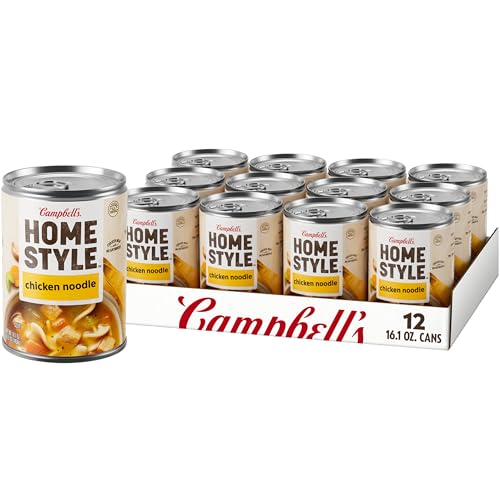
The best all-rounder in the aisle because the chicken is real, the noodles stay firm, and the broth tastes like someone actually cooked it.
This is the can most buyers reach for when they want real chicken pieces and noodles that still have structure. The 16.1-ounce cans come in a 12-pack, so you are covered for a full sick-week or a month of quick lunches. The broth lands right in the middle — savory enough to sip straight, but not so salty it overpowers. Buyers report the “ratio of veggies to noodles is good,” and the noodles avoid the “weird, big/chunky texture” found in other Campbell’s lines.
Unlike the Rao’s option further down (which some call watery and bland), the Campbell’s Homestyle delivers a medium-bodied broth with visible carrots and celery. At 12.12 pounds for the full box, it is a serious pantry investment — at 12.12 pounds versus the 6.01-pound Rao’s box.
The easy-open pop top on each can is a small but real win when your energy is low. A five-minute microwave window (2 to 2.5 minutes) or a quick stovetop heat gets dinner on the table faster than ordering delivery.
What works
- Tender chunks of chicken with no antibiotics — not shredded filler
- Enriched egg noodles hold texture; not mushy
- Pop-top lids on every can — no can opener needed
What to know
- Some found it lacking in punch — one cook adds lemon juice and herbs to boost flavor
- Smaller can size than some other Campbell’s lines, so value per can is slightly lower
This is the one to grab if you want a solid all-rounder with decent meat, decent noodles, and a broth that does not need doctoring. One real trade-off: if you prefer an ultra-rich stock, you may want to season this one up yourself.
2. Healthy Choice Chicken Noodle Soup

A low-sodium can that trades heavy salt for clean, simple ingredients you can actually taste — and that makes it the pick for health-conscious buyers.
Healthy Choice markets itself as a “whole-hearty” take on the old-fashioned classic, and it delivers on that promise — white-meat chicken, noodles, carrots, celery, and added vitamin A. The big difference from the rest of the shelf is the sodium level. Buyers consistently mention that it has “less salt than most store-bought soups,” making it a smart choice if you are watching your blood pressure or just do not want your tongue blasted with salt.
The flip side: the low-fat, low-sodium formula produces what one reviewer called a “mild flavor, not heavy.” It is not going to knock your socks off with richness. But it does fit a low-carb lifestyle with 11g net carbs per serving (12g total carbs minus 1g dietary fiber). Compared to the Campbell’s Homestyle above, the broth is lighter and the seasoning is gentler — better for those who want to add their own finishing touches.
Each can is 15 ounces, and the 12-pack gives you 180 total ounces of soup. A buyer who sent a case to a sick friend called it a “great gift,” and several noted it pairs perfectly with pretzels or crackers for a filling lunch.
Wins here
- Lower sodium than major competitors — easier on the heart
- White-meat chicken plus real garden vegetables
- Fits low-carb meal plans at 11g net carbs per serving
Good to know
- Flavor is mild and lean — not as hearty as full-sodium options
- Best for fat-conscious buyers who prioritize health over richness
Perfect if you need a lower-sodium soup that still has real chicken and noodles, or you prefer to customize the flavor yourself. If you crave a deeply savory, rich broth, skip this one — this soup is subtle on purpose.
3. Pacific Foods Organic Chicken Noodle Soup
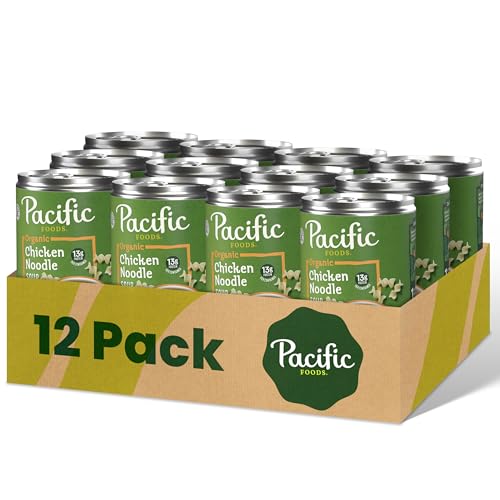
The only can in this lineup with 13g of protein and USDA Organic certification — a clear win for shoppers who want clean ingredients and a filling meal.
Pacific Foods brings a genuinely clean ingredient list to the table — USDA Certified Organic chicken, non-GMO ingredients, no artificial colors or flavors. Each 16.1-ounce can delivers 13 grams of protein, which is a standout number in the canned soup aisle. Buyers consistently praise the texture: “not overcooked, noodles not mushy, carrots right texture.” That is a rare trifecta for a product that sits on a shelf for months.
The 12-pack comes in at 12.12 pounds — the same package weight as the Campbell’s above, but with a higher-quality ingredient profile. The broth is clean and mild, leaning slightly under-seasoned out of the can. One reviewer noted it “needs more salt for flavor,” though her husband disagreed. That is actually a mark in its favor — you control the salt, not the factory. The organic chicken is tender, the noodles are firm, and the vegetables still have some bite.
The price sits at the premium end of this list, but you are paying for organic certification, 13 grams of protein per can, and the kind of texture that makes a canned soup feel almost homemade. A buyer called it “the best on the shelves.”
Why it stands out
- 13g protein per can — highest protein number in this lineup
- USDA Organic with non-GMO ingredients
- Noodles stay firm and carrots keep their texture after canning
The honest catch
- Broth is mild out of the can — plan to add your own seasoning
- Premium price tier, though owners mention it beats grocery-store organic pricing
Grab this if you want organic ingredients, solid protein per can, and noodles that do not disintegrate in the microwave. Know this first: you will want salt and pepper on hand to dial in the flavor to your taste.
4. Rao’s Made For Home Chicken Noodle Soup
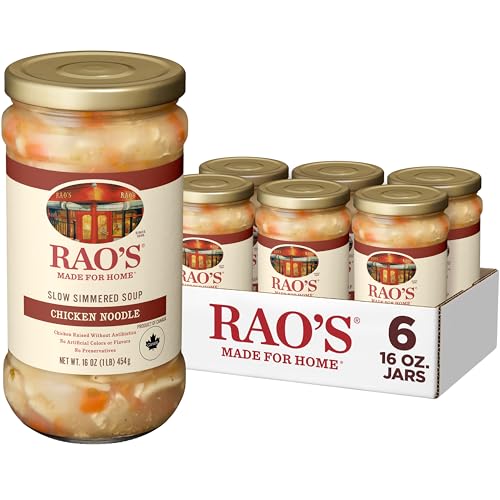
An Italian-style soup with fusilli pasta instead of egg noodles — a gamble that pays off only if you are willing to season it heavily at the table.
Rao’s brings its premium sauce reputation into the soup aisle, and the result is different from every other can in this guide. Instead of classic egg noodles, Rao’s uses tender fusilli pasta for a more substantial bite. The broth is made with rich chicken stock, carrots, celery, and onions, and the chicken pieces are noticeably larger than what you find in most canned soups.
The catch — and several reviewers flag this — is that the broth comes across as “watery and bland, less flavorful than Campbell’s” to some palates. One buyer was blunt: “Very few noodles; soup is mostly water.” The chicken pieces, while larger, were described by another as “tasteless and dry.” This is a soup that benefits from a heavy hand with salt and pepper at the table.
The pack is also the smallest here — 6 cans at 16 oz each, totaling 96 ounces compared to the 193.2 ounces in the Campbell’s or Pacific Foods 12-packs. The package weight of 6.01 pounds is less than the 12.12 pounds of those larger packs. So you are paying a premium for the Rao’s brand name and the fusilli pasta, not for volume.
What is different
- Fusilli pasta instead of egg noodles — Italian-style twist
- Large chicken pieces visible in the can
- No artificial colors, premium ingredient list
Where it falls short
- Broth described by multiple buyers as watery and bland
- Only 6 cans in the pack — half the total volume of the 12-pack options
- Large chicken pieces reported as dry and lacking flavor
Choose this when you want fusilli pasta in your soup and are willing to season aggressively at the table. Pass if you expect a sturdy, flavorful broth straight from the can — this one needs help.
Understanding the Specs
Protein Content
This is the single most useful number on a canned soup label. It tells you how much real chicken (and sometimes egg) is actually in the can versus broth and filler. The Pacific Foods option claims 13g per can, which is a strong benchmark. Many cans do not list it at all, which usually means the number is low. More protein means a more satisfying meal that keeps you full longer.
Sodium Level
Canned soup is one of the saltiest items in the grocery store because salt is the main preservative and flavor booster. Healthy Choice markets lower sodium explicitly, but most standard cans land around 600-800mg per serving. The daily recommended limit is 2,300mg, so a single can can use up a third of your daily allowance. If you watch your blood pressure, look for “low sodium” on the label or check the nutrition panel before buying.
Pack Count and Total Volume
A 12-pack gives you 193.2 ounces versus 96 ounces in a 6-pack. That matters for two reasons: per-can cost goes down on larger packs, and you are less likely to run out mid-week. The trade-off is storage space. A 12-pack of 16-ounce cans weighs over 12 pounds and takes up real pantry real estate.
Noodle Type and Integrity
This is the textural heart of the soup. Classic enriched egg noodles hold up best in canned form — they stay tender but firm. Some brands use thick, chunky pasta shapes that feel artificial. Others use fusilli or rotini. If texture matters to you (and it should), look for reviews that mention noodles staying “not mushy” or “right texture.” The worst canned soups leave noodles that dissolve into a starchy paste on first reheat.
FAQ
What is the best canned chicken noodle soup brand?
How long does canned chicken noodle soup last?
Can I microwave canned chicken noodle soup in the can?
Is Rao’s chicken noodle soup worth the price?
Which canned chicken noodle soup has the most protein?
Are there low-sodium canned chicken noodle soups?
How do I make canned chicken noodle soup taste better?
What is the difference between Campbell’s Homestyle and regular Campbell’s chicken noodle soup?
Can I freeze canned chicken noodle soup?
Is canned chicken noodle soup healthy?
Final Thoughts: The Verdict
For most buyers, the canned chicken noodle soup winner is the Campbell’s Homestyle because it delivers the best balance of tender chicken, decent vegetable ratio, and noodles that hold their shape — all at a fair price for a 12-pack. If you want organic ingredients with 13g of protein per can, grab the Pacific Foods Organic. And for a low-sodium option that still tastes like real chicken soup, the Healthy Choice is the smartest pick for health-conscious shoppers.
How We Picked
We do not accept paid placement. Every pick is matched to a real buyer and a real use-case; we do not hands-on test units.
Sources & Methodology
Specifications: manufacturer listings and product documentation. Review insights: verified customer reviews, as of July 2026. Pricing: not shown on this page (it changes often); check the current price via the retailer link.
As an Amazon Associate, WellFizz earns from qualifying purchases. This does not affect which products we feature.
Related Guides

Mo Maruf
I created WellFizz to bridge the gap between vague wellness advice and actionable solutions. My mission is simple: to decode the research and give you practical tools you can actually use.
Beyond the data, I am a passionate traveler. I believe that stepping away from the screen to explore new environments is essential for mental clarity and physical vitality.