Our readers keep the lights on and my smoothie glass nicely filled. As an Amazon Associate, I earn from qualifying purchases.
A restless night on the trail isn’t just about discomfort—it saps your energy for the next day’s miles. The wrong pad lets cold seep through from the ground while you toss on uneven inflation, turning a promising sunrise into a painful wake-up call. Finding the right balance of warmth, weight, and packability defines a successful backcountry sleep system.
I’m Mohammad Maruf — the founder and writer behind WellFizz. I spend countless hours analyzing specification sheets, customer field reports, and material science data to understand exactly what separates a mediocre sleep mat from one that delivers genuine rest under the stars.
This guide breaks down the critical metrics behind the best camping pad for backpacking, from R-value and insulation type to packed volume and valve design, so you can match your gear to your actual trail conditions.
How To Choose The Best Camping Pad For Backpacking
Backpacking pads live at the intersection of three competing priorities: warmth (measured by R-value), weight (ounces matter on every climb), and packed size (fits inside your pack or straps externally). Understanding how these specs interact helps you avoid the common mistake of over-buying insulation for summer trips or under-buying for early shoulder-season hikes.
R-Value and Insulation Types
R-value measures a pad’s resistance to heat loss through the ground. A value of 1.0 to 2.0 suits warm-weather use; 2.0 to 4.0 covers three-season conditions; anything above 4.0 handles below-freezing temperatures. Insulation comes in two forms: synthetic fill (like Thermolite or proprietary fibers) and reflective film layers (like ThermaCapture or heat-reflective foils) that bounce body heat back. Synthetic insulation adds weight and bulk but resists compression; reflective layers save weight but require an air gap to function.
Weight, Packed Size, and Durability
Ultralight backpackers target pads under 16 ounces. Closed-cell foam pads weigh around 10-14 ounces but pack externally. Inflatable pads compress smaller but weigh more due to valve hardware and fabric. Fabric denier matters: 20D nylon is lighter but less puncture-resistant; 30D or 40D ripstop nylon adds durability for rocky ground without a huge weight penalty. Always account for the pump sack or stuff sack weight in your total.
Width, Thickness, and Sleeping Position
A 20-inch wide pad fits standard backpacking tents but forces arms to hang off the sides. Wide versions (25 inches) improve comfort for side sleepers but add 4-6 ounces. Thickness between 2.5 inches and 4.5 inches determines how well the pad cushions hips and shoulders. Side sleepers need at least 3 inches to avoid bottoming out against the ground. Vertical baffle pads tend to feel more stable than horizontal baffles for those who shift positions at night.
Quick Comparison
On smaller screens, swipe sideways to see the full table.
| Model | Category | Best For | Key Spec | Amazon |
|---|---|---|---|---|
| Big Agnes Rapide SL Insulated | Inflatable Insulated | Side sleepers needing quiet comfort | 4.5 in thick, R-Value 4.8 | Amazon |
| Therm-a-Rest NeoAir XLite NXT | Ultralight Inflatable | Weight-conscious thru-hikers | 11.5 oz, R-Value 4.5 | Amazon |
| Big Agnes Divide Insulated | 3-Season Inflatable | Reliable three-season warmth | 23 oz, R-Value 4.0 | Amazon |
| Naturehike Ultralight Insulated | Budget Insulated | Cold-weather value seekers | 25.8 oz, R-Value 4.6 | Amazon |
| TREKOLOGY UL R7 | High R-Value Inflatable | Year-round winter camping | 2 lbs, R-Value 7.2 | Amazon |
| NEMO Switchback Foam | Closed-Cell Foam | Reliable durability and dual use | 14.8 oz, R-Value 2.0 | Amazon |
| Klymit Static V | Budget Inflatable | Compact budget-friendly option | 13.5 oz, 2.5 in thick | Amazon |
In‑Depth Reviews
1. Big Agnes Rapide SL Insulated

The Rapide SL delivers a 4.5-inch thickness and an R-value of 4.8, making it one of the warmest and most comfortable mid-range inflatable pads available. The quilted top creates a cushioned surface that reduces the crinkle noise common to many insulated pads, which is a real advantage for light sleepers. The proprietary offset I-Beam construction provides stable support without the hammock-like bounce that horizontal baffles sometimes produce.
At 14.5 ounces in the regular wide version, it competes directly with ultralight models while offering a thicker profile and larger outer chambers (4.25 inches) that cradle the sleeper and prevent rolling off. The included Pumphouse sack inflates the pad in under four minutes without introducing moisture, which is a practical upgrade over breath inflation in cold weather. Field reports from long-distance hikers confirm the pad holds air reliably over extended trips and packs down smaller than the Therm-a-Rest Trail Pro.
The Rapide SL suits backpackers who prioritize comfort and warmth over absolute minimum weight. It handles three-season use comfortably and stretches into early winter conditions when paired with a closed-cell foam underlayer. This pad earns the top spot because it balances premium features—quiet fabric, rapid inflation, and thick insulation—at a price that undercuts many competitor offerings with similar specs.
Why it’s great
- Quiet fabric eliminates crinkle noise at night
- Pumphouse sack enables fast, moisture-free inflation
- Thick 4.5-inch profile provides reliable hip and shoulder cushioning for side sleepers
Good to know
- Wide version adds weight compared to standard 20-inch models
- Premium price bracket may exceed casual backpacker budgets
2. Therm-a-Rest NeoAir XLite NXT

The NeoAir XLite NXT sets the benchmark for ultralight backpacking pads, weighing just 11.5 ounces in the regular size while delivering a 4.5 R-value capable of supporting three-season and even mild winter use. The Triangular Core Matrix construction minimizes convective heat loss through the baffles, and the reflective ThermaCapture layer traps radiant heat without adding synthetic fill weight. At 3 inches thick, it provides sufficient cushioning for most side sleepers, though heavier users may feel the ground through the pad on uneven terrain.
The WingLock valve system allows fast inflation and rapid deflation, with a one-way gasket that prevents air escaping during setup. The NXT generation significantly reduced the crinkle noise that plagued earlier NeoAir models—field tests confirm the fabric is now quiet enough for shared tent spaces. The pad rolls to the size of a 1-liter water bottle, which frees up critical internal pack volume for food and clothing.
The 30D ripstop nylon fabric is lighter than the 40D used on some competitor pads, which means careful site selection and a groundsheet are recommended to avoid punctures. The stuff sack doubles as a pump sack, but requires a few more squeezes than dedicated inflation bags. This pad is the right choice for thru-hikers and ounce-counters who refuse to compromise on warmth-to-weight ratio.
Why it’s great
- Industry-leading warmth-to-weight ratio at 11.5 oz
- NXT fabric is dramatically quieter than previous generations
- Compact packed size fits inside a 1-liter bottle space
Good to know
- 30D fabric requires care on rocky or sandy ground
- Pump sack inflation takes more effort than bag-style pumps
3. Big Agnes Divide Insulated

The Divide Insulated delivers a 4.0 R-value and 3.25-inch thickness in a package that weighs 23 ounces, positioning it as a durable three-season workhorse at a mid-range price. The vertical baffle design provides a smooth, flat sleeping surface that feels more like a home mattress than the V-shaped or quilted profiles found on some competitor pads. THERMOLITE insulation combined with a heat-reflective film traps body heat effectively down to about 20°F without adding excessive bulk.
The I-Beam construction reduces overall weight while maintaining structural stability, and the larger outer chambers (3.5 inches) help keep the sleeper centered on the pad. The high-volume valve allows micro-adjustments for fine-tuning firmness, which is useful for side sleepers who need a softer feel at the hips. The included inflation sack doubles as a storage bag, and the 3M repair patches add peace of mind for multi-week trips.
The standard 20-inch width is narrow for broad-shouldered individuals or active sleepers, and the 23-ounce weight is noticeable compared to ultralight alternatives. However, the recycled nylon ripstop fabric adds puncture resistance that makes this pad suitable for off-trail camping and rocky sites. The Divide is the best pick for backpackers who want reliable insulation and durable construction without jumping to top-tier prices.
Why it’s great
- Vertical baffle design provides stable, flat sleeping surface
- Durable recycled nylon fabric handles rough terrain
- THERMOLITE insulation delivers reliable three-season warmth
Good to know
- 20-inch width is narrow for some sleepers
- 23 oz weight is heavier than ultralight competitors
4. Naturehike Ultralight Insulated

The Naturehike Ultralight Insulated pad offers an impressive 4.6 R-value and 3.2-inch thickness at a weight of 1.6 pounds, making it one of the most budget-friendly options for cold-weather backpackers. The NKTR Air heat-reflective system uses eight layers of aluminum molding inside the baffles to reduce convective heat loss, which is a far more sophisticated insulation approach than the simple reflective films found on some pads at double the price. The perforated aluminum layer design also helps reduce the crinkle noise that usually accompanies metallic reflective layers.
The 20D nylon and TPU construction provides decent abrasion resistance for the weight class, and the dual-vent valve design allows one-way inflation through the outer cap while the inner cap opens for rapid deflation. The included pump sack inflates the pad in about four squeezes, and the storage sack doubles as a dry bag for electronics or clothing. The 73-inch length accommodates taller users without foot overhang, and the punching-point structure distributes pressure evenly across the pad surface.
The instructions for attaching the pump sack are not intuitive, and some users report a learning curve with the valve alignment. The pad is also slightly bulkier when packed compared to premium options. However, for backpackers who need genuine 4-season warmth without spending above mid-range, this pad delivers exceptional thermal performance per dollar.
Why it’s great
- 8-layer aluminum insulation provides high R-value at low cost
- Pump sack inflates pad in four squeezes
- 73-inch length fits taller sleepers comfortably
Good to know
- Pump sack attachment instructions are unclear
- Packed size is larger than ultralight alternatives
5. TREKOLOGY UL R7
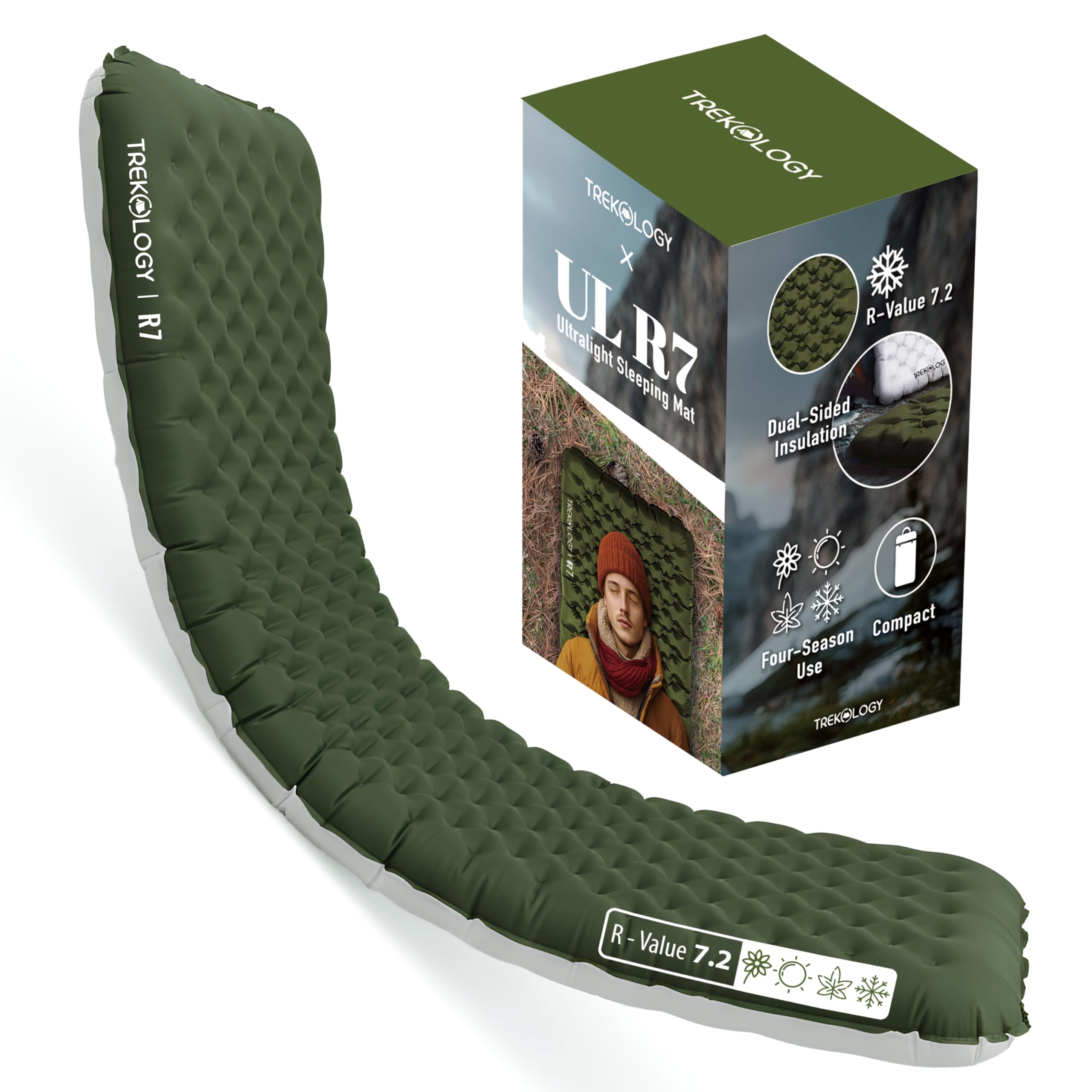
The TREKOLOGY UL R7 stands out with an SGS-certified R-value of 7.2, making it one of the most insulated backpacking pads available at a mid-range price point. The 4-inch thickness provides generous cushioning that prevents bottoming out even for 240-pound sleepers, and the 40D ripstop nylon with TPU coating offers excellent puncture resistance for winter environments where ground is often frozen and jagged. The pad supports up to 330 pounds, which is rare for a 2-pound inflatable pad.
Field tests confirm the pad keeps users warm in temperatures as low as 22°F with a properly rated sleeping bag, and some reports show comfortable sleep at 15°F with minimal additional insulation. The anti-leak valve design prevents air loss during the night, and the included carry bag doubles as a storage solution. The rectangular shape (70.8 x 24 inches) provides ample space for side sleepers who need extra hip room.
The pad is heavier than the average backpacking pad at 2 pounds, and the reflective foil insulation slows deflation compared to non-insulated pads—users need to press out air carefully to achieve a compact roll. The sleeping surface can feel slippery with a down sleeping bag, and some users add a thin liner to prevent sliding. This pad is the best choice for winter backpackers and cold-sleeping individuals who prioritize maximum ground insulation over pack weight.
Why it’s great
- Highest R-value (7.2) in the mid-range category for extreme cold
- 330 lb weight capacity accommodates larger sleepers
- 40D fabric offers superior puncture resistance for winter use
Good to know
- 2-pound weight is heavy for summer backpacking
- Reflective foil slows deflation and packing process
6. NEMO Switchback Foam
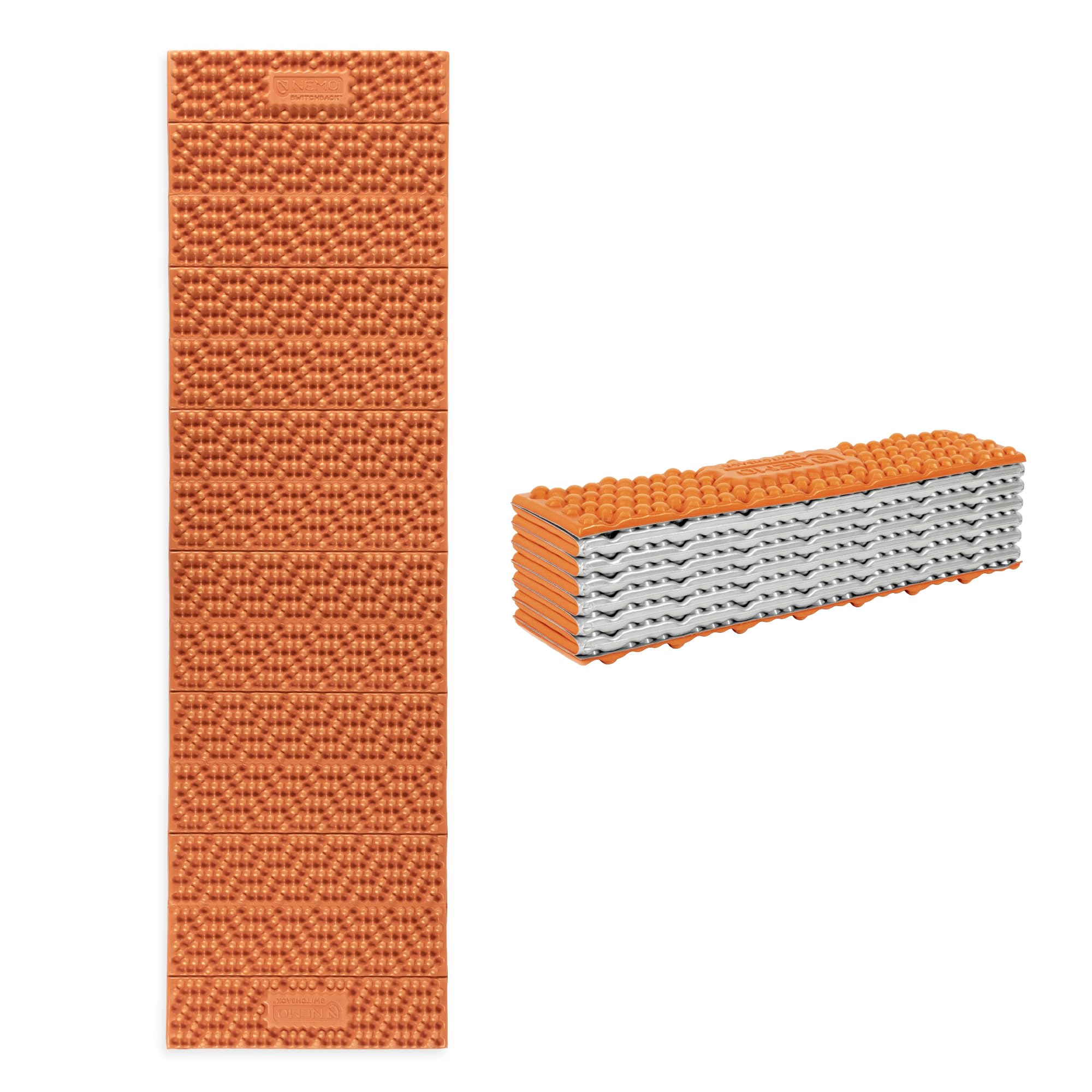
The NEMO Switchback is a closed-cell foam pad that uses a hexagonal nesting pattern to increase plushness without adding weight. The pad weighs 14.8 ounces and delivers a 2.0 R-value, which covers warm-weather and mild three-season use. The precision tooling allows the foam layers to nest tighter when rolled, achieving a smaller packed diameter than traditional foam pads while still providing the durability that inflatable pads cannot match—no punctures, no leaks, no valve failures.
The dual-density Axiotomic foam combines a supple top layer for comfort with a firmer bottom layer for ground insulation. The metallized thermal reflective film on the underside reflects body heat back to the sleeper, which adds measurable warmth compared to standard closed-cell pads. Many backpackers cut the Switchback to torso length to save weight and use the offcut as a sit pad or dog bed, which maximizes utility for ounce-conscious trips.
The pad is less comfortable than inflatable options, especially for side sleepers who will feel pressure at the hips and shoulders. It also packs externally since it cannot compress inside a backpack. However, its reliability makes it the right choice for alpine environments, desert trips with sharp ground, and as a supplementary underlayer for inflatable pads in cold weather.
Why it’s great
- Virtually indestructible—no punctures or valve failures
- Hexagonal design packs smaller than traditional foam pads
- Doubles as a sit pad or cut to torso length for ultralight use
Good to know
- 2.0 R-value limits use to warm and mild conditions
- Less comfortable than inflatable pads for side sleepers
7. Klymit Static V

The Klymit Static V uses an innovative V-chamber design that limits air movement and heat loss while providing a contoured sleeping surface. At 13.5 ounces and a packed size of 3 by 8 inches, it competes directly with ultralight inflatable pads at a fraction of the price. The dynamic side rails create a slight cradle that helps keep the sleeper centered on the pad, which is effective for preventing roll-off during the night.
The 2.5-inch thickness is sufficient for back sleepers but may cause side sleepers to feel the ground at the hip pressure point. The deep weld expansion zones allow sleeping bag loft to extend beneath the user, which improves thermal performance compared to flat baffle designs. The separate inflation and deflation valves are simple and reliable, and the included patch kit covers common puncture scenarios.
Durability reports are mixed—some users experience slow leaks after a few months of weekly use, which suggests the 20D fabric is best suited for careful campers who use a groundsheet. The pad also requires significant effort to fold into the original stuff sack. For entry-level backpackers or those on a tight budget, the Static V offers impressive weight and packed size metrics that rival pads costing twice as much.
Why it’s great
- Ultralight at 13.5 oz with very small packed size
- V-chamber design limits air movement and improves warmth for its class
- Affordable entry point for new backpackers
Good to know
- 2.5-inch thickness may not suit side sleepers
- Some durability concerns with consistent weekly use
FAQ
Can I use a sleeping pad with an R-value of 4.0 for winter camping?
How does pump sack inflation compare to blowing into the valve?
Should I buy a wide sleeping pad for side sleeping?
Final Thoughts: The Verdict
For most backpackers, the camping pad for backpacking winner is the Big Agnes Rapide SL Insulated because it combines a thick 4.5-inch profile, quiet fabric, and rapid pump-sack inflation at a weight that suits three-season adventures. If you prioritize ultralight gram-shaving, grab the Therm-a-Rest NeoAir XLite NXT. And for cold-weather backpackers who need maximum ground insulation without spending premium dollars, nothing beats the TREKOLOGY UL R7.

Mo Maruf
I created WellFizz to bridge the gap between vague wellness advice and actionable solutions. My mission is simple: to decode the research and give you practical tools you can actually use.
Beyond the data, I am a passionate traveler. I believe that stepping away from the screen to explore new environments is essential for mental clarity and physical vitality.