Our readers keep the lights on and my smoothie glass nicely filled. As an Amazon Associate, I earn from qualifying purchases.
A single blister on a long hike or a nasty cut from a stray branch can turn a backcountry trip into a crisis. The difference between a minor inconvenience and a full-blown emergency often comes down to the contents and organization of the kit on your belt or in your pack.
I’m Mohammad Maruf — the founder and writer behind WellFizz. My research focuses on dissecting the specific materials, weight penalties, and real-world supply counts that separate a reliable trail companion from a bag of cheap bandages.
Whether you’re a weekend hiker or a dedicated overlander, the ideal solution balances compact portability with genuine trauma capability. This guide breaks down the top options to help you find the best camping medical kit for your specific adventures.
How To Choose The Best Camping Medical Kit
Picking the right kit starts with understanding where you’re going and what you’re likely to face. A car-camping setup can carry a bigger box, but a weekend backpacker needs ultra-light efficiency.
Supply Count vs. Weight vs. Quality
The raw number of pieces means little if the items are poor quality or inappropriate for the outdoors. Look for kits that prioritize medical-grade components like sterile gauze pads, quality elastic bandages, and proper trauma shears over cheap, plastic-wrapped filler items. A 180-piece kit under one pound offers a far better density of real utility than a heavy, 80-piece generic bag.
Pouch Material and Attachment
Nylon denier ratings (e.g., 600D, 1000D) indicate the fabric’s tear resistance. For rough terrain, a 1000D nylon pouch with a water-repellent coating adds significant durability. MOLLE compatibility allows you to lash the kit to a backpack or tactical vest, keeping it instantly accessible rather than buried in a main compartment.
Water Resistance and Organization
A waterproof inner dry bag (like a DryFlex liner) or a water-repellent pouch is critical for wet environments. Beyond moisture protection, rapid-response labeling or clear internal compartments let you find a trauma pad or tweezers in seconds, not seconds that could cost you blood. A well-organized kit is a kit you will actually use.
Specific Outdoor Add-ons
Look for supplies directly relevant to the trail: moleskin for blisters, tick removal forceps, antiseptic wipes, and insect sting relief. These items are far more commonly needed during a camp than heavy splints or bulky cervical collars, which are better suited to a car kit.
Quick Comparison
On smaller screens, swipe sideways to see the full table.
| Model | Category | Best For | Key Spec | Amazon |
|---|---|---|---|---|
| EVERLIT 180 Pieces Tactical | Tactical IFAK | Heavy-duty outdoor & trauma | 1000D Nylon MOLLE Pouch | Amazon |
| Pasenhome Rapid-Response | Organized Kit | Labeled access & car camping | 600D Ripstop Polyester | Amazon |
| Adventure Medical Kit .7 | Ultralight | Backpacking & climbing | 5.92 oz DryFlex Bag | Amazon |
| RHINO RESCUE Ultralight | Mini Kit | Minimalist hiking & travel | 20g Nylon Pouch | Amazon |
| Lincada 143 Pieces | All-Purpose | Family day trips & travel | 9.6 oz — Clear Access | Amazon |
In‑Depth Reviews
1. EVERLIT 180 Pieces Tactical First Aid Kit

The EVERLIT kit earns the top spot because it balances a high supply count (180 pieces) with a genuinely rugged 1000D reinforced nylon pouch that won’t shred on granite or branches. Designed by Army vets, its MOLLE attachment system lets you clip it to a pack’s external webbing or a tactical vest, keeping critical trauma supplies like the CPR mask, trauma shears, and wound dressings within arm’s reach.
At 1.2 pounds and roughly the size of a thick paperback, this kit packs burn dressings, elastic bandages, eye pads, and moleskin for blister relief alongside the usual bandages. The two main pockets with elastic organizers prevent the inside from becoming a jumble, so you can quickly find a 4×4 gauze pad even with sweaty hands.
User reviews highlight the exceptional value for the component quality, with consistent praise for the comprehensive nature of the kit for both car and backpack use. The only trade-off is a slightly blocky profile that can feel bulky in a fully packed ultralight backpack, though the external MOLLE lashing neatly solves that issue.
Why it’s great
- High 180-piece count with trauma-grade components
- Extremely durable 1000D nylon and MOLLE compatible
Good to know
- Square shape can be bulky in a small pack
- Not the lightest option for ultralight hikers
2. Pasenhome Rapid-Response First Aid Kit

This Pasenhome kit prioritizes what many kits ignore: speed of access. Its 20 labeled compartments with brief usage notes mean you don’t waste precious seconds guessing which pouch holds the trauma pad versus the gauze roll. The 600D ripstop polyester shell and strong two-way zippers are built for daily carry in a car, RV, or campsite base, striking a solid mid-point between ultralight and full-size.
At 1.3 pounds with dimensions of 7.9 x 5.9 x 3.6 inches, it leaves a smartly designed pocket of empty space for adding personal prescription meds or a tourniquet. Retired nurses and experienced campers noted in reviews that the labeling system is genuinely helpful and the sterile pad assortment (three of each size) is practical for medium-severity injuries like deep cuts from cooking gear or falls on rocky terrain.
While not built for the ultralight crowd, its flexible MOLLE straps let you lash it to a backpack for day hikes. The kit’s soft-sided construction also makes it far more comfortable to store in a duffel than a hard plastic case, eliminating the risk of cracking in freezing car temperatures.
Why it’s great
- Rapid-response labels make finding items intuitive
- Durable 600D polyester with MOLLE straps for attachment
Good to know
- Not waterproof (water-resistant fabric only)
- Best suited for base camp and car use, not ultralight packs
3. Adventure Medical Kit Ultralight/Watertight .7
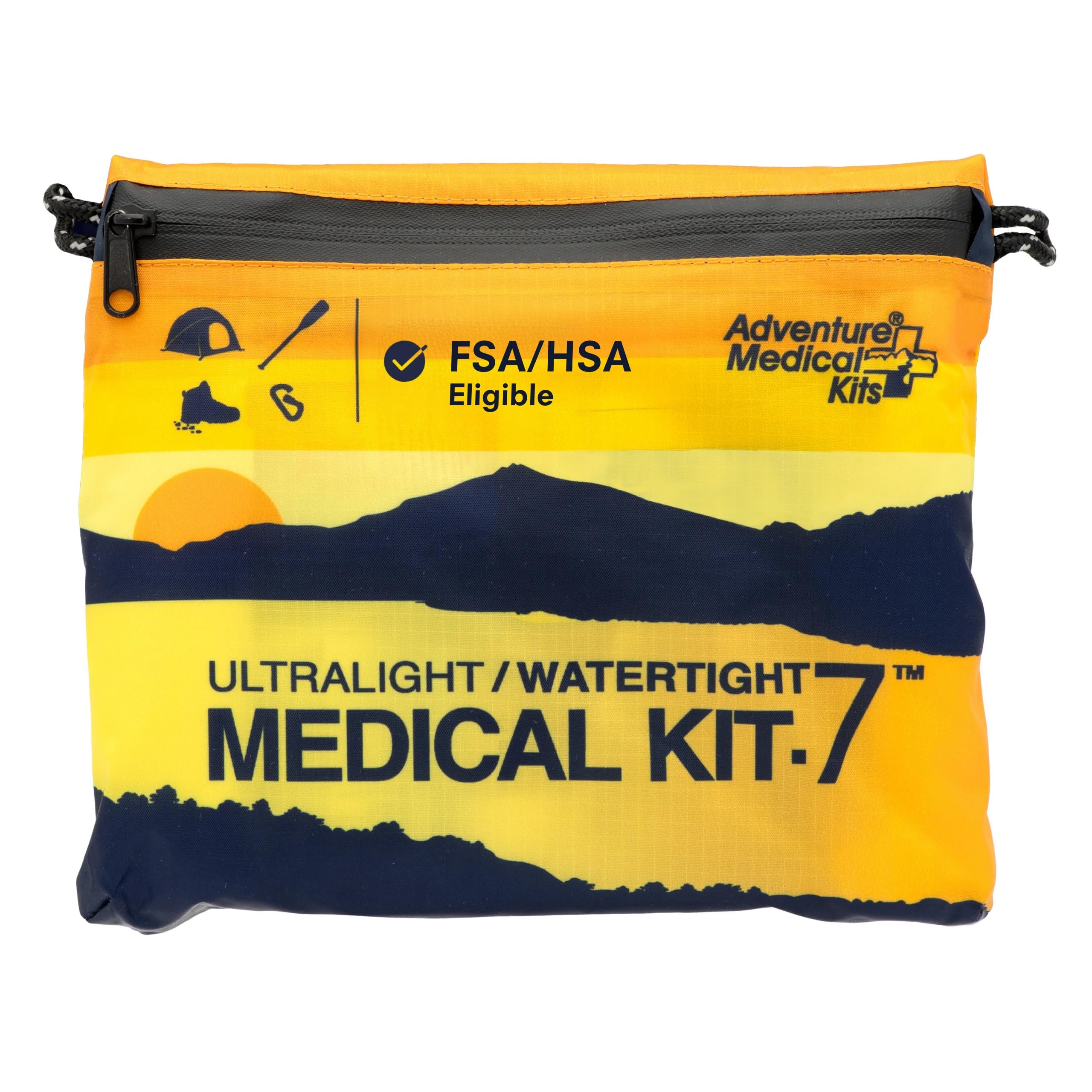
For the long-distance hiker, the Adventure Medical Kit .7 is the gold standard of weight discipline. At just 5.92 ounces fully loaded, it fits easily into a pack’s side pocket without adding measurable heft. Its standout feature is the reusable DryFlex waterproof inner bag, which keeps your bandages and gauze bone-dry even after a river crossing or an afternoon thunderstorm.
Supplies are curated specifically for common trail injuries: die-cut moleskin for hot spots, tick removal forceps, insect sting relief wipes, and antiseptic ointment alongside standard bandages and gauze. The water-resistant outer bag with a DWR finish adds an extra barrier against drizzle, making this a solid choice for climbers, mountain bikers, and three-season backpackers covering serious mileage.
Customer feedback is consistent that this is a “basics only” kit — it handles minor scrapes, blisters, and small wounds well, but it won’t handle major trauma. Many users supplement it with a tourniquet or extra trauma shears, which the DryFlex bag accommodates easily. For its intended use case — a lightweight personal kit for short trips — it is exceptionally well-priced for the quality of the components.
Why it’s great
- Ultralight at under 6 ounces with waterproof DryFlex storage
- Includes specialized items: moleskin, tick forceps, sting relief
Good to know
- Not designed for severe trauma or group trips
- Best supplemented with extra wound dressings for longer treks
4. RHINO RESCUE Ultralight First Aid Kit

When every gram counts, the RHINO RESCUE kit delivers 79 essential pieces in a pouch that weighs just 20 grams empty — roughly the weight of a single energy gel. High-quality nylon construction keeps it durable despite the feathery weight, and its 180 x 100 x 30 mm dimensions slide neatly into a hip belt pocket, running vest, or hydration pack chest strap.
The selected contents are hyper-focused on day-hike realities: bandages, gauze, antiseptic wipes, a CPR mask, and an emergency blanket. The kit intentionally omits heavy items like large rolls of tape or bulky splints to maintain its ultralight footprint. Reviews consistently mention this as the perfect companion for a 10L sling bag or for upgrading personal car kits without adding bulk.
A couple of user caveats: the clasp is a minor weak point, and the scissors could be sharper. The kit remains water-repellent, not waterproof, so a separate dry bag is advisable for multi-day wet trips. But for the minimalist who treats first aid as an insurance policy rather than a hospital, this is a superb entry-level option.
Why it’s great
- Extremely lightweight at 20g empty pouch weight
- Well-chosen 79-piece supply set for trail basics
Good to know
- Clasp closure is less secure than zippers
- Scissors are adequate but not surgical grade
5. Lincada 143 Pieces Portable Travel First Aid Kit

This Lincada kit stakes its claim as the best all-purpose family companion for car camping, beach trips, and RV life. Its 143 pieces include not just the expected bandages and gauze but also burn cream, antibiotic ointment, and a surprising assortment of colorful, fun-patterned bandages that kids actually want to wear. The clear outer compartments let you see contents at a glance without opening every zipper.
At 9.6 ounces, it’s heavier than the ultralight options, but its size fits neatly into a diaper bag, glove compartment, or kitchen drawer. The compact form factor (8.1 x 7.1 x 2.3 inches) is optimized for quick grab-and-go scenarios. Many users on family trips praised its comprehensive nature for handling scraped knees, minor burns from stoves, and the occasional splinter.
Some buyers noted that not every item is individually labeled inside, making it slightly less efficient than the Pasenhome kit for rapid trauma response. However, for the price and volume of supplies, it’s a fantastic value for families who want one kit to cover home, car, and short camping trips without needing a separate pack for every location.
Why it’s great
- Excellent 143-piece set with burn cream and ointment
- Compact enough for diaper bags, cars, and RVs
Good to know
- Not all internal items are individually labeled
- Lacks trauma shears and advanced wound care items
FAQ
What is the ideal number of pieces for a camping medical kit?
Why is a MOLLE-compatible pouch recommended for camping?
Can I use a standard home first aid kit for car camping?
Final Thoughts: The Verdict
For most users, the best camping medical kit winner is the EVERLIT 180 Pieces Tactical because it combines a rugged 1000D MOLLE pouch with the highest supply density per dollar for serious outdoor trauma. If you want ultralight performance for multi-day treks, grab the Adventure Medical Kit .7. And for family car camping, nothing beats the organized labeling of the Pasenhome Rapid-Response.

Mo Maruf
I created WellFizz to bridge the gap between vague wellness advice and actionable solutions. My mission is simple: to decode the research and give you practical tools you can actually use.
Beyond the data, I am a passionate traveler. I believe that stepping away from the screen to explore new environments is essential for mental clarity and physical vitality.