Our readers keep the lights on and my smoothie glass nicely filled. As an Amazon Associate, I earn from qualifying purchases.
That first night flat on your back after a long hike should end with deep, restorative sleep — not a stiff hip from a deflating pad or a cold draft seeping through the floor. The gap between a rough campsite and a great morning comes down to a single piece of gear: your sleeping pad.
I’m Mohammad Maruf — the founder and writer behind WellFizz. I’ve spent hundreds of hours dissecting foam densities, R-value measurements, valve designs, and packed weights to separate real comfort from marketing fluff in the outdoor gear space.
This guide compares seven models across three tiers — from budget-friendly foam hybrids to premium expedition pads — so you can confidently choose the best camping mattress for your sleeping style and adventure type.
How To Choose The Best Camping Mattress
A camping mattress is not a one-size-fits-all purchase. The ideal pad for a weekend car camper is too heavy for a thru-hiker, and an ultralight air pad often feels like a pool float for a side sleeper. You need to weigh three overlapping factors: insulation performance (R-value), thickness and foam density, and the inflation method that matches your camping routine.
R-Value and Seasonal Insulation
R-value measures how well the pad resists heat loss to the cold ground. An R-value of 1 to 3 is suitable for summer; 3 to 5 works for three-season use; anything above 5 is winter-ready. Thick foam pads with reflective layers (like those above 7) let you camp comfortably below freezing. If you plan to car camp in fall or winter, ignore pads below a 4.5 R-value.
Foam Type and Construction
Memory foam pads (often combined with air chambers) deliver a plush, body-conforming feel but are heavier and bulkier. Self-inflating pads use open-cell foam inside an airtight shell — they inflate on their own when the valve opens and provide consistent support without a pump. Pure air pads (like ultralight backpacking models) are the lightest and most packable but sacrifice lateral stability and require a separate inflation method.
Inflation System
Built-in electric pumps inflate a pad in under a minute — ideal for car campers and families who value speed. Manual pump sacks are lighter and never run out of battery but take 40 to 90 seconds of effort. Self-inflating valves let the foam draw in air automatically, then you fine-tune with a few puffs. The trade-off is always between speed and weight.
Quick Comparison
On smaller screens, swipe sideways to see the full table.
| Model | Category | Best For | Key Spec | Amazon |
|---|---|---|---|---|
| NYECHTO Self-Inflating Pad | Memory Foam | Car campers wanting fast setup | 9.5 R-value / 3.14 in thick | Amazon |
| Hikenture Comfort Plus | Self-Inflating Foam | Four-season car camping | 9.5 R-value / 4 in thick | Amazon |
| Big Agnes Rapide SL | Air Pad | Ultralight three-season backpacking | 4.8 R-value / 3.5 in thick | Amazon |
| SoundAsleep Dream Series | Air Mattress | Glamping and guest beds | 18 in tall / 56 air coils | Amazon |
| Therm-a-Rest NeoAir Xlite NXT | Ultralight Air | Fast-and-light backpacking | 4.5 R-value / 13 oz weight | Amazon |
| Exped MegaMat Medium Wide | Self-Inflating | Car camping bed-like comfort | 8.1 R-value / 4 in thick | Amazon |
| Therm-a-Rest MondoKing 3D | Self-Inflating Foam | Extreme cold and large sleepers | 7.0 R-value / 4.25 in thick | Amazon |
In‑Depth Reviews
1. NYECHTO Self Inflating Sleeping Pad with Electric Pump

This pad hits a rare sweet spot: a 9.5 R-value normally found only in expedition-level gear, paired with a built-in rechargeable electric pump that inflates the 3.14-inch memory foam core in under 45 seconds. The 28D high-density foam evenly distributes weight up to 665 pounds, which means no pressure points for side sleepers and no bottoming out when you shift at night.
The 50D elastic knit cover breathes well and stays silent — no crinkling every time you roll over. It packs down to a 9-inch-thick roll that fits most car trunks, and the USB-C rechargeable pump handles roughly seven full inflation cycles on a single charge. A secondary two-layer valve at the foot lets you self-inflate manually if the battery dies.
Customer feedback consistently praises how well it holds air after the initial foam expansion period. A few buyers noted the first inflation takes slightly longer while the vacuum-packed foam relaxes, but once set, the pad requires no top-offs over a two-night trip. For the blend of insulation, comfort, and electric convenience, this is the balanced pick for weekend campers and overlanders alike.
Why it’s great
- Built-in rechargeable pump inflates in under a minute
- 9.5 R-value insulates well into freezing temperatures
- 3.14-inch memory foam supports side and stomach sleepers
Good to know
- First inflation takes longer as foam expands from vacuum
- At 5.95 lbs, too heavy for backpacking
2. Exped MegaMat Medium Wide
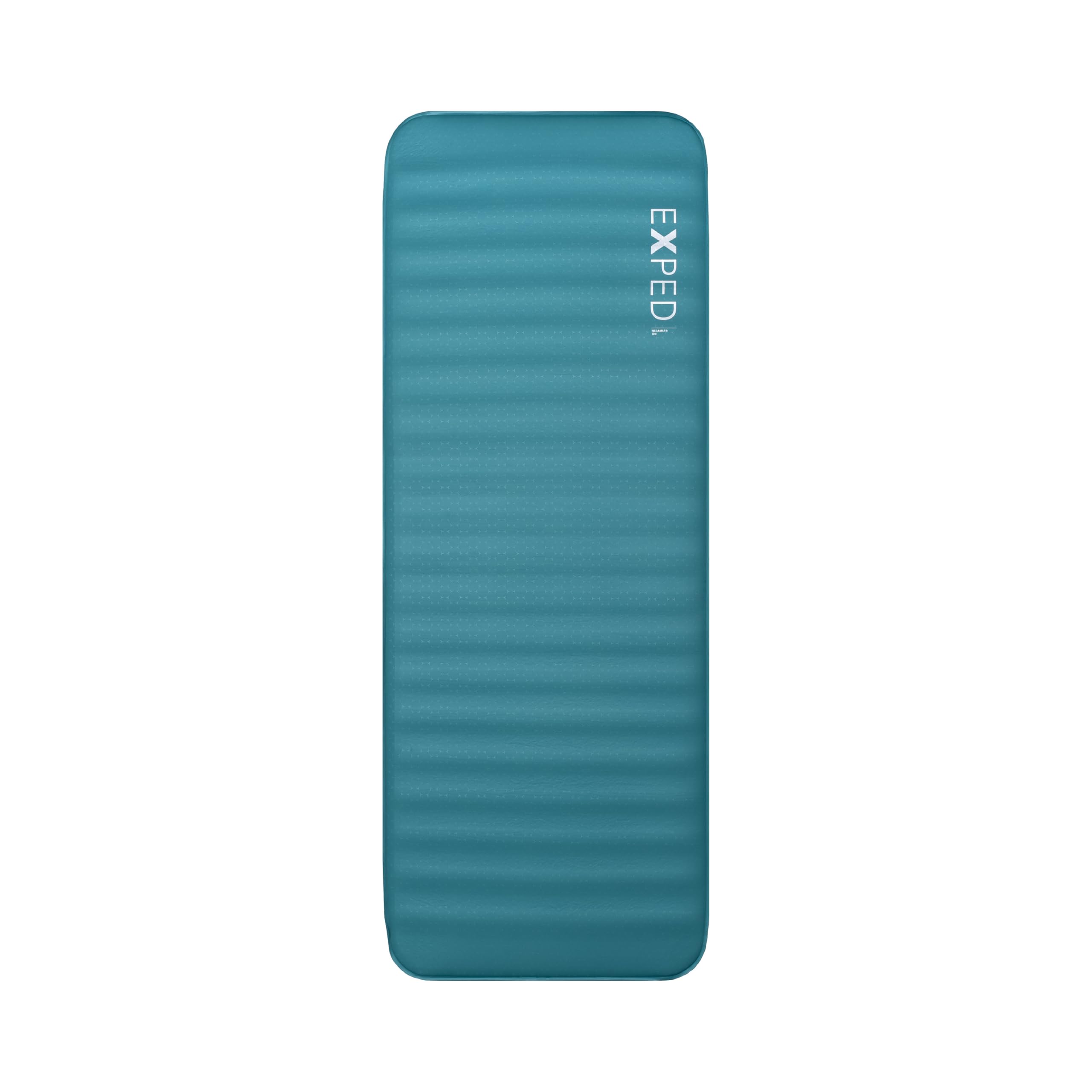
The Exped MegaMat is the closest you can get to your home mattress without dragging one into the woods. Its 4-inch open-cell foam core uses air-core channels and 3D vertical sidewalls that prevent the edge collapse common on cheaper pads — you can roll to the very edge without feeling like you will slide off. With an 8.1 R-value, it easily handles sub-freezing nights.
The 100% recycled 4-way stretch tricot polyester top fabric feels soft and has a slight give that cradles your hips and shoulders. The included Top-Up Pump lets you dial in the firmness from plush to firm with about 30 pumps. Self-inflation takes a few minutes, and the oversized carry bag makes rolling it back up straightforward, even with a bad knee.
Owners who replaced truck-bed or rooftop-tent mattresses with the MegaMat report it stays firm for an entire week without air loss. The trade-off is weight — at 73 ounces, this is strictly a car-camping or base-camp pad. The welded side handle makes it easy to drag across a tent floor, and the material resists stains and odors from pets or spills.
Why it’s great
- 4-inch foam feels like a real bed with no edge sag
- 8.1 R-value for true four-season insulation
- Firmness adjustable from plush to firm
Good to know
- Too heavy and bulky for backpacking
- Premium price reflects expedition-grade build
3. Hikenture Comfort Plus 4 Inch Thick Self Inflating Sleeping Pad

The Hikenture Comfort Plus offers a full 4 inches of thickness and a 9.5 R-value at a price that undercuts most comparable foam pads by a significant margin. The self-inflating foam core uses a patented two-way valve that lets air in quickly and seals tight with an audible click. The included pump sack gives you the final few bags of air for a custom firmness level.
At 80 inches long and 28 inches wide, the pad is noticeably longer and wider than standard models — a critical detail for taller sleepers or anyone who hates having their arms hang off the edge during the night. The polyester top is quiet and soft to the touch, and the foam-air hybrid design compresses to a relatively compact roll for car camping.
Customer feedback highlights how well the pad holds air over consecutive nights. Several users above 200 pounds report waking without hip or shoulder soreness. The deflation side of the valve includes a one-way stop that prevents air from sneaking back in, making roll-up faster. The main trade-off is the 6.5-pound weight, which locks it into car-camping duty rather than backpacking.
Why it’s great
- 4-inch thickness delivers excellent pressure relief
- 9.5 R-value handles all four seasons
- Extra-wide 28-inch surface fits taller and broader sleepers
Good to know
- 6.5 lbs makes it car-camping only
- Some units may need break-in inflation cycles
4. Big Agnes Rapide SL Insulated Sleeping Pad

The Rapide SL is designed for the hiker who refuses to trade comfort for pack weight. At only 17 ounces for the regular size, it inflates to 3.5 inches thick with a quilted top and offset I-beam construction that reduces the hammock effect typical of uninsulated air pads. The outer chambers are 4.25 inches, which creates a subtle cradle that keeps you centered on the pad all night.
Two layers of heat-reflective film push the R-value to 4.8 — warm enough for spring, summer, and fall backpacking, and marginal for winter if you pair it with a closed-cell foam pad. The high-volume valve works with the included Pumphouse inflation sack to fill the pad in about four minutes without introducing moisture from your breath.
Backpackers on long trips appreciate the double ripstop nylon and aviation-grade TPU lamination, which resist punctures from sharp tent stakes or rough ground. The pad deflates fast through the wide valve and packs smaller than a one-liter water bottle. Side sleepers in particular note the 4.25-inch outer chambers eliminate hip contact with the ground.
Why it’s great
- Ultralight at 17 oz for three-season backpacking
- Quilted top with offset I-beam for stable support
- 4.8 R-value with moisture-free pump sack inflation
Good to know
- R-value too low for deep winter camping
- Inflator bag takes practice to use efficiently
5. Therm-a-Rest NeoAir Xlite NXT Ultralight Sleeping Pad

The NeoAir Xlite NXT is the benchmark that all other ultralight pads are measured against. The regular size weighs just 13 ounces and rolls up to the size of a one-liter bottle, yet delivers a 4.5 R-value through Therm-a-Rest’s reflective ThermaCapture technology and Triangular Core Matrix construction that traps radiant and convective heat.
The 3-inch baffled internal structure creates a stable sleeping surface without foam. The WingLock valve is fast and intuitive — a quarter turn opens for inflation, a second position locks for deflation. The pump sack doubles as a stuff sack, keeping your setup dry and your pack weight low. The PFAS-free DWR coating on the stuff sack is an environmentally conscious update.
For hikers counting every gram, this pad is the gold standard for three-season use. It sacrifices a bit of plushness compared to foam-core pads — the air-only construction means you feel the baffles underneath — but the weight-to-warmth ratio is unmatched. If you need to shave ounces for a thru-hike, the Xlite NXT is the move.
Why it’s great
- Weighs only 13 oz while providing 4.5 R-value
- Baffled air design feels stable and supportive
- WingLock valve inflates and deflates rapidly
Good to know
- Air-only design can feel less cushioned than foam pads
- Premium price for ultralight performance
6. Therm-a-Rest MondoKing 3D Self-Inflating Sleeping Pad

The MondoKing 3D lives up to its name: 4.25 inches of StrataCore foam construction with vertical 3D sidewalls that deliver a 7.0 R-value — warm enough for serious winter camping. The stretch knit fabric top layer feels like a jersey sheet and eliminates the plastic-y texture that makes some pads noisy. The three-dimensional sidewalls maximize the useable surface, so you never roll onto a tapered edge.
The TwinLock valve system separates inflation and deflation into two one-way valves, making setup and breakdown significantly faster than single-valve competitors. The included pump sack doubles as a stuff sack, and the foam core packs down to a manageable 26 x 10.3 inches. At 5.5 pounds, it is car-camping territory, but that weight buys you true bed-level comfort.
Owners consistently report that the MondoKing supports sleepers over 300 pounds without sagging or deflating over a week of use. The 80 x 30-inch XX-Large size gives ample room for tall sleepers. A few users noted the pad can slide on slick tent floors, but that is a minor issue compared to the warmth and support it provides in sub-freezing conditions.
Why it’s great
- 7.0 R-value and 4.25-inch thickness for extreme cold
- 3D sidewalls maximize sleep surface width
- TwinLock valves speed up setup and deflation
Good to know
- 5.5 lbs makes it car-camping only
- Can slide on slick tent floors without non-slip coating
7. SoundAsleep Dream Series Luxury Air Mattress
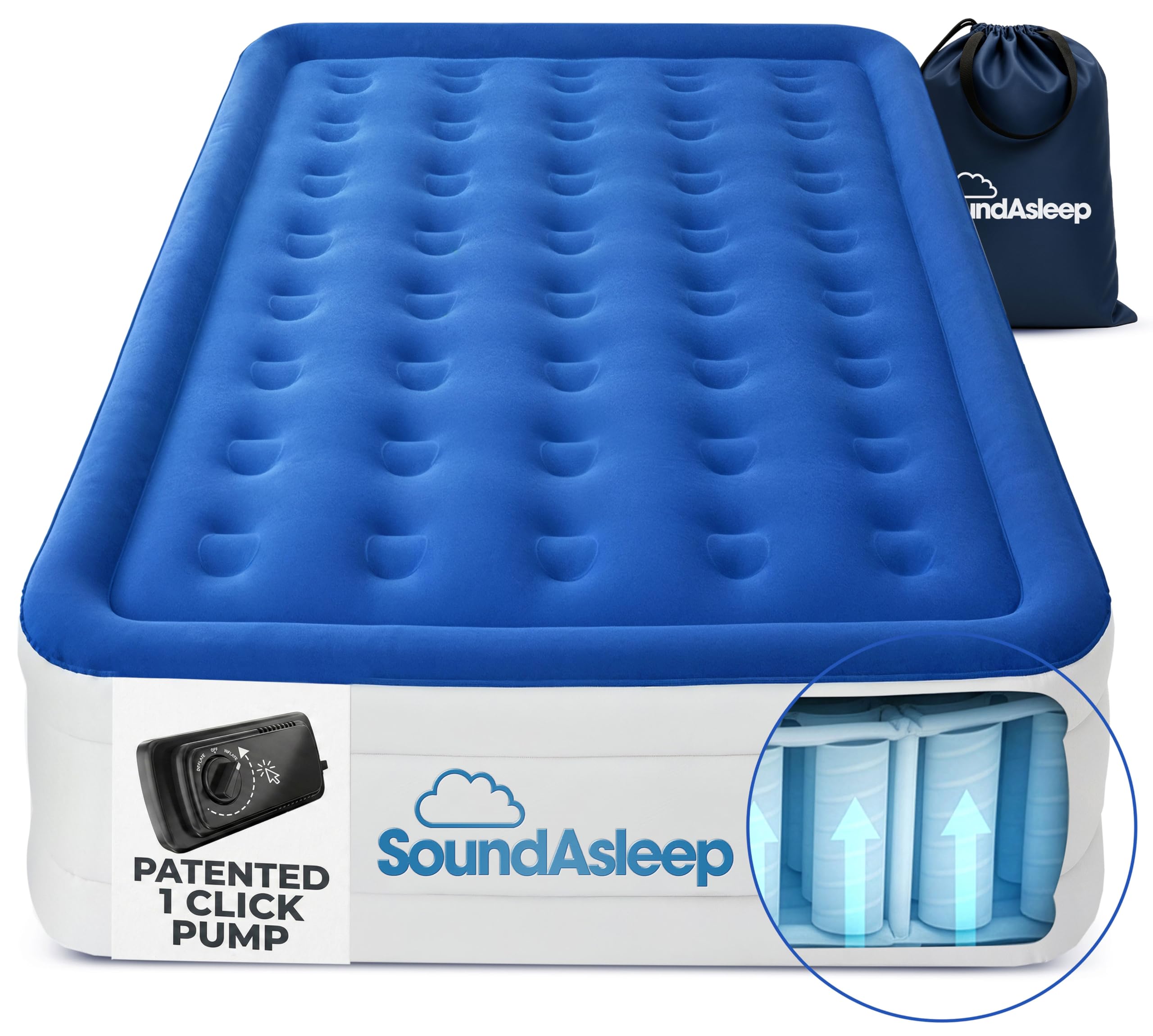
The SoundAsleep Dream Series is a completely different category from the foam pads above — it is a double-height, 18-inch-tall inflatable bed with 56 internal air coils that give it the structural feel of a real box spring. The ComfortCoil technology keeps the surface flat and firm, eliminating the pool-float sag that cheap air mattresses suffer from. The SureGrip bottom prevents sliding across the tent or guest room floor.
The patented one-click internal pump inflates the California King XL size (86 x 72 x 18 inches) in under four minutes and lets you adjust firmness on the fly. The extra-thick, waterproof flocked top feels like velvet and keeps fitted sheets in place without slipping. The dual-chamber construction provides ample support for two adults without the dreaded trough-in-the-middle effect.
Customer reviews highlight the excellent US-based customer support — several owners reported receiving immediate replacements when their first unit developed a leak after months of use. For glamping, family tent trips, or hosting guests at home, the Dream Series offers hotel-like comfort that no self-inflating foam pad can match. The trade-off is a large packed size and the need for a power source to run the pump.
Why it’s great
- 18-inch double height feels like a real bed
- 56 ComfortCoil air coils prevent sag and center deflation
- One-click internal pump inflates in under 4 minutes
Good to know
- Requires AC power or a large inverter for the pump
- Large packed size limits car-camping use
FAQ
Does a higher R-value always mean a better camping mattress?
Can I use a camping mattress with a built-in pump for backpacking?
What is the difference between self-inflating and memory foam camping pads?
Final Thoughts: The Verdict
For most users, the best camping mattress winner is the NYECHTO Self Inflating Sleeping Pad because it combines an excellent 9.5 R-value, a thick memory foam core, and a built-in electric pump at a mid-range cost that requires no extra gear purchases. If you want true bed-like comfort for car camping and don’t mind the weight, grab the Exped MegaMat Medium Wide. And for ultralight backpacking where every ounce matters, nothing beats the Therm-a-Rest NeoAir Xlite NXT.

Mo Maruf
I created WellFizz to bridge the gap between vague wellness advice and actionable solutions. My mission is simple: to decode the research and give you practical tools you can actually use.
Beyond the data, I am a passionate traveler. I believe that stepping away from the screen to explore new environments is essential for mental clarity and physical vitality.