Our readers keep the lights on and my smoothie glass nicely filled. As an Amazon Associate, I earn from qualifying purchases.
A good night’s sleep in the backcountry shouldn’t mean sleeping on a lumpy patch of ground or feeling trapped inside a tight nylon cocoon. A camping hammock tent solves both problems by lifting you off the cold, uneven terrain while wrapping you in waterproof fabric and bug-proof mesh. The result is a rest stop that feels more like a floating bed than a survival tarp, as long as you pick the right one for your body type, climate, and packing style.
I’m Mohammad Maruf — the founder and writer behind WellFizz. Over years of analyzing outdoor gear specifications, I’ve learned that the difference between a miserable and a restorative night in a hammock tent comes down to three things: the angle of your chosen lay, the density of the bug mesh, and how the rain fly manages condensation away from your sleeping bag.
Whether you plan to sleep under the stars week after week or just want a single reliable setup for annual trips, this guide breaks down the real-world strengths of each design to help you find the best camping hammock tent for your specific needs.
How To Choose The Best Camping Hammock Tent
Every hammock tent balances three competing priorities: how flat you can lie, how protected you are from weather, and how much weight you carry. Understanding these trade-offs before you purchase saves you from buying something that’s either too heavy to hike with or too drafty to sleep through.
Flat Lay vs. Cocoon Position
A standard gathered-end hammock forces your legs higher than your head, creating a banana-shaped curve that can strain your lower back overnight. Higher-end camping hammock tents address this with longer bed lengths (11 feet versus the common 9-foot design) or with spreader bars and arch pole systems that keep the fabric tensioned flat. If you are a side sleeper or have any back sensitivity, a design that enables a true diagonal lay is non-negotiable.
Rain Fly Coverage and Seam Quality
The difference between a refreshing sleep and a wet, miserable one is often just two inches of rain fly overhang. A quality rain fly extends at least 4 to 6 inches past the hammock edges and 12 inches past the ends. Taped or sealed seams prevent capillary water from seeping through needle holes. Look for 20D to 40D ripstop nylon with a silicone or PU coating rated above 1500mm — anything lower risks soaking through during sustained rain.
Bug Mesh Density and Zipper Quality
A fine mesh (20 holes per linear inch or higher) blocks no-see-ums and gnats, while a coarser mesh (around 10 holes per inch) keeps out mosquitoes but lets in smaller biting flies. Equally important is the zipper: a snag-free YKK zipper with a fabric guard strip on the inside prevents the mesh from catching and tearing in the middle of the night.
Packed Weight vs. Complete System
Some models integrate the bug net and rain fly into a single attached unit, which saves setup time but often adds bulk. Others use modular components that allow you to leave the rain fly behind in fair weather. A typical all-in-one camping hammock tent weighs between 3.5 and 4.5 pounds. If you are backpacking more than five miles to camp, every ounce counts — consider a modular setup that lets you shed the fly when conditions are clear.
Quick Comparison
On smaller screens, swipe sideways to see the full table.
| Model | Category | Best For | Key Spec | Amazon |
|---|---|---|---|---|
| onewind 11ft Bundle | Premium | Flat Diagonal Lay | 11ft x 68in single-panel bed | Amazon |
| Lawson Blue Ridge | Premium | Spreader Bar Flatness | 90in x 42in with arch poles | Amazon |
| OneTigris Backwoods 2.0 | Mid-Range | Bushcraft Shelter | 75D Nylon, 1500mm rating | Amazon |
| Night Cat 4-in-1 | Mid-Range | 4-in-1 Versatility | 132in length, 440lb capacity | Amazon |
| WintMing 3-in-1 | Mid-Range | Pop-Up Frame System | Aluminum poles, 440lb load | Amazon |
| CROSSHIP All-in-One Set | Budget | Complete Kit with Underquilt | 700g polyester underquilt fill | Amazon |
| OneTigris KOMPOUND | Budget | Zip-in Thermal Cover | 210T Nylon, 8.5ft x 4.2ft | Amazon |
In‑Depth Reviews
1. onewind 11ft Camping Hammock with Rain Fly and Bug Net
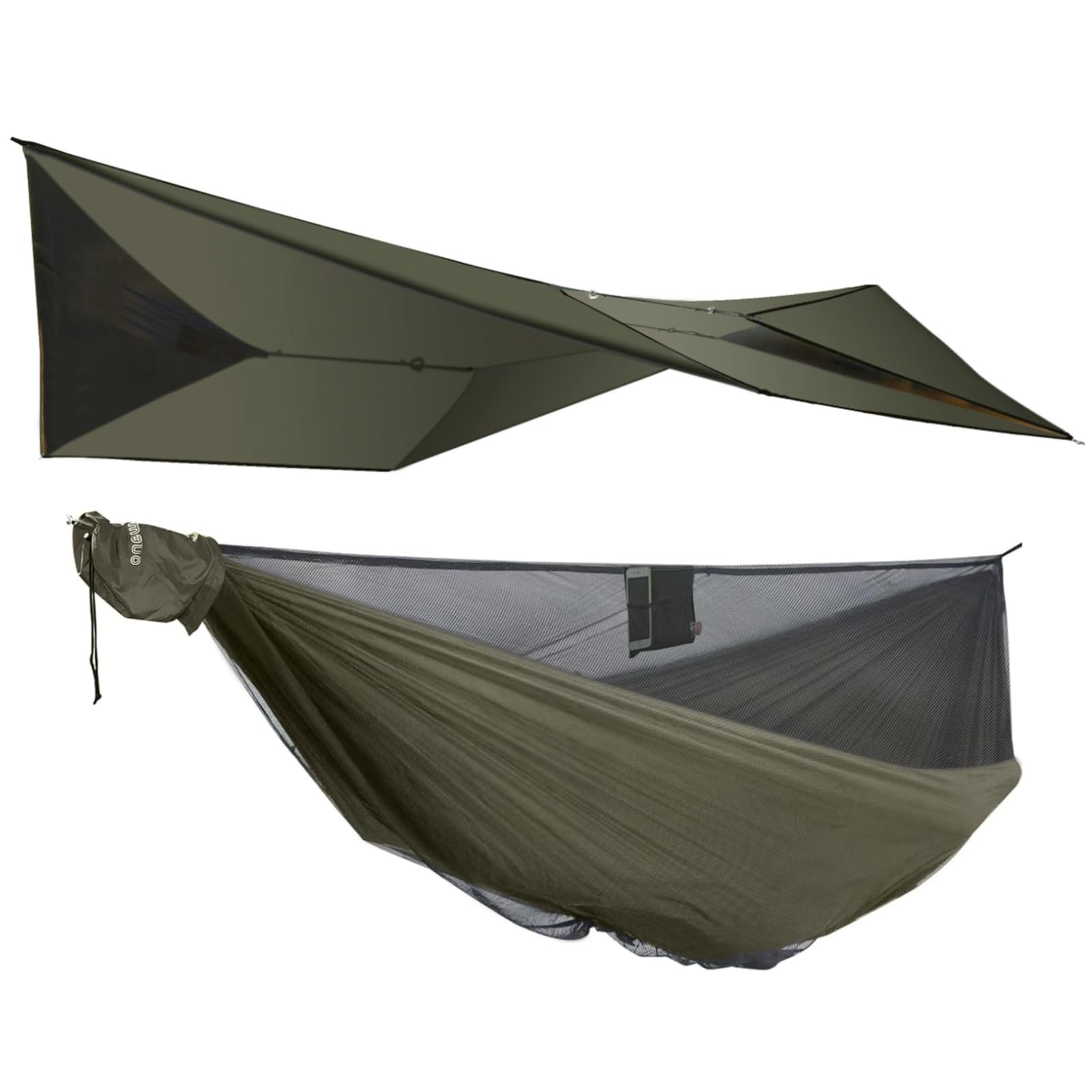
The onewind 11-foot bundle stands out because of its single-panel hammock bed, which eliminates the center seams found on three-panel parachute hammocks. At 11 feet long and 68 inches wide, this bed allows a true diagonal lay for most adults up to around 6-foot-3, distributing weight evenly across the fabric rather than forcing a curved spine. The 12-foot by 10-foot silnylon tarp provides generous door-style coverage that blocks wind-driven rain from the sides and ends.
The system includes a removable bottom-entry bug net that avoids the common frustration of zippers catching on mosquito mesh. The UHMWPE adjustable ridgeline lets you fine-tune the sag angle, and the four aluminum stakes and reflective guylines make evening setup straightforward. At 4.6 pounds total, this is not the lightest option for ultralight purists, but it balances durability and comfort for regular backpacking trips.
Customer experiences confirm the tarp handles 3°F snow conditions when used with an underquilt and that the wide bed allows heavier users — tested up to 270 pounds — to sleep comfortably. The only real learning curve is the bottom-entry bug net design, which some users initially find confusing before they adjust the ridgeline tension correctly.
Why it’s great
- 11-foot single-panel bed enables flat diagonal sleep for tall users
- 12×10 ft silnylon tarp with doors provides full storm coverage
- Bottom-entry bug net eliminates zipper snag issues
Good to know
- Packed weight of 4.6 lbs may be high for ultralight backpackers
- Bottom-entry bug net requires practice to tension correctly
2. Lawson Hammock Blue Ridge Camping Hammock and Tent
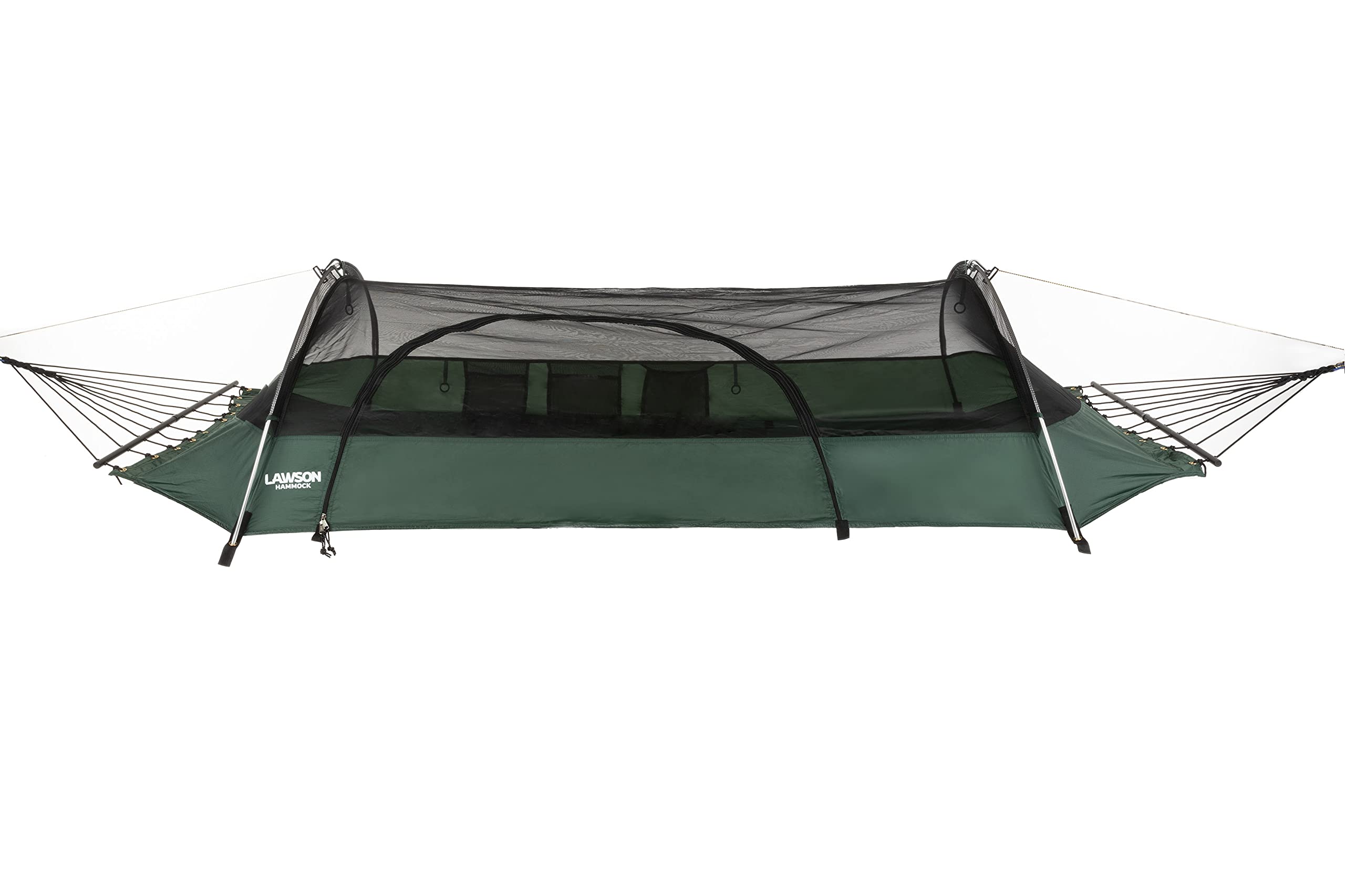
The Lawson Blue Ridge uses a patented arch pole and spreader bar system that keeps the hammock bed tensioned flat, essentially eliminating the cocoon effect that defines traditional gathered-end hammocks. At 90 inches long and 42 inches wide, the bed feels more like a narrow cot — you can sleep on your side, back, or even belly without the fabric wrapping around your shoulders. The detachable rain fly and integrated bug net convert the hammock into a fully enclosed tent system.
A standout feature of this design is its ability to pitch on the ground using trekking poles if trees are unavailable, making it one of the most versatile options for alpine terrain or desert camping above the treeline. The dry weight with poles is 4.3 pounds, and the packed size of 22 by 6 inches fits inside most backpack lids. The rain fly clips on separately, allowing you to leave it behind when clear skies are guaranteed.
The main trade-off is the 275-pound weight capacity, which is lower than many gathered-end hammocks. Entry and exit also require a bit more balance because the frame does not swing as freely as a traditional hammock.
Why it’s great
- Spreader bar creates a flat, cot-like sleeping surface
- Can be used on the ground as a tent when trees are absent
- Proven durability with decade-long lifespan reported
Good to know
- 275 lb weight limit is lower than many alternatives
- Requires side guy lines for lateral stability
3. OneTigris Backwoods Bungalow Bushcraft Shelter 2.0

The Backwoods Bungalow 2.0 is a hybrid tent-hammock shelter that functions more like a Baker-style canvas tent than a standard hammock. The 75D ripstop nylon body with a 1500mm waterproof rating provides exceptional durability against branches and rock abrasion. The front canopy can be propped open with trekking poles to create a covered porch area — a rare feature that appeals to bushcrafters who cook under shelter or want to operate a small wood stove safely away from the sleeping area.
Weighing 3.2 pounds without poles, this shelter uses an A-frame ridgeline setup between two trees. The double-layer entrance combines a mesh door for ventilation with a solid nylon flap that zips shut during storms. A rear mesh vent with an external flap promotes crossflow, reducing condensation buildup — critical for anyone using a camp stove inside the vestibule.
The main limitation is size: at 7 feet long, 4 feet wide, and 3.8 feet tall at the peak, this shelter is best suited for a single occupant plus gear. Users over 6-foot-2 report that their head and feet press against the ends, especially when the fly is fully closed and condensation can wick through contact points. The shelter requires a minimum of 10 to 14 stakes for full setup, which adds weight and anchor time in hard ground.
Why it’s great
- 75D ripstop fabric is exceptionally puncture-resistant
- Porch vestibule supports stove use and covered cooking
- Dual-layer front opening with mesh and solid fly
Good to know
- Too short for users over 6-foot-2 who lie fully diagonal
- Requires many stakes (10-14) for full storm setup
4. Night Cat Camping Hammock Tent 4-in-1
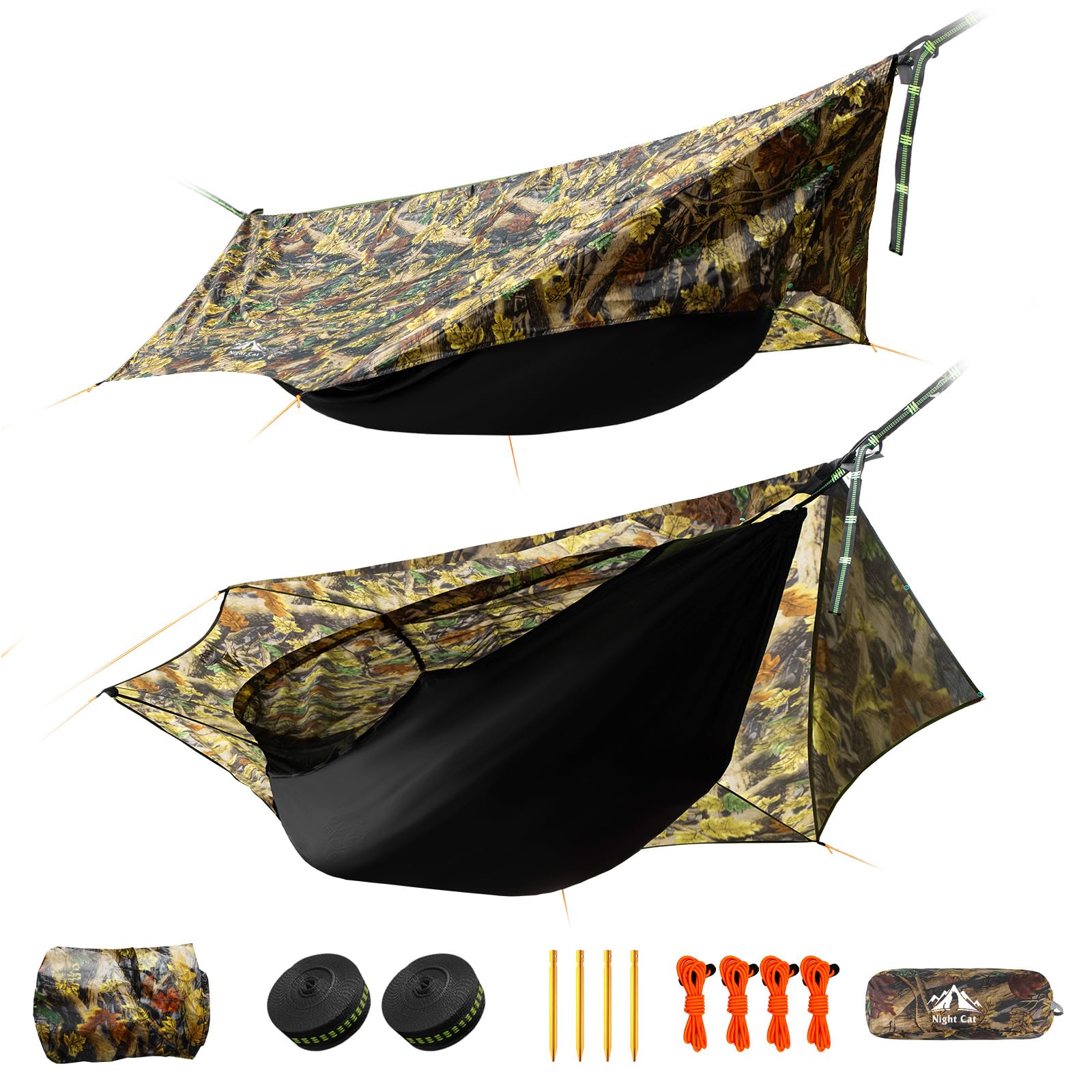
The Night Cat 4-in-1 combines a hammock, rain fly, bug net, and a built-in mattress sleeve into a single compact system. At 132 inches long and 55 inches wide, the bed accommodates taller users without their feet pressing into the fabric. The microfiber material feels softer against skin than standard nylon, and the internal sleeve accepts most closed-cell foam pads, preventing them from sliding around during the night.
Setup takes around three minutes once the tree straps are in place, thanks to an offset lay that helps keep the user centered and stable. The camouflage color pattern is popular among military and hunting users operating in CENTCOM environments. At 3.5 pounds packed, this is one of the lighter all-in-one options, though users report that the rain fly lacks grommets on two corners, requiring creative staking with the included pegs.
One early reviewer found the original rain fly was not fully waterproof, but the manufacturer proactively sent a replacement 2-person tent at no cost — a signal that the company stands behind the product. The included tree straps are shorter than ideal for large-diameter trees, so having a backup set of longer straps is wise.
Why it’s great
- Extra-long 132-inch bed fits tall users comfortably
- Built-in mattress sleeve keeps sleeping pad centered
- Lightweight at 3.5 lbs for a complete 4-in-1 system
Good to know
- Rain fly has no grommets on two corners for staking
- Included tree straps are short for wide trees
5. WintMing Hammock with Mosquito Net and Rain Fly Cover 3-in-1

The WintMing 3-in-1 uses two aluminum frame poles that run along the sides of the integrated bug net to keep the mesh fully tensioned away from your face. This pop-up style design means you do not have to fiddle with a separate ridgeline or worry about sagging netting touching your skin. The hammock itself measures 107 inches by 55 inches, providing enough room for a single user plus a small gear storage bag on the interior ridgeline.
At 3 pounds and packing down to 15.7 by 5.5 by 4.7 inches, this system is one of the most packable mid-range options. The rain fly attaches via C-clips to the same hook points that hold the hammock suspension, creating a sealed envelope that directs water away from the opening. The 440-pound weight capacity makes it accessible to a wide range of body types, though the base fabric is notably thin and may require a ground cloth if you ever need to pitch it as a ground bivy.
Some users report that the rain fly opening is sewn on the opposite side from the hammock opening, which forces the user to either sleep facing away from the view or to flip the entire setup — a quality control inconsistency noted by several reviewers. Once positioned correctly, the system holds up well in windy conditions up to 50 mph when paired with an underquilt, and the included aluminum C-clips and anti-flip stakes add stability.
Why it’s great
- Frame poles keep bug net fully tensioned off the face
- Compact packed size at 15.7 inches long
- Ridgeline interior hooks and pocket for gear storage
Good to know
- Rain fly and hammock opening can be misaligned from factory
- Base fabric is thin and may not handle ground pitching
6. CROSSHIP Camping Hammock with Mosquito Net, Underquilt & Rain Fly
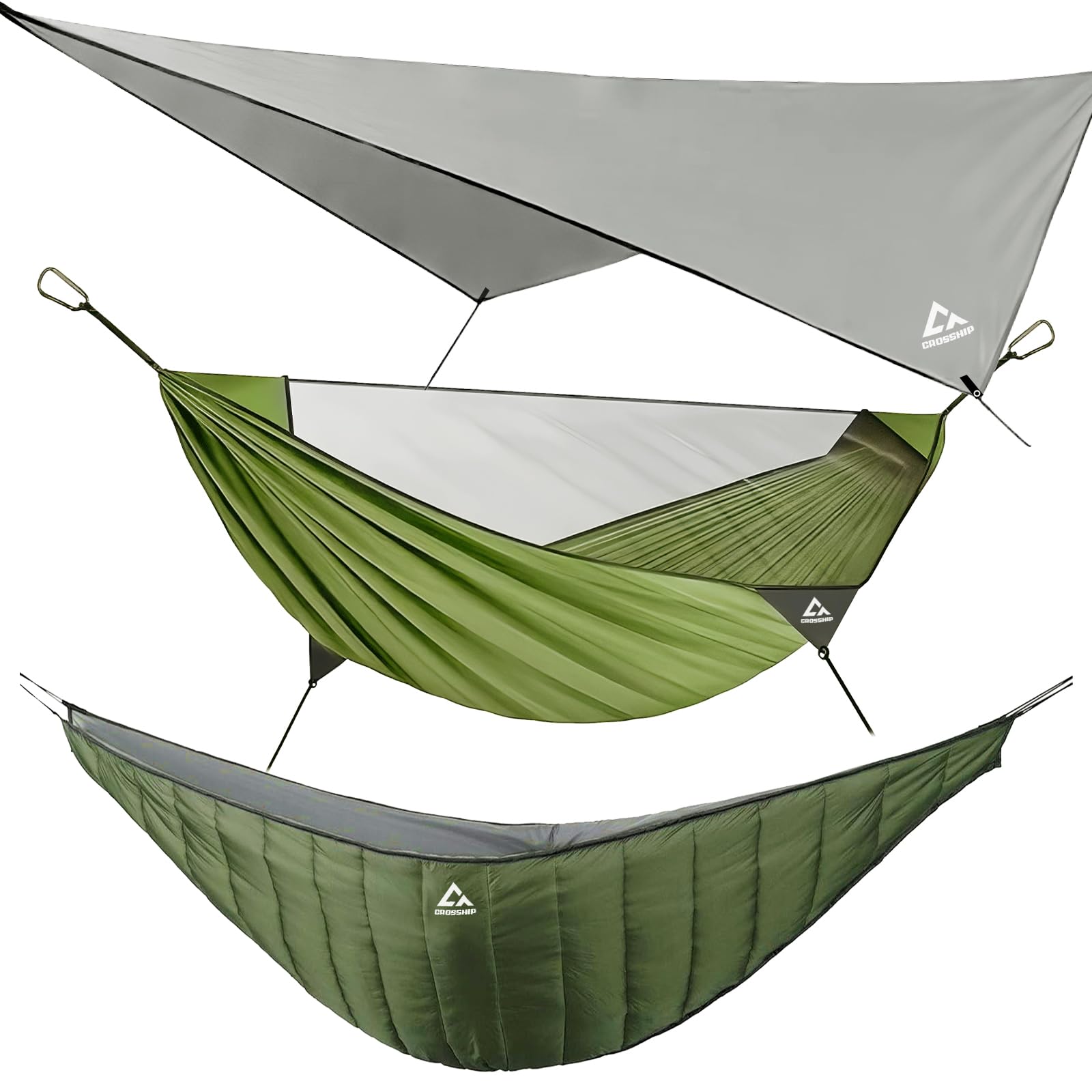
The CROSSHIP set is the only complete kit in this guide that includes a dedicated underquilt from the start, making it the most straightforward option for cold-weather campers who do not already own insulation. The 700-gram polyester fill underquilt pairs with a 20D ripstop nylon shell and a DWR coating, rated for temperatures between 41°F and 68°F. Combined with a sleeping bag, users report staying warm in actual 30°F and even 0°F snow conditions.
The hammock itself uses 210T parachute nylon with a B3-grade mesh density on the bug net, which is finer than the standard mosquito netting and effectively blocks no-see-ums. The rain fly features a triangular design that covers the hammock ends more thoroughly than a simple rectangular tarp. Setup is quick, and the system packs into a stuff sack that fits neatly in a standard 40-liter backpack.
The main drawback is the underquilt attachment system: the elastic tie-out loops have been reported to pull out of the quilt stitching under tension, which requires a field repair with a cord lock. The hammock is listed as a 2-person unit but realistically fits only one adult plus gear due to its gathered-end design. The tree straps included are functional but on the shorter side, which may be an issue with very wide tree trunks in old-growth forests.
Why it’s great
- Includes a dedicated 700g underquilt for cold-weather camping
- B3 mesh blocks no-see-ums and small biting insects
- Triangular rain fly provides better end coverage
Good to know
- Underquilt attachment loops may pull out under tension
- Listed as 2-person but realistically 1 adult plus gear
7. OneTigris KOMPOUND Camping Hammock with Net

The OneTigris KOMPOUND packs a lot of functionality into a 2-pound package. The standout feature is the zip-in internal cover that closes off the top of the hammock, trapping warm air near your sleeping bag and preventing frost from condensation from forming on your insulation. This is uncommon in entry-level hammock tents and makes a real difference on nights that dip below freezing.
The 210T nylon taffeta fabric is lighter than the 75D alternatives found on bushcraft shelters, but it still holds up to regular weekend use. Elasticated side ropes prevent the hammock from folding closed around your face, and the adjustable ridgeline supports a lantern hanger and a small storage pocket that doubles as a sling. The included 12KN carabiners and 9.2-foot tree-friendly straps are more robust than what comes with most budget sets.
The trade-off for the low weight is a shorter hammock bed at 8.5 feet long and 4.2 feet wide. Taller users above 5-foot-10 will find the diagonal lay limited — you may need to replace the ridgeline with an adjustable Amsteel line and add continuous loops for easier tension adjustment. The YKK zippers are quality, but users report they occasionally catch on the mesh if not aligned carefully during entry.
Why it’s great
- Zip-in internal top cover reduces frost and retains warmth
- Ultralight at 2 lbs packed weight
- Robust 12KN carabiners included
Good to know
- 8.5ft bed length limits diagonal lay for taller users
- Zipper may catch on mesh if not perfectly aligned
FAQ
Can I sleep directly on the ground with a camping hammock tent?
How do I prevent condensation inside the rain fly during cold weather?
What length hammock do I need for a flat diagonal sleep?
Do I need an underquilt, or can I use a sleeping pad inside the hammock?
Final Thoughts: The Verdict
For most users, the best camping hammock tent winner is the onewind 11ft Bundle because its single-panel bed provides a flat diagonal lay for tall campers, the 12×10-foot tarp handles nasty weather, and the removable bug net avoids common zipper snags. If you want a flat, cot-like sleeping surface that can also pitch on the ground, grab the Lawson Hammock Blue Ridge. And for bushcrafters who need a stove-ready shelter with heavy-duty fabric, nothing beats the OneTigris Backwoods Bungalow 2.0.

Mo Maruf
I created WellFizz to bridge the gap between vague wellness advice and actionable solutions. My mission is simple: to decode the research and give you practical tools you can actually use.
Beyond the data, I am a passionate traveler. I believe that stepping away from the screen to explore new environments is essential for mental clarity and physical vitality.