Our readers keep the lights on and my smoothie glass nicely filled. As an Amazon Associate, I earn from qualifying purchases.
Dragging a bulky CPAP into the backcountry or an RV feels counterintuitive to the freedom you’re chasing. The hum of a power station, the hunt for a 120V hookup, and the weight of a backup battery can turn a restful night under the stars into a logistical puzzle. A dedicated camping CPAP setup solves this by pairing your therapy device with a portable, high-capacity power source designed for off-grid endurance.
I’m Mohammad Maruf — the founder and writer behind WellFizz. I’ve spent countless hours cross-referencing battery chemistries, inverter efficiencies, and real-world runtime reports to separate the gear that actually lasts from the gear that leaves you gasping at 3 AM.
Whether you’re a weekend car camper, a thru-hiker who packs every ounce, or an RV full-timer preparing for dry camping, finding the right camping cpap means matching battery capacity to your specific machine’s draw, pressure settings, and tolerance for extra weight — all without sacrificing a full night’s therapy.
How To Choose The Best Camping CPAP
Selecting a camping CPAP setup isn’t just about grabbing the biggest battery on the shelf. You need to match the power source to your therapy machine’s voltage requirements, your personal pressure settings, and the environmental conditions of your campsite. Three factors dominate the decision: total capacity in watt-hours, the battery’s peak output capability, and how efficiently it handles your specific device.
Capacity: Watt-Hours, Not Amp-Hours
Every CPAP machine draws a specific wattage that varies with pressure and accessory use. A typical ResMed AirSense 11 at 10 cm H₂O without humidifier draws about 30W. A 100Wh battery will therefore run it for roughly 3.3 hours — well short of one night. A 300Wh pack gives you about 10 hours of safe margin. Always overestimate your nightly consumption by 20% to account for temperature drops and battery aging.
Voltage Matching: 12V vs. 24V Machines
Most modern ResMed machines (AirSense 10/11, AirCurve) operate on a 24V input, while many older units and Philips DreamStation models run on 12V. Dedicated camping CPAP batteries like the Pilot-24 Lite are wired for 24V systems, while the Pilot-12 Lite handles 12V gear. Mismatching voltage can damage the machine or simply fail to power it. Some premium travel batteries such as the Zopec Explore Mini use auto-voltage sensing to adjust on the fly.
Weight vs. Runtime Tradeoff
Dedicated CPAP batteries under 2 lbs offer maximum portability for backpacking and air travel, but rarely exceed 100Wh — enough for one to two nights without humidifier. Larger power stations weighing 10-28 lbs with 500-1000Wh capacity can run a CPAP for a full week camping, but they also charge phones, laptops, and small appliances. Choose based on whether your camping style is carry-everything versus drive-and-set-up.
Quick Comparison
On smaller screens, swipe sideways to see the full table.
| Model | Category | Best For | Key Spec | Amazon |
|---|---|---|---|---|
| EASYLONGER ES960 PRO | Mid-Range | Multi-night car camping | 297.6Wh LiFePO4, 6.6 lbs | Amazon |
| Pilot-24 Lite | Mid-Range | ResMed AirMini/AirSense travel | 95Wh, 1.3 lbs, 24V | Amazon |
| Pilot-12 Lite | Mid-Range | DreamStation 12V travel | 95Wh, 1.3 lbs, 12V | Amazon |
| Zopec Explore Mini | Premium | Ultralight air travel & hiking | 99.9Wh, 1.1 lbs, auto-voltage | Amazon |
| DaranEner 600W + Solar Panel | Mid-Range | Solar-powered off-grid basecamp | 576Wh LiFePO4, 13.7 lbs | Amazon |
| Pilot Flex 98Wh | Premium | Dual-voltage frequent fliers | 98Wh, 1.9 lbs, 12V/24V | Amazon |
| Zopec Explore 5700 | Premium | Up to 3 nights without humidifier | 5700 mAh, 2.5 lbs | Amazon |
| ALLWEI 1200W | Premium | Full home backup & RV camping | 1008Wh LiFePO4, 28 lbs | Amazon |
| Jackery Explorer 1000 v2 | Premium | Multi-night basecamp + appliance power | 1070Wh LiFePO4, 23.8 lbs | Amazon |
In‑Depth Reviews
1. EASYLONGER ES960 PRO
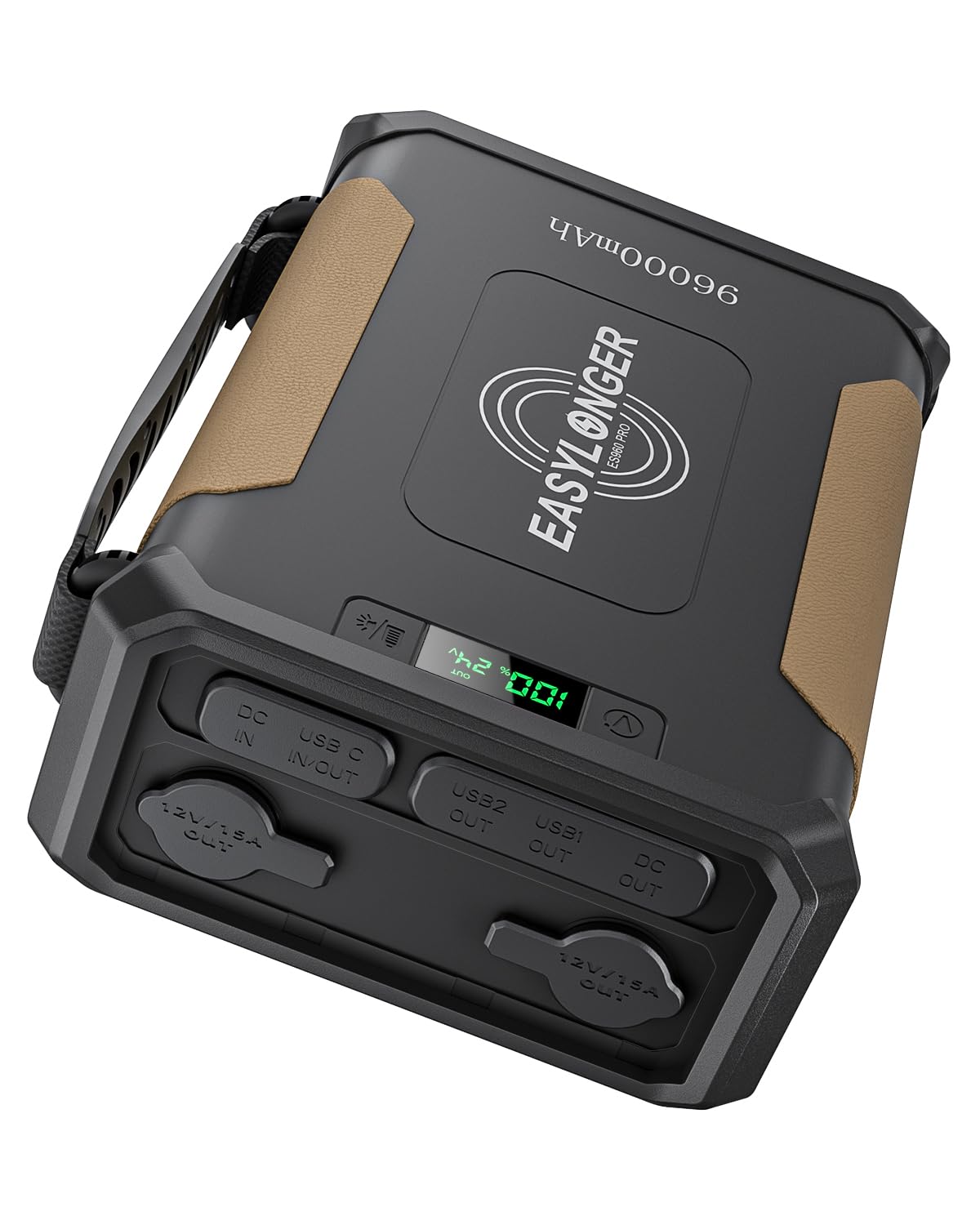
The EASYLONGER ES960 PRO strikes the sweetest balance between portability and raw capacity for dedicated camping use. Its 297.6Wh LiFePO4 pack delivers verified multi-night performance — real users report 36+ hours of runtime on an AirSense 10 with heat and humidity off, and still had 25% charge remaining. That’s roughly three full nights of therapy without recharging, which puts it ahead of most portable CPAP batteries in this weight class.
At 6.6 pounds, it’s carry-friendly for car campers, RV travelers, and even short backpacking trips where you’re not counting every gram. The built-in 100W USB-C port can top off a laptop or phone simultaneously, and the pass-through charging feature lets you run the CPAP directly while the battery recharges from a wall outlet or solar panel. The included four-cable set supports ResMed, Philips, and Luna machines without extra adapters.
Some users noted the light switch is easy to bump on accidentally, and the 297.6Wh capacity exceeds the 160Wh FAA limit, so it’s not suitable for airline carry-on. The 6.6-pound weight also keeps it out of ultralight backpacking territory. But for car camping and RV trips where reliable multi-night power is the priority, this unit is hard to beat.
Why it’s great
- Proven 3+ nights runtime on a single charge
- LiFePO4 chemistry with 3000+ cycle lifespan
- Pass-through charging for uninterrupted therapy
Good to know
- Not TSA-compliant for air travel (over 160Wh)
- Heavier than dedicated travel batteries
2. Pilot-24 Lite

The Pilot-24 Lite is the go-to dedicated CPAP battery for ResMed users who fly often and camp moderately. At just 1.3 pounds and 95Wh capacity, it slips into a carry-on without raising eyebrows — TSA and FAA compliant. Users report 8 to 16 hours of runtime on AirSense 10 and AirMini machines when running without humidifier or heated tube, covering one full night comfortably and often stretching into a second.
The aluminum case houses LG industrial-grade lithium-ion cells that recharge in 2-3 hours from a standard wall adapter. Included cables connect directly to AirMini and AirSense 11, while separate cables cover AirSense 10 and other 24V machines. The compact footprint (6.7 x 3.5 x 0.8 inches) lets it tuck into the side pocket of a CPAP travel case or backpack without adding bulk.
A small but notable downside: several users on camping forums report that the included DC cables can be finicky, requiring a precise insertion angle to maintain connection. The 95Wh capacity also means running a humidifier cuts runtime dramatically — expect closer to 4 hours with a mid-level heat setting. If your camping style involves driving to a site and sleeping in a tent, this is a perfect lightweight companion. For extended off-grid trips, you’ll want a larger pack.
Why it’s great
- Ultra-light at 1.3 lbs for air travel and backpacking
- Fast 2-3 hour recharge with included adapter
- TSA-approved 95Wh capacity
Good to know
- DC cables require careful alignment to stay connected
- Humidifier use drastically cuts runtime
3. Pilot-12 Lite
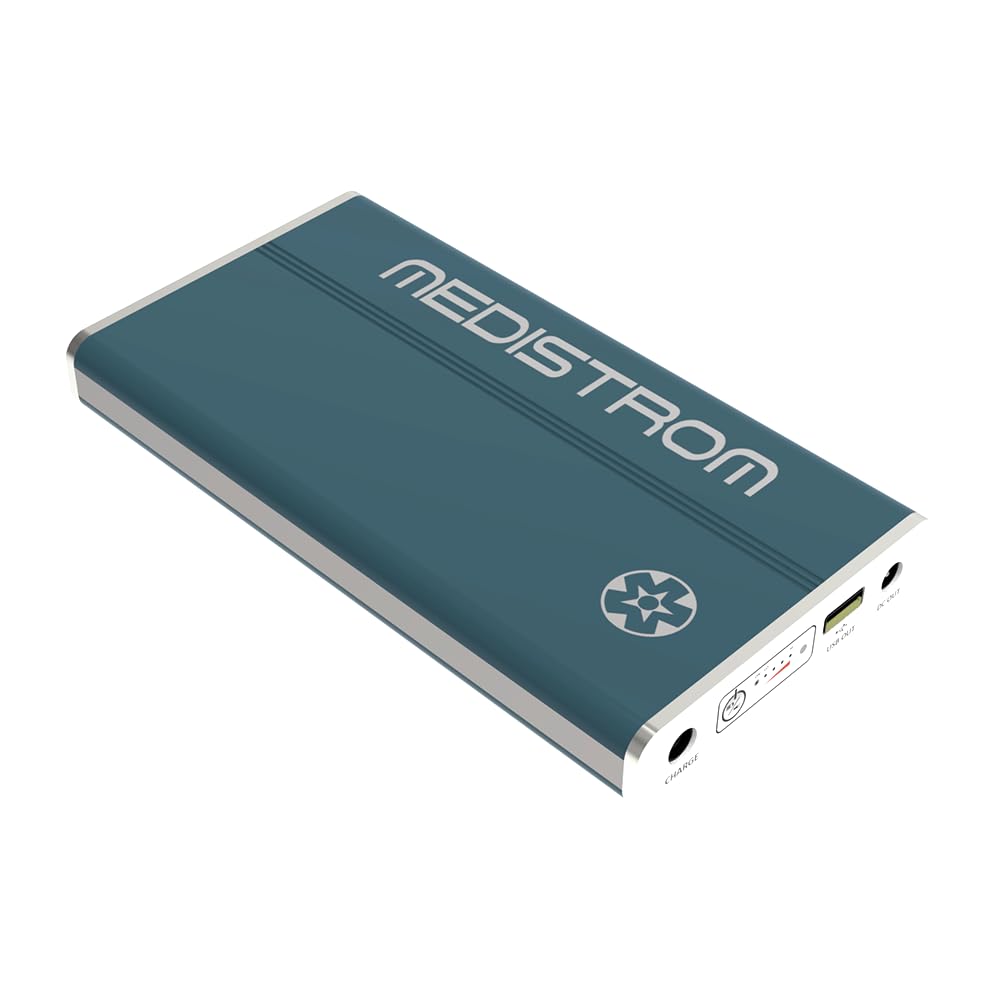
If you’re running a 12V CPAP like the Philips DreamStation 1 or 2, the Pilot-12 Lite is the 1.3-pound partner you want in your gear bag. It shares the same aluminum-and-LG-cell build as the 24V version but is wired specifically for 12V machines. Users report remarkable efficiency — one DreamStation 2 user logged 2.75 nights (roughly 26 hours total) on a single charge with humidifier and heated tube disabled, all in a 50°F campsite.
The battery recharges in under 2 hours using the DreamStation’s own power supply, which means one less proprietary charger to pack. It also doubles as a UPS: when plugged into wall power, it automatically switches to battery during an outage without interrupting therapy. The 95Wh capacity makes it TSA-friendly, and the unit fits neatly into any laptop or CPAP bag sleeve.
On the downside, compatibility is limited to the provided DreamStation cables — you’ll need to purchase separate adapters for ResMed machines if that’s your primary device. A small number of users experienced device failure after extended use, though customer service responsiveness was mixed. For dedicated DreamStation campers who prioritize weight and carry-on access, this is the clear pick.
Why it’s great
- Almost 3 nights of runtime per charge in testing
- Recharges via DreamStation power supply — no extra cable
- TSA-friendly 95Wh for airline travel
Good to know
- 12V only — not compatible with 24V ResMed machines
- Warranty concerns reported for long-term durability
4. Zopec Explore Mini

The Zopec Explore Mini claims the title of world’s smallest and lightest CPAP travel battery at just 1.1 pounds and a 6.5 x 3 x 1-inch footprint. Despite the tiny size, it packs 99.9Wh using Panasonic lithium-ion cells (the same chemistry Tesla uses in its vehicles) and features patented auto-voltage technology that adapts to 12V, 19V, and 24V machines automatically. No switches, no adapters — just plug in and go.
Real-world testing backs up the specs: a verified user report shows the Mini running a ResMed AirMini for 2.75 nights on a single charge. Recharge is equally impressive — a full charge in 1.5 hours using the included 65W USB-C charger. The unit also includes a travel pouch, three ResMed cables, and an 18-month warranty. The solid-state cooling design eliminates the noisy fan found in many larger batteries.
The biggest tradeoff is the tradeoff inherent in all tiny batteries: 99.9Wh limits you to roughly two nights of therapy without humidifier. Some users report the unit runs warm during charging, and a few received units that were dead on arrival. The USB-C charging fault appears in early customer reports, so testing your unit before leaving on a trip is essential. For fly-and-sleep users who want to snore silently on redeye flights or camp out of a backpack, the weight savings are unmatched.
Why it’s great
- World’s lightest CPAP battery at 1.1 lbs
- Auto-voltage for all machine types
- Fast 1.5-hour recharge with USB-C 65W
Good to know
- 2-night max runtime without humidifier
- USB-C charging reliability issues reported
5. DaranEner 600W + Solar Panel
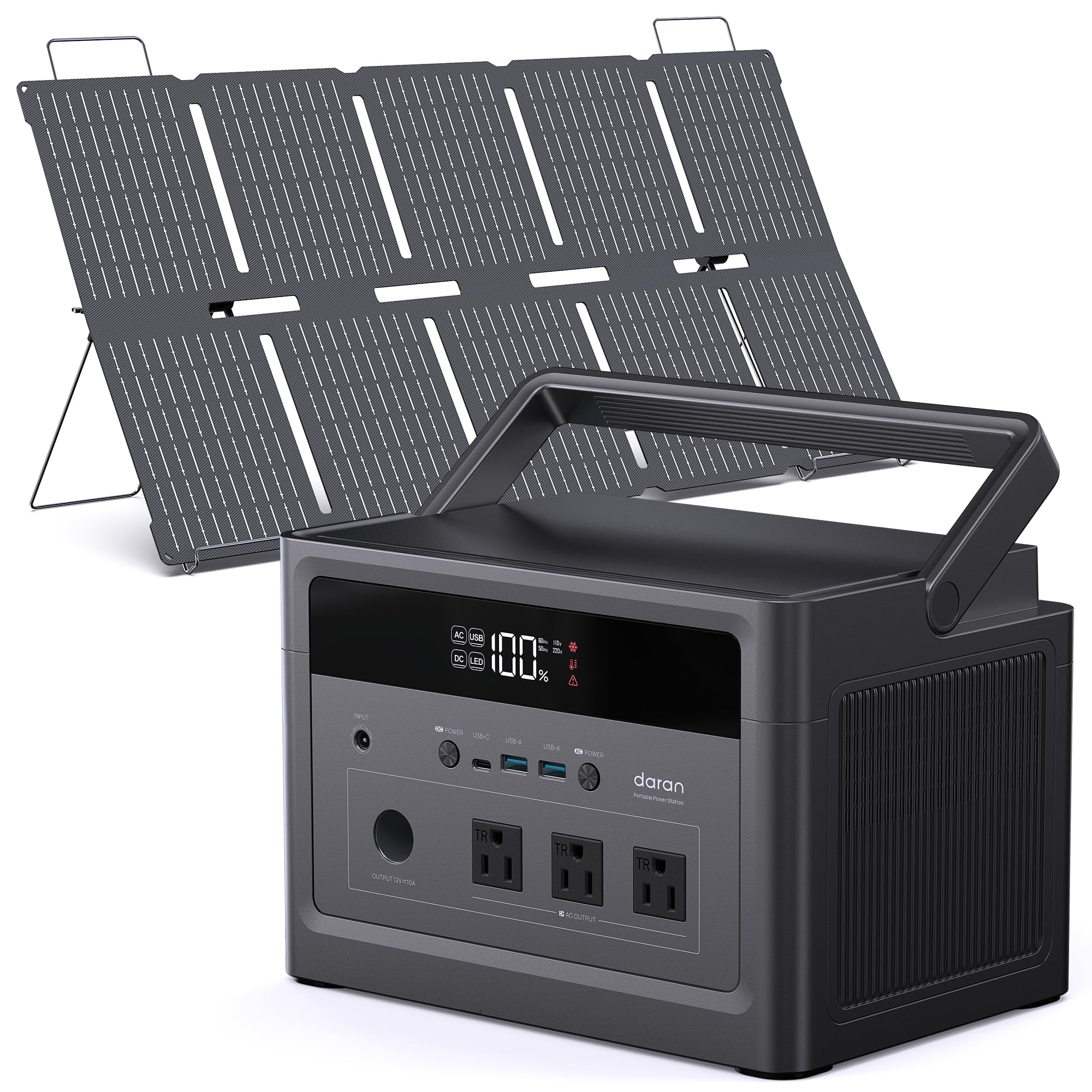
The DaranEner Cubus600L bundles a 576Wh LiFePO4 power station with a foldable 100W solar panel, creating a self-sustaining CPAP power solution for off-grid campsites. With 600W continuous AC output (1200W surge), it can run a CPAP machine for roughly 10-20 hours depending on settings — covering multiple nights without any recharging from a wall outlet. The included 100W panel can replenish the battery in full sunlight within 6-8 hours, effectively giving you unlimited off-grid therapy.
At 13.7 pounds, it’s too heavy for backpacking but perfectly manageable for car camping, RV sites, and basecamp setups. The seven-port hub includes three AC outlets, a 100W USB-C PD port, two USB-A ports, and a 120W car socket — enough to power a CPAP, charge phones, and run a camp light simultaneously. The LiFePO4 cells are rated for over 3,000 cycles to 80% capacity, and the smart BMS provides overcharge and short-circuit protection.
Some users found the unit couldn’t reliably power low-wattage appliances like coffee makers due to inverter sensing thresholds, and the solar panel’s stand is a bit finicky in wind. CPAP runtime can vary significantly based on ambient temperature — cold nights below freezing can drain the battery faster. If you want a green, multi-day CPAP power system for basecamp use and don’t mind the weight, this solar bundle is an excellent investment.
Why it’s great
- Includes 100W solar panel for renewable off-grid power
- 576Wh capacity covers 2-4 nights of CPAP therapy
- Quiet fanless operation won’t disturb campsite
Good to know
- 13.7 lbs — not suitable for backpacking
- Solar panel stand is unstable in windy conditions
6. Pilot Flex 98Wh

The Pilot Flex bridges the gap between single-voltage travel batteries and full power stations by offering native 12V and 24V support in one compact 98Wh unit. At 1.9 pounds and 6.57 x 2.95 x 0.79 inches, it’s slightly bulkier than the Lite series but adds universal compatibility for ResMed, Philips, and other brands without needing separate adapters. A true dual-voltage battery for multi-machine households.
Runtime tests with the AirSense 11 show roughly 8 hours per charge with humidity and tube heat off, which covers a full night of therapy. Users who disable the humidifier comfortably get a second night. The unit recharges in 2-3 hours and includes cables for AirMini and AirSense 11 right out of the box. The anodized aluminum case feels robust enough for bumpy RV drives and dusty campsites.
Some users report the battery fails to hit the advertised two-night mark, typically delivering closer to 1.5 nights with an AirMini. The included DC cables can be finicky, requiring a specific insertion angle to maintain contact. At the premium end of the dedicated travel battery spectrum, the Flex’s dual-voltage flexibility is unmatched, but value-driven buyers may find the single-voltage Lite options more cost-effective.
Why it’s great
- Dual 12V/24V support for any CPAP brand
- Compact 1.9 lb design with aluminum case
- 8+ hours runtime per charge in real-world testing
Good to know
- Runtime shorter than advertised with AirMini
- Cables need precise alignment to stay connected
7. Zopec Explore 5700

The Zopec Explore 5700 is a dedicated universal travel CPAP battery designed for users who need three consecutive nights of therapy without a recharge hookup. At 2.5 pounds, it’s heavier than the Explore Mini but delivers significantly more runtime — users sleeping 7-8 hours per night without humidifier regularly report making it through a three-day camping weekend on a single charge. The 110-240V compatibility makes it a strong option for international travel as well.
The battery uses lithium-ion cells housed in a slim 7.7 x 5.7 x 1-inch body that fits into most CPAP travel bags. It carries a multi-voltage adapter system that works with ResMed, Philips Respironics, DeVilbiss, and other popular machines without needing separate cable kits. The included car charger allows for in-vehicle topping off between campsites. Recharge time from 20% to full sits around 2 hours using the included power supply.
Several users note that enabling the humidifier drains the battery extremely fast — runtime drops to roughly 3-4 hours with heat on. A few others report that the advertised three-night performance is optimistic and that actual runtime is closer to two nights, especially at higher pressure settings. The Explore 5700 also doesn’t charge other devices well — the USB port can barely handle an Apple Watch. For pure CPAP backup that prioritizes multi-night endurance over multi-device charging, this is a solid pick.
Why it’s great
- Proven 3-night runtime without humidifier
- International voltage support for global travel
- Fast 2-hour recharge back to full
Good to know
- USB port cannot charge phones while running CPAP
- Heat/night setting cuts battery life by 50%+
8. ALLWEI 1200W
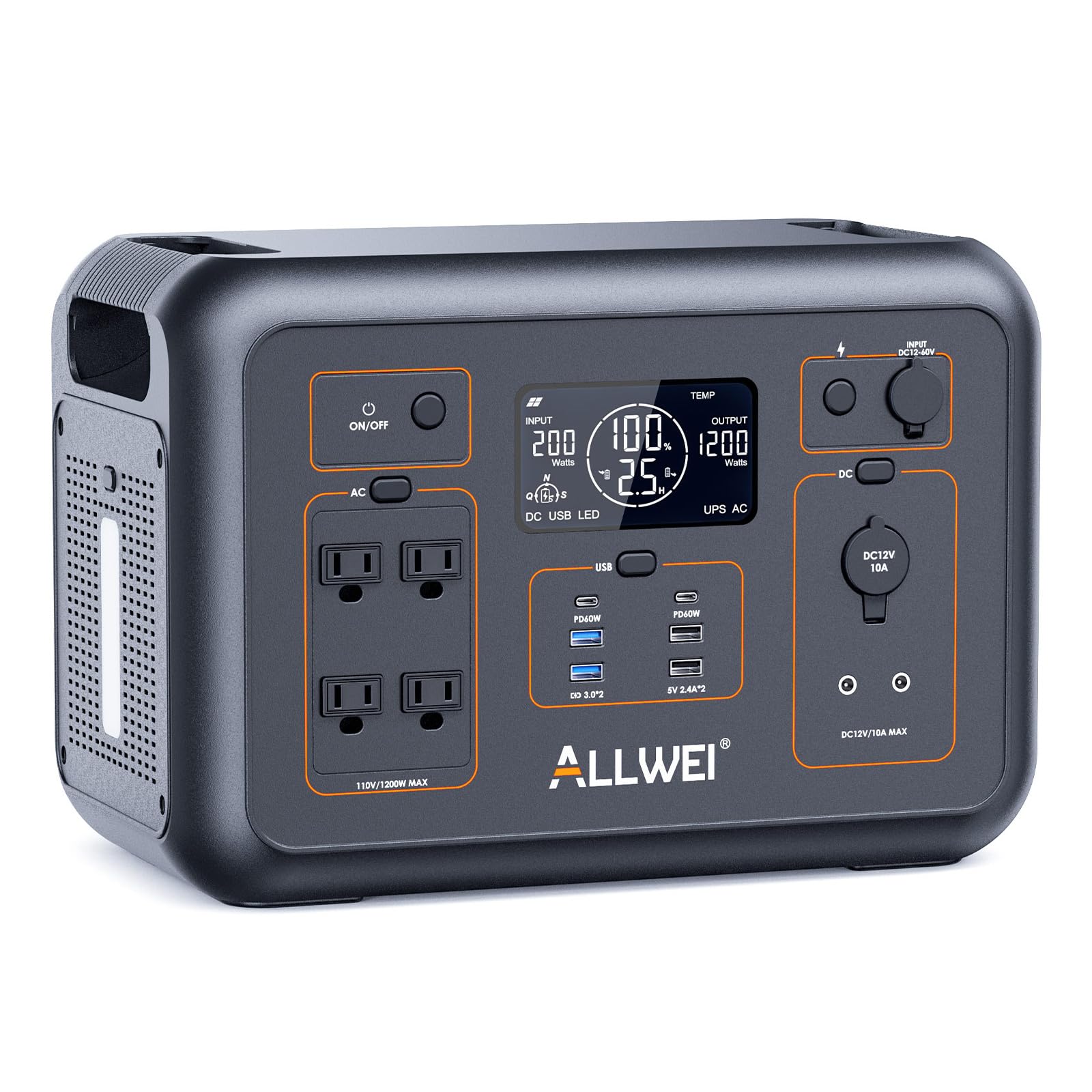
The ALLWEI 1200W power station moves beyond dedicated CPAP batteries into full home-backup territory, but it earns its place on this list because of how effectively it powers CPAP therapy. Its 1008Wh LiFePO4 battery can run a CPAP machine for roughly 30 hours without humidifier — meaning a solid week of nightly use without recharging. The 1200W continuous inverter can also power a mini-fridge, fan, or medical device, making it ideal for RV camping and emergency home backup.
The built-in UPS mode switches to battery power in under 10 milliseconds, ensuring your CPAP doesn’t skip a breath during a campground power flicker. The four AC outlets, two USB-C 60W ports, and car socket handle multiple devices at once. At 28 pounds, it’s heavy but includes ergonomic handles for rolling into an RV cabinet or car trunk. The 1.5-hour fast charge from 0-80% via AC is impressive for the capacity.
The weight is the obvious drawback — this is not a unit you carry any distance. A small number of users report AC output failure shortly after purchase, and the proprietary solar connector limits panel options. The internal fan can also be audible in a quiet tent. For car campers and RV dwellers who want a single power station for CPAP plus appliances, the ALLWEI delivers exceptional value per watt-hour.
Why it’s great
- 1008Wh capacity powers CPAP for up to a week
- UPS mode protects therapy during power transitions
- Fast 1.5-hour AC recharge to 80%
Good to know
- 28 lbs too heavy for any hiking or backpacking
- Proprietary solar connector limits panel options
9. Jackery Explorer 1000 v2

The Jackery Explorer 1000 v2 represents the gold standard for premium portable power stations used in outdoor CPAP setups. Its 1070Wh LiFePO4 battery and 1500W pure sine-wave inverter provide enough capacity to run a CPAP machine for over 35 hours without humidifier — that’s a full week of nightly therapy without so much as plugging in. The 23.8-pound body includes a foldable handle and measures just 9.72 inches on each side, making it manageable for RV compartments and car trunks.
The real standout feature is the 1-hour emergency fast charge, which takes the battery from 0% to 100% using the Jackery App — a game-changer if you forget to charge before a camping trip and only have a lunch break. The 100W USB-C PD port can power a laptop while the two USB-A ports and three AC outlets run a CPAP and phone simultaneously. Users report the unit runs quieter and cooler than competing 1500W stations, and the smart BMS provides reliable charge management.
At this price and weight, the Explorer 1000 v2 is squarely for car campers, RV owners, and home emergency users who refuse to compromise on power availability. It’s not for backpacking. The only genuine drawback is the cost and the fact that the included solar panel is sold separately. For those who want the most reliable, best-reviewed power station that doubles as a camping CPAP solution, this is the long-term investment that pays off every single trip.
Why it’s great
- 1070Wh capacity for a full week of CPAP therapy
- 1-hour emergency fast charge via app
- Quiet and cool operation, rated 4000+ cycles
Good to know
- 23.8 lbs limits use to vehicle-based camping
- Solar panel sold separately
FAQ
Can I use any portable power station with my ResMed or Philips CPAP?
How much battery capacity do I need for one night of CPAP camping?
Will cold temperatures ruin a CPAP battery while camping?
Can I fly with a CPAP battery for camping trips?
Final Thoughts: The Verdict
For most users, the camping cpap winner is the EASYLONGER ES960 PRO because it delivers verified multi-night runtime in a LiFePO4 pack that fits inside a car camping bin, without the bulk of a full power station. If you want TSA-friendly carry-on capability and fly to your camping destinations, grab the Zopec Explore Mini. And for RV users or extended basecamp stays where you also need to power a fridge and lights, nothing beats the Jackery Explorer 1000 v2.

Mo Maruf
I created WellFizz to bridge the gap between vague wellness advice and actionable solutions. My mission is simple: to decode the research and give you practical tools you can actually use.
Beyond the data, I am a passionate traveler. I believe that stepping away from the screen to explore new environments is essential for mental clarity and physical vitality.