Our readers keep the lights on and my smoothie glass nicely filled. As an Amazon Associate, I earn from qualifying purchases.
Waking up with a seized lower back after a night on the cold, uneven ground can turn a wilderness escape into a misery of stiffness and pain. The right camping bed is not a luxury—it is the single most critical piece of gear for anyone who carries a spinal condition into the backcountry. A sagging cot or a wafer-thin pad amplifies pressure points, torques the lumbar curve, and guarantees a ruined trip.
I’m Mohammad Maruf — the founder and writer behind WellFizz. I have spent years analyzing foam densities, cot frame geometries, fabric tension ratings, and R-values to determine which designs actively protect a vulnerable spine during sleep.
After cross-referencing hundreds of verified buyer reports and technical spec sheets, I can confidently recommend the camping beds for bad backs that keep your vertebrae aligned from dusk until dawn.
How To Choose The Best Camping Beds For Bad Backs
Selecting a camping bed for a bad back requires a shift in priorities. You are not just looking for something soft—you are looking for a structure that holds your spine in a neutral position all night. Three specific factors separate a back-saving bed from a back-wrecking one.
Cot Tension and Frame Width
A cot that sags in the middle forces your hips to sink below your shoulders, creating a C-curve that strains the lumbar discs. Look for wide cots—28 inches or more across—with a taut, non-stretch fabric surface. Scissor-leg frames and X-braced leg brackets resist the sagging that narrow, budget cots allow.
Off-Ground Height and Accessibility
Getting down to a ground-level pad is painful for anyone with back stiffness. A cot that sits 15 inches or higher lets you sit down and stand up without sudden twisting motions. This height also allows you to store gear underneath, keeping the sleeping area clear.
Foam vs. Air: What Works for a Sore Back
Self-inflating foam pads offer superior pressure distribution for side-sleepers with hip sensitivity because the foam does not bottom out against the ground. Pure air pads with baffled internal structures can also work, but they require a high R-value and at least 3 inches of thickness to prevent pressure points.
Quick Comparison
On smaller screens, swipe sideways to see the full table.
| Model | Category | Best For | Key Spec | Amazon |
|---|---|---|---|---|
| Sportneer Camping Cot | Mid-Range | Tall, heavy users needing width | 28.7″ wide, 330 lbs capacity | Amazon |
| TIMBER RIDGE Quick Set-Up Cot | Mid-Range | Ultralight car campers | 7.1 lbs, 20-second setup | Amazon |
| Portal Folding Camping Cot | Mid-Range | Tall users needing length | 82.68″ length, steel frame | Amazon |
| KingCamp Ultralight Cot | Mid-Range | Backpackers needing portability | 4.8 lbs, 7075 aluminum | Amazon |
| ONETIGRIS SUPRANUBIS Cot | Premium | Adjustable-height versatility | Adjustable 5.9″ to 15.75″ height | Amazon |
| Therm-a-Rest LuxuryMap Pad | Premium | Pressure-mapped foam support | 3″ self-inflating foam, R-6 | Amazon |
| Therm-a-Rest NeoAir Xlite NXT | Premium | Ultralight backpacking | 13 oz, R-4.5, 3″ baffled | Amazon |
In‑Depth Reviews
1. Sportneer Camping Cot
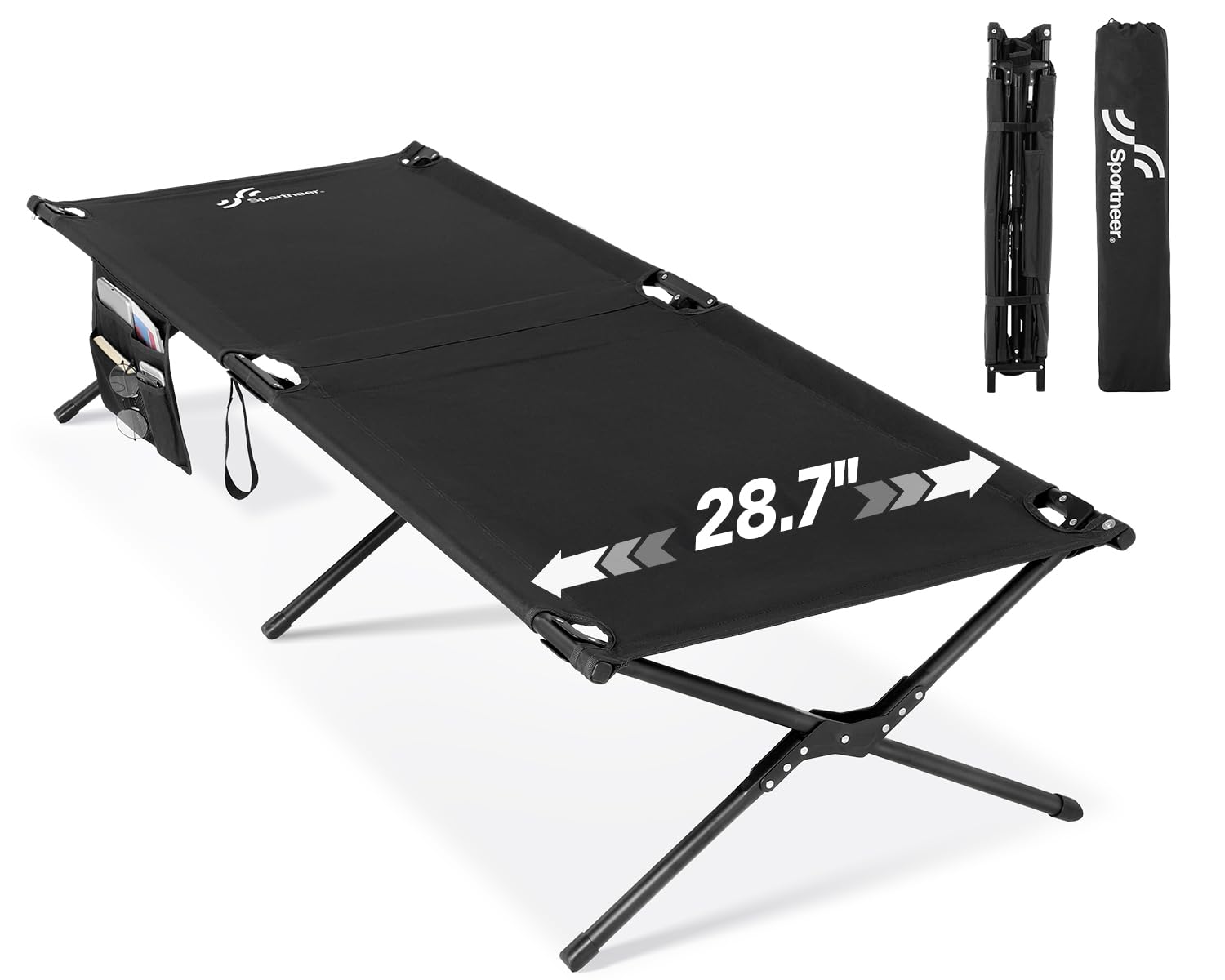
The Sportneer Cot delivers the widest sleeping surface in this price tier at 28.7 inches, which means your hips and shoulders stay square rather than rolling into a hammock-like slouch. The X-shaped leg brackets and alloy steel frame create a rigid platform that resists the sagging that aggravates lumbar strain, and the 330-pound weight capacity confirms the structural margin of safety. Owners report that adding a 3-inch mattress pad transforms this already taut surface into a genuinely supportive sleep system.
The 15-inch off-ground height is a practical advantage for anyone with lower back stiffness—you can sit down to dress without that painful drop or deep squat. The 40.2-by-7.9-inch folded footprint is compact enough for a sedan trunk despite the generous sleeping dimensions. Side pockets keep your phone and glasses off the ground, a small convenience that prevents midnight twisting to reach dropped items.
A few users note a slight front-to-back wobble that does not affect sleep stability but is worth knowing if you tend to shift aggressively during the night. The cot is heavier than ultralight alternatives, so it is best suited for car camping or guest-room duty rather than backpacking. For the combination of width, height, and frame rigidity, this is the most back-friendly cot at a mid-range investment.
Why it’s great
- Exceptionally wide 28.7-inch surface prevents the side-sag that torques the lower back.
- Rugged alloy steel frame and X-bracing support up to 330 pounds without flex.
- Instant setup with leg rotation lock means no bending or kneeling during assembly.
Good to know
- At 13.8 pounds, it is too heavy for backpacking or long carries.
- A few owners report minor lateral wobble when shifting weight side to side.
2. TIMBER RIDGE 20-Second Quick Set-Up Camping Cot
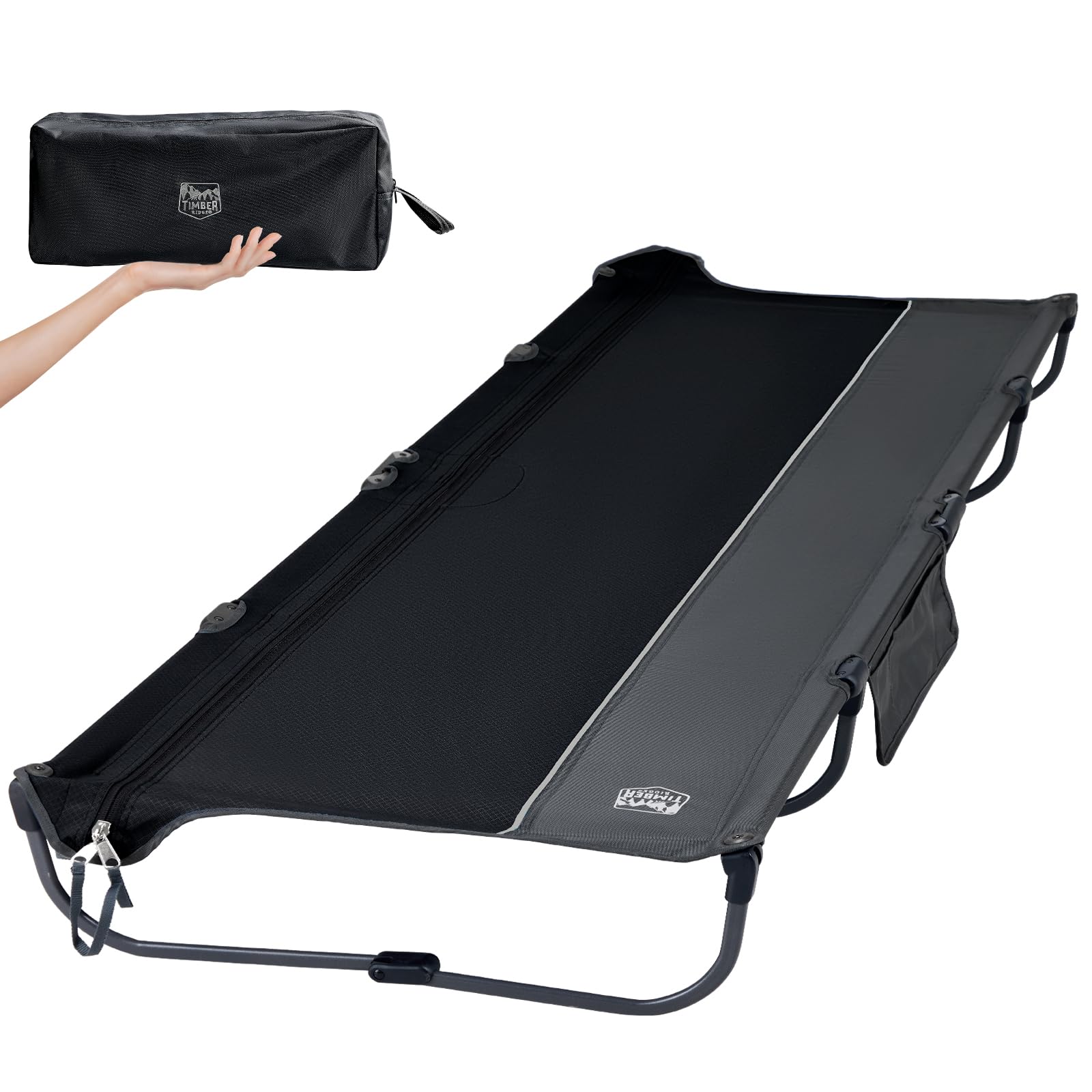
At 7.1 pounds with a pre-attached frame that deploys in 20 seconds, this TIMBER RIDGE cot is the obvious choice for campers who need to minimize load weight without sacrificing the spinal benefits of an elevated sleep surface. The aluminum U-shape frame distributes weight evenly across the 76.4-by-26.8-inch surface, and the soft fabric tautness eliminates the crossbars that can press into your back through a thin sleeping pad. Users under 6 feet report that the flat, no-sag surface is noticeably more comfortable for side-sleeping than ground pads alone.
The 7.9-inch off-ground height is lower than most premium cots, which means it fits inside small one- and two-person tents while still providing clearance from cold ground, roots, and rocks. The low profile also makes it easier to climb into for users with limited hip mobility, as you can slide onto the surface rather than hoist yourself up. The compact folded size of 19.7 by 9.4 by 5.9 inches slips into checked luggage or an RV storage bay without complaint.
The 225-pound weight capacity is the clear trade-off—sleepers approaching or exceeding that limit may find the aluminum frame flexes more than steel alternatives. The zipper closure design requires care to keep the track free of dirt and debris. This cot is best for smaller-framed individuals who prioritize packability and quick setup over maximum weight tolerance.
Why it’s great
- True 20-second deployment with zero assembly — no bending, no pole threading.
- Ultralight 7.1-pound aluminum frame is easy to carry to the campsite.
- No crossbars under the sleeping surface, so pressure points are eliminated.
Good to know
- 225-pound weight limit is restrictive for larger users or those needing extra support.
- Low 7.9-inch height makes sitting down to dress less graceful than taller cots.
3. Portal Folding Portable Camping Cot

Sleepers over 6 feet tall have a notoriously hard time finding a cot that supports the full length of the spine without forcing the feet or head off the edge. The Portal cot solves this with an 82.68-inch sleeping surface and a generous 31.5-inch width, giving tall users true full-length lumbar support. The powder-coated steel frame and 600D Oxford fabric create a taut platform that resists the center sag that can create a banana-shaped spine position during the night.
The 18.9-inch off-ground height is the tallest in this line-up, which is a genuine advantage for anyone with back pain that makes deep squatting or kneeling difficult. You can sit on the edge, pivot, and lie down with minimal spinal twisting. Owners confirm the cot handles users up to 6 feet 2 inches and 250 pounds without noticeable frame flex, and the scissor-action folding legs provide stable ground contact even on uneven campsite terrain.
The trade-off is weight and assembly effort. The cross-brace setup requires some muscle, and several users report that the legs swing freely during assembly, making it a two-person job for smaller campers. If you can manage the weight and setup, the spinal real estate is unmatched.
Why it’s great
- Extra-long 82.68-inch surface fits 6-foot-2 users without foot overhang.
- Tall 18.9-inch height eliminates the painful deep squat required by ground pads.
- Sturdy steel frame and taut 600D fabric resist the lumbar-crushing sag.
Good to know
- Heavy 24.7-pound frame is impractical for any activity beyond car camping.
- Assembly requires significant physical effort and may need two people.
4. KingCamp Ultralight Camping Cot
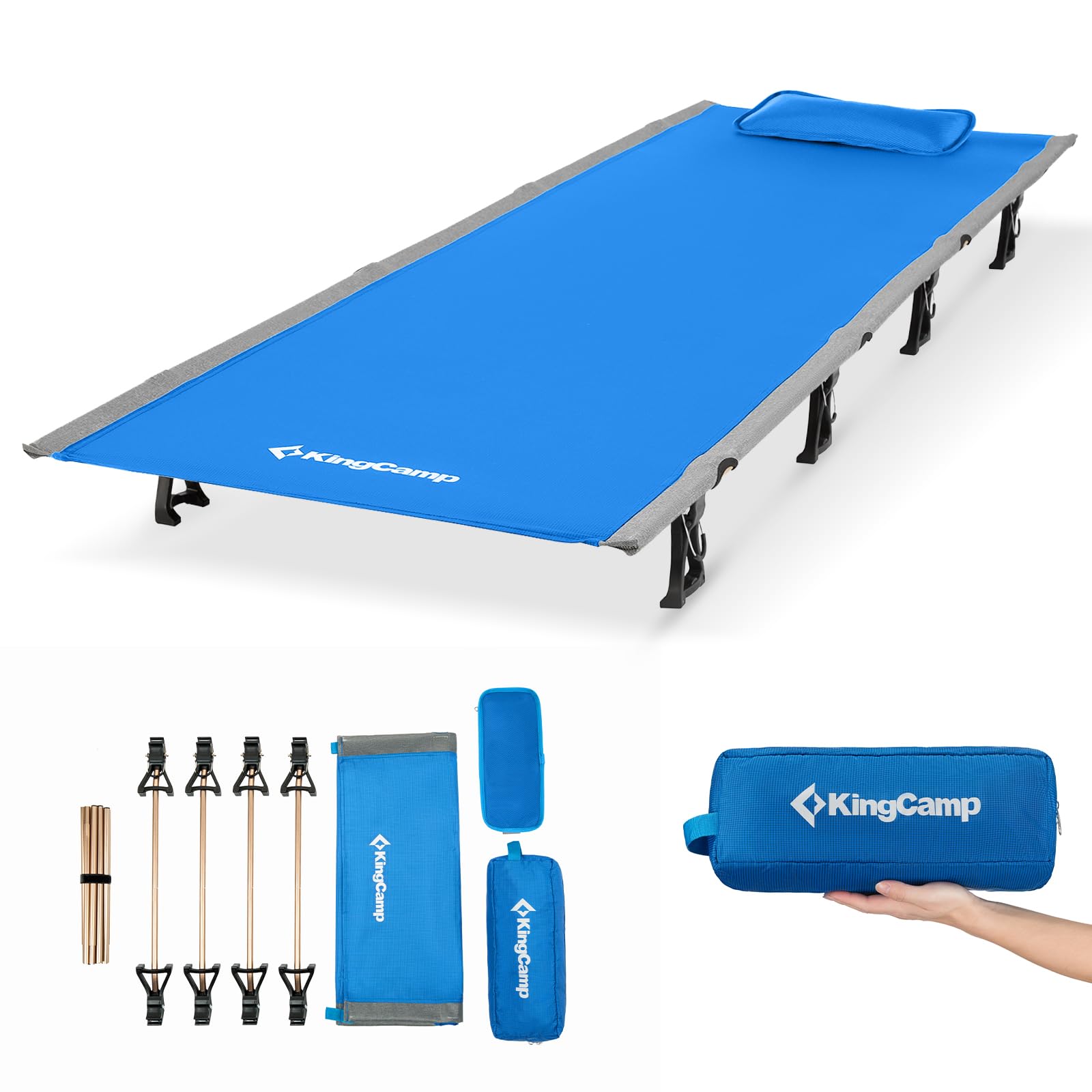
At 4.8 pounds, the KingCamp cot proves that a back-supporting sleep platform does not have to weigh as much as a cooler. The 7075 aluminum alloy frame and triangular leg structure create a stable, low-profile cot that keeps your spine flat without the side-to-side roll that plagues narrower ultralight options. The 25-inch width adds an inch over standard backpacking cots, which is enough to keep your shoulders from spilling off the edge during restless sleep.
The 4.7-inch off-ground height is minimal—this bed lives close to the dirt—but the taut 420D Oxford fabric and strong frame prevent the ground from transmitting rocks and roots directly into your back. Many users pair this cot with an additional sleeping pad, and the included straps allow you to secure a thin foam pad to the surface for extra lumbar cushioning. The folded size of 14 by 5.1 by 5.1 inches fits inside a backpack, making it viable for short backpacking trips where weight and volume are critical.
The low profile means you will need to sit on the ground or a separate stool to access the cot, which can be difficult for users with significant back stiffness. Some users report occasional leg collapse during movement, though this appears to be an assembly issue rather than a design flaw. If you need to carry your bed on your back but cannot tolerate ground pads, this is the entry-point cot that balances portability with basic spinal support.
Why it’s great
- Ultralight 4.8-pound frame is packable for backpacking and hiking trips.
- Triangular leg structure and aluminum frame provide stable, flat support.
- Integrated straps allow you to attach a sleeping pad for extra lumbar cushioning.
Good to know
- Low 4.7-inch profile requires squatting or sitting on the ground to enter.
- Occasional reports of legs collapsing mid-sleep if frame is not fully locked.
5. ONETIGRIS SUPRANUBIS Camping Cot

The ONETIGRIS SUPRANUBIS is the only cot in this group that offers two height options, making it uniquely adaptable for different back-care needs. In the high position at 15.75 inches, you get a proper sitting height that lets you stand up after a night’s sleep without the twisting lunge that triggers sciatica. In the low position at 5.9 inches, the cot fits inside a tent while still offering the flat, taut support of an elevated bed. The aircraft-grade 7075 aluminum bars support up to 330 pounds, giving larger users confidence in the frame’s stability.
The 27.5-inch width is generous, and the 300D Oxford fabric has a rip-stop weave that remains taut without excessive give. The leverage locking mechanism allows you to assemble the cot without the awkward wrestling that steel-frame cots often require. Owners praise the attached side pocket and underside storage net for keeping gear organized, eliminating the need to twist and reach for items on the ground during the night.
The cot requires assembly out of the box, and a few users note that the leg attachment process can be fiddly the first time. At 9.5 pounds, it sits between ultralight and car-camping weights—manageable for short carries but not ideal for backpacking. For campers who want the flexibility of a cot that can serve as a bed, a bench, or a low-profile tent bed, this is the most versatile option for protecting a sensitive back.
Why it’s great
- Two height settings adapt to tent interiors or open-air car camping.
- Wide 27.5-inch surface with taut rip-stop fabric prevents lumbar hammocking.
- Aluminum frame supports 330 pounds without the flex of steel alternatives.
Good to know
- Leg attachment during initial setup can be fiddly for first-time users.
- At 9.5 pounds, it is too heavy for multi-day backpacking trips.
6. Therm-a-Rest LuxuryMap Self-Inflating Foam Camping Sleeping Pad

For campers whose back pain requires foam-based pressure point relief rather than just a taut fabric surface, the LuxuryMap is the gold standard. Therm-a-Rest uses pressure-mapping technology to vary foam density across the pad—softer foam under the hips and shoulders, firmer support under the lumbar zone. The 3-inch thickness provides enough depth that your hips do not bottom out against the tent floor, and the R-6 insulation rating means you stay warm in sub-freezing conditions without adding bulk.
The TwinLock valve system offers separate inflation and deflation ports, so you can dial in firmness exactly to your preference. An over-60 reviewer with a sore hip reported this pad transformed their camping sleep quality, and multiple users confirm it does not lose air over multiple nights. The stretch-knit face fabric feels soft against sleepwear and reduces the crinkle noise that can disturb light sleepers.
The Regular size measures 72 by 20 inches, but the actual foam sleeping area is slightly narrower—a detail confirmed by multiple users. This pad is best used on top of a cot for maximum back support, as the combination of a rigid cot base and pressure-mapped foam creates a near-mattress experience. The price reflects the premium foam technology, but for chronic back pain sufferers, the investment is directly linked to sleep quality.
Why it’s great
- Pressure-mapped foam density targets hip and shoulder relief while supporting the lumbar spine.
- TwinLock valve system lets you adjust firmness to exactly your comfort level.
- R-6 insulation provides year-round warmth for cold-weather campers.
Good to know
- Actual foam sleeping area is slightly smaller than the fabric dimensions.
- Requires 2-4 hours of inflation time before first use for optimal foam expansion.
7. Therm-a-Rest NeoAir Xlite NXT Ultralight Camping Pad

The NeoAir Xlite NXT redefines what is possible for ultralight backpackers with bad backs. At just 13 ounces in the Regular size, it rolls down to the volume of a 1-liter water bottle, yet delivers a 3-inch thickness with a baffled internal structure that provides remarkable stability. The Triangular Core Matrix construction minimizes the air movement that causes instability on thinner pads, and the 4.5 R-value ensures warmth even in freezing conditions.
The Wide version offers 25 inches of sleeping width, which is enough for side-sleepers to keep their knees and shoulders on the pad without rolling off. Users confirm the pad holds air for over 48 hours without noticeable loss, and the WingLock valve allows rapid inflation and deflation. The reflective ThermaCapture technology traps radiant heat, so you stay warm without adding weight.
The 30D ripstop nylon face fabric is durable for its weight class but requires care—sharp tent stakes and rough ground can puncture it. Users report the pad works best on top of a cot for maximum back support, as the baffled air structure alone may not provide enough depth for severe lumbar issues without additional insulation. For backpackers who refuse to carry heavy gear but refuse to sleep in pain, this is the featherweight solution.
Why it’s great
- Baffled internal structure and 3-inch thickness prevent bottoming out.
- Ultralight 13-ounce weight packs down smaller than a standard water bottle.
- R-4.5 insulation with reflective heat-trapping technology works in sub-freezing conditions.
Good to know
- Thin face fabric is vulnerable to punctures from sharp ground debris.
- Some users report valve malfunction on early units—inspect before the trip.
FAQ
Is a cot or a sleeping pad better for a bad back?
What width should I look for in a camping cot for back pain?
Final Thoughts: The Verdict
For most users, the camping beds for bad backs winner is the Sportneer Camping Cot because its wide 28.7-inch surface, rigid alloy steel frame, and 15-inch height provide the taut, elevated support that protects the lower back from sag. If you want a cot that is ultralight and packable, grab the TIMBER RIDGE Quick Set-Up Cot. And if you need the ultimate foam-based pressure point relief for severe back pain, nothing beats the Therm-a-Rest LuxuryMap Self-Inflating Pad on top of a cot for true spinal alignment all night.

Mo Maruf
I created WellFizz to bridge the gap between vague wellness advice and actionable solutions. My mission is simple: to decode the research and give you practical tools you can actually use.
Beyond the data, I am a passionate traveler. I believe that stepping away from the screen to explore new environments is essential for mental clarity and physical vitality.