Our readers keep the lights on and my smoothie glass nicely filled. As an Amazon Associate, I earn from qualifying purchases.
That throbbing pressure in your lower back after mile eight on the trail is a clear signal — your pack isn’t transferring weight the way it should. A properly fitted internal frame camping backpack should make the load feel like part of your body, not a burden strapped to your spine. The difference between a trip you remember fondly and one you just endure often comes down to this single piece of gear.
I’m Mohammad Maruf — the founder and writer behind WellFizz. I analyze load-transfer geometry, suspension architecture, and fabric density to separate gear that works from gear that just looks good on a spec sheet.
After evaluating capacity, frame design, and real-world durability across seven contenders, this guide cuts through the noise to help you find the best camping backpack for your specific style of adventure.
How To Choose The Best Camping Backpack
A camping backpack is not a one-size-fits-all purchase. The wrong suspension or capacity can turn a weekend in the wilderness into a painful chore. Focus on these three criteria to find a pack that disappears on your back.
Volume and Trip Duration
Volume is the most obvious metric, but beginners often overbuy. A 50 to 60-liter pack comfortably handles 2 to 4-night trips with a tent, sleeping bag, and stove. Jumping to 75 liters adds space for bulkier gear but increases pack weight and encourages overpacking, which strains the suspension system.
Frame Type and Load Transfer
Internal frame packs use a rigid stay — usually aluminum or a lightweight composite — to transfer the load from your shoulders down through the hipbelt. The key spec here is the frame’s ability to keep the pack stable against your back while allowing natural torso movement. A light wire frame saves ounces but may not handle 40+ pound loads without sagging.
Hipbelt and Torso Adjustment
Eighty percent of a pack’s weight should rest on your hips. Look for a hipbelt with dense, contoured foam that wraps around your iliac crest without gaping. Torso adjustment, often a ladder-lock system, lets you match the pack to your exact back length. A pack that fits poorly at the torso will never carry comfortably, regardless of how many pockets it has.
Quick Comparison
On smaller screens, swipe sideways to see the full table.
| Model | Category | Best For | Key Spec | Amazon |
|---|---|---|---|---|
| Osprey Rook 65L | Premium | Multi-day backpacking | Adjustable AirSpeed suspension | Amazon |
| Kelty Asher 65L | Mid-Range | Ventilated carry | 3 lb 5 oz internal frame | Amazon |
| The North Face Terra 55 | Premium | Thru-hiking, weekend trips | Full-length U-zip access | Amazon |
| Osprey Farpoint Trek 75L | Premium | Travel + backpacking hybrid | AirCover integrated raincover | Amazon |
| Teton Explorer 65L | Mid-Range | Entry to multi-day use | 5 lb internal frame | Amazon |
| Mardingtop 60L Military | Budget | Customization, moderate loads | MOLLE modular webbing | Amazon |
| Ubon 60L Internal Frame | Budget | Weekend trips on a budget | 2.65 lb lightweight frame | Amazon |
In‑Depth Reviews
1. Osprey Rook 65L

The Osprey Rook 65L represents the sweet spot where premium suspension engineering meets a practical, no-nonsense feature set. Its AirSpeed tensioned mesh backpanel keeps the pack off your spine, creating a ventilated channel that dramatically reduces back sweat on long ascents. The LightWire frame does an excellent job transferring load to the hipbelt, and multiple users report comfortable carries even in the 30 to 35 pound range over dozens of trail miles.
At 3.7 pounds, this pack is light enough for weekend trips yet robust enough for week-long treks. The integrated, stowable raincover is a thoughtful inclusion that saves the hassle of a separate accessory, and the angled water bottle pockets allow one-handed access without removing the pack. The 65-liter capacity balances generous storage with a streamlined profile that doesn’t catch on branches.
Some users note the absence of a large outer mesh pocket for quick-access layers, and the fit tends to favor broader shoulders. The waist belt can feel snug on narrow hips, so trying the torso adjustment before committing is wise. For the quality and the Osprey All Mighty Guarantee, this is a long-term investment in comfortable carry.
Why it’s great
- Ventilated AirSpeed backpanel reduces sweat buildup effectively.
- Integrated raincover is convenient and removable.
- LightWire frame transfers load efficiently to the hipbelt.
Good to know
- No large external mesh pocket for quick stashing.
- Waist strap may not fit narrow hips comfortably.
2. Kelty Asher 65L
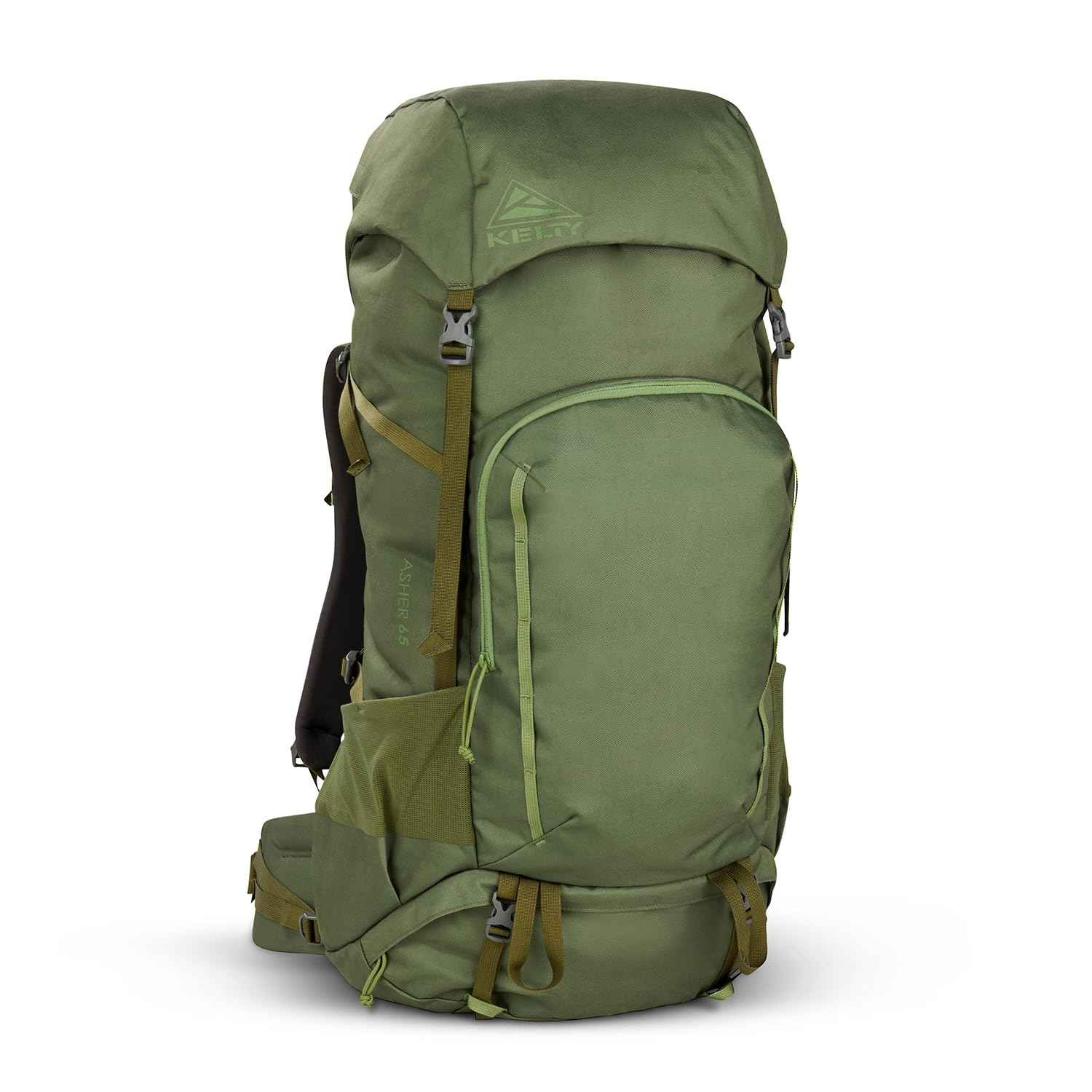
The Kelty Asher 65L brings expert-level specs to an accessible mid-range price point, with the Amp Flow ventilated back panel standing out as its defining feature. The tensioned mesh and channeled foam create substantial airflow, making this pack a strong choice for hikers who run warm. The internal aluminum stay and perimeter frame provide stable load transfer for carries up to about 50 pounds, which covers most multi-day trips comfortably.
At just 3 pounds 5 ounces, the Asher is impressively lightweight for its capacity and build quality. The Fit Pro torso adjustment system works quickly, allowing on-the-fly changes when shedding or adding layers. The hydration sleeve, sleeping bag compartment, and load-lifter straps are all present and well-executed, and the polyester shell with C0 DWR resists light rain without adding weight.
A few users found the Velcro shoulder strap adjustment less intuitive than traditional ladder-lock systems, and the bottom fabric may show wear sooner if frequently dragged over rocks. The fit runs trim, which benefits athletic builds but may feel restrictive for larger torsos. For ventilated comfort at a reasonable weight, this pack delivers.
Why it’s great
- Amp Flow backpanel offers excellent ventilation for hot-weather hiking.
- Lightweight design at 3 lb 5 oz for a 65L pack.
- Fit Pro torso adjustment is quick and intuitive.
Good to know
- Velcro shoulder strap adjustment may feel less secure to some users.
- Bottom fabric may show wear from rough terrain.
3. The North Face Terra 55
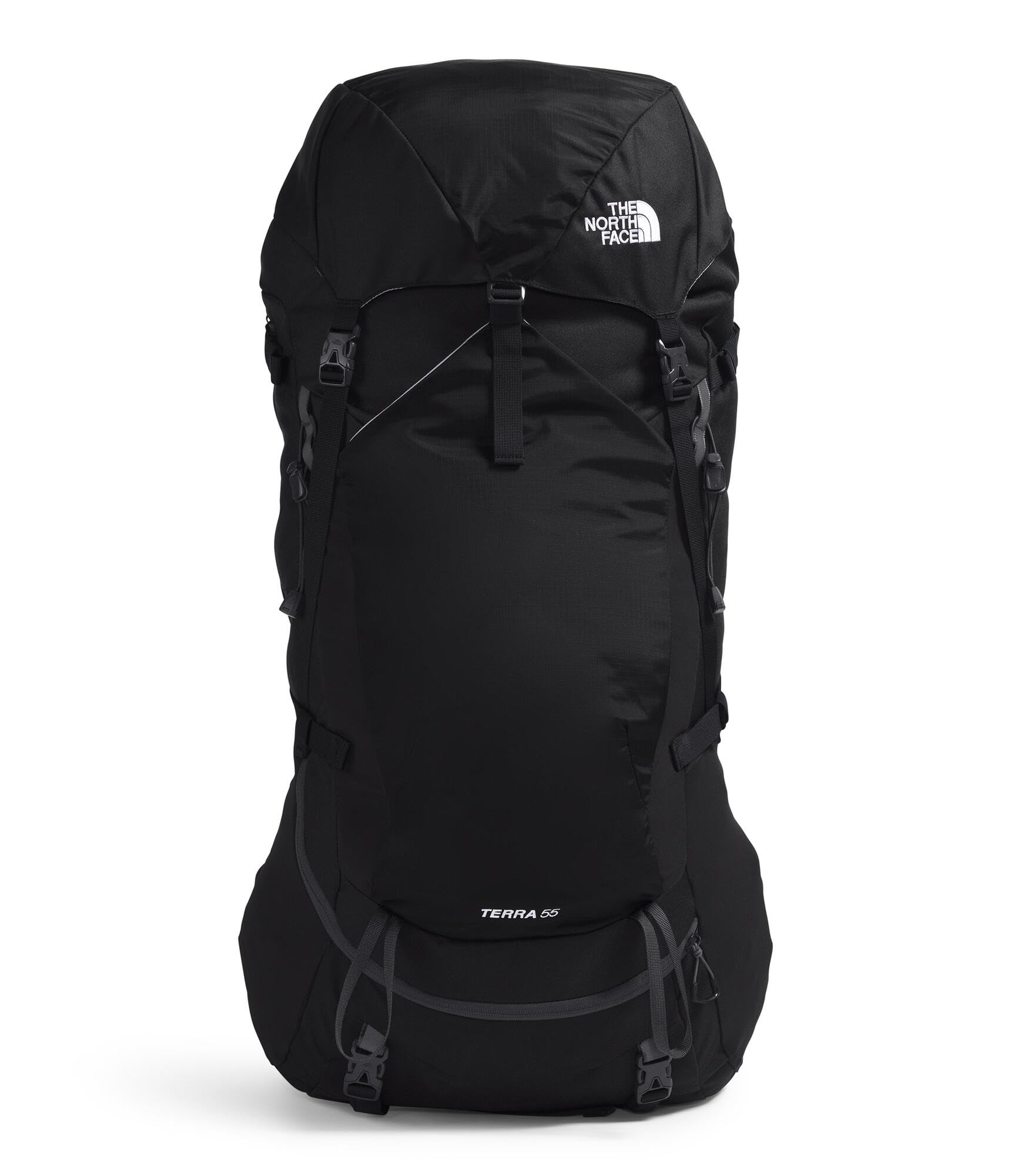
The North Face Terra 55 is a thoughtfully designed pack for the thru-hiker or weekend warrior who values quick access and organized storage. The full-length two-way U-zip opens the main compartment from top to bottom, allowing you to dig out a rain jacket at the bottom of the pack without unpacking everything. The removable lid with an internal zip pocket and key clip adds security for small essentials.
The padded back panel and hipbelt prioritize comfort over maximum ventilation, making this a good choice for cooler conditions where wind block is more important than airflow. The load-lifter straps and removable frame sheet allow fine-tuned weight distribution, even with loads approaching 35 to 40 pounds. At around 4 pounds, this is a mid-weight pack with a durable polyester build that feels solid without being heavy.
The Terra 55 runs slightly small in volume compared to its stated 55 liters, so shorter trips may find the 57-liter L/XL more appropriate. The S/M option at 53 liters is tight for a tent and sleeping bag combination. Some users also note that the side bottle pockets could be deeper for larger Nalgene bottles. It is a precise, well-built pack for those who prioritize accessibility.
Why it’s great
- Full-length U-zip provides unmatched access to the main compartment.
- Padded back panel and hipbelt are very comfortable for heavier loads.
- Removable lid and internal organization are well-designed.
Good to know
- S/M 53L volume may be too small for multi-day trips with bulky gear.
- Side bottle pockets could be deeper for larger water bottles.
4. Osprey Farpoint Trek 75L
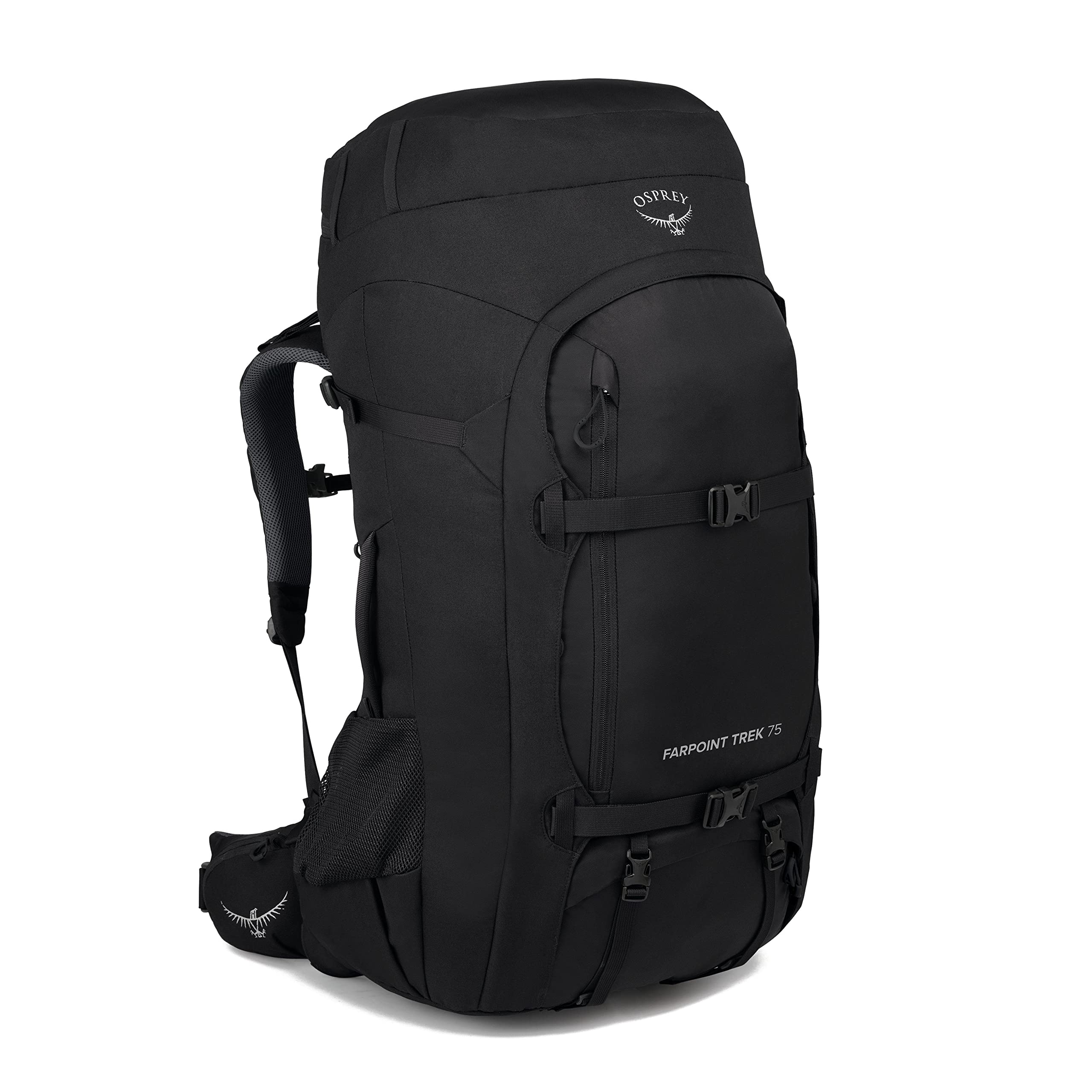
The Osprey Farpoint Trek 75L blurs the line between a backpacking pack and a travel pack, making it a standout choice for the adventure traveler who flies to a trailhead. The AirCover system serves double duty as both a raincover and a protective shell for airline luggage, which saves weight and bulk. The full-opening clamshell main compartment makes packing cubes and organization far easier than a traditional top-loading design.
At 4.63 pounds, the Farpoint Trek is heavier than dedicated backpacking packs in its class, but the extra weight comes from features that matter on mixed trips. The AirSpeed tensioned mesh backpanel keeps you cool on the trail, while the stowable suspension lets you zip the hipbelt and shoulder straps behind a panel for checked luggage. The multi-function sleeve fits a hydration reservoir or a padded laptop case, adding versatility for work trips.
The 75-liter capacity is generous, and the side compression straps help cinch down a lighter load. Some users find the side pockets too tight for large water bottles when the pack is full, and the lack of a separate sleeping bag compartment means you’ll need to use packing cubes or stuff sacks for organization. For the globetrotter who needs one pack for plane, train, and trail, this is the all-in-one solution.
Why it’s great
- AirCover system acts as both raincover and luggage protection.
- Clamshell main compartment simplifies packing and organization.
- Stowable suspension makes it airline-compliant.
Good to know
- Heavier than dedicated backpacking packs at 4.63 lb.
- Side pockets are tight for large water bottles when full.
5. Teton Explorer 65L
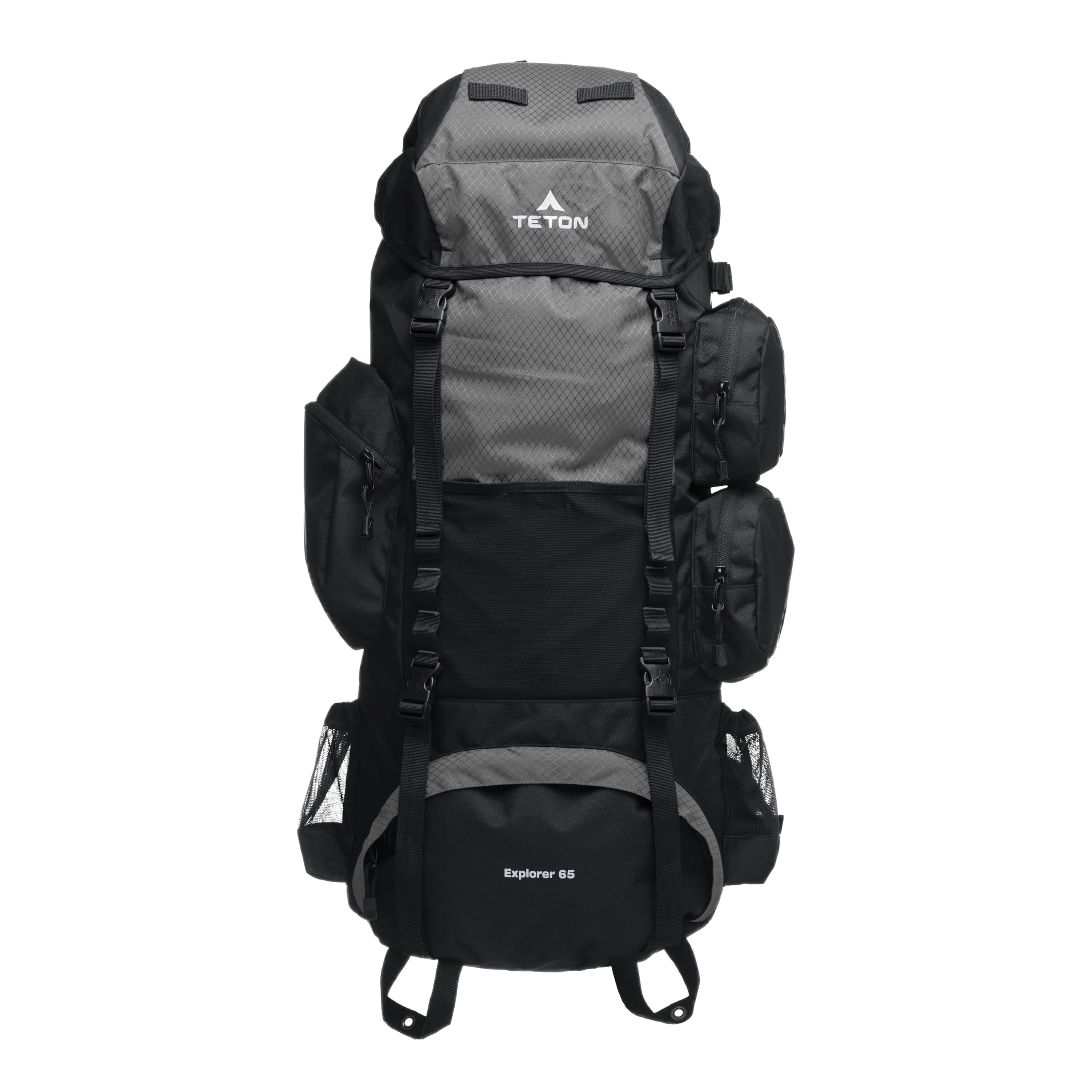
The Teton Explorer 65L is a workhorse pack that punches well above its price point, offering a feature set that rivals packs costing significantly more. The multi-position torso adjustment system allows the pack to fit a wide range of body types, from medium to tall adventurers, and the open-cell foam lumbar pad with molded channels provides surprisingly effective ventilation. The 600D polyurethane lining adds a layer of durability that holds up against branch scrapes and repeated loading.
At 5 pounds, this is a heavier pack, but the weight is justified by the robust internal frame and generous padding. The large sleeping bag compartment with a floating divider keeps wet or dirty gear separate from your main stash, and the multidirectional compression straps stabilize the load neatly. Users consistently report comfortable carries with loads ranging from 20 to 57 pounds, making the Explorer a versatile choice for beginners and experienced backpackers alike.
The side mesh pockets are too small to accommodate standard 32-ounce water bottles, and the zippers can feel stiff during the first few trips. The hipbelt lacks pockets, which is a notable omission for those who like to keep snacks and a phone within reach. For the price, however, the Explorer’s comfort and capacity are hard to beat, and Teton’s customer support is responsive.
Why it’s great
- Multi-position torso adjustment fits a wide range of body types.
- 600D polyurethane lining resists abrasion and moisture well.
- Comfortable carry across a wide load range from 20 to 57 lb.
Good to know
- Side mesh pockets are too small for standard water bottles.
- Hipbelt lacks pockets for on-the-go access.
6. Mardingtop 60L Military Backpack
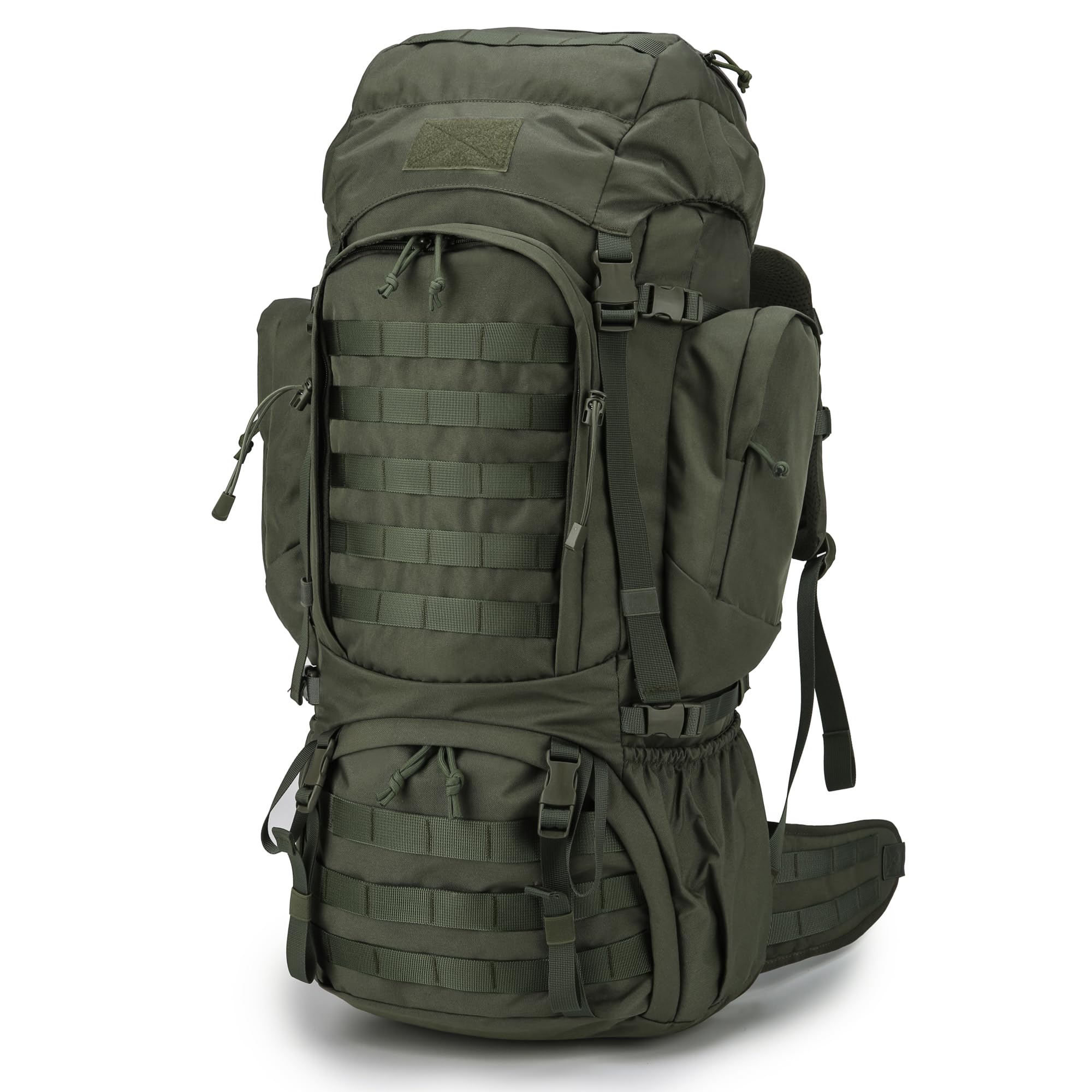
The Mardingtop 60L Military Backpack is built for the user who wants total control over their pack’s configuration. The full MOLLE webbing on the front and sides allows attachment of pouches, carabiners, and gear externally, making this pack ideal for hunters, survivalists, or anyone who carries specialized equipment. The internal frame provides decent load transfer for moderate carries, and the expandable capacity that reaches up to 75 liters via the extension collar adds flexibility for bulkier loads.
The YKK zippers and reinforced stitching suggest a level of build quality that holds up under regular abuse, and the included raincover uses four tie-down points for a secure fit. The sleeping bag compartment and multiple internal pockets keep gear organized, while the hydration sleeve accommodates a bladder up to 3 liters. At 4.49 pounds, the pack is mid-weight for its class and carries moderately well under 30 to 45 pounds.
The hipbelt padding is thin and can cause chafing on longer hikes with heavy loads, and the shoulder straps are narrow for a pack of this capacity. The cinches tend to loosen under sustained heavy loads above 50 pounds, so this is best suited for moderate distances under 20 miles. For the price-conscious user who wants modularity, the Mardingtop offers excellent bang for the buck.
Why it’s great
- Full MOLLE webbing provides extensive external attachment options.
- YKK zippers and reinforced stitching improve durability.
- Expandable capacity from 60L to 75L via extension collar.
Good to know
- Hipbelt padding is thin and may cause chafing on long hikes.
- Cinches loosen under sustained heavy loads above 50 lb.
7. Ubon 60L Internal Frame Backpack
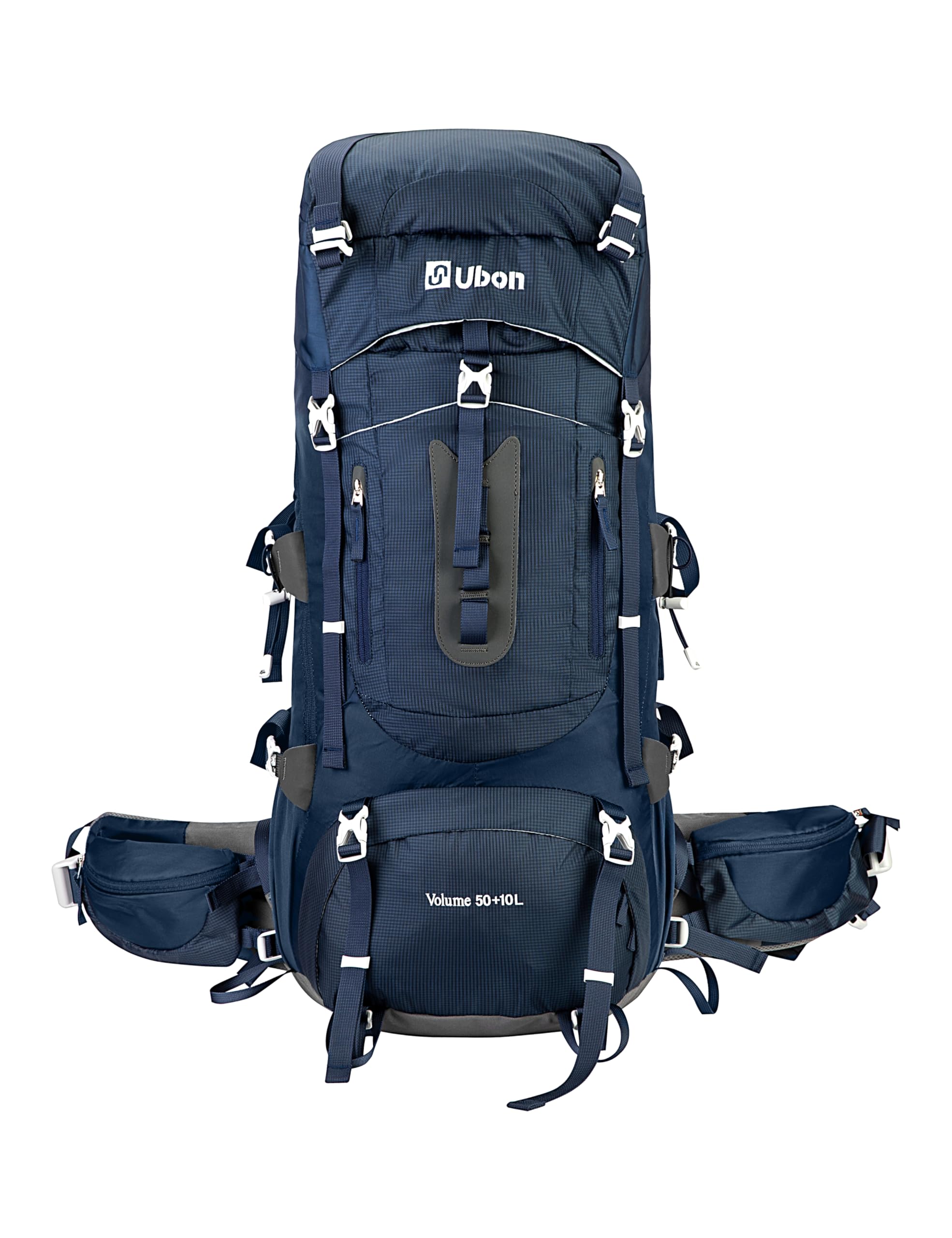
The Ubon 60L Internal Frame Backpack is a surprising performer for its weight and price point. Weighing just 2.65 pounds, it is one of the lightest framed packs in the 60-liter class, making it an attractive option for budget-conscious hikers who want to save ounces without sacrificing structure. The mesh airflow back panel helps reduce sweat buildup, and the adjustable shoulder straps and sternum strap allow a reasonable fit for most users between 5’2″ and 6’3″.
The pack includes a sleeping bag compartment, hydration sleeve, and a rainfly that covers the main body. Users report comfortable carries for loads up to 28 pounds over 2 to 4-night trips, though the shoulder and waist straps lack the foam density of premium packs and may feel less supportive under heavier loads. The zippers are functional but not confidence-inspiring for long-term abuse, and the fabric is light enough that sharp rocks can be a concern.
The Ubon runs small for its stated 60 liters, feeling closer to a 50-liter or 35-liter pack for some users, which is important to note when planning your gear list. The side pockets are well-placed for water bottles, and the overall layout is intuitive for first-time backpackers. For weekend trips with moderate loads on well-maintained trails, this pack delivers genuinely good value without breaking the bank.
Why it’s great
- Very lightweight at 2.65 lb for a framed 60L pack.
- Mesh back panel provides decent ventilation.
- Good value for weekend trips with moderate loads.
Good to know
- Runs smaller than advertised 60L, closer to 35-50L.
- Zippers and strap foam feel budget-tier compared to premium packs.
FAQ
How do I measure my torso length for a camping backpack?
Is a 65-liter pack too big for a weekend trip?
What is the difference between internal frame and external frame packs?
Final Thoughts: The Verdict
For most users, the best camping backpack winner is the Osprey Rook 65L because it combines premium AirSpeed suspension with a practical feature set at a reasonable weight, making it comfortable for multi-day trips without breaking the bank. If you need maximum ventilation for hot-weather hiking, grab the Kelty Asher 65L. And for a hybrid that transitions seamlessly from backpacking to air travel, nothing beats the Osprey Farpoint Trek 75L.

Mo Maruf
I created WellFizz to bridge the gap between vague wellness advice and actionable solutions. My mission is simple: to decode the research and give you practical tools you can actually use.
Beyond the data, I am a passionate traveler. I believe that stepping away from the screen to explore new environments is essential for mental clarity and physical vitality.