Our readers keep the lights on and my smoothie glass nicely filled. As an Amazon Associate, I earn from qualifying purchases.
Stepping into the world of camper solar can feel overwhelming, with endless specs and promises. The wrong choice can leave you stranded with a dead battery, turning your peaceful retreat into a stressful situation. This guide cuts through the noise, translating complex technical data into clear, actionable insights so you can invest in a system that delivers reliable power, trip after trip.
I’m Mohammad Maruf — the founder and writer behind WellFizz. My work involves deep market research, analyzing thousands of data points and product specifications to understand what truly makes a solar panel perform reliably in real-world camping scenarios, separating marketing hype from tangible value.
By comparing efficiency ratings, build materials, and real-user feedback, we’ve identified the top performers that balance power, portability, and durability, making your off-grid adventures easier and more sustainable with the right best camper solar panels.
How To Choose The Best Camper Solar Panels
Selecting solar panels isn’t just about grabbing the highest wattage. It’s about creating a system that matches your energy consumption, installation space, and travel habits. A well-chosen setup silently powers your adventures, while a mismatched one becomes dead weight.
Assess Your Power Needs & Travel Style
Start by listing your essential devices: fridge, lights, fans, phones, and perhaps a laptop. Calculate their total watt-hour consumption. Weekend warriors with a small fridge can often manage with 100-200 watts, while full-time vanlifers may need 400 watts or more. Next, consider your camping style. If you often park in shaded forests, portable panels you can move into sunlit clearings are invaluable. If you primarily drive and park in open spaces, a permanent rooftop array offers a “set and forget” solution.
Decipher the Technology: Efficiency Matters
Panel efficiency determines how much sunlight is converted into usable electricity. Monocrystalline panels are the standard for campers due to their high efficiency and good performance in low light. Within this category, look for advanced cell technology like N-Type with 16 busbars (16BB). These panels, often boasting 23-25% efficiency, generate more power in the same footprint, handle heat better, and are more resistant to performance degradation from shade or micro-cracks compared to older PERC cells.
Prioritize Durability and Weatherproofing
Your panels will face sun, rain, hail, and highway winds. For rigid panels, look for anodized aluminum frames and tempered glass with high snow/wind load ratings (e.g., 2400Pa/5400Pa). Junction boxes should have a high IP rating (IP65 or higher) for dust and water resistance. For foldable panels, the protective lamination is key—ETFE is a premium, durable material, while Oxford cloth with a waterproof coating is common. Check for reinforced grommets and sturdy kickstands.
Understand the Complete System
A panel alone doesn’t charge your battery. You need a charge controller to regulate the voltage. PWM controllers are budget-friendly and work well for smaller systems, but MPPT controllers are more efficient, especially in non-ideal conditions, and can squeeze up to 30% more power from your panels. Ensure the controller is compatible with your battery chemistry (Lithium, AGM, Gel). Many kits bundle these components, simplifying the purchase and ensuring compatibility.
Quick Comparison
On smaller screens, swipe sideways to see the full table.
| Model | Type | Best For | Key Feature | Amazon |
|---|---|---|---|---|
| Renogy 200W Portable | Foldable | Versatile off-grid charging | 25% N-Type efficiency, USB-C PD | Amazon |
| Renogy 200W Rigid Panel | Rooftop | Permanent van/RV installations | Compact size, 25% efficient N-Type | Amazon |
| Renogy 200W Starter Kit | Complete Kit | First-time system installers | Includes controller, cables, brackets | Amazon |
| RICH SOLAR 200W Panel | Rooftop | Durable off-grid setups | 18BB N-Type cells, rugged frame | Amazon |
| ECO-WORTHY 200W Kit | Complete Kit | Balanced entry-level system | Two 100W panels & 30A controller | Amazon |
| DOKIO 300W Foldable | Foldable | High-wattage portable charging | Lightweight 15.3lb, 300W output | Amazon |
| Renogy 100W Starter Kit | Complete Kit | Smaller RVs & battery maintenance | All-in-one with 30A PWM controller | Amazon |
| ECO-WORTHY 200W Bifacial | Rooftop | Maximizing output in reflective environments | Generates power from both sides | Amazon |
| DOKIO 150W Foldable Kit | Foldable | Ultra-portable backup power | Includes standalone controller, 7.3lb | Amazon |
| GRECELL 100W Portable | Foldable | Charging power stations on the go | Multiple adapters, briefcase design | Amazon |
| Renogy 100W N-Type | Rooftop | Adding to an existing array | Budget-friendly 25% efficient panel | Amazon |
In‑Depth Reviews
1. Renogy 200W Portable Solar Panel
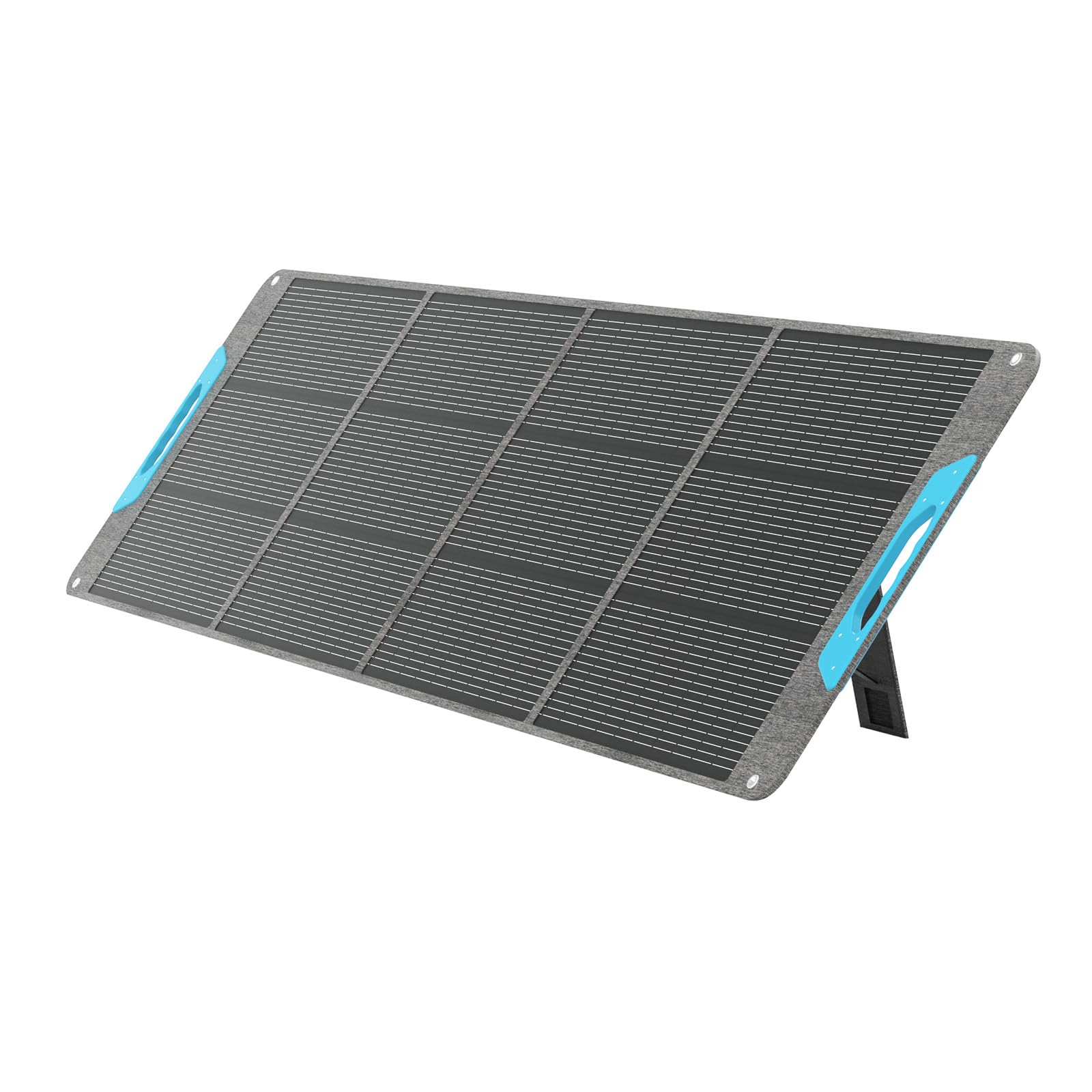
This panel strikes a remarkable balance between high-end performance and user-friendly portability, making it our top pick. Its industry-leading 25% efficiency, achieved through 16BB N-Type cell technology, means it harvests more energy faster than most competitors, a critical advantage during short winter days or under partly cloudy skies. The quad-fold design with magnetic closures feels premium and packs down to a manageable size, while the built-in kickstands offer multiple angle adjustments for optimal sun tracking.
Beyond raw solar output, its versatility shines. You get a 45W USB-C Power Delivery port and two USB-A ports, allowing you to charge laptops, cameras, and phones directly while simultaneously sending power to a power station or 12V battery via the MC4 output. Users consistently report achieving outputs very close to its rated 200W, with one noting 189-191 watts in direct sun, which is exceptional for a portable unit. The IP65 rating provides genuine peace of mind against rain and dust during outdoor adventures.
The panel’s thoughtful design extends to practical touches like a zippered pocket for cables, ground studs for stability in wind, and reinforced grommets for permanent mounting on an RV if desired. It’s a comprehensive power hub that eliminates the need for separate solar panels and device chargers, simplifying your gear and maximizing utility from a single investment.
Why it’s great
- Exceptional real-world output thanks to premium N-Type cells.
- Unmatched versatility with high-wattage USB-C PD for direct device charging.
- Robust, weatherproof build with clever, user-friendly design details.
- Lightweight for its power class, enhancing portability.
Good to know
- The premium technology and features place it in a higher tier.
- While lightweight, it’s still a substantial panel to carry and store.
2. Renogy 200W Rigid Solar Panel

For a permanent rooftop installation where space is at a premium, this rigid panel is a professional-grade choice. It utilizes the same advanced 16BB N-Type cell technology as the portable version, delivering a high 25% efficiency, but in a frame that’s specifically designed to be 7.5% smaller and 11.7% lighter than previous models. This makes it perfect for fitting more wattage onto the constrained roof of a Class B van or smaller RV.
The panel operates at a higher voltage (24V nominal), which minimizes current loss over the wiring run from your roof to your battery bank, improving overall system efficiency. Its low temperature coefficient is a standout feature for campers in hot climates, as it minimizes power loss when the panel gets scorching hot—a common issue that reduces the output of lesser panels. Reviews from full-time vanlifers confirm its reliability, with users powering fridges, laptops, and even air conditioning units with multiple panels.
Durability is engineered in, with a tempered glass front, anodized aluminum frame, and certifications to withstand significant wind and snow loads. Backed by a strong 25-year performance guarantee, this panel is an investment in long-term, hassle-free off-grid power. It’s the go-to for builders who want to maximize every square inch of roof space with the most efficient technology available.
Why it’s great
- Maximizes power density for limited roof space.
- Superior performance in high-temperature environments.
- High-voltage design reduces wiring losses for rooftop systems.
- Backed by a robust long-term warranty for peace of mind.
Good to know
- Requires a separate charge controller and mounting hardware.
- Designed for permanent install, not for moving into the sun.
3. Renogy 200W Solar Panel Starter Kit

If you’re new to solar and want a guaranteed-compatible system with all necessary components, this premium kit is an excellent choice. It includes two high-efficiency 100W monocrystalline panels, a 30A PWM charge controller with a clean flush-mount design, all necessary cabling, MC4 connectors, branch connectors for wiring, mounting Z-brackets, and even a Bluetooth module for remote monitoring. It’s a true turnkey solution that removes the guesswork.
The Adventurer Li charge controller is pre-configured for lithium batteries but supports all major battery types. The inclusion of the BT-1 module is a significant value-add, allowing you to monitor system voltage, charging current, and battery status directly from your smartphone via the Renogy DC Home app. This remote insight is invaluable for managing your power without having to physically check a display. Users have successfully used this kit to run portable fridges, exhaust fans, and lighting for days off-grid.
The panels feature corrosion-resistant frames and are built to withstand harsh weather. The provided cabling is generous in length, offering flexibility in installation layout. For someone who wants a reliable, brand-matched system from a single box with the convenience of modern app connectivity, this kit represents a robust and well-supported entry point into solar power.
Why it’s great
- Comprehensive kit with every component needed for installation.
- Smart Bluetooth monitoring provides easy system oversight.
- High-quality, durable components from a trusted brand.
- Generous cable lengths and connectors for flexible setup.
Good to know
- The charge controller is a PWM type; an MPPT would offer higher efficiency.
- Some users have reported occasional connectivity issues with the dedicated app.
4. RICH SOLAR 200W Monocrystalline Panel

The RICH SOLAR 200W panel is a workhorse built for enduring harsh conditions while delivering reliable power. It employs 18BB N-Type monocrystalline cells, which offer excellent performance stability in heat and better low-light output compared to traditional cells. The construction is notably robust, with a heavy-duty 1.3mm anodized aluminum frame and anti-reflective tempered glass, inspiring confidence for long-term outdoor exposure.
Users praise its real-world performance, with detailed reviews noting consistent output near its rated capacity under good sun and a surprising ability to still generate around 50 watts on fully overcast days. The panel comes with pre-drilled holes compatible with standard mounting systems, making installation straightforward. Its reputation for toughness is backed by anecdotes of surviving extreme weather events, including severe hailstorms and high winds, without damage.
This panel is an ideal candidate for someone building a durable, permanent or semi-permanent array on an RV, cabin, or shed. It provides a strong balance of advanced cell technology, physical resilience, and straightforward installation. The included 25-year limited power output warranty underscores the manufacturer’s confidence in its long-term performance.
Why it’s great
- Exceptionally durable construction built to survive extreme weather.
- Consistent, high output with good low-light and cloudy-day performance.
- Features reliable 18BB N-Type cell technology.
- Simple installation with standard pre-drilled mounting holes.
Good to know
- It is a large, rigid panel designed for mounting, not portability.
- Like all rigid panels, requires separate purchase of mounting hardware and charge controller.
5. ECO-WORTHY 200W Solar Panel Kit

For campers seeking a capable entry point without a significant investment, this ECO-WORTHY kit delivers remarkable value. It bundles two 100W monocrystalline panels with a 30A PWM charge controller, mounting brackets, and all necessary cables. The panels boast a 21.5% efficiency rating and come with pre-drilled holes and plug-and-play MC4 connectors, making setup intuitive for beginners.
The kit is designed for flexibility, allowing you to wire the two panels in series for a 24V system or in parallel for 12V, depending on your battery bank setup. Users report that the panels feel solid and well-made, generating expected power outputs that successfully keep RV batteries charged for running lights, water pumps, and fans. The included controller, while basic, provides essential protections and has USB ports for direct device charging.
This package is perfect for the DIY enthusiast who wants to dip their toes into solar power for their camper or small off-grid shed. It provides all the core components needed for a functional 200-watt system, letting you learn the ropes without the complexity of sourcing individual parts. The overall positive reception highlights it as a reliable and budget-conscious way to gain energy independence.
Why it’s great
- Offers an incredibly cost-effective way to get a full 200W system.
- Includes all essential components for a quick start.
- Panels are well-constructed and deliver on performance promises.
- Wiring flexibility for 12V or 24V battery systems.
Good to know
- The provided PWM charge controller is less efficient than an MPPT model.
- Mounting hardware is functional but basic; you may want to upgrade screws for certain roofs.
6. DOKIO 300W Portable Foldable Solar Panel

When you need serious portable power to quickly replenish large battery banks or high-capacity power stations, the DOKIO 300W panel answers the call. Its most impressive feat is packing 300 watts of monocrystalline cells into a package that folds down to a slim profile and weighs only 15.3 pounds, making it arguably the best power-to-weight ratio in this category.
The kit includes a standalone 20A PWM charge controller with alligator clips for easy connection to 12V batteries, plus a set of DC adapters for power stations. A long 9.8-foot cable allows you to place the panel in optimal sun while keeping your gear in the shade. Early adopters have been pleasantly surprised, with one user measuring 288 watts (over 90% efficiency) right out of the box under good sun, noting it outperformed their larger rigid panels in some conditions.
This panel is ideal for campers with high energy demands, such as those running medical devices, larger fridges, or wanting to minimize generator runtime. Its foldable, lightweight nature means it’s still manageable for one person to deploy, despite its high output. It’s a powerful tool for those who prioritize maximum energy harvest from a portable solution.
Why it’s great
- Delivers high wattage in a remarkably portable and lightweight form factor.
- Includes a useful charge controller and various adapters for flexibility.
- Long cable provides setup flexibility for optimal panel placement.
- Can produce near its rated output under ideal conditions.
Good to know
- Lacks built-in kickstands; you must provide your own support or lay it flat.
- The included PWM controller limits potential efficiency; pairing with an MPPT is recommended for best results.
7. Renogy 100W Solar Panel Starter Kit

A longtime favorite for RVers and boaters, this 100W starter kit from Renogy is a benchmark for reliability and simplicity. It features a single 100W monocrystalline panel with a robust anodized frame, paired with the capable Wanderer 30A PWM charge controller. The controller includes an RS232 port for optional Bluetooth connectivity, allowing for future upgrades in system monitoring.
The kit is celebrated for its complete package: the panel, controller, adaptor kit, tray cables, and Z-brackets are all included. This makes it an ideal solution for maintaining the charge on a single RV or marine battery, preventing discharge from parasitic loads like CO detectors or stereo memory. RV technicians often recommend this very kit as a first upgrade to ensure battery health year-round, noting its ability to fully recharge a battery over the course of a sunny day.
While not the most technologically advanced panel on this list, its strength lies in proven performance, high-quality construction, and the convenience of a matched system. For someone with modest power needs or looking for a dedicated battery maintainer, this kit continues to be a solid and trustworthy choice that’s easy to install and set up.
Why it’s great
- Time-tested, reliable kit from an industry-leading brand.
- Everything needed for a basic 100W installation is in the box.
- Controller is expandable and supports Bluetooth monitoring.
- Perfect for battery maintenance and small power needs.
Good to know
- 100 watts may be insufficient for powering appliances beyond lights and charging.
- Uses standard PERC cell technology, not the latest high-efficiency N-Type.
8. ECO-WORTHY 200W Bifacial Solar Panel (2-Pack)
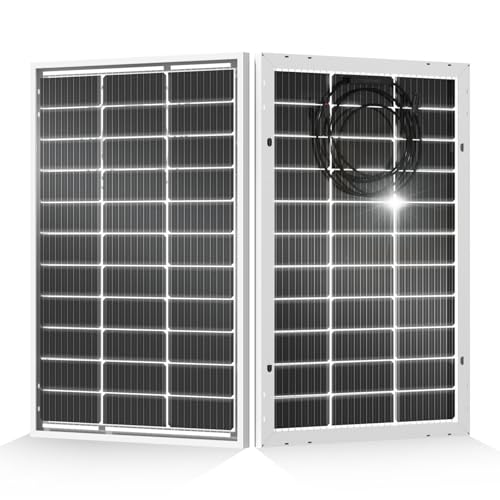
This product offers a unique technological advantage: bifacial panels that generate power from both the front and the back. The rear side captures reflected and scattered light from the ground or surrounding surfaces (like a light-colored RV roof), which can boost total energy yield by 5-25% depending on the environment. This makes them particularly effective on bright, reflective surfaces or on cloudy days when diffuse light is abundant.
The kit includes two 100W panels, giving you a 200W starting capacity with the potential for bonus output. They feature 12BB solar cells with a 23% conversion rate and are built with a durable, translucent backsheet. Users confirm that the bifacial design makes a tangible difference, noting consistent power generation even when direct sunlight is suboptimal. The panels are also competitively priced, offering advanced technology at a mid-range point.
These panels are a smart choice for the analytically-minded camper who wants to extract every possible watt, especially if mounting over a reflective surface or in often-overcast regions. They represent a forward-thinking approach to solar harvesting that can lead to more consistent daily energy production than traditional single-sided panels of the same rated wattage.
Why it’s great
- Innovative bifacial design captures additional energy from reflected light.
- Can provide more consistent power in cloudy or low-lightconditions.
- Offers two 100W panels for system flexibility and expansion.
- Built with durable materials and IP68 rated junction boxes.
Good to know
- Bifacial gain requires proper installation over a reflective surface.
- Like all rigid panels, requires separate charge controller and mounting.
9. DOKIO 150W Portable Foldable Solar Panel Kit

For campers who prioritize minimal weight and bulk above all else, the DOKIO 150W kit is a standout. Weighing a mere 7.3 pounds and folding to the size of a large laptop bag, it’s incredibly easy to stash in a packed vehicle or carry on a hike. Despite its compact form, it’s a complete system, including a standalone PWM charge controller with a clear LCD screen, a long 9.8-foot cable, and various DC adapters.
The inclusion of a separate controller is a significant advantage for direct battery charging. Users appreciate the ability to charge a 12V battery system safely without needing a separate power station as an intermediary. Reviews confirm solid performance, with one user measuring 118W in real-world testing, which is respectable for a panel of this size and portability. It’s a favorite among those who need to top off ham radio batteries, small RV batteries, or power stations while on the move.
Its ultra-portable design does mean it lacks built-in kickstands, so you’ll need to be creative with propping it up. However, for the backpacker, overlander, or anyone with severe space constraints, this kit offers a compelling blend of adequate power and unmatched packability, making solar charging feasible where larger panels simply wouldn’t fit.
Why it’s great
- Extremely lightweight and compact, perfect for space-limited setups.
- Comes as a full kit with a useful charge controller for direct battery charging.
- Long cable allows for flexible panel placement away from your gear.
- Affordable entry point into portable solar.
Good to know
- No integrated kickstands; you must provide your own support.
- Fabric case should not be left in heavy rain or intense sun for prolonged periods.
10. GRECELL 100W Portable Solar Panel
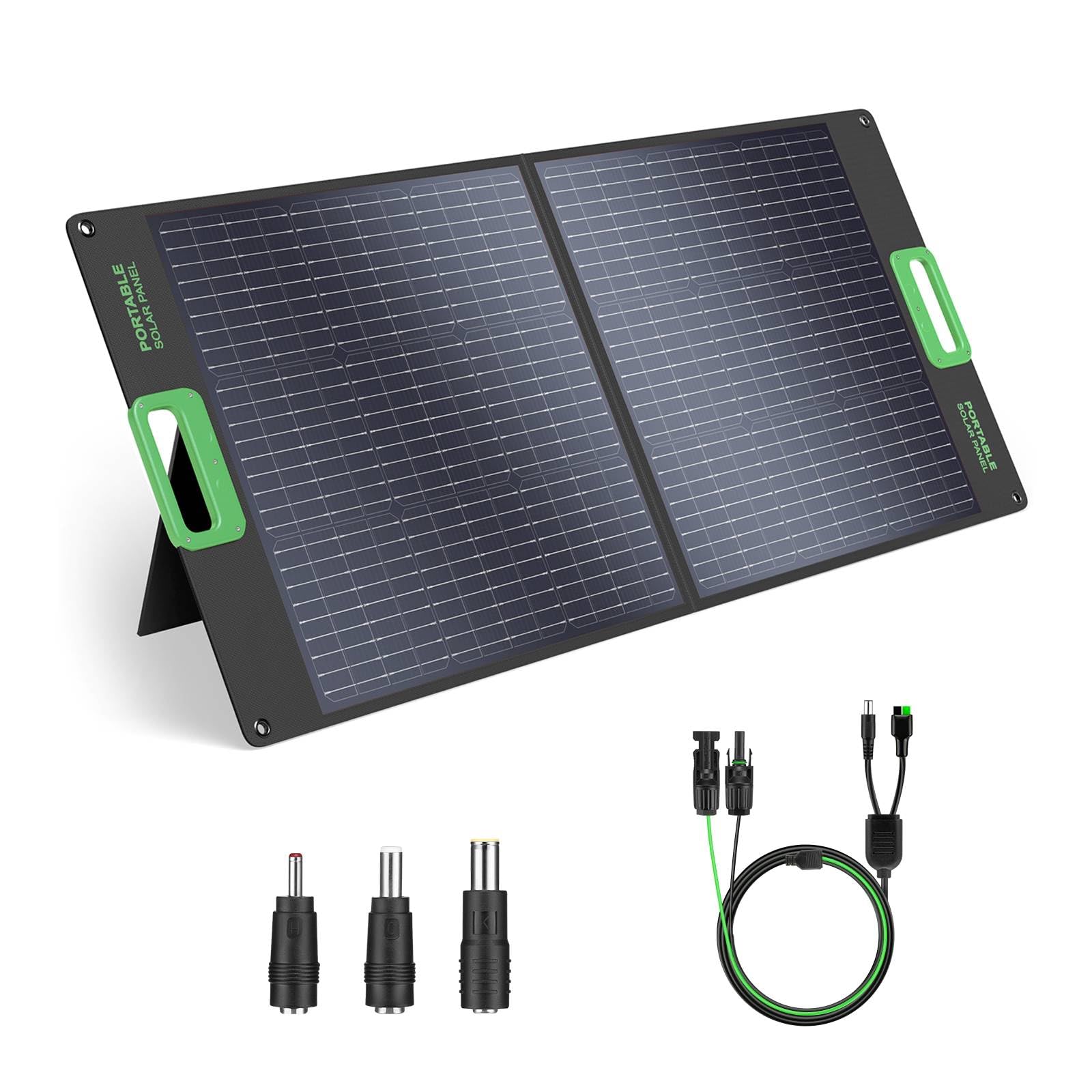
This foldable panel is an excellent budget-friendly option specifically tailored for charging portable power stations. Its key strength is compatibility; it comes with a comprehensive set of adapters (Anderson, DC, and barrel plugs) to connect with a wide variety of power station brands, making it a versatile companion for your existing gear. The bifold design with magnetic handles and a built-in zippered pouch keeps everything organized.
Performance is solid for its class, with users reporting outputs in the 80-90 watt range under good sun, which is typical and effective for charging mid-sized power stations. The panel includes sturdy kickstands for easy angling and reinforced grommets for tie-downs. It also supports connecting a second identical panel in parallel to double your input, a valuable feature for future expansion as your power needs grow.
While not as rugged or efficient as the premium portable options, it delivers reliable functionality at a very accessible point. It’s an ideal choice for casual campers, festival-goers, or as a backup emergency charger who want a simple, effective solar solution to keep their Jackery, Goal Zero, or similar power station running without breaking the bank.
Why it’s great
- Outstanding value with a wide array of included connectors for universal compatibility.
- Convenient briefcase design with storage and kickstands.
- Can be paired with a second panel for more power.
- Reliable performance for charging popular power stations.
Good to know
- Uses standard monocrystalline cells, not the latest high-efficiency technology.
- The Oxford cloth exterior is water-resistant but not submersible; avoid heavy rain.
11. Renogy 100W N-Type Solar Panel

This single rigid panel brings Renogy’s premium N-Type 16BB cell technology to an entry-level wattage, making it a smart choice for expanding an existing array or for a small, highly efficient standalone system. Its 25% efficiency rating means it will generate more power per square foot than a conventional 100W panel, which is crucial when roof space is limited. The low temperature coefficient also ensures it holds its output better on hot days.
Durably constructed with IP65 protection, low-iron tempered glass, and a corrosion-resistant frame, it’s built to last for decades. Users integrating it into systems report satisfaction with its output, often comparing it favorably to older, larger panels. It’s an ideal component for the DIYer who wants to build a high-efficiency system piece by piece, starting with a single panel and adding more as needed.
While it’s just the panel itself, its value lies in its advanced core technology at a competitive point. For someone planning a scalable system who wants to start with the best cell technology available, or for someone needing to replace an old 100W panel with a more powerful one in the same footprint, this panel is a future-proof and reliable building block.
Why it’s great
- Brings high-end N-Type efficiency to a standard 100W form factor.
- Superior performance in high temperatures and low-light conditions.
- Durable, weatherproof construction backed by strong warranties.
- Perfect for system expansion or as a high-performance starter panel.
Good to know
- Only the panel; requires separate purchase of controller and mounting.
- As a single panel, wattage may be low for those with significant power needs.
Understanding the Specs
Cell Efficiency & Technology
This percentage (e.g., 22.5%, 25%) indicates how effectively the panel converts sunlight into electricity. Higher efficiency means more power from the same physical size. N-Type monocrystalline cells with multiple busbars (16BB, 18BB) represent the current high-end, offering better performance in heat and shade, and lower long-term degradation compared to standard PERC cells.
Wattage (W) & Voltage (V)
Wattage is the panel’s power rating under ideal lab conditions. Real-world output is typically 70-85% of this. Voltage is critical for system matching. “12V” panels actually have a higher open-circuit voltage (Voc ~22V) to push current into a 12V battery. “24V” panels have even higher voltage, which is more efficient for wiring longer distances and is often used in larger systems.
Durability Ratings
Look for an IP (Ingress Protection) rating for the junction box (IP65+ is good) and mechanical load ratings for wind (e.g., 2400 Pa) and snow (e.g., 5400 Pa). Anodized aluminum frames resist corrosion. For portable panels, the laminate material (ETFE vs. PET) affects longevity and scratch resistance.
Charge Controller Type
PWM (Pulse Width Modulation) controllers are simple and budget-friendly, essentially connecting the panel directly to the battery. MPPT (Maximum Power Point Tracking) controllers are more complex and efficient; they dynamically find the panel’s optimal voltage to extract up to 30% more power, especially in cold or cloudy weather. Essential for maximizing your investment.
FAQ
What size solar panel do I need for my camper?
Can I mix and match different solar panels?
Do solar panels work on cloudy days or in the shade?
What maintenance do solar panels require?
Final Thoughts: The Verdict
For most people, the best camper solar panels winner is the Renogy 200W Portable because it masterfully blends cutting-edge efficiency, versatile direct-device charging, and practical portability into one reliable package. If you want a premium, permanent rooftop solution to maximize space, grab the Renogy 200W Rigid Panel. And for a complete, budget-friendly system that gets you started with everything in the box, nothing beats the value of the ECO-WORTHY 200W Kit.

Mo Maruf
I created WellFizz to bridge the gap between vague wellness advice and actionable solutions. My mission is simple: to decode the research and give you practical tools you can actually use.
Beyond the data, I am a passionate traveler. I believe that stepping away from the screen to explore new environments is essential for mental clarity and physical vitality.