Our readers keep the lights on and my smoothie glass nicely filled. As an Amazon Associate, I earn from qualifying purchases.
Waking up stiff and cold after a night on the ground can ruin an entire camping trip. The right camp mattress changes that equation entirely—it’s the single piece of gear that determines whether you wake refreshed or miserable, and it’s the one item where a few inches of thickness and a specific R-value number separate a good night from a restless one.
I’m Mohammad Maruf — the founder and writer behind WellFizz. Over the years I’ve analyzed foam densities, valve mechanisms, insulation layering, and packed dimensions across dozens of self-inflating and air-only pads to understand which designs actually hold up season after season.
Whether you’re car camping every weekend or squeezing gear into a backpack for a multi-day trek, finding the right camp mattresses means matching thickness, insulation, and packed size to your specific sleep style and trip type.
How To Choose The Best Camp Mattresses
Camp mattresses fall into two main camps—self-inflating foam pads and air-only pads. Foam hybrids offer built-in insulation and fail-safe comfort even if a leak develops, while air-only designs prioritize minimal packed weight and volume for backpackers. Your choice depends entirely on how you camp and what you prioritize when you sleep.
R-Value and Seasonal Insulation
R-value measures a pad’s resistance to heat loss. A value of 1.5 to 2 is fine for warm summer nights above 50°F, while 4.0 and above carries you into shoulder seasons and winter camping. The ground saps body heat aggressively—if you sleep cold or camp in cooler months, targeting an R-value of 4.5 or higher prevents that dreaded chill from creeping up through the pad.
Thickness, Width, and Sleeping Position
Side sleepers need at least 3 inches of thickness to keep hips and shoulders from pressing into the ground. Back sleepers can get away with 2.5 inches. Width matters equally—a 20-inch pad works for ultralight backpacking, but 25 to 30 inches gives room to shift positions without rolling off. The outer chambers on many modern pads are slightly taller to cradle you in the center, which improves stability for restless sleepers.
Packed Size and Inflation Method
Self-inflating pads open their valve and expand on their own, but they rarely reach full firmness without a few extra breaths or a pump sack. Air-only pads require deliberate inflation via a sack or pump. Packed size is the real trade-off—thick foam pads with high R-values roll up to the size of a small camping pillow, while minimalist air pads compress to the size of a water bottle. Match the packed volume to your available space: car campers can ignore this metric, but backpackers should weigh every cubic inch.
Quick Comparison
On smaller screens, swipe sideways to see the full table.
| Model | Category | Best For | Key Spec | Amazon |
|---|---|---|---|---|
| Therm-a-Rest MondoKing 3D | Self-Inflating Foam | Ultimate car camping comfort | 7.0 R-value / 4.25″ thick | Amazon |
| Therm-a-Rest LuxuryMap | Self-Inflating Foam | Pressure point relief | 6.0 R-value / 3″ thick | Amazon |
| Big Agnes Rapide SL | Air Chamber Insulated | Ultralight backpacking | 4.8 R-value / 3.5″ thick | Amazon |
| Acacia 4″ Self Inflating | Self-Inflating Foam | Year-round family camping | 6.0 R-value / 4.3″ thick | Amazon |
| Hikenture 4″ Self Inflating | Self-Inflating Memory Foam | Budget winter camping | 9.5 R-value / 4″ thick | Amazon |
| Sea to Summit Camp Plus | Self-Inflating Foam | Durable all-rounder | 4.3 R-value / 2.6″ thick | Amazon |
| Big Agnes Divide | Air Chamber Uninsulated | Warm weather ultralight | 1.5 R-value / 3.5″ thick | Amazon |
In‑Depth Reviews
1. Therm-a-Rest MondoKing 3D Self-Inflating Camping Sleeping Pad

The MondoKing 3D lives up to its name with a 4.25-inch thickness and a 7.0 R-value that makes it the warmest self-inflating pad in this lineup. Its StrataCore construction sandwiches a continuous foam layer between alternating ridges of air and foam, which traps heat efficiently while still compressing into a 26×10.3-inch roll. The 3D vertical sidewalls create a true mattress-like edge, so you don’t feel like you’re about to roll off when you shift to the border.
The TwinLock valve system uses separate one-way ports for inflation and deflation—no fumbling with a single valve that does both. The included pump sack speeds setup, and the stretch-knit fabric top adds a soft-to-the-touch feel that minimizes noise compared to crinkly nylon surfaces. At 5.5 pounds, it’s undeniably heavy, but for car campers who want a bed-like experience, the weight is irrelevant.
Users report that the pad self-inflates within a few minutes and feels genuinely comfortable for side sleepers weighing up to 300 pounds. The 80×30-inch XX-Large dimensions give ample room to spread out, and the PFAS-free storage sack reflects a thoughtful environmental update. The one recurring complaint involves valve defects on used units, so purchasing new ensures you get the fully functional one-way design.
Why it’s great
- Highest R-value (7.0) in the group for extreme cold
- 4.25″ thickness accommodates side sleepers without bottoming out
- TwinLock valves make inflation and deflation fast and separate
- Stretch knit top is quiet and comfortable against skin
Good to know
- Heavy at 5.5 lbs—strictly for car camping
- Rolled size is large (31×10.3″) takes up significant trunk space
- Valve defects possible on used/secondhand units
2. Therm-a-Rest LuxuryMap Self-Inflating Foam Camping Sleeping Pad

Therm-a-Rest applied its pressure mapping technology to the LuxuryMap, varying foam density across the pad so that high-pressure zones like hips and shoulders get softer support while the lumbar area remains firmer. The result feels noticeably different from a uniform foam slab—testers with chronic hip soreness specifically reported better sleep on this pad compared to standard self-inflating designs. The 3-inch thickness and 6.0 R-value deliver year-round insulation suitable for three-season camping and mild winter use.
The TwinLock valve system mirrors the MondoKing’s dedicated in/out ports, and the included pump sack eliminates breath moisture inside the pad. The 77×30-inch XL size provides generous width for rolling sleepers, though some users note the actual foam sleeping area measures slightly narrower than the fabric edge suggests. The pad weighs 5 pounds 2 ounces and rolls to 31×10 inches—again, a car camping profile.
Long-term owners praise the LuxuryMap’s durability, with one reviewer still using a 1970s Therm-a-Rest pad that functions perfectly. The 2024 version uses a thinner, more elastic fabric weave that conforms better to body contours but may attract static dust. The pad requires 2-4 hours of full inflation before first use to let the foam expand fully, which is a step some first-time users miss.
Why it’s great
- Pressure-mapped foam relieves hip and shoulder pain
- 6.0 R-value insulates well into shoulder seasons
- Made in the USA with proven long-term durability
- TwinLock valves and pump sack reduce setup effort
Good to know
- Actual sleeping surface is slightly narrower than advertised fabric width
- Requires pre-expansion period before first use
- Static charge can attract dust during setup
3. Big Agnes Rapide SL – Insulated Sleeping Pad

The Rapide SL strikes a near-perfect balance between packed size, weight, and insulation for backpackers who refuse to sleep cold. At just 24 ounces for the Wide Regular (25×72 inches), it packs down smaller than most foam hybrid pads while still delivering a 4.8 R-value through two layers of heat-reflective film. The quilted top surface and offset I-beam construction create a pillowy feel that reduces the bouncy sensation common in pure air chambers.
The 4.25-inch outer chambers are taller than the 3.5-inch center, cradling you in place naturally without active effort. The high-volume valve with micro-adjustment lets you fine-tune firmness, and the included Pumphouse sack inflates the pad in about four minutes without introducing breath moisture. The superlight nylon double ripstop fabric with aviation-grade TPU lamination resists punctures well for its weight class.
Reviewers consistently mention the pad’s quiet surface—no crinkling during movement—and the fact that it stays fully inflated overnight even through temperature drops. The wide version gives enough room for side sleepers to bend knees without sliding off. The trade-off is cost: the Rapide SL sits at the higher end of the mid-range, but the weight-to-warmth ratio justifies it for anyone counting ounces on a multi-day route.
Why it’s great
- Ultralight at 24 oz with a genuine 4.8 R-value
- Quilted top and offset I-beam eliminate air mattress bounce
- Taller outer chambers keep sleepers centered
- Pumphouse sack inflates fast and keeps moisture out
Good to know
- Premium price point compared to foam hybrids
- Not warm enough for deep winter camping alone
- Packed size still larger than minimalist air pads
4. Acacia 4″ Thick Self Inflating Sleeping Pad

Acacia’s Y-shaped telescopic foam structure is the standout engineering here—it compresses the pad’s volume by up to 60 percent after deflation, which solves the classic problem of thick foam pads being impossible to stuff back into their sacks. The 4.3-inch thickness and 6.0 R-value make it a serious contender for year-round car camping, and the 440-pound weight capacity means it supports larger body types without the foam bottoming out against the ground.
The two-way valve handles the bulk of self-inflation, and the included carry bag doubles as a pump sack for fine-tuning firmness. Side buckles let you connect two pads together for couples or kids, which is rare at this thickness level. The 30D elastic fabric with TPU-reinforced coating resists abrasion well, and heat-molded seams keep air locked in—reviewers report minimal overnight pressure loss even during temperature swings.
Some users note that the pad is bulky to pack despite the telescopic foam, with the rolled size roughly equivalent to a large laundry basket. It’s also better suited for car camping or glamping than backpacking. The customer service experience stands out positively—one reviewer received a replacement unit within days after developing a hard-to-find leak, with the manufacturer guiding them through leak detection steps first.
Why it’s great
- Y-shaped foam compresses 60% for easier packing
- 4.3″ thickness and 6.0 R-value for year-round use
- 440 lb weight capacity supports larger sleepers
- Side buckles connect two pads together
Good to know
- Still bulky when rolled—not for backpacking
- Requires electric pump for fastest inflation
- Carry bag is thin and feels delicate
5. Hikenture 4″ Thick Self Inflating Sleeping Pad

The Hikenture pad posts the highest R-value in the entire lineup at 9.5, making it the undisputed choice for winter campers who need serious ground insulation without spending premium-tier money. The 4-inch thickness combines memory foam with air, creating a plush surface that feels more like a mattress than a camping pad. The 80×28-inch dimensions accommodate taller sleepers and provide enough width for natural sprawling.
The self-inflating mechanism works well—the pad inflates most of the way on its own, and the included pump sack finishes the job without breath moisture. The patented two-way valve prevents air from sucking back during deflation, which is a common annoyance on cheaper pads. The blue polyester surface is quiet and soft against skin, and users report zero cold transfer from the ground even on frozen surfaces.
The obvious trade-off is weight and packed size. At 6.5 pounds and rolling into a sizable bundle, this is strictly a car camping or guest-room pad. One reviewer noted an initial defect near the valve that was replaced without hassle, indicating good customer support. The memory foam interior means the pad takes a few minutes to fully expand after unrolling, a similar behavior to higher-end Therm-a-Rest models.
Why it’s great
- Highest R-value (9.5) in this guide for extreme cold
- Memory foam and air combo feels like a real mattress
- Generous 80×28″ size for tall or restless sleepers
- Patented valve prevents air suck-back during deflation
Good to know
- Heavy at 6.5 lbs—car camping only
- Packed size is large for trunk storage
- Initial expansion requires patience after unboxing
6. Sea to Summit Camp Plus Self-Inflating Foam Sleeping Mat
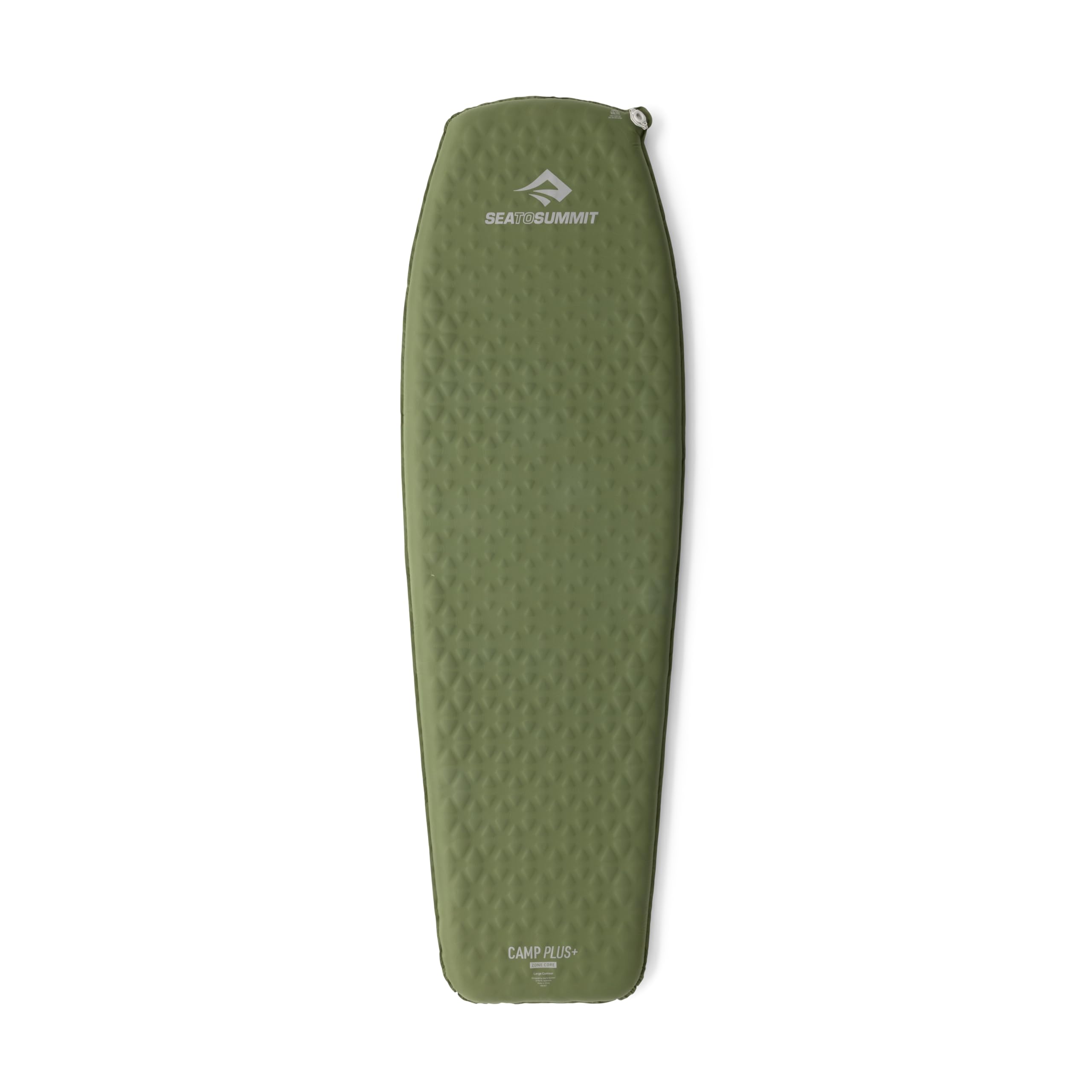
Sea to Summit’s Camp Plus uses a 75D polyester face fabric that survives direct sun, sand, and sharp rocks—one reviewer tested it in Death Valley summer conditions without damage. The 2.6-inch thickness and 4.3 R-value position it as a three-season pad that handles early spring and late fall with confidence. The tapered regular shape measures 72×22 inches, which saves weight compared to rectangular pads while still offering a 12 percent larger sleep surface than standard mummy shapes.
The multi-function reversible valve handles one-way deflation and fine pressure tuning, and the updated Xpel valve allows tighter rolling for better packability. The innovative coring technique removes foam from non-contact areas to reduce bulk without compromising warmth where your body actually touches. At 2.4 pounds, it’s lighter than most foam hybrids, making it feasible for shorter backpacking trips if you’re willing to carry a bit more weight.
The main drawback is that the foam takes days to fully expand after initial vacuum packing—some users didn’t realize this and judged the comfort prematurely. Once expanded, the pad is comfortable and supportive, though the 22-inch width feels narrow for side sleepers who bend their knees. The included PillowLock patches work well with Sea to Summit pillows, keeping your pillow from sliding off during the night.
Why it’s great
- Extremely durable 75D fabric survives rough terrain
- Contoured shape adds sleeping surface without extra weight
- Xpel valve enables tight roll for efficient storage
- Light enough for short backpacking trips at 2.4 lbs
Good to know
- Foam requires days to fully expand after unboxing
- 22-inch width feels narrow for side sleepers
- Doesn’t self-inflate quickly—needs breath or pump assist
7. Big Agnes Divide – Lightweight Air Chamber Sleeping Pad

The Big Agnes Divide is designed specifically for warm-weather backpackers who prioritize packed size and weight over insulation. With an R-value of 1.5, it’s a summer-only pad that shines on trips where nighttime temperatures stay above 50°F. The vertical I-beam construction creates a stable sleeping surface that doesn’t sag or balloon, and the 3.5-inch thickness accommodates side sleepers comfortably despite the lack of foam.
The 3.5-inch outer chambers are wider than the center, creating a subtle cradle that keeps you centered without active effort. The recycled nylon ripstop fabric with aviation-grade TPU lamination provides good puncture resistance for its lightweight build, and the high-volume valve with micro-adjustment lets you dial in firmness precisely. The included inflation sack fills the pad in under a minute without moisture, and at 24 ounces, this pad disappears into a backpack.
Reviewers appreciate the pad’s quiet surface—no crinkling during movement—and the fact that it stays inflated overnight. The 25-inch wide version offers enough space for comfortable shifting, while the 20-inch version saves even more weight for ultralight fans. The trade-off is clear: no insulation means cold ground will sap your warmth below 50°F. For dedicated summer camping or hammock backup use, it’s a near-perfect choice.
Why it’s great
- Ultralight at 24 oz with a tiny packed size
- 3.5″ thickness with taller outer chambers for stability
- I-beam construction eliminates bouncy air mattress feel
- Inflation sack fills pad fast without breath moisture
Good to know
- 1.5 R-value limits use to summer conditions
- 20-inch width option is too narrow for side sleepers
- No insulation means cold ground bleeds heat quickly
FAQ
What R-value do I need for winter camping?
Are self-inflating pads better than air-only pads?
How do I store a self-inflating pad long-term?
Final Thoughts: The Verdict
For most users, the camp mattresses winner is the Therm-a-Rest MondoKing 3D because it delivers unmatched warmth and thickness for car campers who refuse to sacrifice sleep quality. If you want ultralight performance on the trail, grab the Big Agnes Rapide SL. And for year-round family camping on a budget, nothing beats the value of the Hikenture 4-inch pad.

Mo Maruf
I created WellFizz to bridge the gap between vague wellness advice and actionable solutions. My mission is simple: to decode the research and give you practical tools you can actually use.
Beyond the data, I am a passionate traveler. I believe that stepping away from the screen to explore new environments is essential for mental clarity and physical vitality.