Our readers keep the lights on and my smoothie glass nicely filled. As an Amazon Associate, I earn from qualifying purchases.
Shaky, poorly lit, and muffled audio are the three signs of amateur vlogging. The difference between a subscriber magnet and a skipped video often comes down to the tool in your hand—specifically, a camera with a large sensor, reliable stabilization, and a microphone input that can capture your voice clearly without wind noise or echo. Phone cameras are convenient but they lock you into fixed focal lengths, small sensors that struggle in low light, and audio quality that forces your viewers to reach for the volume knob every ten seconds.
I’m Mohammad Maruf — the founder and writer behind WellFizz. I’ve spent the last 15 years dissecting camera specs, field-testing stabilization systems across Micro Four Thirds, APS-C, and full-frame bodies, and cross-referencing real user footage to identify which vlogging cameras actually deliver publish-ready video straight out of the box.
From pocket-sized gimbal cams to interchangeable-lens mirrorless rigs, this deep-dive guide breaks down the top contenders to help you find the very best cameras for vlogging that match both your skill level and your specific shooting style without blowing your budget on features you don’t need.
How To Choose The Best Cameras For Vlogging
Your vlogging camera is a trade-off triangle: sensor size, stabilization, and audio flexibility. Prioritizing the wrong corner means you end up with beautiful footage that nobody can hear, or clean audio attached to shaky, un-watchable video. Know your primary shooting scenario before you start comparing specs.
Stabilization: mechanical beats digital every time
A camera with in-body image stabilization (IBIS) or a mechanical gimbal will produce smooth walking shots without that jello-wobble artifact common in digital stabilization. Action cameras like the DJI Osmo Nano rely on their small size and magnetic mounts for stability, while mirrorless bodies like the Panasonic G85 use 5-axis IBIS inside the sensor housing itself.
Audio: the input that keeps viewers watching
A vlog with gorgeous 4K footage and muffled audio gets skipped within five seconds. Look for a camera with a 3.5mm microphone jack and ideally a headphone monitoring port. Don’t trust built-in mics for anything except scratch audio; cameras like the DJI Osmo Pocket 3 Creator Combo include a wireless transmitter in the box, saving you from buying one separately.
Sensor size and low-light performance
The physical size of the sensor determines how much light the camera can collect. A 1-inch sensor (found in the Pocket 3) is a massive jump from a phone sensor, while APS-C (Sony ZV-E10, Nikon Z 30) and full-frame (Canon EOS R8) sensors offer significantly better dynamic range and noise performance in dim restaurants or evening street vlogs.
Recording limits and heat management
Some cameras cap 4K recording at 30 minutes or overheat in continuous use. If you record long interviews, livestream, or shoot B-roll for hours, check for unlimited recording duration and passive cooling design. The Nikon Z 30 and Canon EOS R8 handle long sessions without thermal shutdown.
Quick Comparison
On smaller screens, swipe sideways to see the full table.
| Model | Category | Best For | Key Spec | Amazon |
|---|---|---|---|---|
| DJI Osmo Pocket 3 | Gimbal Camera | Walk-and-talk vlogging | 1″ CMOS, 3-axis gimbal | Amazon |
| Sony Alpha ZV-E10 | Mirrorless | Interchangeable-lens vlogging | APS-C 24.2MP, 4K oversampled from 6K | Amazon |
| Sony Alpha 6700 | Mirrorless | Hybrid photo/video pro | APS-C 26MP, 4K 120fps | Amazon |
| DJI Osmo Nano | Action Camera | Compact POV vlogging | 1/1.3″ sensor, 143° FOV | Amazon |
| Insta360 GO Ultra | Action Camera | Ultra-light wearable vlog | 1/1.28″ sensor, 53g weight | Amazon |
| Panasonic G85 | Mirrorless | Budget IBIS and weather sealing | MFT 16MP, 5-axis IBIS | Amazon |
| Panasonic LUMIX G100 | Mirrorless | Beginner with tracking audio | MFT, built-in mic with tracking | Amazon |
| Nikon Z 30 | Mirrorless | Unlimited 4K recording | APS-C 20.9MP, unlimited 4K 30p | Amazon |
| Blackmagic Pocket 4K | Cinema Camera | Professional color grading | MFT, 13 stops dynamic range | Amazon |
| Canon EOS RP | Full-Frame | Entry-level full-frame vlog | Full-frame 26.2MP, RF 24-105mm | Amazon |
| Canon EOS R8 | Full-Frame | Uncropped 4K 60fps full-frame | Full-frame 24.2MP, 4K oversampled from 6K | Amazon |
In‑Depth Reviews
1. DJI Osmo Pocket 3 Creator Combo

The Osmo Pocket 3 owns the vlogging sweet spot with a 1-inch CMOS sensor that collects dramatically more light than the 1/1.3-inch sensors in action cameras, producing noticeably cleaner footage in dim interiors and evening street scenes. Its rotating 2-inch touchscreen flips instantly between horizontal and vertical framing, which matters for creators who publish both landscape YouTube content and portrait TikTok clips without cropping.
The built-in 3-axis mechanical gimbal delivers buttery-smooth walking footage that no digital stabilization can match, and ActiveTrack 6.0 keeps your face centered even when you spin or crouch. The Creator Combo bundles the DJI Mic 2 transmitter, a battery handle that extends runtime to about 166 minutes, and a wide-angle lens adapter that pushes the FOV wider for selfie-style vlogging.
D-Log M and 10-bit color recording allow for real color grading in post, which is rare at this size and price point. The only trade-off is the exposed gimbal mechanism — it’s more fragile than a solid-body action cam, so you’ll want the included carrying bag for travel.
Why it’s great
- 1-inch sensor delivers professional low-light quality
- 3-axis mechanical gimbal eliminates walking shake
- Included wireless mic removes audio upgrade cost
Good to know
- Exposed gimbal needs careful handling in dirt or rain
- Battery handle adds bulk when attached
2. Sony Alpha ZV-E10
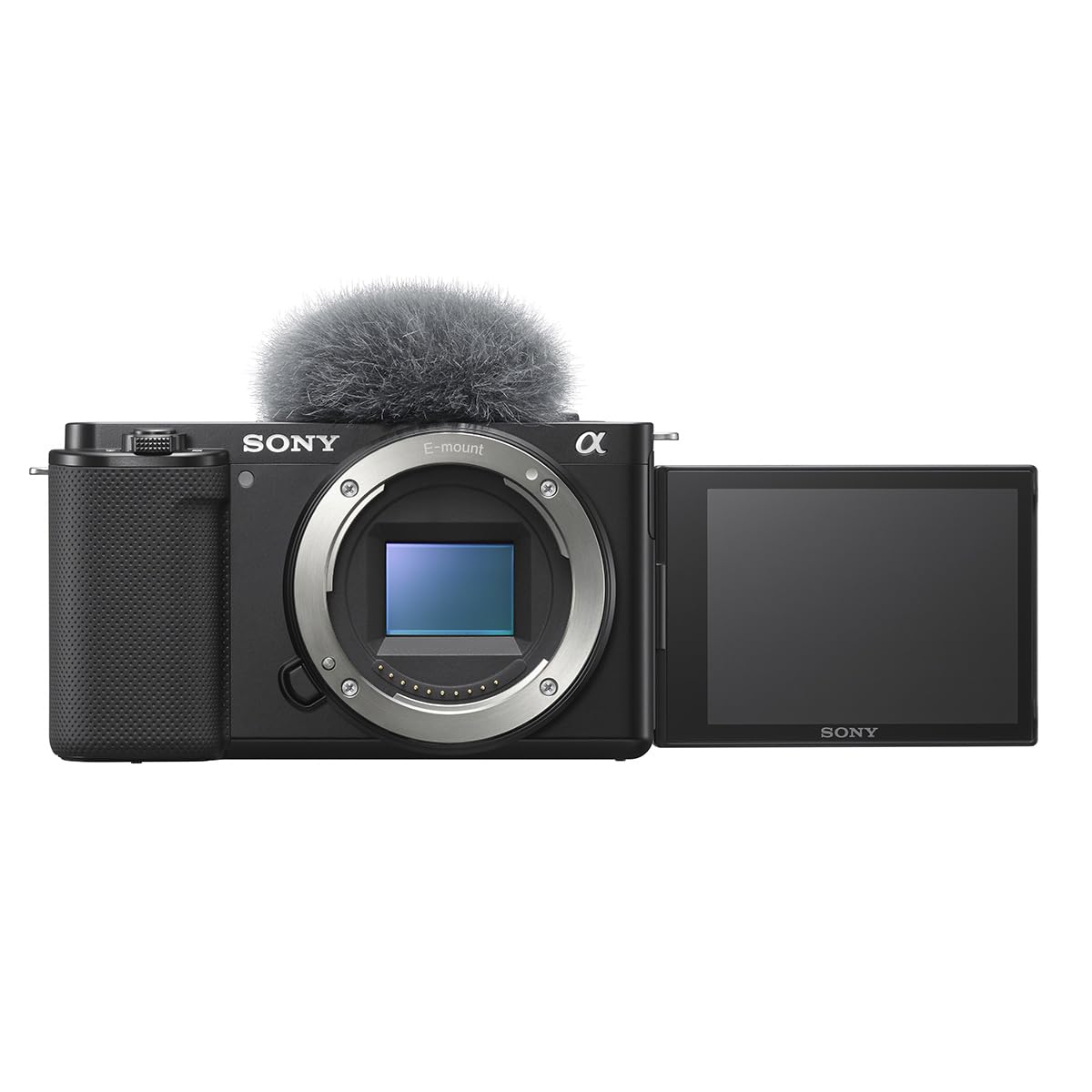
The ZV-E10 remains the gold standard for interchangeable-lens vlogging under four figures because of Sony’s Real-Time Eye AF, which locks onto your eye and stays there even when you move around the frame or hold up an object. The 24.2MP APS-C sensor captures 4K video oversampled from a 6K readout, producing sharper pixel-level detail than many competing cameras in this class.
The Product Showcase Setting is a clever vlogging-specific feature: hold an item in front of the lens and the camera instantly racks focus to the object, pull it away and it snaps back to your face. A single button toggles background blur on and off, eliminating the need to dive into aperture menus mid-recording.
There is no in-body stabilization, so you must rely on OSS lenses or a gimbal for walking shots. The battery life is moderate — expect about 25 minutes of continuous 4K recording on a single charge. Rolling shutter is noticeable during quick pans, so plan smooth camera movements.
Why it’s great
- Real-Time Eye AF is class-leading for vlog self-focus
- 6K oversampled 4K delivers crisp, detailed footage
- Product Showcase mode is uniquely useful for review vlogs
Good to know
- No IBIS — expects OSS lens or gimbal for stable walking shots
- Battery drains fast in 4K recording
3. Sony Alpha 6700 with 18-135mm Lens

The Alpha 6700 is Sony’s most refined APS-C body, combining a 26MP back-illuminated sensor with a dedicated AI processor that tracks subjects — human eyes, animal eyes, even birds and insects — with nearly zero hunting. The 4K 120fps high-frame-rate mode lets you slow down action footage by 4x while retaining full resolution, which is a killer feature for hiking, pet, or sports vlogs.
The BIONZ XR engine powers 6K oversampled 4K at up to 60fps in 4:2:2 10-bit color, giving editors room to push shadows and recover highlights. The 18-135mm kit lens offers a 7.5x zoom range that covers everything from wide-angle selfie framing to compressed portrait shots at the long end, though its variable aperture means you lose light as you zoom.
One caveat: the camera can overheat after roughly 40 minutes of 4K 60fps recording. The single SD card slot is a downgrade from dual-slot competitors, and the electronic viewfinder is small. For pure vlogging, the FX30 is a better video-first choice, but the a6700 wins if you also shoot serious stills.
Why it’s great
- AI-based subject tracking is the fastest in APS-C mirrorless
- 4K 120fps enables smooth slow-motion without quality loss
- 10-bit 4:2:2 color for serious post-production grading
Good to know
- Overheats after ~40 mins of 4K 60fps continuous recording
- Single SD card slot and small EVF
4. DJI Osmo Nano Standard Combo (128GB)
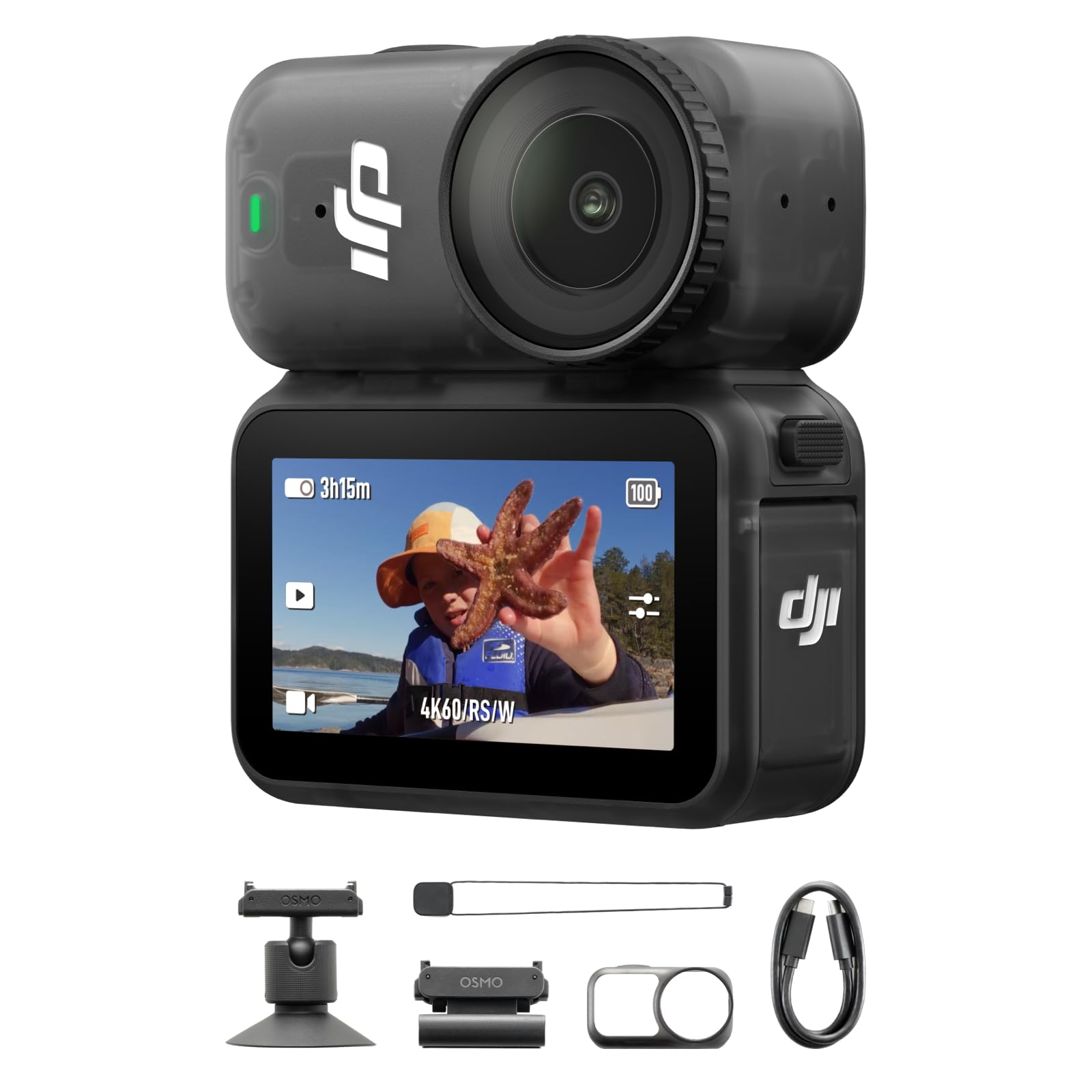
Weighing next to nothing and small enough to clip onto a hat brim, the Osmo Nano brings a 1/1.3-inch sensor and 143-degree ultra-wide FOV into a magnetic form factor that fits in a jacket pocket. The 4K 60fps recording with 10-bit D-Log M color gives you room to match footage from larger cameras when editing multiple-angle projects.
The magnetic mounting system is genuinely clever: the camera snaps onto a hat clip, lanyard, or a ball-joint mount that attaches to metal surfaces. Battery life hits about 60 minutes when recording in 4K detached from the dock, and roughly two hours with the Vision Dock attached. The built-in 128GB storage means you can start shooting immediately without buying a memory card.
Audio supports direct connection to two external microphones via OsmoAudio, but the built-in mic is predictable for an action cam — usable indoors, thin outdoors. The camera is waterproof to 10 meters without a housing, making it a solid choice for vloggers who shoot near water or in light rain.
Why it’s great
- Ultra-compact magnetic clip-on design for POV shooting
- 128GB internal storage — no card needed out of box
- Waterproof to 10m for water-adjacent vlogging
Good to know
- Built-in mic quality degrades in wind without accessory
- Dock battery may drain slowly even when device is off
5. Insta360 GO Ultra
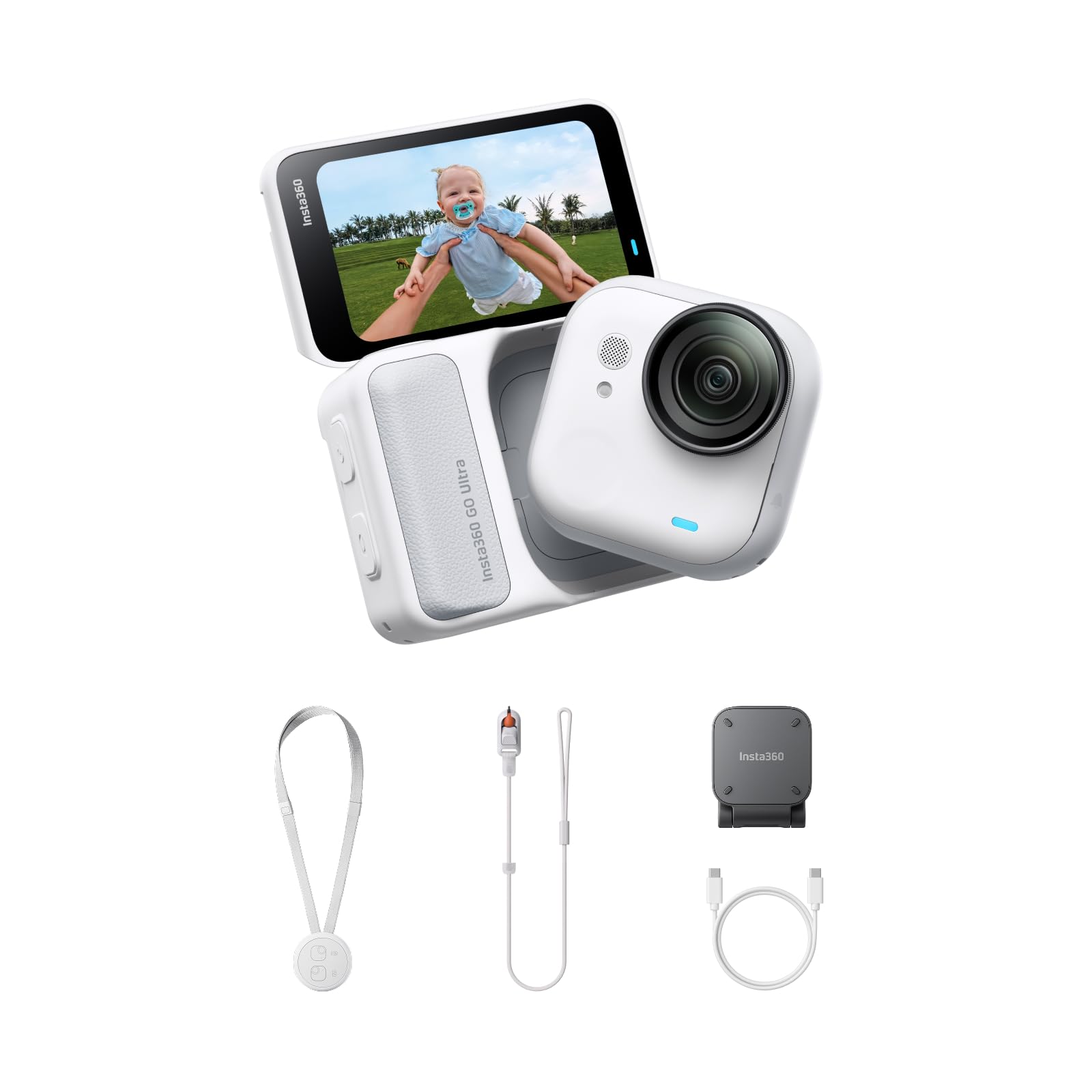
At just 53 grams, smaller than most wristwatches, the GO Ultra is the lightest 4K vlogging camera that still produces usable footage. The 1/1.28-inch sensor paired with a 5nm AI chip enables PureVideo mode for low-light scenarios, and the 4K Active HDR maintains detail in high-contrast scenes like sunset beach walks or shaded forest trails.
Magnetic mounting works through a pendant or easy clip, making the camera disappear onto your chest or cap brim so you can vlog hands-free without the weight of a GoPro or gimbal camera around your neck. Standalone battery hits about 70 minutes, and the Action Pod extends that to three hours with 12-minute 0–80% fast charging.
FlowState stabilization has three adjustable levels, and the 360 Horizon Lock keeps the horizon level even if you tilt your head or the camera rotates. The built-in mic is surprisingly good for a camera this small — reviewers note it sounds closer to an external lavalier than a typical onboard action-cam microphone.
Why it’s great
- 53g weight is barely noticeable when clipped to clothing
- PureVideo mode improves low-light dramatically for its size
- Ultra-fast 12-minute charge from 0 to 80%
Good to know
- Requires Action Pod for full battery life and waterproofing
- microSD card sold separately — no internal storage
6. Panasonic LUMIX G85 with 12-60mm Lens

The G85 is an older body that still outclasses many newer cameras on value because Panasonic put 5-axis in-body stabilization inside a weather-sealed magnesium-alloy chassis at a price that leaves room for good glass. The 16MP Micro Four Thirds sensor has no low-pass filter, which gives it a slight resolution edge over other 16MP sensors and produces sharper 4K video than its pixel count suggests.
The 12-60mm kit lens includes its own optical stabilization that pairs with the IBIS for dual-image stabilization, making handheld walking shots remarkably smooth without a gimbal. The articulating touchscreen flips to face you for selfie framing, and the electronic viewfinder is clear and responsive for sunny-day shooting.
Autofocus in 4K is contrast-detect only, so it hunts more than phase-detect systems in dim light. Battery life is modest — expect about a day of casual shoot-and-review use. The G85 is heavier than the G7 it replaced, but that weight comes from a larger grip and better build quality.
Why it’s great
- 5-axis IBIS with OIS lens makes handheld shooting gimbal-smooth
- Weather-sealed body withstands light rain and dust
- Articulating touchscreen is excellent for self-framing
Good to know
- Contrast-detect AF hunts in low-light 4K shooting
- Heavier than competing MFT bodies like the G7
7. Panasonic LUMIX G100 with 12-32mm Lens

The G100 is purpose-built for vloggers who want mirrorless image quality without the learning curve of manual audio. Its built-in microphone uses tracking technology — the camera adjusts the pickup pattern based on where subjects are in the frame, switching between omni, cardioid, and shotgun-like directionality automatically as you pan.
The 12-32mm pancake lens collapses flat against the body, making the overall kit small enough for one-handed recording. V-Log L recording is available for those who want to grade footage, and the frame marker overlays social-media aspect ratios like 1:1 and 4:5 for Instagram and TikTok composition.
4K video is capped at roughly 10 minutes per clip, which is a hard limit for anyone recording long monologues or interviews. The 8-bit internal recording also lacks the color-depth latitude of 10-bit competitors. For quick daily vlogs and social clips, though, the G100’s size and audio innovation make it a compelling entry point.
Why it’s great
- Tracking microphone adjusts pickup pattern to subject position
- Collapsible 12-32mm lens keeps the kit ultra-compact
- V-Log L included for color grading practice
Good to know
- 4K recording limited to ~10 minutes per clip
- 8-bit color depth limits grading compared to 10-bit options
8. Nikon Z 30 with 16-50mm Lens

Nikon’s smallest mirrorless camera is also its most vlogging-focused, with an unlimited 4K 30p recording limit that keeps rolling even during long interviews or classroom recordings. The 20.9MP APS-C sensor delivers crisp video with accurate color, and the eye-tracking autofocus works for both people and pets — useful for lifestyle vloggers who film their dogs or cats running around.
The 16-50mm kit lens is compact enough to keep the whole package light, and the flip-down touchscreen serves as a selfie monitor with a red REC light that clearly shows when you’re filming. USB-C provides both power and data for simultaneous livestreaming — plug it into a computer and it works as a high-quality webcam without extra hardware.
There is no electronic viewfinder, so you must rely entirely on the LCD for framing. This is fine for typical vlogging but can be a problem in bright sunlight. The built-in stereo mic has adjustable sensitivity, but an external mic via the 3.5mm jack is recommended for serious audio quality.
Why it’s great
- Unlimited 4K 30p — no overheating or time limit
- USB-C livestreaming 4K 30p and constant power
- Eye tracking AF works reliably for people and animals
Good to know
- No viewfinder — LCD-only framing in bright light
- Kit lens aperture (f/3.5–6.3) limits low-light performance
9. Blackmagic Pocket Cinema Camera 4K

The Pocket Cinema Camera 4K is not a casual vlog camera — it’s a professional cinema tool that shoots 12-bit Blackmagic RAW and Apple ProRes, giving you massive latitude to push shadows and recover highlights in post. The Micro Four Thirds sensor offers 13 stops of dynamic range and dual native ISO up to 25,600, which means clean noise performance even in candlelight or street-lit night scenes.
The 5-inch touchscreen LCD is bright enough to use as your primary monitor, eliminating the need for an external display. Mini XLR inputs with phantom power let you connect professional microphones directly, and the USB-C port records straight to external SSDs, which is cheaper and faster than CFast 2.0 cards. DaVinci Resolve Studio comes included with full activation.
There is no in-body stabilization, no phase-detect autofocus, and no flip screen — every shot requires manual focus or a follow-focus rig, and smooth footage demands a gimbal or tripod. Battery life is roughly 30 minutes from the included LP-E6 battery. This camera is for vloggers who are already comfortable with a full manual cinema workflow and want the highest possible image quality.
Why it’s great
- 12-bit Blackmagic RAW provides extreme grading flexibility
- 13 stops dynamic range and dual ISO 25,600 for low-light
- Mini XLR inputs with phantom power for pro audio gear
Good to know
- No IBIS, no continuous AF, no flip screen
- Battery lasts ~30 minutes — requires external power for long shoots
10. Canon EOS RP with RF 24-105mm Lens

The EOS RP is the most affordable entry point into full-frame mirrorless for vloggers who want that shallow depth-of-field look and superior low-light performance without jumping to the R8 or R6 price tier. The 26.2MP full-frame sensor paired with the RF 24-105mm f/4-7.1 IS STM lens delivers noticeably less noise at high ISO than APS-C sensors, especially in dim restaurant or indoor home settings.
The vari-angle touchscreen swings out completely for front-facing vlogging, and the Dual Pixel CMOS AF provides fast, reliable face tracking during video. The RF lens mount is adaptable to Canon’s enormous EF/EF-S lens library via a simple adapter, giving you cheap access to fast primes like the 50mm f/1.8 for that creamy bokeh background.
4K recording introduces a 1.6x crop factor and a 30-minute clip limit, and there is no Dual Pixel AF in 4K mode — only contrast detect. The kit lens aperture narrows to f/7.1 at the telephoto end, which significantly reduces low-light capability. For 1080p vlogging with full AF and no crop, the RP performs beautifully, but 4K is compromised compared to the R8.
Why it’s great
- Full-frame sensor delivers beautiful shallow depth-of-field
- Excellent high-ISO performance for indoor evening vlogs
- Access to massive Canon EF lens library via adapter
Good to know
- 4K mode has a heavy 1.6x crop and no Dual Pixel AF
- 30-minute 4K recording limit per clip
11. Canon EOS R8 Body

The EOS R8 is essentially an R6 Mark II guts dropped into a lighter, more affordable body — producing uncropped 4K 60p video oversampled from a 6K readout with full Dual Pixel CMOS AF II coverage across 100% of the frame. This means face detection and subject tracking (people, animals, vehicles) work during 4K recording, which most cameras still don’t offer at this body-only price point.
The 24.2MP full-frame sensor with DIGIC X processor delivers class-leading low-light noise control, and Canon Log 3 enables 10-bit internal recording for professional color grading. The 180fps slow-motion mode at 1080p crops in and reduces quality, but the 40fps electronic shutter with full autofocus is useful for capturing fast action for B-roll cutaways.
There is no in-body stabilization — you’ll need an RF lens with IS or a gimbal to smooth walking footage. Battery life is mediocre (around 500 photos or an hour of video), and the single UHS-II SD card slot is a limitation for backup recording. The R8 is the lightest full-frame body Canon makes, so the weight savings is real for all-day shoulder carry.
Why it’s great
- Uncropped 4K 60p oversampled from 6K — sharp and full-frame
- Dual Pixel AF II works during 4K and tracks subjects reliably
- Canon Log 3 and 10-bit color for professional grading
Good to know
- No IBIS — expects stabilized lens or gimbal for steady footage
- Single SD card slot and short battery life
FAQ
Do I need a gimbal for a vlogging camera or is in-body stabilization enough?
What microphone type works best for outdoor vlogging with wind noise?
Can I use a full-frame camera like the Canon R8 for handheld vlogging?
Final Thoughts: The Verdict
For most users, the cameras for vlogging winner is the DJI Osmo Pocket 3 Creator Combo because it packs a 1-inch sensor, 3-axis gimbal stabilization, and an included wireless microphone into a pocket-sized body that produces publish-ready footage with zero learning curve. If you want an interchangeable-lens system with the best autofocus in the business, grab the Sony Alpha ZV-E10. And for pro-level full-frame quality with uncropped 4K 60p and Canon Log 3, nothing beats the Canon EOS R8 at its price.

Mo Maruf
I created WellFizz to bridge the gap between vague wellness advice and actionable solutions. My mission is simple: to decode the research and give you practical tools you can actually use.
Beyond the data, I am a passionate traveler. I believe that stepping away from the screen to explore new environments is essential for mental clarity and physical vitality.