Our readers keep the lights on and my smoothie glass nicely filled. As an Amazon Associate, I earn from qualifying purchases.
Nature photography demands gear that balances resolution, speed, and environmental ruggedness — often all at once. Whether you’re tracking a peregrine falcon in flight or waiting for dawn light on a dew-laden leaf, the camera you choose determines which details you capture and which ones blur into compromise. The gap between a missed focus and a wall-printable shot is measured in milliseconds and millimeters.
I’m Mohammad Maruf — the founder and writer behind WellFizz. I’ve spent years analyzing imaging hardware specifications, from sensor dynamic range and pixel pitch to AF point coverage and IBIS stop ratings, to separate marketing claims from genuine field performance.
After comparing dozens of models across sensor sizes, autofocus systems, and lens ecosystems, this guide identifies the cameras for nature photography that actually deliver on their promises in real-world field conditions.
How To Choose The Best Cameras For Nature Photography
Selecting the right camera for nature and wildlife requires matching the gear to your specific shooting environment and subject behavior. A landscape photographer on a multi-day hike has different needs than a bird photographer shooting from a blind at dawn. These are the primary factors that separate adequate from excellent.
Sensor Size and Dynamic Range
Full-frame sensors (35.6×23.8mm) offer the widest dynamic range and best high-ISO noise performance, which is critical for dawn/dusk wildlife shots. APS-C sensors (23.5×15.7mm) provide a 1.5x crop factor that effectively extends your telephoto reach — a 300mm lens behaves like 450mm. Micro Four Thirds sensors offer even more crop factor (2x) in a lighter body, but with reduced dynamic range at higher ISOs. For most nature shooters, APS-C hits the sweet spot between reach, weight, and low-light capability.
Autofocus Performance and Subject Detection
Birds in flight, bounding mammals, and erratic insects demand AF systems that track moving subjects across the frame. Look for phase-detection AF points covering at least 80% of the sensor area. Modern mirrorless cameras with AI-based subject detection (bird, animal, vehicle modes) dramatically improve keeper rates by letting the camera handle focus while you compose. DSLR users should prioritize cross-type sensors over simple horizontal ones for better low-contrast tracking.
Weather Sealing and Build Quality
Nature photography happens in rain, dust, salt spray, and freezing temperatures. A camera with magnesium alloy chassis and environmental seals at every port, battery door, and card slot will survive conditions that destroy consumer-grade bodies. Check for explicit IP-rated sealing or manufacturer claims about dust/moisture resistance. The OM SYSTEM and Nikon Z series are leaders in weather sealing at mid-range price points.
Image Stabilization (IBIS vs Lens-based)
In-body image stabilization (IBIS) lets you shoot handheld at shutter speeds 5–7 stops slower than the reciprocal rule — invaluable when using non-stabilized telephoto lenses or shooting in low forest light. Lens-based optical stabilization (OIS) works best at long focal lengths. The ideal setup combines both, which the Panasonic G85 and OM SYSTEM cameras provide through Dual I.S. systems that coordinate body and lens stabilization.
Battery Life and Weight
A 10-mile hike with a 4-pound camera body plus telephoto lens adds up fast. Mirrorless cameras typically consume more battery power than DSLRs due to electronic viewfinders and sensor-based AF. Expect 300–400 shots per charge on mirrorless versus 800–1200 on DSLR. Always budget for spare batteries and consider a battery grip for extended field days. Weight also affects your ability to hold steady — a 2-pound body with a 3-pound lens requires good technique or a monopod.
Quick Comparison
On smaller screens, swipe sideways to see the full table.
| Model | Category | Best For | Key Spec | Amazon |
|---|---|---|---|---|
| Nikon Z50 II (Two Lens Kit) | Mid-Range | Travel & versatile wildlife | 231 phase-detection AF points | Amazon |
| Canon EOS R6 Mark II | Premium | Pro-level hybrid action | 40 fps electronic burst, 8-stop IBIS | Amazon |
| OM SYSTEM OM-5 II (14-150mm) | Premium | Weather-sealed travel companion | 6.5-stop 5-axis IBIS | Amazon |
| Sony a7 III | Premium | Full-frame value & low-light | 693 phase-detection AF points | Amazon |
| Nikon D7500 | Mid-Range | Classic DSLR reliability | 51-point AF, 8 fps burst | Amazon |
| Canon EOS RP + RF 24-105mm | Mid-Range | Compact full-frame entry | Full-frame 26.2MP sensor | Amazon |
| OM SYSTEM OM-5 II (12-45mm PRO) | Premium | High-end Micro 4/3 travel | 121-point AF, PRO lens kit | Amazon |
| Panasonic G85 | Mid-Range | Best value IBIS system | 5-axis Dual I.S. 2 | Amazon |
| Sony a7R V | Premium | High-resolution landscape | 61MP sensor, 8-stop IBIS | Amazon |
| Fujifilm X100VI | Premium | Street-nature documentary | 40.2MP, 6-stop IBIS, fixed 23mm f/2 | Amazon |
| Panasonic FZ80D | Budget | Ultra-zoom all-in-one | 60x optical zoom (20-1200mm) | Amazon |
In‑Depth Reviews
1. Nikon Z50 II (Two Lens Kit)

The Nikon Z50 II is the most complete APS-C mirrorless package for nature photographers entering the ecosystem. Its 20.9MP DX-format sensor captures lifelike colors with excellent dynamic range, and the included twin-lens kit (16-50mm f/3.5-6.3 VR + 50-250mm f/4.5-6.3 VR) covers everything from wide landscapes to distant wildlife. The 231 phase-detection AF points with dedicated bird and airplane subject detection modes give it a decisive advantage over earlier Z-series bodies for wildlife tracking.
In field use, the eye-detection AF reliably locks onto birds perched against complex backgrounds, and the 31 built-in Picture Control presets let you dial in a specific aesthetic without post-processing — useful for generating shareable results on the trail. The built-in flash and Night Portrait mode add versatility for crepuscular shooting when you can’t use a tripod. Battery life is typical for mirrorless in this class, averaging around 300 shots per charge, so the SnapBridge app for quick phone transfer becomes essential for sharing between refills.
The kit lenses are optically decent but not exceptional — they perform best stopped down to f/8 for landscape work. The real strength of the Z50 II is its lightweight body that handles like a compact, making it the camera you actually carry on a 12-mile hike rather than leave in the car. For the APS-C nature photographer who wants modern AF without the weight of full-frame, this is the current sweet spot.
Why it’s great
- Excellent subject detection for birds and animals
- Compact two-lens kit covers 16-250mm range
- 31 Picture Control presets save editing time in the field
Good to know
- Kit lenses are average in sharpness compared to premium glass
- Battery life requires planning for long days in the field
- No lens mount compatibility with older F-mount gear without adapter
2. Canon EOS R6 Mark II

The Canon EOS R6 Mark II is a full-frame hybrid that blurs the line between professional wildlife camera and versatile landscape tool. Its 24.2MP sensor paired with the DIGIC X processor delivers 6K-oversampled 4K video at 60 fps, making it ideal for nature videographers who want slow-motion capture of animal behavior. The Dual Pixel CMOS AF II system detects people, animals, birds, horses, trains, and aircraft — a category range that covers nearly every nature shooting scenario.
What sets this camera apart is the 40 fps electronic shutter burst with full AF/AE tracking. In a practical bird-in-flight test, the R6 Mark II captured 39 usable frames out of 40 in a burst sequence — a keeper rate that few cameras in its class can match. The 8-stop in-body image stabilization means you can handhold telephoto lenses at 1/15 second and still get sharp results, which is transformative for late-afternoon forest shooting when light is dropping.
Build quality is professional-grade with extensive weather sealing, dual card slots, and a USB-C 10Gbps port for rapid file transfer. The absence of a pop-up flash is deliberate — this camera is designed for serious glass and external lighting. Battery life is strong at approximately 450 shots per charge, though video shooters will want a spare. The main consideration is the RF lens ecosystem, which requires an adapter for EF glass but rewards investment with outstanding optical quality.
Why it’s great
- 40 fps burst with near-100% AF accuracy for action sequences
- 8-stop IBIS enables sharp handheld shots at extreme speeds
- Advanced subject detection covers birds, mammals, and vehicles
Good to know
- RF lens ecosystem requires adapter for classic Canon glass
- Body-only purchase means separate lens investment
- No built-in flash; external light needed for close fill
3. OM SYSTEM OM-5 II (14-150mm)
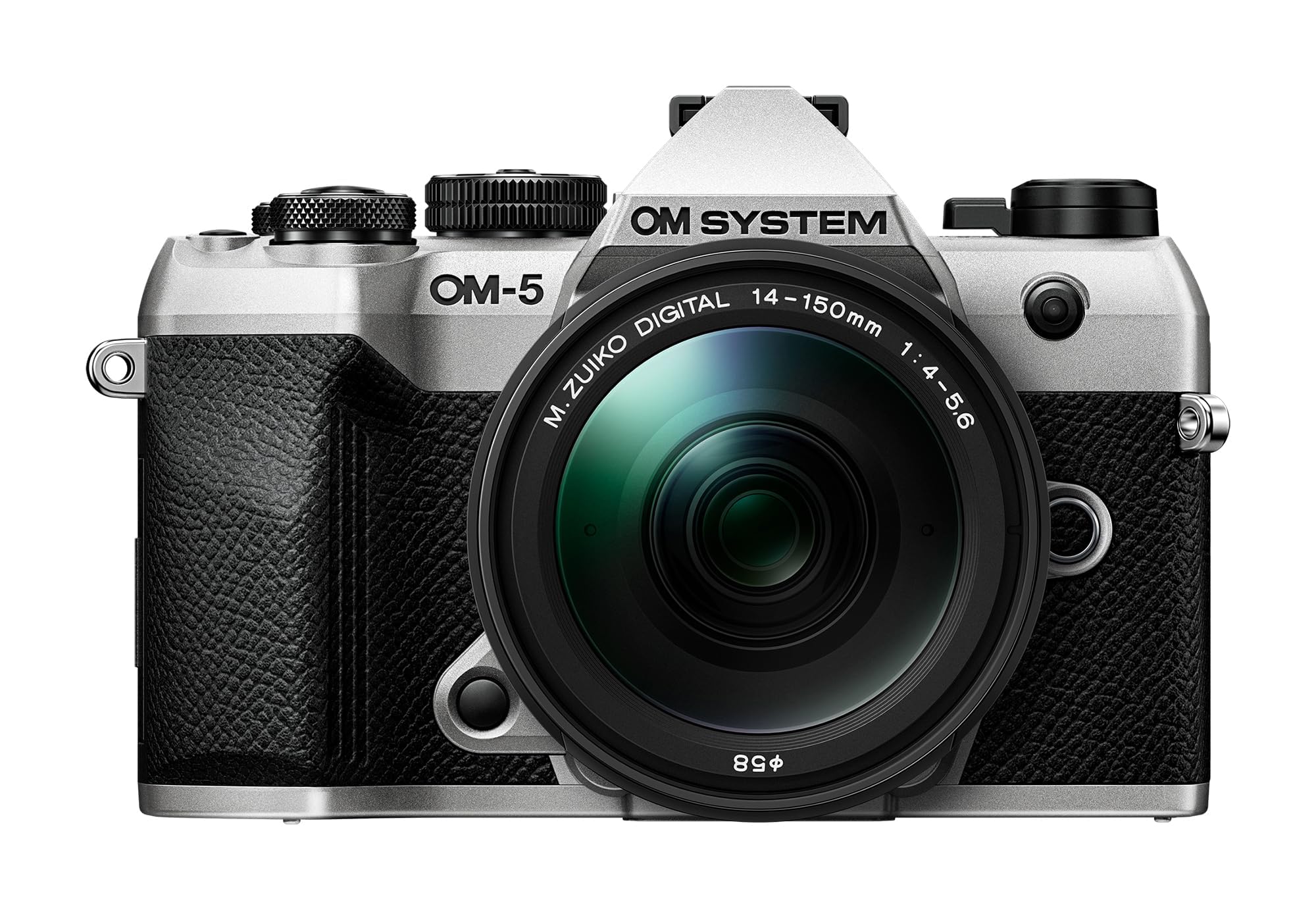
The OM SYSTEM OM-5 II with the 14-150mm f/4.0-5.6 II lens is the most complete weather-sealed travel kit for nature photographers who shoot in unpredictable conditions. The Micro Four Thirds body is astonishingly compact for this feature set — it fits in a jacket pocket with the lens collapsed. The 6.5-stop 5-axis in-body image stabilization means you can shoot sharp images at 1/4 second handheld, making it a low-light champion despite the smaller sensor.
What surprises most field users is the computational photography suite accessible via the dedicated button. Focus bracketing and stacking work in-camera for macro and landscape shots, and the night vision mode is genuinely useful for nocturnal wildlife observation without disturbing animals. The 121-point hybrid AF system with phase and contrast detection is fast enough for most wildlife scenarios, though it can struggle with fast erratic movement like birds making sharp turns in flight.
The 14-150mm lens covers an equivalent 28-300mm full-frame range in a single zoom, eliminating the need to change lenses in dusty environments. This is the camera you grab when the weather forecast is awful but you still want to shoot. The trade-off is the smaller sensor’s higher noise at ISO 3200 and above, and the 12-bit bit depth which limits raw editing headroom compared to 14-bit full-frame rivals. For the outdoor traveler prioritizing weight and durability, this is the benchmark.
Why it’s great
- Class-leading weather sealing for rain, dust, and cold
- 6.5-stop IBIS enables handheld success in near-dark
- One-lens 28-300mm equivalent covers all travel needs
Good to know
- Higher noise at ISO 3200+ compared to APS-C and full-frame
- 12-bit raw files have less edit flexibility than 14-bit competitors
- Small battery requires spares for full-day shooting
4. Sony a7 III (28-70mm Kit)

The Sony a7 III remains a benchmark for full-frame value years after its release, and for good reason — its 24.2MP back-illuminated Exmor R sensor still delivers 15-stop dynamic range and clean images up to ISO 12800. The 693-point phase-detection AF system covers 93% of the frame, making it highly capable for wildlife tracking, and the 10 fps mechanical burst with AF/AE tracking handles most action scenarios reliably.
Battery life sets the standard for mirrorless cameras — the NP-FZ100 cell delivers approximately 710 shots per charge, which means you can shoot two full days without recharging in moderate use. The 28-70mm f/3.5-5.6 kit lens provides a versatile walk-around range for landscapes and environmental scenes, though wildlife shooters will want to pair this body with a 70-200mm or 100-400mm telephoto. The in-body stabilization is rated at 5 stops, sufficient for handheld video and static shots at moderate shutter speeds.
The kit lens is competent but not optically exciting — it delivers center sharpness at f/8 but shows edges softening and chromatic aberration at wide apertures. The menu system is characteristically Sony-dense, which can frustrate beginners but rewards time investment. For the nature photographer who wants full-frame low-light capability and long battery life in a compact body, the a7 III is still the smartest price-to-performance ratio in the Sony ecosystem.
Why it’s great
- Exceptional battery life for extended field sessions
- 15-stop dynamic range handles high-contrast scenes beautifully
- Massive lens ecosystem with third-party support
Good to know
- Kit lens is average and needs replacement for serious wildlife
- Menu complexity requires learning time before field use
- Weather sealing is less robust than modern OM SYSTEM/Nikon Z bodies
5. Nikon D7500 (18-140mm)

The Nikon D7500 is a testament to DSLR endurance in the mirrorless age, delivering the same 20.9MP sensor and 51-point AF system from the pro-grade D500 in a more affordable body. The 18-140mm f/3.5-5.6 ED VR kit lens provides an equivalent 27-210mm range that covers most nature scenarios, from wide landscapes to moderate wildlife. The 8 fps burst with 51 cross-type AF sensors gives reliable tracking for moving subjects, and the optical viewfinder provides zero-lag real-time feedback that some wildlife photographers still prefer over EVF.
Battery life is the standout feature — the D7500 easily exceeds 900 shots per charge, which means weeks between charges for casual users and full-day endurance for heavy shooters. The 3.2-inch tilting LCD with touch functionality makes ground-level macro and low-angle wildlife shots easier to compose. The 4K UHD video at 30 fps with stereo sound and power aperture control is competent, though the lack of in-body stabilization means you need VR lenses or a tripod for smooth footage.
The D7500’s ergonomics are excellent for large hands, with a deep grip and well-spaced button layout that works with gloves. The weather-resistant construction uses magnesium alloy and seals at critical points, suitable for light rain and dust. The main limitations are the single SD card slot and the lack of a headphone jack for video monitoring. For the DSLR die-hard who values battery endurance and optical finder clarity over the latest mirrorless AF tricks, the D7500 delivers proven reliability today.
Why it’s great
- Industry-leading battery life for all-day field shooting
- Optical viewfinder with zero-lag for fast-action tracking
- Pro-grade AF system inherited from the D500
Good to know
- Single SD card slot limits redundancy for critical shoots
- No in-body stabilization; relies on VR lenses for shake-free video
- Heavier than equivalent mirrorless kits for hiking
6. Canon EOS RP + RF 24-105mm

The Canon EOS RP is the lightest full-frame mirrorless body available and an accessible entry point into the RF ecosystem. Its 26.2MP sensor delivers the depth and low-light performance that full-frame sensors are known for, with smooth transitions between color tones in landscape scenes. The RF 24-105mm f/4-7.1 IS STM kit lens includes 5-stop optical stabilization and covers a versatile zoom range, making it a capable walk-around kit for nature documentary and travel.
The Dual Pixel CMOS AF with eye-detection is fast for still portraits and moderate landscape subjects, but this camera is not designed for fast wildlife. The 4K video has a 1.7x crop and 30-minute recording limit, which restricts its utility for extended nature footage. What the RP excels at is delivering full-frame image quality in a body that weighs 485 grams — you can carry it all day on a neck strap without fatigue. The vari-angle touchscreen is useful for low-angle flower and ground-level compositions.
The kit lens is acceptably sharp in the center from f/5.6 to f/11 but shows softness at the edges and at wider apertures. The RP lacks in-body stabilization, relying entirely on lens-based IS. Battery life is mediocre at around 250 shots per charge, so extra batteries are non-negotiable. For the landscape and nature enthusiast who wants a lightweight full-frame experience without the weight and cost of pro bodies, the RP kit is a balanced, affordable entry.
Why it’s great
- Extremely lightweight full-frame body for hiking and travel
- RF lens ecosystem provides a clear upgrade path
- Excellent color science and dynamic range for landscape scenes
Good to know
- 4K video has significant crop and recording time limits
- No in-body stabilization; kit lens IS is moderate
- Battery life requires carrying multiple spares for day trips
7. OM SYSTEM OM-5 II (12-45mm PRO)
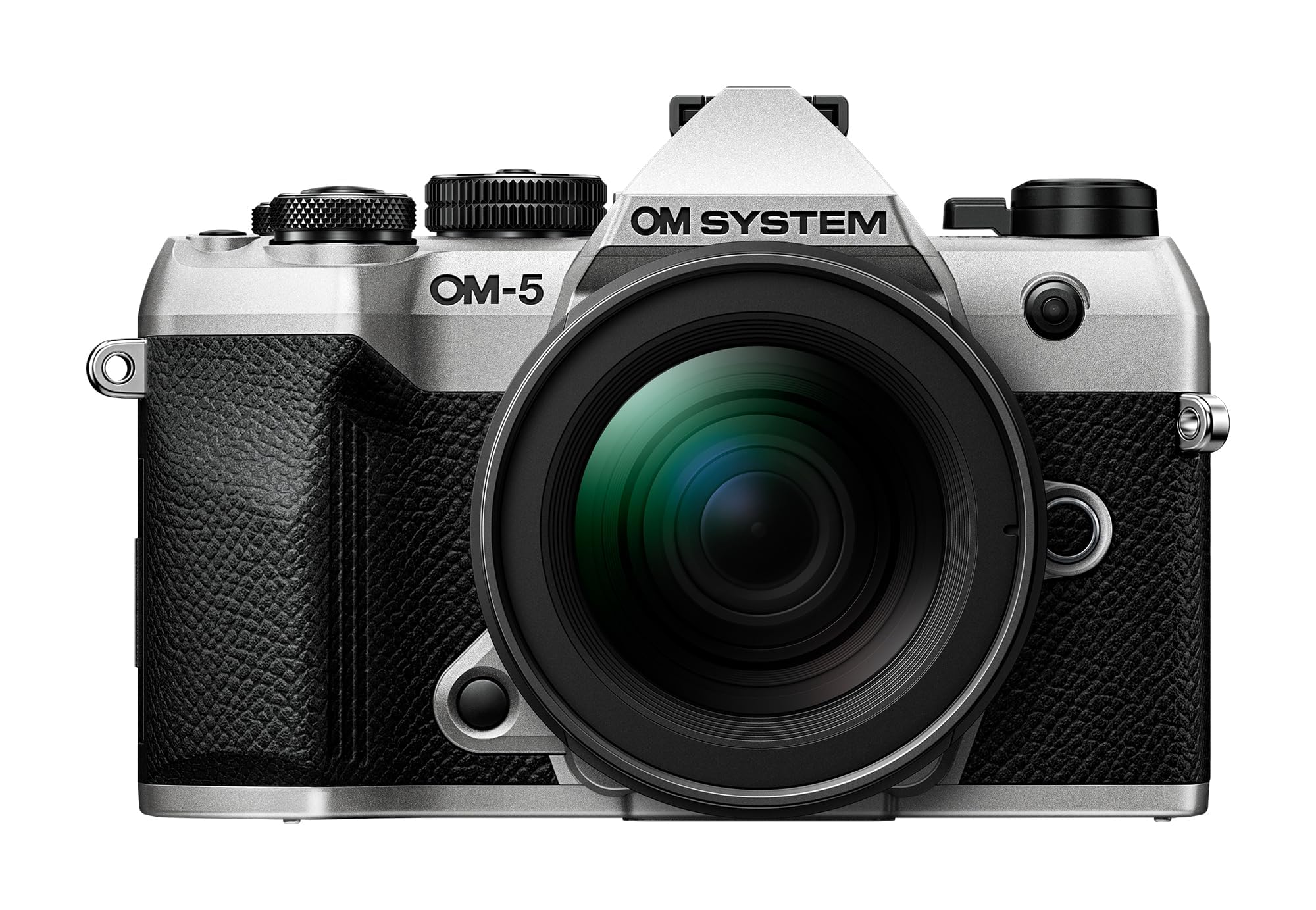
The OM SYSTEM OM-5 II paired with the M.ZUIKO Digital ED 12-45mm f/4.0 PRO lens represents the highest image quality achievable in the Micro Four Thirds travel form factor. The PRO lens delivers corner-to-corner sharpness at all apertures, with optical corrections that outresolve the 20MP sensor — ideal for landscape and detailed nature studies. The camera body retains the same exceptional 6.5-stop 5-axis IBIS and IP53 weather sealing as the 14-150mm kit version, but the PRO glass elevates the entire system’s resolving power.
The 12-45mm PRO lens covers an equivalent 24-90mm full-frame range, which is perfect for landscapes, environmentals, and close-up nature work with its 0.4x maximum magnification. The constant f/4 aperture is a practical compromise — you lose a stop compared to f/2.8 PRO zooms but save significant weight and cost. The computational photography features (focus bracketing, stacking, night vision) work seamlessly with this lens, extending its usable range beyond what the optics alone suggest.
The feedback that this camera is essentially an E-M5 III with USB-C and a refreshed menu system has some truth, and the small grip may bother users with larger hands. However, the PRO kit lens is the star here — it justifies the premium over the standard zoom version by delivering images that genuinely rival mid-range full-frame setups in good light. For the nature photographer who values portability more than absolute sensor size, this kit offers the best size-to-quality ratio available.
Why it’s great
- PRO lens delivers sharpness that rivals full-frame mid-range zooms
- 6.5-stop IBIS with weather sealing for all-condition shooting
- Computational photography suite expands creative options in-camera
Good to know
- Body design shows its age compared to native OM SYSTEM innovations
- Small grip may cause fatigue during long sessions with heavy lenses
- Constant f/4 aperture limits low-light performance vs f/2.8 alternatives
8. Panasonic G85 (12-60mm)

The Panasonic G85 remains the entry-level champion for video-focused nature photographers who need stabilization without spending a premium. Its 16MP Micro Four Thirds sensor lacks an optical low-pass filter, resolving approximately 10% more fine detail than previous 16MP sensors in this category. The 12-60mm f/3.5-5.6 Power O.I.S. kit lens covers an equivalent 24-120mm range, and pairing it with the in-body 5-axis Dual Image Stabilization 2 lets you shoot 4K video handheld with minimal shake.
The 4K Photo mode captures 30 fps stills from video, allowing you to extract the perfect frame of a bird taking off or a deer flicking its ear. The Post Focus feature lets you select the focus point after the shot — useful for macro subjects where depth of field is razor-thin. The 2360K-dot OLED viewfinder is bright and responsive, and the 3-inch articulating touchscreen flips out for low-angle compositions. The magnesium alloy front panel provides decent durability, and the weather-sealed kit lens handles light rain.
The autofocus uses contrast detection with DFD technology, which is fast in good light but hunts in low-contrast situations like backlit foliage at dusk. The 16MP sensor limits crop flexibility compared to 20MP+ competitors, and the lack of a headphone jack disappoints serious videographers. For the budget-conscious nature enthusiast who values stabilization and 4K video quality over raw resolution, the G85 is still an exceptional deal that competes with cameras costing significantly more.
Why it’s great
- Best stabilization value in its class with Dual I.S. 2
- 4K Photo and Post Focus features save missed shots
- Weather-sealed kit lens ready for field conditions
Good to know
- Contrast-detect AF struggles in low-contrast outdoor light
- 16MP sensor limits cropping and printing at large sizes
- No headphone jack for audio monitoring during video recording
9. Sony a7R V

The Sony a7R V is the ultimate resolution camera for landscape and fine-detail nature photography. Its 61MP full-frame back-illuminated Exmor R sensor captures detail that outresolves virtually any lens on the market, and the AI-based processing unit enables Real-time Recognition AF that tracks subjects with uncanny precision. The 8-stop in-body image stabilization means you can shoot handheld at extreme shutter speeds and still get sharp results, which is transformative for dawn landscape work before tripods are practical.
The 693 phase-detection AF points cover the entire frame, and the deep-learning AI recognizes and tracks birds, animals, insects, and vehicles — the insect detection is unique in this class and genuinely useful for macro nature photography. The 8K 24p and 4K 60p video capabilities are best-in-class for the resolution category, though the rolling shutter in 8K mode limits fast-panning applications. The improved menu system and articulating LCD make field operation smoother than earlier a7R bodies.
The 61MP files demand significant storage and processing power — a single uncompressed RAW image is approximately 120MB. The body-only configuration means you need high-quality glass to realize the sensor’s potential, and CFexpress Type A cards are required for burst shooting. Battery consumption is higher than the a7 III, averaging around 450 shots per charge. For the dedicated landscape and nature photographer who needs maximum resolution for large prints or extreme cropping, the a7R V is the benchmark.
Why it’s great
- 61MP resolution for extreme detail and print flexibility
- AI-based AF with insect tracking for macro nature work
- 8-stop IBIS for handheld shooting in low landscape light
Good to know
- Massive file sizes require high-capacity storage and fast editing hardware
- Battery life is sufficient but not exceptional for demanding shoots
- Body-only purchase; requires investment in premium glass
10. Fujifilm X100VI

The Fujifilm X100VI is a specialist tool for the nature photographer who values a specific photographic discipline over versatility. Its fixed 23mm f/2 lens (35mm equivalent) forces you to compose within a single focal length, which encourages intentional framing of environmental scenes, forest interiors, and intimate landscapes. The 40.2MP X-Trans CMOS 5 HR sensor is the highest resolution APS-C sensor in production, and the 6-stop in-body image stabilization lets you shoot in conditions that would normally require a tripod.
The hybrid viewfinder — switching between optical and electronic — is a unique tool for nature photography. In optical mode, you see the scene without any latency or battery drain, overlayed with electronic frame lines and data. The 20 Film Simulation modes, including the new REALA ACE, produce out-of-camera JPEGs that require no post-processing, which is valuable for creating immediate results during extended trips without a laptop. The built-in 4-stop neutral density filter is invaluable for shooting flowing water, waterfalls, and streams at slow shutter speeds in daylight.
The fixed 23mm lens is not a wildlife tool — it cannot zoom to distant subjects and offers no macro capability. Autofocus consistency is tied to the lens’s older linear motors, which sometimes lag the sensor’s resolution potential. Battery life is short at approximately 350 shots per charge, especially with IBIS active. The X100VI is for the nature documentarian who wants a compact, high-image-quality camera for environmental storytelling, not for wildlife reach or landscape versatility.
Why it’s great
- 40.2MP sensor out-resolves any other APS-C camera on the market
- Built-in ND filter enables long-exposure waterfall shots in daylight
- Film simulations produce gallery-ready JPEGs straight from camera
Good to know
- Fixed 23mm lens severely limits composition flexibility in the field
- Older AF motor technology struggles with the sensor’s resolution demands
- Short battery life necessitates multiple spares for day-long shoots
11. Panasonic FZ80D

The Panasonic FZ80D is an ultra-zoom bridge camera that compresses a 20-1200mm equivalent (60x optical) range into a single fixed-lens body. For the nature photographer on a tight budget who needs reach for distant wildlife and birds, this is the most affordable way to get a 1200mm telephoto view. The Power O.I.S. stabilization effectively suppresses hand-shake at full zoom, and the 4K Photo mode extracts 8MP stills from video at 30 fps — useful for capturing fast animal movements.
The 2,360K-dot live viewfinder is bright and usable in direct sunlight, which is essential for framing distant subjects. The Post Focus function works reasonably well for casual nature shots, allowing touch-to-focus after capture. The 1/2.3-inch sensor is the limiting factor — image quality degrades noticeably at ISO 800 and above, producing soft, grainy images even at base ISO with heavy fine detail. The autofocus is contrast-detect and can hunt in low-contrast scenes like backlit birds in trees.
The FZ80D is best understood as a discovery camera for someone exploring nature photography without committing to an interchangeable lens system. It produces images suitable for social media and small prints, but serious nature photographers will find the resolution and noise performance inadequate for wall printing or heavy cropping. The battery drains quickly with extensive zoom use, and the absence of Wi-Fi means tethered transfer to a phone requires an adapter. For the price, the reach is remarkable, but the image quality reflects the sensor’s limitations.
Why it’s great
- Unmatched reach-to-price ratio with 60x optical zoom
- Power O.I.S. delivers usable handheld shots at 1200mm equivalent
- 4K Photo extraction captures burst sequences from video
Good to know
- Small sensor produces soft, noisy images at moderate ISO
- Contrast-detect AF hunts in challenging backlit outdoor scenes
- No Wi-Fi and limited connectivity for modern sharing workflows
FAQ
Is full-frame necessary for professional nature photography?
What is the minimum autofocus point count for reliable bird photography?
How important is weather sealing for hiking and outdoor photography?
Should I buy a DSLR or mirrorless camera for nature photography in 2025?
Is a bridge camera like the Panasonic FZ80D sufficient for serious nature photography?
Final Thoughts: The Verdict
For most users, the cameras for nature photography winner is the Nikon Z50 II because it delivers modern mirrorless autofocus, twin-lens versatility, and reliable image quality in a lightweight, budget-conscious package that won’t weigh you down on the trail. If you want maximum resolution and detail for large-format printing of landscapes and fine nature studies, grab the Sony a7R V. And for the ultimate all-around outdoor companion that shrugs off rain and dust while stabilizing every shot, nothing beats the OM SYSTEM OM-5 II.

Mo Maruf
I created WellFizz to bridge the gap between vague wellness advice and actionable solutions. My mission is simple: to decode the research and give you practical tools you can actually use.
Beyond the data, I am a passionate traveler. I believe that stepping away from the screen to explore new environments is essential for mental clarity and physical vitality.