Our readers keep the lights on and my smoothie glass nicely filled. As an Amazon Associate, I earn from qualifying purchases.
Landscape photography rewards patience, but choosing the right camera shouldn’t test yours. The difference between a keeper and a wall-hanger often comes down to dynamic range, sensor resolution, and how well a body handles the punishing light of golden hour or the deep shadows of a forest floor. Sensor size, weather sealing, and lens ecosystem compatibility define what you can actually capture when the conditions turn brutal.
I’m Mohammad Maruf — the founder and writer behind WellFizz. I’ve spent years analyzing sensor performance metrics, dynamic range tests, and lens roadmaps to separate marketing noise from the hardware that actually delivers in the field.
This guide breaks down the technical specs that matter — from pixel pitch to weather sealing — so you can confidently choose the best cameras for landscape photography that match how you actually shoot.
How To Choose The Best Cameras For Landscape Photography
Landscape shooting demands hardware that can handle extreme contrast, long exposures, and unpredictable weather. Here’s what separates a solid field camera from a studio body that won’t survive the trail.
Dynamic Range and Sensor Quality
Dynamic range determines how much detail you can recover from shadows and highlights in a single exposure. For landscape work, look for sensors that deliver at least 13 stops of dynamic range at base ISO. Back-illuminated (BSI) sensors often perform better here, reducing noise in shadow areas and giving you more latitude during post-processing. Full-frame sensors generally offer wider dynamic range than APS-C, though the gap has narrowed in recent years.
Weather Sealing and Build Durability
Spray, dust, freezing temperatures, and blowing sand are part of the landscape photographer’s reality. A camera with proper weather sealing uses gaskets around every port, battery door, and card slot. Magnesium alloy chassis offer better protection than polycarbonate bodies. Check for operating temperature ranges and IP-rated sealing — a camera that fails when conditions get rough is worse than no camera at all.
Lens Ecosystem and Compatibility
Lenses shape your images more than the body. A strong native lens lineup with wide-angle zooms, tilt-shift lenses, and fast primes is critical. Consider whether the mount supports adapters for legacy glass, especially if you already own high-quality wide-angle lenses. Also weigh the size and weight of the system — carrying a full kit over miles of trail gets heavy fast.
Stabilization and Long Exposure Features
In-body image stabilization (IBIS) lets you shoot handheld at slower shutter speeds, but for true landscape work, look for features like pixel-shift multi-shot for ultra-high resolution composites and built-in intervalometers for timelapses. A camera with Astro Tracer or similar star-tracking functionality can eliminate the need for a separate star tracker for night landscapes.
Quick Comparison
On smaller screens, swipe sideways to see the full table.
| Model | Category | Best For | Key Spec | Amazon |
|---|---|---|---|---|
| Nikon D850 | DSLR | High-res stills & maximum detail | 45.7MP BSI sensor, 153-point AF | Amazon |
| Canon EOS R5 | Mirrorless | Hybrid landscape & wildlife | 45MP stacked sensor, 8K video | Amazon |
| Pentax K-1 Mark II | DSLR | Astro & rugged outdoor work | 36MP, Astro Tracer, pixel shift | Amazon |
| Panasonic LUMIX S1RII | Mirrorless | Ultra-high res & video hybrid | 44.3MP, 8K video, IBIS | Amazon |
| Fujifilm X-H2 | Mirrorless | APS-C value with 40MP detail | 40MP, pixel shift multi-shot | Amazon |
| Panasonic LUMIX S1II | Mirrorless | Hybrid photo & video work | 24.1MP stacked, 15 stops DR | Amazon |
| Canon EOS 5D Mark IV | DSLR | Reliable pro workhorse | 30.4MP, Dual Pixel CMOS AF | Amazon |
| Sony a7 III | Mirrorless | Versatile full-frame entry | 24.2MP BSI, 693-point AF | Amazon |
| Nikon Z 6II | Mirrorless | Balanced stills & video hybrid | 24.5MP BSI, dual card slots | Amazon |
| Canon EOS RP | Mirrorless | Budget-friendly full-frame | 26.2MP, compact body | Amazon |
| Sony Alpha 6700 | Mirrorless | Compact APS-C hybrid | 26MP, AI autofocus | Amazon |
In‑Depth Reviews
1. Nikon D850 DSLR

The Nikon D850 remains a benchmark for pure stills quality. Its 45.7-megapixel BSI CMOS sensor paired with the EXPEED 5 processor delivers class-leading dynamic range at base ISO — around 14.8 stops — which means you can pull deep shadow detail without introducing noise. The 153-point Multi-CAM 20K autofocus system locks on reliably even in dim pre-dawn light, and native ISO 64 provides the cleanest possible files for long exposure work.
Build quality matches the sensor. The magnesium alloy chassis is fully weather-sealed against dust and moisture, and the tilting 3.2-inch touchscreen makes composition easier from low tripod positions. The optical viewfinder remains one of the brightest and most accurate ever built, a real advantage when you’re framing against harsh backlight. SnapBridge connectivity allows wireless file transfers to your phone for quick social sharing in the field.
The D850 is heavier than mirrorless alternatives at roughly 2.3 pounds with the battery, but for dedicated landscape shooters who prioritize maximum resolution and dynamic range over portability, it’s still the gold standard. The included 64GB SD card and shoulder bag add immediate utility. Just be aware that to fully exploit 45.7 megapixels, you’ll need top-tier NIKKOR glass — kit lenses will leave you wanting.
Why it’s great
- Exceptional 45.7MP resolution with deep dynamic range for shadow recovery
- Top-tier weather sealing and magnesium alloy build for harsh conditions
- Optical viewfinder offers zero-lag composition in tricky lighting
Good to know
- Heavier than mirrorless options — noticeable on long hikes
- Requires high-quality full-frame lenses to unlock full potential
- No in-body stabilization — rely on lens VR or a tripod
2. Canon EOS R5

The Canon EOS R5 brings a 45-megapixel stacked CMOS sensor to the mirrorless world, offering readout speeds that support 20 fps electronic shutter and 8K internal recording. For landscape photographers, the stacked architecture reduces rolling shutter artifacts when panning across scenes, and the DIGIC X processor delivers excellent noise control up to ISO 6400. Dual Pixel CMOS AF with 1,053 phase-detection points blankets nearly the full frame, making focus acquisition effortless even at f/11.
In-body image stabilization rated at 8 stops is a genuine game-changer for handheld landscape work at twilight. You can shoot at shutter speeds that would have required a tripod with earlier cameras. The weather-sealed magnesium body is built for field use, and the bright electronic viewfinder — at 5.76 million dots — offers a clear, lag-free preview of exposure and depth of field. The RF mount gives you access to Canon’s superb wide-angle primes and zooms, including the 15-35mm f/2.8L and 24-105mm f/4L.
The R5’s overheating issues during extended 8K recording are well-documented, but for stills-focused landscape work this rarely matters. Battery life runs about 320 shots per charge, so carry at least two spares for a full day out. If you want a single body that excels at both high-resolution stills and professional-grade video, the R5 is hard to beat.
Why it’s great
- 8-stop IBIS enables handheld low-light landscapes without a tripod
- 45MP stacked sensor with fast readout reduces rolling shutter
- Outstanding AF coverage across the entire frame
Good to know
- Battery life is only adequate — budget for extra batteries
- Can overheat during extended 4K/8K video recording
- RF lenses are premium-priced compared to DSLR alternatives
3. Pentax K-1 Mark II

The Pentax K-1 Mark II occupies a niche that no other full-frame camera touches: dedicated astro-landscape shooting. Its 36.4-megapixel AA filter-less sensor maximizes sharpness at the pixel level, and the motor-driven Pixel Shift Resolution system composites four images into a single 36MP file with dramatically improved color accuracy. The included Astro Tracer mode uses the built-in GPS unit and shake-reduction mechanism to move the sensor, tracking stars for exposures up to five minutes without an external star tracker.
Weather sealing is genuinely class-leading. Pentax rates the K-1 Mark II for operation in freezing temperatures and heavy rain, with 87 independent seals around the magnesium alloy body. The unique cross-tilt LCD screen swings out on a system that clears the tripod ball head — a small detail that field shooters appreciate. Multi-exposure mode, interval shooting, and star-timelapse functions are built directly into the menu, eliminating the need for external controllers.
The K-mount system supports decades of Pentax glass, including the superb D FA 15-30mm f/2.8 and D FA 21mm f/2.4 Limited. Autofocus uses contrast detection with only 33 AF points, which feels dated compared to mirrorless competitors. The K-1 Mark II is also on the heavier side at 2.3 pounds. If your work focuses on night landscapes and you value ruggedness over AF speed, this camera is uniquely capable.
Why it’s great
- Astro Tracer eliminates the need for an external star tracker
- Pixel Shift Resolution yields superior color and sharpness
- Exceptional weather sealing for extreme outdoor conditions
Good to know
- AF system is slow compared to modern mirrorless bodies
- Heavy build — not ideal for ultralight backpacking
- Limited native lens selection beyond Pentax DA/DFA glass
4. Panasonic LUMIX S1RII

The Panasonic LUMIX S1RII pushes the boundaries of resolution with a 44.3-megapixel full-frame sensor, and it’s the first Panasonic body to offer 8K internal video recording. For landscape photographers, the handheld high-resolution mode — which composites multiple exposures to produce images equivalent to 177 megapixels — is a genuine innovation. The Phase Hybrid AF with advanced AI tracking handles human and animal subjects reliably, even when shooting landscapes that include hikers or wildlife.
Dynamic range is wide, with LUMIX’s color science providing natural, film-like tones straight out of camera. The 5-axis IBIS system, rated at up to 6.5 stops, allows for steady handheld compositions at slower shutter speeds. The electronic viewfinder offers a crisp 5.76-million-dot OLED panel with 0.78x magnification. The L-Mount alliance gives access to lenses from Leica, Sigma, and Panasonic — including some excellent ultra-wide options like the Sigma 14-24mm f/2.8 DG DN.
Some early units have reported overheating issues during video recording, and the lack of open-gate slow-motion modes might disappoint hybrid shooters. The S1RII is also body-only, meaning you’ll need to budget for a high-quality L-mount wide-angle lens immediately. For dedicated landscape shooters who want the highest resolution available in a mirrorless body and don’t mind investing in glass, it delivers.
Why it’s great
- Handheld high-resolution mode pushes effective resolution to 177MP
- Excellent color science with natural film-like tones
- L-Mount gives access to Leica, Sigma, and Panasonic glass
Good to know
- Some units have reported overheating in video mode
- Body-only — requires immediate investment in native lenses
- AF peaking and low-light AF performance could be better
5. Fujifilm X-H2

The Fujifilm X-H2 is the world’s first APS-C camera to hit 40 megapixels, and for landscape photographers, that resolution translates into remarkable cropping flexibility. The back-illuminated X-Trans CMOS 5 HR sensor, paired with the X-Processor 5, delivers excellent dynamic range — around 13 stops at base ISO — and the Pixel Shift Multi-Shot mode composites 20 frames into a 160-megapixel DNG file with true medium-format levels of detail. Film Simulation modes, especially Velvia and Provia, produce gorgeous out-of-camera colors that reduce post-processing time.
In-body image stabilization offers 7 stops of compensation, enough for handholding at shutter speeds that would blur on non-stabilized bodies. The weather-sealed magnesium body feels durable, and the electronic viewfinder is rated at 5.76 million dots with 120 Hz refresh rate. The X-H2 also supports 8K/30p and 4K/120p video, making it a strong hybrid option. The 16-80mm f/4 kit lens included in this bundle is optically sharp and adds OIS for extra stability.
The biggest consideration is lens quality: 40 megapixels is demanding, and not all Fujinon XF lenses resolve enough detail. You’ll want the XF 8-16mm f/2.8 or XF 16mm f/1.4 to exploit the sensor fully. Battery life is solid at roughly 680 shots per charge, and the body weight of only 1.4 pounds makes it a strong choice for hikers who want high resolution without carrying a full-frame kit.
Why it’s great
- 40MP APS-C sensor offers medium-format-like detail with pixel shift
- Film Simulations reduce editing time with gorgeous color profiles
- Lightweight build at just 1.4 pounds — ideal for long treks
Good to know
- Requires premium XF lenses to resolve full 40MP detail
- No full-frame depth of field control for certain compositions
- Menu system is deep and takes time to learn
6. Panasonic LUMIX S1II

The Panasonic LUMIX S1II is built around a 24.1-megapixel partially stacked CMOS sensor that prioritizes readout speed and dynamic range over raw pixel count. Dynamic Range Boost, debuting in the S1 series, delivers a claimed 15 stops of dynamic range — among the widest of any full-frame camera. This makes it exceptional for landscape scenes with extreme contrast, where you need to retain detail in both sunlit highlights and deep shadows. The 5.1K 60p open gate recording and internal ProRes RAW give video shooters enormous flexibility.
Stabilization is class-leading. The 8-stop 5-axis IBIS system lets you shoot handheld at shutter speeds that would be impossible on non-stabilized bodies. The AI-powered phase-detect autofocus handles face and subject tracking well. Build quality is robust with full weather sealing, and the 3.2-inch tilt-screen is bright enough for outdoor use. The L-Mount again offers access to Sigma and Leica glass.
While 24.1 megapixels is more than enough for large prints and commercial work, pixel-peepers may want more resolution for extreme cropping. The 24MP sensor also runs at 70 fps with AFC burst shooting, which is overkill for landscapes but useful if you also shoot action. Some users report the battery life is only average for a mirrorless body, so plan accordingly for full-day shoots.
Why it’s great
- 15 stops dynamic range handles extreme contrast scenes
- 8-stop IBIS enables rock-solid handheld compositions
- Internal ProRes RAW eliminates need for external recorder
Good to know
- 24MP resolution limits cropping potential compared to 45MP bodies
- Battery life is middling — pack spares for long days
- Relatively heavy for a mirrorless body at 1.9 pounds
7. Canon EOS 5D Mark IV
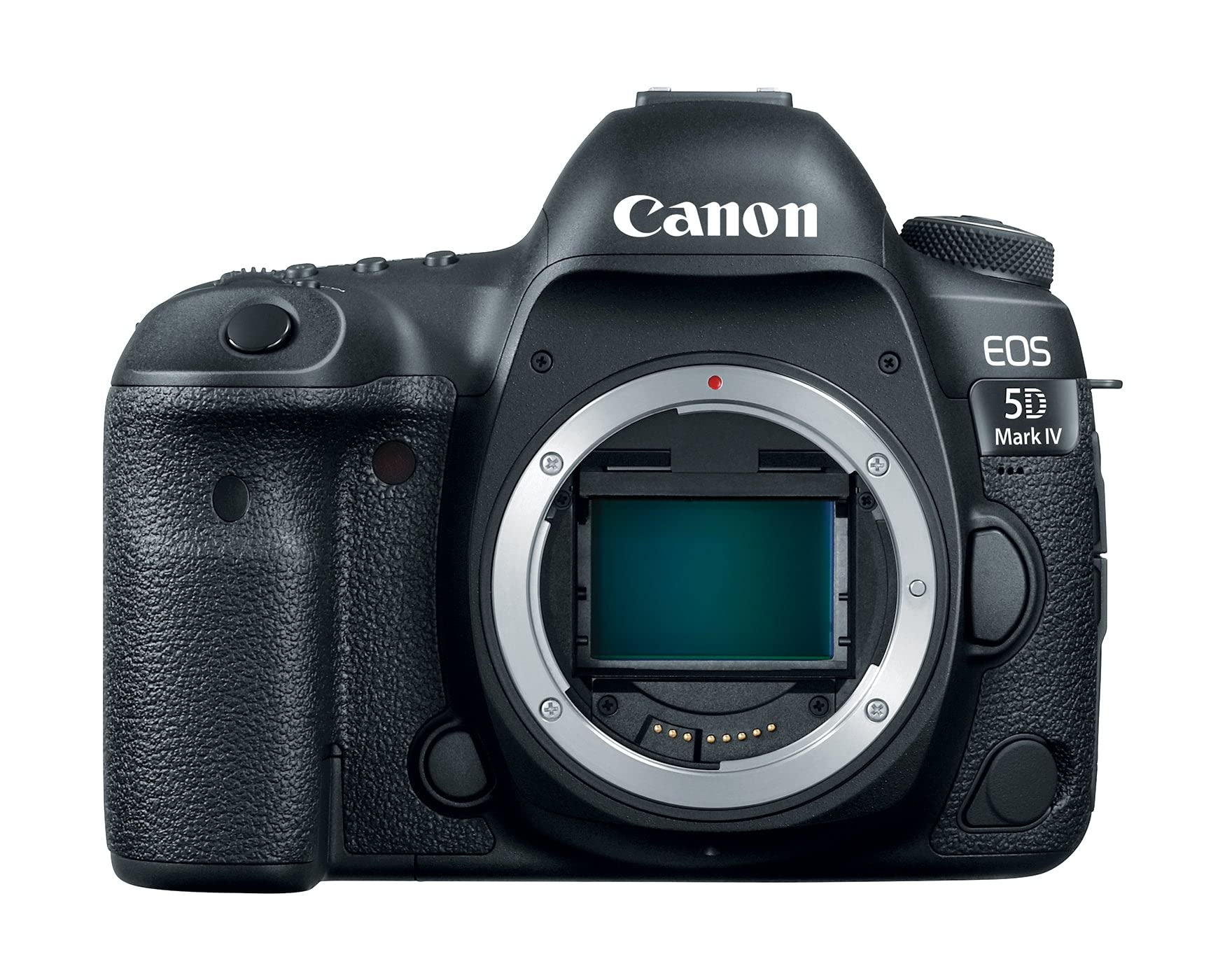
The Canon EOS 5D Mark IV is a proven workhorse that balances resolution, speed, and reliability. Its 30.4-megapixel full-frame CMOS sensor delivers excellent dynamic range — a significant improvement over the Mark III — and the DIGIC 6+ processor provides clean images up to ISO 3200 with usable results at 6400. The 61-point AF system with 41 cross-type sensors is fast and accurate in low light, making it a strong option for dawn and dusk landscape sessions.
Dual Pixel CMOS AF provides smooth, responsive focus during Live View shooting, which is useful for precise manual focus assist on the 3.2-inch touchscreen LCD. The magnesium alloy body is fully weather-sealed, and the optical viewfinder is large and bright. GPS geotagging is built in, a genuinely useful feature for landscape photographers who want to track exact shooting locations for future reference. The EF mount gives access to Canon’s vast library of L-series wide-angle lenses.
The 5D Mark IV is limited to 4K Motion JPEG video with a 1.74x crop factor, which feels dated in a world of oversampled 4K. Battery life is exceptional — over 900 shots per charge — so you can shoot all day without swapping. If you already own Canon EF glass and don’t need the very latest mirrorless features, this remains a dependable choice for professional landscape work.
Why it’s great
- Built-in GPS geotagging for tracking exact shoot locations
- Exceptional battery life — 900+ shots per charge
- Massive EF lens ecosystem with outstanding wide-angle options
Good to know
- 4K video has a heavy 1.74x crop factor
- No in-body stabilization — need stabilized lenses or a tripod
- Heavier than most mirrorless alternatives at 1.76 pounds
8. Sony a7 III

The Sony a7 III proved that full-frame mirrorless could deliver professional-grade performance at a reasonable price. Its 24.2-megapixel back-illuminated Exmor R sensor provides 15 stops of dynamic range, competitive with newer bodies, and the BSI architecture keeps noise levels low even at ISO 6400. The 693-point phase-detection AF system covers 93% of the frame, making focus fast and accurate in most lighting conditions. Silent shooting up to 10 fps is useful when you don’t want to disturb a quiet landscape scene.
Five-axis in-body stabilization gives up to 5 stops of compensation, enough for handheld shooting at moderate shutter speeds. The included 28-70mm f/3.5-5.6 kit lens is decent for starting out but lacks the sharpness and fast aperture you’ll want for serious landscape work. Battery life is exceptional at 710 shots per charge, and the dual SD card slots provide backup during long shoots. The compact body weight of 1.4 pounds makes it easy to carry on extended hikes.
The a7 III’s menu system is notoriously convoluted, and the 2.36-million-dot EVF is lower resolution than newer competitors. The kit lens is the first thing you’ll want to upgrade — pairing it with a Sigma 14-24mm f/2.8 DG DN or Sony 16-35mm f/2.8 GM transforms its landscape capability. For photographers entering full-frame on a budget who still want excellent dynamic range and reliable AF, the a7 III is a proven entry point.
Why it’s great
- 15 stops dynamic range from BSI sensor rivals much newer bodies
- Exceptional battery life — 710 shots per charge
- Compact and lightweight at 1.4 pounds for easy trekking
Good to know
- Menu system is complex and takes time to master
- Kit lens is mediocre — budget for a better wide-angle zoom
- EVF resolution feels dated compared to recent releases
9. Nikon Z 6II

The Nikon Z 6II strikes a strong balance between stills quality and video performance, making it a versatile companion for landscape photographers who also shoot timelapses or B-roll. Its 24.5-megapixel BSI CMOS sensor delivers excellent dynamic range — around 14 stops — with clean files up to ISO 6400. The 273-point phase-detection AF system is responsive and accurate, and the 5-axis in-body stabilization provides up to 5 stops of compensation, which helps when you’re composing handheld near slot canyons or uneven terrain.
Dual card slots — one CFexpress/XQD and one UHS-II SD — give you redundancy and flexibility. The Z 6II is also the first Z-series body with native 4K 60p oversampled video, which provides sharp footage for those who want to pair landscapes with cinematic clips. The Z-mount offers a short flange distance that allows Nikon to design sharp wide-angle lenses, including the NIKKOR Z 14-24mm f/2.8 S and Z 20mm f/1.8 S. Compatibility with F-mount glass via the FTZ adapter opens up decades of NIKKOR lenses.
Autofocus tracking can struggle with fast-moving subjects, though this is less of an issue for static landscapes. Battery life is adequate at about 410 shots, so a spare is recommended for long days. The Z 6II is also a bit heavier than the Sony a7 III at 1.6 pounds, but the ergonomics and build quality are excellent. If you’re invested in the Nikon ecosystem or want a well-rounded hybrid body, the Z 6II is a smart choice.
Why it’s great
- Dual card slots provide redundancy for critical shoots
- Excellent native Z wide-angle lenses available
- Oversampled 4K 60p video for high-quality clips
Good to know
- AF tracking can lose subjects in fast panning scenarios
- Battery life is only average — carry a spare
- Slightly heavier than some APS-C alternatives
10. Canon EOS RP

The Canon EOS RP is the most affordable way to get into full-frame mirrorless, pairing a 26.2-megapixel CMOS sensor with Canon’s RF mount for access to modern glass. For landscape photographers on a tight budget, image quality is solid — dynamic range is good but not class-leading, and the sensor holds up well at ISO 1600. The included RF 24-105mm f/4-7.1 IS STM lens provides optical image stabilization at up to 5 stops, which helps steady handheld shots at the wide end.
The body is compact and lightweight at just 1.1 pounds, making it easy to carry as a backup or primary hiking camera. The 2.36-million-dot EVF is sufficient for composition, and the vari-angle touchscreen is useful for low-angle shots near the ground. Dual Pixel CMOS AF provides fast, accurate autofocus in still and video modes. The RF lens lineup is growing, with excellent options like the RF 16mm f/2.8 STM and RF 24-105mm f/4L IS USM.
The RP’s biggest compromises are in speed and build. Continuous shooting tops out at 5 fps with AF tracking, and the polycarbonate body lacks the weather sealing of higher-end models. The kit lens has a variable aperture that limits low-light performance, and the 24-105mm range isn’t particularly wide for landscape work. If you can stretch to a better lens immediately, the RP is a capable entry point, but serious landscape shooters should budget for a wider, faster RF lens.
Why it’s great
- Lightest full-frame mirrorless body at just 1.1 pounds
- Affordable entry point into Canon RF ecosystem
- Vari-angle touchscreen aids low-angle compositions
Good to know
- Limited to 5 fps continuous shooting
- Polycarbonate body lacks pro-grade weather sealing
- Kit lens has slow variable aperture and modest wide-end coverage
11. Sony Alpha 6700

The Sony Alpha 6700 packs a 26-megapixel APS-C Exmor R sensor into a compact body that weighs only 1.2 pounds, making it the smallest and lightest camera on this list. For landscape photographers who prioritize portability without sacrificing image quality, the BIONZ XR processor delivers excellent dynamic range — around 13 stops — and the dedicated AI processing unit provides best-in-class subject recognition for people, animals, and even birds. The 759-point phase-detection AF system covers 93% of the frame.
Video capabilities are impressive, with 4K 60p oversampled from 6K and 4K 120p at a 1.58x crop, giving hybrid shooters flexibility. In-body stabilization is decent but not class-leading — you’ll still want a gimbal for smooth handheld video. The APS-C sensor offers a 1.5x crop factor, which can actually be beneficial for landscape shooters who want extra reach with full-frame wide-angle lenses adapted via an adapter. The E-mount ecosystem is vast, with excellent wide-angle options from Sony, Sigma, and Tamron.
Some users have reported overheating after extended 4K 60p recording in hot weather, a consideration for outdoor shooters in summer. Batteries drain quickly when recording video, though stills shooting provides reasonable battery life. The menu system, while improved, still isn’t as intuitive as some competitors. For hikers, backpackers, and travel landscape photographers who want a lightweight, highly capable system with modern autofocus, the Alpha 6700 is a strong contender.
Why it’s great
- Compact and lightweight at only 1.2 pounds — ideal for backpacking
- Best-in-class AI autofocus for people, animals, and birds
- Oversampled 4K 60p and 4K 120p for flexible video capture
Good to know
- Can overheat during extended 4K 60p recording in hot weather
- In-body stabilization is decent but not top-tier
- Complex menu system takes time to master
FAQ
Is full frame or APS-C better for landscape photography?
What dynamic range do I need for good landscape images?
Do I need a camera with in-body image stabilization for landscapes?
Why do some landscape photographers prefer DSLRs over mirrorless cameras?
Final Thoughts: The Verdict
For most users, the best cameras for landscape photography winner is the Nikon D850 because it combines 45.7 megapixels of resolution with class-leading dynamic range, rugged weather sealing, and the excellent NIKKOR lens ecosystem. If you want a weather-sealed body with built-in Astro Tracer for night landscapes, grab the Pentax K-1 Mark II. And for a lightweight kit that can handle extended hikes without weighing you down, nothing beats the Fujifilm X-H2.

Mo Maruf
I created WellFizz to bridge the gap between vague wellness advice and actionable solutions. My mission is simple: to decode the research and give you practical tools you can actually use.
Beyond the data, I am a passionate traveler. I believe that stepping away from the screen to explore new environments is essential for mental clarity and physical vitality.