Our readers keep the lights on and my smoothie glass nicely filled. As an Amazon Associate, I earn from qualifying purchases.
Food photography is its own discipline—texture, color, and depth must translate from plate to pixel without losing appetite appeal. A smartphone struggles with the close focusing distances, controlled depth of field, and accurate color reproduction that make a dish look as good as it tastes. The right interchangeable lens system unlocks the ability to render steam, sauce, and crumb with detail that compels a viewer to reach through the screen.
I’m Mohammad Maruf — the founder and writer behind WellFizz. I have analyzed lens formulas, sensor architectures, and autofocus algorithms across multiple price brackets to find the bodies that deliver true-to-life color and macro-level sharpness for food work.
Cameras in this guide are evaluated on their ability to handle close focusing, produce shallow depth of field for isolating a single dish, and maintain accurate white balance in mixed lighting scenarios — the core demands of any serious kitchen shooter. Use this to find the best cameras for food photography that match your shooting style and budget.
How To Choose The Best Camera for Food Photography
Selecting a camera body for food work requires thinking about lens system flexibility, close-focusing performance, and color accuracy above raw speed or video frame rates. The following factors are the ones I prioritize when screening candidates for this guide.
Sensor Size and Depth of Field Control
Full-frame sensors deliver the most natural bokeh falloff and the best high-ISO performance when shooting in dim restaurant lighting. APS-C and Micro Four Thirds sensors can work well, but they require wider aperture lenses to achieve the same subject isolation. For food photography—where you often want the leading edge of a fork in focus while the background blurs—full-frame has a real advantage.
Minimum Focus Distance and Macro Capability
The closer your camera can focus, the more detail you can extract from a small plate. Dedicated macro lenses with 1:1 magnification let you fill the frame with a single berry. Standard zoom kits often have a minimum focus distance of 30-45cm, which is too far for overhead flat-lays or tight detail shots of garnishes.
Color Science and White Balance Stability
Food demands accurate color reproduction. A camera with poor auto white balance will tint a bright salad green or a tomato red in a way that looks unappetizing. Look for a brand known for natural color science and the ability to set a custom white balance easily—this alone can save hours of post-processing correction.
Lens Ecosystem and Prime Availability
A body is only as good as the glass you put in front of it. For food work, you need access to a 50mm f/1.8, 85mm f/1.8, or a 90-105mm macro prime. The lens system must offer a reliable fast prime at a reasonable price. Mirrorless mounts (Sony E, Canon RF, Nikon Z, L-Mount) generally offer a broader range of modern macro and portrait primes than older DSLR mounts.
Quick Comparison
On smaller screens, swipe sideways to see the full table.
| Model | Category | Best For | Key Spec | Amazon |
|---|---|---|---|---|
| Nikon Z MC 105mm f/2.8 VR S | Macro Prime | True 1:1 Lifesize Detail | 105mm f/2.8 VR | Amazon |
| Panasonic S5II | Hybrid Mirrorless | Video + Still Balance | 24.2MP Full-Frame | Amazon |
| Tamron 90mm F/2.8 Di VC USD | Macro Prime | Canon System Macro | 90mm f/2.8 1:1 Macro | Amazon |
| Sony a7 IV | Full-Frame Mirrorless | High Resolution Still Life | 33MP BSI-CMOS | Amazon |
| Canon EOS R8 | Full-Frame Mirrorless | Lightweight Studio Kit | 24.2MP, DIGIC X | Amazon |
| Nikon D850 | Professional DSLR | Maximum Resolution (45.7MP) | 45.7MP BSI-CMOS | Amazon |
| Sony a7 III | Full-Frame Mirrorless | Reliable All-Rounder | 24.2MP Sensor | Amazon |
| Canon EOS RP | Entry Full-Frame | Affordable Full-Frame Entry | 26.2MP, 24-105mm Lens | Amazon |
| Canon EOS Rebel T7 | Budget DSLR | Beginner All-in-One Bundle | 24.1MP APS-C | Amazon |
| Panasonic Lumix G100 | Compact MFT | Vlogging + Quick Flat-Lays | MFT 12-32mm Kit | Amazon |
| Nikon COOLPIX P1000 | Superzoom Bridge | Extreme Zoom (3000mm) | 16MP 125x Zoom | Amazon |
In‑Depth Reviews
1. Nikon Z MC 105mm f/2.8 VR S
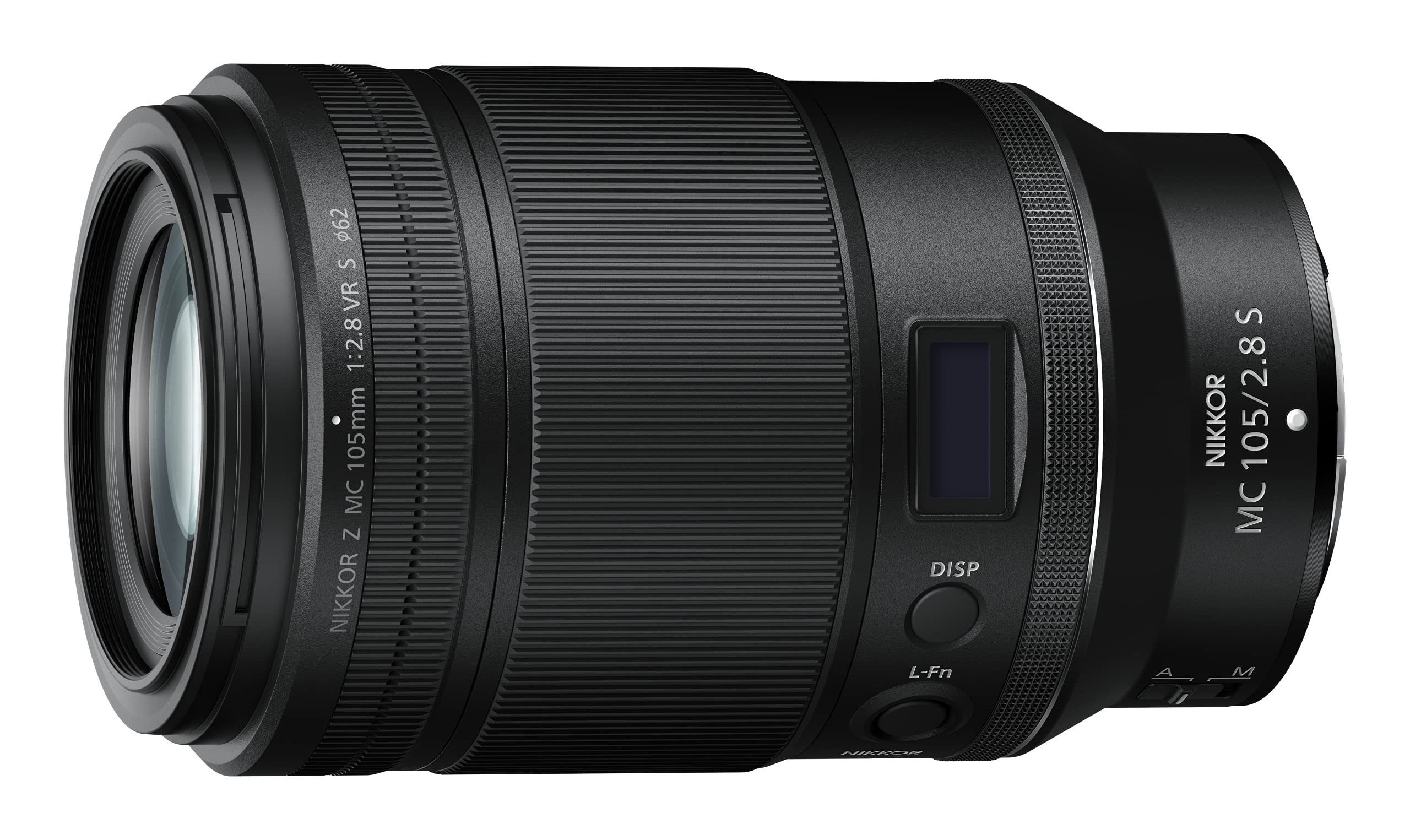
This Z-mount macro prime from Nikon is purpose-built for close-up food work. It delivers true 1:1 magnification, so a single cherry or a cross-section of a pie fills the sensor edge to edge. The S-Line optics produce knife-edge sharpness and nearly zero chromatic aberration, even at f/2.8—a common trouble point for macro lenses. Vibration Reduction (VR) allows handheld detail shots down to a quarter of a second, invaluable for restaurant-style plating where a tripod is impractical.
The 105mm focal length provides a comfortable working distance of about a foot, giving you room to position side lights or a reflector without bumping the lens. Paired with a Nikon Z6 II or Z8, you get reliable subject-detection autofocus. On a Z5 or Z50, it performs admirably as a manual-focus macro lens with focus peaking guidance. The aperture ring lock and weather-sealed barrel add peace of mind when you’re shooting near steam or liquids in a busy kitchen.
Color rendering is neutral but slightly warm, which flatters the natural reds, yellows, and greens in produce and cooked dishes. A difference you’ll notice immediately: the bokeh is smooth and non-distracting, allowing the main subject to remain the clear star. If you shoot food professionally or aspire to, this lens is the reference standard for macro work within the Nikon Z system.
Why it’s great
- Exceptional 1:1 macro sharpness for extreme plate detail.
- VR enables steady handheld close-ups without tripod.
- Weather-sealed for busy kitchen environments.
Good to know
- Requires a Z-mount body; no compatibility with F-mount DSLRs.
- Focus breathing is noticeable at close distances.
2. Panasonic LUMIX S5II
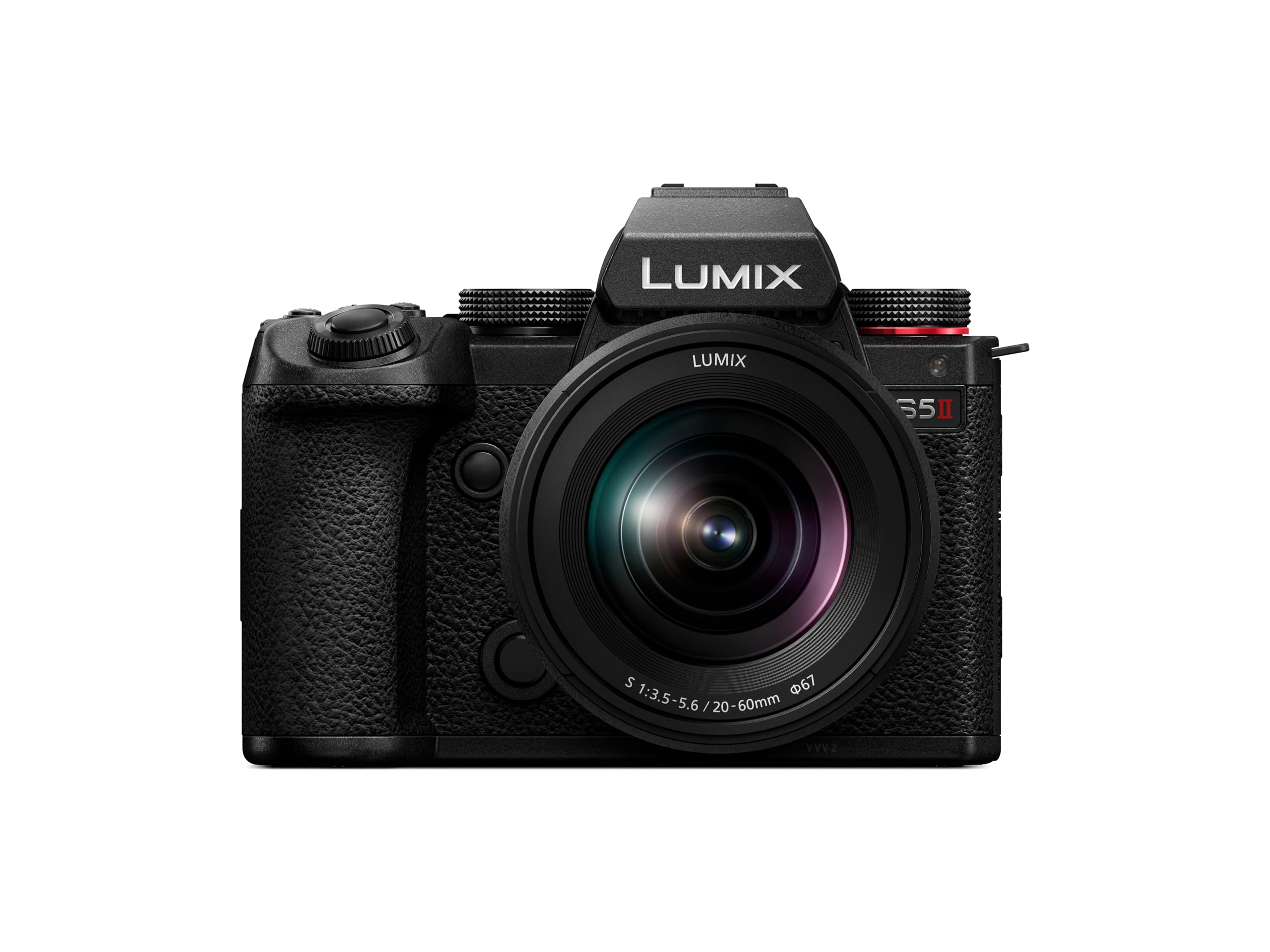
The S5II solves the autofocus pain point that held back earlier Lumix cameras. Its Phase Hybrid AF locks onto a plate’s leading edge quickly and stays there even as you recompose. Paired with the kit 20-60mm zoom, you get a standard coverage range useful for overhead flat-lays and table-level shots. The 24.2MP full-frame sensor captures excellent dynamic range, preserving highlight detail in glossy sauces without blowing out.
Active Image Stabilization is a standout for handheld video—if you create short-form food content, this camera allows smooth pans across a plating sequence without a gimbal. The 14+ stop V-Log profile is deeper than most rival bodies in its price bracket, giving editors flexibility to match color across multiple clips. Unlimited recording time via the internal fan means no overheating when shooting long tutorials.
Downsides are the kit lens’s f/3.5-5.6 aperture, which limits shallow depth-of-field effects compared to a dedicated macro or portrait prime. Investing in the Sigma 65mm f/2 or Panasonic 50mm f/1.8 transforms this body into a food-centric tool. The S5II’s ergonomics are refined, with a deep handgrip and clear button layout for quick adjustments between shots.
Why it’s great
- Phase Hybrid AF eliminates hunting for fast focus pulls.
- Active I.S. makes handheld video gimbal-smooth.
- Unlimited 4:2:2 10-bit recording without overheating.
Good to know
- Kit lens aperture is slow; invest in a fast prime for bokeh.
- Battery life is average—plan for spares on all-day shoots.
3. Tamron 90mm F/2.8 Di VC USD (Canon EF)
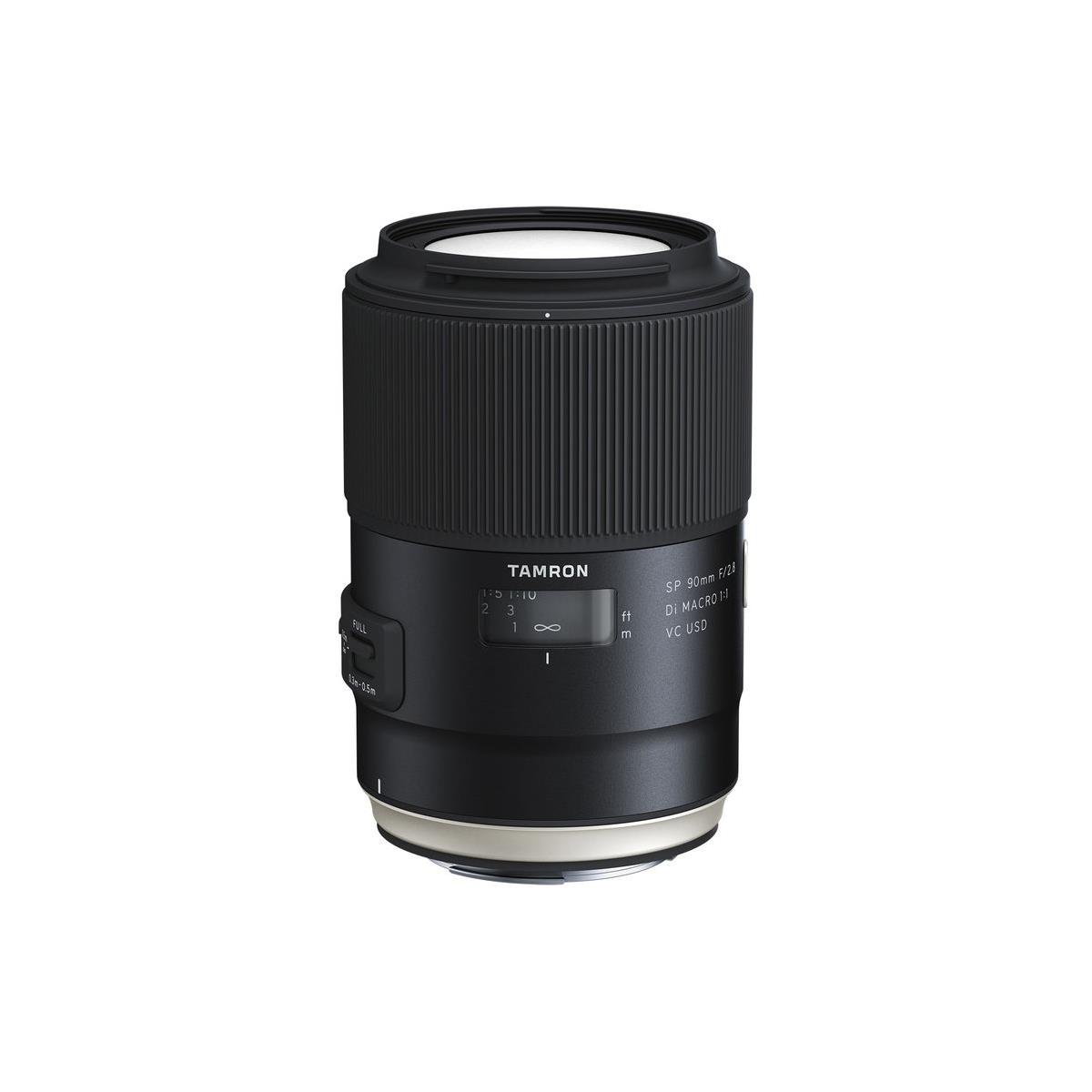
If you already own a Canon EF-mount DSLR like the 5D Mark IV or 90D, this Tamron macro lens is one of the best food photography lenses you can buy. The 90mm focal length gives a flattering compression for plated dishes. At f/2.8, it creates creamy out-of-focus backgrounds that isolate a single taco or slice of cake. Vibration Compensation (VC) allows sharper handheld close-ups than the Canon 100mm f/2.8L in similar lighting conditions.
The moisture-proof and dust-resistant construction is a plus for kitchen use where flour, sugar, or steam may be present. The Fluorine coating on the front element repels water and fingerprints. Advanced coating technology reduces flare when side-lighting a dish with bright window light. The circular 9-blade aperture keeps bokeh smooth even when stopped down to f/4 or f/5.6.
A firmware update through the Tap-In Console is recommended to address slower autofocus in dim conditions. Some early batches showed chromatic aberration at wide apertures, but later production runs largely resolved this. For food photographers who value tactile rendering and reliable VC, this lens delivers a distinct look that complements Canon’s warmer color profile.
Why it’s great
- Excellent 1:1 macro sharpness with beautiful bokeh falloff.
- VC stabilization works well for handheld close-ups.
- Moisture-resistant build suited for kitchen environments.
Good to know
- Autofocus can be slow in low light without firmware update.
- Chromatic aberration visible in some early copies at f/2.8.
4. Sony Alpha 7 IV

The 33MP sensor of the a7 IV provides extra cropping room without sacrificing detail—useful when you need to reframe a plate in post. Real-time Eye AF for humans works well, but more importantly, the Real-time Tracking for Subjects function can lock onto a specific element like a spoon or a garnish and hold it as you adjust composition. The E-mount lens ecosystem is vast, with macro primes like the Sony 90mm f/2.8 G or Sigma 105mm f/2.8 giving this body true food-photography capability.
Color science on the a7 IV includes S-Cinetone, which brings a subtle warmth to skin and food tones alike. The 4K 60p 10-bit 4:2:2 video capability with full pixel readout means your B-roll clips of a bubbling sauce or whisking in a bowl will have rich, editable detail. The fully articulating touchscreen simplifies overhead flat-lays when the camera is mounted on an overhead arm.
The a7 IV is a large body for a mirrorless camera, and the kit 28-70mm f/3.5-5.6 lens is a weak link. You’ll want a dedicated macro or fast prime to unlock the sensor’s potential. The BIONZ XR processor is fast, but the mechanical shutter tops out at 10fps—more than enough for food, but noticeable if shooting action like a pour shot.
Why it’s great
- 33MP sensor offers extra cropping flexibility for plate detail.
- Vast E-mount lens ecosystem includes excellent macro primes.
- Articulating screen aids overhead composition.
Good to know
- Kit lens is dim; budget for a fast prime or macro lens.
- Body is on the heavier side for a travel mirrorless.
5. Canon EOS R8

The EOS R8 packs the same autofocus brain as the R6 II into a smaller, lighter body. Dual Pixel CMOS AF II covers the entire frame with 1,053 zones, so you can tap to focus on a far corner of an overhead food scene and the camera will lock instantly. The 24.2MP full-frame sensor delivers excellent color with Canon’s signature slight magenta bias—a smooth base for food tones that many editors prefer over more neutral profiles.
6K oversampling at 4K 30p produces video footage with high fine detail and low noise; the 4K 60p mode is uncropped. The vari-angle LCD makes it straightforward to shoot at low table height without kneeling. The R8 is Canon’s lightest full-frame body—clocking in under a pound without a lens—which matters when you’re positioning it on a flexible mini tripod or a boom arm for overhead flat-lays.
The trade-off is battery life. Carrying two or three spares is wise for a day of shooting. The lack of in-body image stabilization means you should pair the R8 with stabilized RF lenses (like the RF 35mm f/1.8 IS Macro STM or RF 85mm f/2 IS) for sharp handheld results.
Why it’s great
- Fast, reliable Dual Pixel AF II across the entire frame area.
- Very lightweight body, ideal for overhead boom setups.
- Excellent video oversampling for detail-rich B-roll.
Good to know
- Battery life is short; keep spares charged and ready.
- No IBIS—depends on stabilized RF lenses for sharp handheld work.
6. Nikon D850

The D850 remains the highest-resolution DSLR ever designed, with a 45.7MP BSI-CMOS sensor that captures enough detail to crop into a single plate element and still have enough resolution for a full-page print. The backside-illuminated structure improves dynamic range at low ISOs, exactly where food photography lives—base ISO 64 yields clean shadows and rich highlights. The built-in focus shift shooting mode fires a series of images with automated focus steps, which you can combine in post into a focus-stacked shot that keeps the entire cheesecake sharp from front to back.
The optical viewfinder is bright and large, and the tilting touchscreen is handy for low-angle table shots. 153-point autofocus is fast and accurate, even in the dim interior of a restaurant. The D850 also has a dedicated silent shooting mode that eliminates mirror slap, useful when shooting a quiet brunch service.
The downsides are the sheer file size—each RAW file is around 60-80 MB—demanding large memory cards and storage. The F-mount lens system is mature, but best results require high-end glass like the 105mm f/2.8E VR or the 85mm f/1.4G. The D850 is heavy and not suited for casual carry; it belongs in a camera bag on a studio shoot.
Why it’s great
- 45.7MP resolution is outstanding for large prints and heavy cropping.
- Focus shift shooting automates focus stacking for deep DOF.
- Excellent dynamic range at ISO 64.
Good to know
- Large RAW files require fast, high-capacity memory cards.
- Heavy all-day carry; better suited for planned studio work.
7. Sony a7 III

The a7 III has been a reference full-frame body since launch, and it still holds up for food photography because of its balanced feature set. The 24.2MP BSI sensor delivers 15 stops of dynamic range, enough to hold detail in both a steaming bowl of soup (highlights) and the dark wood of a table (shadows). The 693-point phase-detection AF covers 93% of the frame, making it easy to focus on a specific olive or drop of sauce even when it’s not centered.
Battery life is exceptional for a mirrorless body—about 710 shots per charge—which removes the battery anxiety that plagues smaller cameras. The Eye AF for humans reliably locks onto the chef or subject, but for food, you’ll rely on flexible spot AF to micro-adjust your focal plane. The in-body image stabilization yields around 5 stops of correction, helpful for handheld shots of a flat-lay at 1/15 second.
The kit 28-70mm f/3.5-5.6 lens is decent for coverage but not for close-up food work. You should plan to add a macro prime—the Sony 90mm f/2.8 G or a Sigma 105mm f/2.8—to unlock the a7 III’s real potential for food. The body is also relatively large, though it balances well with heavier lenses.
Why it’s great
- Excellent 15-stop dynamic range for challenging food lighting.
- Long battery life—shoot all day without changing batteries.
- Reliable AF coverage across 93% of the frame.
Good to know
- Kit lens is not ideal for close-up food detail shots.
- No articulating screen for overhead composition.
8. Canon EOS RP

The EOS RP is the most affordable full-frame mirrorless camera in Canon’s lineup, making it a strong entry point for food bloggers who want shallow depth-of-field without switching to a larger card format. The 26.2MP sensor uses Canon’s Dual Pixel AF, which is phase-detection on the sensor and locks onto subjects quickly. The kit 24-105mm f/4-7.1 IS STM is a versatile lens with a 0.4x maximum magnification at the telephoto end—adequate for plate-wide shots but not true macro.
Weight is where the RP shines: it’s the lightest full-frame Canon body at just 485g body-only. That weight reduction translates to easier handling on a tripod or a tabletop mount. The vari-angle touchscreen maintains full articulation for overhead table shots or low angles. The RF mount has a growing set of affordable primes, like the RF 35mm f/1.8 IS Macro STM, that add real macro capability without breaking the bank.
The main limitation is the kit lens’ slow f/4-7.1 aperture, which restricts bokeh and low-light capability. Upgrading to a fast RF prime transforms the system. The 4K video is cropped and lacks the oversampling seen in the R8, and the burst rate is modest at 5fps. For still food photography with good light, it’s a capable, budget-friendly start.
Why it’s great
- Lightest RF-mount body—easy to position on a small tripod or boom.
- Vari-angle touchscreen simplifies overhead and low-angle shots.
- Affordable entry to full-frame with access to RF primes.
Good to know
- Kit lens has slow aperture; budget for a faster prime.
- 4K video is cropped and lacks oversampling.
9. Canon EOS Rebel T7
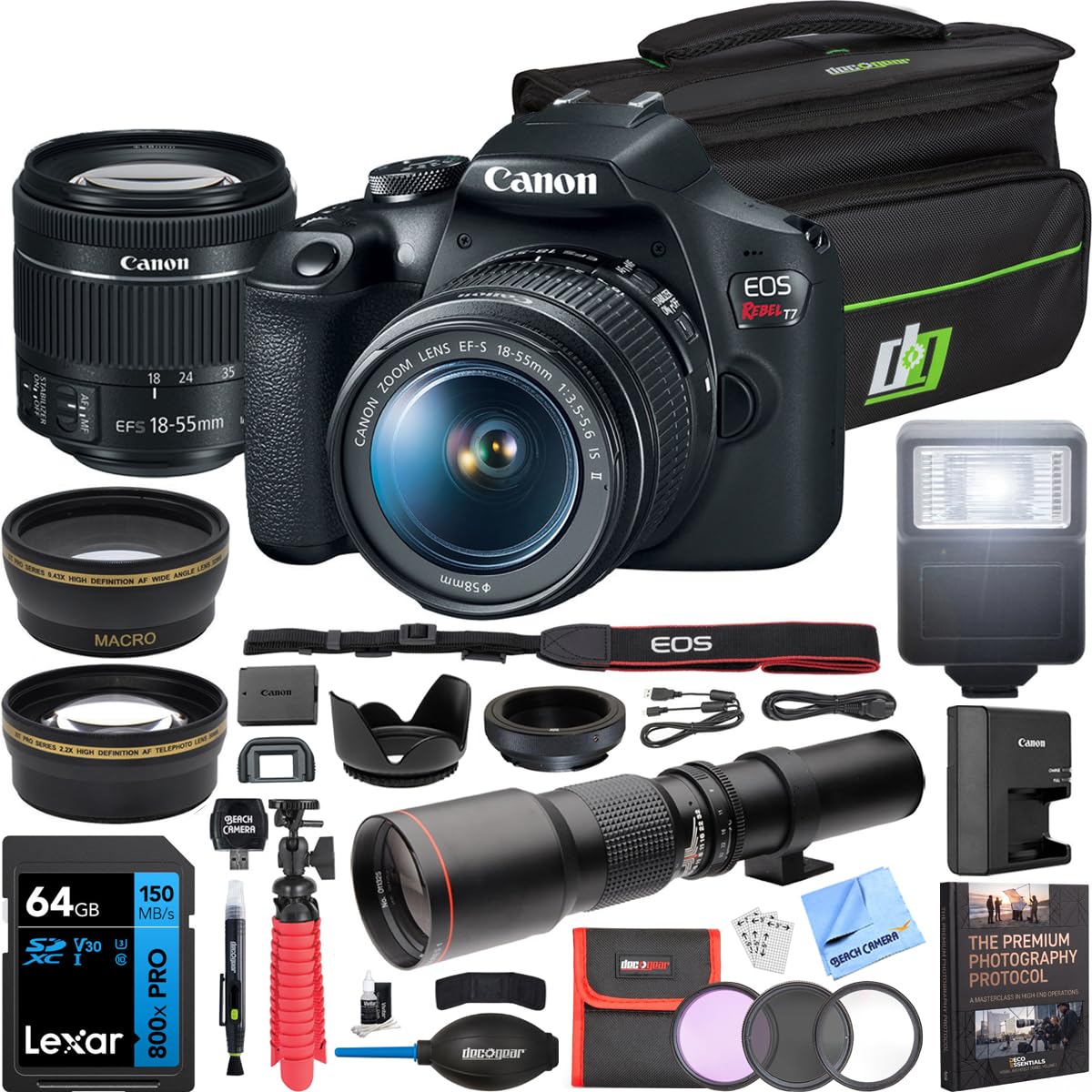
The Rebel T7 is a classic entry-level DSLR that comes bundled with an 18-55mm kit lens plus a 500mm telephoto, a 64GB memory card, a bag, and a tripod. For the aspiring food photographer on a tight budget, it’s a full imaging ecosystem out of the box. The 24.1MP APS-C sensor captures enough resolution to fill a web post or small print, and the DIGIC 4+ processor handles white balance well across standard lighting scenarios.
The optical viewfinder gives you a direct, lag-free view of the scene. The 9-point autofocus system is basic but functional when you use a single central point for food detail shots. The Scene Intelligent Auto mode helps beginners who aren’t comfortable with manual exposure yet—it adapts to lighting for decently exposed flat-lays. The bundle accessories include a 58mm UV filter and 2.2x telephoto lens, though these are best left aside for food work—stick to the kit zoom at 18-55mm.
The T7 shows its age in low dynamic range compared to modern mirrorless bodies, and the kit lens’ minimum focus distance is about 35cm, limiting close-up detail. The continuous shooting speed of 3fps is fine for still food but not pour shots. It’s a functional training camera—when you outgrow it, you’ll know exactly which upgrade you need.
Why it’s great
- Excellent value with an all-in-one bundle for beginners.
- Simple controls and Scene Auto mode ease the learning curve.
- Large ecosystem of affordable EF-S lenses for upgrades.
Good to know
- APS-C sensor limits shallow DOF compared to full-frame.
- Kit lens focus distance is too long for tight plate close-ups.
10. Panasonic Lumix G100

The Lumix G100 is a tiny interchangeable-lens camera built around the Micro Four Thirds system. Its compact size and flip-out screen make it a natural for food vloggers who want to show plating while filming themselves. The iA (intelligent auto) mode optimizes exposure and color for quick results. For food flat-lays at home, the G100 fits easily into a handbag or small messenger bag, allowing you to pull it out and shoot at a moment’s notice.
The Micro Four Thirds lens system offers affordable macro options like the Panasonic 30mm f/2.8 macro or Olympus 60mm f/2.8 macro, both of which achieve 1:1 magnification. The built-in microphone tracks audio, and the 5-axis hybrid I.S. keeps handheld clips steady. The 4K 24p 30p video captures adequate fine detail for social media content, and V-Log L recording adds color grading flexibility.
The low-light performance of the MFT sensor is limited—expect noise above ISO 3200. The 12-32mm kit lens has an f/3.5-5.6 variable aperture, which restricts shallow depth-of-field. 4K video recording time is capped at short clips, and the viewfinder resolution is modest. The G100 is best as a travel-friendly companion for casual food documentation, not as a primary still photography tool.
Why it’s great
- Extremely portable body for casual or vlogging food content.
- Accessible iA mode produces very good out-of-camera colors.
- Micro Four Thirds system has affordable macro lenses available.
Good to know
- MFT sensor struggles with noise at ISO 3200 and above.
- 4K video recording is limited to short clips (max time).
11. Nikon COOLPIX P1000

The P1000 is the bridge camera with the world’s most extreme zoom—a 125x optical zoom that reaches an equivalent 3000mm. While this is marketed for wildlife, it has a hidden trick for food photographers: a Macro Close-Up mode that lets you focus as close as 1cm from the subject at the wide-angle end. This allows filling the frame with a single food texture, like the bubbles in a pancake batter or the grains of a coarse salt, with no lens swapping needed.
The 16MP sensor is small, which limits low-light capability, but in well-lit studio conditions or bright window light, the P1000 produces sharp, usable images. Dual Detect Optical VR keeps the frame steady at long focal lengths, but you’ll still want a tripod for the macro work. The 4K video output is stereo and supports an accessory hotshoe for external audio. Full manual controls with PASM modes let you dial in shutter speed and aperture for consistent results.
The camera is heavy and bulky—roughly 3.1 pounds—making it awkward for overhead or tight table setups. The autofocus at extreme zoom is slow, and the small sensor means you can’t achieve shallow depth of field in the way a full-frame body can. The P1000 is a niche tool for detail-only macro work without changing lenses, but not a primary everyday camera for composition-heavy food photography.
Why it’s great
- Insane 125x optical zoom for extreme plate detail from a distance.
- Macro Close-Up mode gets to 1cm from the subject.
- Full manual controls for exposure precision.
Good to know
- Small sensor limits dynamic range and low-light performance.
- Heavy body—difficult to position for overhead flat-lays.
FAQ
Do I need a full-frame sensor for food photography, or is APS-C enough?
What minimum focus distance should I look for in a food photography lens?
Is focus stacking necessary, and which cameras support it?
Final Thoughts: The Verdict
For most users, the cameras for food photography winner is the Nikon Z MC 105mm f/2.8 VR S because it combines 1:1 macro capability with professional S-Line optics and VR stabilization in a single, weather-sealed lens. If you want a hybrid body that handles both still food content and video tutorials, grab the Panasonic S5II. And for a budget-conscious start with a full-accessory ecosystem, nothing beats the Canon EOS Rebel T7 bundled kit.

Mo Maruf
I created WellFizz to bridge the gap between vague wellness advice and actionable solutions. My mission is simple: to decode the research and give you practical tools you can actually use.
Beyond the data, I am a passionate traveler. I believe that stepping away from the screen to explore new environments is essential for mental clarity and physical vitality.