Our readers keep the lights on and my smoothie glass nicely filled. As an Amazon Associate, I earn from qualifying purchases.
Choosing a camera that intentionally omits wireless connectivity is a deliberate move toward reliability, security, and distraction-free shooting. Whether you’re a photographer working in sensitive environments, a parent handing a point-and-shoot to a child, or simply someone who values battery life and direct physical controls over cloud syncing, the decision to go without WiFi is one of the most practical choices you can make in a saturated market.
I’m Mohammad Maruf — the founder and writer behind WellFizz. I’ve spent over a decade dissecting camera specs, sensor architectures, and lens ecosystems to help buyers match the right hardware to their workflow, not the other way around.
This guide cuts through the noise to put only the most capable cameras that do not rely on wireless connectivity front and center, from pocketable travel zooms to professional full-frame bodies, detailed so you can compare exactly what matters for your best camera without wifi.
How To Choose The Best Camera Without WiFi
When you intentionally strike WiFi from your criteria, the entire evaluation shifts toward the fundamentals: sensor quality, optical range, mechanical durability, and control ergonomics. Every camera here earns its place by delivering excellent files first — not by promising a smartphone sync app that may become obsolete.
Sensor Size and Lens Ecosystem
The sensor is the heart of any camera. Full-frame sensors (like the 24.2MP sensor in the Sony a7 III or the 30.4MP sensor in the Canon 5D Mark IV) offer superior dynamic range and low-light performance over APS-C sensors. However, APS-C bodies like the Nikon D7100 or Fujifilm X100VI benefit from smaller, lighter lenses and a wider effective reach with telephoto glass. Without WiFi, there is no trade-off in image quality — only a direct line between the sensor and your memory card.
Optical Zoom Range and Aperture
In the non-connected camera world, the optical zoom and aperture matter far more than digital zoom or software tricks. The Panasonic LUMIX TZ/ZS99 packs a 30x optical zoom (24-720mm equivalent) into a pocket body — a range you simply cannot get from any smartphone. For DSLR and mirrorless bodies, the lens you mount determines your reach; cameras with larger mounts like Canon RF or Sony E give you access to fast primes and super-telephotos that maintain sharpness across the frame.
Burst Rate and Autofocus Performance
Without WiFi consuming background resources, these cameras can dedicate all their processing power to speed. The Nikon D850 shoots 9 frames per second with full autofocus at 45.7 megapixels, and the Canon EOS R8 delivers 40 frames per second in electronic shutter mode — both figures that rival or exceed any WiFi-connected counterpart. Look for phase-detection autofocus points covering a high percentage of the frame; the Sony Alpha 6700’s 759-point system and the Nikon D7100’s 51-point system are strong markers of reliable tracking.
Quick Comparison
On smaller screens, swipe sideways to see the full table.
| Model | Category | Best For | Key Spec | Amazon |
|---|---|---|---|---|
| Sony a7 III | Full-Frame Mirrorless | Professional hybrid stills/video | 24.2MP BSI sensor, 693 AF points | Amazon |
| Canon EOS 5D Mark IV | Full-Frame DSLR | Studio and event photography | 30.4MP sensor, 7fps burst | Amazon |
| Nikon D850 | Full-Frame DSLR | High-resolution landscape/studio | 45.7MP BSI sensor, 9fps | Amazon |
| Sony Alpha 6700 | APS-C Mirrorless | Travel and vlogging hybrid | 26MP BSI sensor, AI AF tracking | Amazon |
| Canon EOS R8 | Full-Frame Mirrorless | Lightweight content creation | 24.2MP sensor, 40fps e-shutter | Amazon |
| Panasonic TZ/ZS99 | Compact Travel Zoom | Concerts and travel reach | 30x optical, 24-720mm Leica | Amazon |
| FUJIFILM X100VI | APS-C Premium Compact | Street photography and style | 40MP BSI sensor, 23mm f/2 | Amazon |
| Nikon D7100 | APS-C DSLR | Durable outdoor/all-weather | 24.1MP, 51-point AF, sealed | Amazon |
| KODAK PIXPRO FZ55 | Point & Shoot | Budget/gift and job site photos | 16MP, 5x optical zoom | Amazon |
In‑Depth Reviews
1. Sony a7 III Full-Frame Mirrorless Interchangeable-Lens Camera with 28-70mm Lens

The Sony a7 III is the benchmark for a WiFi-free full-frame camera that sacrifices nothing. Its 24.2MP back-illuminated sensor delivers 15 stops of dynamic range and clean files up to ISO 204,800, making it a standout for low-light event work and landscape photography where wireless connectivity is a liability, not a feature.
The 693 phase-detection and 425 contrast AF points cover 93% of the frame, and the 10fps burst rate with AE/AF tracking ensures you never miss a decisive moment. The included FE 28-70mm f/3.5-5.6 OSS lens provides a versatile starting range, but the real strength is the E-mount ecosystem, which lets you adapt nearly any manual-focus lens without worrying about WiFi compatibility.
Real-world battery life is exceptional: users report over 700 shots per charge thanks to the NP-FZ100 cell, a figure that WiFi models can only dream of. Even the menu system, though deep, becomes manageable when you are not fighting a connectivity sub-menu. This camera is built for shooters who need to transfer files via SD card and move on.
Why it’s great
- Class-leading 15-stop dynamic range for recovering shadows and highlights
- 693-point AF system with 93% frame coverage for reliable tracking
- Incredible battery life (~710 shots per charge)
Good to know
- Kit lens is decent but benefits from an upgrade for low-light work
- Menu system is complex and takes time to learn
- Weather sealing is adequate but not rugged for extreme abuse
2. Canon EOS 5D Mark IV Digital SLR Camera (Body Only)
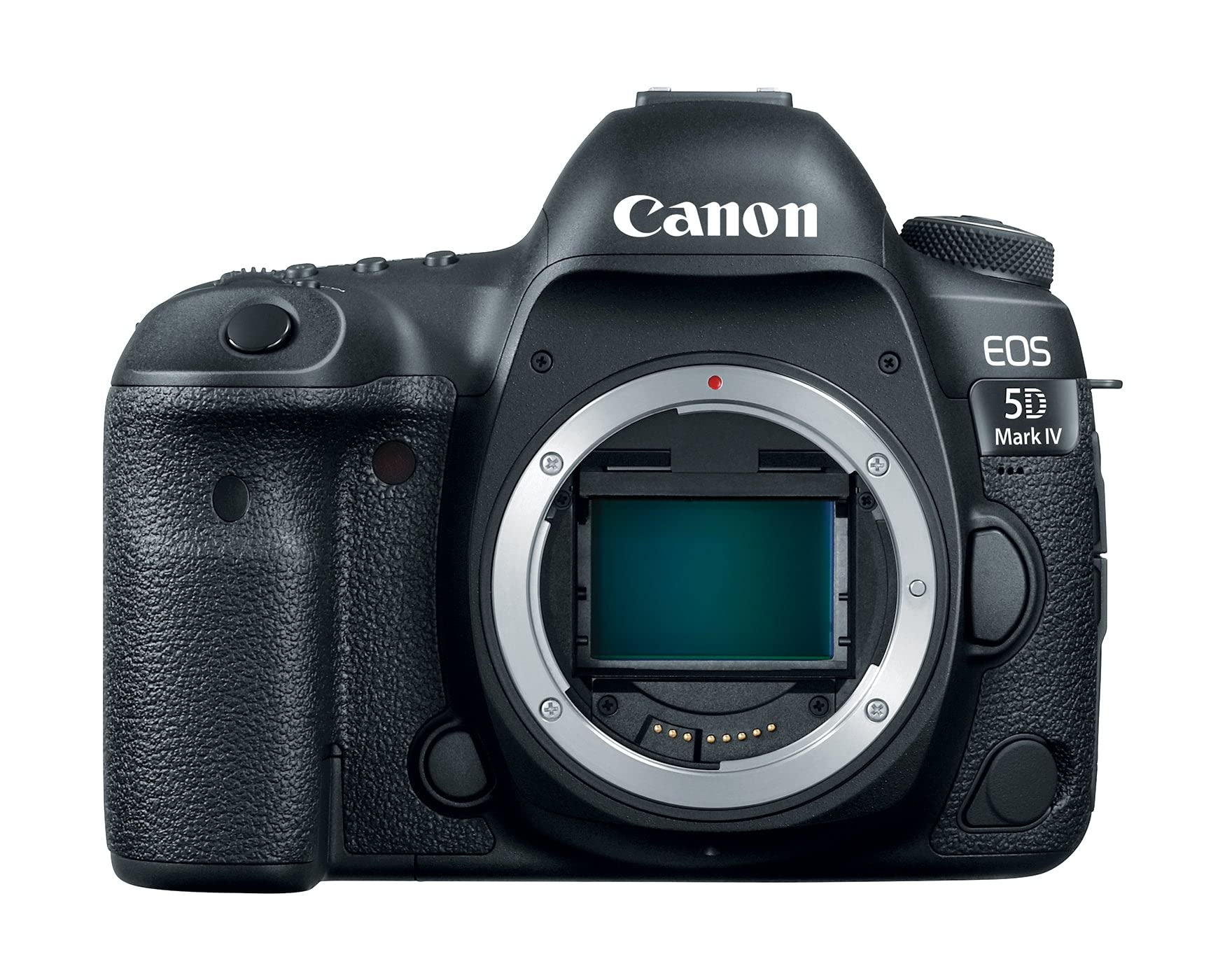
The Canon 5D Mark IV is a purpose-built DSLR that treats WiFi as an optional extra (via the Canon Camera Connect app) rather than a core feature, making it ideal for studio and event photographers who prefer to tether via USB or pull files from a card. The 30.4MP full-frame CMOS sensor paired with the DIGIC 6+ processor delivers detail that holds up to heavy cropping and large prints.
Its 61-point autofocus system, including 41 cross-type points, provides fast and accurate phase detection through the optical viewfinder. The Dual Pixel CMOS AF in live view mode is responsive and smooth for video work, though the camera records 4K Motion JPEG at 30fps — a format that produces enormous files but spectacular quality. The 7fps burst rate is more than enough for most portrait and wedding workflows.
The body is built like a tank with magnesium alloy construction and weather sealing. Users consistently praise its intuitive controls and reliable performance over thousands of shutter actuations. This is a camera that can be passed down through a decade of professional use without ever needing a firmware update for a WiFi app that no longer exists.
Why it’s great
- 30.4MP sensor with excellent dynamic range and low noise at high ISO
- Dual Pixel CMOS AF for smooth live view and video focusing
- Magnesium alloy body with pro-grade weather sealing
Good to know
- 4K video is Motion JPEG format, resulting in very large file sizes
- No fold-out articulating screen for overhead or low-angle shots
- GPS feature drains battery quickly when enabled
3. Nikon D850 FX-Format Digital SLR Camera Body

The Nikon D850 is widely regarded as the best DSLR ever made, and it achieves this without relying on any WiFi gimmicks. Its 45.7MP back-illuminated full-frame sensor delivers astonishing resolution with no optical low-pass filter, meaning every lens you mount is resolved to its maximum potential. The D850’s dynamic range is among the best ever tested, with ISO 64 producing files of extraordinary tonal smoothness.
The 153-point autofocus system (99 cross-type) is derived from the flagship D5 and provides industry-leading subject acquisition. At 9 fps with full autofocus, the D850 can handle action shooting, while the 4K in-camera time-lapse mode and 120fps slow-motion at 1080p add serious video versatility. The tilting touchscreen is a practical addition for tripod work.
Build quality is outstanding: a weather-sealed magnesium body with a deep grip and ergonomic button placement. The only connectivity is via USB 3.0, HDMI, and optional SnapBridge for GPS—which many users disable anyway. This camera is designed for photographers who want to edit 14-bit RAW files on a calibrated monitor after shooting, not stream JPEGs to a phone.
Why it’s great
- 45.7MP BSI sensor with no OLPF for maximum sharpness
- 153-point AF system with 99 cross-type sensors for fast tracking
- 9fps burst with full AF and outstanding dynamic range
Good to know
- Requires high-speed XQD or SD cards to handle large files
- Video autofocus is mediocre in live view; manual focus is preferred
- Heavy body (approximately 1005g) for all-day handheld shooting
4. Sony Alpha 6700 – APS-C Interchangeable Lens Camera

The Sony Alpha 6700 is a mid-range APS-C powerhouse that does not let the absence of WiFi affect its performance one bit. With a dedicated AI processor running real-time recognition for humans, animals, birds, and vehicles, this camera delivers the most advanced subject-tracking autofocus in its class — all without needing a cloud-based service. The 26MP Exmor R BSI sensor produces sharp, clean files up to ISO 6400.
It records 4K/60p video oversampled from 6K at 4:2:2 10-bit, plus high-frame-rate 4K at 120p. The compact body is light enough for a gimbal, and the E-mount compatibility gives access to a huge selection of native and third-party glass. Although the camera has built-in Bluetooth for remote control, the WiFi chip (present in the spec sheet) is not required for any core function.
Battery life is excellent for its size, and the menu system, while deep, rewards time spent learning it. The on-sensor phase-detection with 759 AF points ensures that manual focus peaking and eye detection remain snappy and precise. For anyone wanting Sony’s best APS-C sensor without relying on a smartphone companion app, this is the choice.
Why it’s great
- Dedicated AI processor for real-time subject recognition and tracking
- 26MP BSI sensor with excellent dynamic range and low noise
- 4K/60p oversampled from 6K with 4:2:2 10-bit color
Good to know
- Menu system is complex and requires time to master
- In-body stabilization is decent but not sufficient for smooth gimbal-free video
- Small body may be cramped for users with larger hands
5. Canon EOS R8 Mirrorless Camera Body

The Canon EOS R8 is the lightest full-frame RF-mount camera available, shedding weight without shedding performance. Its 24.2MP sensor and DIGIC X processor deliver the same internals found in the much more expensive R6 Mark II, including uncropped 4K/60p video oversampled from 6K. The maximum electronic shutter speed reaches 40fps with full AF tracking.
The Dual Pixel CMOS AF II system covers 100% of the frame with 1,053 zones and uses deep learning to detect people, animals, and vehicles. Despite having built-in Bluetooth and Wi-Fi (for the optional Canon Camera Connect app), the camera operates completely independently of any wireless connection during shooting. The vari-angle touchscreen and lightweight body (461g) make it an excellent travel and vlogging companion.
The main sacrifice for the low weight is a smaller battery (LP-E17) rated for roughly 500 shots, and the absence of in-body image stabilization. This camera relies on lens-based IS or external stabilization. For photographers who value portability and 4K quality over all-day battery reserves, the R8 is a compelling WiFi-free option.
Why it’s great
- Lightest full-frame RF-mount body at 461g, ideal for travel
- 40fps electronic shutter with full autofocus for action shots
- Uncropped 4K/60p oversampled from 6K with C-Log3
Good to know
- No in-body image stabilization; relies on lens IS
- Battery life is modest (approx. 500 shots per charge)
- Single UHS-II SD card slot limits backup options
6. Panasonic LUMIX TZ/ZS99 Point and Shoot Camera

The Panasonic LUMIX TZ/ZS99 is a pocketable point-and-shoot that leaves WiFi behind in favor of a truly remarkable 30x optical zoom — a 24-720mm equivalent Leica lens that fits in your jacket pocket. This camera is tailor-made for travelers and concert-goers who need to reach subjects far away without carrying interchangeable lenses or relying on smartphone digital zoom that destroys image quality.
Its 20.3MP 1/2.3-inch sensor delivers sharp daylight images, and the built-in 5-axis Hybrid O.I.S. steadies telephoto shots. The 1,840k-dot tiltable touchscreen is bright and responsive. Although the camera includes Bluetooth for image transfer, the physical controls and zoom rocker let you shoot without ever pairing a device — just insert an SD card and capture.
The 4K Photo mode (30fps burst) and Full HD 120fps slow-motion make it versatile for action sequences. Image quality is very good up to ISO 800; pushing higher introduces noise, but the class-leading zoom range makes it the only camera in this list that can capture a stage performer from the back row. It is the ultimate practical choice for anyone who refuses to carry a pocket-sized phone with a cheap telephoto adapter.
Why it’s great
- 30x optical zoom (24-720mm) with Leica lens for incredible reach
- Compact body that fits easily in a pants or jacket pocket
- 5-axis Hybrid O.I.S. for sharp handheld telephoto shots
Good to know
- Image quality degrades above ISO 800, especially in low light
- Autofocus can hunt in fast-moving situations at full zoom
- Bluetooth connectivity is present but not required for shooting
7. FUJIFILM X100VI Digital Camera (Silver)

The FUJIFILM X100VI is the sixth iteration of the most beloved fixed-lens compact camera ever made, and it remains a WiFi-free enthusiast’s dream. Its 40.2MP X-Trans CMOS 5 HR BSI sensor paired with the 23mm f/2 lens (35mm equivalent) produces images with film-like color science straight out of camera, requiring zero editing or app-based tweaking. The optical viewfinder with electronic bright frame display is a joy to use.
In-body image stabilization (IBIS) is a first for the X100 series, providing up to 6 stops of shake correction. The autofocus uses hybrid contrast and phase detection with 425 points, plus intelligent subject recognition for faces, eyes, animals, birds, cars, motorcycles, and trains. It records 6.2K 30p 4:2:2 10-bit video internally, making it a viable secondary camera for video work.
The camera’s retro dials and physical controls completely remove the need for any touch screen or WiFi menu to change exposure settings. Battery life is decent, and the unique character of the 23mm f/2 lens means your images have a distinct look that no phone can replicate. It is the ultimate camera for the photographer who wants to stay in the moment and shoot.
Why it’s great
- 40.2MP BSI X-Trans sensor with Fujifilm’s film simulations and color science
- Hybrid optical/electronic viewfinder for intuitive composition
- 6-stop in-body image stabilization for handheld low-light shooting
Good to know
- Fixed 23mm f/2 lens means no zoom; you move to frame
- Autofocus can be inconsistent in very low light compared to competitors
- Premium pricing reflecting the unique design and limited availability
8. Nikon D7100 24.1 MP DX-Format Digital SLR (Body Only)

The Nikon D7100 is a weather-sealed APS-C DSLR that proves durability and image quality do not require WiFi. Its 24.1MP DX-format sensor (without an optical low-pass filter) captures exceptionally sharp images, and the 51-point autofocus system with 15 cross-type sensors delivers fast subject acquisition even in challenging light. This camera is built like a tank — users report it surviving multiple drops onto concrete without losing functionality.
It shoots 6 fps continuous for up to 100 frames, which is still respectable for sports and wildlife. The optical viewfinder is bright and provides 100% frame coverage. 1080p Full HD video with full-time autofocus and a built-in stereo microphone is functional for casual video work. The optional WU-1a adapter for wireless transfer is available, but the camera is entirely self-contained without it.
The double SD card slot provides instant backup, and the magnesium-alloy body with extensive weather sealing makes it ideal for outdoor photography in rain, dust, or cold. The D7100 is an excellent choice for a budget-conscious photographer who wants a robust, fully featured camera that will not prompt you to “sync to cloud.”
Why it’s great
- Weather-sealed magnesium alloy body for durability in harsh conditions
- 24.1MP sensor with no AA filter for tack-sharp images
- 51-point AF system (15 cross-type) for fast, accurate focusing
Good to know
- Battery life is short (approx. 200 shots drains quickly)
- Small buffer fills quickly during continuous burst shooting
- Video autofocus is basic compared to modern mirrorless cameras
9. KODAK PIXPRO FZ55 16MP Digital Point & Shoot Camera
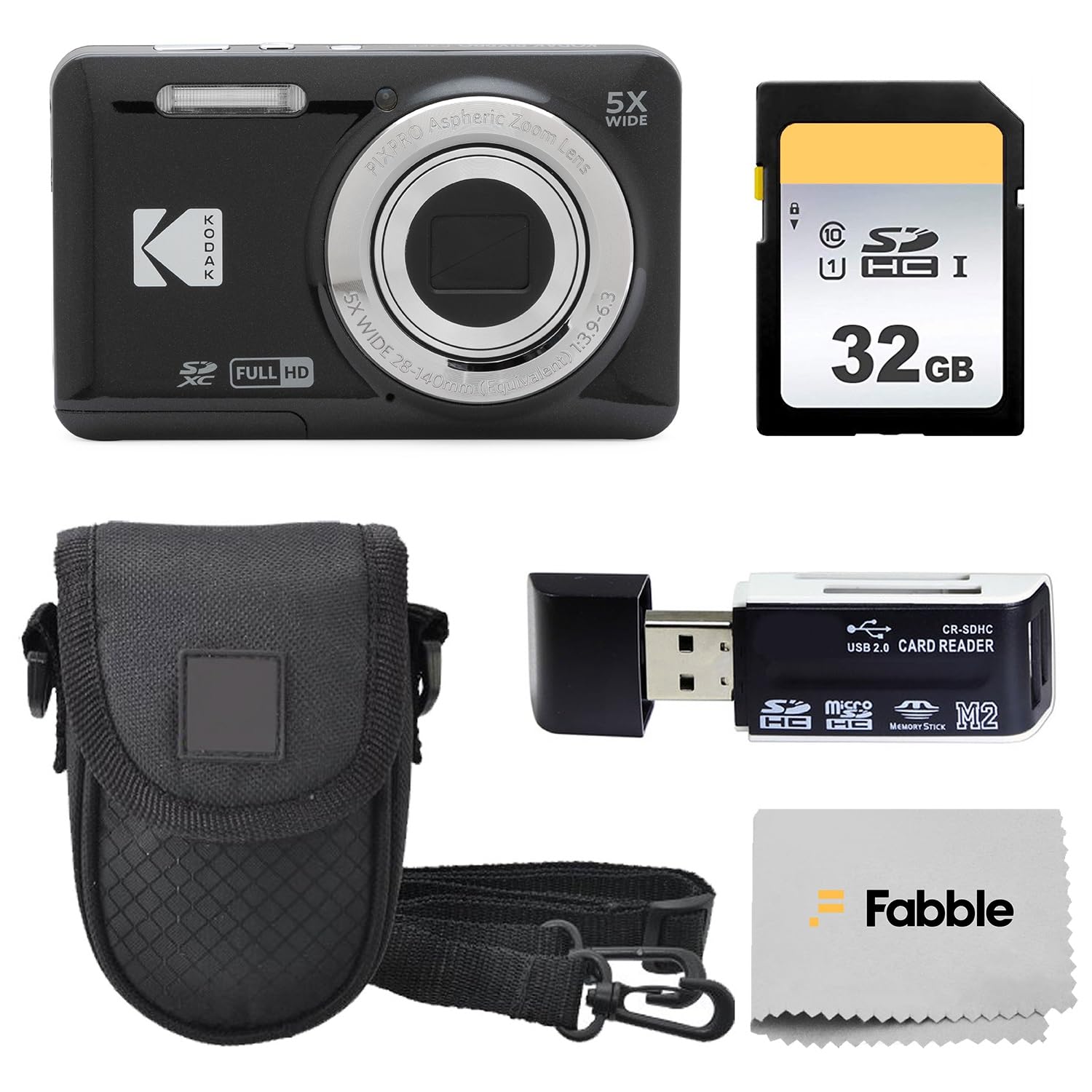
The KODAK PIXPRO FZ55 is an entry-level point-and-shoot that completely avoids WiFi, making it a safe, simple, and affordable option for children, seniors, or anyone who just wants to point and capture without menus. Its 16MP sensor and 5x optical zoom (28mm wide-angle) produce clean, vibrant images in daylight, and the 2.7-inch LCD screen makes composition straightforward.
The bundle includes a 32GB SD card, protective case, and card reader — everything needed to start shooting immediately without installing any app. The camera supports 1080p Full HD video and has multiple scene modes. Customers report 6-8 hours of battery life from the rechargeable lithium-ion cell, far exceeding any smartphone’s screen-on time.
This camera is not about specs; it is about reliability and ease of use. It works as a great gift for kids or as a job-site camera where rugged simplicity is more important than resolution. For anyone who wants a camera that works out of the box with no configuration, the FZ55 is the most practical pick on this list.
Why it’s great
- Simple operation with no setup required — point, shoot, transfer
- Bundled with 32GB SD card, case, and reader for immediate use
- Excellent battery life (6-8 hours) for full-day outings
Good to know
- Image quality is decent but limited in low light compared to larger sensors
- 5x optical zoom is modest; not suitable for distant subjects
- Small body may be awkward for users with large hands
FAQ
Why would I choose a camera without WiFi instead of one with built-in connectivity?
Is it possible to add WiFi to a camera that doesn’t have it built in?
Does a camera without WiFi have any disadvantages for travel?
Can I still use remote triggering with a camera that has no WiFi?
Final Thoughts: The Verdict
For most users, the best camera without wifi winner is the Sony a7 III because it combines a full-frame sensor with class-leading autofocus, 15-stop dynamic range, and exceptional battery life — all without relying on wireless connectivity. If you want the ultimate resolution and build quality for studio work, grab the Nikon D850. And for a pocketable travel zoom that fits in any bag and can reach sporting events from the cheap seats, nothing beats the Panasonic LUMIX TZ/ZS99.

Mo Maruf
I created WellFizz to bridge the gap between vague wellness advice and actionable solutions. My mission is simple: to decode the research and give you practical tools you can actually use.
Beyond the data, I am a passionate traveler. I believe that stepping away from the screen to explore new environments is essential for mental clarity and physical vitality.