Our readers keep the lights on and my smoothie glass nicely filled. As an Amazon Associate, I earn from qualifying purchases.
That grainy, jittery phone clip you keep reshooting? It’s not your talent — it’s the sensor size and the missing stabilization hardware that only a dedicated body brings. A proper camera with a 1-inch or larger sensor, mechanical stabilization, and a quality codec changes what you can pull off in post, in low light, and in motion.
I’m Mohammad Maruf — the founder and writer behind WellFizz. My research pipeline digs into sensor readout speeds, bit depths, autofocus algorithms, and thermal management across a spread of mirrorless and compact video-first systems to separate spec-sheet hype from real shooting performance.
The market now offers everything from pocket gimbal cameras to full-frame beasts with internal RAW recording, making a best camera with video recording choice depend more than ever on how you shoot, not just what specs you read.
How To Choose The Best Camera With Video Recording
The video shooting market splits cleanly into two camps: run-and-gun creators who need stabilization and autofocus out of the box, and narrative/cinema shooters who prioritize dynamic range and codec flexibility over convenience. Your shooting scenario determines which sensor class, stabilization type, and recording format you should target.
Sensor Size and Low-Light Performance
A Micro Four Thirds sensor (Panasonic G100, Blackmagic Pocket 4K) delivers a 2x crop factor and decent noise performance up to ISO 6400. Full-frame sensors (Canon R8, Sony a7 III, Nikon Z6 III) gather significantly more light at identical ISOs, giving you cleaner shadows and the ability to shoot in dim interiors without adding noise. For vlogging or controlled studio work, the smaller sensor is fine. For weddings, events, or dusk shooting, full-frame pulls ahead.
Stabilization: IBIS vs. Gimbal vs. Digital
In-body image stabilization (IBIS) is found on full-frame bodies like the Nikon Z6 II, Sony a7 IV, and Canon R6 Mark II. It compensates for hand shake at the sensor level and works best for static or slow panning shots. For walking or running shots, a mechanical gimbal (as integrated into the DJI Osmo Pocket 3) or a separate gimbal rig is required. Digital stabilization crops the frame and should be avoided as a primary stabilization method.
Recording Limits and Overheating
Many mirrorless cameras impose a 29-minute 59-second recording limit or overheat after 30 minutes of 4K 60p. The Panasonic S5II and Blackmagic Pocket 4K use active cooling (fans or heat sinks) to record indefinitely. If you shoot long interviews, livestreams, or continuous event coverage, this thermal headroom is the difference between a reliable tool and a constant interruption.
Quick Comparison
On smaller screens, swipe sideways to see the full table.
| Model | Category | Best For | Key Spec | Amazon |
|---|---|---|---|---|
| Canon EOS R6 Mark II | Full-frame Mirrorless | Hybrid shooting, events | 6K oversampled 4K 60p | Amazon |
| Nikon Z6 III | Full-frame Mirrorless | Internal 6K RAW, low light | 6K/60p N-RAW internal | Amazon |
| Sony Alpha 7 IV | Full-frame Mirrorless | Photo/video hybrid, color science | 33MP 4K 60p 10-bit 4:2:2 | Amazon |
| Panasonic LUMIX S5II | Full-frame Mirrorless | Unlimited 4K, active cooling | Unlimited 4:2:2 10-bit | Amazon |
| Sony a7 III | Full-frame Mirrorless | Budget full-frame video starter | 24.2MP BSI, 4K S-Log | Amazon |
| Canon EOS R8 | Full-frame Mirrorless | Lightweight full-frame entry | 4K 60p oversampled 6K | Amazon |
| Nikon Z 6II | Full-frame Mirrorless | Versatile hybrid, dual slots | 24.5MP, 4K 60p full readout | Amazon |
| FUJIFILM X-T30 III | APS-C Mirrorless | Stylish compact, film simulations | 26.1MP, 4K 30p DCI | Amazon |
| Blackmagic Pocket Cinema 4K | Cinema Camera | Professional color grading | 13 stops DR, Blackmagic RAW | Amazon |
| DJI Osmo Pocket 3 | Pocket Gimbal Camera | Vlogging, travel, gimbal-stable | 1-inch sensor, 3-axis gimbal | Amazon |
| Panasonic LUMIX G100 | Micro Four Thirds Mirrorless | Entry-level video, webcam use | 4K 24p, 360° audio mic | Amazon |
In‑Depth Reviews
1. Canon EOS R6 Mark II Mirrorless Camera

The R6 Mark II is the most balanced hybrid camera Canon has produced, pairing the DIGIC X processor with a 24.2MP full-frame sensor that oversamples 6K to deliver uncropped 4K 60p video with clean, detailed imagery. The Dual Pixel CMOS AF II covers the entire frame with 1,053 zones and detects people, animals, vehicles, trains, and horses — making it nearly impossible to lose focus on moving subjects. You get up to 40 fps electronic shutter for stills, an 8-stop IBIS system that works alongside lens stabilization, and a vari-angle touchscreen that flips forward for self-recording.
Video shooters gain C-Log 3 and HDR PQ profiles, support for 10-bit 4:2:2 internal recording, and a 6K oversampled 4K mode that resolves fine textures like fabric weave or brick mortar without aliasing. The 180 fps Full HD slow-motion mode is great for action replay, and the maximum 6-hour continuous recording in Full HD removes the old 30-minute hard limit. In-body stabilization comfortably replaces a gimbal for static handheld shots, though walking footage still shows micro-jitters.
The LP-E6NH battery delivers roughly 760 shots or 2.5 hours of mixed video, which is a major improvement over previous EOS R bodies. The dual UHS-II SD card slots provide redundancy for client work, and the weather-sealed magnesium alloy body handles rain and dust without complaint. The absence of a built-in flash is a minor concession for a body that otherwise covers nearly every hybrid shooting scenario.
Why it’s great
- Uncropped 4K 60p from 6K oversample delivers superb sharpness.
- 8-stop IBIS eliminates need for gimbal in most handheld use.
- Dual card slots and weather sealing for professional reliability.
Good to know
- Single UHS-II slot can bottleneck fast burst workflows.
- No built-in flash; external hotshoe unit required.
2. Nikon Z6 III Mirrorless Camera

The 24.5MP BSI sensor delivers a native ISO range of 100–64000 with an extended Hi 1.7 setting equivalent to ISO 204800 — a serious advantage for low-light event work. Autofocus detection operates down to -10 EV, and Deep Learning recognition handles human faces as small as three percent of the frame, which matters when subjects are partially occluded.
The electronic viewfinder reaches 4000 nits max brightness with a 5760k-dot resolution and DCI-P3 color gamut — you can frame a shot in direct sunlight without shading the eyepiece. Video features include 4K/120p oversampled from 6K, Full HD/240p slow motion, and a Hi-Res Zoom function that provides up to 2x digital zoom during HD recording. The body integrates 5-axis IBIS rated for 5.5 stops, and the dual card slot accepts CFexpress Type B, XQD, or UHS-II SD cards.
Battery life runs approximately 2 hours of continuous recording, so a spare EN-EL15c battery is mandatory for full-day shoots. The menu system is deep and highly customizable, but new Nikon users should budget time to set up the i-menu and My Menu banks. The Z6 III survived intentional rain exposure during testing without issue, and the ergonomic grip balances well with heavier Z lenses like the 24-70mm f/2.8 S.
Why it’s great
- Internal 6K N-RAW at 60fps without external recorder required.
- 4000-nit EVF works in direct sunlight without shade.
- Excellent low-light noise profile up to ISO 12800.
Good to know
- Battery life ~2 hours; carry at least two spares.
- Autofocus can be finicky in very dark, low-contrast scenes.
3. Sony Alpha 7 IV Mirrorless Camera

The a7 IV’s 33MP Exmor R back-illuminated sensor with the BIONZ XR processor delivers a 1.5x resolution advantage over the a7 III while maintaining 4K 60p 10-bit 4:2:2 internal recording with full pixel readout and no binning. The 7K oversampling for 4K 30p produces the most detailed image in this price bracket, and the S-Cinetone color profile inherited from Sony’s cinema line gives skin tones a natural, filmic roll-off straight out of camera — massively reducing grading time.
Autofocus uses 693 phase-detection points covering 93 percent of the frame, with real-time Eye AF for humans, animals, and birds working in both photo and video modes. The IBIS system delivers 5.5 stops of correction, enough to smooth out handheld static shots but not walking footage. The fully articulating 3-inch touchscreen makes chest-level and overhead shooting practical, and the dual card slot supports CFexpress Type A and UHS-II SD simultaneously.
Battery life is rated at 600 shots CIPA, but real-world hybrid shooting yields closer to 1,200 stills or 3 hours of video before the NP-FZ100 depletes — excellent for a mirrorless body. The grip is deeper than the a7 III, improving balance with f/2.8 zooms. The main video limitation is the 1.5x crop applied to 4K 60p, which reduces the effective field of view and requires wider glass to compensate for interior or tight-space work.
Why it’s great
- 7K oversampled 4K 30p produces exceptional per-pixel sharpness.
- S-Cinetone color profile reduces post-production grading time significantly.
- Real-time Eye AF works for humans, animals, and birds in video.
Good to know
- 4K 60p forces a 1.5x crop, limiting wide-angle field of view.
- Single CFexpress Type A slot with fast cards is expensive.
4. Panasonic LUMIX S5II Mirrorless Camera
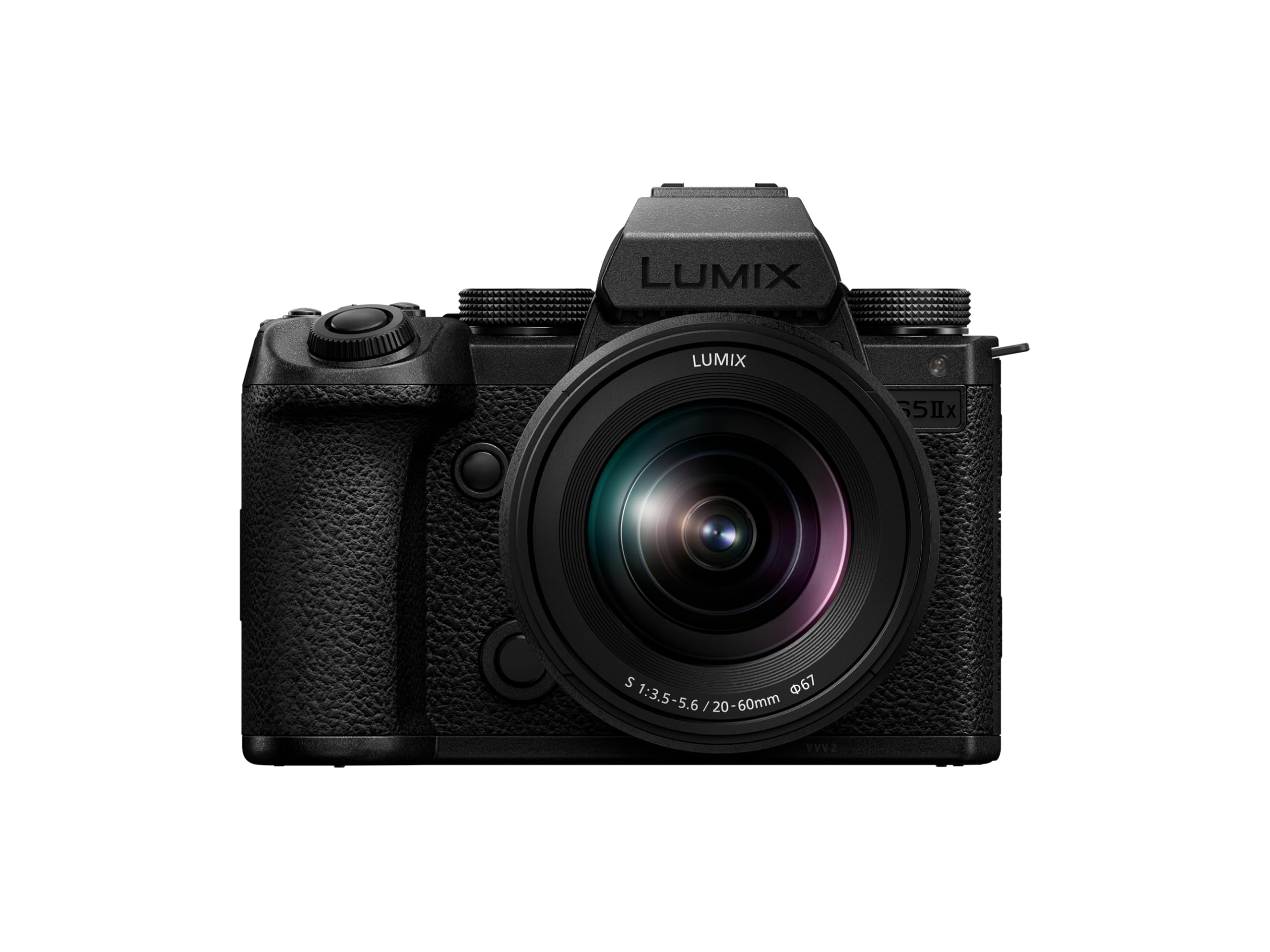
The S5II solves the single biggest pain point of mirrorless video: overheating. A dedicated heat pipe and internal fan allow unlimited 4:2:2 10-bit recording in 4K without a hard stop, making it the only full-frame body under that can run a multicamera interview or livestream indefinitely. The 24.2MP full-frame sensor uses phase hybrid AF for the first time on a Panasonic S-series, with 779 focus points that detect and track human faces even when the subject turns their head.
Active I.S. combines IBIS with electronic stabilization to produce walking shots that stay smooth without a gimbal — not perfectly stable like a mechanical gimbal, but usable for run-and-gun B-roll. The 14+ stop V-Log/V-Gamut capture provides a flat profile with wide dynamic range, and the REAL TIME LUT feature lets you apply a custom LUT in-camera, previewing the final color grade on the LCD while you shoot. The included 20-60mm f/3.5-5.6 kit lens is versatile, covering wide environmental shots to near-macro close-ups.
The body is slightly heavier than a Sony a7 IV due to the thermal hardware, but the deep grip and balanced weight distribution reduce hand fatigue during long handheld sessions. Battery life is the weakest point — the DMW-BLK22 is rated for roughly 370 shots CIPA, and video recording drains a full battery in about 90 minutes. A battery grip or external USB-C power bank is essential for all-day productions. The L-mount ecosystem is growing but still smaller than Sony E or Nikon Z in lens options.
Why it’s great
- Active cooling allows truly unlimited 4K/60p 10-bit recording.
- Active I.S. produces gimbal-like walking footage without extra gear.
- In-camera REAL TIME LUT eliminates need for post-color grading.
Good to know
- Battery life is poor; external power or spare batteries required.
- L-mount lens selection is less extensive than Sony or Nikon.
5. Sony a7 III Full-Frame Mirrorless

The a7 III may be a few years old, but its 24.2MP back-illuminated full-frame sensor with 15-stop dynamic range remains a benchmark for entry-level full-frame video. It records 4K S-Log 3 at 24/25/30p with full pixel readout and no pixel binning, producing footage that holds up well in post-grading despite the 8-bit internal codec. The 693 phase-detection AF points cover 93 percent of the frame and lock onto subjects fast enough for wedding and event work even in moderate low light.
Battery life is legendary for mirrorless — the NP-FZ100 is rated for 710 shots CIPA, and real-world hybrid shooters regularly exceed 1,000 stills or 4 hours of mixed video per charge. The 5-axis IBIS provides 5.0 stops of correction, smoothing out handheld static b-roll without the crop penalty of digital stabilization. The kit 28-70mm f/3.5-5.6 lens is perfectly usable for starting out, giving you a standard zoom range to learn focal length preferences before investing in primes.
The main downsides are the 8-bit 4:2:0 internal codec, which limits color grading flexibility compared to 10-bit alternatives, and the lack of a fully articulating screen — the tilting LCD is blocked by a tripod ball head in portrait orientation. The menu system is also famously deep and confusing for new users; customizing the function menu and My Dial saves significant time during a shoot. Despite these aging quirks, the a7 III still delivers reliable video at a price that leaves room for a quality lens in the budget.
Why it’s great
- Outstanding battery life — longest single-charge endurance in its class.
- Full-frame 4K S-Log with 15 stops dynamic range.
- 693-point AF covers 93% frame for reliable object tracking.
Good to know
- Internal recording is 8-bit 4:2:0, limiting color grading latitude.
- Tilting LCD is blocked by tripod head in vertical orientation.
6. Canon EOS R8 Mirrorless Camera

The EOS R8 is the lightest full-frame RF-mount camera Canon makes, weighing only 461 grams with battery and card — noticeable lighter than the R6 II while sharing the same 24.2MP sensor and DIGIC X processor. It records uncropped 4K 60p oversampled from 6K, producing video sharp enough to crop into for reframing without visible loss of detail. Dual Pixel CMOS AF II covers 100 percent of the frame with 1,053 zones and detects people, animals, vehicles, aircraft, trains, and horses.
Video features include Canon Log 3 and HDR PQ for color grading, 10-bit 4:2:2 internal recording, and Full HD high-frame rate recording at up to 180 fps for slow-motion playback. The vari-angle touchscreen flips forward for self-recording, and UVC/UAC support means you can plug it directly into a computer for plug-and-play webcam use without capture cards. The electronic shutter reaches 40 fps with full AF tracking, matching the R6 II for still photography speed.
The trade-offs are significant for the weight savings: there is no in-body stabilization, so you must rely on lens IS or a gimbal for smooth video. The battery is the same LP-E17 used in the RP, rated for less than 400 shots CIPA, and 4K 60p can trigger overheating after 30 minutes in warm environments. The single UHS-II SD card slot offers no redundancy for paid work. The R8 is an exceptional value for shooters who already own RF lenses and are willing to add external stabilization.
Why it’s great
- Lightest full-frame RF body at 461g — ideal for travel and hiking.
- Uncropped 4K 60p from 6K oversample delivers excellent detail.
- Canon Log 3 and 10-bit color for professional-grade grading.
Good to know
- No in-body stabilization; lens IS or gimbal required for video.
- Small battery and single card slot limit professional use.
7. Nikon Z 6II Mirrorless Camera

The Z 6II is Nikon’s answer to the wedding and event photographer who shoots video as a second deliverable. It combines a 24.5MP BSI full-frame sensor with dual card slots — one CFexpress/XQD and one UHS-II SD — giving redundancy that mirrorless bodies at this price point often skip. The 4K UHD 60p recording uses full pixel readout without cropping, producing detailed footage that matches what the Z6 III delivers at half the price.
Autofocus uses 273 phase-detection points with improved low-light acquisition over the original Z6, and subject tracking works for human faces and eyes in video mode. The 5-axis IBIS provides 5.0 stops of stabilization, sufficient for static handheld shots but not walkable footage. The body accepts the new vertical battery grip, and USB-C constant power allows indefinite livestreaming or time-lapse shooting without worrying about battery swaps.
The most common complaint from users is that the screen does not flip forward for self-filming, making it difficult for solo vloggers to frame themselves. The autofocus tracking also occasionally loses subjects when they cross in front of busy backgrounds. Despite these limitations, the Z6 II produces consistently excellent out-of-camera JPEGs with pleasing color science, and the 14-bit raw files offer significant latitude for still photography. It remains a strong hybrid option for Nikon shooters who want a dual-slot backup body.
Why it’s great
- Dual card slots (CFexpress + SD) provide backup for paid work.
- 4K 60p full pixel readout delivers clean oversampled video.
- USB-C constant power for unlimited livestreaming and time-lapse.
Good to know
- Screen does not flip forward for vlogging or self-recording.
- AF tracking can lose subjects against complex backgrounds.
8. FUJIFILM X-T30 III Mirrorless Camera
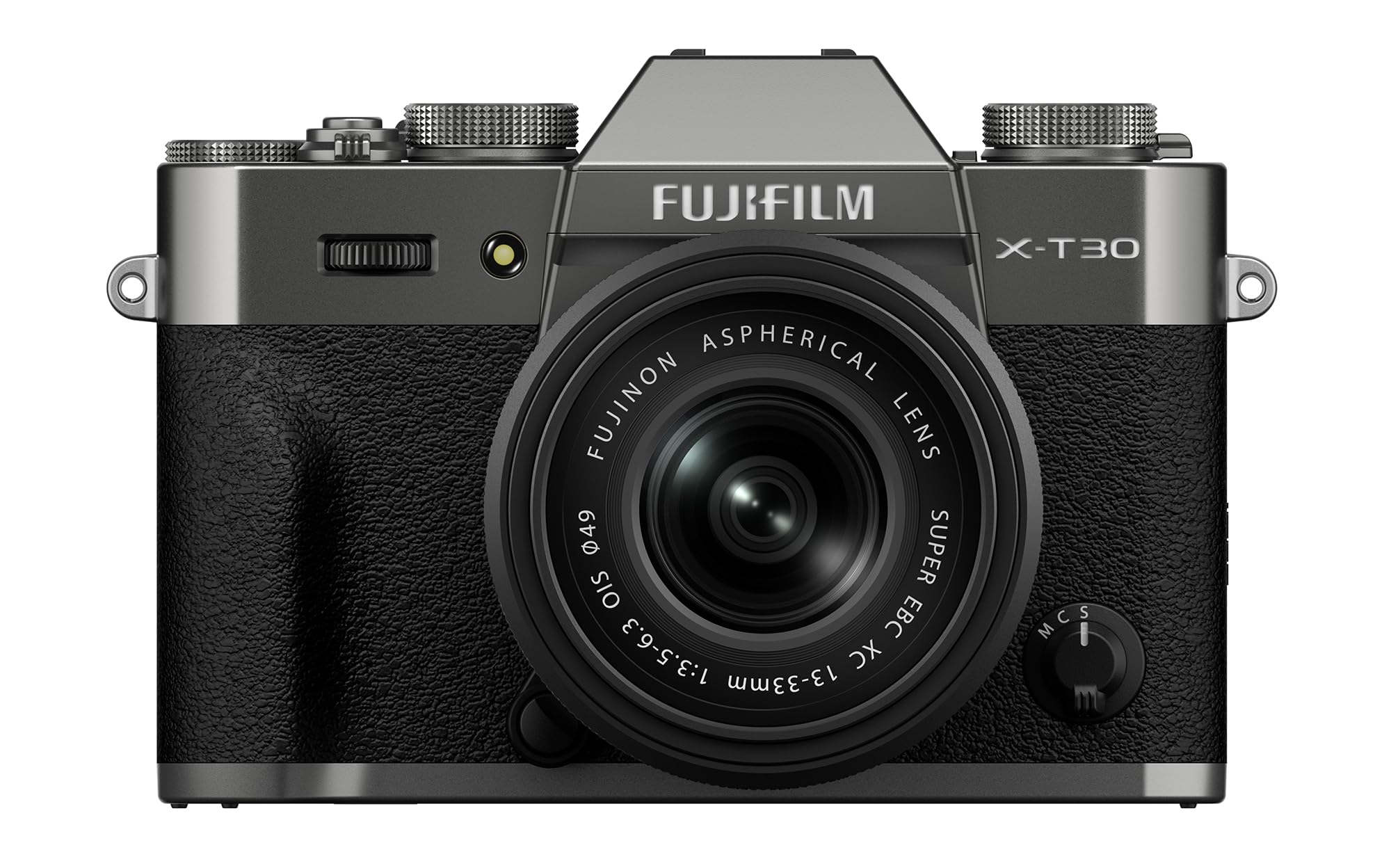
Fujifilm’s X-T30 III packs the same 26.1MP X-Trans CMOS sensor and X-Processor 5 as the higher-end X-T5 into a smaller, lighter body that weighs just 378 grams with the included XC 13-33mm OIS kit lens. The 20 Film Simulation modes — including Astia, Velvia, and the beloved Classic Chrome — produce finished-looking footage straight out of camera, which dramatically reduces time in post for social media creators who want an immediate visual signature.
Video recording reaches 4K 30p DCI at 10-bit 4:2:2 over the full sensor width, with support for F-Log and F-Log2 flat profiles for those who prefer to grade. The AI-powered subject detection autofocus uses 425 phase-detection points and recognizes human faces, eyes, animals, birds, cars, motorcycles, airplanes, and trains — holding focus well in continuous AF during video. The retro dial-based exposure control appeals to photographers who prefer physical feedback over menu diving.
The biggest compromises for video shooters are the absence of in-body image stabilization and the slow maximum aperture of the kit lens (f/3.5-6.3), which forces higher ISOs in dim environments. The NP-W126S battery is small, rated for roughly 390 shots CIPA, and no charger is included in the box. The X-T30 III is a stylish, portable entry into hybrid shooting that prioritizes aesthetic out-of-camera results over raw video headroom or stabilization.
Why it’s great
- 20 Film Simulations produce distinctive, finished-looking video without grading.
- AI subject detection tracks animals, birds, and vehicles in video mode.
- Compact and lightweight design is ideal for everyday carry.
Good to know
- No in-body stabilization; relies on lens OIS or external support.
- Kit lens is slow (f/3.5-6.3), limiting low-light video capability.
9. Blackmagic Pocket Cinema Camera 4K

The Blackmagic Pocket Cinema Camera 4K is a genuine cinema tool, not a modified stills camera. It records 4K DCI at up to 60 fps in 12-bit Blackmagic RAW or 10-bit ProRes to SSD via USB-C, CFAST 2.0, or SD UHS-II cards. The 4/3-inch image sensor with 13 stops of dynamic range and dual native ISO (400 and 3200) captures shadow detail and highlight roll-off that rivals cameras costing three times as much, and the included DaVinci Resolve Studio license provides a complete color grading suite out of the box.
The 5-inch touchscreen LCD is bright enough for indoor monitoring and replaces an external monitor for most run-and-gun setups. The body is carbon-fiber-reinforced polycarbonate, keeping weight manageable at 710 grams, while the multi-function handgrip places start/stop, ISO, and white balance controls directly under your fingers. The active Micro Four Thirds mount means you can adapt almost any vintage lens — Canon FD, Leica R, Nikon F — with a simple mechanical adapter.
This camera is not for everyone. There is no in-body stabilization, no continuous autofocus, no tilting or articulating screen, and the LP-E6 battery lasts roughly 30 minutes of recording. You need a tripod, gimbal, or shoulder rig for every shot. The native 1080p is also heavily cropped. For filmmakers who already control focus manually and want maximum color depth in post, however, the Pocket 4K delivers genuine cinema image quality at the lowest entry price available.
Why it’s great
- 12-bit Blackmagic RAW and 13 stops of dynamic range at this price is unmatched.
- Active MFT mount adapts virtually any manual lens for vintage look.
- USB-C SSD recording removes card swap anxiety during long takes.
Good to know
- No autofocus or stabilization — requires manual operation and rigging.
- LP-E6 battery lasts ~30 minutes; external power or battery grip essential.
10. DJI Osmo Pocket 3 Creator Combo
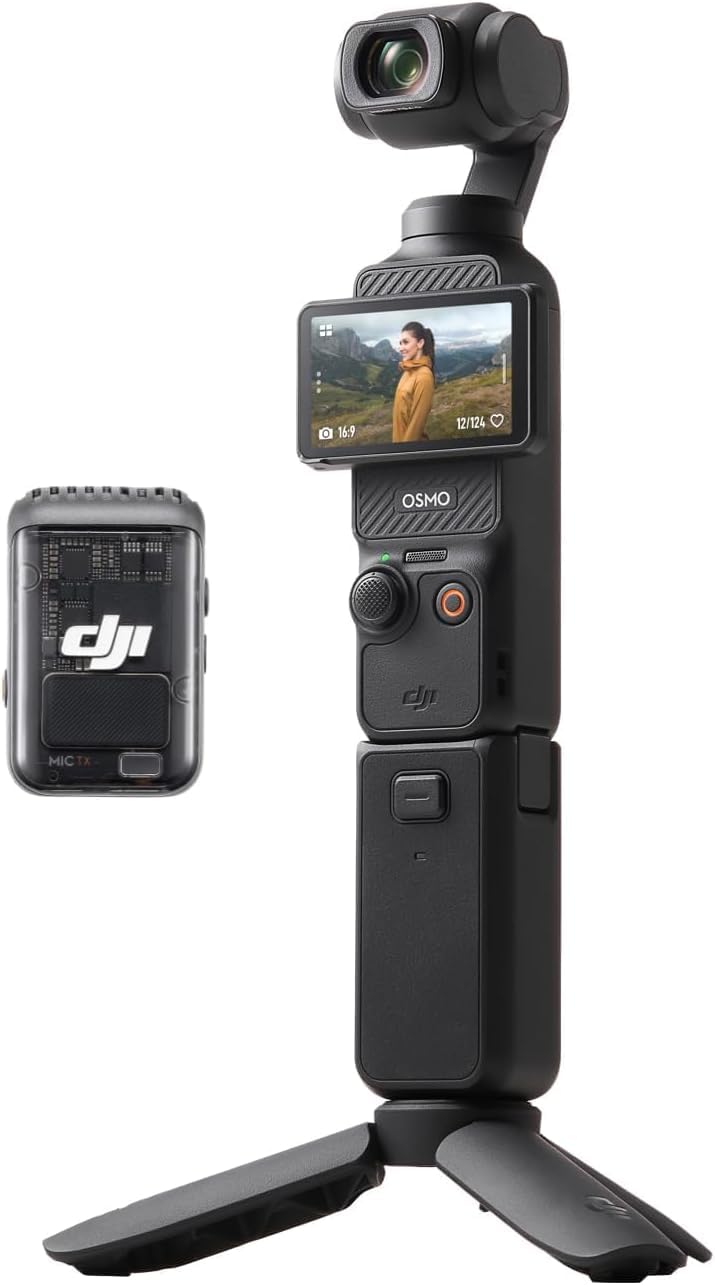
If you have ever wanted a camera that slides into a jeans pocket and stabilizes like a full gimbal rig, the Osmo Pocket 3 is that device. Its 1-inch CMOS sensor records 4K at 120 fps with no crop and negligible rolling shutter, while the 3-axis mechanical gimbal produces walking and running shots indistinguishable from a gimbal-balanced mirrorless body. The 2-inch rotatable touchscreen automatically switches between horizontal and vertical shooting, making it the only camera on this list that handles both orientations natively.
ActiveTrack 6.0 keeps you centered in the frame while moving, and the included DJI Mic 2 transmitter captures broadcast-quality audio within a 250-meter range — solving the two hardest vlogging problems (framing and sound) in a single package. The D-Log M 10-bit color profile records up to one billion colors for grading, and the Creator Combo bundles a wide-angle lens, battery handle, mini tripod, and carrying bag that together handle nearly every shooting scenario without additional gear.
The 166-minute internal battery is generous for a pocket device, and USB-C charging tops it to 80 percent in 35 minutes. The main trade-off is the fixed lens — no optical zoom, so you must physically move to change composition. The gimbal mechanism also requires careful handling; dropping the camera can damage the stabilization axis permanently. For vloggers, travel documentarians, and social media creators who prioritize portability and gimbal stability above all else, the Pocket 3 delivers near-professional results in a cigarette-pack footprint.
Why it’s great
- 3-axis mechanical gimbal provides stabilization equal to a separate gimbal rig.
- 4K 120fps from a 1-inch sensor with no crop and minimal rolling shutter.
- DJI Mic 2 wireless system included in Creator Combo for studio-quality audio.
Good to know
- Fixed lens means no optical zoom; framing changes require physical movement.
- Gimbal mechanism is fragile; impacts can permanently damage stabilization.
11. Panasonic LUMIX G100 4K Mirrorless Camera

The G100 is Panasonic’s answer to the vlogger who wants interchangeable-lens capability without the bulk of a full-frame rig. The Micro Four Thirds 20.3MP sensor records 4K 24p video with V-Log L support for color grading, and the built-in 360-degree OZO audio microphone automatically adjusts beamforming between omni-directional and directional modes depending on whether you narrate to camera or capture ambient sound. The camera weighs only 412 grams with the 12-32mm kit lens and fits in a coat pocket.
The 5-axis hybrid stabilization reduces shake enough for static handheld shots, and the frame-marker feature overlays aspect ratio guidelines (1:1, 4:5, 9:16) on the screen without cropping the actual recording, letting you frame for multiple social media platforms from a single clip. The iA mode handles exposure, focus, and stabilization automatically for beginners, while manual controls remain accessible as skills develop. The camera can also function as a UVC webcam by connecting via USB, covering livestream and video call duties.
The G100 has clear limitations: recording stops after 20 minutes (no continuous mode), the body feels plasticky compared to higher-end Panasonic models, and the 12-32mm kit lens has a slow f/3.5-5.6 maximum aperture that struggles in dim interiors. The micro-HDMI port is fragile for external monitor use. For a budget-friendly introduction to interchangeable-lens video on the Micro Four Thirds system — especially if you pair it with a faster prime like the 25mm f/1.7 — the G100 delivers solid 4K quality with built-in audio that beats any built-in smartphone mic.
Why it’s great
- Built-in 360-degree acoustic mic with tracking audio outperforms phone mics.
- Frame-marker feature lets you shoot for multiple social aspect ratios simultaneously.
- Ultra-light body (412g) and kit lens pack small for daily carry.
Good to know
- Recording stops at 20 minutes — no continuous video mode.
- Kit lens aperture is slow; a bright prime lens vastly improves low-light quality.
FAQ
How long can the Nikon Z6 III record 4K video in one take?
Do I need a gimbal for the Canon R8 if it has no IBIS?
Can the Blackmagic Pocket 4K use standard SD cards for recording?
What is the real-world battery life of the Panasonic S5II in video mode?
Final Thoughts: The Verdict
For most users, the best camera with video recording winner is the Canon EOS R6 Mark II because it combines uncropped 4K 60p, 8-stop IBIS, professional dual card slots, and reliable AF tracking in a weather-sealed body that handles both stills and video without compromise. If you want internal 6K RAW recording and the brightest EVF on the market, grab the Nikon Z6 III. And for a pocket-sized gimbal rig that produces smooth walking footage with zero rigging, nothing beats the DJI Osmo Pocket 3.

Mo Maruf
I created WellFizz to bridge the gap between vague wellness advice and actionable solutions. My mission is simple: to decode the research and give you practical tools you can actually use.
Beyond the data, I am a passionate traveler. I believe that stepping away from the screen to explore new environments is essential for mental clarity and physical vitality.