Our readers keep the lights on and my smoothie glass nicely filled. As an Amazon Associate, I earn from qualifying purchases.
The market is flooded with instant cameras that promise a tangible memory, but deliver washed-out, tiny prints and a frustrating reliance on expensive, proprietary film that turns every snapshot into a costly gamble. Choosing the wrong hybrid or instant camera means accepting blurry photos, slow development, and a device that collects dust after the first party.
I’m Mohammad Maruf — the founder and writer behind WellFizz. I’ve spent years analyzing the print resolution, film cost-per-shot, battery cycle life, and Bluetooth latency of every major hybrid and instant camera system on the market to separate the genuinely delightful from the merely trendy.
After comparing over a dozen models across ink-free thermal, ZINK, dye-sublimation, and traditional film systems, the camera that prints ultimately comes down to balance between tangible print quality, recurring film cost, and creative control in the field.
How To Choose The Best Camera That Prints
Choosing the right camera that prints is about understanding the trade-offs between print size, image quality, film availability, and the cost of each shot. The three main print technologies — ZINK (zero-ink), dye-sublimation, and traditional film — each have distinct strengths in durability, color vibrancy, and price per print.
Print Technology & Recurring Cost
ZINK prints are smudge-proof and water-resistant, but can look slightly cooler in color temperature. Dye-sublimation (4PASS) adds a protective overcoat for superior durability and vibrancy, but at a higher per-sheet cost. Traditional film (Instax Mini or Polaroid) produces the classic soft, nostalgic aesthetic but requires buying proprietary film packs that are typically more expensive per shot than digital printing methods.
Hybrid vs. Pure Instant
Hybrid cameras (like the Leica Sofort 2 and KODAK Mini Shot 2 Retro) capture a digital file before printing, allowing you to edit, apply filters, and decide which shots to print from a digital gallery. Pure instant cameras (like the Fujifilm Instax Mini 12 and Polaroid Go Gen 2) print every shot you take, which teaches composition discipline but wastes film on failed exposures. For beginners or those who want to save money on film, a hybrid design is much more forgiving.
Image Resolution & Film Format
A camera’s digital sensor resolution matters most for the digital file you keep, not the tiny print. Most instant prints are 2×3 inches or 3×4 inches, so a 10MP sensor is more than adequate for that size. If you plan to also view images on a phone or tablet, look for cameras that store higher-resolution JPEGs (48MP-like interpolation, or 20MP native) alongside the physical print.
Battery Life & Connectivity
Lithium-ion rechargeable batteries are standard in premium models and provide dozens of prints per charge. Lower-cost models may use disposable AA or CR2 batteries, which can be a hidden expense. Bluetooth or app connectivity allows remote shutter control, manual settings, and printing photos from your phone library — a feature worth prioritizing if you want a camera that doubles as a pocket photo printer.
Quick Comparison
On smaller screens, swipe sideways to see the full table.
| Model | Category | Best For | Key Spec | Amazon |
|---|---|---|---|---|
| Fujifilm Instax Mini 12 Holiday Bundle | Instax Film | Family gatherings & gifts | 2×3″ prints in ~5 seconds | Amazon |
| Kodak Printomatic+ Bundle | ZINK | Photo guest books & scrapbooking | 10MP, ZINK sticky-back prints | Amazon |
| kiimento P2 (Kidamento) | Thermal | Kids creative play (ages 6+) | 48MP interpolation, 2.4″ screen | Amazon |
| Polaroid Go Gen 2 Bundle | Polaroid Film | Compact carry & spontaneous shots | 20MP, built-in selfie mirror | Amazon |
| Fujifilm Instax Mini 12 Bundle (Shutter) | Instax Film | Complete starter kit with accessories | 60mm f/12.7 lens, auto exposure | Amazon |
| Polaroid Now+ Gen 3 Bundle | Polaroid Film | Enthusiasts who want manual & app control | Bluetooth app, manual mode | Amazon |
| KODAK Mini Shot 2 Retro Bundle | Dye-Sublimation | Smartphone printing + camera in one | 4PASS, Bluetooth, 10MP | Amazon |
| Fujifilm Instax Square SQ1 | Instax Square Film | Larger square prints with retro feel | 1.5x larger than mini, ISO 800 | Amazon |
| Leica Sofort 2 | Hybrid Digital/Instant | Selective printing & Leica glass quality | LCD display, 10 lens effects | Amazon |
In‑Depth Reviews
1. Fujifilm Instax Mini 12 Holiday Bundle 2025 – Lilac Purple
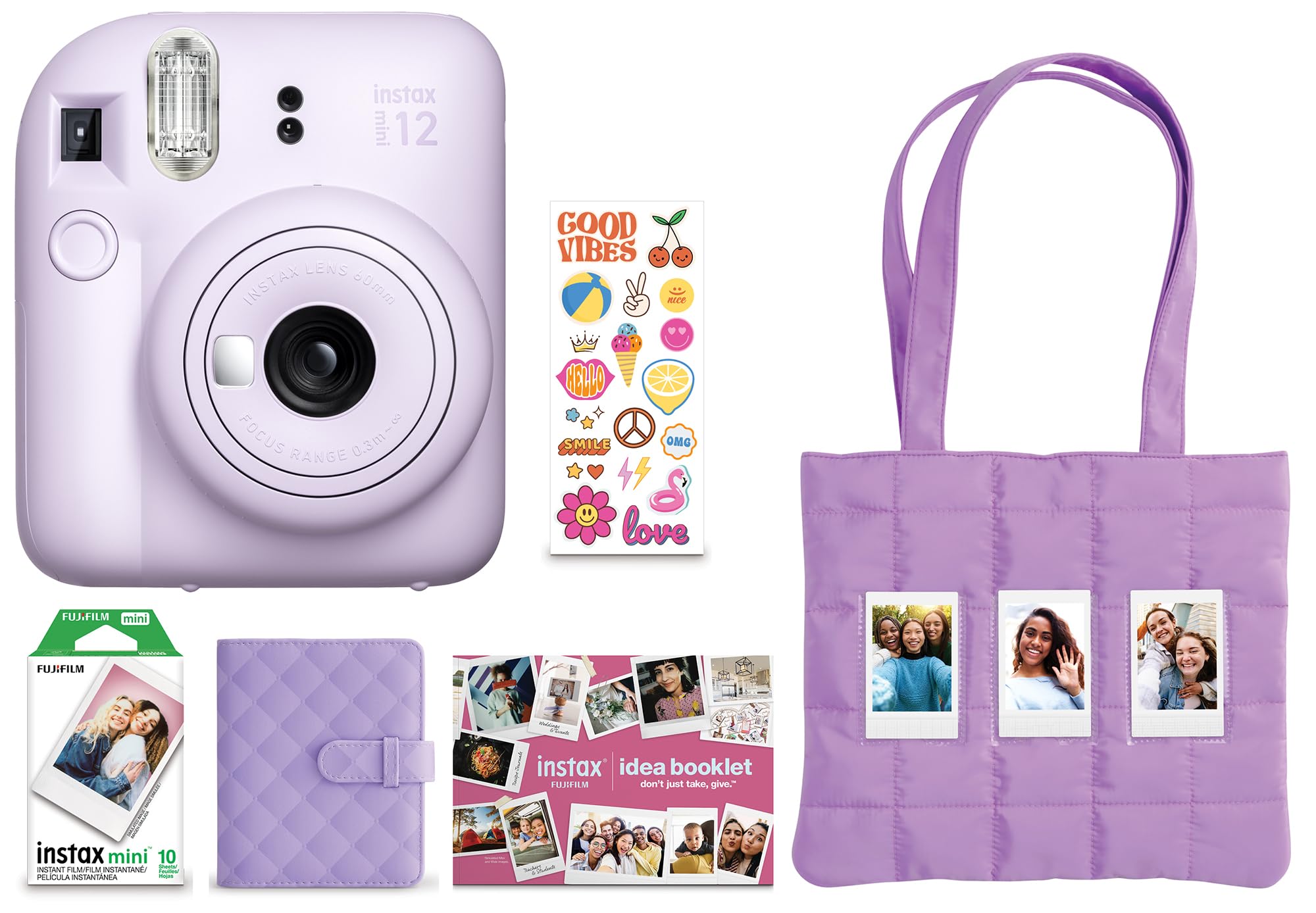
The Instax Mini 12 remains the benchmark for mainstream instant photography, and this holiday bundle makes it a complete turnkey experience. The twist-to-turn-on lens mechanism is intuitive, and the built-in selfie mirror with parallax correction and close-up mode ensures selfies are properly framed — a feature most budget models omit entirely.
Image quality is reliably bright thanks to automatic exposure and flash control, producing 2×3-inch prints that develop in about 90 seconds. The bundle includes a 10-pack of film, a sticker sheet, a quilted tote bag with three film pockets, and a photo album holding up to 64 prints, making it an excellent gift that requires no additional purchases.
Battery life from two AA alkaline cells is good for about 10 film packs, and the camera is lightweight enough for children as young as seven to handle. The only trade-off is the lack of a digital preview — every shot is a physical commitment, which teaches composition but wastes film on bad exposures.
Why it’s great
- Simple twist-lens on/off with automatic flash and exposure for consistently bright prints
- Holiday bundle includes film, album, tote bag, and stickers — ready out of the box
- Close-up mode with parallax correction reduces off-center selfies
Good to know
- No digital preview or editing — every shot is printed immediately
- Film packs add recurring cost; 10 prints per pack goes fast with kids
- Requires good lighting for optimal development; indoor flash is fine but not adjustable
2. Kodak Printomatic+ Instant Print Digital Camera Starter Bundle – Pink
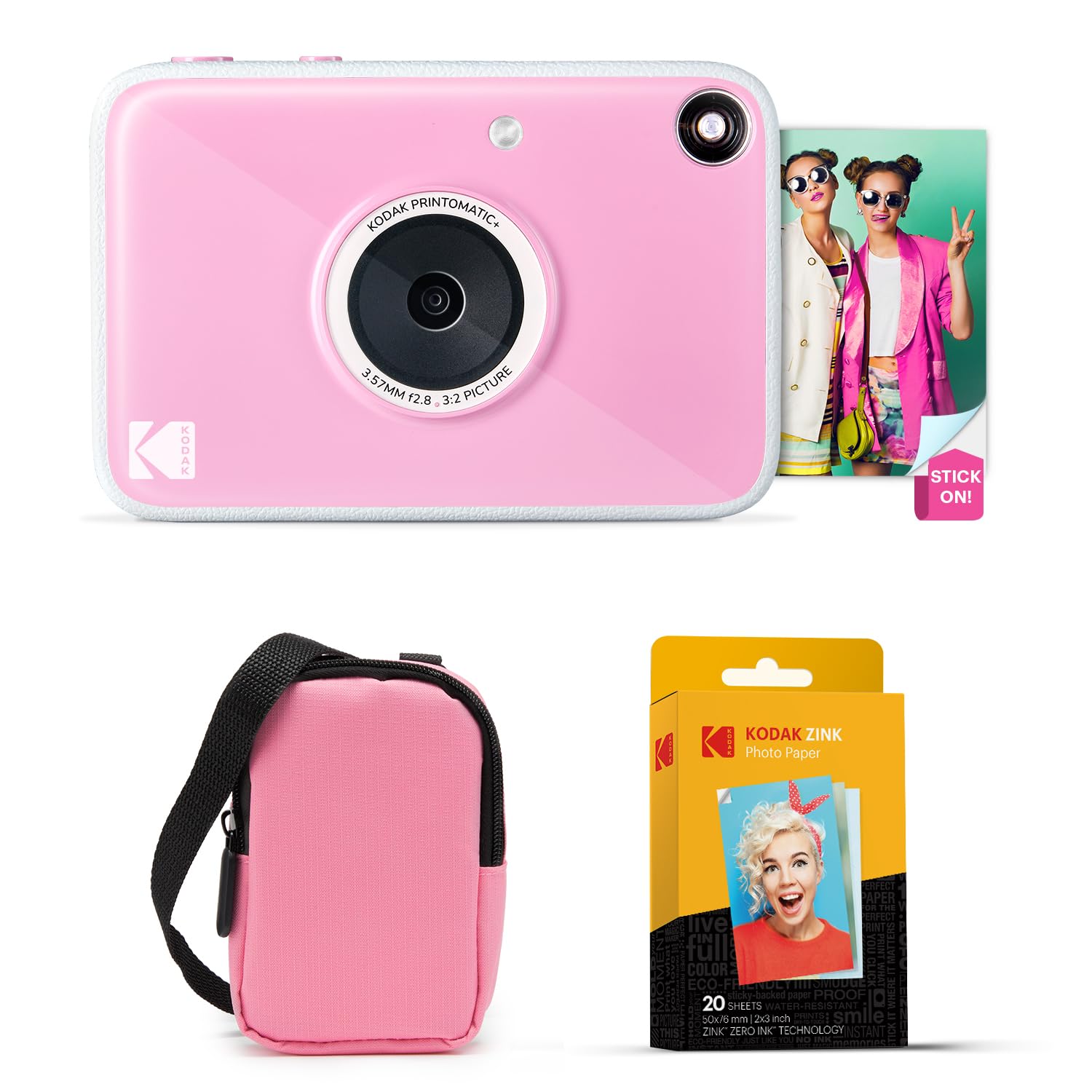
The Printomatic+ uses ZINK (zero-ink) technology to produce sticky-backed 2×3-inch prints that are water-resistant, tear-resistant, and smudge-proof — making them ideal for scrapbooks, photo guest books, and refrigerator displays. The 10MP sensor and f/2.8 aperture produce decent detail for the print size, though colors can lean slightly cool compared to dye-sublimation options.
A built-in RGB LED status indicator communicates whether the camera is processing, printing, or cooling down, which is helpful since the cooldown period between shots is longer than film-based rivals. The included carrying case and 20-sheet ZINK paper pack add value, and the macro lens capability allows for close-up shots that are surprisingly detailed.
Battery life from the 9V lithium-ion cell is the main limitation — several reviewers noted it drains faster than expected with continuous use. The fixed-focus lens also means no autofocus, so subjects closer than about two feet can appear soft. For the price, however, it remains a strong entry-level choice for kids and casual users who want instant prints without film pack hassles.
Why it’s great
- ZINK sticky-back prints are durable, water-resistant, and perfect for albums or scrapbooks
- Includes carrying case and 20-sheet paper bundle for immediate use
- Auto-flash and f/2.8 aperture deliver decent exposure in mixed lighting
Good to know
- Long cooldown between shots slows down event photography
- Battery life is shorter than film-based competitors
- Colors can appear slightly cool or washed out compared to dye-sublimation prints
3. kiimento Instant Print Digital Camera P2 – Sky Blue
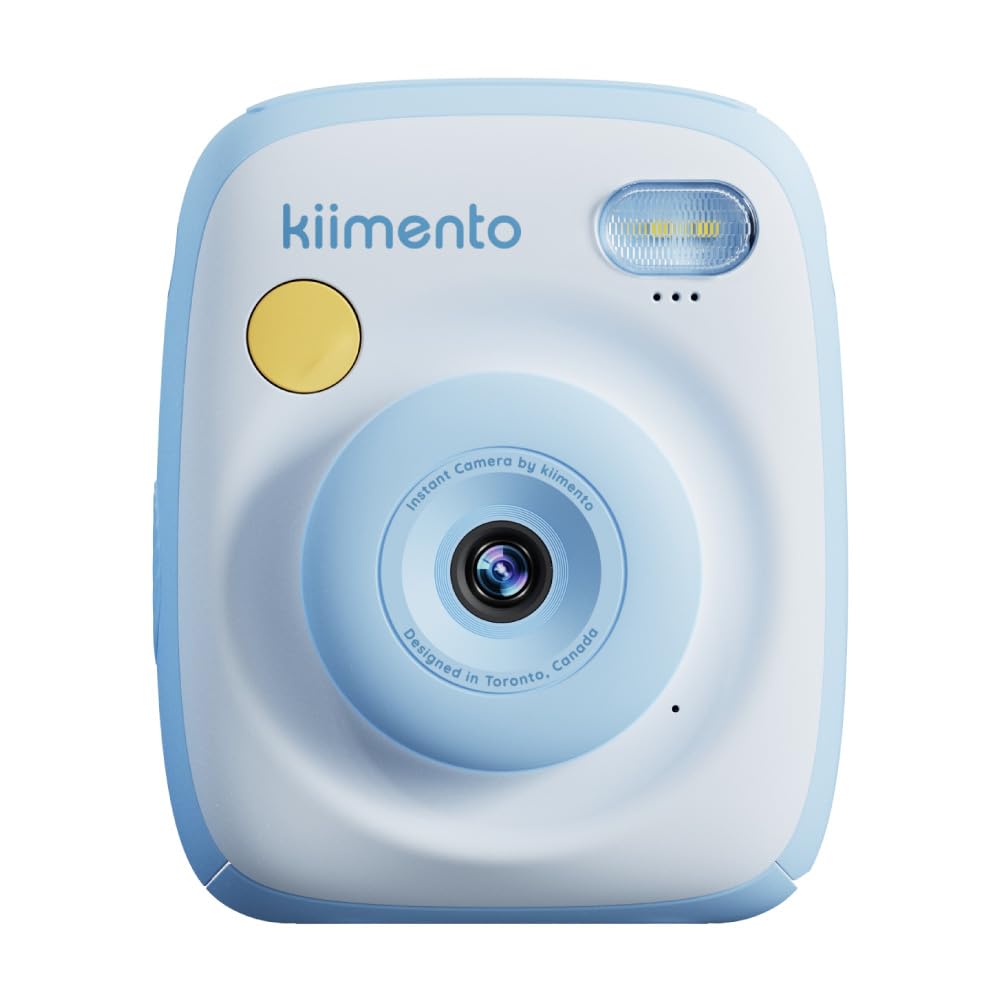
The kiimento P2 differentiates itself with a hybrid approach: a 48MP interpolation sensor captures high-resolution digital files and 1080p video, while ink-free thermal printing delivers monochrome prints on colored paper (Black, Blue, Pink, or Orange) without requiring any cartridges or film packs. This means zero recurring consumable cost beyond the included paper rolls.
Children aged six and up benefit from the dual-mode interface — Normal mode for straightforward point-and-shoot, and Creator mode with three density levels and over 25 filters. The 2.4-inch HD screen lets them review shots before printing, saving paper on failed frames. A pre-installed 32GB microSD card stores thousands of images and videos, making it the most storage-forward model in this comparison.
The build quality feels robust with rounded edges and a heavy-duty strap, though the camera is not drop-proof. Thermal prints come out crisp in black-and-white with faint grid lines, which some users find charmingly nostalgic and others less sharp than color film. The 6-hour battery life from USB-C rechargeable battery is excellent for a kids’ camera, lasting multiple days of regular use.
Why it’s great
- Zero recurring cost — ink-free thermal printing with four colored paper options
- Creator mode with 25+ filters and three density levels encourages artistic control
- USB-C rechargeable with 6-hour battery life; includes 32GB microSD card
Good to know
- Prints are monochrome (black-on-colored-paper) rather than full color
- Thermal paper can feel slightly fragile compared to ZINK or dye-sublimation
- Physical design is kid-friendly but not ruggedized against drops
4. Polaroid Go Generation 2 Mini Instant Camera + Film Bundle – White

The Polaroid Go Generation 2 is the smallest camera in Polaroid’s lineup, measuring just over four inches wide and weighing light enough to slip into a jacket pocket or small bag. This compactness makes it the most portable option for spontaneous outings, park visits, or concert souvenirs where a bulkier camera would be left behind.
Image quality benefits from a wide aperture range and a precise light sensor that adjusts exposure automatically, producing clearer and brighter Polaroid prints than earlier Go models. Double-exposure and self-timer modes add creative flexibility, and the built-in selfie mirror in the reflective viewfinder makes framing yourself straightforward.
The USB-C rechargeable battery lasts for over 15 film packs, which is impressive for a camera this small. However, the Polaroid Go film is a proprietary format that costs more per shot than Instax Mini film, and the print quality can be inconsistent in low-contrast or dimly lit scenes — a Polaroid trait that some users adore and others find frustrating. Fresh film is essential; expired stock often fails to develop properly.
Why it’s great
- Ultra-compact size fits in a pocket or small bag for true portability
- USB-C rechargeable battery lasts over 15 film packs, eliminating disposable cells
- Double-exposure and self-timer modes add creative range beyond basic point-and-shoot
Good to know
- Proprietary Polaroid Go film is more expensive per shot than Instax Mini
- Print quality can be blurry or low contrast in poor lighting conditions
- Expired or old film stock often fails to develop, requiring fresh purchases
5. Fujifilm Instax Mini 12 Instant Camera + Shutter Accessories Bundle – Lilac Purple

This bundle elevates the standard Instax Mini 12 experience by including a Shutter-branded carrying case, a 20-sheet film value pack, color filters, a 64-page photo album, and five colored plastic frames — everything a family needs to start shooting and displaying immediately. The camera itself retains the same reliable 60mm f/12.7 lens and auto-exposure flash system that makes the Mini 12 a consistent performer.
The film development time of roughly 90 seconds produces the classic soft, nostalgic look that Fujifilm is known for, and the prints are remarkably consistent in terms of exposure and color balance when used in well-lit environments. The close-up mode with parallax correction is a genuine improvement over earlier Mini models, delivering properly framed selfies without guesswork.
One limitation is the lack of exposure compensation or lighting adjustments — the Mini SE model offers this, while the Mini 12 keeps things fully automatic. The AA battery setup is convenient for replacement but runs through cells faster than the rechargeable lithium packs found in premium models. For family parties and kid-friendly use, this bundle remains an outstanding value proposition.
Why it’s great
- Complete bundle includes case, 20 film sheets, album, color filters, and frames
- Parallax-corrected close-up mode delivers properly framed selfies every time
- Consistent automatic exposure produces reliable prints in good lighting conditions
Good to know
- No manual exposure settings or adjustable flash intensity
- AA alkaline batteries need replacement more often than rechargeable lithium cells
- Image quality degrades noticeably in low-light or fast-moving scenes
6. Polaroid Now+ 3rd Generation I-Type Instant Camera + Film Bundle – White
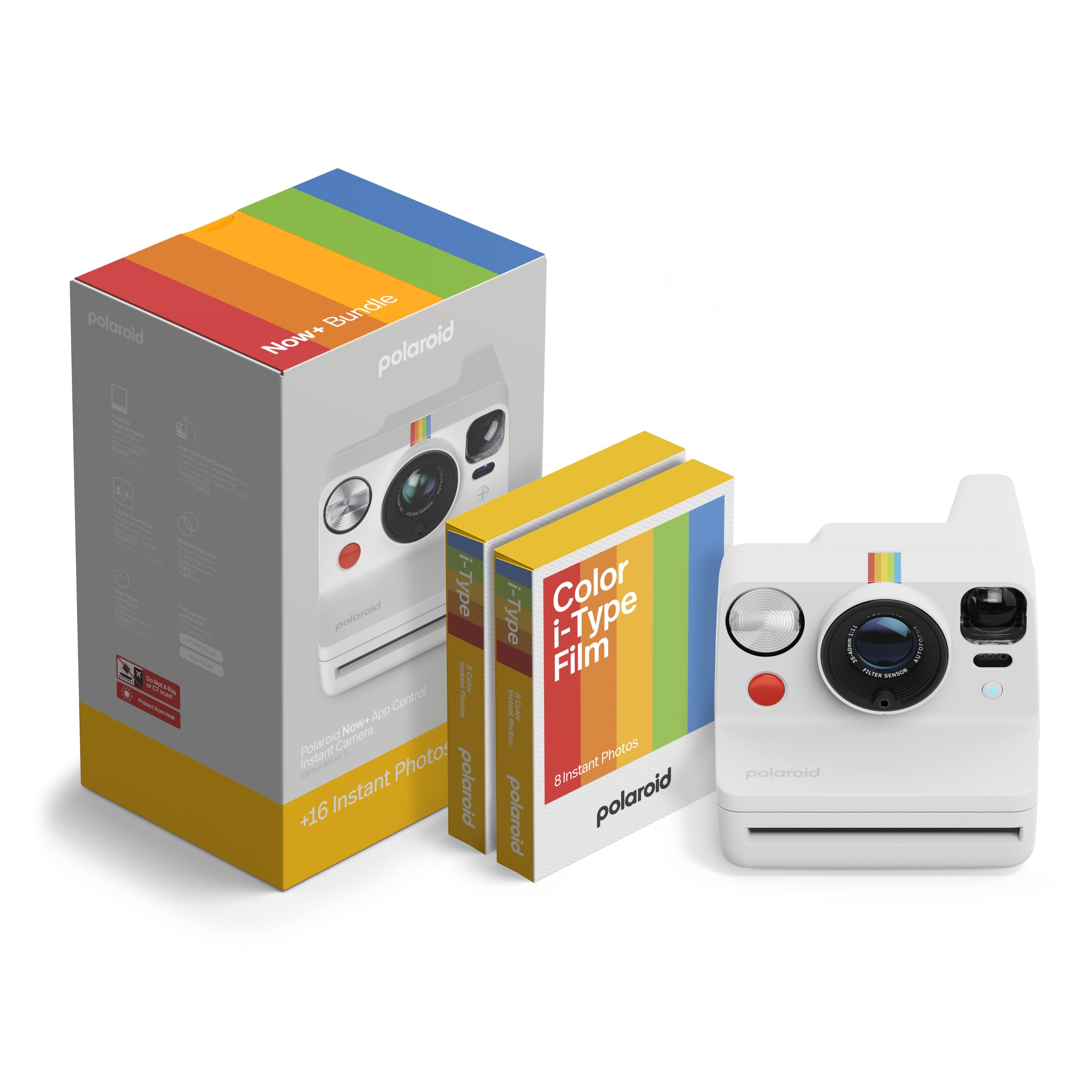
The Polaroid Now+ Gen 3 is the only model in this lineup that offers full manual exposure control, aperture priority, and Bluetooth app connectivity for remote shutter and advanced settings. This makes it the premier choice for photographers who want the Polaroid aesthetic but demand creative control over their exposures — something pure point-and-shoot models cannot provide.
The camera shoots both Polaroid i-Type and 600 film, giving you flexibility in film availability and aesthetic. The app integration extends to double-exposure mode, self-timer, and the ability to trigger the camera from a phone, making tripod-based group shots and long exposures possible. USB-C rechargeable battery lasts over 15 film packs, and the build quality reflects the premium pricing with a classic Polaroid silhouette made from more sustainable materials.
The overriding consideration is the cost of Polaroid film, which is among the most expensive per shot in this comparison. Additionally, the offset viewfinder requires a mental adjustment when composing shots — the lens and viewfinder are not aligned, so close subjects will appear shifted in the final print. For anyone willing to learn these quirks, the Now+ Gen 3 delivers the most versatile instant photography experience available.
Why it’s great
- Full manual and aperture priority modes via Bluetooth app for creative exposure control
- Compatible with both i-Type and 600 film, expanding your film options
- USB-C rechargeable battery lasts over 15 film packs; sustainable materials in construction
Good to know
- Polaroid film is the most expensive per shot in this comparison
- Offset viewfinder requires practice to frame subjects correctly at close range
- App must be paired for manual controls; no onboard manual dials on the camera body
7. KODAK Mini Shot 2 Retro 2×3” Instant Digital Camera & Photo Printer Bundle – White
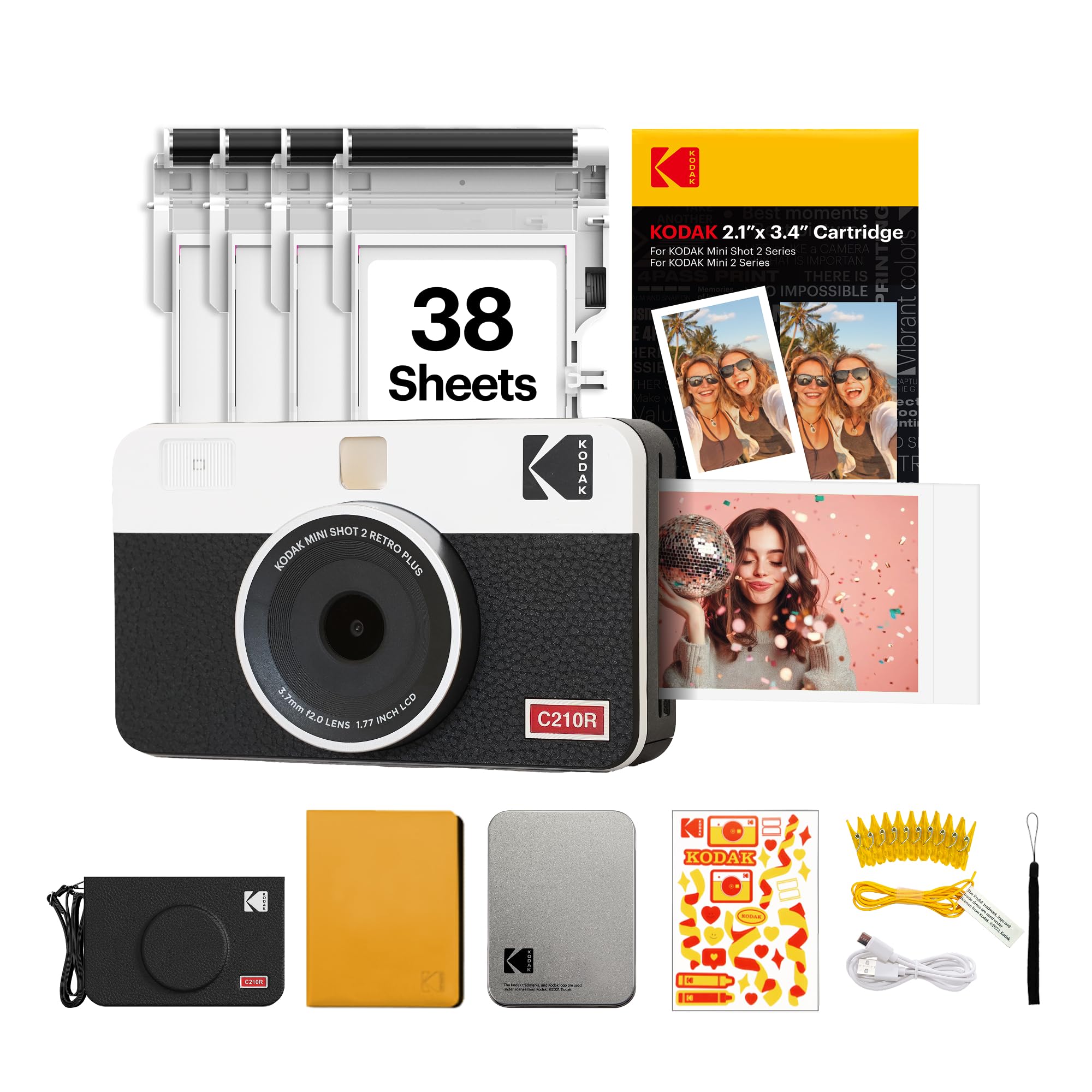
The Mini Shot 2 Retro functions as both a 10MP instant camera and a standalone Bluetooth photo printer for your smartphone — a true 2-in-1 device that reduces the need for separate gadgets. The 4PASS dye-sublimation printing process applies three color layers plus a clear protective laminate coat, resulting in prints that resist fingerprints, water, and fading for significantly longer than ZINK or thermal alternatives.
Print time is approximately 55 seconds per 2×3-inch print, and the bundled gift includes 38 photo sheets plus a leather-style case that adds a retro aesthetic. The KODAK Photo Printer app lets you edit, crop, and apply filters before printing, and Bluetooth pairing is straightforward for both iOS and Android devices.
The camera’s 10MP resolution is adequate for 2×3 prints, but compared to higher-megapixel sensors in other hybrids, the detail is modest. Some users report that colors appear slightly warmer than expected, which can be corrected in the app. The instruction manual is notoriously small and multi-language, making initial setup slightly fiddly for less tech-savvy users. Once configured, however, the combination of camera and phone printing makes this one of the most flexible models in the mid-range tier.
Why it’s great
- 4PASS dye-sublimation prints are smudge-proof, water-resistant, and fade-resistant
- Works as both an instant camera and a Bluetooth smartphone printer
- Bundled with 38 sheets, leather case, and photo book for immediate use
Good to know
- 10MP resolution is adequate for print size but not for large digital enlargements
- Print colors can run warm; app editing recommended for color calibration
- Setup instructions are printed too small to read easily; app required for print control
8. Fujifilm Instax Square SQ1 Instant Camera – Terracotta Orange

The Instax Square SQ1 delivers prints that are roughly 1.5 times larger than the standard Instax Mini format, giving you more canvas for details and a square aspect ratio that suits social media-style compositions without cropping. The terracotta orange finish is distinctive and the rounded textured grip with separate thumb grip attachment makes handling secure and comfortable.
Auto-exposure ensures adequately bright prints in most lighting conditions, and the built-in selfie mirror with one-touch selfie mode makes portrait framing intuitive. The ISO 800 film is consistent and widely available, though the fixed aperture and lack of adjustable flash mean that low-light results can appear darker than expected — a common criticism from users who expect more flexibility at this price tier.
Film cost for the Square format is higher than Instax Mini but lower than Polaroid film, striking a middle ground in per-print expense. The SQ1 lacks self-timer, double-exposure, and any digital connectivity, keeping the experience purely analog. For anyone who values the larger square print size and nostalgic look over digital features, the SQ1 is a focused, well-executed choice.
Why it’s great
- Square prints are 1.5x larger than Instax Mini with a classic social-friendly aspect ratio
- Textured grip and thumb rest provide comfortable one-handed shooting
- One-touch selfie mode with selfie mirror simplifies portrait framing
Good to know
- No self-timer, double-exposure, or digital connectivity of any kind
- Low-light prints can appear darker than expected due to fixed aperture
- Square format film is more expensive per shot than Mini film
9. Leica Sofort 2 Digital and Instant Photo Camera – Black

The Leica Sofort 2 is the only true hybrid in this comparison — it captures full digital files on an internal memory card, displays them on an LCD screen, and lets you select which frames to print using Instax Mini film. This eliminates wasted film entirely: you review, edit with ten lens effects and film-style filters, and only print the shots you love. The two shutter releases (one for standard shooting, one for selfies) are a thoughtful ergonomic touch.
Image quality is driven by Leica’s contrast-detection autofocus system and a 35mm-equivalent lens with aperture ranging from f/2 to f/2.4, producing digitally captured files that are far sharper and more color-accurate than any pure instant camera in this list. The 16:9 aspect ratio and 12-bit color depth allow for more dynamic range in the digital file before it’s printed to 2×3-inch Instax Mini film.
The Leica FOTOS app enables wireless printing of images from your phone’s Leica Gallery, effectively making the Sofort 2 a pocket photo printer for your smartphone as well. The trade-off is the price — this is the most expensive camera in the roundup by a significant margin. The JPEG files are smaller than many dedicated digital cameras, and the battery uses a proprietary lithium-ion cell rather than USB-C. If you want the best combination of digital control and instant output, the Sofort 2 is in a class of its own.
Why it’s great
- True hybrid design — digital LCD preview lets you choose which shots to print, saving film costs
- 10 lens effects and film filters plus Leica contrast-detection autofocus deliver superior image quality
- Leica FOTOS app allows wireless printing from your phone gallery
Good to know
- Highest price point in this comparison; a significant investment for an instant camera
- Proprietary lithium-ion battery instead of USB-C rechargeable
- JPEG file size is relatively small; not a replacement for a dedicated digital camera
FAQ
Which camera that prints has the lowest recurring film cost?
Can I print photos from my phone using any of these cameras?
What’s the difference between Instax Mini and Polaroid film?
Are these cameras suitable for children?
Do any of these cameras have autofocus?
Final Thoughts: The Verdict
For most users, the camera that prints winner is the Fujifilm Instax Mini 12 Holiday Bundle because it combines the most popular film format, a complete accessory kit, and foolproof automatic exposure at a price that makes instant photography accessible — without the recurring cost surprises of premium systems. If you want zero recurring costs and a creative digital-first workflow for kids, grab the kiimento P2. And for enthusiasts who demand manual control, Bluetooth app integration, and the ability to selectively print from a digital gallery, nothing beats the Polaroid Now+ Gen 3 or the Leica Sofort 2.

Mo Maruf
I created WellFizz to bridge the gap between vague wellness advice and actionable solutions. My mission is simple: to decode the research and give you practical tools you can actually use.
Beyond the data, I am a passionate traveler. I believe that stepping away from the screen to explore new environments is essential for mental clarity and physical vitality.