Our readers keep the lights on and my smoothie glass nicely filled. As an Amazon Associate, I earn from qualifying purchases.
A camera lens filter is a piece of optical glass that sits in front of your lens to control light, cut reflections, or protect the front element. The decision between a UV protector, a circular polarizer, or a variable neutral density filter directly affects image sharpness, color accuracy, and creative flexibility — get the coating wrong and you introduce flare or a green tint that ruins your edit.
I’m Mohammad Maruf — the founder and writer behind WellFizz. I’ve spent years cross-referencing specifications and field reports for optical accessories, comparing glass substrates, coating layer counts, and thread tolerances to separate genuine value from marketing claims.
Whether you need a hard-shelled kit for run-and-gun video work or a premium UV filter for permanent lens protection, this guide evaluates five of the top options to help you find the best camera lens filters for your specific setup.
How To Choose The Best Camera Lens Filters
Picking the wrong filter type or glass quality can degrade your images more than the lens itself. Start by understanding the three core filter families — UV, CPL, and ND — and then match the coating level to your lens’s resolving power.
Filter Type: UV vs. CPL vs. ND vs. Variable ND
UV filters block ultraviolet light and serve primarily as a sacrificial lens protector. Circular polarizers (CPL) rotate to eliminate reflections on water and glass and boost color saturation. Neutral density (ND) filters reduce light entry by a fixed number of stops, enabling wider apertures or slower shutter speeds in bright conditions. Variable ND filters combine two polarizing layers, offering a range of stops in one ring — but they risk an X-pattern cross at the highest settings, especially on wider focal lengths.
Coating Layer Count and Glass Quality
Entry-level filters use single-coated or double-coated glass that reflects more light, increasing the chance of ghosting and flare. Mid-range options start at 8 to 10 layers of multi-coating, while premium filters like the Hoya NXT Plus use 18 or more layers plus Schott B270 optical glass for 98 percent light transmission. A higher coating count also makes cleaning easier and reduces color cast.
Thread Size Compatibility
Every lens has a filter thread diameter printed next to the ø symbol on the barrel — common sizes include 58mm, 62mm, 67mm, 72mm, and 77mm. Buying the wrong size means the filter either won’t screw on or will vignette. Step-up rings allow a larger filter to work on a smaller lens, but step-down rings can cause mechanical vignetting.
Quick Comparison
On smaller screens, swipe sideways to see the full table.
| Model | Category | Best For | Key Spec | Amazon |
|---|---|---|---|---|
| Hoya NXT Plus 58mm UV | UV Protector | Permanent lens protection with no image degradation | 10-layer HMC, 98% light transmission | Amazon |
| K&F CONCEPT 62mm Variable ND2-2000 | Variable ND | 11-stop range for daylight long exposures | 18-layer multi-coating, 7.4mm frame | Amazon |
| NEEWER 58mm UV/CPL/ND Kit | 3-Piece Kit | All-round coverage in a hard case | Multi-coated, aluminum alloy frame | Amazon |
| K&F CONCEPT 58mm Variable ND2-ND400 | Variable ND | Budget-friendly video and outdoor work | 1-9 stops, AGC optical glass | Amazon |
| X-SweetDream 58mm Close-Up Kit | Macro Set | Extreme close-ups without a dedicated macro lens | +1, +2, +4, +10 diopters | Amazon |
In‑Depth Reviews
1. Hoya NXT Plus 58mm UV Filter
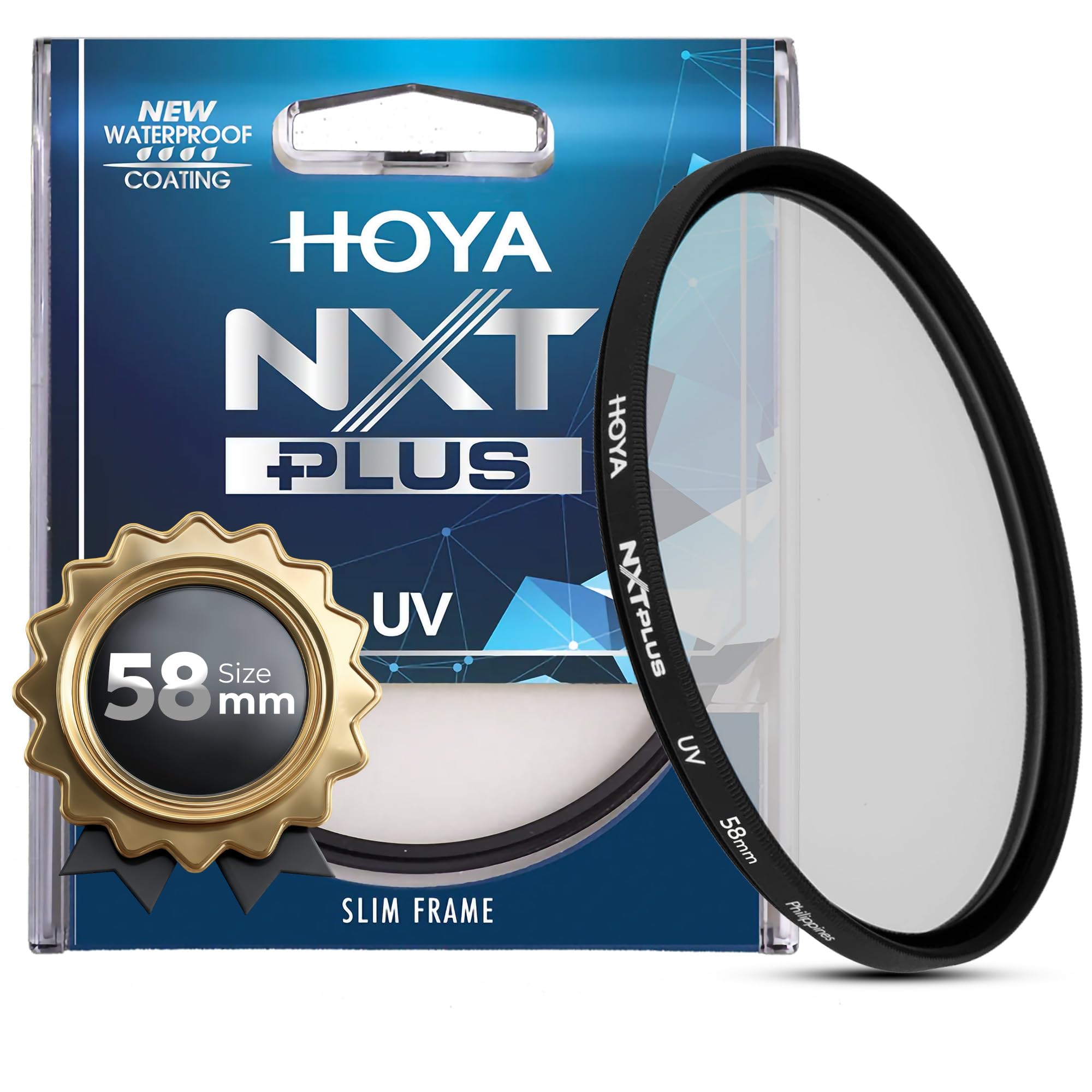
The Hoya NXT Plus uses Schott B270 clear glass — a premium optical substrate that preserves sharpness and color neutrality far better than standard soda-lime glass found on budget UV filters. With ten layers of HMC anti-reflective coating, it achieves 98 percent light transmission, meaning you see essentially zero loss in contrast or brightness when the filter is attached.
The hydrophobic top-coat repels smudges and dust, making cleaning quick without scratching the surface. At 58mm, it fits common kit lenses perfectly and its slim aluminum frame does not cause vignetting even on wide-angle glass. Many users run this filter permanently as a lens protector and report that image quality is indistinguishable from shooting bare glass.
While the price is higher than generic UV filters, the build quality and optical performance match or exceed Japanese and German brands at a comparable level. For photographers who want permanent lens protection without compromising on ultimate sharpness, this is the standard.
Why it’s great
- Schott B270 glass eliminates color cast and preserves sharpness
- Hydrophobic coating makes cleaning smudges effortless
Good to know
- Premium price compared to entry-level UV filters
- Only available as a UV filter — does not offer variable ND or CPL
2. K&F CONCEPT 62mm Variable ND2-2000 (1-11 Stops)
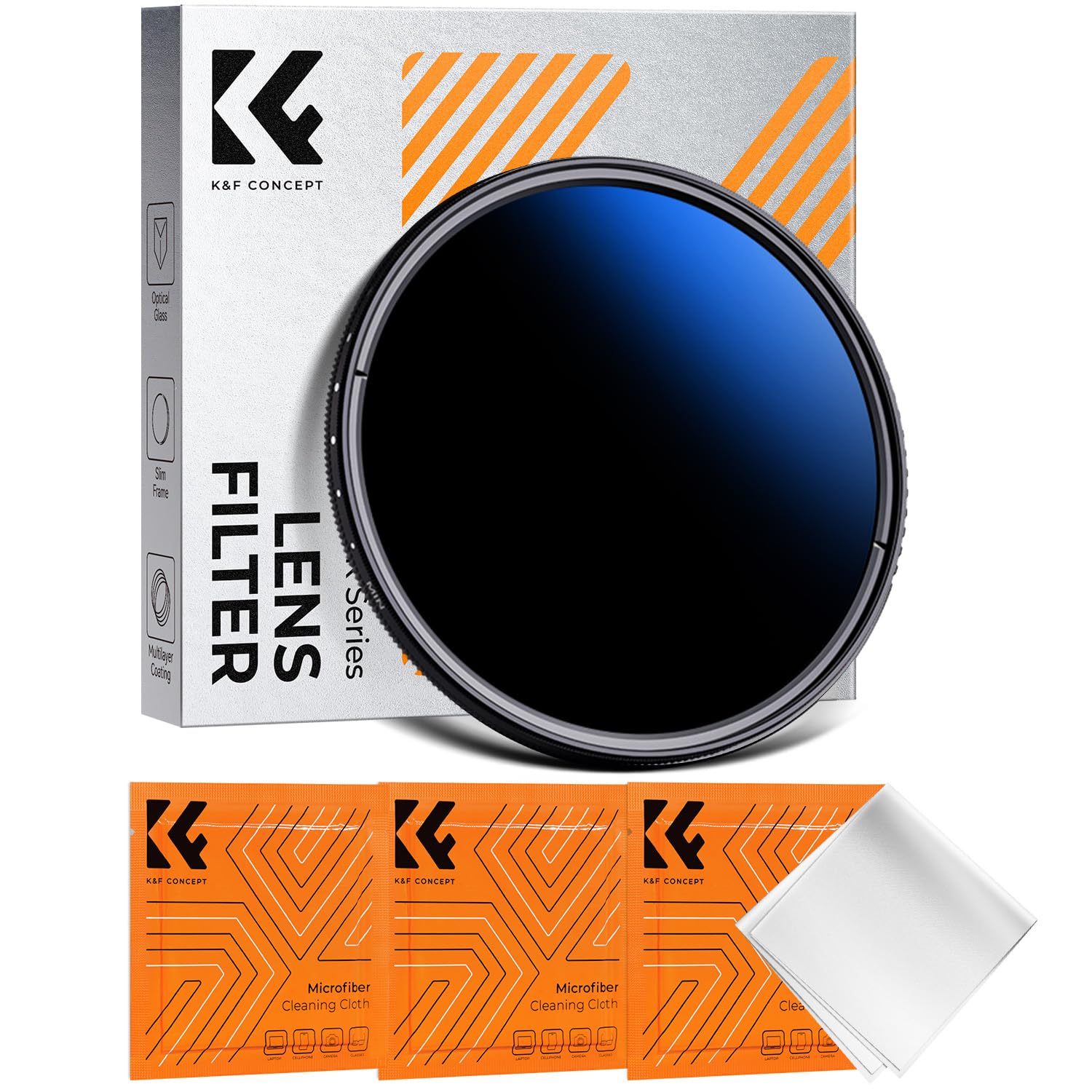
K&F’s K-Series variable ND offers an unusually wide 1 to 11-stop reduction range — ND2 all the way to ND2000 — making it one of the most versatile variable filters on the market for daylight long exposures. The 18-layer multi-coating on the AGC optical glass keeps color shift minimal, though some green tint has been reported past 5 stops by a small number of users.
The ultra-thin 7.4mm frame fits wide-angle lenses without vignetting and the anodized sandblasted metal surface reduces stray reflections. Users shooting in harsh desert or snow conditions report the filter holds up well over two years of heavy use, with accurate color and smooth rotation that never sticks.
As with any variable ND, the X-pattern cross appears near the maximum stop range — avoid pushing past 10 stops on wide lenses. For filmmakers using Sony a6700 or Canon R50 bodies, this filter softens digital sharpness slightly and controls exposure without changing aperture.
Why it’s great
- Massive 11-stop range covers ND2 to ND2000 in one filter
- Ultra-slim frame avoids vignetting on wide-angle lenses
Good to know
- X-pattern cross appears at maximum stops on wide focal lengths
- Some users notice a green tint past 5 stops, correctable in post
3. NEEWER 58mm UV/CPL/ND Lens Filter Kit
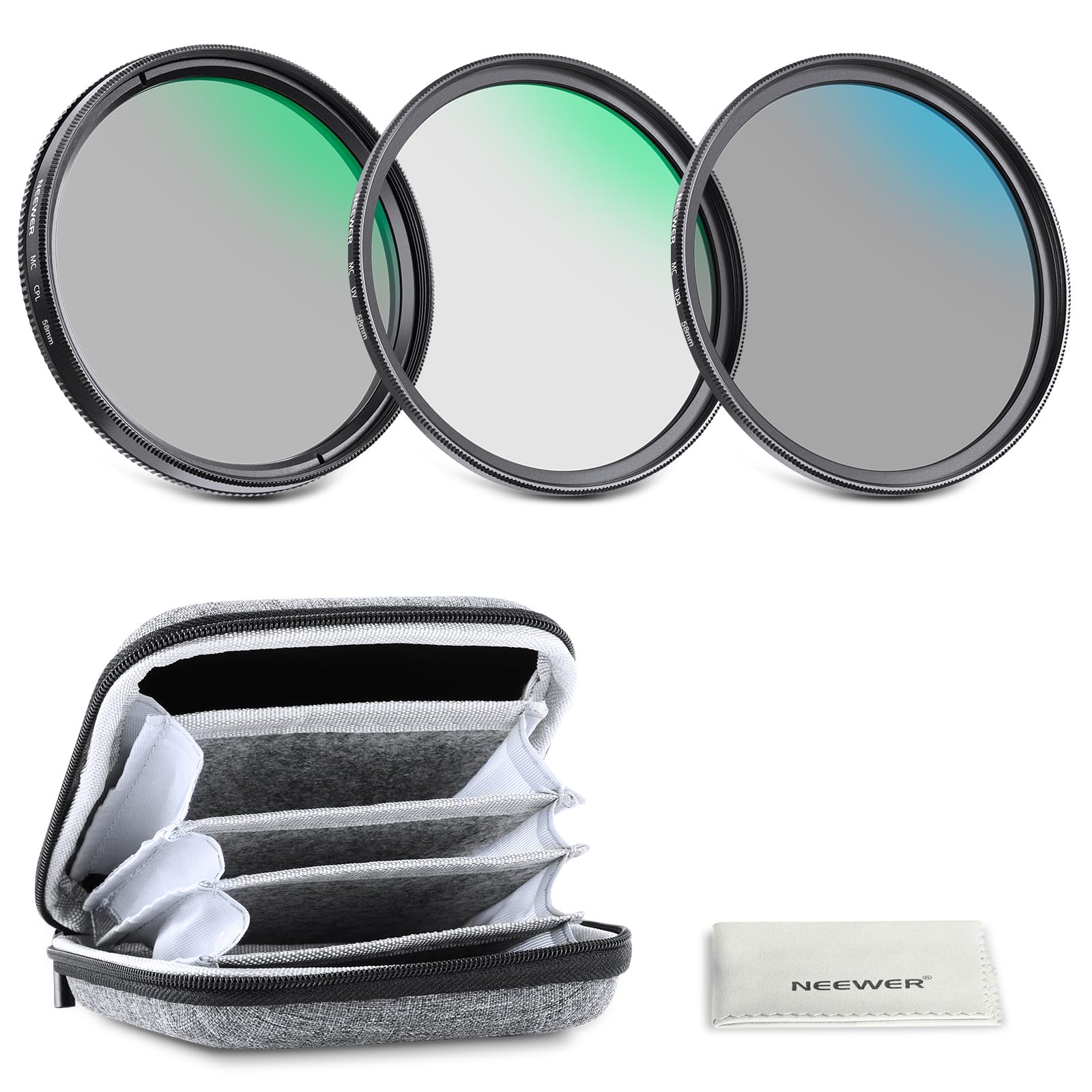
The NEEWER kit bundles three essential filters — a UV protector, a circular polarizer, and an ND4 (2-stop) — in a single hard case with individual foam slots. This is the ideal starter set for photographers who want to cover lens protection, reflection control, and light reduction without buying three separate filters.
The multi-coating on all three pieces delivers good color reproduction and minimal flare, while the aluminum alloy frames feel solid and thread smoothly. Users consistently praise the CPL for cutting glare on water and glass effectively, and the ND4 is useful for achieving motion blur on overcast days.
The storage case itself is a major plus — compact enough to slide into a side pocket and organized well enough to prevent scratches during transit. A few users report that the ND filter is not as optically neutral as premium glass, but at this price bracket the overall quality-to-value ratio is excellent.
Why it’s great
- Three-filter set covers UV, CPL, and ND4 in one purchase
- Hard case with individual slots prevents scratches in a bag
Good to know
- ND4 is only a 2-stop reduction — insufficient for bright daylight long exposures
- Optical neutrality is decent but not on par with premium single filters
4. K&F CONCEPT 58mm Variable ND2-ND400 (1-9 Stops)
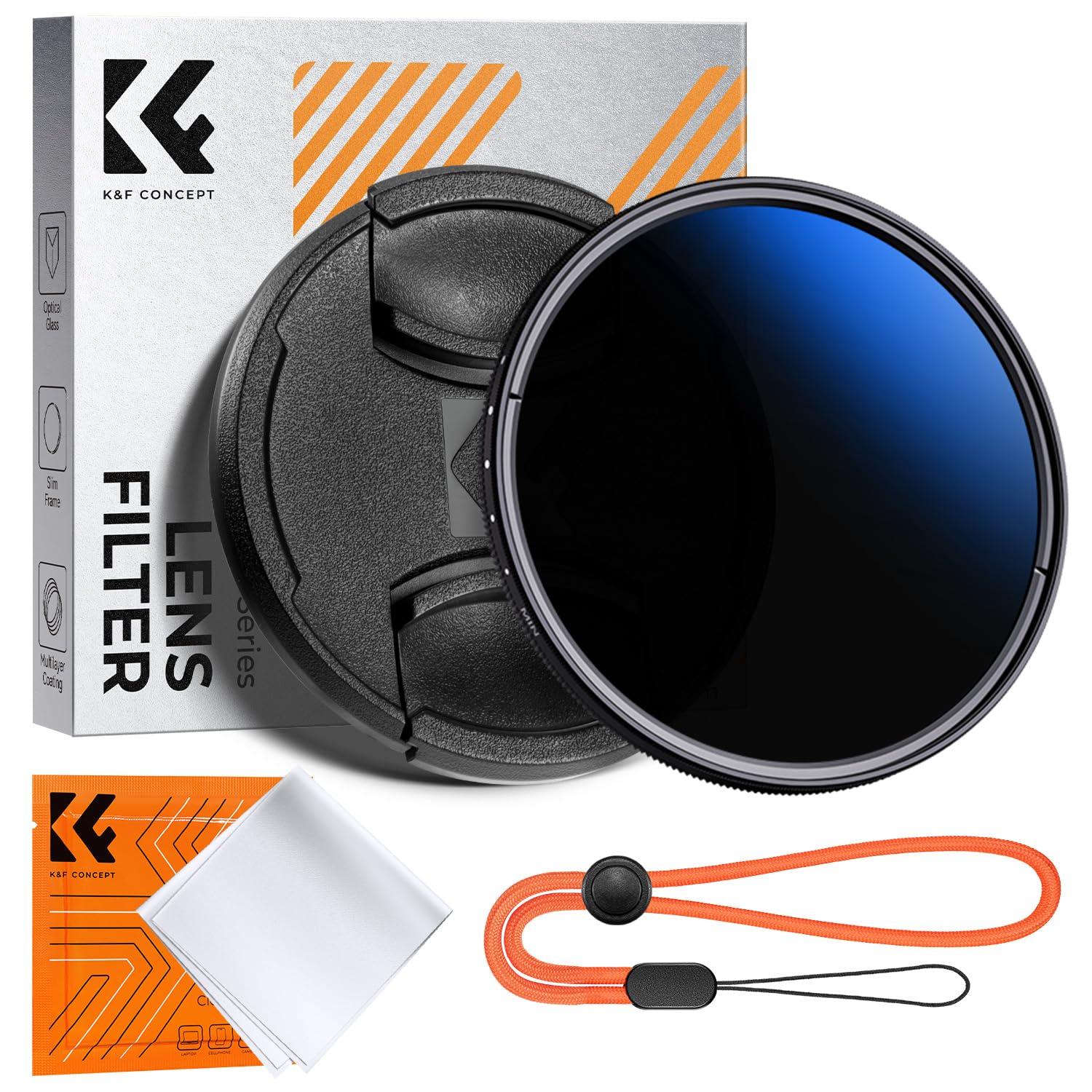
K&F’s entry-level variable ND delivers 1 to 9 stops of light reduction in a 58mm package at a price that makes it accessible for beginners exploring video or outdoor photography. The 18 multi-layer coatings on AGC optical glass minimize reflections, and the 360-degree rotation ring provides smooth, stepped control without sudden jumps.
Users report good results for bright outdoor video and water shots — footage looks buttery with minimal color cast at lower stops. The filter caps and cleaning cloth included are practical additions, and the CNC-patterned metal ring offers enough grip for easy attachment even with cold or gloved hands.
The main trade-off is the X-pattern cross that appears beyond roughly 7 stops, especially on wide-angle lenses. A handful of users also note a green tint past 5 stops that requires color correction in post. If you stay within the mid-range of stops and avoid maxing out, this filter punches above its price class.
Why it’s great
- Affordable entry point for variable ND video work
- Smooth rotation with no vignetting at lower stops
Good to know
- X-pattern cross appears past ~7 stops on wide lenses
- Noticeable green tint past 5 stops, requires post-processing
5. X-SweetDream 58mm Close-up Filter Kit (+1, +2, +4, +10)
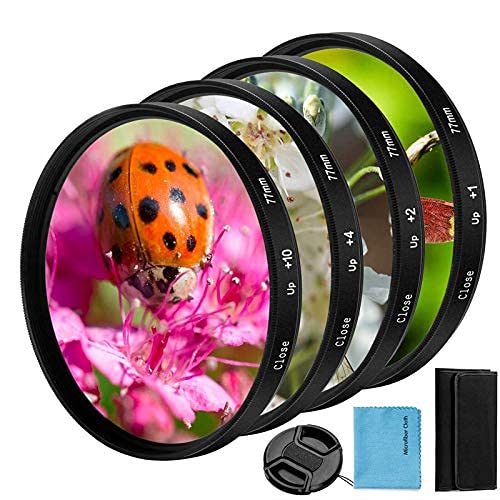
The X-SweetDream close-up kit provides four diopter strengths (+1, +2, +4, +10) that screw onto the front of your existing lens, letting you shoot extreme macro without buying a dedicated macro lens. The +10 diopter delivers significant magnification, though center sharpness remains good while the outer edges soften — a trade-off typical of close-up filters at this price point.
Each filter is double threaded, meaning you can stack them to create intermediate diopter values like +5, +6, or +7 by combining two rings. The kit includes a nylon pouch, a lens cap, and a microfiber cloth, making it easy to carry and switch in the field. Users pair these filters with standard primes like a 50mm f/2 for impressive results on modern mirrorless bodies.
Autofocus struggles at +10 diopter, requiring manual focus and a steady hand or tripod. With proper lighting and careful technique, the optical quality-to-price ratio is outstanding for hobbyists and budget-conscious macro shooters.
Why it’s great
- Four diopter strengths provide flexible macro magnification
- Double-threaded design allows stacking for custom power
Good to know
- +10 diopter requires manual focus — autofocus fails
- Edge sharpness declines at higher magnifications
FAQ
Can I stack a UV filter with a variable ND filter?
Why does my variable ND filter show an X-pattern at high stops?
What does “double-threaded” mean on a macro filter?
Final Thoughts: The Verdict
For most users, the best camera lens filters winner is the Hoya NXT Plus 58mm UV Filter because it combines Schott B270 glass with 10-layer HMC coating for permanent lens protection that does not degrade optical quality. If you want a versatile variable ND for video and long exposures, grab the K&F CONCEPT 62mm Variable ND2-2000. And for budget-friendly all-round coverage, nothing beats the NEEWER 58mm UV/CPL/ND Kit.

Mo Maruf
I created WellFizz to bridge the gap between vague wellness advice and actionable solutions. My mission is simple: to decode the research and give you practical tools you can actually use.
Beyond the data, I am a passionate traveler. I believe that stepping away from the screen to explore new environments is essential for mental clarity and physical vitality.