Our readers keep the lights on and my smoothie glass nicely filled. As an Amazon Associate, I earn from qualifying purchases.
Balancing the demands of high-resolution still photography with the fluid, real-time requirements of vlogging is a tightrope walk. You need a camera that delivers crisp, detailed images with shallow depth of field for portraits, yet also provides reliable autofocus, decent audio inputs, and stable 4K video for talking-head content without overheating. The market is crowded with options that excel at one but falter at the other, making the decision a complex trade-off between sensor size, lens ecosystems, and video codecs.
I’m Mohammad Maruf — the founder and writer behind WellFizz. I’ve analyzed hundreds of hours of test footage and spec sheets to identify which hybrid cameras genuinely serve both masters without forcing you into painful compromises.
Whether you are upgrading from a smartphone or building a professional kit, selecting the right camera for photography and vlogging means finding a body that balances sensor performance, stabilization, and connectivity without blowing your budget.
How To Choose The Best Camera For Photography And Vlogging
The ideal hybrid camera must feel equally at home in a portrait studio and on a monopod in a coffee shop. Focus on these four pillars before looking at any brand name.
Sensor Size and Resolution
Full-frame sensors (35mm equivalent) offer superior low-light performance and shallower depth of field, which is excellent for portrait photography. APS-C sensors are smaller, lighter, and often have a deeper depth of field that can be easier for solo vloggers shooting themselves. A resolution between 24MP and 33MP is the sweet spot for high-quality prints and 4K video oversampling without creating massive file sizes.
Stabilization — The Vlogger’s Best Friend
In-Body Image Stabilization (IBIS) is critical for handheld vlogging. It smooths out the micro-jitters from walking or gesticulating, reducing the need for a gimbal. For photography, IBIS allows you to shoot at slower shutter speeds without blur, giving you an extra 3-5 stops of light. Check the CIPA rating for stabilization, but real-world tests from review footage are more valuable for vloggers.
Autofocus and Subject Tracking
Phase-detection autofocus with real-time eye/face tracking is non-negotiable for vlogging. You want a system that locks onto your face the moment you flip the screen around and stays locked even as you move your hands or turn your head. For photography, animal and vehicle tracking algorithms ensure your action shots are in focus. Look for systems with a high number of AF points (at least 400+) for dense coverage across the frame.
Video Features and Connectivity
Uncropped 4K at 60fps is the current standard for smooth, high-quality footage. A fully articulating touchscreen is essential for framing yourself. A 3.5mm microphone jack and a headphone jack for monitoring are vital for audio quality. Consider the codec support — 10-bit 4:2:2 recording gives you far more color grading flexibility than 8-bit, which is a key differentiator for serious content creators.
Quick Comparison
On smaller screens, swipe sideways to see the full table.
| Model | Category | Best For | Key Spec | Amazon |
|---|---|---|---|---|
| DJI Osmo Pocket 3 | Compact Gimbal | Travel vlogging & stabilization | 1″ CMOS, 4K/120fps | Amazon |
| Panasonic LUMIX G85 | Mirrorless M43 | Value hybrid with IBIS | 16MP, 5-Axis IBIS | Amazon |
| Canon EOS RP | Full-Frame Mirrorless | Entry-level full-frame for travel & portraits | 26.2MP, 4K UHD | Amazon |
| Sony Alpha 6700 | APS-C Mirrorless | AI tracking & high-speed hybrid shooting | 26MP, 4K/120p | Amazon |
| Canon EOS R8 | Full-Frame Mirrorless | Lightweight full-frame for content creation | 24.2MP, 4K/60p | Amazon |
| Nikon Z 7II | High-Res Full-Frame | Ultra-high resolution studio & landscape | 45.7MP, 4K/60p | Amazon |
| Nikon Z6 III | Full-Frame Mirrorless | Professional video with 6K internal RAW | 24.5MP, 6K/60p RAW | Amazon |
| Sony Alpha 7 IV | Full-Frame Mirrorless | All-around hybrid for prosumers | 33MP, 4K/60p 10-bit | Amazon |
| Panasonic LUMIX S5II | Full-Frame Mirrorless | Unlimited recording & phase-detect AF | 24.2MP, 6K/30p Open Gate | Amazon |
| Blackmagic Pocket Cinema 6K Pro | Cinema Camera | Professional filmmaking & color grading | 6144×3456, 13 stops DR | Amazon |
| Canon EOS Rebel T7 Kit | DSLR Bundle | Budget starter kit with multiple lenses | 24.1MP, 1080p HD | Amazon |
In‑Depth Reviews
1. Sony Alpha 7 IV Full-frame Mirrorless

The Sony A7 IV is the benchmark for the hybrid shooter, packing a 33MP full-frame sensor that oversamples 7K down to crisp 4K/30p footage. The BIONZ XR processor provides snappy menu navigation and real-time Eye AF that sticks to your face like glue, even when you turn sideways or hold a prop. Dual card slots (CFexpress Type A and SD) give you reliable backup for important shoots.
The 4K 60p recording uses a full-pixel readout with 10-bit 4:2:2 color, giving editors plenty of latitude to push shadows and grade skin tones. The S-Cinetone color profile delivers a cinematic look straight out of camera, reducing post-production time. The 3.0-inch vari-angle touchscreen is responsive, though the menu system remains characteristically dense for a Sony.
Ergonomics are improved over the A7 III with a deeper grip and better button placement. The 5-axis IBIS is effective for handheld footage but still demands steady hands for walking shots. Battery life exceeds 500 shots per charge, which is solid for a full day of mixed stills and video work. If you can only own one camera that does nearly everything well, this is it.
Why it’s great
- Excellent hybrid stills and video performance
- Reliable real-time tracking autofocus
- Dual card slots for redundancy
Good to know
- 4K 60p has an APS-C crop
- Menu system has a learning curve
2. Blackmagic Pocket Cinema Camera 6K Pro

The Pocket Cinema Camera 6K Pro is a dedicated cinema tool that demands a different workflow than a stills camera. Its Super 35 sensor captures 6K native resolution with 13 stops of dynamic range, and the built-in 2/4/6-stop ND filters let you maintain a wide aperture in bright conditions without bulky matte boxes. The 5-inch HDR touchscreen is bright enough for outdoor use.
This is not a point-and-shoot vlogger camera. Recording in Blackmagic RAW or Apple ProRes requires significant storage and a color-accurate monitor for grading. The included DaVinci Resolve Studio license is a huge value. Dual gain ISO up to 25,600 yields clean shadows, but the auto-exposure system lacks the smoothing of consumer cameras.
The EF lens mount opens up a vast catalog of affordable glass, but the camera body is chunky at 2.6 lbs. Without IBIS, you will need a gimbal or tripod for smooth footage. It is perfect for a filmmaker who needs maximum latitude in post and does not mind the extra gear. Not suitable for casual photography.
Why it’s great
- Best in class dynamic range and RAW capture
- Built-in ND filters are a game changer for outdoor shooting
- Includes full DaVinci Resolve Studio license
Good to know
- No in-body stabilization
- Requires external monitoring and storage rig
- Not designed for casual photography
3. Canon EOS R8 Mirrorless Camera

The EOS R8 is essentially an R6 Mark II sensor and processor wrapped in a lighter, more affordable body. It shoots uncropped 4K 60p oversampled from 6K, plus Full HD slow motion up to 180fps. The Dual Pixel CMOS AF II covers 100% of the frame with subject detection for people, animals, and vehicles, making it incredibly easy to stay in focus while moving.
Weighing just over 1 pound with the kit lens, the R8 is the lightest full-frame RF mount camera on the market. The vari-angle touchscreen is excellent for vlogging, and the UVC/UAC support means it doubles as a high-quality webcam for streaming. Canon Log 3 and HDR PQ give you flat profiles for grading, though the 4K 60p will overheat after around 30 minutes in hot conditions.
The trade-offs are real: no in-body stabilization, a single SD card slot, and a smaller LP-E17 battery that struggles to last a full day of heavy use. You will need a powered grip or external battery for long shoots. For the price, the image quality and autofocus punch far above their weight, making it a top pick for vloggers who want full-frame but cannot swing the R6 Mark II.
Why it’s great
- Exceptional full-frame image quality for the weight
- Fast, intelligent Dual Pixel autofocus
- Clean 4K 60p and 180fps slow motion
Good to know
- No IBIS — you will need stabilized lenses or a gimbal
- Single card slot and small battery
- 4K 60p can overheat in direct sun
4. Panasonic LUMIX S5II with 20-60mm Lens
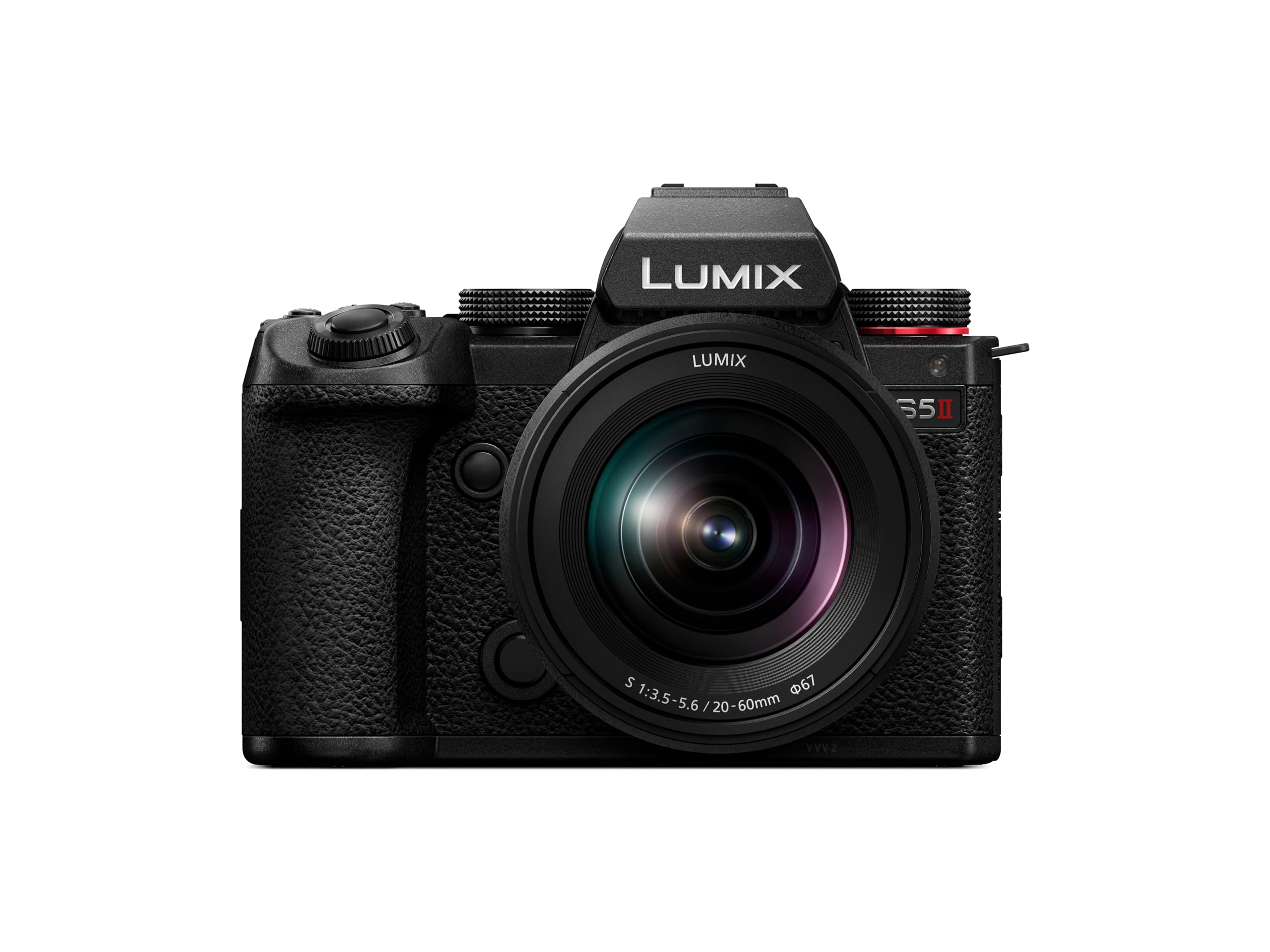
The S5II is Panasonic’s long-awaited answer to its autofocus woes, introducing phase-detect AF alongside the contrast-detect system. It locks onto faces and eyes reliably, rivaling Sony and Canon performance. The Active I.S. is outstanding, smoothing out walking shots so well that you can often skip the gimbal for casual vlogs.
The 24.2MP sensor delivers accurate colors and 14+ stops of dynamic range via V-Log. The REAL TIME LUT feature lets you apply a look in-camera, which is incredibly useful for vloggers who want a finished image without grading. Unlimited 4:2:2 10-bit recording at 4K 60p is possible thanks to an internal fan that disperses heat effectively.
The kit 20-60mm lens is versatile but slow at the telephoto end. The body is weather-sealed and comfortable to hold. Battery life is average, and the square body shape can be prone to scratches. For a hybrid shooter who values stabilization and unlimited recording time, the S5II is a steal.
Why it’s great
- New phase-detect AF is reliable and accurate
- Best-in-class Active I.S. for handheld video
- Unlimited 4:2:2 10-bit recording with internal fan
Good to know
- Kit lens is decent but not fast
- Battery life is average
- L-mount lens ecosystem is smaller than Sony/Canon
5. Nikon Z 7II

The Z 7II is a resolution monster, built for photographers who need to crop heavily or print large. The 45.7MP sensor captures astonishing detail, and the 493-point phase-detect AF is fast and accurate. Dual card slots (CFexpress and SD) provide security for critical work, and the vertical grip adds extended battery life.
For video, the Z 7II records 4K UHD 60p oversampled from the full sensor width, producing sharp footage with good color science. However, it lacks the advanced video features of rival cameras: no internal 10-bit 4:2:2, no raw video output, and no log profiles with the same flexibility as Canon or Sony. It is a stills-first camera with video as a solid bonus.
The 2-axis tilt touchscreen is less flexible than a fully articulating screen for vlogging. The menu system is praised for its logical layout, and the IBIS provides a solid 5 stops of compensation. If your priority is ultimate stills resolution with occasional good video, this is your machine.
Why it’s great
- Incredible 45.7MP stills resolution
- Dual card slots for professional workflow
- Excellent build quality and ergonomics
Good to know
- Video features are limited compared to dedicated hybrids
- No fully articulating screen
- Battery life is average for the sensor size
6. Nikon Z6 III

The Z6 III represents a massive leap forward for Nikon’s hybrid capabilities, offering 6K/60p internal N-RAW recording and an oversampled 4K UHD that is exceptionally sharp. The built-in 5760k-dot EVF with 4000 nits peak brightness makes it usable even in harsh sunlight, a huge plus for outdoor vloggers.
Autofocus is 20% faster than the Z6 II, with subject detection that tracks humans, animals, and vehicles reliably down to -10 EV. The 5-axis IBIS works in tandem with VR lenses for stable handheld footage. The body is weather-sealed and survived real-world downpours according to testers. Dual card slots support CFexpress Type B, XQD, and SD cards.
The menu system, while improved, still has a learning curve for those coming from Sony or Canon. Battery life hovers around 2 hours of continuous video use, so spares are essential. For videographers who want internal raw recording and excellent low-light performance without stepping up to the Z8/Z9 price bracket, the Z6 III is a compelling option.
Why it’s great
- Internal 6K/60p N-RAW and oversampled 4K
- Exceptional 4000-nit EVF for outdoor use
- Fast, reliable subject-detection AF
Good to know
- Battery life is short for video work
- Menu system can be complex
- CFexpress cards are expensive
7. Sony Alpha 6700 APS-C Mirrorless

The Alpha 6700 packs the latest AI processing chip into a compact APS-C body, giving it subject recognition that borders on prescient. It tracks eyes, faces, animals, birds, insects, and cars with uncanny accuracy. The 26MP Exmor R sensor is back-illuminated for excellent low-light performance, and the 6K oversampled 4K 60p video is incredibly sharp.
The body is small and light, making it easy to carry on a gimbal or in a sling bag. The vari-angle touchscreen is perfect for vlogging. However, the menu system is the same dense Sony maze, and the IBIS is only adequate — you will want a gimbal for smooth walking footage. The buffer can fill quickly during high-speed bursts.
Battery life is impressive for an APS-C camera, and the single card slot is a limitation for paid work. For a content creator who values portability and top-tier autofocus above all else, the a6700 is a tiny titan. It is also a great second body for Sony full-frame shooters.
Why it’s great
- Best-in-class AI-based autofocus tracking
- Lightweight and portable for gimbal use
- Sharp 4K 60p from 6K oversampling
Good to know
- IBIS is average; gimbal recommended for video
- Single card slot
- Sony menu system is complex
8. Canon EOS RP with RF 24-105mm Lens

The EOS RP is the most affordable full-frame mirrorless body from Canon, making it a tempting entry point for photographers who want that full-frame look. The 26.2MP sensor produces lovely colors and good dynamic range, and the Dual Pixel AF is snappy with the kit lens. The RF 24-105mm F4-7.1 IS STM lens offers a useful zoom range with optical stabilization.
Video capabilities are limited: 4K capture has a heavy 1.6x crop and a 30-minute recording limit, and the 1080p footage is better suited to casual use. The kit lens also lacks an AF/MF switch, requiring you to dive into the menu to toggle manual focus. These compromises make it a better photography-first tool than a dedicated vlogging rig.
The body is compact and comfortable, weighing under a pound. Battery life is acceptable with a spare. For budget-conscious shooters who want to enter the RF ecosystem and prioritize stills over advanced video features, the RP is an excellent value that leaves room to upgrade the body later while keeping the glass.
Why it’s great
- Most affordable full-frame mirrorless body
- Canon color science and Dual Pixel AF
- Compact and comfortable for travel
Good to know
- 4K video has a heavy crop and record limit
- Kit lens lacks AF/MF switch
- Battery life is average
9. DJI Osmo Pocket 3 Creator Combo

The Osmo Pocket 3 is a specialized vlogging tool that prioritizes mobility and stabilization above all else. The built-in 3-axis gimbal delivers cinematic smoothness without the setup time of a traditional gimbal and camera rig. The 1-inch sensor captures excellent 4K/120fps footage with good dynamic range for its size, and the 2-inch rotatable screen flips to vertical instantly.
The Creator Combo adds a DJI Battery Handle for extended runtime (up to 166 minutes), a mini tripod, and a wireless lavalier microphone with intelligent noise reduction. Active Track 6.0 keeps the camera locked on you even as you move, making it ideal for solo travel vloggers. The whole kit fits in a cargo pocket.
The trade-off is the small sensor compared to interchangeable lens cameras — low-light performance is merely acceptable, and you cannot change lenses. The 9.4MP stills are fine for social media but fall short of dedicated cameras. For a vlogger whose primary output is video for YouTube or TikTok, this is an easy grab-and-go setup that consistently delivers smooth shots.
Why it’s great
- Built-in 3-axis gimbal for buttery smooth video
- Compact enough to carry everywhere
- Excellent Active Track and wireless mic included
Good to know
- Small sensor limits low-light and stills quality
- Fixed lens means no optical zoom or lens swaps
- Not a photography-centric device
10. Panasonic LUMIX G85 Mirrorless Kit

The G85 remains a cult favorite for budget-conscious creators who need dual stabilization. The in-body 5-axis IBIS works alongside the Power O.I.S. in the kit lens to produce remarkably stable handheld footage. The 16MP Micro Four Thirds sensor with no low-pass filter resolves fine details well, and the 4K video up to 30fps is clean.
The camera is weather-sealed with a magnesium alloy front plate, punching above its price point for build quality. The 3-inch tilt-and-touch LCD and OLED viewfinder are clear and responsive. The 4K Photo mode lets you extract 8MP stills from video, and the Post Focus feature lets you change the focus point after shooting — a handy creative tool.
Video weaknesses include mediocre autofocus in low light for 4K and the absence of a headphone jack. The kit lens is decent but not optically superb. The Micro Four Thirds ecosystem offers a huge range of affordable glass. For a beginner on a tight budget who wants a rugged hybrid with excellent stabilization, the G85 is a phenomenal deal.
Why it’s great
- Excellent 5-axis IBIS for the price
- Weather-sealed, rugged magnesium alloy body
- Huge Micro Four Thirds lens selection
Good to know
- 4K autofocus can be sluggish in low light
- No headphone jack for audio monitoring
- Kit lens is decent but not top-tier
11. Canon EOS Rebel T7 DSLR Double Zoom Kit
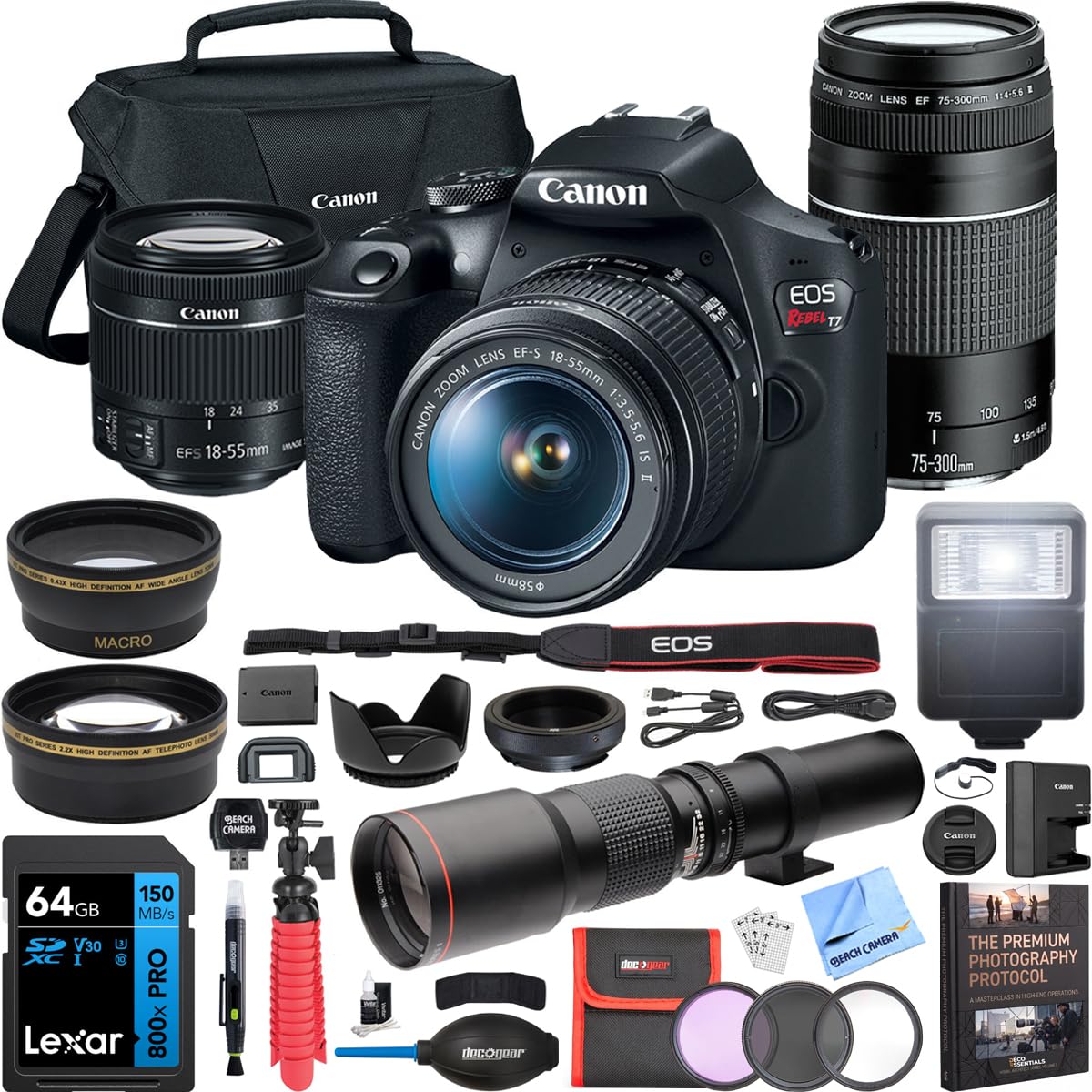
The Rebel T7 is an entry-level DSLR designed for absolute beginners learning the basics of photography. The 24.1MP APS-C sensor is paired with an 18-55mm and a 75-300mm zoom lens, giving you a wide-to-telephoto range right out of the box. The optical viewfinder and 3-inch LCD are functional, and the bundled accessories — tripod, flash, filters, and 64GB memory card — add value for someone starting from zero.
Video is strictly 1080p at 30fps with no stabilization, no mic input, and the standard DSLR ergonomics that feel clunky for vlogging. The 9-point AF system is slow for video autofocus. This is not a camera you buy for vlogging; it is a photography learning tool that happens to record video. The battery life is fine for stills but drains quickly in live view.
The build quality is plastic but reliable, and the Wi-Fi/NFC lets you transfer images to your phone. For a student or parent on a strict budget who wants to learn exposure, composition, and lens swapping, the T7 bundle is hard to beat. Just do not expect it to serve as a primary vlogging camera.
Why it’s great
- Comprehensive bundle with two lenses and accessories
- Easy to use for learning photography fundamentals
- Canon’s large ecosystem of EF/EF-S lenses
Good to know
- 1080p video only, no 4K or stabilization
- Slow 3fps burst and basic 9-point AF
- Battery drains fast in live view mode
FAQ
Can one camera truly excel at both photography and vlogging?
Do I need in-body image stabilization for vlogging?
Is a flip-out screen essential for vlogging?
Why do some cameras overheat during 4K recording?
Do I need a fast lens for hybrid shooting?
Final Thoughts: The Verdict
For most users, the camera for photography and vlogging winner is the Sony Alpha 7 IV because it offers the best balance of high-resolution stills, reliable autofocus, and 4K 60p 10-bit video in a body that is comfortable for long shoots. If you want an incredibly lightweight full-frame body with great autofocus and a lower price, grab the Canon EOS R8. And for unlimited video recording with exceptional stabilization, nothing beats the Panasonic LUMIX S5II.

Mo Maruf
I created WellFizz to bridge the gap between vague wellness advice and actionable solutions. My mission is simple: to decode the research and give you practical tools you can actually use.
Beyond the data, I am a passionate traveler. I believe that stepping away from the screen to explore new environments is essential for mental clarity and physical vitality.