Our readers keep the lights on and my smoothie glass nicely filled. As an Amazon Associate, I earn from qualifying purchases.
Shooting a perfectly plated dish only to find the texture of the sauce and the tiny droplets of oil are soft and undefined in your final image is a frustration every food photographer knows. The difference between a snapshot of your meal and a compelling food photograph often comes down to the gear that can capture the subtle gradients, the specular highlights, and the fine details of your subject. This guide focuses on the specific camera bodies and lenses that excel in the food photography environment, where close focusing distance, color accuracy, and controlled depth of field are non-negotiable.
I’m Mohammad Maruf — the founder and writer behind WellFizz. My research into camera gear for niche applications involves sifting through hundreds of real-world user reports and technical spec sheets to isolate what actually matters for a specific task like documenting food.
Whether you are a professional food stylist documenting plates for a menu, a blogger building a recipe library, or a home cook capturing culinary creations for social media, selecting the right tool significantly changes the final result. This analysis of the best camera for photographing food breaks down the sensor, lens, and workflow options that deliver consistent, sharp, and appetizing results.
How To Choose The Best Camera For Photographing Food
Choosing a camera for food work means prioritizing the lens first. The body is a sensor box, but the lens dictates how close you can get, how much light it captures, and how the background melts away. Look for a dedicated macro lens that offers a minimum focusing distance allowing you to fill the frame with a single ingredient or a small plate.
Macro Magnification and Working Distance
A true macro lens achieves a 1:1 reproduction ratio, meaning the subject is life-sized on the sensor. For food, this lets you capture the texture of a crumb or the gloss on a glazed donut. A lens with a longer focal length, like 100mm or 105mm, offers a greater working distance, keeping the camera further from the food to avoid casting shadows or blocking the light.
Depth of Field Control and Aperture
Controlling depth of field is critical for isolating a specific part of the dish. A lens with a maximum aperture of f/2.8 or wider allows you to create a shallow plane of focus, turning a busy tabletop into a background of soft blur. For overhead flat-lays, a smaller aperture like f/8 to f/11 is needed to keep the entire plate sharp, requiring you to manage your light levels carefully.
Sensor Size and Low Light Performance
A full-frame sensor provides better dynamic range and cleaner images at higher ISOs, which is essential when shooting indoors with natural window light. APS-C sensors can achieve excellent results with modern sensors, often at a lower entry price, but they introduce a crop factor that changes your effective focal length and depth of field characteristics.
Tilting Screen and Live View Ergonomics
Food photography frequently involves shooting from overhead or from a low tabletop angle. A camera with a fully articulating or tilting touchscreen allows you to compose the shot without contorting your back. A high-resolution electronic viewfinder also helps confirm focus and exposure before you press the shutter.
Quick Comparison
On smaller screens, swipe sideways to see the full table.
| Model | Category | Best For | Key Spec | Amazon |
|---|---|---|---|---|
| Nikon NIKKOR Z MC 105mm f/2.8 VR S | Lens | Macro sharpness with VR | 1:1 x 105mm | Amazon |
| Canon EOS RP Kit | Mirrorless Kit | Entry full-frame + zoom | 26.2 MP Full Frame | Amazon |
| Sony FE 100mm F2.8 GM OSS | Lens | Fast AF macro detail | 1.4x Magnification | Amazon |
| Tamron SP 90mm F/2.8 Di VC USD | Lens | Budget macro sharpness | 1:1 x 90mm | Amazon |
| Panasonic S 100mm F2.8 Macro | Lens | Lightweight L-mount macro | 298g Weight | Amazon |
| Canon T7 Rebel Bundle | DSLR Bundle | Budget DSLR start | 24.1 MP APS-C | Amazon |
| Nikon D7500 Kit | DSLR Kit | Versatile action + food | 20.9 MP APS-C | Amazon |
| Sony a7 III Kit | Mirrorless Kit | All-around full-frame | 24.2 MP BSI FF | Amazon |
| Sony FX30 | Cinema Body | Video-first food content | 20.1 MP APS-C | Amazon |
| Fujifilm X100VI | Compact | Walk-around food flat-lay | 40.2 MP APS-C | Amazon |
| Panasonic S5IIX Bundle | Mirrorless Bundle | Hybrid photo/video pro | 24.2 MP Full Frame | Amazon |
In‑Depth Reviews
1. Nikon NIKKOR Z MC 105mm f/2.8 VR S
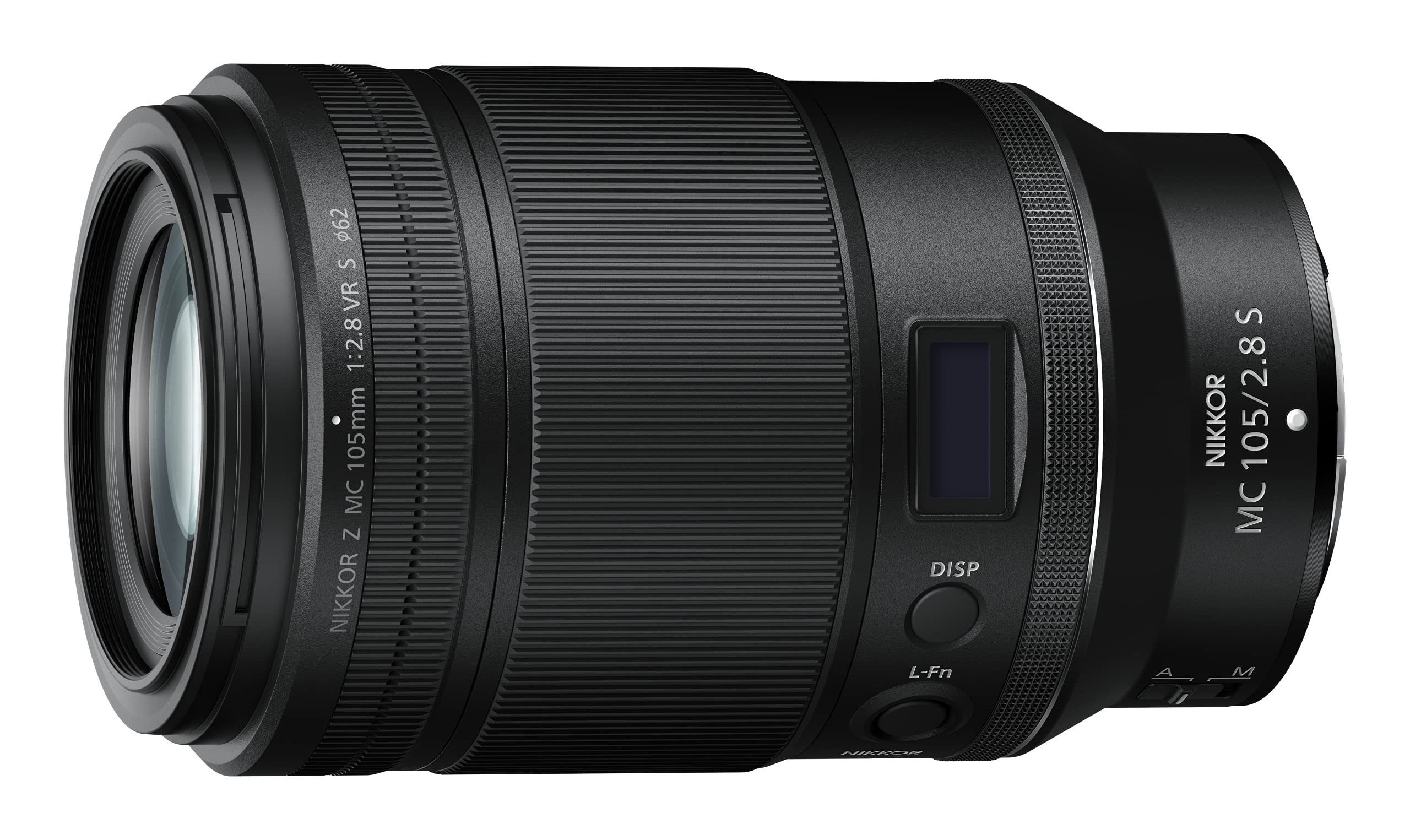
This S-Line prime offers extraordinary 1:1 macro resolution with Nikon’s best optics and a bright f/2.8 aperture that creates a beautiful, creamy bokeh for isolating a single garnish from the background. The 105mm focal length provides a comfortable working distance, letting you frame a plate without casting your shadow over the table. The VR combined with Z-series IBIS makes handheld overhead flat-lay shots feasible even in moderate natural light.
Reviewers consistently highlight the edge-to-edge sharpness and virtually zero chromatic aberration, which is critical when shooting high-contrast details like the crust of a seared steak or the edge of a melting sauce. The weather-sealed construction adds peace of mind in a busy kitchen environment. The autofocus lock-on is fast and quiet, though some users note focus breathing is noticeable, which only matters for video work.
For the food photographer who prioritizes resolution and contrast over everything else, this lens on a Z-body offers the most clinical sharpness available at this price tier. It also doubles as an exceptional portrait lens, making it a versatile option for a professional working across genres. The only real drawback is the lack of a tripod collar, although its light weight compensates.
Why it’s great
- Superb S-Line sharpness with no fringing at close focus.
- VR stabilization allows reliable handheld macro work.
Good to know
- Focus breathing is noticeable for video use.
- No tripod mounting collar included in the box.
2. Tamron SP 90mm F/2.8 Di VC USD Macro
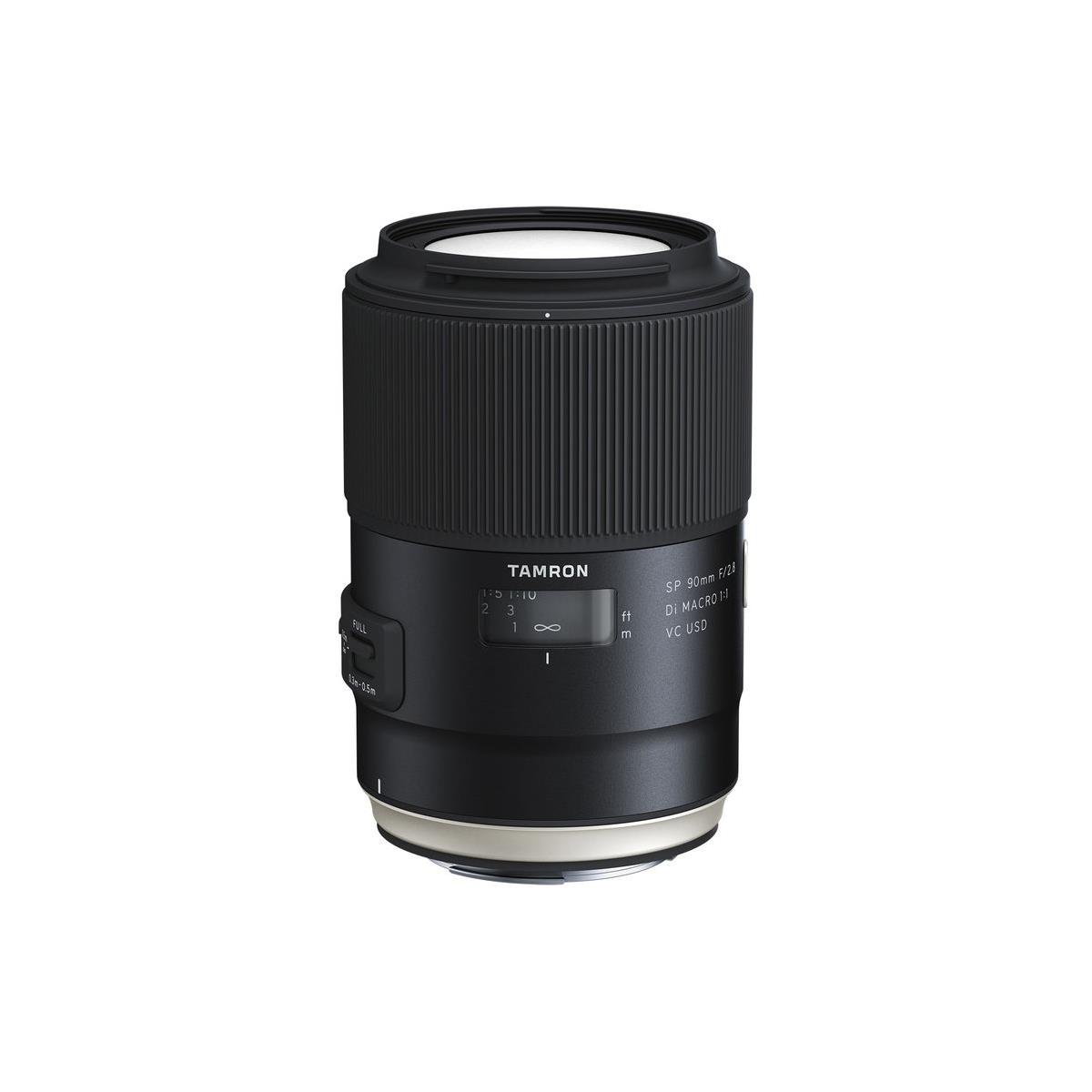
This lens delivers near-reference macro performance at a more accessible price point. The 90mm focal length is a classic for food and product work, providing a working distance that feels natural for tabletop framing. The Vibration Compensation (VC) is effective for reducing the effects of minor hand shake during close-up capture, a common issue when leaning over a plate to adjust a garnish.
Reviews mention exceptional sharpness and a creamy bokeh that rivals the native brand options. The fluorine coating on the front element repels fingerprints and moisture, a practical benefit when shooting around splashes and steam. The autofocus is surprisingly fast for a macro lens, though some users report minor chromatic aberration wide open, which clears significantly when stopped down to f/4 or f/5.6, the sweet spot for food full-plate shots.
For a food photographer on a budget, this lens offers a fantastic entry into dedicated macro optics. It works well on both crop-sensor Canon EF mount bodies (giving an effective ~144mm reach) and full-frame cameras. The only caveat is that some users recommend purchasing the Tap-in Console to fine-tune the autofocus for perfect calibration with a specific body.
Why it’s great
- Excellent price-to-sharpness ratio for a dedicated macro lens.
- Moisture-resistant construction and fluorine coating for durability.
Good to know
- Some chromatic aberration visible wide open, requires stopping down.
- Autofocus can struggle in dim restaurant light.
3. Sony FE 100mm F2.8 GM OSS

This G Master macro lens is built for extreme resolution and defines the high-end for food detail. It goes beyond standard 1:1 magnification, offering a 1.4x maximum magnification capability that allows you to see the exact grain structure of a salt crust. The four XD Linear AF motors deliver fast, silent autofocus that locks onto small subjects like a single berry or a slice of garlic without hunting.
Users report that the bokeh is exceptionally smooth, making busy tabletop backgrounds disappear into clean, round shapes. The optical stabilization is highly refined for macro shake, which is critical when working at these magnifications. The Nano AR Coating effectively eliminates flare and ghosting, preserving contrast when shooting a glossy dish under directional window light.
This lens is the choice for the professional who requires the highest possible magnification and the sharpest image with zero compromises in autofocus reliability. The only significant barrier is its premium price, which positions it as an investment for serious commercial work. It demands a high-resolution Sony body like the a7R series to fully resolve its capabilities.
Why it’s great
- Exceeds 1:1 with 1.4x magnification for extreme texture capture.
- Fast and silent XD Linear AF motors ideal for capture.
Good to know
- Premium price point may exceed hobbyist budgets.
- Best paired with high-resolution Sony full-frame bodies.
4. Canon EOS RP Kit

This full-frame mirrorless kit is a cost-effective entry into the benefits of a larger sensor, which gives noticeably better control over background blur than an APS-C camera. The 24-105mm kit lens provides a versatile zoom range, making it easy to frame an entire table setup at 24mm and zoom in for a tighter plate shot at 105mm. The RF mount also means you can adapt any EF macro lens later.
The vari-angle touchscreen is a strong point, allowing you to compose from a low table angle or directly overhead without lying on the floor. The Dual Pixel CMOS AF is reliable and fast for locking onto faces or objects. Reviewers note the battery life is adequate for a single session with an extra battery, and the camera is compact and lightweight for travel to location shoots.
For someone moving from a smartphone or an entry-level DSLR to a full-frame mirrorless system for food work, this kit offers the simplest upgrade path. You will eventually want a dedicated macro prime lens, but the kit lens easily handles the typical overhead flat-lay at f/8 to f/11. The 4k video has a crop factor, so it is less ideal for wide-angle video content.
Why it’s great
- Full-frame sensor provides better depth of field control.
- Articulating screen makes tabletop composition easy.
Good to know
- 4K video recording introduces a significant crop.
- Kit lens is soft at the edges below f/8.
5. Panasonic LUMIX S 100mm F2.8 Macro

This 100mm macro lens is remarkably light for a full-frame macro optic. Its 298-gram weight means it handles like a much smaller lens, reducing arm fatigue during long sessions of handheld overhead shooting. The Dual Phase Linear Motor ensures silent autofocus operation, which is beneficial for video recording without any motor noise interfering with bokeh sound or a recipe tutorial.
Image quality is high, with good resolution from the center to the edges and pleasing bokeh characteristics typical of a medium-telephoto focal length. Users praise its compact form factor and the fact it fits into a bag easily alongside other S-series lenses. The lens also suppresses focus breathing, a detail appreciated by video shooters who pull focus from a plate background to the foreground dish.
This lens is a perfect match for the Panasonic S5IIX and similar bodies. The trade-off for the light weight is a slightly smaller maximum aperture compared to some macro specific lenses, but f/2.8 is bright enough for most controlled food studio lighting setups. It offers a unified workflow with other L-mount glass.
Why it’s great
- Extremely light weight for comfortable handheld work.
- Silent autofocus and minimal focus breathing for video.
Good to know
- Some units may have initial AF motor issues.
- Small build may mean less robust weather sealing than larger lenses.
6. Panasonic LUMIX S5IIX Bundle
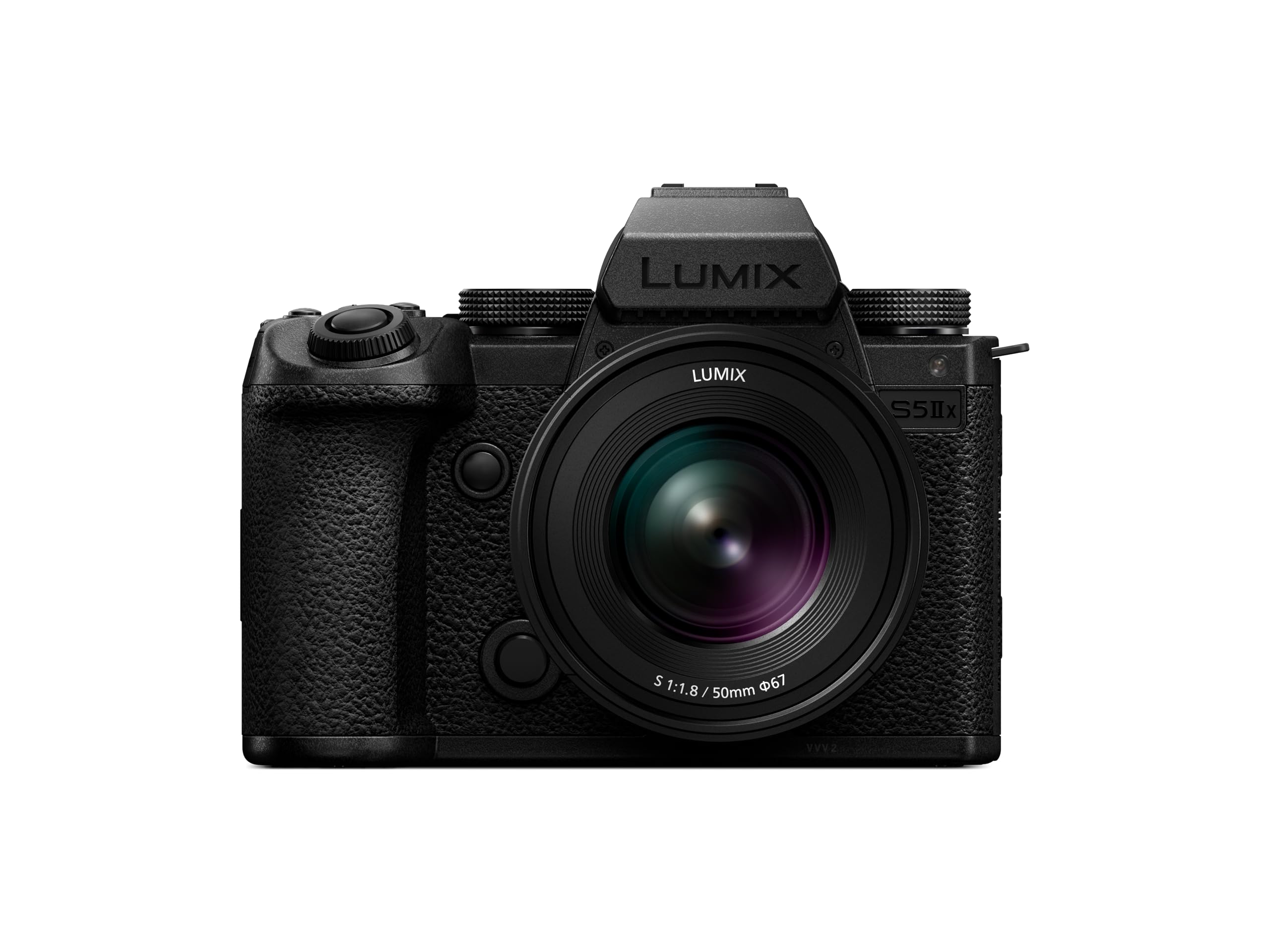
This bundle combines a capable full-frame body with Phase Hybrid Autofocus and two versatile lenses: a 20-60mm zoom and a fast 50mm f/1.8 prime. The 50mm f/1.8 lens is particularly useful for food work, offering a natural perspective for overhead shots and a wide aperture for isolated detail shots. The body features Active Image Stabilization that smooths handheld capture significantly.
Video shooters will value the Unlimited Recording capability and the advanced codecs like 5.8K ProRes, which provide ample cropping room for focusing on specific elements of a dish. The 14+ stop V-Log capture gives extensive flexibility for color grading the final image or video to match a brand aesthetic. The heat dispersion mechanism ensures the camera can run uninterrupted during a long cooking demo or studio shoot.
This system represents a serious hybrid tool for the creator producing both stills and video content for a food blog, YouTube channel, or social media. The dual lens kit reduces the immediate need for further investment. The L-mount system’s growing library includes the excellent Panasonic 100mm macro lens above.
Why it’s great
- Includes fast prime lens for bokeh-heavy food stills.
- Unlimited recording and professional video codecs for production.
Good to know
- Firmware update removed advertised Ethernet streaming feature.
- Body and lenses are a larger kit than some compact alternatives.
7. Sony a7 III Kit

The a7 III remains a benchmark for full-frame performance at its level. The 24.2-megapixel BSI sensor delivers excellent dynamic range, which is crucial for recovering shadow detail in a dimly lit restaurant or preserving highlight detail on a glossy sauce. The 693-point phase-detection AF system provides fast and reliable focusing, locking onto a fork moving into the frame without drifting to the plate.
The battery life is a standout feature, easily covering an all-day food shoot on a single charge. The kit lens is decent for its range, but you will want to pair this body with a dedicated macro lens like the Sony 90mm or the newer 100mm GM for serious food detail. The 5-axis IBIS works effectively for sharp hand held shots at moderate shutter speeds.
This kit is ideal for the photographer who needs a single camera that performs well across food work, travel, and portraiture. It is a known quantity with a vast ecosystem of lenses and accessories. The body’s compact size relative to DSLRs makes it easier to maneuver over a table for those tight angle compositions.
Why it’s great
- Excellent dynamic range for shadow and highlight recovery.
- Long battery life supports all-day shooting sessions.
Good to know
- Kit lens needs upgrading for true macro work.
- Menu system is complex and not beginner friendly.
8. Sony Cinema Line FX30

This cinema camera is built for the food content creator who prioritizes video quality. The Super 35 sensor over samples 6K to produce a clean, detailed 4K image with natural color rendition. The built-in S-Cinetone color profile provides a beautiful, film-like look straight out of the camera, reducing the need for extensive grading for social media posts.
Features like dual native ISO and a 14+ stop dynamic range ensure clean footage even when shooting in the lower light often found in ambient-lit kitchen shoots. The cooling fan system allows for unlimited recording, which is critical for live cooking demos or long shooting days. The reliable autofocus keeps tracking the subject, even when it moves away from the table and returns.
While it takes excellent stills, the FX30 is a video-first tool. For a creator whose primary output is video, this body paired with a macro lens offers a dedicated solution. The smaller APS-C sensor means you need to consider the crop factor when choosing lenses for wide overhead shots, but the lower cost and high frame rate options are clear benefits.
Why it’s great
- S-Cinetone delivers a professional cinematic look for food video.
- Active cooling allows unlimited recording without overheating.
Good to know
- APS-C crop factor changes lens field of view.
- Battery life is moderate, requiring external packs for long days.
9. Fujifilm X100VI

This fixed-lens compact camera is a specialized tool for the style-driven food photographer. The 40.2-megapixel sensor provides incredible resolution for a compact system, allowing for significant cropping to refine a composition in post. The 23mm f/2 lens gives an effective 35mm field of view, ideal for wide table shots and environmental flat-lays that include context around the dish.
The built-in Film Simulations, like the new REALA ACE mode, create highly appealing out-of-camera JPEGs with rich colors and subtle contrast, perfect for instant social media sharing. The built-in 4-stop ND filter is invaluable for shooting video at a wide aperture in bright light, and the 6-stop IBIS is effective for stabilizing handheld video clips. The hybrid viewfinder allows you to compose through an optical or electronic finder.
This is not a dedicated macro camera. You cannot fill the frame with a single crumb; its strength is in the overall scene, the table setting, and the plating arrangement. It is a fantastic everyday carry camera that delivers a specific, filmic look. The fixed lens is a creative constraint that forces you to move, not zoom, but it limits flexibility for tight detail shots.
Why it’s great
- Beautiful film simulations for instant, shareable results.
- Built-in ND and IBIS in an ultra-compact body.
Good to know
- Fixed lens limits macro and telephoto detail shots.
- Price has been inflated due to high demand and limited supply.
10. Nikon D7500 Kit

This DSLR body combined with an 18-140mm zoom lens is a rugged, versatile kit for a generalist photographer who also shoots food. The 20.9MP sensor delivers excellent high-ISO performance, which helps when relying on available window light instead of flash. The 51-point AF system with 15 cross-type sensors provides solid focus tracking for moving subjects like pouring liquids or cooking action.
The 18-140mm zoom offers a very flexible range, from wide enough to capture a full kitchen counter to long enough for tight detail portraits of the final plate. The tilting touchscreen works well for tabletop angle shots. The large optical viewfinder provides a bright, high-contrast view for critical composition. The camera is well-built and weather-resistant, suitable for the environments of a busy kitchen.
The trade-off is that the 18-140mm lens is not a true macro. Its close-focusing ability is good but not life-size. For dedicated food detail, you would need to add a macro prime lens. The camera body is also heavier than many modern mirrorless alternatives, though the battery life is exceptional.
Why it’s great
- Durable, weather-resistant body for kitchen use.
- Excellent battery life for all-day shooting.
Good to know
- Kit lens lacks true 1:1 macro magnification.
- Heavier than mirrorless systems, making overhead work more tiring.
11. Canon T7 Rebel Bundle
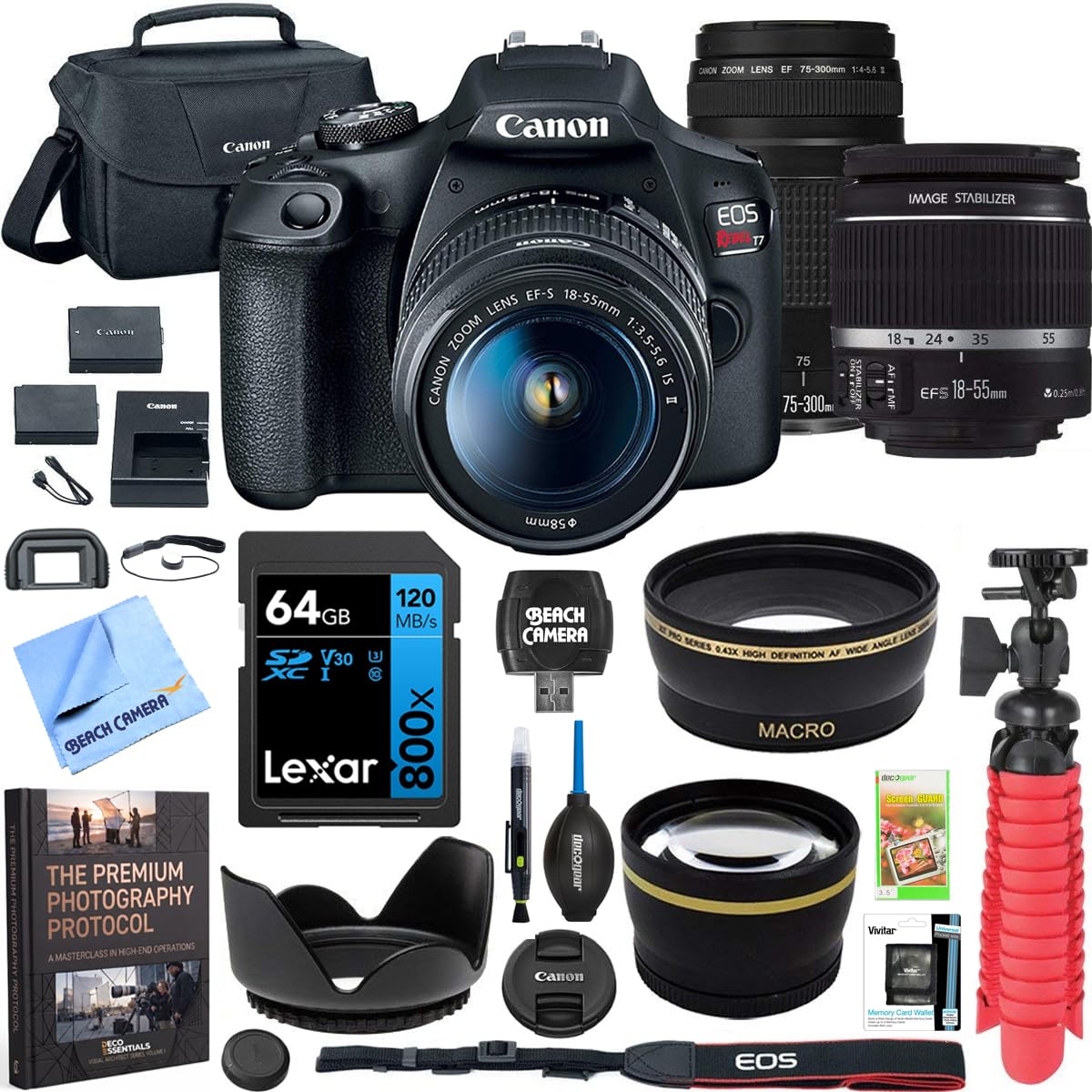
This bundle offers an entry-level DSLR with two zoom lenses and a full accessory kit, making it a budget-friendly introduction to interchangeable lens photography for food. The 24.1-megapixel APS-C sensor is capable of producing good detail in good light, suitable for social media quality images. The 75-300mm telephoto lens allows for a tight head-on shot of a plate from a distance.
The bundle includes a tripod, memory cards, and a bag, which is a helpful starter package for someone who does not own any gear. The 18-55mm kit lens is great for capturing a table setting, but its maximum aperture of f/3.5-5.6 limits shallow depth of field. The camera interface is simple and menu-driven, making it easy for a beginner to learn manual exposure and focusing.
The limitations for food work are clear: the 9-point autofocus system is basic, the continuous shooting speed is only 3 fps, and the viewfinder coverage is 95%. The bundled batteries have been reported to drain quickly. This camera will work for basic food snaps, but it will struggle with the fine detail and low-light demands of professional food photography. It is a learning tool, not a professional one.
Why it’s great
- Affordable entry into an interchangeable lens system.
- Comprehensive bundle includes everything to start shooting.
Good to know
- Basic AF system and slow frame rate limit professional use.
- Bundled battery quality can be inconsistent and short-lived.
FAQ
What is the best focal length for food photography?
Do I need a full-frame camera for food photography?
Why is the tilting screen important for food photography?
Final Thoughts: The Verdict
For most users, the best camera for photographing food winner is the Nikon NIKKOR Z MC 105mm f/2.8 VR S because it delivers genre-best macro sharpness and contrast with excellent stabilization on Z bodies. If you want a full-frame mirrorless body with versatile zoom for general work, grab the Canon EOS RP Kit. And for video-first food content with cinematic color, nothing beats the Sony FX30.

Mo Maruf
I created WellFizz to bridge the gap between vague wellness advice and actionable solutions. My mission is simple: to decode the research and give you practical tools you can actually use.
Beyond the data, I am a passionate traveler. I believe that stepping away from the screen to explore new environments is essential for mental clarity and physical vitality.