Our readers keep the lights on and my smoothie glass nicely filled. As an Amazon Associate, I earn from qualifying purchases.
Choosing a camera for personal use means finding the right balance between image quality, portability, and ease of use — whether you’re capturing family moments, travel adventures, or creative projects. The wrong choice locks you into a system that is either too heavy to carry daily or too limited to grow with your skills.
I’m Mohammad Maruf — the founder and writer behind WellFizz. For this guide, I spent countless hours analyzing sensor specs, autofocus systems, lens ecosystems, and real-world user feedback to separate marketing noise from meaningful performance data.
Whether you want a pocketable compact, a versatile mirrorless kit, or a full-frame powerhouse, this guide breaks down the options to help you find the best camera for personal use that matches how you actually shoot.
How To Choose The Best Camera For Personal Use
Selecting a personal camera involves more than just comparing megapixels. You need a device that fits your lifestyle, skill level, and the types of subjects you shoot most often. Here are the core factors to prioritize.
Sensor Size: The Foundation of Image Quality
The sensor determines how much light the camera captures, directly impacting detail, dynamic range, and low-light performance. APS-C sensors offer an excellent sweet spot between image quality and compact camera bodies. Full-frame sensors deliver superior low-light performance and shallower depth of field but come in larger, heavier cameras. For most personal use — travel, family, street photography — a modern APS-C sensor provides more than enough quality without the bulk.
Autofocus System: The Key to Sharp Shots
Nothing is more frustrating than missing a fleeting moment because the camera hunted for focus. Look for phase-detection autofocus points that cover a wide area of the frame. Eye-detection AF for humans, animals, or birds is a game-changer for portraits and action shots. The number of AF points and the speed of the processor behind them directly translate into how reliably the camera locks onto your subject.
Lens Ecosystem and Kit Lens Quality
The camera is only as good as the glass in front of it. A quality kit lens can deliver sharp, versatile images from day one. Consider whether the lens mount offers a wide selection of affordable primes and zooms for future upgrades. For personal use, a standard zoom covering 24-50mm equivalent is ideal for everyday shooting, while a longer reach is better for travel and wildlife.
Portability vs. Ergonomics
A camera that stays home isn’t useful. Compact mirrorless bodies and high-zoom point-and-shoots are easy to slip into a bag or even a large pocket. However, smaller cameras may have smaller grips and fewer physical controls. Hold the camera if possible — a comfortable grip and intuitive button layout encourage you to shoot more often.
Quick Comparison
On smaller screens, swipe sideways to see the full table.
| Model | Category | Best For | Key Spec | Amazon |
|---|---|---|---|---|
| Canon EOS R100 | Mirrorless | Entry-level mirrorless | 24.1MP APS-C, 4K 24fps | Amazon |
| Panasonic LUMIX G85 | Mirrorless | Stabilized video/photo | 16MP MFT, 5-Axis IBIS | Amazon |
| Panasonic LUMIX ZS99 | Compact | Travel/concerts zoom | 30x optical zoom (24-720mm) | Amazon |
| Sony ZV-E10 | Mirrorless | Vlogging/content creation | 24.2MP APS-C, 4K 30fps | Amazon |
| Nikon Z 5 | Mirrorless | Full-frame enthusiast | 24.3MP Full-Frame, IBIS | Amazon |
| Ricoh GR IIIx | Compact | Everyday carry/street | 24.2MP APS-C, 40mm f/2.8 | Amazon |
| Sony a6400 | Mirrorless | Fast action tracking | 24.2MP APS-C, 0.02s AF | Amazon |
| Canon EOS R8 | Mirrorless | Lightweight full-frame | 24.2MP Full-Frame, 4K 60fps | Amazon |
| Nikon Z50 II | Mirrorless | Versatile two-lens kit | 20.9MP APS-C, 4K 60fps | Amazon |
In‑Depth Reviews
1. Sony ZV-E10
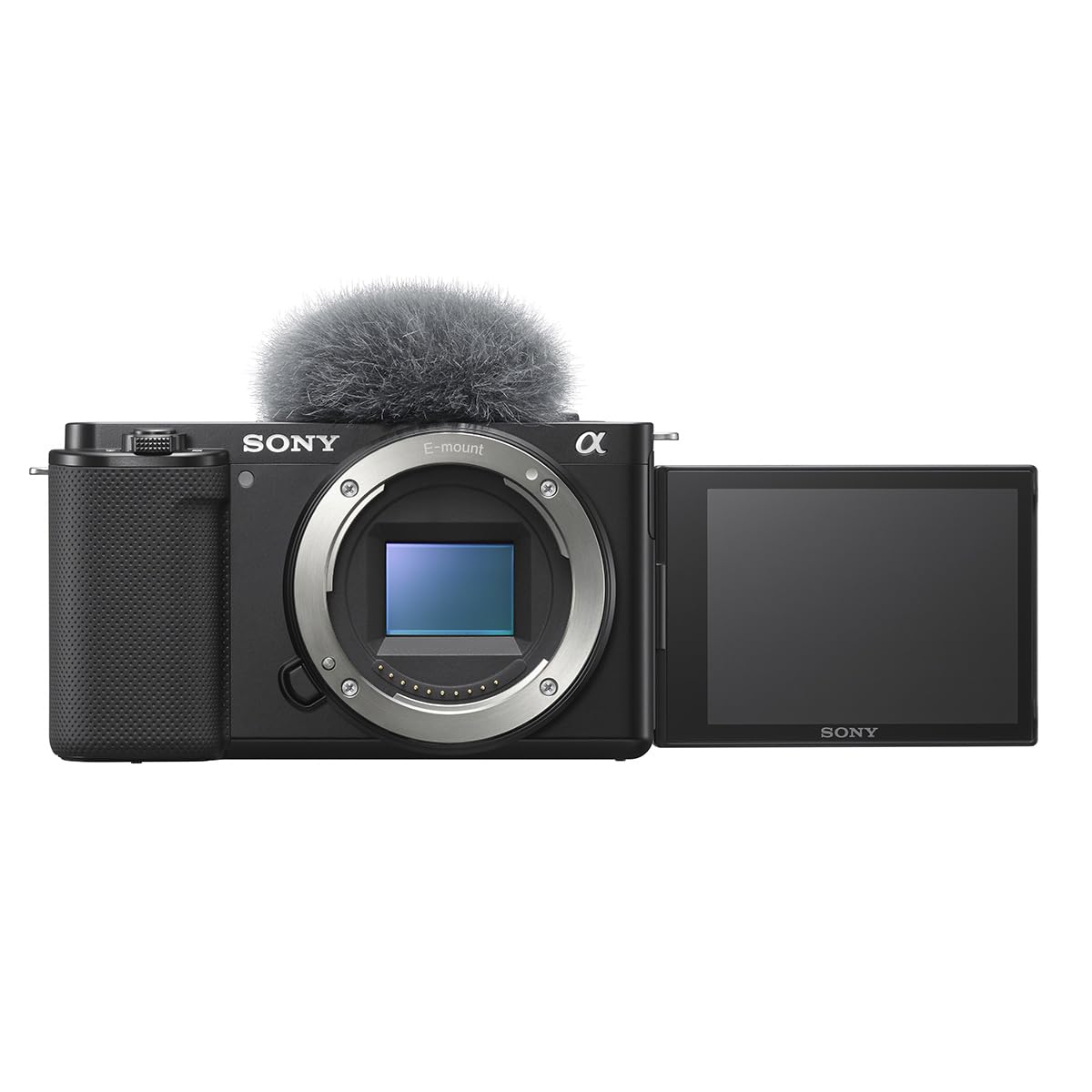
The Sony ZV-E10 pairs a large 24.2MP APS-C Exmor CMOS sensor with a BIONZ X processor to deliver sharp 4K video oversampled from 6K — meaning exceptional detail and minimal artifacts. Its Real-Time Eye AF and 425 phase-detection points lock onto faces and subjects quickly, making it highly reliable for both vlogging and stills. The Product Showcase Setting and Background Defocus button add practical convenience for content creators.
The articulating touchscreen and lightweight body make this camera easy to handle for extended shoots. It includes a 3.5mm mic input for better audio, and the zoom rocker on the body works with compatible power zoom lenses. Dual S-Log and HLG profiles provide flexibility for color grading in post-production.
One limitation is the lack of in-body image stabilization, which means you’ll rely on lens-based stabilization or a gimbal for smooth handheld video. Battery life is moderate, and the rolling shutter effect is noticeable during fast panning. However, for the combination of video features, autofocus speed, and image quality at this price tier, it remains a top contender.
Why it’s great
- Excellent 4K quality with 6K oversampling
- Fast and reliable Real-Time Eye AF
- Product showcase mode is perfect for creators
Good to know
- No in-body image stabilization (IBIS)
- Battery life is modest for all-day shoots
- Rolling shutter is noticeable in 4K
2. Sony a6400

The Sony a6400 is built around a 24.2MP APS-C sensor with 425 phase-detection and 425 contrast-detection points covering 84% of the sensor area. Its 0.02-second autofocus acquisition speed makes it one of the fastest cameras in its class for tracking moving subjects — ideal for kids, pets, or sports. The real-time eye tracking for humans and animals works reliably across stills and video.
The 18-135mm kit lens offers a versatile focal range for travel and everyday photography, producing crisp, natural colors straight out of camera. The tiltable LCD screen flips up 180 degrees for vlogging and self-portraits, and the built-in flash adds flexibility for low-light situations. Continuous shooting at 11 fps ensures you capture the decisive moment.
A common frustration is the menu system, which can feel dense and less intuitive than competitors. The battery life is decent but benefits from carrying a spare. The 4K video has no record time limit and doesn’t overheat during typical use, but internal microphones pick up handling noise. Overall, the a6400 delivers professional-level AF at a mid-range price.
Why it’s great
- Blazing-fast 0.02s autofocus with real-time tracking
- Excellent 24.2MP stills with natural colors
- Versatile 18-135mm kit lens included
Good to know
- Menu system is complex at first
- No in-body stabilization for handheld video
- Internal microphones record handling noise
3. Panasonic LUMIX ZS99

The Panasonic LUMIX ZS99 packs a Leica DC Vario-Elmar lens with a 24-720mm equivalent focal range into a body small enough to slip into a jacket pocket. This 30x optical zoom allows you to capture wide landscapes and distant subjects at concerts or sporting events without carrying interchangeable lenses. The 1,840k-dot tiltable touchscreen helps compose shots from tricky angles.
4K video recording at 30p and 4K Photo burst mode at 30 fps give you flexibility for capturing moving moments. The dedicated Send Image button transfers files quickly to your smartphone via Bluetooth 5.0 and the Panasonic Image App. Stepped zoom and Lens Position Resume features let you jump to preset focal lengths and return to a previous zoom setting.
Image quality is solid in good light, though the small sensor shows noise sooner than larger APS-C or full-frame cameras, especially in low light. Autofocus can struggle in dim conditions, and the menu system requires some learning. For travel, concerts, and family outings where zoom reach matters most, the ZS99 delivers unmatched reach in a pocketable body.
Why it’s great
- 30x optical zoom in a truly pocketable body
- Leica lens delivers sharp, colorful images
- Easy smartphone sharing via Bluetooth
Good to know
- Small sensor struggles in low light
- Autofocus is slower in dim conditions
- No viewfinder; relies on LCD screen
4. Canon EOS R100

The Canon EOS R100 is the smallest and lightest body in the EOS R series, paired with a 24.1MP APS-C CMOS sensor and the DIGIC 8 image processor. Dual Pixel CMOS AF covers 143 zones with human face and eye detection, providing reliable autofocus for beginners stepping up from a smartphone. Continuous shooting reaches 6.5 fps in One-Shot AF mode.
The included RF-S18-45mm F4.5-6.3 IS STM lens is compact and stabilized, offering a standard zoom range for everyday photography. 4K video at 24 fps and Full HD at 60 fps cover basic video needs, while the HD 120 fps mode enables slow-motion clips. The intuitive GUI and auto mode make it easy for new users to get great results without deep manual settings.
The lack of a touchscreen and the smaller electronic viewfinder resolution are noticeable compromises. The battery can last a day of casual shooting but does not include a dedicated charger — only USB charging. For a beginner-friendly entry point into the Canon RF mirrorless system at a very accessible price, the R100 is a strong starting point.
Why it’s great
- Smallest and lightest EOS R body for easy carry
- Dual Pixel CMOS AF with face/eye detection
- Great value for entering Canon mirrorless system
Good to know
- No touchscreen; smaller EVF
- 4K limited to 24 fps; no 60p
- No dedicated battery charger included
5. Panasonic LUMIX G85

The Panasonic LUMIX G85 combines a 16MP Micro Four Thirds sensor (with no low-pass filter) with 5-axis in-body dual image stabilization, allowing sharp handheld photos and smooth 4K video even in low light. The kit lens — 12-60mm Power O.I.S. — provides a useful 24-120mm equivalent range with optical stabilization that works in tandem with the IBIS.
4K video recording and exclusive 4K Photo mode (30 fps burst) let you extract high-res stills from video. The OLED live viewfinder (2360K dots) is bright and clear, and the 3-inch tilt-and-touch LCD makes framing from high or low angles easy. The magnesium alloy body and weather sealing add durability for outdoor use.
The lower 16MP resolution means less cropping flexibility compared to 24MP competitors, and battery life is average. The Wi-Fi connection can be finicky, and autofocus in very low light for 4K video is slower than newer systems. Still, the G85 offers outstanding stabilization at its price point, making it ideal for handheld shooting.
Why it’s great
- Class-leading 5-axis IBIS for handheld sharpness
- Weather-sealed magnesium alloy build
- 4K Photo mode and versatile kit lens
Good to know
- 16MP sensor limits cropping potential
- Battery life is average for the class
- Wi-Fi connectivity can be inconsistent
6. Nikon Z 5

The Nikon Z 5 is Nikon’s most compact full-frame mirrorless camera, featuring a 24.3MP CMOS sensor and 5-axis in-body image stabilization that allows steady handheld shots at shutter speeds as low as 1/9 second. The 273 phase-detection AF points cover a wide area, and the Eye-Detection AF works reliably for people, dogs, and cats — making it excellent for family portraits and candid moments.
4K/30p and 1080/60p video recording with shallow depth of field provide high-quality footage, and the dual UHS-II SD card slots offer immediate backup — a critical feature for irreplaceable personal memories. The high-resolution EVF (3.69M dots) and vari-angle touchscreen make composition easy from any angle. Built-in Wi-Fi and Bluetooth via SnapBridge simplify image sharing.
The continuous shooting speed of 4.5 fps is slower than many competitors, and the video features lack 4K 60p and 10-bit output. The Z mount lens ecosystem is growing but still smaller than Sony E or Canon RF. For someone prioritizing full-frame image quality and IBIS at a reasonable price, the Z 5 delivers a complete, reliable system.
Why it’s great
- Full-frame sensor with excellent low-light performance
- 5-axis IBIS for steady handheld shooting
- Dual SD card slots for backup
Good to know
- Slow 4.5 fps continuous shooting
- 4K limited to 30p; no 60p
- Z lens ecosystem still expanding
7. Canon EOS R8

The Canon EOS R8 packs a 24.2MP full-frame CMOS sensor and the DIGIC X processor into the lightest full-frame RF mount camera body Canon offers. Dual Pixel CMOS AF II covers the entire frame with 1,053 zones and deep-learning subject detection for people, animals, vehicles, horses, and aircraft. The uncropped 4K 60p video is oversampled from 6K, delivering exceptionally sharp footage.
The 3-inch vari-angle LCD touchscreen and OLED EVF with up to 120 fps refresh rate make it easy to frame and review shots from any position. Canon Log 3 and HDR PQ provide professional video color grading flexibility. The UVC/UAC support means it works as a high-quality webcam via single USB cable — useful for streaming and video calls.
The R8 lacks in-body image stabilization, relying on lens-based IS or digital stabilization that crops the frame. The LP-E17 battery provides modest life (around 500 photos, 1 hour of video), and the single SD card slot offers no immediate backup. It also lacks the robust weather sealing of higher-end Canon R bodies. For a lightweight full-frame travel camera with top-tier video specs, it’s hard to beat.
Why it’s great
- Excellent uncropped 4K 60fps oversampled from 6K
- Dual Pixel CMOS AF II with multiple subject detection
- Lightest RF full-frame body for travel
Good to know
- No in-body image stabilization
- Small battery life for all-day shooting
- Single SD card slot, no weather sealing
8. Ricoh GR IIIx

The Ricoh GR IIIx is the ultimate pocketable camera for serious shooters, combining a 24.2MP APS-C sensor with a fixed 40mm f/2.8 GR lens that delivers exceptional sharpness edge-to-edge. This 40mm equivalent field of view offers a natural perspective close to human vision — ideal for street photography, everyday carry, and travel where you want maximum image quality in minimal space. The camera starts up in about 0.8 seconds.
In-body image stabilization helps compensate for the lack of a larger grip, allowing sharp photos even in dim light. The GR Engine 6 processor enables high-speed hybrid AF and a variety of built-in film simulations. The touchscreen supports quick menu navigation and U modes for saving custom settings. The camera is truly pocketable, fitting in a jacket or even jeans pocket.
The fixed lens means no zoom — you have to “zoom with your feet” — and the GR IIIx has no built-in flash, no EVF, and no 4K video capability. Battery life is short, requiring at least one spare for a full day out. There is also a known risk of dust accumulating on the sensor if used in harsh environments without a filter adapter. For those who value portability and image quality above all else, it’s a dream camera.
Why it’s great
- APS-C sensor in a truly pocketable body
- Exceptional 40mm f/2.8 lens sharpness
- Quick startup and responsive controls
Good to know
- Fixed lens; no zoom capability
- Short battery life; carry spares
- No 4K video, no EVF, no flash
9. Nikon Z50 II

The Nikon Z50 II is a compact APS-C mirrorless camera featuring a 20.9MP DX-format sensor and an impressive 31 built-in Picture Control presets for creative color grading directly in-camera. The advanced autofocus system detects and tracks nine subject types — including people, dogs, cats, birds, and vehicles — with dedicated modes for birds and airplanes. 4K UHD video at 60 fps and Full HD slow-motion at 120 fps cover video needs.
The two-lens kit includes the NIKKOR Z DX 16-50mm f/3.5-6.3 VR standard zoom and the 50-250mm f/4.5-6.3 VR telephoto zoom, covering a versatile range from wide-angle to medium telephoto. This combo is ideal for travel, where you can leave the telephoto behind for light days or carry both for wildlife and compressed portraits. Built-in flash and Night Portrait mode help in low light without external gear.
The 20.9MP sensor provides less cropping headroom than 24MP counterparts, and the menu system requires some learning for new Nikon users. The camera is lightweight and compact but lacks a fully articulating screen, and the video features were not fully tested in some user reports. The included dual lens kit makes it a complete travel system out of the box.
Why it’s great
- Two-lens kit covers wide to telephoto range
- Clever in-camera Picture Control presets
- Reliable autofocus with nine subject types
Good to know
- 20.9MP sensor limits cropping
- Menu system can be non-intuitive
- No fully articulating screen
FAQ
What megapixel count do I actually need for personal prints and social media?
Is a mirrorless camera better than a DSLR for personal use?
What is the “crop factor” and why does it matter for my lens choices?
Do I need 4K video in a personal camera, or is Full HD enough?
Final Thoughts: The Verdict
For most users, the best camera for personal use winner is the Sony ZV-E10 because it combines a large APS-C sensor, excellent 4K video, and fast real-time autofocus in a compact body at a reasonable price. If you want in-body stabilization for handheld video and stills, grab the Panasonic LUMIX G85. And for ultimate portability with pro-level image quality, nothing beats the Ricoh GR IIIx that slips into any pocket.

Mo Maruf
I created WellFizz to bridge the gap between vague wellness advice and actionable solutions. My mission is simple: to decode the research and give you practical tools you can actually use.
Beyond the data, I am a passionate traveler. I believe that stepping away from the screen to explore new environments is essential for mental clarity and physical vitality.