Our readers keep the lights on and my smoothie glass nicely filled. As an Amazon Associate, I earn from qualifying purchases.
Newborn photography lives and dies by two things: the ability to capture impossibly fine detail in low, gentle light and a shutter that does not wake a sleeping infant. Cameras with loud mechanical mirrors or slow focus hunting are immediate liabilities. The right body pairs silent electronic shutters with fast, high-precision autofocus that locks onto a baby’s tiny features without startling them.
I’m Mohammad Maruf — the founder and writer behind WellFizz. I have spent hundreds of hours analyzing sensor performance, autofocus algorithms, and silent-shutter capabilities across dozens of mirrorless and DSLR bodies to find the models that deliver studio-grade results without disturbing the subject.
This guide cuts through the marketing to highlight the specs that actually matter for photographing a newborn, and it names the specific models that earn their keep in this demanding role. If you want a camera for newborn photography that delivers safe, silent, and sharp images from day one, start reading.
How To Choose The Best Camera For Newborn Photography
Newborn shoots demand a unique combination of silent operation, fast face-detect autofocus, good low-light performance, and the ability to resolve fine detail like eyelashes and skin texture. Picking the right body is less about raw resolution numbers and more about how the camera behaves in a quiet, dimly lit room with a tiny, unpredictable subject.
Silent Shutter Capability
Loud mechanical shutters startle babies and ruin poses. A camera with a fully silent electronic shutter mode lets you fire away without making a sound. Not all electronic shutters are equal — some suffer from rolling shutter distortion on fast-moving hands or swaying wraps, but for the slow, controlled pace of newborn photography, most modern electronic shutters work perfectly. Check that the camera allows silent shooting in its full-resolution burst mode, not just in a reduced-quality mode.
Eye and Face Detection Autofocus
A newborn’s eyes are tiny, and manually nailing focus at wide apertures (f/1.8 to f/2.8) is tough even for experienced shooters. Cameras with real-time Eye AF that detects and tracks human eyes — and works in low light down to at least -3 EV — save you from missed focus. The best systems track the subject even when the baby turns their head or is partially swaddled.
Low-Light Image Quality and IBIS
Newborn sessions rarely use harsh studio strobes; most photographers work with soft window light or continuous LED panels at low power. A full-frame or large APS-C sensor with excellent high-ISO performance allows you to keep shutter speeds fast enough to freeze subtle movement without introducing noise. In-body image stabilization (IBIS) helps you shoot at slower shutter speeds hand-held while keeping the background creamy and the eyes sharp.
Lens Ecosystem and Skin Tone Rendition
The body is only part of the equation. A prime lens with a wide aperture — typically 35mm, 50mm, or 85mm — is the go‑to for newborn portraits because it allows tight framing and beautiful background blur. Brands like Fujifilm, Canon, and Nikon are known for pleasing skin-tone color science straight out of camera, which reduces post-processing time. Make sure the camera you choose has affordable, high-quality lenses in the 35–85mm range.
Quick Comparison
On smaller screens, swipe sideways to see the full table.
| Model | Category | Best For | Key Spec | Amazon |
|---|---|---|---|---|
| Fujifilm X-S20 | Mid-Range Mirrorless | Best Overall | 26.1MP, 7-stop IBIS, Eye AF | Amazon |
| Canon EOS R5 | Premium Full-Frame | Ultra Detail & Video | 45MP, 8K, Dual Pixel AF | Amazon |
| Sony Alpha 7 IV | Premium Full-Frame | Best Hybrid Value | 33MP, Real-time Eye AF | Amazon |
| Sony a7 III | Full-Frame | Best Value Full-Frame | 24.2MP, 693 AF points | Amazon |
| Nikon Z5 II | Full-Frame Mirrorless | Low Light Specialist | 24.5MP, -10EV AF | Amazon |
| Panasonic LUMIX S5IIX | Full-Frame | Video Hybrid | 24.2MP, Phase Hybrid AF | Amazon |
| Nikon D850 | DSLR | Highest Resolution Still | 45.7MP, 9 fps | Amazon |
| Canon EOS RP | Entry Full-Frame | Budget Full-Frame Starter | 26.2MP, 4K Timelapse | Amazon |
| Nikon D5600 | DSLR | Budget DSLR | 24.2MP, SnapBridge | Amazon |
| OM SYSTEM E-M10 Mark IV | Compact Mirrorless | Portable Every Day | 20MP, 5-axis IBIS | Amazon |
| Panasonic LUMIX G85 | Value Mirrorless | Budget Mirrorless Value | 16MP, Dual IS, 4K | Amazon |
In‑Depth Reviews
1. Fujifilm X-S20

Fujifilm’s long‑standing strength in pleasing skin tone color science makes the X‑S20 a natural choice for newborn portraiture. The 26.1‑megapixel X‑Trans CMOS 4 sensor produces images that look polished straight out of camera, meaning you spend less time editing. Its 180‑degree vari‑angle touchscreen is perfect for overhead crib shots or low‑angle floor setups without contorting your back.
The X‑Processor 5 engine brings fast, reliable subject detection autofocus — including eye and face tracking that works in low indoor light. Combined with five‑axis in‑body stabilization rated at up to seven stops, you can shoot handheld at slower shutter speeds while still keeping the baby’s eyes tack sharp. The fully silent electronic shutter mode lets you fire away without disturbing a sleeping newborn.
Battery life reaches 750 frames in normal mode, a big improvement over earlier X‑S series models, so a single charge covers a full newborn session. The deep handgrip is comfortable even with larger portrait lenses attached. For its balance of color, stabilization, autofocus, and portability, this is the most complete package for the dedicated newborn photographer.
Why it’s great
- Excellent out‑of‑camera skin tones save editing time
- 7‑stop IBIS enables sharp handheld shots in low light
- Silent electronic shutter does not disturb the baby
Good to know
- Not fully weather‑sealed; be careful in damp environments
- Single SD card slot limits backup options
2. Canon EOS R5

The Canon EOS R5 is the resolution king of this list, with a 45‑megapixel full‑frame sensor that captures every eyelash and skin texture detail. For newborn photographers who need to crop tightly into tiny features without losing sharpness, the R5 delivers. Dual Pixel CMOS AF with 1,053 points covers nearly 100% of the frame and includes eye and face detection that tracks reliably even when the baby is partially swaddled.
The electronic shutter is fully silent and capable of 20 fps burst shooting, which means you never miss a fleeting micro‑expression. In‑body image stabilization provides up to eight stops of correction, making handheld shooting at moderate shutter speeds completely viable. The high‑resolution EVF is exceptionally bright, ideal for composing in dim nurseries.
At this resolution level you need premium glass to see the full benefit — a fast 50mm or 85mm prime is recommended. The R5 is heavier and more expensive than other options, but if raw detail and latitude for cropping are your priorities, it justifies the investment. Some users report heat management limits during extended 8K recording, but for stills it remains cool and reliable.
Why it’s great
- 45MP sensor allows heavy cropping while retaining detail
- Industry‑leading Dual Pixel AF with 100% coverage
- IBIS rated at 8 stops for extremely stable handheld shots
Good to know
- Requires high‑quality RF lenses to realize its full potential
- Battery life (~650 shots) may require a spare for long sessions
3. Sony Alpha 7 IV

The Sony Alpha 7 IV strikes a powerful balance between resolution, autofocus capability, and video performance. Its 33‑megapixel back‑illuminated full‑frame sensor delivers sharp detail with excellent dynamic range, allowing you to recover highlight and shadow detail during editing. Real‑time Eye AF for humans is among the most reliable in the industry — it locks onto a newborn’s eyes instantly and tracks them even when the baby turns or is partially covered.
In‑body image stabilization rated at 5.5 stops helps you shoot at slower shutter speeds in natural light without camera shake. The BIONZ XR processor provides fast overall response, and the articulating touchscreen makes overhead and low‑angle framing simple. Dual card slots (CFexpress Type A / SD) give you the security of a backup.
This body works beautifully with Sony’s affordable 50mm f/1.8 or 85mm f/1.8 primes, which are excellent for newborn portraiture. The menu system has improved significantly over earlier Sony generations, making it more beginner‑friendly. If you need one camera that handles both high‑quality stills and 4K video for behind‑the‑scenes content, this is the pick.
Why it’s great
- 33MP sensor offers excellent resolution and dynamic range
- Real‑time Eye AF locks onto baby eyes every time
- Dual card slots for worry‑free session backup
Good to know
- 4K 60fps video has a slight crop factor
- Battery life is good but a spare is recommended for long days
4. Sony a7 III

The Sony a7 III proved that full‑frame quality could be accessible without sacrificing performance. Its 24.2‑megapixel back‑illuminated sensor still delivers excellent low‑light performance with a 15‑stop dynamic range, more than enough to capture the delicate tonal transitions of newborn skin in soft natural light. The 693‑phase detection AF points cover 93% of the sensor area, and Eye AF works reliably on small faces.
The silent shutter mode is genuinely quiet, and the mechanical shutter is also damped enough that it rarely startles a sleeping baby when you need to switch. Battery life is exceptional for a mirrorless camera — around 710 shots per charge, meaning one battery easily lasts a full session. The compact body is comfortable to hold for extended periods.
It lacks the higher resolution and more advanced video features of newer models, but for pure still‑focused newborn photography, the a7 III remains a proven workhorse. Pair it with the Sony 50mm f/1.8 or a Sigma 85mm f/1.4 Art lens for a setup that punches well above its weight class.
Why it’s great
- Excellent low‑light performance with 15‑stop dynamic range
- Long battery life (~710 shots) covers a full session
- Reliable Eye AF that works on small subjects
Good to know
- 24MP sensor offers less cropping flexibility than higher‑res bodies
- Menu system is less intuitive than newer Sony models
5. Nikon Z5 II
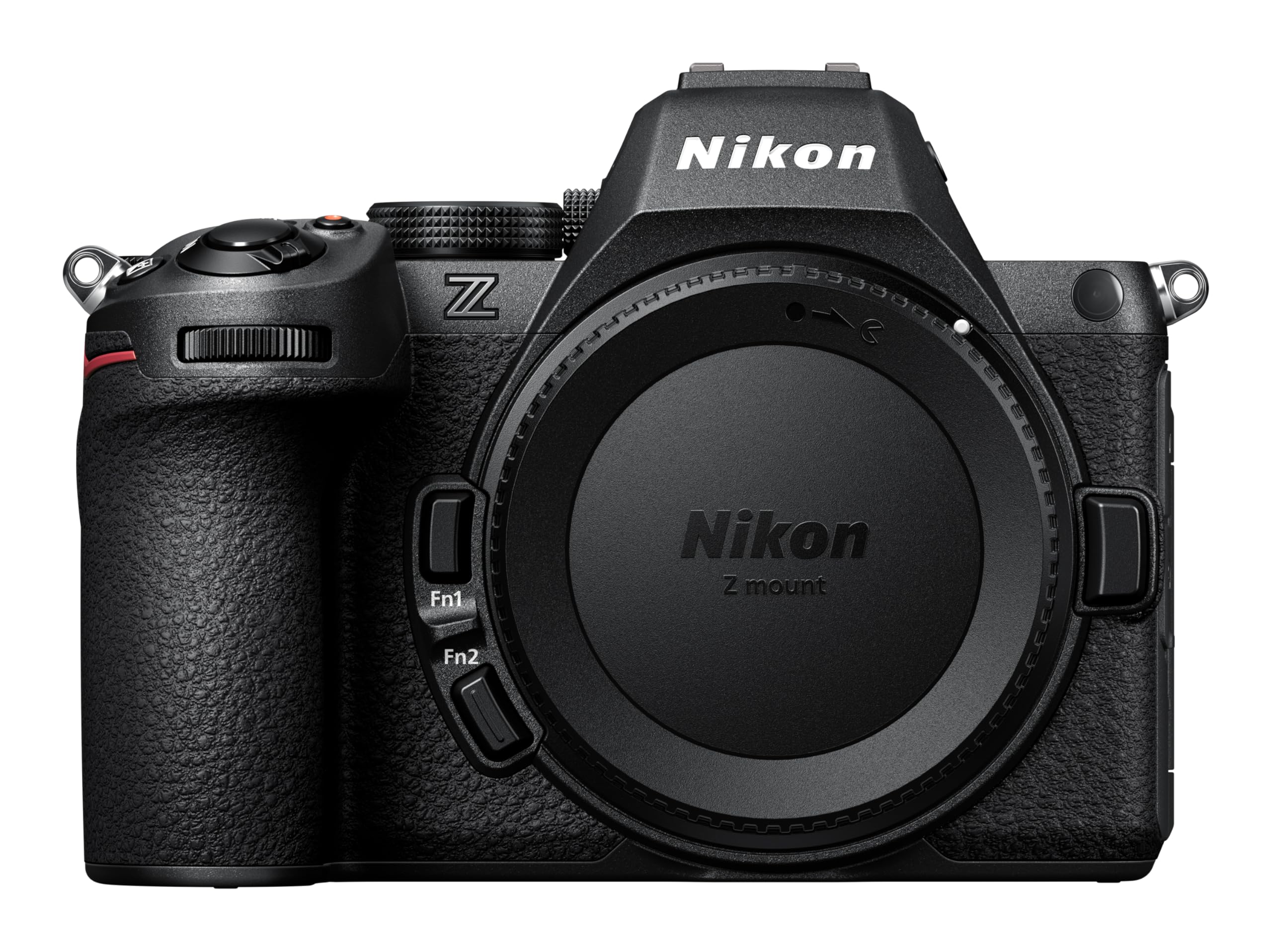
The Nikon Z5 II combines a 24.5‑megapixel BSI full‑frame sensor with the EXPEED 7 processor to deliver outstanding performance in very low light — critical for newborn sessions that rely solely on window light or dim LED setups. The autofocus can detect subjects down to -10 EV, meaning it locks focus in near darkness, and it includes automatic subject detection for people.
In‑body stabilization rated at 7.5 stops allows you to shoot at incredibly slow shutter speeds handheld while keeping the image sharp. This is a huge advantage when you want to keep your ISO low for maximum image quality. The electronic viewfinder reaches 3000 nits brightness, making composition easy even in bright backlighting.
The Z5 II supports Nikon’s Imaging Cloud service for automatic firmware updates and image transfer, which is a nice convenience. It also offers 4K 60p video and 12‑bit N‑RAW recording for high‑end video content. The body is built around a comfortable handgrip and straightforward controls that make it easy for DSLR‑to‑mirrorless upgraders.
Why it’s great
- Exceptional low‑light autofocus down to -10 EV
- 7.5‑stop IBIS for ultra‑stable handheld shooting
- Bright 3000‑nit EVF works in any lighting condition
Good to know
- No built‑in flash; requires a hotshoe flash for fill light
- Uses single SD slot (backup requires external recorder)
6. Panasonic LUMIX S5IIX
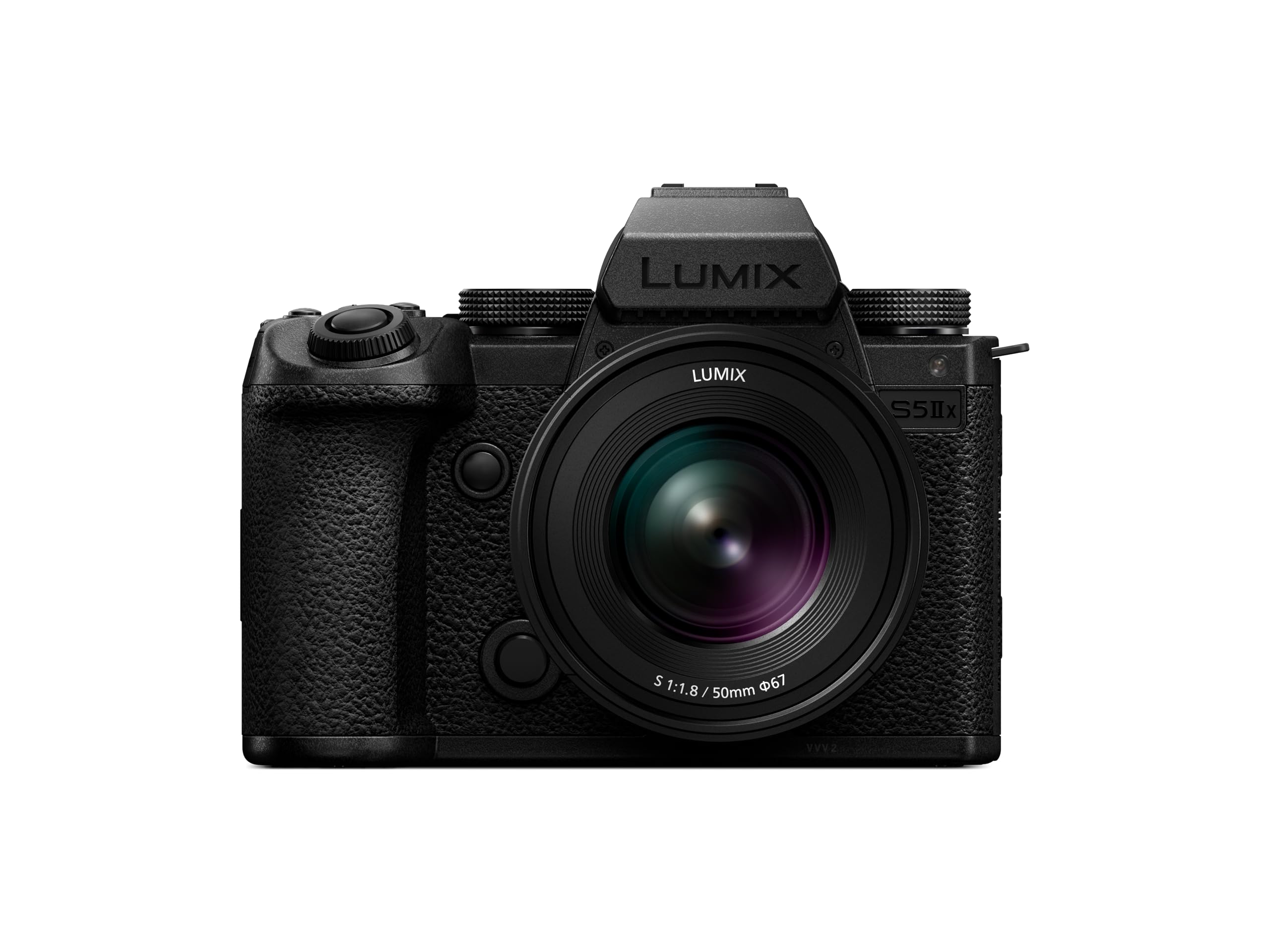
The Panasonic S5IIX is built for creators who need a hybrid that excels at both stills and video. Its 24.2‑megapixel full‑frame sensor with phase‑detection autofocus finally solves Panasonic’s long‑standing AF weakness, providing fast and reliable eye tracking for newborn faces. The body also features Active I.S. for smoother handheld video when recording session highlights or behind‑the‑scenes clips.
Unlimited 4K and 5.8K ProRes recording without overheating — thanks to an internal fan — means you never hit a recording limit during a long shoot. The two‑lens kit (20‑60mm and 50mm f/1.8) gives you both a versatile zoom for environmental shots and a fast prime for dreamy close‑ups with shallow depth of field.
The body is well‑sealed against dust and moisture, adding peace of mind. The dual SD card slots allow simultaneous backup, which matters for professional newborn sessions where reshoots are not an option. For photographers who also produce video content for social media or client galleries, the S5IIX is a flexible solution.
Why it’s great
- Phase‑detection AF finally delivers reliable eye tracking
- Unlimited 4K/5.8K recording with no overheating
- Kit includes a fast 50mm f/1.8 prime for portraiture
Good to know
- Bulky compared to smaller mirrorless options
- L‑mount lens selection is growing but smaller than Sony/Canon
7. Nikon D850

The Nikon D850 remains a benchmark for DSLR image quality with its 45.7‑megapixel back‑illuminated full‑frame sensor. For newborn photographers who want the absolute maximum resolution for large prints or heavy cropping, the D850 delivers detail that rivals medium‑format systems. The tilting touchscreen is useful for low‑angle compositions, and the optical viewfinder offers an incredibly clear view of your subject without any electronic lag.
The autofocus system — 153 points, including 99 cross‑type sensors — is fast and accurate even in dimly lit nurseries. The D850 can shoot at 9 fps with full AF performance, capturing rapid micro‑expressions. Its battery life is excellent, easily lasting through multi‑hour newborn sessions.
The main trade‑off is size and weight: the D850 is a substantial DSLR body, heavier than any mirrorless option on this list. It also lacks the advanced eye‑tracking AF that newer mirrorless cameras offer. But if still‑image resolution and optical‑finder responsiveness are your priorities, this is worth considering.
Why it’s great
- 45.7MP sensor provides incredible detail for large prints or cropping
- Large, bright optical viewfinder with no EVF lag
- Excellent battery life for long sessions
Good to know
- Heavy and bulky, especially with a portrait lens attached
- No built‑in eye/face AF; requires careful focusing technique
8. Canon EOS RP

The Canon EOS RP is the lightest and most compact full‑frame mirrorless camera on this list, weighing just 485g. It uses a 26.2‑megapixel full‑frame sensor paired with Canon’s Dual Pixel CMOS AF system, which provides fast, accurate autofocus in live view. The RF 24‑105mm kit lens is optically stabilized and offers a useful focal range for both wide environmental shots and tight portraits in one lens.
The fully articulating touchscreen is excellent for self‑portrait setups when photographing your own newborn, and the menu system is simple enough for beginners to navigate. The body is compatible with Canon EF and EF‑S lenses via an adapter, giving access to a massive used lens market on a budget.
The RP is a great entry point into full‑frame photography, but its older sensor shows its limits in very low light compared to newer bodies. It also lacks IBIS, so you need stabilized lenses for handheld stability. Still, for its price tier, it offers a genuine full‑frame image look that APS‑C bodies cannot match.
Why it’s great
- Very lightweight and compact for a full‑frame body
- Canon Dual Pixel AF is reliable and beginner‑friendly
- RF lens mount is future‑proof for upgrades
Good to know
- No in‑body image stabilization; stabilized lenses needed
- Older sensor shows more noise in extremely dim conditions
9. Nikon D5600

The Nikon D5600 is a budget‑friendly DSLR that still performs well for newborn photography when paired with the right lens. Its 24.2‑megapixel APS‑C sensor offers good dynamic range, and the vari‑angle touchscreen allows flexible framing. The 18‑55mm kit lens is decent for learning, but the real value comes from adding a Nikon 35mm f/1.8 DX or 50mm f/1.8 lens for properly blurred backgrounds.
SnapBridge Bluetooth and Wi‑Fi let you transfer images quickly to your phone for client previews. The camera is lightweight and easy to use, with guide mode that helps beginners understand aperture and shutter speed. Full HD 1080p video at 60 fps is acceptable for simple clips.
The D5600 lacks silent electronic shutter and its optical viewfinder is not helpful for fine focus at wide apertures. You also need to be more careful with focus placement since there is no eye‑detection AF. But for its price range, it produces pleasing images with the right prime lens.
Why it’s great
- Low‑cost entry with a huge used lens ecosystem
- Vari‑angle touchscreen helps with creative angles
- SnapBridge for quick phone image transfers
Good to know
- No silent shutter mode; mechanical shutter can wake babies
- No eye‑detection AF; requires careful manual focus or selection
10. OM SYSTEM E-M10 Mark IV

The OM SYSTEM E-M10 Mark IV is remarkably small and lightweight, making it easy to keep with you at all times — which matters when you have a newborn at home. Its 20‑megapixel Micro Four Thirds sensor is paired with 5‑axis in‑body image stabilization capable of 4.5 stops of compensation, a huge help for handheld shots in low indoor light.
The flip‑down monitor with dedicated selfie mode is useful for taking photos with the baby, and the camera includes 16 art filters that add creative flair. The kit 14‑42mm EZ pancake lens is small enough that the camera fits in a jacket pocket, making it a true grab‑and‑go option.
The image quality is excellent for its size, but the Micro Four Thirds sensor has more noise at high ISOs compared to APS‑C or full‑frame bodies. It also lacks the eye‑tracking AF depth of larger systems. For a compact camera that travels easily and still allows interchangeable lenses, though, the E‑M10 Mark IV is a strong choice.
Why it’s great
- Extremely compact and pocketable with pancake lens
- Reliable 5‑axis IBIS for steady handheld shots
- Flip‑down selfie screen for unique angles with the baby
Good to know
- Smaller Micro Four Thirds sensor has higher noise at high ISO
- No advanced eye‑tracking AF for moving babies
11. Panasonic LUMIX G85

The Panasonic LUMIX G85 is the budget king of Micro Four Thirds, offering incredible value for the price. Its 16‑megapixel sensor, while lower resolution than most competitors, produces fine detail thanks to the lack of an optical low‑pass filter. The class‑leading dual image stabilization — combining in‑body 5‑axis stabilization with lens‑based OIS — allows sharp handheld shots at very slow shutter speeds.
The camera is weather‑sealed with a magnesium alloy body, giving it a premium feel that belies its price. The 4K video recording at 30 fps includes useful features like Post Focus and 4K Photo mode, where you can select the focus point after the shot. The tilt‑screen LCD and OLED viewfinder are both clear and responsive.
For newborn photography, the G85 lacks a silent electronic shutter mode that works in full resolution, and its contrast‑detection autofocus can hunt in very low light. It also has no eye‑detection AF, so you need to be precise with your focus point. However, for learning the craft on a tight budget, the G85 is a capable tool that punches well above its price.
Why it’s great
- Very budget‑friendly with excellent build quality (weather‑sealed)
- Dual IS system provides outstanding stabilization
- 4K video and Post Focus feature add creative flexibility
Good to know
- 16MP sensor offers limited cropping ability
- Contrast‑detect AF hunts more than phase‑detect systems
FAQ
Do I need a full‑frame camera for newborn photography?
Can I use the kit lens for newborn photos?
Is an articulating screen important for newborn photography?
How important is video capability for newborn photography?
Final Thoughts: The Verdict
For most users, the camera for newborn photography winner is the Fujifilm X‑S20 because it combines excellent out‑of‑camera skin tones, 7‑stop IBIS, reliable eye‑detection AF, and a silent electronic shutter in a lightweight body. If you want maximum resolution for cropping and large prints, grab the Canon EOS R5. And for a budget‑friendly entry that still delivers solid results, nothing beats the Nikon D5600 paired with a fast prime lens.

Mo Maruf
I created WellFizz to bridge the gap between vague wellness advice and actionable solutions. My mission is simple: to decode the research and give you practical tools you can actually use.
Beyond the data, I am a passionate traveler. I believe that stepping away from the screen to explore new environments is essential for mental clarity and physical vitality.