Our readers keep the lights on and my smoothie glass nicely filled. As an Amazon Associate, I earn from qualifying purchases.
Family photography demands a camera that balances speed, image quality, and ease of use—capturing fleeting smiles, chaotic birthday parties, and candid moments without fuss. The wrong choice means blurry shots of moving toddlers, missed expressions, or a camera so heavy it stays home.
I’m Mohammad Maruf — the founder and writer behind WellFizz. I’ve spent years analyzing mirrorless and DSLR systems, comparing autofocus algorithms, sensor performance, and real-world family usability across dozens of models.
After reviewing eleven cameras ranging from entry-level DSLRs to pro-grade mirrorless bodies, the overwhelming recommendation for most households is the camera for family photography that delivers reliable autofocus, solid low-light ability, and a versatile zoom range without breaking your back or your budget.
How To Choose The Best Camera For Family Photography
The best family camera isn’t always the most expensive one. It’s the one you’ll actually bring along and that can reliably focus on a moving child in mixed lighting. Here are the three pillars to consider.
Autofocus Speed and Subject Tracking
For family use, autofocus is king. Look for cameras with phase-detection AF points covering most of the frame and dedicated eye/face detection for humans. Systems that can track eyes across the frame while you recompose are worth every penny—they turn chaotic scenes into sharp, keeper-rate images without constant refocusing.
Sensor Size and Low-Light Performance
Full-frame sensors (35mm) deliver better high-ISO performance than APS-C, which directly translates to cleaner images indoors without a flash. However, modern APS-C sensors like the 26.1MP Fujifilm X-Trans are excellent for living-room lighting. If you frequently shoot in dimly lit homes, prioritize a full-frame model or a fast-aperture prime lens.
Stabilization and Lens Versatility
In-body image stabilization (IBIS) reduces blur from shaky hands, especially at slower shutter speeds indoors. A kit lens with a wide-to-telephoto range (like 24-105mm or 18-55mm) gives you group shots and tight portraits from one lens. For family trips, a compact body with a versatile stabilized zoom is more practical than a bag full of primes.
Quick Comparison
On smaller screens, swipe sideways to see the full table.
| Model | Category | Best For | Key Spec | Amazon |
|---|---|---|---|---|
| Sony a7 III | Full-Frame Mirrorless | Reliable all-round performance | 693 phase-detection AF points | Amazon |
| Canon EOS R5 | Full-Frame Mirrorless | Professional-grade detail | 45MP / 8K / Dual Pixel AF | Amazon |
| Nikon Z6 III | Full-Frame Mirrorless | Video+photo hybrid family use | 6K/60p N-RAW / 4000nit EVF | Amazon |
| Canon EOS RP | Full-Frame Mirrorless | Entry-level full-frame value | 26.2MP / 24-105mm kit lens | Amazon |
| Fujifilm X-T30 III | APS-C Mirrorless | Beautiful JPEG colors out of camera | 26.1MP X-Trans / Film Sims | Amazon |
| Panasonic LUMIX S9 | Full-Frame Mirrorless | Ultra-compact travel with LUT support | 24.2MP / 18-40mm lens | Amazon |
| Sony Alpha 7C II | Full-Frame Mirrorless | Compact full-frame with AI AF | 33MP / AI Processor / 759pts | Amazon |
| Nikon D850 | DSLR Full-Frame | High-res stills for careful shooters | 45.7MP / 153 AF points | Amazon |
| Panasonic LUMIX G100 | Micro Four Thirds | Budget-friendly hybrid for vloggers | 4K / Tracking mic / 12-32mm | Amazon |
| Canon EOS Rebel T7 | DSLR APS-C | Budget bundle for total beginners | 24.1MP / 9 AF points | Amazon |
| Fujifilm X100VI | Compact Fixed Lens | Everyday carry with film simulations | 40.2MP / 23mm f/2 fixed | Amazon |
In‑Depth Reviews
1. Sony a7 III

The Sony a7 III remains the goldilocks full-frame mirrorless for family duty. Its 693 phase-detection AF points cover 93% of the sensor, meaning you can track a toddler darting across the yard without losing focus. The 24.2MP back-illuminated sensor delivers clean images up to ISO 6400, which is exactly where most birthday parties and holiday dinners live.
The 28-70mm kit lens is a capable starter, but pairing the body with a fast prime like the 35mm f/1.8 unlocks the low-light potential that makes indoor family portraits shine without a flash. Battery life is outstanding—around 710 shots per charge—so you won’t scramble for a charger during a full day at the park.
Real-world users consistently praise the fast, accurate autofocus and excellent dynamic range. The menu system is dense, but once configured, the camera rewards you with professional-level output. The price-to-performance ratio here is still unbeatable for a general-purpose family camera.
Why it’s great
- Industry-leading autofocus with 693 points and eye tracking
- Excellent high-ISO performance for indoor/low-light shooting
- Impressive battery life for all-day family outings
Good to know
- Kit lens is soft in low light, budget for a prime lens
- Menu system is complex, take time to customize
2. Canon EOS R5

The Canon EOS R5 is the over-achiever for families who also want professional-grade stills and video. The 45MP full-frame sensor captures enormous detail—great for cropping into group shots—and the Dual Pixel CMOS AF II with 1,053 points covers the entire frame. Eye Control AF (select focus by looking) is genuinely useful when you need to keep the camera up while chasing kids.
In-body stabilization combines with lens IS for up to 8 stops of shake correction, making handheld shots at 1/2 second possible. For family video, the 4K 120fps mode yields smooth slow-motion of a child’s first steps. Battery life is around 650 shots, adequate but not class-leading.
Overheating fears from early firmware have been largely resolved, and users now report reliable 4K recording for extended family events. The body-only price is higher, but for shooters who already own or plan to invest in Canon RF glass, this is a long-term investment in image quality.
Why it’s great
- 45MP resolution allows heavy cropping for group portraits
- Unmatched Dual Pixel AF with eye and subject detection
- Excellent IBIS for low-light handheld shots
Good to know
- Body-only—budget for expensive RF lenses
- Battery life is adequate but not stellar for all-day use
3. Nikon Z6 III

The Nikon Z6 III is a hybrid powerhouse that works brilliantly for families who shoot both stills and video. The 4000-nit electronic viewfinder is the brightest in its class—critical for tracking a running child in harsh sunlight. AF detection works down to -10 EV, so candlelit birthday cakes are no problem, and it can detect human faces as small as 3% of the frame.
The 6K/60p N-RAW video gives you room to punch in for cinematic b-roll, while oversampled 4K delivers sharper everyday clips. The dual card slot (CFexpress + SD) adds redundancy for event photography. The weather-sealed body has survived user reports of downpours, making it a solid choice for outdoor family adventures.
User feedback highlights the fast, reliable autofocus and excellent low-light performance, though the menu system isn’t as intuitive as Sony’s. It’s lighter than the D850, making it easier to carry around a theme park for eight hours.
Why it’s great
- Best-in-class EVF brightness for outdoor shooting
- AF detection down to -10 EV for low-light reliability
- 6K N-RAW and oversampled 4K for high-quality home videos
Good to know
- Menu navigation is less streamlined than rivals
- Battery life around 2 hours, carry spares for video days
4. Canon EOS RP

The Canon EOS RP is the most affordable entry into full-frame mirrorless, making it an attractive option for families upgrading from a smartphone or entry-level DSLR. The 26.2MP sensor yields great dynamic range and low-light performance for indoor scenes. The bundled RF 24-105mm f/4-7.1 IS STM lens offers a versatile zoom range with up to 5 stops of optical stabilization.
Face-detecting autofocus is reliable for stationary portraits, though it can struggle with fast-moving toddlers compared to pricier models. The 4K video has a crop factor and a recording limit, but 1080p video looks beautiful with smooth focus transitions.
Users upgrading from DSLRs love the bright electronic viewfinder and flip-out touchscreen for low-angle kid shots. The RF lens ecosystem offers excellent glass for future upgrades, making this a solid long-term platform that won’t break the bank today.
Why it’s great
- Most affordable full-frame entry point with great image quality
- Lightweight and compact, easy to carry daily
- Versatile 24-105mm kit lens with image stabilization
Good to know
- Autofocus is slower for high-action family moments
- 4K video has a crop factor and 30-minute limit
5. Fujifilm X-T30 III
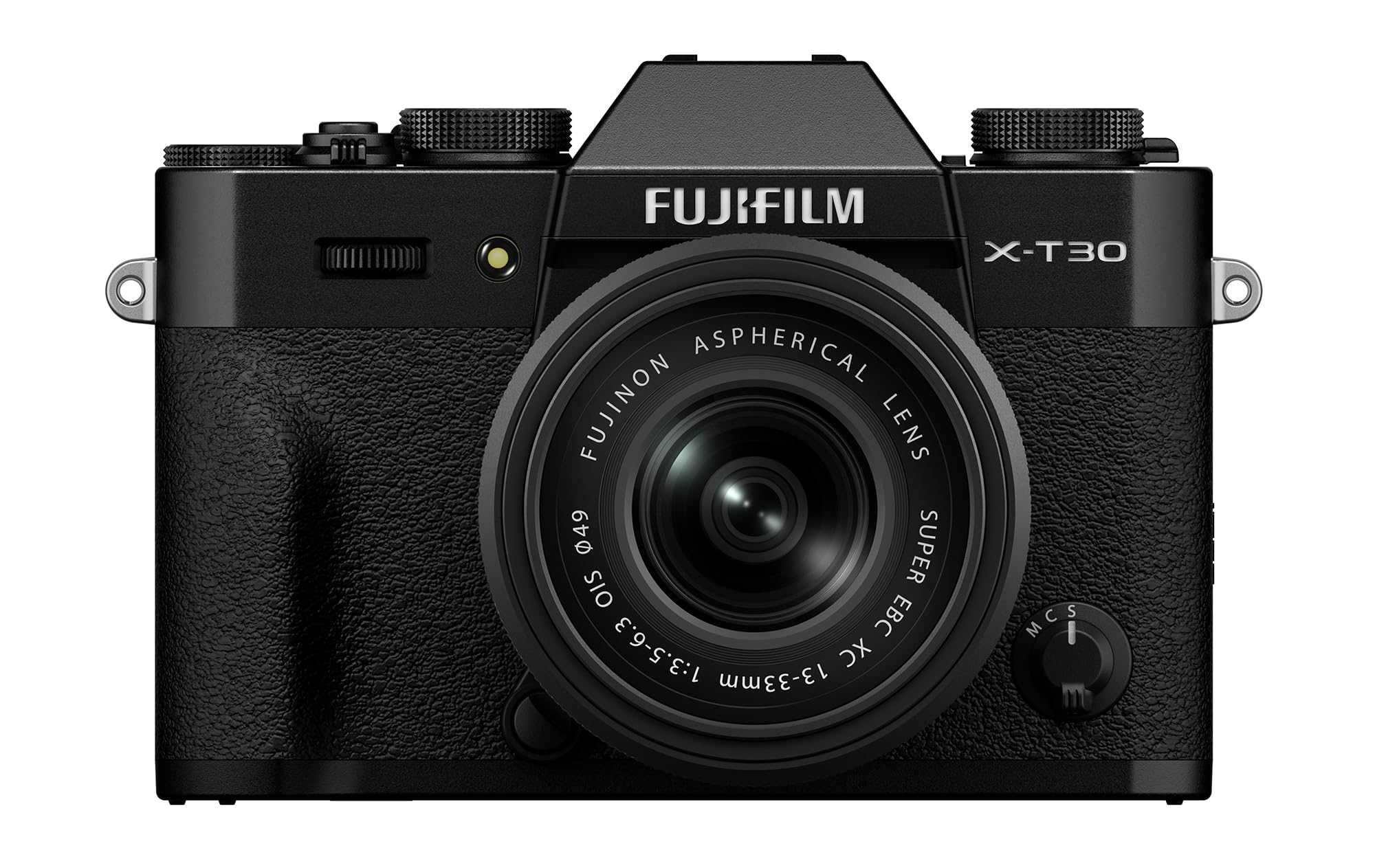
The Fujifilm X-T30 III wins on character: its 20 Film Simulation modes produce gorgeous JPEGs straight out of camera—no editing required. For busy parents who want share-ready photos of their kids without spending hours in Lightroom, that’s a massive time saver. The Astia simulation renders skin tones beautifully, and the AI-powered subject detection autofocus keeps active kids in focus.
The 26.1MP X-Trans CMOS 5 HR sensor delivers exceptional detail and color science that rivals full-frame cameras in good light. The compact body with classic dials makes it a joy to use, and the 425 phase-detection AF points cover a wide area. The XC 13-33mm kit lens is versatile, though its slow aperture struggles in low light without bumping ISO.
User reviews consistently mention the steep learning curve for beginners, but those who invest time are rewarded with some of the best out-of-camera colors in the industry. No in-body stabilization means you’ll need steady hands or OIS lenses for sharp indoor shots.
Why it’s great
- Best out-of-camera JPEG colors with Film Simulations
- AI autofocus with 425 points for fast subject detection
- Compact, stylish body that inspires creative shooting
Good to know
- No in-body stabilization, requires steady technique
- Battery drains quickly, carry spares for full-day events
6. Panasonic LUMIX S9

The Panasonic LUMIX S9 is the smallest full-frame interchangeable lens camera on this list, designed for the family that travels light. Paired with the S 18-40mm lens, it slips into a cross-body bag or large coat pocket—a critical feature for parents who already carry a diaper bag and snacks. The 24.2MP sensor delivers professional-grade quality in a compact shell.
The LUMIX Lab app enables ultra-fast Wi-Fi transfers, so photos appear on your phone seconds after capture, ready for sharing or printing. Open Gate recording lets you capture all aspect ratios from one shot, which is perfect for posting to both Instagram (square) and YouTube (16:9) without re-composing. In-body stabilization is solid for handheld video.
Users love the portability and image quality but note the lack of a hotshoe or EVF means you’re committed to the rear screen for composition and you can’t add an external flash. The kit lens is a slow variable-aperture, so consider a faster prime for low-light family gatherings.
Why it’s great
- Extremely compact full-frame body, easy to carry anywhere
- Fast Wi-Fi transfer for immediate family sharing
- Open Gate recording for flexible social media aspect ratios
Good to know
- No electronic viewfinder or hotshoe for flash
- Kit lens is slow, invest in faster glass for low light
7. Sony Alpha 7C II

The Sony Alpha 7C II pairs a 33MP full-frame sensor with a dedicated AI processor for advanced subject recognition, making it one of the most intelligent family cameras on the market. The AI detects and tracks not only human eyes and faces but also birds and animals—perfect for a family trip to the zoo. Despite the compact rangefinder-style body, it packs the same sensor and processor found in Sony’s bulkier A7 IV.
The 759 hybrid AF points cover a wide area, and the eye-tracking is sticky. Users report that the camera locks onto a toddler’s eye as soon as they raise the camera to their eye. The 10-bit 4:2:2 4K video at 60p produces beautiful home movies with smooth focus pulls. The improved menu system from the previous generation is more intuitive for family users.
Battery life is excellent for a camera this size, and the compact body makes it easy to stow in a purse or bag. The single SD card slot is the main compromise, and the EVF resolution is lower than the more expensive A7 IV. But for most family scenarios, the 7C II delivers 95% of the performance at a fraction of the weight.
Why it’s great
- AI processor provides best-in-class human/animal eye tracking
- 33MP sensor with excellent dynamic range for family portraits
- Compact and light enough for everyday carry
Good to know
- Single SD card slot offers no backup for important events
- EVF resolution is lower than same-price competitors
8. Nikon D850

The Nikon D850 is the DSLR that refuses to die because it’s still one of the highest-resolution cameras you can buy. The 45.7MP back-illuminated sensor delivers phenomenal detail with no optical low-pass filter, meaning family portraits are razor-sharp even when cropped heavily. The 153-point AF system with 99 cross-type sensors is fast and accurate in good light, though it’s not as sticky as modern mirrorless eye-AF for moving subjects.
The 9 fps burst with full AF is enough to capture a child catching a ball, and the 4K time-lapse mode is a creative bonus. The tilting touchscreen makes low-angle shots of pets and toddlers easier. The optical viewfinder offers zero lag, which some DSLR veterans still prefer for action shots.
User reviews highlight the exceptional build quality, weather sealing, and battery life that easily lasts a weekend event. The large body and heavy weight are the main downsides—it’s a serious camera for intentional shooting, not a grab-and-go family camera. Lens investment matters: pair it with sharp glass to justify the sensor.
Why it’s great
- 45.7MP sensor allows extreme cropping without losing detail
- Robust weather-sealed build for outdoor family adventures
- Outstanding battery life for all-day events
Good to know
- Heavy body discourages casual daily carry
- Autofocus lacks modern mirrorless eye-tracking sophistication
9. Panasonic LUMIX G100

The Panasonic LUMIX G100 is a budget-conscious entry-point that doesn’t skimp on video features. The Micro Four Thirds sensor is smaller than APS-C, but the 12-32mm kit lens keeps the system compact—about the size of a travel mug. The standout feature is the built-in 360-degree tracking microphone that adjusts direction based on subject movement, a real asset for recording a child’s recital or birthday speech.
The 4K video quality is crisp, and the 5-axis hybrid stabilization smooths out handheld walking footage. The iA (intelligent auto) mode chooses sensible settings for beginners, while manual modes offer room to grow. The flip-out touchscreen is great for family selfies or vlogging. The camera also doubles as a high-quality webcam via USB.
User feedback is mixed on the plasticky build and the small electronic viewfinder that’s awkward for eyeglass wearers. The kit lens is also noted as “dark” and limiting in low light—upgrading to the 25mm f/1.7 is widely recommended. It’s a decent starter camera but may frustrate parents shooting mostly indoors without better glass.
Why it’s great
- Built-in tracking microphone captures high-quality family audio
- Very compact and affordable entry to interchangeable lenses
- Works as a webcam for remote school events
Good to know
- Plasticky build feels less durable for active families
- Kit lens is slow; budget for a fast prime for indoor use
10. Canon EOS Rebel T7
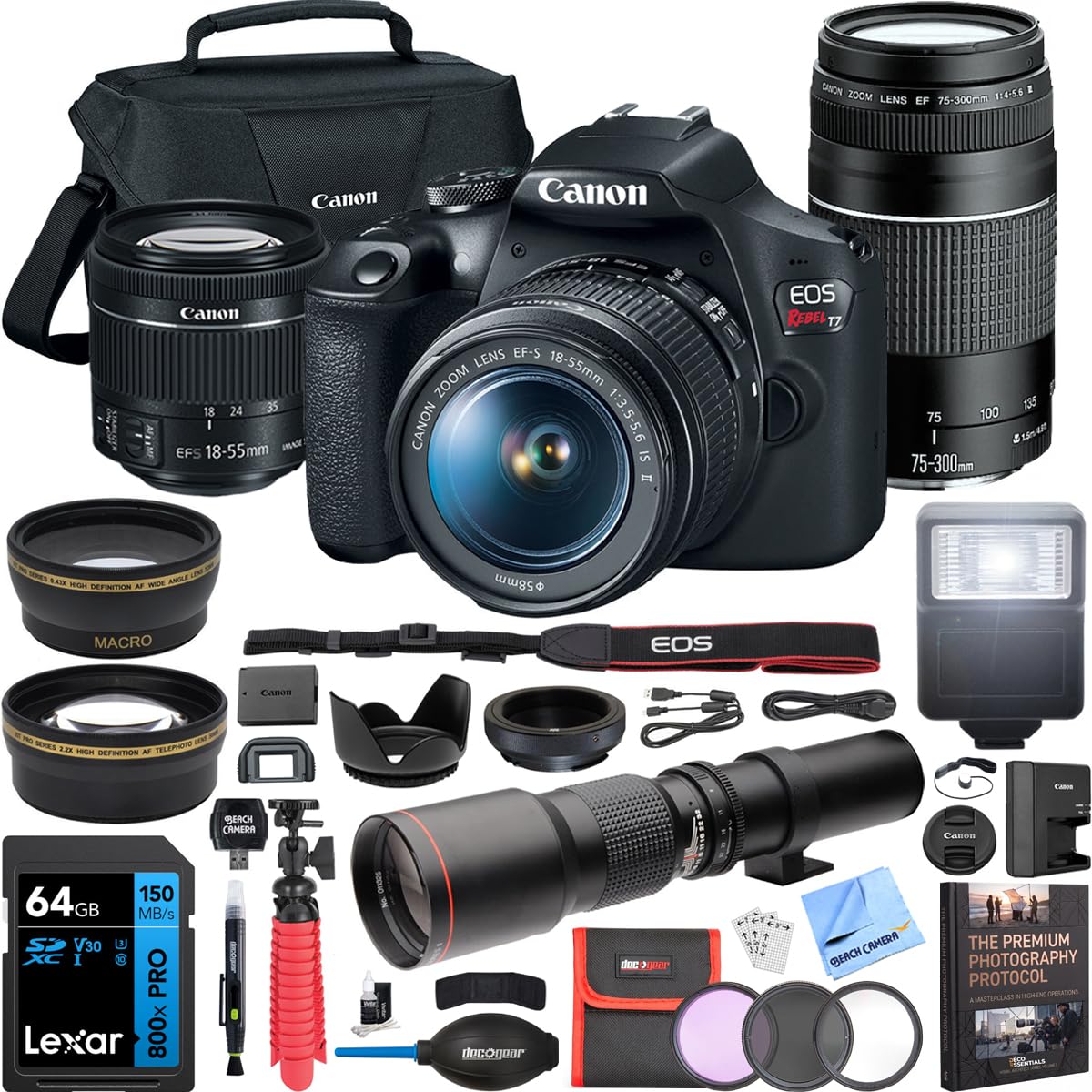
The Canon EOS Rebel T7 bundle is the classic budget entry: a 24.1MP APS-C DSLR with two zoom lenses (18-55mm and 75-300mm) plus a massive accessory kit including a 500mm telephoto, tripod, flash, bag, and more. For under one price point, it offers everything an absolute beginner needs to start exploring family photography—from wide group shots to distant wildlife at the park.
The 9-point autofocus system is basic by modern standards, but Scene Intelligent Auto mode handles exposure decisions reliably for casual shooters. The optical viewfinder provides zero-lag viewing, and the 3 fps burst is slow but workable for static portraits. The built-in Wi-Fi allows quick transfer to a phone for social sharing.
User reviews consistently praise the value bundle, but warn about the included accessories. The 500mm lens requires a tripod, the battery drains quickly (some users report 8-15 shots before needing a recharge), and the cheap bag barely fits everything. The real value is in the Canon ecosystem: the EF lens mount offers decades of affordable glass to grow into.
Why it’s great
- Massive bundled accessory kit, value-packed for beginners
- 24.1MP sensor delivers good image quality for the price
- Access to Canon’s huge EF lens ecosystem for future upgrades
Good to know
- Battery drain is severe, carry multiple spares
- Basic 9-point AF struggles with moving children
11. Fujifilm X100VI

The Fujifilm X100VI is a cultural phenomenon for good reason: its 40.2MP X-Trans sensor, fixed 23mm f/2 (35mm equivalent) lens, and 20 Film Simulations produce stunning social-ready images with zero editing. The hybrid viewfinder (optical + electronic) is a joy to use, and the built-in ND filter allows wide-aperture shooting in bright daylight—perfect for a beach day with the kids.
The 5-axis IBIS with up to 6 stops of correction allows handheld shooting at 1/4 second, making low-light indoor shots possible without a flash. The 425-point AF system is fast for static subjects, though it can hunt in low contrast compared to newer eye-AF algorithms. The 6.2K video is surprisingly capable for a fixed-lens camera.
Users rave about the camera’s tactile dials, inspiring design, and film recipes that make every outing feel creative. The fixed focal length is the biggest trade-off—you zoom with your feet, which may not suit all family scenarios. The price is premium, but for the photographer who values experience as much as the result, it’s a camera that stays glued to your hand.
Why it’s great
- Incredible out-of-camera JPEGs with Film Simulations
- Compact, stylish design encourages daily carry
- Excellent IBIS for handheld low-light family portraits
Good to know
- Fixed 35mm f/2 lens limits versatility for groups or zoom
- Autofocus can struggle in low light compared to newer models
FAQ
How do I improve indoor family photos without a flash?
Do I need a full-frame camera for family portraits?
How important is burst rate for shooting kids?
Final Thoughts: The Verdict
For most users, the camera for family photography winner is the Sony a7 III because it delivers unbeatable autofocus, excellent low-light performance, and solid battery life in a system with tons of affordable lens options. If you want beautiful out-of-camera JPEGs with creative film simulations, grab the Fujifilm X-T30 III. And for uncompromising resolution and professional-grade build when you’re shooting family portraits with full creative control, nothing beats the Canon EOS R5.

Mo Maruf
I created WellFizz to bridge the gap between vague wellness advice and actionable solutions. My mission is simple: to decode the research and give you practical tools you can actually use.
Beyond the data, I am a passionate traveler. I believe that stepping away from the screen to explore new environments is essential for mental clarity and physical vitality.