Our readers keep the lights on and my smoothie glass nicely filled. As an Amazon Associate, I earn from qualifying purchases.
Choosing a camera for everyday use means balancing image quality with ease of carry, intuitive controls, and a feature set that grows with you. Too much complexity kills spontaneity, while too little capability leads to frustration when you want to experiment.
I’m Mohammad Maruf — the founder and writer behind WellFizz. I’ve spent over a decade analyzing market trends, reading thousands of spec sheets, and comparing sensor performance, autofocus systems, and lens ecosystems across the full range of consumer cameras to help casual shooters find the perfect fit.
Whether you are documenting weekend trips, capturing family milestones, or exploring creative framing, the right tool removes technical friction and keeps the focus on the moment. This guide breaks down the most compelling options for the camera for casual photography.
How To Choose The Best Camera For Casual Photography
The cameras in this guide cover a wide performance span, so focusing on a few key traits helps you pinpoint your ideal match without getting lost in marketing jargon.
Sensor Size and Resolution
Sensor size dictates how well the camera performs in low light and how much control you have over background blur. Full-frame sensors (like the one in the Sony a7 III) give you the best image quality and depth of field control, but they come with larger, heavier bodies and lenses. APS-C sensors (found on the Canon EOS R50 and Sony ZV-E10) strike an excellent balance between image quality and portability. Most casual shooters will find 24 megapixels more than enough for large prints and cropping; 40 megapixels (as on the Fujifilm X-E5) is overkill for snapshots but allows extreme cropping.
Autofocus Simplicity
For casual use, reliable autofocus that detects faces and eyes is far more important than tracking a racing car at 20 frames per second. Look for cameras with phase-detection AF covering a wide portion of the frame. The Sony and Canon models in this guide excel here, often letting you compose the shot and press the shutter without fussing over focus points. Slower contrast-detection systems (common on older bridge cameras) can miss the decisive moment, especially indoors.
Lens Ecosystem and Kit Lens Quality
The lens you use most determines your image quality more than the body does. A sharp, stabilized kit lens like the 18-45mm on the Canon EOS R50 or the 12-60mm on the Panasonic G85 covers wide-angle to moderate telephoto, handling landscapes, portraits, and group shots. If you prefer portability, a compact pancake prime (like the 23mm on the Fujifilm X-E5) delivers superb sharpness in a pocketable size, but you sacrifice zoom flexibility. Consider how often you plan to buy additional lenses; systems with many affordable options (Sony E-mount, Micro Four Thirds) are ideal for casual photographers who want to grow slowly.
Quick Comparison
On smaller screens, swipe sideways to see the full table.
| Model | Category | Best For | Key Spec | Amazon |
|---|---|---|---|---|
| Sony a7 III | Full-Frame | Low-Light & Pro-Grade Images | 24.2MP BSI Full-Frame Sensor | Amazon |
| Fujifilm X-E5 | Mirrorless APS-C | Film Simulations & Compact Style | 40.2MP X-Trans 5 Sensor | Amazon |
| Nikon Z 7II | Full-Frame | Ultra-High-Resolution Landscapes | 45.7MP BSI Full-Frame Sensor | Amazon |
| Sony a6400 | Mirrorless APS-C | Fast Action & Street Shooting | 0.02s Autofocus, 425 Phase Points | Amazon |
| Nikon Z 6II | Full-Frame | Hybrid Stills & Video Balance | 24.5MP Full-Frame BSI Sensor | Amazon |
| Canon EOS R50 | Mirrorless APS-C | Beginners & Versatile Vlogging | Dual Pixel CMOS AF II | Amazon |
| Sony ZV-E10 | Mirrorless APS-C | Vlogging & Content Creation | 4K Oversampled from 6K | Amazon |
| Canon EOS R100 | Mirrorless APS-C | Budget Entry into Mirrorless | 24.1MP APS-C CMOS Sensor | Amazon |
| Panasonic G85 | Mirrorless Micro 4/3 | Stabilization & Travel Value | 5-Axis In-Body Dual I.S. | Amazon |
| Olympus TG-7 | Rugged Compact | Adventure & Underwater Snaps | Waterproof to 15 Meters | Amazon |
| Panasonic FZ80D | Bridge Superzoom | Wildlife & Extreme Reach | 60x Optical Zoom (20-1200mm) | Amazon |
In‑Depth Reviews
1. Sony a7 III Full-Frame Mirrorless

The Sony a7 III has become a reference point for full-frame mirrorless performance at a reasonable investment. Its 24.2-megapixel back-illuminated sensor delivers class-leading dynamic range, letting you recover shadows without noise in post-processing. The 693 phase-detection points covering 93% of the frame ensure that facial detection keeps up with fast-moving toddlers or pets, even in dim indoor light.
In casual use, the 10 fps burst rate with continuous autofocus feels responsive, while the 28-70mm kit lens provides a practical everyday range for group portraits, landscapes, and street photography. The 15-stop dynamic range means you get usable images straight out of camera without needing to tweak exposure in software.
Battery endurance is a standout feature — rated for over 700 shots per charge, so you rarely worry about carrying spares on day trips. The only real concessions are the deep menu system, which takes time to learn, and the lack of a fully articulating screen, making waist-level vertical shots a bit awkward. Still, for image quality per dollar, this remains a top pick for serious casual shooters.
Why it’s great
- Excellent low-light performance with ISO up to 204,800
- Class-leading battery life for a mirrorless body
- Fast and reliable real-time eye-tracking AF
Good to know
- Complex menu system may overwhelm first-time users
- Screen does not tilt forward for self-recording
- Kit lens aperture is slow for indoor action
2. Fujifilm X-E5
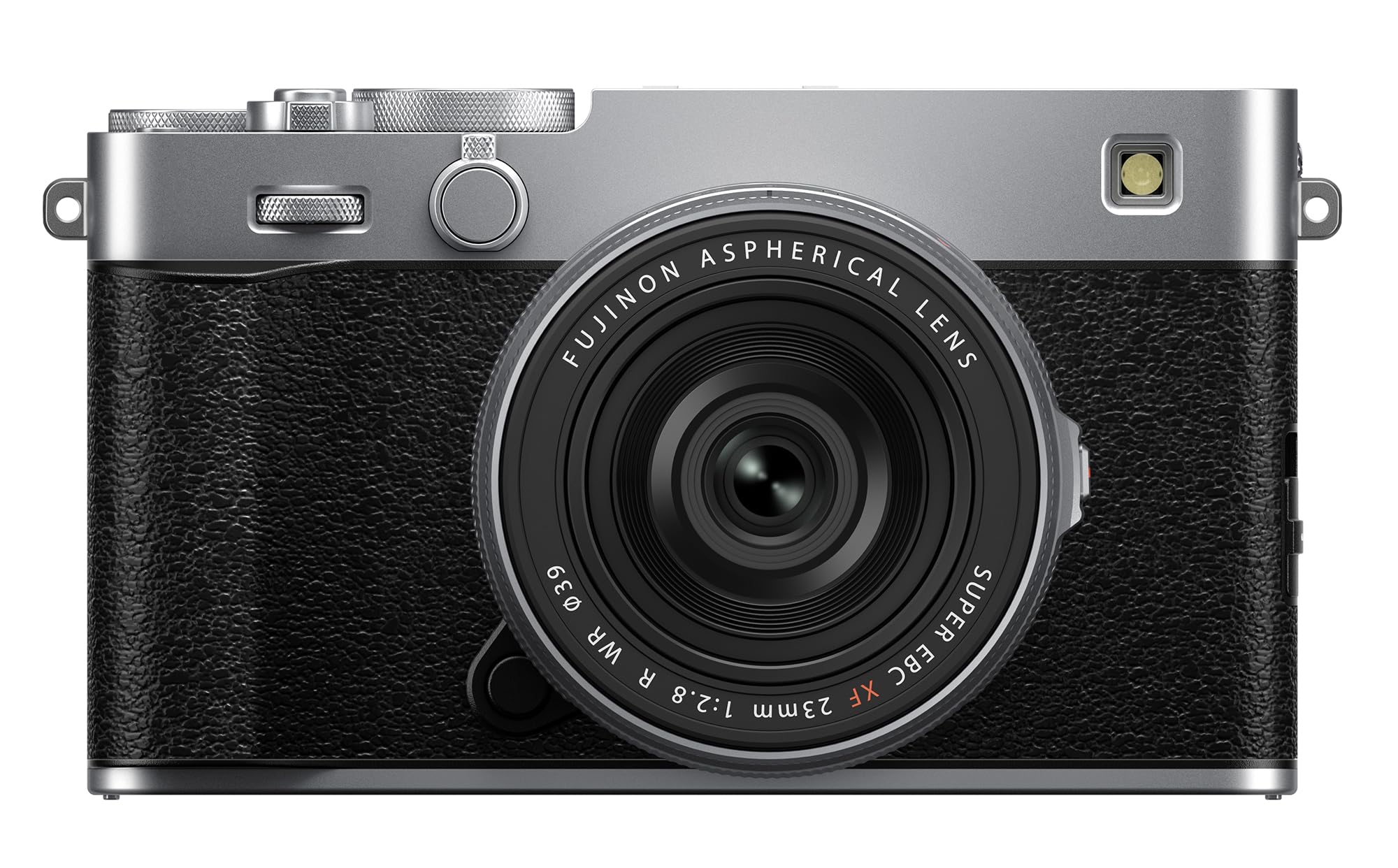
Fujifilm’s X-E5 bridges classic rangefinder aesthetics with modern image stabilization and high-resolution capture. Its 40.2-megapixel X-Trans 5 HR sensor out-resolves most APS-C competitors, allowing heavy crops without visible pixelation. The in-body image stabilization provides up to seven stops of shake correction, which is a real advantage when you are shooting handheld at dusk without a tripod.
The bundled XF23mm f/2.8 pancake lens is perfectly matched to the compact body — you get a true everyday-carry combination that slides into a coat pocket. Fujifilm’s Film Simulation modes, now controlled via a dedicated dial, produce JPEGs with distinct color science that often eliminates the need for post-processing. Deep-learning AI subject detection handles humans, animals, and vehicles with high accuracy.
The downsides are notable for casual users: the body lacks full weather sealing, the battery drains faster than the competition due to the high-resolution sensor, and the dedicated Film Simulation dial feels redundant to many photographers. But if you value a compact, stylish, and ultra-sharp setup that delivers artistic images straight out of the box, this is an inspiring companion.
Why it’s great
- Pancake kit lens makes for an extremely portable setup
- JPEGs with iconic film simulations require no editing
- 7-stop IBIS enables sharp shots in marginal light
Good to know
- Not weather-sealed against rain or dust
- High resolution demands fast memory cards
- Battery life is below average for mirrorless cameras
3. Nikon Z 7II

The Nikon Z 7II is built for photographers who demand extreme detail from their everyday carry. Its 45.7-megapixel BSI full-frame sensor captures files large enough for billboard prints, and the absence of an optical low-pass filter further sharpens fine textures like fabric weaves or foliage. The in-camera timelapse mode with exposure smoothing is a useful tool for casual landscape and travel photography.
Dual card slots (XQD plus UHS-II SD) offer immediate backup for important trips, and the vertical grip compatibility extends shooting endurance without switching bodies. The 2-axis tilt touchscreen and silent electronic shutter make it easy to capture candid moments without drawing attention. The 493 phase-detection points cover most of the frame, though subject tracking is less sticky than the Sony competition.
Battery life is average for a high-resolution full-frame body, but the USB-C constant power input solves this for long timelapses. For casual shooters who often crop deeply or print large, the Z 7II is a future-proof investment — just know that it demands sharp, expensive glass to truly realize its resolution.
Why it’s great
- 45.7MP resolution allows huge crops with minimal quality loss
- Dual card slots provide reliable backup on the go
- Built-in intervalometer and in-camera timelapse
Good to know
- Subject tracking can lose lock on fast erratically moving subjects
- Large RAW files eat up storage quickly
- No built-in flash for emergency fill light
4. Sony a6400

The Sony a6400 has earned its reputation as one of the fastest-focusing APS-C cameras ever made. The 0.02-second acquisition time and 425 phase-detection points covering 84% of the sensor make it almost impossible to miss a spontaneous expression or action moment around the house. The 11 fps burst with real-time tracking feels instant, and the 24.2-megapixel sensor delivers clean files up to ISO 6400.
The 18-135mm kit zoom provides a very flexible range — wide enough for tight indoor groups and long enough for compression in portraits at the park. The 4K recording with 6K oversampling produces crisp footage, and the tiltable LCD flips upward for vlogging shots. Build quality is solid with a magnesium-alloy front panel, though the body does not include full weather sealing.
Where the a6400 shows its age is the menu system, which still requires diving into multiple sub-menus to change basic settings. Battery life is adequate but not class-leading, and the micro USB port is slower for data transfer than USB-C. For casual shooters who prioritize fast, accurate autofocus and a versatile zoom range, this is still a compelling mid-range option.
Why it’s great
- Industry-leading autofocus speed for any mirrorless under double the price
- Versatile 18-135mm kit lens reduces need for extra glass early on
- Magnesium-alloy construction feels premium and durable
Good to know
- Menu navigation is confusing for first-time Sony users
- No USB-C charging option for modern convenience
- Weather sealing is minimal despite the solid build
5. Nikon Z 6II

The Nikon Z 6II offers full-frame performance with a versatile feature set that appeals to casual photographers who also shoot video. The 24.5-megapixel back-illuminated sensor captures clean, detailed images at high ISO, and the 5-axis in-body stabilization works with any lens you mount, providing a clear advantage in dimly lit interiors. The 14 fps burst rate is sufficient for moderate action like kids playing sports.
One of the strongest practical features is the dual card slots — one CFexpress/XQD and one UHS-II SD — giving you flexible storage options and the ability to backup in-camera. The ergonomics are excellent, with deep grip and intuitive button placement that works well for all-day shooting. The Z-mount lens lineup continues to grow, and the camera accepts hundreds of F-mount lenses via the FTZ adapter.
Autofocus subject tracking, while improved over the original Z 6, still lags behind Sony’s system in challenging scenarios, such as when a subject briefly moves behind an obstacle. Battery life is average for full-frame, and the screen does not flip forward for self-recording. For a balanced shooter who values image quality and stabilization over raw AF speed, the Z 6II is a smart choice.
Why it’s great
- In-body stabilization provides sharp handheld shots at any shutter speed
- Dual card slots offer backup for memorable trips
- Large Z-mount ecosystem with adapter for legacy glass
Good to know
- AF tracking confidence is lower than Sony counterparts
- No fully articulating screen for front-facing work
- Battery life is moderate; carry a spare for all-day shoots
6. Canon EOS R50
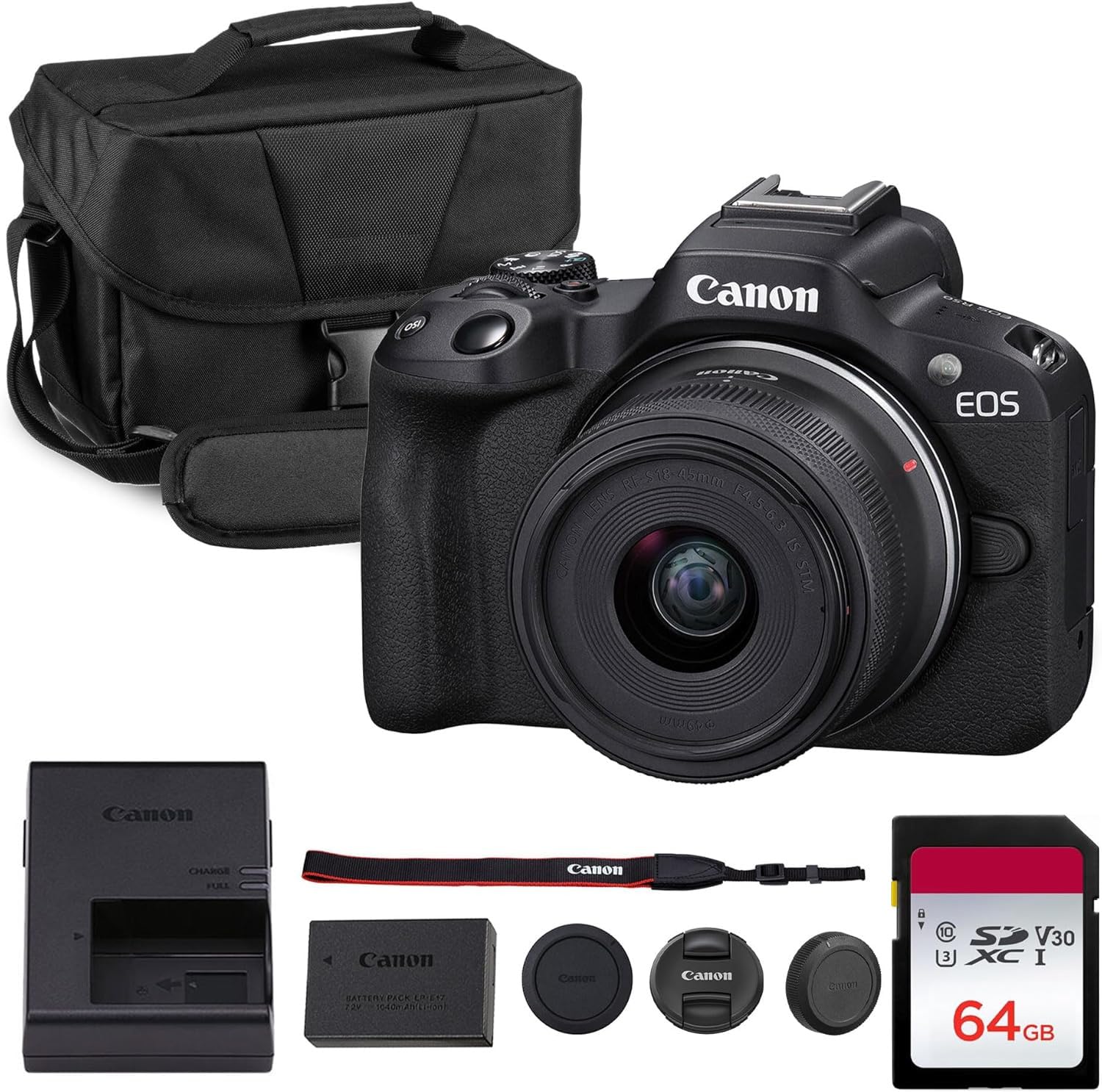
Canon’s EOS R50 is purpose-built for beginners who want a simple path to high-quality photos without complex menus. The 24.2-megapixel APS-C sensor is mated to the Dual Pixel CMOS AF II system, which delivers smooth, reliable face and eye tracking for both subjects and pets. The 4K video is oversampled from the full sensor width, producing noticeably sharper footage than cameras with pixel-binned 4K.
The vari-angle touchscreen is a major usability win for casual photographers — you can frame low-angle shots, overhead compositions, and self-recording without contorting your body. The Creative Assist mode offers in-camera guidance, letting you adjust brightness, background blur, and color tone using simple sliders rather than jargon. The included 18-45mm kit lens is lightweight and stabilized.
Given its price point, the R50 lacks in-body image stabilization, relying instead on lens-based stabilization. The electronic viewfinder is small, and the plastic body does not inspire the same confidence as a magnesium-alloy build. For a family camera or a first interchangeable-lens system, the R50 simplifies the transition from smartphone photography gracefully.
Why it’s great
- Dual Pixel AF II is intuitive and reliable for family moments
- Fully articulating touchscreen handles any shooting angle
- Creative Assist mode makes camera settings easy to understand
Good to know
- No in-body stabilization; relies on lens OIS
- EVF is smaller and lower resolution than competitors
- Body uses polycarbonate, not metal
7. Sony ZV-E10
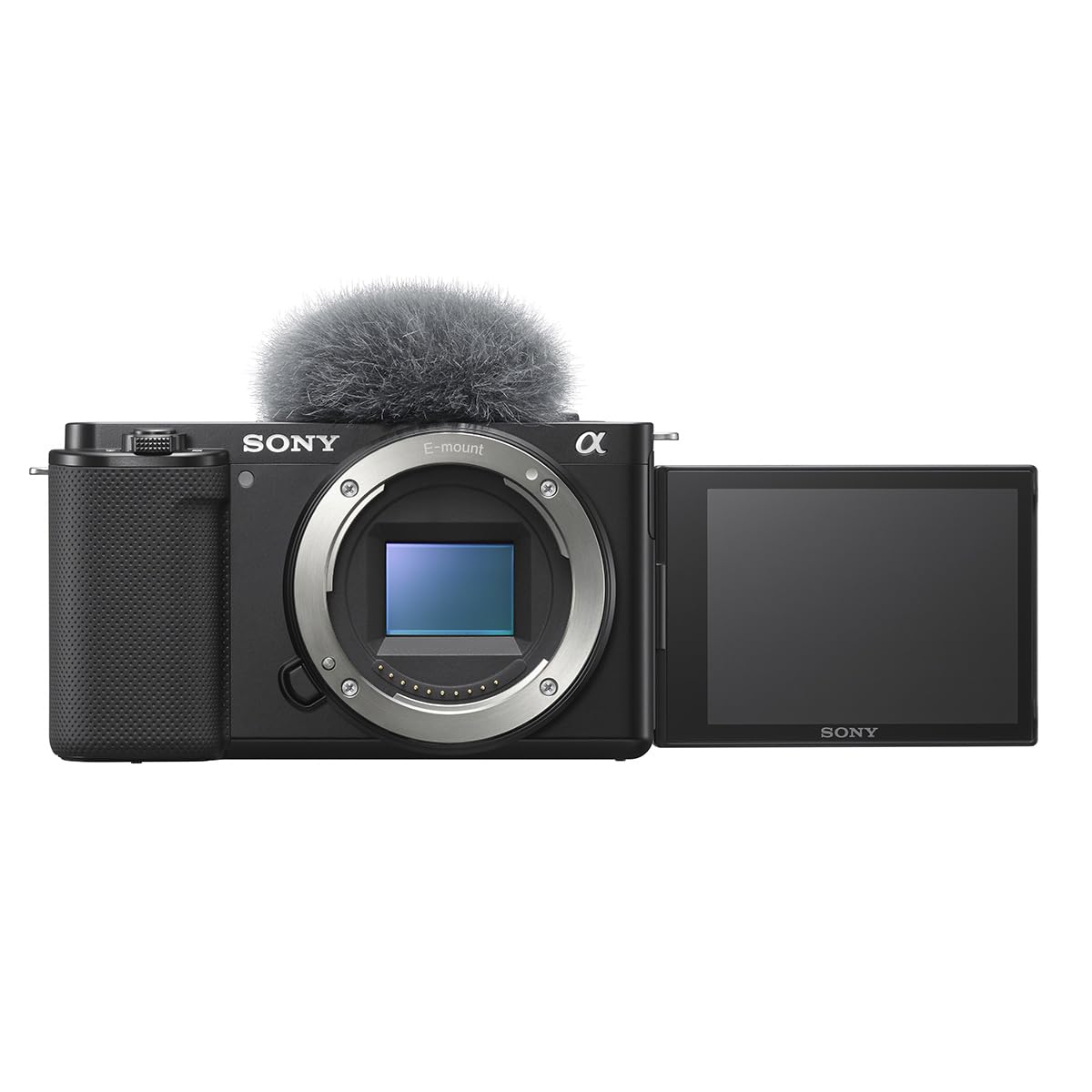
The Sony ZV-E10 is a video-first mirrorless camera that still performs admirably for still photography. The 24.2-megapixel APS-C sensor produces sharp, natural-toned images, and the 4K footage is oversampled from a 6K readout, delivering exceptional detail for family videos or casual YouTube content. The Product Showcase setting transitions focus instantly from your face to an object you hold up, which is handy for review-style clips.
The Background Defocus button lets you toggle between a blurry background and a deep focus with one tap, giving you creative control without diving into aperture settings. The built-in directional 3-capsule microphone captures clear audio for vlogs. At its weight and size, it is one of the most portable interchangeable-lens options for a casual shooter who wants to shoot both video and photo.
The lack of in-body stabilization means you will need stabilized lenses for smooth handheld footage. The LCD does not tilt down for top-down shots, and the menu system remains characteristically deep. The 4K 30p recording introduces a crop factor, narrowing the field of view slightly. For content creators who value video features and portability over traditional stills handling, the ZV-E10 hits a sweet spot.
Why it’s great
- Sharp 4K video with minimal rolling shutter in normal use
- Product Showcase and Background Defocus buttons simplify live content
- Lightweight body with good ergonomics for extended handheld use
Good to know
- No in-body stabilization; lens OIS is mandatory for steady handheld shots
- 4K at 30p has a noticeable crop factor
- Menu system can be confusing for first-time Sony users
8. Canon EOS R100

The Canon EOS R100 is the lightest and smallest body in the EOS R series, making it the least intimidating entrance into interchangeable-lens mirrorless photography. The 24.1-megapixel APS-C sensor and DIGIC 8 processor produce clean, detailed images that compare favorably to entry-level DSLRs, with the option of shooting 4K at 24 fps. The Dual Pixel CMOS AF with 143 zones covers face and eye detection for both humans and animals.
The RF-S 18-45mm kit lens is impressively compact and provides a practical zoom range for everyday snapshots, from wide landscapes to moderate telephoto portraits. The 6.5 fps burst rate in One-Shot AF is enough for static or slow-moving subjects, like a child blowing out birthday candles. Electronic viewfinder and built-in flash are included, giving you two framing options even in bright sunlight.
Inevitably for an entry-level price, the R100 lacks a fully articulating screen (only a fixed display), and the 4K video suffers from a significant crop factor that effectively turns your wide lens into a normal lens. The autofocus system, while reliable, has fewer points than higher-tier Canons. For someone buying their first real camera on a tight budget, the R100 offers genuine upgrade over phone photography.
Why it’s great
- Smallest and lightest body in the EOS R series for easy carry
- Dual Pixel AF with face and eye detection works reliably
- Includes both EVF and built-in flash for flexible shooting
Good to know
- Fixed LCD screen limits creative angles
- 4K video has a heavy crop, reducing field of view
- Lower burst rate than pricier R-series models
9. Panasonic Lumix G85

The Panasonic G85 remains a favorite for value-conscious enthusiasts who want stabilized 4K video and photos without spending full-frame money. The 16-megapixel Micro Four Thirds sensor omits the low-pass filter, which sharpens fine detail by about 10% compared to earlier Panasonic sensors. The 5-axis in-body dual image stabilization works with the lens OIS to produce blur-free handheld shots at shutter speeds that would be impossible on unstabilized systems.
The 12-60mm kit lens covers a 24-120mm full-frame equivalent range, which is genuinely versatile for travel, family events, and street photography. The Magnesium-alloy body is splash-resistant and dust-sealed, a rare feature at this tier. The OLED viewfinder is crisp, and the tilt-and-touch LCD gives you fast control over focus points with a tap of the finger.
The lower 16-megapixel count means you have less room to crop compared to 24-megapixel competitors. Autofocus can be sluggish in very low light when filming 4K. The Micro Four Thirds ecosystem, while rich, has a smaller depth-of-field effect than larger sensors, which may matter for portrait shooters. For those who prioritize stabilization and weather resistance at a modest price, the G85 is a resilient workhorse.
Why it’s great
- Excellent 5-axis stabilization works for handheld video and low-light stills
- Weather-sealed magnesium-alloy body handles light rain and dust
- Versatile 12-60mm kit lens covers most common focal lengths
Good to know
- 16MP sensor limits cropping ability compared to 24MP alternatives
- AF can hunt in dim conditions during 4K video recording
- Micro Four Thirds sensor has less background blur capability than APS-C
10. Olympus Tough TG-7

The Olympus Tough TG-7 is the ultimate pocket companion for environments where a regular camera would fail. It is waterproof to 15 meters, shockproof from 2.1 meters, crushproof to 100 kgf, and freezeproof down to -10°C. That level of ruggedness means you can take it snorkeling, hiking in a downpour, or dropping it on rocky terrain without a second thought. The 12-megapixel back-illuminated sensor paired with an f/2.0 lens captures bright images in good light.
The variable macro system is genuinely impressive: four different macro modes allow focusing as close as 1 cm from the end of the lens, revealing microscopic details of flowers, insects, or textures that a standard camera cannot reach. The underwater modes include underwater HDR and underwater microscope, adjusting white balance and color for submerged shooting automatically. 4K video at 30 fps and 120 fps high-speed recording add versatility for adventure clips.
The small sensor size means image quality degrades noticeably in low light, with visible noise even at moderate ISO. LCD brightness can wash out in direct sunlight, and there is no electronic viewfinder. For a casual photographer who spends weekends outdoors, by the pool, or on snowy trails, the TG-7 is the most liberating tool you can own — because you never have to worry about killing your camera.
Why it’s great
- Rugged enough for snorkeling, mountain hikes, and winter trips without a case
- Macro modes enable stunning close-up shots that challenge larger cameras
- Underwater color modes produce natural-looking images without external filters
Good to know
- Small sensor struggles with noise levels in dim environments
- No viewfinder; screen can be hard to see in bright sun
- 12MP resolution is modest compared to most competitors in this guide
11. Panasonic Lumix FZ80D

The Panasonic FZ80D fills a niche that no interchangeable-lens system can match at this price: a 60x optical zoom covering 20mm to 1200mm equivalent in one compact package. This reach lets casual photographers capture wildlife, distant landmarks, or moon craters without carrying multiple lenses. The POWER O.I.S. stabilization is crucial at the telephoto end, effectively suppressing hand shake so you can get sharp images at full zoom hand-held.
The 4K Photo and Post Focus features give you a safety net in fast-moving situations: shoot a 4K video burst and extract an 8-megapixel frame after the fact, or tap the screen to change the focus point after the shot is taken. The 2,360K-dot electronic viewfinder is bright enough for composing shots in strong sunlight, a clear advantage over smartphones. The 18.1-megapixel sensor captures decent detail in good light.
Where the FZ80D falls short is image quality in low light: the small 1/2.3-inch sensor produces noticeable grain even at base ISO once the light drops. The autofocus uses contrast detection, which hunts more than phase-detect systems in dim conditions. Battery life is modest, and the large zoom range can tempt you to shoot at focal lengths where camera shake and atmospheric haze degrade results. For a daytime outdoor zoom specialist, this is a uniquely capable budget-friendly bridge camera.
Why it’s great
- 60x optical zoom (20-1200mm) covers wildlife and sports without lens changes
- POWER O.I.S. stabilization keeps telephoto shots surprisingly steady
- 4K Photo extraction helps capture fleeting moments
Good to know
- Small sensor produces grainy images in low-light or indoor settings
- Contrast-detection AF struggles with speed when light drops
- Battery drains quickly with heavy zoom usage
FAQ
How many megapixels do I really need for casual photography?
Should I get a camera with a built-in flash or use an external one?
Does a larger sensor always mean better pictures?
Final Thoughts: The Verdict
For most users, the camera for casual photography winner is the Sony a7 III because it delivers full-frame image quality, class-leading autofocus, and excellent battery life that make daily shooting effortless. If you want compact style and beautiful JPEGs straight out of camera, grab the Fujifilm X-E5. And for rugged outdoor adventures where water, drops, and dust are constant threats, nothing beats the Olympus Tough TG-7.

Mo Maruf
I created WellFizz to bridge the gap between vague wellness advice and actionable solutions. My mission is simple: to decode the research and give you practical tools you can actually use.
Beyond the data, I am a passionate traveler. I believe that stepping away from the screen to explore new environments is essential for mental clarity and physical vitality.