Our readers keep the lights on and my smoothie glass nicely filled. As an Amazon Associate, I earn from qualifying purchases.
Specs are compiled from manufacturer listings and verified buyer reviews and can change over time — please confirm the key details on the product page before buying.
Smartphones hit a wall when you need to zoom into a stage, catch a bird in a distant tree, or hand a camera to a kid without worrying about a drop. A dedicated point-and-shoot solves all of that — giving you real optical zoom that actually sees far and a design built simply to take photos. You trade a thousand settings for a button that just works.
I’m Mohammad Maruf — the founder and writer behind WellFizz. This guide is built by comparing the manufacturers’ published specifications and the patterns across verified customer reviews, so you get each pick’s real strengths and trade-offs instead of marketing spin.
Whether you are shopping for your first real camera or a reliable travel companion, the right camera for beginners point and shoot puts optical zoom and straightforward controls back in your hands without overwhelming you with menus or interchangeable lenses.
Our Picks at a Glance


How To Choose The Best Camera For Beginners Point And Shoot
The best beginner point-and-shoot balances optical zoom reach, automatic modes, and pocketable size. You do not need a degree in photography — you need a camera that gets out of your way and lets you capture the moment. Here are the key specs to look at.
Optical Zoom — The Real Superpower
This is the main reason to buy a dedicated camera. Optical zoom uses the lens to magnify the image without losing quality, unlike digital zoom which just crops the photo. A 4x zoom is good for everyday family shots. A 30x to 40x zoom lets you photograph a singer on stage or a deer at the edge of a field. If you plan to shoot distant subjects, prioritize optical zoom over megapixels.
Image Stabilization — The Steady Hand You Need
When you zoom in all the way, even tiny hand movements make your photo blurry. Optical Image Stabilization (OIS) physically shifts the lens or sensor to counteract your shake. At 30x or 40x zoom, stabilization is not a luxury — it is the difference between a sharp keeper and a throwaway blur. Look for “Optical” or “5-Axis” stabilization.
Sensor Size and Megapixels
Most beginner point-and-shoots use a 1/2.3-inch sensor. This is small, but perfectly fine for well-lit outdoor photos. Megapixels (16MP to 20.3MP) matter more for cropping than for overall quality. A 20.3MP sensor gives you more flexibility to crop a shot and still print a decent 8×10. Do not obsess over the megapixel race — sensor technology and image processing matter just as much.
Video and Connectivity
If you plan to shoot short videos, look for 1080p Full HD or 4K UHD. Wi-Fi and Bluetooth let you transfer photos to your phone instantly and post them online, or use your phone as a remote viewfinder. This is a huge convenience for social-media-savvy beginners.
Quick Comparison
| Model | Best For | Optical Zoom | Megapixels | Max Video | Amazon |
|---|---|---|---|---|---|
| Canon PowerShot ELPH 360 HS | Everyday pocket carry | 12x | 20.2 MP | 1080p | Amazon |
| Sony DSC-H300 (Renewed) | Super-zoom budget reach | 35x | 20.1 MP | HD | Amazon |
| KODAK PIXPRO AZ255 | Versatile mid-range zoom | 25x | 16 MP | 1080p/30fps | Amazon |
| KODAK PIXPRO AZ528 | Wildlife and sports at a distance | 52x | 16 MP | 1080p Full HD | Amazon |
| Panasonic LUMIX ZS99 | Travel with premium Leica lens | 30x | 20.3 MP | 4K Video/Photo | Amazon |
| Canon PowerShot SX740 HS (Silver) | Concert and event photography | 40x | 20.3 MP | 4K UHD | Amazon |
In‑Depth Reviews
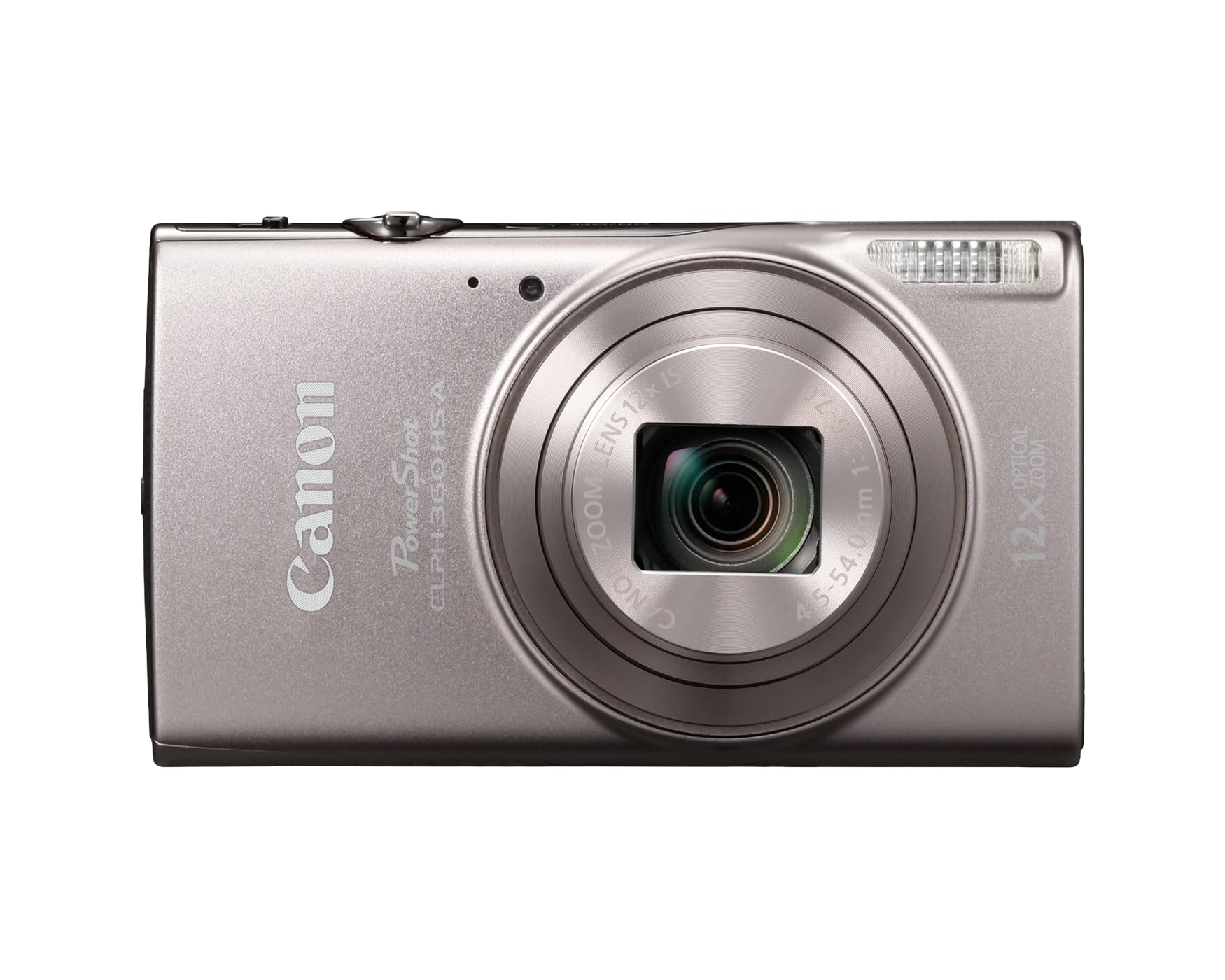
1. Canon PowerShot ELPH 360 HS A Silver
The pocket-friendly Canon balances 12x zoom, image quality, and Wi-Fi sharing for newcomers.
This camera earns the top spot because it nails the essentials without getting complicated. The 12x optical zoom with Optical Image Stabilizer is versatile enough for everything from group portraits to pulling in a distant landmark, while the 20.2 Megapixel CMOS sensor paired with the DIGIC 4+ Image Processor delivers detailed shots even when the light drops. A 3.0-inch LCD makes framing easy from wide angles, and the Hybrid Auto mode — which captures a short video clip before every still and rolls them into a daily recap — adds a creative twist that beginners genuinely enjoy.
The build quality and compact size are what people praise most. Built-in Wi-Fi and NFC let you transfer images straight to your smartphone without hunting for a cable, which is a huge convenience for posting to social media. The crowd-pleasing features include a 12x zoom range that is stronger than the 4x on the entry-level KODAK FZ45, though it falls short of the 35x reach on the Sony DSC-H300. This is the camera to reach for if you want a reliable, everyday carry that grows with you through easy-to-follow YouTube tutorials. The main trade-off is battery life — owners note that the lithium-ion charge lasts about an hour of active shooting, so buying a spare battery for a full day out is smart.
Why It Works
- 12x optical zoom with stabilization keeps distant subjects sharp
- 20.2 MP sensor and DIGIC 4 processor handle dim light well
- Built-in Wi-Fi and NFC make phone transfer instant and cable-free
- Hybrid Auto mode creates fun video recaps automatically
The Honest Downside
- Battery life is limited — about 1 hour of continuous use per charge
- Some beginners find the menu system takes a few hours to learn
Reach for this if: you want a stylish, pocketable camera with solid zoom and easy Wi-Fi sharing for everyday adventures and travel.
Look elsewhere if: you need extended battery life for all-day trips without access to charging — pack a spare battery or consider the AA-powered options below.
2. KODAK PIXPRO FZ45 16MP Digital Camera Bundle
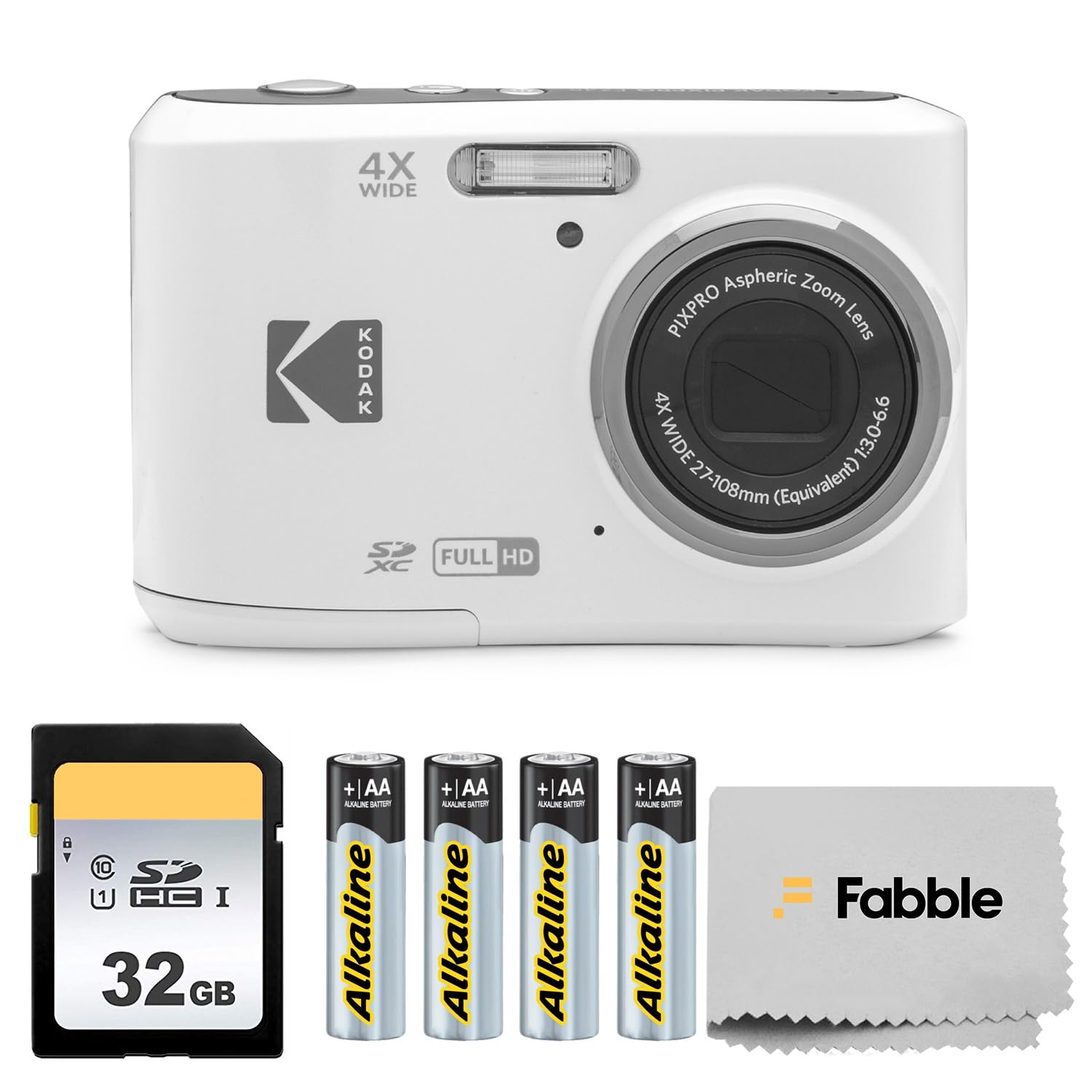
The budget-friendly super-zoom stretches your view without stretching your wallet.
If you are used to the 4x zoom on the KODAK FZ45, prepare for a massive leap. The Sony DSC-H300 packs a 35x optical zoom that brings distant subjects — think mountain peaks, stage performers, or backyard deer — right into your frame. The 20.1 MP sensor captures beautifully detailed photos, and in-camera Optical SteadyShot stabilization reduces blur even in low light. The Sweep Panorama mode lets you capture wide landscapes by simply panning the camera, which is a fun and easy feature for beginners.
As a renewed (refurbished) unit, it offers incredible value at a mid-range price. Owners consistently call it a “great handheld camera for on the go,” praising the clear HD pictures and ease of use. The camera quality and picture quality are the most-mentioned positives by a wide margin. The 35x zoom beats the 25x on the KODAK AZ255 and the 12x on the Canon ELPH 360, making it the strongest budget option for reach. The trade-off is that, being a renewed product, reliability can be a mixed experience — some units work flawlessly for years, while a few buyers report issues after 30 days. The autofocus uses only 5 points (compared to 25 on the Panasonic ZS99), so it is slower for tracking fast-moving subjects.
Why It Stands Out
- 35x optical zoom delivers exceptional reach for the price — a 8.8x gap over 4x cameras
- 20.1 MP sensor and 12-bit color depth for detailed, vibrant images
- Optical SteadyShot keeps telephoto shots sharper than expected
- Sweep Panorama makes landscape photography easy
What to Know
- Renewed condition means no manufacturer warranty — check the seller’s return policy carefully
- 5 autofocus points are limited for tracking fast-moving kids or pets
Reach for this if: your top priority is maximum optical zoom on a budget for outdoor and daylight photography.
Careful if: you want a brand-new, sealed-in-box camera with a full manufacturer warranty — a new Canon or KODAK might give you more confidence.
3. KODAK PIXPRO AZ255 16MP Digital Camera
the balance between everyday zoom and super-telephoto, powered by standard AA batteries.
The AZ255 is the definition of a versatile mid-range option. Its 25x optical zoom paired with a 24mm wide-angle lens lets you capture sweeping landscapes and then zoom in to see details far away, all without swapping lenses. The 16MP CMOS sensor handles daylight beautifully, and the Optical Image Stabilization (OIS) helps keep your long-zoom shots from turning into shaky blurs. It records 1080p Full HD video at 30fps, making it capable for casual vlogging or capturing family events. The 3-inch LCD screen is large and clear for composing shots.
What owners love most is the picture quality and the value for the money. At 25x, it offers a huge step up in reach compared to the 4x on the FZ45 or the 5x on the FZ55, while still being budget-friendly. Like the FZ45, it runs on 4x AA batteries, so you can keep shooting as long as you have spares in your bag. The camera quality gets mixed reviews — some units feel more solid than expected, while others feel a bit plasticky, which is the main compromise at this price. The autofocus uses 25 points (matching the far pricier Panasonic ZS99), which helps lock onto subjects more reliably than the single-point system on the cheaper FZ45.
Balanced reach: 25x optical zoom is enough for wildlife and sports, but not so extreme that it becomes hard to stabilize.
The catch: Build quality feels entry-level to some hands — treat it carefully and it will serve you well.
Reach for this if: you want a powerful zoom that still uses cheap, globally available AA batteries for low-maintenance travel.
Think twice if: you need a pocket-friendly camera — this bridge-style body is larger than the compact ELPH or FZ45.
4. Kodak PIXPRO FZ55 Digital Camera Bundle
The bridge camera that reaches 52x into the wild, the stands, and the sky — all without a tripod.
The AZ528 is built for one thing: bringing impossibly distant subjects into sharp, detailed view. With a 52x optical zoom and a 24mm wide-angle lens, it can go from a sweeping canyon panorama to a close-up of a hawk on a power line in an instant. The 16MP BSI CMOS sensor (Backside-Illuminated) performs better in low light than standard sensors, and the Optical Image Stabilization (OIS) actively compensates for hand shake even at maximum zoom. It shoots 1080p Full HD video and offers a 6 fps burst mode for capturing fast action sequences, like a soccer goal or a dog catching a frisbee.
Built-in Wi-Fi lets you wirelessly transfer photos to your smartphone and use your phone as a remote viewfinder — a handy feature for those tricky angles. The camera quality and ease of use are the most praised aspects. Owners find it a great entry-level option for birdwatching and wildlife, with one calling it “easy to use” and “lightweight.” The zoom gets mixed feedback because at 52x, even the smallest hand movement creates blur; a half-press of the shutter to let the stabilization catch up is essential. The rechargeable Li-ion battery is adequate for a day of shooting, though some wish it lasted longer.
class-leading reach: At 52x, this zoom beats every other camera on this list — it is the one for moon shots and faraway wildlife.
Stability demands practice: At max zoom, you need to brace the camera or use a tripod for consistently sharp results; the OIS helps but is not magic.
Reach for this if: your main goal is to photograph birds, wildlife, or sporting events from a distance on a budget.
Think twice if: you want a pocket camera for casual everyday use — this bridge design is larger and not pocketable.
5. Panasonic LUMIX ZS99 Point and Shoot Camera

The pocket rocket with a Leica lens that slips into a jacket and shoots 4K video.
The LUMIX ZS99 is the camera you buy when you want premium optics in a genuinely pocketable body. The Leica DC Vario-Elmar lens with 30x optical zoom (24-720mm equivalent) delivers sharp, contrast-rich images that stand out from the crowd. The 20.3MP 1/2.3-inch sensor pairs with a 121-point autofocus system — the highest point count on this list by a huge margin — which locks onto subjects quickly and accurately. It records 4K UHD video at 30p and offers 4K PHOTO burst mode at 30fps, letting you pull a perfect still from a video clip. The 1,840k-dot tiltable touchscreen is bright and responsive for composing from any angle.
Wireless connectivity is smooth: built-in Bluetooth v5.0 and a dedicated Send Image button transfer photos to your smartphone instantly via the Panasonic Image App. Owners praise the 30x zoom for being “class-leading by any phone” for concerts and sports, and the quality of the Leica glass gets top marks. The 5-Axis HYBRID O.I.S.+ (Optical Image Stabilization) is notably effective, keeping handheld telephoto shots much steadier than the KODAK AZ528. The honest downsides are that the camera lacks a built-in flash and the 4K video recording is limited to 15-minute clips before overheating protection kicks in, so plan for short takes. Low-light performance is a known weak spot compared to modern smartphones.
Premium Highlights
- Leica 30x zoom lens (24-720mm) delivers exceptional optical quality in a pocket body
- 121-point autofocus system is the fastest and most accurate on this list
- 4K video and 4K Photo burst mode for high-resolution flexibility
- 5-Axis Hybrid O.I.S.+ keeps telephoto shots remarkably steady
Know Before You Buy
- No built-in flash — nighttime shots rely entirely on ambient or external light
- 4K recording stops after 15 minutes due to heat; bring a spare battery
Reach for this if: you prioritize pocketable size, premium Leica lens quality, and 4K video for travel and event photography.
Careful if: you frequently shoot in very low light or need long continuous 4K video — this camera has limits there.
6. Canon PowerShot SX740 HS (Silver)

The 40x zoom that becomes a concert essential and a backyard birder’s best friend.
The SX740 HS is a fan favorite for a reason: a 40x optical zoom (24-960mm equivalent) with Optical Image Stabilizer and Zoom Framing Assist. The framing assist is a smart feature that temporarily zooms out so you can find your subject, then zooms back to your focal length — a huge help when tracking a fast-moving bird or a player on the field. The 20.3MP CMOS sensor and DIGIC 8 image processor deliver sharp, vibrant photos with good low-light handling for its class. It shoots 4K UHD video and 4K time-lapse movies, adding creative options for beginners. The 3.0-inch tilt-type LCD flips 180 degrees up for selfies and vlogging.
Built-in Wi-Fi and Bluetooth make sharing painless. With nearly 1,800 ratings, it is the most-reviewed camera on this list, and the consensus is clear: the zoom is fantastic and the compact size makes it a go-anywhere camera. The 40x reach easily beats the 30x on the Panasonic ZS99 and the 35x on the Sony DSC-H300. Owners love it for birdwatching, having taken “30k photos in 2 months” with one unit. The main compromise is the lack of a viewfinder — you compose entirely on the LCD, which can be hard to see in bright sunlight. The battery lasts about 2 hours of active shooting, so a backup is recommended for day trips. Some units sold on Amazon are international versions without a Canon USA warranty, so verify the listing.
Why It Dominates
- 40x optical zoom with Zoom Framing Assist makes tracking distant subjects easy
- 20.3MP sensor and DIGIC 8 processor produce excellent image quality
- 4K video and time-lapse in a compact, pocketable body
- Wi-Fi and Bluetooth for smooth phone transfer
The Main Trade-Off
- No electronic viewfinder — the LCD can be hard to see in bright sunlight
- Battery life is around 2 hours; a spare battery is a smart investment
Reach for this if: you need serious zoom reach for concerts, sports, or wildlife in a compact camera that travels easily.
Look elsewhere if: you absolutely need a viewfinder for shooting in bright sun — consider the larger bridge-style AZ528 instead.
Understanding the Specs
Optical Zoom — How Far You Can See
This is the most important number on a point-and-shoot. A 4x zoom is fine for family portraits and travel landmarks. A 25x to 40x zoom is for concerts, wildlife, and sports. The number tells you how many times the lens magnifies the image compared to the wide-angle setting — so a 40x zoom makes a subject look 40 times closer. Always prioritize optical zoom over digital zoom, which just crops and blows up the image, causing quality loss.
Optical Image Stabilization — The Sharpness Saver
At high zoom levels, your natural hand shake gets magnified. Optical Image Stabilization (OIS) uses tiny moving elements inside the lens or sensor to physically counter that shake in real time. This is why photos taken at 30x, 40x, or 52x zoom can still look sharp. Without it, most telephoto shots will be blurry. Look for “Optical,” “5-Axis,” or “SteadyShot” in the specs.
FAQ
How many megapixels do I really need in a beginner point and shoot camera?
What is the difference between optical zoom and digital zoom?
Which battery type is better: AA batteries or a rechargeable lithium ion pack?
Can I use a point and shoot camera for video?
How do I transfer photos from a point and shoot camera to my phone?
Will a point and shoot camera fit in my pocket?
What is image stabilization and do I need it?
Are renewed or refurbished cameras a good option for a beginner?
Final Thoughts: The Verdict
If you want one dependable pick, the camera for beginners point and shoot winner is the Canon PowerShot ELPH 360 HS because it combines a versatile 12x optical zoom, dependable image quality, and built-in Wi-Fi in a truly pocketable size that new photographers find easy to use and enjoy. If you want the absolute longest reach for concerts and wildlife while staying affordable, grab the KODAK PIXPRO AZ528 with its 52x zoom. And for a complete ready-to-shoot kit with a 40x superzoom that fits in a small bag, the Canon PowerShot SX740 HS Bundle is the one to reach for.
How We Picked
We do not accept paid placement. Every pick is matched to a real buyer and a real use-case; we do not hands-on test units.
Sources & Methodology
Specifications: manufacturer listings and product documentation. Review insights: verified customer reviews, as of July 2026. Pricing: not shown on this page (it changes often); check the current price via the retailer link.
As an Amazon Associate, WellFizz earns from qualifying purchases. This does not affect which products we feature.
Related Guides

Mo Maruf
I created WellFizz to bridge the gap between vague wellness advice and actionable solutions. My mission is simple: to decode the research and give you practical tools you can actually use.
Beyond the data, I am a passionate traveler. I believe that stepping away from the screen to explore new environments is essential for mental clarity and physical vitality.