Our readers keep the lights on and my smoothie glass nicely filled. As an Amazon Associate, I earn from qualifying purchases.
The first camera you buy defines whether photography becomes a lifelong passion or an expensive hobby left in a closet. The wrong choice—a body with sluggish autofocus, a kit lens that cannot handle low light, or a menu system that fights you at every turn—will frustrate you before you ever learn what aperture, shutter speed, and ISO actually do together. A thoughtful selection built around your specific goals avoids that trap entirely.
I’m Mohammad Maruf — the founder and writer behind WellFizz. I have spent years analyzing camera specifications, comparing sensor sizes, autofocus point counts, and stabilization systems across hundreds of models to identify what actually matters for someone picking up a dedicated camera for the first time.
Whether you are capturing family portraits, starting a YouTube channel, or exploring street photography, your ideal body should teach you without punishing you. This guide breaks down the strongest options available today to help you find the camera for beginners photography that matches your creative path and budget.
How To Choose The Best Camera For Beginners Photography
Selecting your first interchangeable lens camera comes down to understanding three core elements: the body’s sensor and autofocus system, the bundle or lens you start with, and the overall usability of the controls. A beginner camera must inspire confidence, not confusion.
Sensor Size and Megapixels
The sensor is the heart of the camera. An APS-C sensor, found in most entry-level models, offers a superb balance between image quality, low-light performance, and cost. Megapixel counts between 16 and 24 provide plenty of resolution for large prints and cropping, but do not chase numbers—a 24MP sensor with poor noise handling will lose to a 16MP sensor with excellent processing and larger individual pixels.
Autofocus System and Points
A beginner benefits most from reliable, fast autofocus. Look for a system with at least 9 to 49 phase-detection points or, better yet, a hybrid system that covers a wide portion of the frame. Dual Pixel CMOS AF (Canon) and Real-Time Eye AF (Sony/Nikon) are the gold standards for keeping moving subjects sharp without manual intervention.
Stabilization: IBIS vs. In-Lens
Image stabilization allows you to shoot at slower shutter speeds without blur. In-Body Image Stabilization (IBIS) works with any lens you mount, making it a future-proof feature. In-lens stabilization, often found in kit zoom lenses, is more common at this price tier. For beginners who shoot handheld in mixed light, either system is a massive step up from no stabilization at all.
Quick Comparison
On smaller screens, swipe sideways to see the full table.
| Model | Category | Best For | Key Spec | Amazon |
|---|---|---|---|---|
| Sony ZV-E10 | Mirrorless | Vlogging and content creation | 425 phase-detection AF points | Amazon |
| Canon EOS R50 | Mirrorless | Hybrid photo and video beginners | Dual Pixel CMOS AF II | Amazon |
| Nikon Z50 II | Mirrorless | Travel and family photography | 231 hybrid AF points | Amazon |
| Canon EOS RP | Mirrorless | Full-frame entry and landscapes | 26.2MP full-frame CMOS | Amazon |
| Panasonic LUMIX G85 | Mirrorless | Video and handheld shooting | 5-axis in-body stabilization | Amazon |
| Canon EOS M50 | Mirrorless | Compact everyday carry | 143 Dual Pixel AF points | Amazon |
| Canon EOS Rebel T7 (128GB Kit) | DSLR | Traditional DSLR learning experience | 24.1MP APS-C sensor | Amazon |
| Canon EOS Rebel T100 | DSLR | Budget-minded first DSLR | 18MP APS-C sensor | Amazon |
| Canon EOS 4000D Bundle | DSLR | Maximum accessories per dollar | 18MP APS-C sensor | Amazon |
| Nikon D3000 | DSLR | Classic DSLR durability | 10.2MP DX-format sensor | Amazon |
In‑Depth Reviews
1. Sony Alpha ZV-E10
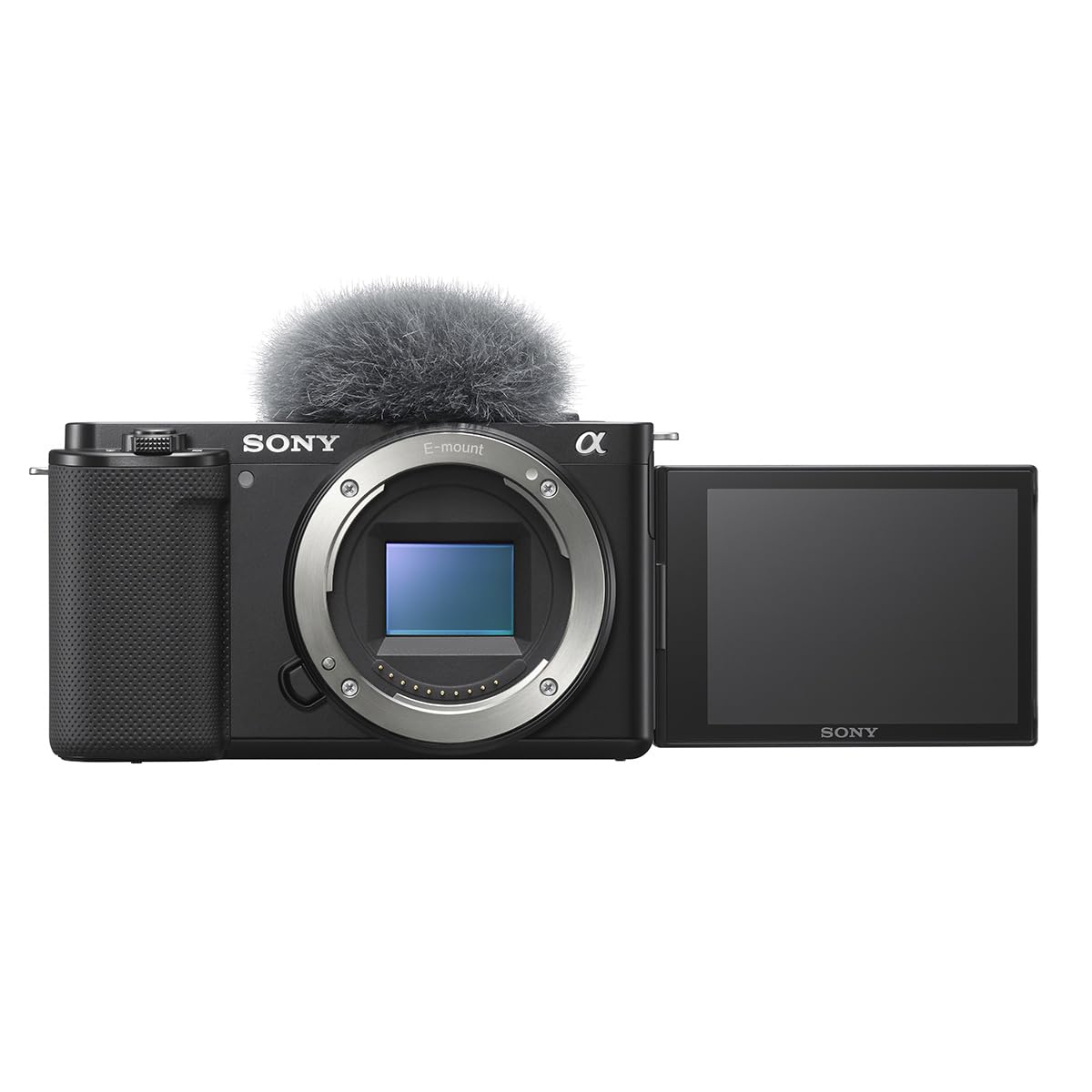
The Sony ZV-E10 is purpose-built for the modern beginner who wants to create video content and stills with minimal friction. Its 24.2MP APS-C sensor delivers sharp, detailed images, and the 425 phase-detection autofocus points provide the kind of reliable subject tracking that eliminates missed focus on moving subjects. The fully articulated screen makes self-recording and vlogging straightforward, and the Background Defocus button lets you toggle a shallow depth-of-field effect instantly without diving into menus.
Video performance is a standout feature here. The camera oversamples 4K from a 6K readout, resulting in footage with excellent detail and color depth. The built-in directional microphone and external mic input give you usable audio out of the box, and the USB streaming capability turns the camera into a high-quality webcam with a single cable. The lightweight body is comfortable for extended handheld use.
The main trade-offs are the lack of in-body stabilization—so you will need a gimbal for smooth walking footage—and the moderate battery life that demands a spare for all-day shoots. The 8-bit video limit and rolling shutter in fast motion are considerations for more advanced users, but for a beginner focused on improving their craft, this camera is an incredible value.
Why it’s great
- Outstanding 425-point phase-detection AF with Real-Time Eye Tracking
- Oversampled 4K video with no overheating in normal use
- Flip-out screen and Product Showcase mode for content creators
- USB streaming without extra hardware
Good to know
- No in-body image stabilization; relies on electronic or lens-based stabilization
- Battery life is modest, plan for spare batteries on long shoots
- 8-bit video limits color grading flexibility
- Noticeable rolling shutter in fast panning shots
2. Canon EOS R50

The Canon EOS R50 is a compact mirrorless camera that brings Canon’s latest Dual Pixel CMOS AF II technology to the entry-level segment. The autofocus system covers a wide area of the frame, delivering fast and reliable face and eye detection for both humans and animals. The 24.1MP APS-C sensor produces vibrant colors with Canon’s signature skin tone rendering, and the oversampled 4K video offers a significant step up in detail from 1080p cameras.
The vari-angle touchscreen is a joy to use for both high-angle and low-angle shots, and the Creative Assist mode helps beginners understand the relationship between aperture, shutter speed, and depth of field in a visual, non-intimidating way. The bundle includes a shoulder bag and a 64GB memory card, reducing the initial accessory shopping list. Vertical video shooting is natively supported, making it a strong choice for social media creators.
The RF-S 18-45mm kit lens is compact and versatile, though its f/4.5-6.3 maximum aperture limits low-light performance compared to a faster prime lens. The camera lacks a built-in flash, so you will need an external unit for indoor events. Overall, the R50 combines modern autofocus, excellent image quality, and a user-friendly interface in a lightweight body that is easy to carry every day.
Why it’s great
- Dual Pixel CMOS AF II provides reliable eye detection for people and animals
- Oversampled 4K video with impressive detail and color
- Vari-angle touchscreen and Creative Assist guide
- Compact and lightweight, ideal for daily carry
Good to know
- No built-in flash; external flash is needed for low-light indoor shots
- Kit lens aperture is slow, limiting performance in dim environments
- No in-body stabilization, relies on lens-based IS
3. Nikon Z50 II

The Nikon Z50 II is a refined mirrorless camera that inherits the processor and menu logic from Nikon’s higher-end Z9, bringing professional-level autofocus intelligence to a beginner-friendly body. The 20.9MP DX-format sensor resolves excellent detail, and the 231 hybrid phase-detection points cover a broad area of the frame. Nine subject-detection modes—including dedicated bird and airplane modes—make it easy to track wildlife and action.
One of the most beginner-friendly features is the built-in Picture Control button, which gives you access to 31 color presets that you can preview in real time. This encourages creative exploration without requiring post-processing skills. The built-in flash is a practical addition for indoor snapshots, and the Night Portrait mode automatically balances flash and ambient exposure for natural-looking results.
The camera supports 4K UHD video at 60p and in-camera 120p slow-motion in Full HD. Electronic VR helps smooth out handheld footage, and the product review mode is useful for content creators. The Nikon SnapBridge app enables quick wireless photo transfer to your smartphone. The single SD card slot and average battery life are minor compromises for the price.
Why it’s great
- Advanced AF with 9 subject-detection modes, including birds and airplanes
- 31 built-in Picture Control presets for creative shooting
- Built-in flash and Night Portrait mode
- 4K 60p video with in-camera slow-motion
Good to know
- Single SD memory card slot
- Battery life is modest, consider a spare
- No automatic sensor cleaning
4. Canon EOS RP

The Canon EOS RP is the most accessible full-frame camera on the market, offering a 26.2MP sensor in a body that weighs less than many APS-C DSLRs. Full-frame delivers superior low-light performance, shallower depth of field, and a wider dynamic range than smaller sensors. For a beginner who wants room to grow without replacing the body, the RP is a compelling long-term investment.
The Dual Pixel CMOS AF provides reliable face detection for stills and video, and the touchscreen interface makes setting adjustments intuitive. The RF 24-105mm f/4-7.1 IS STM kit lens covers a useful zoom range with built-in stabilization, making it versatile for travel, portraits, and general photography. The 4K video has a crop factor and no Dual Pixel AF, so 1080p remains the better video option with this camera.
The battery life is adequate for a day of casual shooting, and the lightweight construction makes it comfortable for long sessions. The full-frame ecosystem gives you access to Canon’s excellent RF lenses, and you can adapt EF lenses with a simple adapter. Beginners serious about advancing their skills will appreciate the headroom this sensor provides.
Why it’s great
- Full-frame sensor for superior low-light and dynamic range
- Lightweight and compact for a full-frame camera
- Dual Pixel CMOS AF with excellent face tracking
- Versatile 24-105mm stabilized kit lens
Good to know
- 4K video has a significant crop and no Dual Pixel AF
- Burst shooting is limited to 5 fps
- Kit lens aperture is slow at the telephoto end
5. Panasonic LUMIX G85

The Panasonic LUMIX G85 stands out as the best-stabilized camera in this segment, thanks to its 5-axis in-body image stabilization that works in tandem with the lens-based stabilization of the 12-60mm Power O.I.S. kit lens. This dual stabilization system allows handheld shooting at shutter speeds that would be impossible with unstabilized cameras, making it ideal for beginners who shoot in changing light conditions without a tripod.
The 16MP Micro Four Thirds sensor lacks a low-pass filter, which noticeably increases fine detail resolution compared to older 16MP sensors. The camera records 4K QFHD video with full sensor readout, and the 4K Photo mode lets you extract 8MP stills from video at 30 fps, which is useful for capturing fleeting moments. The OLED live viewfinder offers 2360K dots of resolution, providing a bright, clear view even in bright sunlight.
The magnesium alloy body is weather-sealed, offering durability that is rare at this price tier. The ergonomics are intuitive, with physical dials for aperture and shutter speed that make manual shooting a tactile experience. The main drawbacks are the smaller Micro Four Thirds sensor, which has less dynamic range than APS-C, and the finicky Wi-Fi connectivity for smartphone transfers.
Why it’s great
- Best-in-class 5-axis dual stabilization for handheld shooting
- Weather-sealed magnesium alloy body
- 4K video with 4K Photo mode and Post Focus
- Excellent ergonomics with dedicated dials
Good to know
- Micro Four Thirds sensor has less dynamic range than APS-C
- Autofocus is slower in low light compared to competitors
- Wi-Fi connectivity for iPhone can be inconsistent
6. Canon EOS M50

The Canon EOS M50 has been a favorite entry-level mirrorless camera for years, and its renewed versions still offer excellent value. The 24.1MP APS-C sensor delivers vibrant, detailed images with Canon’s pleasing color science, and the 143 Dual Pixel AF points provide smooth, accurate autofocus in both stills and video. The OLED electronic viewfinder with Touch and Drag AF lets you move the focus point while looking through the viewfinder by dragging your thumb on the rear screen.
Video features include 4K UHD recording at 24p and HD 120p for slow-motion footage. The body is small and light, making it easy to carry everywhere. The vari-angle touchscreen is responsive, and the menu system is one of the most accessible for beginners. The EF-M 15-45mm kit lens is compact but limited in low light, which is a common trade-off in this category.
The 4K video mode uses a crop factor that narrows the field of view, and the lack of in-body stabilization means you will need a gimbal or steady hands for smooth footage. ISO performance above 3200 shows noise, so a fast prime lens is a worthwhile upgrade. For stills-focused beginners who value portability, the M50 remains a strong choice.
Why it’s great
- Reliable 143-point Dual Pixel CMOS AF
- Compact and lightweight body for everyday carry
- OLED viewfinder with Touch and Drag AF
- Good stills image quality with Canon color science
Good to know
- 4K video uses a significant crop factor
- No in-body image stabilization
- ISO above 3200 shows noticeable noise
7. Canon EOS Rebel T7 (128GB Kit)

The Canon EOS Rebel T7 (known as the 2000D internationally) is a classic DSLR that offers a traditional shooting experience with an optical viewfinder. The 24.1MP APS-C sensor produces high-resolution images, and the 9-point autofocus system is reliable in good light. This bundle includes a wide-angle and telephoto lens alongside the standard 18-55mm kit lens, plus a 128GB memory card, flash, tripod, and carrying case, making it a complete starter package.
The optical viewfinder provides a real-time, zero-lag view of the scene, which many beginners prefer for composing stills. The Scene Intelligent Auto mode eliminates guesswork for beginners, while the Creative Auto and Basic+ modes introduce manual control gradually. Built-in Wi-Fi and NFC allow quick image transfer to a smartphone for social sharing. The 3 fps burst rate is modest but adequate for casual action shots.
The biggest limitation is the 9-point AF system, which covers a small area of the frame and struggles with moving subjects compared to modern mirrorless systems. The bundle accessories are basic—the tripod and bag are functional but not durable for long-term use. The lack of an articulating screen makes high and low-angle shooting more difficult.
Why it’s great
- Complete bundle with 128GB card, extra lenses, flash, and tripod
- 24.1MP APS-C sensor with good detail
- Optical viewfinder for traditional DSLR experience
- Built-in Wi-Fi for easy image sharing
Good to know
- 9-point AF system is limited for action and tracking
- No articulating touchscreen
- Bundle bag and tripod are low quality; plan to upgrade
8. Canon EOS Rebel T100

The Canon EOS Rebel T100 is the most affordable DSLR in Canon’s lineup, designed for absolute beginners who want to step up from smartphone photography without a steep price. The 18MP APS-C sensor produces good quality images in good light, and the 3 fps burst rate is adequate for learning the fundamentals. The optical viewfinder provides a direct, real-time view that helps teach composition and framing.
Scene Intelligent Auto mode makes shooting simple by automatically selecting settings, while the Creative Auto mode and Creative Filters let you experiment with different looks. The built-in flash is useful for indoor snaps, and the Canon Camera Connect app enables remote shooting and instant transfer to your smartphone. The guided live view with Creative Auto mode makes learning about aperture and shutter speed less intimidating.
The T100 uses a contrast-detection autofocus system in live view, which is noticeably slower than phase-detection systems found in higher-end DSLRs and mirrorless cameras. The 18MP sensor is lower resolution than competitors, and the plastic body feels less substantial. For someone purely focused on learning the basics at the lowest possible entry point, this camera serves its purpose.
Why it’s great
- Lowest entry price for a name-brand interchangeable lens camera
- Optical viewfinder for traditional shooting
- Built-in flash and Wi-Fi connectivity
- Creative Auto mode and filters for learning
Good to know
- Contrast-detect AF in live view is slow
- 18MP sensor is lower resolution than the Rebel T7
- Plastic body with a lighter build feel
9. Canon EOS 4000D Pixi Bundle

The Canon EOS 4000D Pixi Advanced Bundle is a comprehensive starter package that includes the camera body, 18-55mm kit lens, wide-angle and telephoto screw-on lenses, a tripod, a carrying bag, and cleaning accessories. The 18MP APS-C sensor is the same older sensor used in Canon’s entry-level DSLRs, providing decent image quality for daytime and well-lit scenes. The 19-point autofocus system is an improvement over the 9-point system, offering better coverage across the frame.
The optical viewfinder provides a clear, real-time view, and the Scene Intelligent Auto mode handles exposure decisions for beginners. The bundle includes a UV filter and extra batteries, reducing the need for additional purchases. The camera supports Full HD 1080p video at 30 fps, which is sufficient for basic home videos and social media content.
The screw-on wide-angle and telephoto lenses add versatility but degrade image quality compared to dedicated zoom lenses. The included case is flimsy and will likely need replacement. The 4000D is Canon’s most basic DSLR, so you are sacrificing build quality, burst rate, and low-light performance to get the lowest possible entry price with maximum accessories.
Why it’s great
- Extensive bundle with wide-angle and telephoto adapters, tripod, and bag
- 18MP sensor with 19-point AF system
- Built-in flash and Full HD video
- Very budget-friendly for a complete kit
Good to know
- Screw-on lenses compromise image quality compared to dedicated glass
- Basic build quality and flimsy included bag
- Low-light performance is limited by the older sensor
10. Canon EOS Rebel T7 (128GB Kit, Alternate)

This alternate bundle of the Canon EOS Rebel T7 includes the same camera body and 18-55mm lens but packages it with a different set of accessories, including a wide-angle and telephoto lens, 128GB memory card, filter kit, flash, and tripod. The 24.1MP APS-C sensor remains the same, offering strong resolution for the price. The 9-point autofocus system is basic but functional for stationary subjects.
The camera supports Full HD 1080p video at 30 fps, and the built-in Wi-Fi with NFC allows quick transfer to your smartphone. The Scene Intelligent Auto mode is forgiving for beginners, and the Creative Auto mode gradually introduces manual control. The optical viewfinder provides a lag-free viewing experience that many DSLR enthusiasts still prefer.
The limitations are the same as the other T7 bundle: a small 9-point AF area, a slow 3 fps burst rate, and a non-articulating screen. The included tripod is not built for stability, and the bag offers minimal protection. However, the camera itself is a reliable workhorse for someone committed to learning DSLR photography on a budget.
Why it’s great
- 24.1MP sensor with solid image quality for the price
- Bundle includes filter kit, flash, and 128GB card
- Built-in Wi-Fi and NFC for easy sharing
- Optical viewfinder for traditional DSLR shooting
Good to know
- 9-point AF system is small and limited for action
- No touchscreen or articulating display
- Bundle accessories are basic quality
11. Nikon D3000

The Nikon D3000 is a classic entry-level DSLR that represents a different era of digital cameras. Its 10.2MP DX-format sensor produces prints up to 20×30 inches, and the EXPEED image processor delivers solid colors and reasonable noise performance up to ISO 800. The 11-point autofocus system is an improvement over Canon’s 9-point system in terms of coverage, and the 3 fps burst rate is adequate for learning.
The Guide mode is one of the D3000’s best features for beginners. It asks you what kind of shot you want to take and then walks you through the settings to achieve it, effectively teaching exposure concepts without overwhelming you. The 18-55mm VR kit lens includes vibration reduction, which helps reduce blur in handheld shots. The camera feels solid and durable, with a comfortable grip for its time.
The D3000 lacks live view functionality, so all shooting must be done through the optical viewfinder. It does not record video, which is a significant limitation for beginners today. The resolution is low by modern standards, and the sensor shows noticeable noise at higher ISOs. For a beginner solely focused on learning still photography fundamentals from scratch, this camera offers a pure, distraction-free experience.
Why it’s great
- Guide mode teaches exposure concepts interactively
- Durable build quality with comfortable grip
- 11-point AF system with solid coverage
- VR kit lens reduces handheld blur
Good to know
- No video recording capability
- No live view, requires viewfinder use
- 10.2MP sensor is low resolution by current standards
FAQ
Should a beginner buy a DSLR or a mirrorless camera in 2025?
How many megapixels do I really need as a beginner photographer?
Is the kit lens good enough to start, or do I need a separate lens?
What is the difference between in-body stabilization and lens stabilization for a beginner?
Final Thoughts: The Verdict
For most users, the camera for beginners photography winner is the Sony Alpha ZV-E10 because it combines excellent autofocus, oversampled 4K video, and a beginner-friendly interface in a lightweight mirrorless body. If you want a full-frame sensor for maximum image quality and room to grow, grab the Canon EOS RP. And for a traditional DSLR learning experience with a complete accessory bundle, nothing beats the Canon EOS Rebel T7 128GB Kit.

Mo Maruf
I created WellFizz to bridge the gap between vague wellness advice and actionable solutions. My mission is simple: to decode the research and give you practical tools you can actually use.
Beyond the data, I am a passionate traveler. I believe that stepping away from the screen to explore new environments is essential for mental clarity and physical vitality.