Our readers keep the lights on and my smoothie glass nicely filled. As an Amazon Associate, I earn from qualifying purchases.
A blurred bird in flight or a distant deer that looks like a speck—these are the heartbreaks that separate a casual snap from a real wildlife keeper. The right camera for this niche does not just have a long lens; it has the autofocus speed to track erratic movement, a sensor that handles low morning light, and a burst rate that catches the decisive wingbeat. Choosing wrong means missing the shot, not just once, but every time the light drops or the subject moves.
I’m Mohammad Maruf — the founder and writer behind WellFizz. I have spent thousands of hours analyzing sensor readout speeds, AF point coverage, burst rates, and lens ecosystem compatibility for the specific demands of wildlife photography at the beginner level.
Whether you are standing at the edge of a marsh at dawn or tracking a squirrel through a backyard canopy, the camera for beginner wildlife photography must balance reach, speed, and ease of use without overwhelming a new user with menus or a price tag that feels like a second mortgage.
How To Choose The Best Camera For Beginner Wildlife Photography
Wildlife photography is the most demanding entry-level genre because your subject refuses to cooperate. The camera must compensate for the distance, the motion, and the fading light. Here are the factors that separate a keeper from a blur.
Autofocus System and Tracking
For wildlife, the autofocus system is the most critical spec. You need phase-detection points that cover a large portion of the sensor, animal-eye or bird-eye detection, and continuous AF that locks onto a moving subject. A camera with only 9 to 11 AF points will frustrate you when a hawk sweeps across the frame. Look for models with at least 143 AF points and dedicated subject tracking for birds or mammals.
Burst Rate and Buffer Depth
A fast burst rate—8 to 15 frames per second—lets you capture the exact moment a bird takes off or an animal turns its head. But the burst rate is useless if the buffer fills after two seconds. The buffer depth determines how long you can hold the shutter down before the camera slows. Aim for at least 20 RAW frames before the buffer chokes.
Reach and Lens Ecosystem
Wildlife is rarely close. A 300mm equivalent reach is the practical minimum, and 400-600mm is ideal. Crop-sensor APS-C cameras give you a 1.5x or 1.6x magnification factor, turning a 200mm lens into a 320mm effective reach. The lens ecosystem matters just as much—look for a system with affordable telephoto zoom options from the camera maker or third parties like Tamron and Sigma.
Image Stabilization
At long focal lengths, hand shake gets magnified. In-body image stabilization (IBIS) lets you shoot sharp at shutter speeds 3 to 5 stops slower than normal. If the body lacks IBIS, look for lenses with optical stabilization (VR or OIS). For a beginner, a body with IBIS is more forgiving when you are juggling settings in the field.
Quick Comparison
On smaller screens, swipe sideways to see the full table.
| Model | Category | Best For | Key Spec | Amazon |
|---|---|---|---|---|
| Canon EOS R7 | Mirrorless | Fast action and bird tracking | 30 fps e-shutter, 651 AF points | Amazon |
| Nikon Z50 II | Mirrorless | Two-lens kit for reach | 50-250mm kit lens, bird detection | Amazon |
| Sony Alpha A6100 | Mirrorless | Fastest AF for the price | 0.02 sec AF, 425 phase-det points | Amazon |
| Panasonic LUMIX G85 | Mirrorless | Best value with IBIS | 5-axis Dual I.S. 2, 16MP M4/3 | Amazon |
| Nikon D7500 | DSLR | Optical viewfinder and battery life | 8 fps, 51-point AF, 20.9MP | Amazon |
| Sony a7 III | Full-Frame Mirrorless | Full-frame low-light performance | 693 phase-det AF, 10 fps, 24.2MP | Amazon |
| Sony Alpha 7C | Compact Full-Frame Mirrorless | Travel-friendly full-frame | 693 AF points, 24.2MP, compact | Amazon |
| Canon EOS Rebel T7 Bundle | DSLR | Budget bundle with dual lenses | 75-300mm lens, 24.1MP, 3 fps | Amazon |
| Tamron 18-300mm Lens | Lens Only | One-lens solution for Sony APS-C | 16.6x zoom, 18-300mm range | Amazon |
| Canon EOS R100 Bundle | Mirrorless | Entry-level mirrorless kit | 24.2MP, 143 AF zones, 4K crop | Amazon |
| Nikon D5100 | DSLR | Classic budget DSLR | 16.2MP, 11-point AF, articulating LCD | Amazon |
In‑Depth Reviews
1. Canon EOS R7

For a beginner serious about wildlife, the R7 is the single most capable body in this lineup. The 32.5-megapixel APS-C sensor delivers a 1.6x crop factor, turning a 100-400mm lens into an effective 160-640mm reach. The Dual Pixel CMOS AF covers 100 percent of the frame with 651 zones, and animal eye detection locks onto birds and mammals with glue-like consistency. The 30 fps electronic shutter with a half-second pre-shooting buffer means you never miss the takeoff—the camera starts recording before you fully press the shutter.
In-body stabilization rated at 7 stops makes handheld 640mm shots feasible at dawn. The magnesium-alloy body is weather-sealed against light rain and dust, which matters when you are crouching in wet grass. The 15 fps mechanical shutter is still faster than most DSLRs in this class. Battery life easily exceeds 500 shots per charge, outperforming many mirrorless competitors by a wide margin.
The main trade-off is the RF-S lens ecosystem. Canon has only a few native RF-S lenses, so most wildlife shooters adapt EF-S glass with the Canon adapter. The adapter works seamlessly, but it adds length and cost. For a beginner who wants to grow without buying a second body for years, the R7 offers a clear upgrade path into RF full-frame when ready.
Why it’s great
- Class-leading 30 fps burst with pre-shooting buffer
- 651 AF points with superb animal eye tracking
- 7-stop IBIS for sharp handheld telephoto shots
- Weather-sealed magnesium body for field durability
Good to know
- Limited native RF-S lens selection requires EF adapter
- Body-only kit demands a separate lens purchase
- Third-party lens AF compatibility can be inconsistent
2. Nikon Z50 II

The Z50 II solves the biggest problem for a beginner wildlife shooter: having a wide-to-telephoto range out of the box. The kit includes a 16-50mm standard zoom and a 50-250mm f/4.5-6.3 VR zoom. On the APS-C sensor, the 250mm end gives an effective 375mm reach—enough for deer, large birds, and zoo animals. The 20.9-megapixel DX sensor captures lifelike colors with a dynamic range that holds detail in backlit fur and feathers.
Nikon put its latest subject-detection autofocus into this body, with nine detectable subjects including birds and animals. Dedicated bird and airplane modes increase AF accuracy for fast-moving feathered subjects. The 231 phase-detection points cover the frame well, and the continuous AF keeps up with moderate action like a dog running or a hawk gliding. The 11 fps burst rate is adequate for most wildlife scenarios.
Compact and lightweight, the Z50 II fits into a small bag with both lenses. The built-in flash helps with fill light in shaded forest environments. The trade-off is the smaller buffer compared to higher-end models—about 20 RAW frames before the speed drops. The menu system takes a few sessions to learn, but the dedicated Picture Control button with 31 presets helps beginners get pleasing colors without post-processing.
Why it’s great
- Two-lens kit covers 16-250mm for immediate reach
- Dedicated bird and animal AF detection modes
- Lightweight and compact for field carry
- Built-in flash and 31 creative presets
Good to know
- Buffer depth limits long burst sequences
- Only one battery included in box
- Lenses are slower at f/6.3 at the long end
3. Sony Alpha A6100

The A6100 claims the world’s fastest autofocus at 0.02 seconds, and in practice, it locks onto a bird in flight faster than any non-Sony camera at this price level. The 425 phase-detection points cover 84 percent of the sensor, and the Real-time Tracking maintains lock as the subject weaves through branches. The 11 fps burst with continuous AF/AE means every frame is properly exposed and in focus.
For a beginner, the Real-time Eye AF for animals is the standout feature. You do not have to manually place a focus point over an eye—the camera finds it automatically and stays locked even as the animal turns its head. The 24.2-megapixel Exmor sensor delivers solid dynamic range up to ISO 3200, which handles early-morning marsh light. The 180-degree tiltable touchscreen works well for low-angle ground-level shots of frogs or insects.
The downsides are the electronic viewfinder quality and the menu system. The EVF is lower resolution than the A6400 or A6100’s peers, making manual focus verification difficult. Sony’s menu structure is famously dense—you will need to customize the function menu buttons before heading into the field. The kit 16-50mm lens is adequate for wide scenes but lacks reach for distant wildlife without buying a separate telephoto.
Why it’s great
- 0.02-second autofocus is class-leading for the price
- Animal Eye AF works reliably on dogs, cats, and birds
- 11 fps continuous shooting with full AF tracking
- 180-degree flip screen for low-angle wildlife work
Good to know
- Electronic viewfinder is noticeably low-resolution
- Menu system requires time to configure for quick access
- No in-body stabilization
4. Panasonic LUMIX G85

The G85 is the most stabilization-capable camera in the mid-range bracket, pairing 5-axis in-body stabilization with the kit lens’s Optical Image Stabilization for a combined Dual I.S. 2 system. At 300mm equivalent, you can handhold sharp shots at shutter speeds two stops slower than normal—a massive advantage at dusk when wildlife activity peaks. The 16-megapixel sensor lacks a low-pass filter, which adds a measurable sharpness boost over standard 16MP Micro Four Thirds sensors.
The weather-sealed magnesium-alloy body gives you confidence in damp forest conditions. The 49-point contrast-detect AF is slower than phase-detect systems in low light, especially when shooting 4K video. However, the 4K Photo mode at 30 fps and Post Focus feature let you pull the sharpest frame from a burst and change the focus point after capture—useful for macro insect photography or static birds.
Battery life is below average, so carrying two extra batteries is essential for a full day in the field. The Micro Four Thirds lens ecosystem is mature and affordable, with long telephoto options like the 100-300mm f/4.0-5.6 that gives a 200-600mm equivalent reach without breaking the bank. The G85 is a strong choice for the budget-conscious beginner who prioritizes stabilization and lens value.
Why it’s great
- Dual I.S. 2 delivers exceptional handheld sharpness at long focal lengths
- Weather-sealed magnesium body for outdoor use
- 4K Photo and Post Focus allow focus adjustment after capture
- Affordable, mature Micro Four Thirds telephoto lens options
Good to know
- Contrast-detect AF is sluggish in dim light
- Battery life requires two spares for full-day field sessions
- 16MP sensor resolution limits cropping ability
5. Nikon D7500

The D7500 is a DSLR that packs the metering and processing system from Nikon’s pro-level D500 into a body at a fraction of the cost. The 51-point AF system with 15 cross-type sensors and Group Area AF gives reliable tracking for birds and running mammals. The 8 fps burst rate with a deep buffer—over 50 RAW frames before slowing—lets you spray through a sequence without the camera choking.
The 20.9-megapixel sensor delivers clean files up to ISO 6400, which is impressive for a crop-sensor DSLR in this price range. The optical viewfinder shows a real-time, zero-delay view that mirrorless EVFs still struggle to match for tracking fast erratic movement. The included 18-140mm VR lens covers wide to short telephoto with effective stabilization, but you will want a 70-300mm or 100-400mm for serious reach.
At roughly 640 grams for the body alone, the D7500 is heavier than most mirrorless options in this guide. The 3.2-inch tilting touchscreen is useful for low-angle shots but does not articulate fully for selfie-style framing. The D7500 lacks 4K video without crop, but the Full HD footage is solid. For a beginner who prefers the optical viewfinder experience and needs excellent battery life—over 900 shots per charge—the D7500 is a serious contender.
Why it’s great
- D500-derived metering and processing for excellent image quality up to ISO 6400
- Deep buffer allows sustained 8 fps bursts without slowdown
- Optical viewfinder with zero delay for tracking fast action
- Outstanding battery life exceeding 900 shots per charge
Good to know
- Heavier body than mirrorless alternatives
- 4K video includes a crop factor
- Articulating screen does not flip fully forward
6. Sony a7 III

The a7 III is the benchmark full-frame mirrorless camera for good reason—the 24.2-megapixel back-illuminated sensor delivers 15 stops of dynamic range and clean images up to ISO 12,800. For a beginner wildlife shooter, that means you can shoot at dawn and dusk without the noise that ruins crop-sensor shots. The 693 phase-detection points covering 93 percent of the frame provide sticky subject tracking that keeps a running fox locked and in focus.
The 10 fps burst with silent electronic shutter lets you capture sequences without spooking shy animals. The 5-axis in-body stabilization gives a 5-stop advantage, making handheld 400mm shots viable in low light. Battery life is marketed at 710 shots per charge, but real-world mixed shooting often exceeds 1,000—an exceptional number that removes anxiety during long field sessions. The dual SD card slots give you instant backup for irreplaceable wildlife shots.
The included 28-70mm kit lens is too short for wildlife. You will need to invest in a 100-400mm or a 70-200mm plus 2x teleconverter to get real reach, pushing the total cost well beyond the camera body. The menu system is Sony’s complex pre-rework design, though the custom button mapping helps. For the beginner with a larger budget who wants full-frame image quality now, the a7 III is a long-term investment.
Why it’s great
- 15-stop dynamic range handles harsh wildlife lighting
- Exceptional high-ISO performance up to 12,800
- 693 AF points with 93% frame coverage and real-time tracking
- Incredible battery life for a mirrorless camera
Good to know
- Kit lens is too short for wildlife—requires additional telephoto investment
- Complex menu system requires configuration time
- Weather sealing is moderate, not storm-proof
7. Sony Alpha 7C
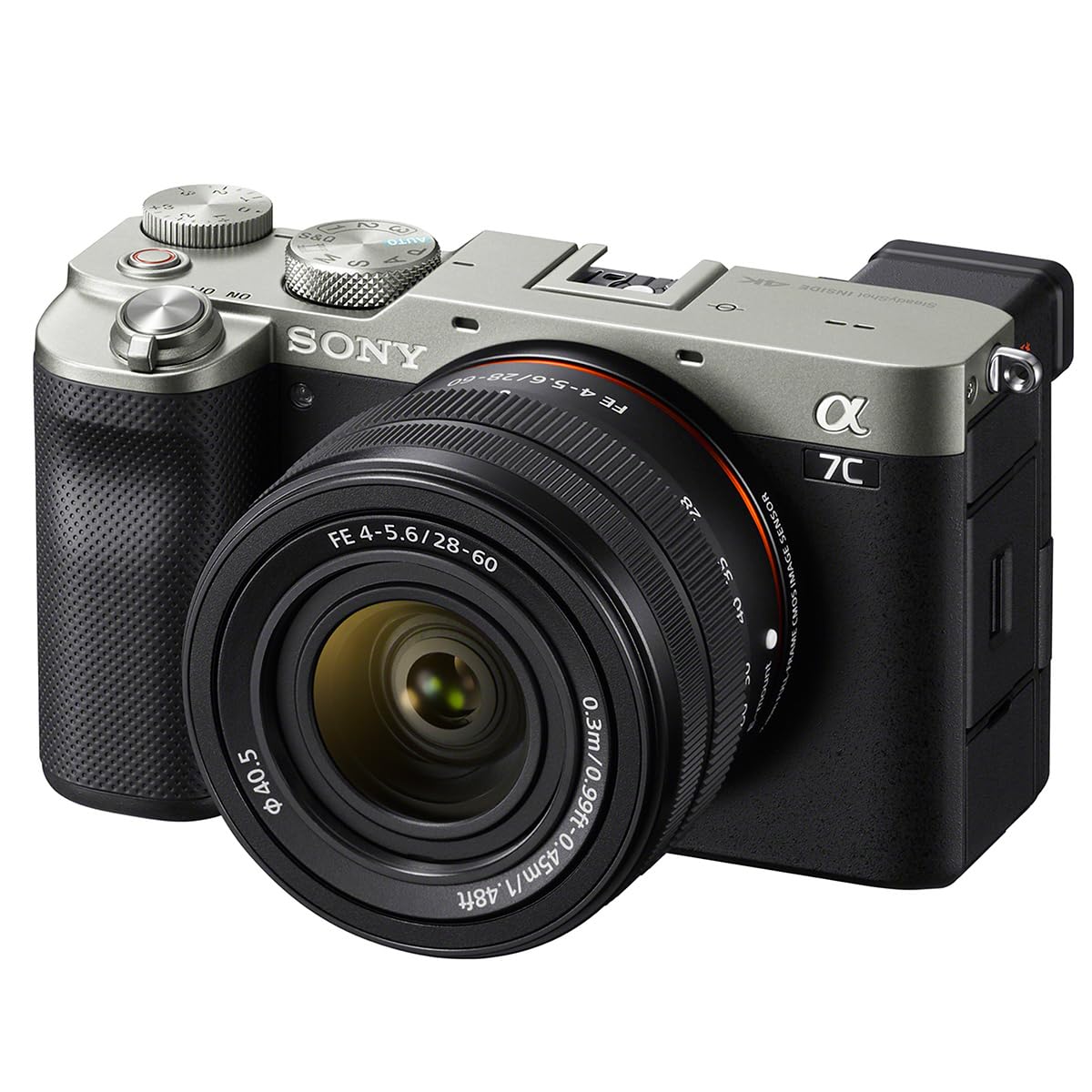
The 7C brings the full-frame sensor and autofocus of the a7 III into a body that is 20 percent smaller and lighter. For a wildlife beginner who hikes miles to find subjects, every gram counts. The 24.2-megapixel back-illuminated sensor delivers the same 15-stop dynamic range and excellent high-ISO performance as the a7 III, while the 693 phase-detection AF points provide reliable animal eye tracking and subject recognition.
The articulating screen flips out fully, making ground-level macro and low-angle wildlife framing much easier than the a7 III’s tilting screen. The compact size also fits smaller camera bags, reducing the deterrent to carrying a camera on every hike. The 4K video uses full pixel readout without binning or crop, producing sharp footage suitable for wildlife documentary projects. The battery life holds up at around 600 to 700 shots per charge.
The electronic viewfinder is the weakest link—small and low-resolution compared to the a7 III, which matters when manually focusing a telephoto lens in dim light. The 28-60mm kit lens is compact but offers minimal reach for wildlife. The 7C lacks the dual card slots and more robust weather sealing of the a7 III, making it less ideal for heavy rain or extended backcountry trips. It is best for the beginner who prioritizes portability without sacrificing full-frame quality.
Why it’s great
- Full-frame quality in a compact travel-friendly body
- Excellent animal eye tracking with 693 AF points
- Fully articulating screen for low-angle and vlogging
- Full-pixel readout 4K video without crop
Good to know
- Electronic viewfinder is small and low-resolution
- Single SD card slot with no backup
- Kit lens is too short for wildlife subjects
8. Canon EOS Rebel T7 Bundle
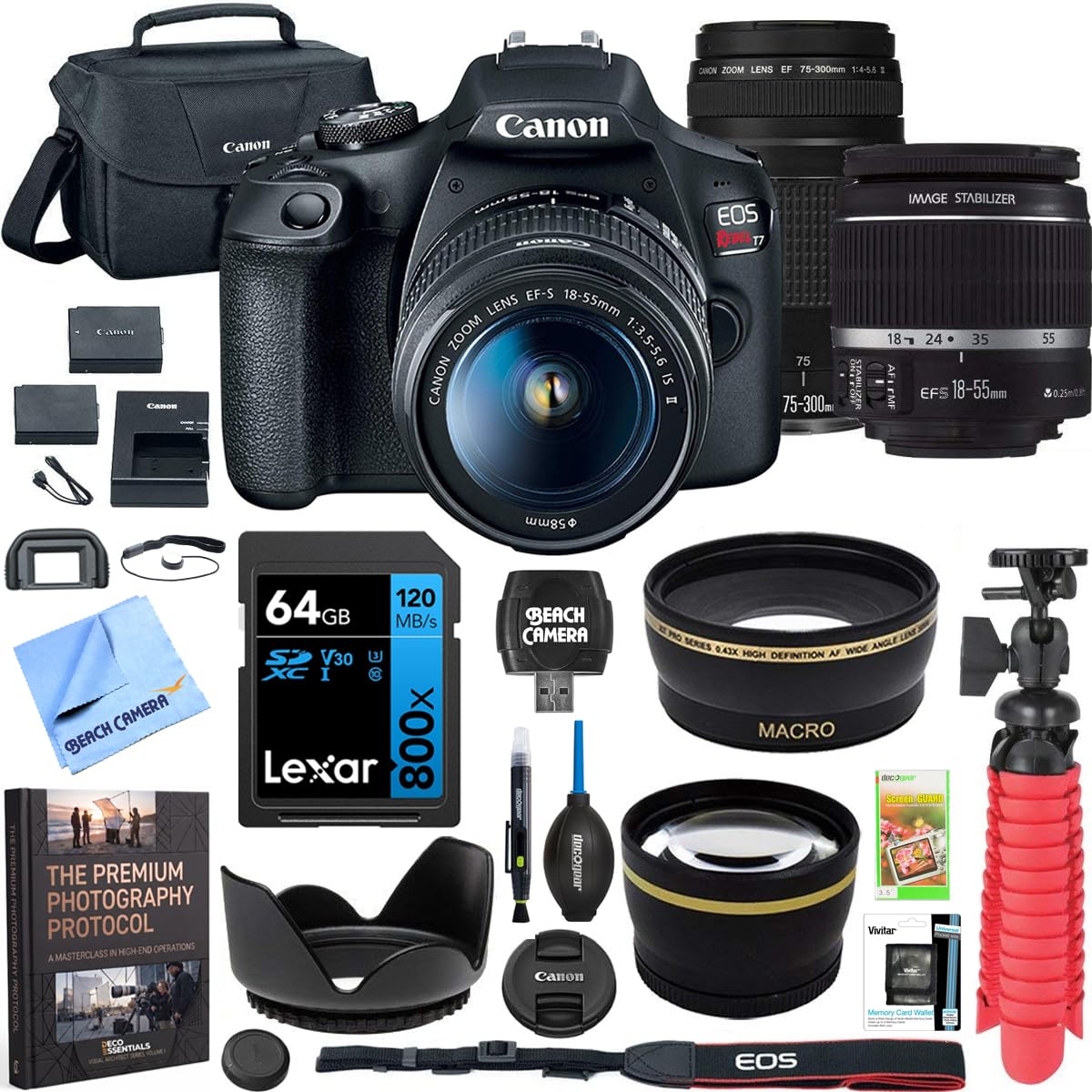
The Rebel T7 bundle solves the reach problem for the tightest budgets by including both an 18-55mm standard zoom and a 75-300mm telephoto zoom. On the APS-C sensor, the 300mm lens gives an effective 480mm reach—enough for deer, waterfowl, and backyard birds. The 24.1-megapixel CMOS sensor delivers clean 16×20 prints and good detail in good light. The built-in Wi-Fi and NFC make sharing field shots to a phone quick.
The 9-point AF system with phase detection is limited compared to modern mirrorless cameras, but it works reliably for slow-moving animals and stationary birds. The 3 fps burst rate is slow by any wildlife standard—you will miss the exact takeoff moment of a bird. The optical viewfinder provides a bright, lag-free view beneficial for tracking. Battery life is excellent, often exceeding 500 shots per charge.
The included bundle accessories are mixed in quality. The wide-angle and telephoto attachment lenses degrade image quality, and the tripod and flash are basic at best. Most buyers should set aside the extra attachments and use the core camera and dual lenses. The DIGIC 4+ processor shows its age in noise handling above ISO 1600. For the entry-level budget where every dollar matters, the T7 bundle gives the longest reach per dollar spent.
Why it’s great
- Includes 75-300mm telephoto for 480mm effective reach
- Excellent battery life for full-day field sessions
- Bright optical viewfinder for tracking subjects
- Built-in Wi-Fi for quick photo sharing
Good to know
- 3 fps burst rate misses fast action
- 9-point AF system is limited for moving wildlife
- Bundle accessory quality is low—stick to core camera and lenses
9. Tamron 18-300mm for Sony E

This is not a camera body—it is a lens that turns any Sony E-mount APS-C body into a wildlife-capable rig. The 18-300mm range gives a 27-450mm full-frame equivalent, covering wide landscapes all the way to distant birds without swapping glass. The VXD linear motor provides fast, near-silent autofocus that keeps up with moving subjects. The optical VC stabilization works effectively for handheld shooting at the 300mm end.
For a beginner who buys a Sony A6100 or A6400, this one-lens approach eliminates the stress of changing lenses in dusty or wet field conditions. The image quality is sharp from center to corner throughout the range, impressive for a 16.6x zoom. The moisture-resistant construction and fluorine coating protect against light rain and smudges. At 21.9 ounces, it is light enough to carry on a hiking pack without fatigue.
The variable aperture of f/6.3 at 300mm limits low-light performance compared to a 70-350mm f/4.5-6.3 or a prime lens. You will need higher ISO values at dawn and dusk, which increases noise on crop-sensor bodies. The external zoom extends as you twist, making gimbal or rig use less convenient. For the beginner who values convenience and one-lens simplicity over maximum low-light speed, the Tamron 18-300mm is the ultimate do-it-all companion.
Why it’s great
- 16.6x zoom range from 18mm wide to 300mm telephoto
- Fast, quiet VXD linear motor AF
- Lightweight at 21.9 oz with moisture-resistant construction
- One-lens solution avoids sensor dust and lens swaps in the field
Good to know
- f/6.3 at 300mm limits low-light wildlife shooting
- External zoom extends physically during use
- Only compatible with Sony E-mount APS-C bodies
10. Canon EOS R100 Bundle

The R100 is Canon’s most affordable mirrorless body, and the bundle includes a 0.43x wide-angle adapter and a 2.2x telephoto adapter that clip onto the kit 18-45mm lens. The 24.2-megapixel APS-C CMOS sensor with DIGIC 8 processor delivers good color science straight out of camera—Canon’s hallmark advantage for beginners who do not want to edit RAW files. The Dual Pixel CMOS AF with 143 zones covers the frame and provides smooth continuous tracking for subjects.
The compact size is the R100’s strongest asset. It fits into a small shoulder bag with room for a water bottle and field guide, encouraging you to carry it on every walk. The 2.36m-dot OLED electronic viewfinder is sharp and helps frame telephoto shots in bright sunlight. The 6.5 fps electronic shutter is faster than any DSLR in the budget tier and works well for slower-moving wildlife like grazing deer or wading birds.
The bundle’s telephoto and wide-angle attachments screw onto the filter thread of the kit lens and degrade image quality noticeably—expect soft corners and chromatic aberration. The included tripod and flash are low quality. For wildlife, you are better off buying the body and a separate 55-210mm telephoto lens than relying on the clip-on adapters. The 4K video records with a crop that narrows the field of view, making wide shots tight.
Why it’s great
- Compact body encourages carrying on every hike
- Canon color science produces pleasing JPGs without editing
- 143 Dual Pixel AF zones provide smooth tracking
- 2.36m-dot OLED EVF is sharp for its price class
Good to know
- Bundled telephoto adapter degrades image quality
- 4K video has a significant crop factor
- Kit lens is too short for wildlife without separate telephoto purchase
11. Nikon D5100

The D5100 is a decade-old DSLR that still produces excellent 16.2-megapixel images for its price tier. The 11-point AF system with 3D tracking works accurately for stationary birds and slow animals, and the 4 fps burst rate is usable for predictable action sequences. The 3-inch articulated LCD flips out to the side, making ground-level macro and awkward-angle shots far easier than fixed-screen cameras. The 1080p Full HD video with external microphone input is a bonus for recording ambient wildlife sounds.
The 18-55mm kit lens is too short for wildlife, but the D5100 is compatible with every Nikon F-mount lens ever made. You can pick up an affordable used 55-300mm or 70-300mm VR lens and get effective reach up to 450mm on the DX sensor. The battery life is legendary—over 1,500 shots per charge is achievable on a full-day hike without worrying about power. The 14-bit RAW files capture excellent dynamic range for the sensor’s age.
The D5100’s age shows in the autofocus speed in Live View, which is slow contrast-detect only. The video autofocus is not usable for tracking subjects. The 16.2-megapixel sensor limits cropping ability compared to modern 24MP cameras. The D5100 is best suited for the ultra-budget beginner who already has access to a used telephoto lens and wants to learn wildlife fundamentals before investing in a modern system. It is a learning tool, not a long-term investment.
Why it’s great
- Extremely long battery life—over 1,500 shots per charge
- Compatible with all Nikon F-mount lenses including affordable telephoto options
- Articulating LCD improves low-angle wildlife framing
- Excellent 14-bit RAW dynamic range for its age
Good to know
- 11-point AF system struggles with fast-moving subjects
- Live View autofocus is slow contrast-detect only
- 16.2MP limits cropping and large prints
FAQ
What is the minimum autofocus point count for shooting birds in flight?
Is a full-frame sensor necessary for wildlife photography as a beginner?
How important is in-body image stabilization for handheld wildlife shooting?
Final Thoughts: The Verdict
For most users, the camera for beginner wildlife photography winner is the Canon EOS R7 because its 30 fps burst with pre-shooting, 651-point AF with animal eye tracking, and 7-stop IBIS give beginners the highest keeper rate without needing professional technique. If you want a two-lens kit that covers wide to telephoto out of the box, grab the Nikon Z50 II. And for the tightest budget where every dollar counts toward reach, nothing beats the Canon EOS Rebel T7 Bundle with its 75-300mm lens.

Mo Maruf
I created WellFizz to bridge the gap between vague wellness advice and actionable solutions. My mission is simple: to decode the research and give you practical tools you can actually use.
Beyond the data, I am a passionate traveler. I believe that stepping away from the screen to explore new environments is essential for mental clarity and physical vitality.