Our readers keep the lights on and my smoothie glass nicely filled. As an Amazon Associate, I earn from qualifying purchases.
Every online audience forgives soft focus before they forgive hollow, distant, or muffled audio. A beautifully framed 4K shot means nothing if the voice sounds like it was recorded from the next room. The real bottleneck in video production today isn’t resolution—it’s the invisible gap between what your camera sensor can see and what its tiny internal microphone can actually hear.
I’m Mohammad Maruf — the founder and writer behind WellFizz. I’ve spent years analyzing the marriage between video capture hardware and professional-grade audio, specifically where the two systems meet in real creator workflows to produce polished, pre-production-ready content.
After comparing a dozen different setups across price tiers and use cases, I’ve found that the absolute best camera and microphone solution depends more on your shooting environment and subject distance than on megapixel count alone.
How To Choose The Best Camera And Microphone
Choosing a camera and microphone combo requires reconciling two very different hardware philosophies. A camera is judged by its sensor size, dynamic range, and lens ecosystem, while a microphone lives or dies by its polar pattern, self-noise floor, and impedance. The best rig bridges the gap between these two worlds without introducing audio delay or power compatibility headaches.
Understand Polar Patterns First
A microphone’s polar pattern determines how much off-axis sound it picks up. Shotgun microphones (supercardioid or lobar) reject sound from the sides and rear, making them ideal for outdoor run-and-gun shoots where wind and ambient noise invade the track. Lavalier microphones (omnidirectional) capture sound equally from all directions, which works well for up-close interviews but fails in noisy rooms. If you are pairing a microphone with a camera for a vlog or interview series, a supercardioid shotgun on a hot shoe is the most reliable starting point because it physically isolates the subject’s voice from the environment.
Match the Connector Type to Your Camera Body
The single most common compatibility mistake is buying an XLR microphone for a camera that only has a 3.5mm auxiliary input. XLR microphones (like the Sennheiser MKH 416 or MKE 600) require phantom power (48V) and a dedicated recorder or an XLR-to-3.5mm adapter box. Camcorders and higher-end mirrorless bodies with a 3.5mm jack can accept line-level or mic-level signals, but the gain staging matters. Some cameras introduce audible hiss when amplifying a quiet microphone. If your camera lacks a 3.5mm input altogether, you must use an external audio recorder and sync in post—a workflow that adds complexity but delivers studio-grade separation.
Stabilization Laws Affect Audio Gear
Gimbal-mounted cameras create a unique problem: the camera moves freely, but the microphone stays stationary relative to the gimbal’s base. A lightweight shotgun attached to a gimbal via a cold shoe may introduce handling noise if the shock mount is inadequate. Pocket gimbals like the DJI Osmo Pocket 3 and the Xtra Muse have internal stabilization that isolates the camera body from hand vibration, but they cannot compensate for a microphone cable dragging across the gimbal arm. Wireless microphone systems (DJI Mic 2 or equivalent) eliminate cable noise entirely and are often the cleaner choice for gimbal-based shooting.
Quick Comparison
On smaller screens, swipe sideways to see the full table.
| Model | Category | Best For | Key Spec | Amazon |
|---|---|---|---|---|
| DJI Osmo Pocket 3 | Gimbal Camera | All-day vlogging | 1” CMOS, 4K/120fps | Amazon |
| Sony a7 III w/ 28-70mm | Full-Frame | Hybrid photo/video | 24.2MP BSI + 693 AF | Amazon |
| Canon EOS RP + 24-105mm | Full-Frame | Travel video | RF mount, 5-stop IS | Amazon |
| Canon EOS R100 Kit | Entry Mirrorless | Beginner photography | 24.1MP APS-C + 4K | Amazon |
| Panasonic LUMIX G100 | Hybrid Mirrorless | Built-in tracking audio | 360° mic + 4K video | Amazon |
| Sennheiser MKE 600 | Shotgun Mic | DSLR/camcorder audio | XLR, low-cut filter | Amazon |
| Sony FX30 + XLR Handle | Cinema Camera | Professional filmmaking | S-Cinetone, 14+ stops | Amazon |
| Sennheiser MKH 416-P48U3 | Pro Shotgun | Film/TV dialog | RF condenser, 13dB noise | Amazon |
| Nikon D7500 Bundle | DSLR Kit | All-in-one starter kit | 20.9MP, 51pt AF | Amazon |
| Insta360 GO Ultra | Action Camera | Hands-free POV | 53g, 4K/60fps | Amazon |
| Xtra Muse | Pocket Gimbal | Budget vlogging | 1” CMOS, 4K/120fps | Amazon |
In‑Depth Reviews
1. DJI Osmo Pocket 3
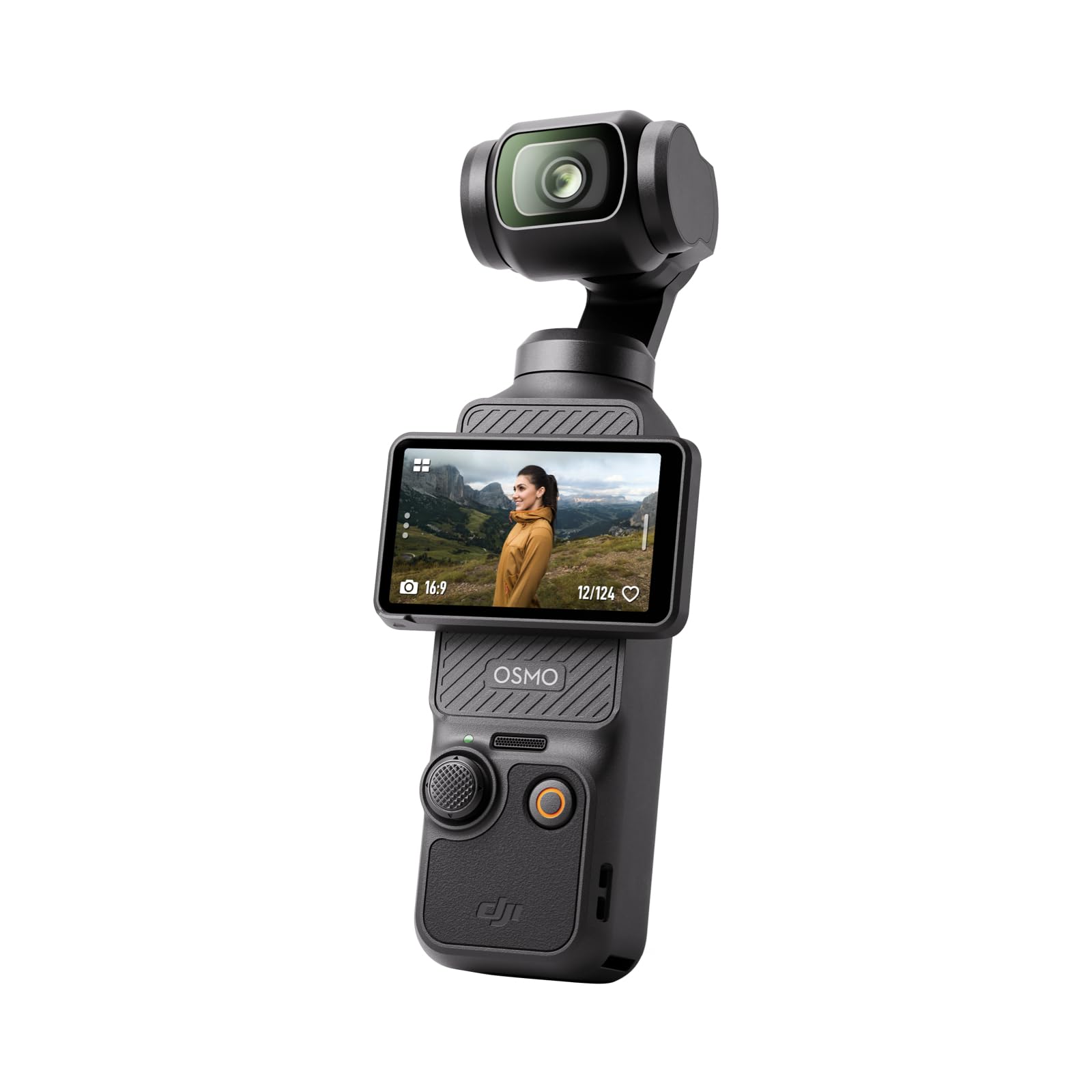
The DJI Osmo Pocket 3 strikes the cleanest balance between sensor quality, stabilization, and audio integration in a pocketable form factor. Its 1-inch CMOS sensor captures 4K video at 120fps with a dynamic range that handles both golden-hour landscapes and dim indoor lighting without immediate noise creep. The 3-axis mechanical stabilization is aggressive enough to eliminate walking bounce during handheld vlogs, and the rotating 2-inch touchscreen makes switching between horizontal and vertical framing instant.
What elevates this as a camera-and-audio solution is the OsmoAudio feature, which pairs wirelessly with DJI Mic 2 transmitters. This eliminates the cable-routing problems common with gimbal-mounted shotguns and gives you a clean 16-bit 48kHz audio feed locked to the video timeline. The built-in stereo microphones are sufficient for quiet indoor recording, but the wireless integration is the real workflow shortcut for creators who do not want to sync audio in post.
Battery life reaches nearly three hours of continuous recording, and the USB-C PD charging means a quick top-up during a lunch break keeps the camera running for a full day of production. The lack of an interchangeable lens system limits creative flexibility—you cannot get a true telephoto or ultra-wide look without aftermarket attachments—but for a single-operator vlogging rig, the trade-off is worth the portability.
Why it’s great
- Wireless DJI Mic 2 pairing removes cable noise and sync steps
- 3-axis gimbal delivers usable handheld footage at walking pace
- Rotating screen supports vertical social media output natively
Good to know
- Requires mandatory app registration within first five uses
- No physical tripod mount on the gimbal base itself
2. Sony a7 III Full-Frame Mirrorless with 28-70mm Lens

The Sony a7 III remains one of the most balanced full-frame mirrorless bodies for hybrid shooters who need excellent photography capabilities and reliable video recording in a single body. Its back-illuminated 24.2MP Exmor R sensor delivers 15 stops of dynamic range, and the 693-point phase-detection autofocus system covers 93 percent of the frame, locking onto subjects with speed that rivals much newer cameras. The 28-70mm f/3.5-5.6 kit lens is optically modest but provides a workable starting range for walkaround video.
Where this camera truly partners with an external microphone is through its 3.5mm stereo input that accepts both mic-level and line-level signals without significant preamp hiss. Pairing the a7 III with a Sennheiser MKE 600 via an XLR-to-3.5mm adapter yields dialogue tracks that retain clarity even in modestly treated rooms. The sensor’s high-ISO performance means you can stop down for deeper depth of field without pushing the gain past usable levels, which indirectly reduces the ambient noise the microphone has to compete with.
The battery life is genuinely impressive for a mirrorless body—around 710 shots per charge—and the dual SD card slots provide redundancy that matters on paid shoots. The menu system is dense and requires initial setup time, and the 4K video is limited to 30fps in Super 35 crop mode, but the image quality out of the gate is consistently pro-grade for its price tier.
Why it’s great
- Full-frame low-light performance reduces noise in video and audio gain chains
- 3.5mm input works cleanly with powered external shotguns
- Battery life outlasts most all-day event shoots
Good to know
- 4K at 30fps forces a Super 35 crop
- Kit lens aperture limits shallow depth-of-field video looks
3. Canon EOS RP + RF24-105mm F4-7.1 IS STM

The Canon EOS RP is the lightest and most compact full-frame body Canon has produced, making it a natural fit for travel vloggers who want shallow depth-of-field without carrying a DSLR-sized rig. The 26.2MP sensor paired with the DIGIC 8 processor produces pleasing color science straight out of camera—portrait skin tones are warm and accurate. The RF 24-105mm kit lens includes 5-stop optical image stabilization, which helps keep static interview shots steady without requiring a tripod.
The 3.5mm external microphone input functions properly with self-powered shotguns like the Rode VideoMic NTG, but the camera’s preamps are not especially quiet. In quiet environments, you may notice a slight floor hiss at higher gain levels. Using a microphone with its own gain control (such as the Sennheiser MKE 600 in battery mode) lets you set the mic’s output hotter and keep the camera’s internal gain lower, effectively bypassing the preamp noise. The full-frame sensor’s high-ISO performance also works in your favor here—you can shoot at ISO 1600-3200 without visible grain, which reduces the need to crank exposure in dim scenarios.
The 4K video mode has two notable limitations: it applies a 1.6x crop factor and runs only at 24fps without dual-pixel autofocus. For slow-paced cinematic travel clips this is acceptable, but action-heavy shooters will find the 1080p 60fps mode more practical. The RP is a gateway into Canon’s RF lens ecosystem at a low entry cost.
Why it’s great
- Lightest full-frame body for extended handheld vlogging sessions
- RF lens stabilization keeps interview shots steady
- Canon color science delivers accurate skin tones with minimal grading
Good to know
- 4K mode crops and lacks Dual Pixel AF
- Internal preamps are audible at high gain levels
4. Sony Cinema Line FX30 with XLR Handle Unit

The Sony FX30 is a Super 35mm (APS-C) cinema camera that inherits the dual-base ISO and S-Cinetone color science from Sony’s larger Venice and FX6 lineups. It records 4K at up to 120fps with 10-bit 4:2:2 color depth internally, and the included XLR handle module gives you two balanced XLR inputs with phantom power—eliminating the need for an external audio recorder for most pro dialog work. This integrated audio handling is the key differentiator from hybrid stills cameras.
The FX30’s active cooling fan allows unlimited recording times without thermal shutdown, a critical feature for interview capture and livestreams. The 14+ stop dynamic range and flexible ISO modes (Cine EI and Cine EI Quick) let you expose for highlights while preserving shadow detail, and the LUT support on the LCD means you can monitor a graded image in-camera. The autofocus system uses 495 phase-detection points and includes Real-time Eye Tracking for both humans and animals.
The APS-C sensor does not match the full-frame shallow-depth-of-field look of the a7S III, and the native lens selection for Sony E-mount APS-C cinema is thinner than the full-frame lineup. The body also lacks a built-in viewfinder, which some shooters find inconvenient for photography. Still, for a dedicated video-first rig with professional XLR audio built into the top handle, the FX30 represents a huge value in the dedicated cinema market.
Why it’s great
- XLR handle with phantom power for professional dialog capture
- Active cooling removes recording time limits
- S-Cinetone delivers cinematic color without complex grading
Good to know
- APS-C sensor limits shallow depth-of-field compared to full-frame
- No built-in electronic viewfinder
5. Sennheiser MKH 416-P48U3 Short Shotgun Microphone

The Sennheiser MKH 416 is the industry-standard short shotgun microphone for film, television, and voice-over work. Its RF condenser design is inherently more resistant to humidity and condensation than traditional DC-bias condensers, which makes it a reliable choice for outdoor location sound. The supercardioid lobar pattern achieves a front-to-side rejection ratio that isolates dialog in noisy environments without the hollow off-axis coloration common in cheaper interference-tube microphones.
The self-noise floor of just 13dB-A is exceptionally low, meaning the microphone adds virtually no hiss to the signal chain. This matters enormously when paired with a camera whose preamps are not studio-grade—the MKH 416 outputs a hot, clean signal that lets you run camera gain lower and avoid preamp noise. The transformerless balanced output delivers a full 20dB sensitivity, providing ample headroom for both quiet dialog and louder source material without distortion.
This microphone requires 48V phantom power and an XLR input, which means it cannot plug directly into a consumer camera without an external recorder or an XLR-to-3.5mm adapter box with phantom power. The lack of a battery power option means you must budget for a recorder like the Zoom H4n or a mixer. The sweet spot for aiming is narrow, requiring practice to keep the subject centered in the pickup pattern, but the audio quality is unmistakably professional.
Why it’s great
- Industry-standard dialog capture used on professional film sets
- RF condenser design resists humidity-induced failure
- Extremely low self-noise floor preserves clean signal at low gain
Good to know
- Requires XLR input and 48V phantom power—not camera-plug-and-play
- Narrow pickup pattern demands precise aiming during takes
6. Xtra Muse Vlogging Camera with 1” CMOS

The Xtra Muse is a direct competitor to the DJI Pocket 3 at a lower entry point, offering the same 1-inch CMOS sensor and 4K/120fps video recording capability with a built-in 3-axis gimbal stabilizer. The sensor size alone is a major upgrade from the typical 1/2.3-inch sensors found in budget action cameras—it gathers significantly more light, producing usable footage in dusk and indoor conditions where smaller sensors fall apart. The gimbal stabilization handles walking, jogging, and even light running without introducing the rolling shutter wobble that electronic stabilization produces.
For audio capture, the Xtra Muse relies on its internal stereo microphones, which are adequate for close-up vlogging in quiet environments but pick up wind noise and handling rumble in outdoor scenarios. The USB-C port can theoretically accept an external USB microphone with an adapter, but this adds bulk and cable management to a device designed for pocket carry. The Master Follow feature keeps the subject framed automatically when the camera is mounted on a tripod, which is useful for solo creators who film themselves.
The 2-inch touchscreen is bright and responsive, and the included carrying bag and 1/4-inch threaded handle provide mounting flexibility. Battery life is about 161 minutes, which covers a solid day of shooting. The build quality feels capable but not as tight as the DJI enclosure—the gimbal mechanism is slightly less dampened, and the plastic body does not inspire the same confidence in rough conditions. For the price, the sensor and stabilization combination is hard to beat.
Why it’s great
- 1-inch CMOS sensor dramatically improves low-light quality over action cams
- 3-axis gimbal delivers stabilizer-quality footage without a separate gimbal
- Competitive price for the sensor/stabilization combination
Good to know
- Internal microphones are susceptible to wind and handling noise outdoors
- Build quality feels less robust than DJI’s enclosure
7. Sennheiser MKE 600 with Auray Universal Shock Mount and Windshield

The Sennheiser MKE 600 is a short shotgun microphone designed specifically for camera-mounted use, bridging the gap between consumer video mics and the professional MKH 416. Its key advantage over the MKH 416 is the dual-power flexibility—it runs on a standard 48V phantom supply or on a single AA battery, making it compatible with DSLRs and mirrorless cameras that lack phantom power via an XLR-to-3.5mm adapter cable. The highly directional supercardioid pattern rejects side noise effectively in run-and-gun environments.
The included Auray shock mount is robust, using replaceable rubber bands that absorb footstep vibration and camera-handling noise, and the foam windscreen is dense enough to handle moderate outdoor breeze without adding a muffled top-end. The low-cut filter switch rolls off rumble below 100Hz, which is useful for reducing HVAC hum or traffic rumble in indoor interviews. The metal construction feels durable without being heavy (128 grams), so it balances well on a camera hot shoe without causing the lens to tilt.
One real-world limitation: the MKE 600 requires a specific cable (Sennheiser KA 600) to connect to cameras that use a 3.5mm TRS input without a standard XLR jack. Without this cable, you cannot get a balanced signal to the camera, and the audio may be quieter or noisier than expected. The microphone performs best when paired with a recorder or a camera with a clean preamp chain.
Why it’s great
- Dual-power mode works with cameras lacking phantom power
- Low-cut filter reduces rumble from HVAC and traffic noise
- Lightweight metal body balances well on camera hot shoes
Good to know
- Requires specific Sennheiser cable for optimal 3.5mm camera connection
- Foam windscreen reduces wind noise but cannot replace a full blimp for heavy outdoor use
8. Panasonic LUMIX G100 Mirrorless Camera with 12-32mm Lens

The Panasonic LUMIX G100 is uniquely positioned as a video-first mirrorless camera with a built-in 360-degree microphone that includes a tracking function. The microphone uses three capsules arranged in a triangular array, and the camera automatically adjusts the pickup pattern to follow the subject as they move across the frame. This is a genuine innovation for solo vloggers who cannot manage a boom operator—it keeps the audio source on-axis without manual intervention, reducing the hollow off-axis sound that fixed shotguns produce when the speaker shifts.
The Micro Four Thirds sensor is smaller than APS-C or full-frame, which means low-light performance is not class-leading, but the 20.3MP resolution and 4K recording at 30fps are sufficient for YouTube and social media output. The 12-32mm retractable kit lens is compact and optically decent at f/3.5-5.6, but its small maximum aperture limits depth-of-field control and indoor performance. The 5-axis hybrid image stabilization (body plus lens) keeps handheld footage stable, though it is not as aggressive as the gimbal stabilization of the DJI Pocket 3.
The G100 includes a frame marker overlay for social media aspect ratios, helpful for creators who shoot once and export in multiple crops. The camera can also serve as a high-quality webcam via USB. The main downsides are the plastic-y build feel and the fact that the recording automatically stops after 20 minutes in 4K, which can be frustrating for long-form interviews or lecture capture.
Why it’s great
- 360-degree tracking microphone keeps dialog on-axis as subjects move
- Compact Micro Four Thirds body with interchangeable lenses
- Frame marker overlays simplify multi-platform social media output
Good to know
- 4K recording stops automatically after 20 minutes
- Small sensor struggles in very low-light conditions compared to APS-C/full-frame
9. Canon EOS R100 with RF-S18-45mm F4.5-6.3 IS STM

The Canon EOS R100 is designed as the entry point into the RF mirrorless ecosystem, offering a 24.1MP APS-C sensor and 4K video recording at a very accessible price. The Dual Pixel CMOS AF system provides 143 phase-detection autofocus zones with face and eye detection, and the DIGIC 8 processor enables continuous shooting at 6.5 frames per second—adequate for capturing fast-moving subjects like kids or pets. The compact body is the lightest in the EOS R series, which makes it easy to carry on daily walks or travel shoots.
The camera includes a 3.5mm external microphone input, which is a crucial feature for anyone serious about improving audio beyond the built-in mono microphone. Plugging in a directional microphone like the Sennheiser MKE 600 or a modest lavalier immediately solves the echo and distance problems that plague camera-mic audio. The kit lens (RF-S18-45mm) provides optical image stabilization at up to 4 stops, which is helpful for steady handheld video when used with the lens IS alone.
The R100 does not include an in-body image stabilization (IBIS) system, so lens-based stabilization is the only option for smooth video. The 4K mode is limited to 24fps, and there is no 120fps slow-motion option. The screen is a fixed LCD with no touch functionality, which makes menu navigation and focus point selection less intuitive than touch-enabled competitors. The camera is an ideal learning platform for newcomers to interchangeable lens photography and video.
Why it’s great
- Very accessible price for entry into Canon RF interchangeable lens system
- Dual Pixel CMOS AF provides reliable face and eye tracking
- 3.5mm mic input allows easy upgrade from built-in camera audio
Good to know
- No in-body image stabilization—relies entirely on lens IS
- 4K video limited to 24fps; fixed, non-touch LCD screen
10. Nikon D7500 DSLR Camera Kit with 18-55mm & 70-300mm Lenses

The Nikon D7500 is a proven DSLR body with a 20.9MP DX-format CMOS sensor and the EXPEED 5 processor, capable of 8 frames per second continuous shooting and 4K UHD video recording at 30fps. The 51-point autofocus system (Multi-CAM 3500FX II) includes 15 cross-type sensors and Group Area AF, delivering reliable tracking for sports, wildlife, and portrait photography. This renewed bundle includes both the 18-55mm VR and 70-300mm ED VR lenses, covering a full range from wide-angle to telephoto.
The D7500 includes a 3.5mm external microphone input, allowing the use of a dedicated shotgun or lavalier microphone. The built-in stereo microphone is better than most DSLRs of its generation—it captures usable audio for casual B-roll—but the bundled kit also includes an external microphone and LED light, giving beginners everything they need to improve audio without a separate purchase. The tilting 3.2-inch touchscreen LCD allows flexible composition from high and low angles, and the SnapBridge Bluetooth/Wi-Fi simplifies image transfer to a smartphone.
The main trade-off with DSLRs in 2023 is the lack of in-body stabilization for video—the VR lenses handle some shake, but smooth panning shots require a tripod or Gimbal. The bundle’s renewed status means the camera is previously owned and restored, which can save money but carries a shorter warranty compared to new stock. The physical weight (640g body alone) is noticeable compared to mirrorless alternatives, though the optical viewfinder feedback is still superior for action photography.
Why it’s great
- Excellent value bundle with two VR lenses, mic, and accessories included
- 51-point AF system provides strong tracking for sports and wildlife
- 3.5mm mic input allows serious audio upgrade path
Good to know
- Renewed unit may have cosmetic wear and limited warranty
- DSLR body heavier than equivalent mirrorless; no IBIS for video
11. Insta360 GO Ultra – Small 4K POV Camera
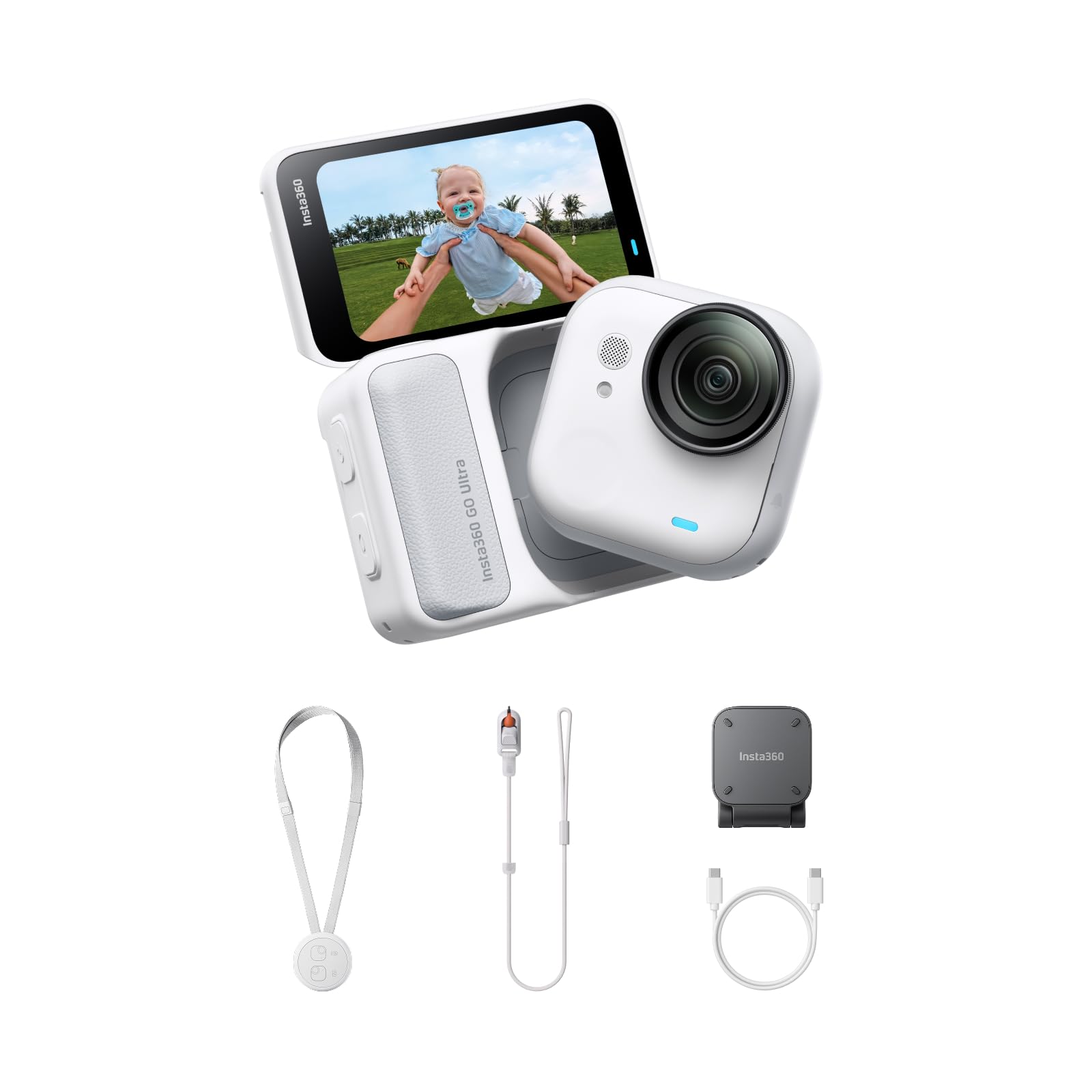
The Insta360 GO Ultra is an ultra-compact action camera weighing only 53 grams, designed for hands-free first-person perspective video capture. Its magnetic mounting system lets you clip it to a baseball cap, wear it around the neck with the included magnet pendant, or attach it to a bike frame. The 1/1.28-inch sensor captures 4K video at 60fps with Active HDR, and the FlowState stabilization has three strength levels plus 360-degree horizon lock, keeping footage level even during aggressive movement.
For audio, the built-in microphone is surprisingly capable for such a small device—several reviews note that the onboard audio rivals some external microphones for close-up selfie vlogs. The camera supports wireless connection to DJI Mic 2 transmitters via Bluetooth, solving the distance issue for action shots where the camera is mounted away from the subject. The Action Pod extends battery life to about three hours, and fast charging reaches 80 percent in 12 minutes, making it practical for all-day cycling or hiking shoots.
The GO Ultra is waterproof to 33 feet without a housing, and it supports interval time-lapse recording and AI-powered automatic editing that pulls highlights from long clips. The low-light PureVideo mode uses the 5nm AI chip to reduce noise in evening shots, though the small sensor cannot compete with a 1-inch CMOS camera in truly dark conditions. The magnetic pendant is less secure on thick winter jackets, and the 35MP still photo resolution is average compared to dedicated action cameras. For creators who want a set-and-forget POV camera with excellent stabilization, this is the current leader in the sub-60g category.
Why it’s great
- Magnetic mounting system enables truly hands-free POV capture
- Built-in microphone quality is strong for close-up selfie vlogging
- Fast charging and 3-hour Action Pod battery suit all-day shoots
Good to know
- Small sensor struggles in very low-light conditions
- Magnetic pendant can detach from thick or heavy winter jackets
FAQ
Can I use an XLR microphone directly with a consumer mirrorless camera?
Why does my audio sound hollow when I use a shotgun mic indoors?
Is a 3.5mm to XLR adapter good enough for pro-level audio?
Final Thoughts: The Verdict
For most users, the best camera and microphone winner is the DJI Osmo Pocket 3 because it delivers the most seamless integration of stabilized 4K video and wireless audio in a single portable device. If you want full-frame shallow depth-of-field with professional XLR audio input capability, grab the Sony FX30 with the XLR Handle Unit. And for pocketable POV shooting where weight is the primary constraint, nothing beats the Insta360 GO Ultra.

Mo Maruf
I created WellFizz to bridge the gap between vague wellness advice and actionable solutions. My mission is simple: to decode the research and give you practical tools you can actually use.
Beyond the data, I am a passionate traveler. I believe that stepping away from the screen to explore new environments is essential for mental clarity and physical vitality.