Our readers keep the lights on and my smoothie glass nicely filled. As an Amazon Associate, I earn from qualifying purchases.
The camcorder market under four figures is a battlefield of sensor sizes and stabilization algorithms. Buyers often assume any 4K camera will produce watchable footage, only to discover that cheap optics and missing gimbal hardware ruin their vacation highlights or client work. The real challenge is finding a unit that balances a large enough sensor with reliable image smoothing and a lens system that doesn’t force you into digital crop hell.
I’m Mohammad Maruf — the founder and writer behind WellFizz. I’ve spent the better part of a decade analyzing CMOS sensor stacks, optical zoom ratios, and stabilization architectures to separate the truly capable camcorders from the marketing fluff.
This guide breaks down nine models that pack professional-grade features without crossing the four-figure barrier, helping you identify your ideal camcorder under $1000 based on real-world sensor performance and stabilization tech rather than headline specs alone.
How To Choose The Best Camcorder Under $1000
Selecting a camcorder in this bracket requires you to prioritize between sensor performance, stabilization hardware, and lens flexibility. A premium gimbal stabilizer is pointless if the sensor falls apart in twilight, and a large sensor can’t save footage ruined by aggressive digital cropping.
Sensor Size Dictates Low-Light Performance
The single largest differentiator at this price point is the physical size of the image sensor. A 1-inch CMOS sensor, as found in the DJI Osmo Pocket 3 or the Xtra Muse, collects roughly four times the light of a typical 1/2.3-inch sensor found in many budget action cameras and older Handycam models. If you shoot indoors, at dusk, or in any scenario where artificial lighting isn’t dominant, prioritize a 1-inch sensor even if it means sacrificing some zoom reach.
Mechanical Versus Digital Stabilization
Digital stabilization crops into the sensor to simulate smooth motion, which reduces the field of view and can introduce warping artifacts during fast panning. A 3-axis mechanical gimbal — built into pocket cameras like the DJI Osmo Pocket 3 and the Xtra Muse — physically counter-rotates the camera module, preserving the full field of view and eliminating micro-jitters without computational penalty. For walking shots, handheld vlogging, or running footage, a mechanical stabilizer is the cleaner solution.
Optical Zoom vs. Prime Lenses For Travel
A prime wide-angle lens, like the fixed 19mm equivalent on the Canon PowerShot V10, offers simplicity and sharpness but forces you to walk closer to your subject. Traditional camcorders like the Sony FDR-AX43 provide a 20x optical zoom lens, making them ideal for stage performances, sports, or wildlife where you cannot physically approach. The trade-off is that long zoom lenses often have slower apertures at the telephoto end, requiring more light to maintain a clean exposure.
Quick Comparison
On smaller screens, swipe sideways to see the full table.
| Model | Category | Best For | Key Spec | Amazon |
|---|---|---|---|---|
| DJI Osmo Pocket 3 Creator Combo | Pocket Gimbal | Professional vloggers & travel enthusiasts | 1-inch CMOS / 3-axis mech. gimbal / 4K-120fps | Amazon |
| GoPro HERO13 Black Bundle | Action Camera | Adventure & sports shooting | 5.3K video / HyperSmooth 6.0 / 1900mAh Enduro | Amazon |
| DJI Osmo Action 6 Enhanced Combo | Action Camera | Underwater & high-motion vlogging | 8K max / f/2.0–f/4.0 variable aperture / 4h battery | Amazon |
| GoPro MAX2 | 360° Action Cam | Immersive 360 reframing & invisible selfies | True 8K 360 / 6 mics / replaceable lenses | Amazon |
| Xtra Muse Pocket Gimbal | Pocket Gimbal | Beginner vloggers wanting DJI-like quality | 1-inch CMOS / 4K-120fps / 10-bit X-Log color | Amazon |
| Sony FDR-AX43 Handycam | Traditional Camcorder | Long zoom event & family shooting | 20x optical zoom / Balanced OIS / 1/2.5″ sensor | Amazon |
| Canon VIXIA HF G70 | Traditional Camcorder | Wedding & event run-and-gun | 20x optical zoom / dual SD slots / DIGIC DV 6 | Amazon |
| XbotGo Falcon | AI Tracking Cam | Team sports auto-tracking & live streaming | AI 6 TOPS auto-tracking / IPX5 / 4K dual lens | Amazon |
| Canon PowerShot V10 | Compact Vlog Cam | Ultra-portable everyday vlogging | 19mm f/2.8 wide / built-in stand / 1″ sensor | Amazon |
In‑Depth Reviews
1. DJI Osmo Pocket 3 Creator Combo

The Osmo Pocket 3 Creator Combo is the gold standard for pocket camcorders under $1000 because it marries a 1-inch CMOS sensor with a true 3-axis mechanical gimbal in a form factor smaller than most point-and-shoot cameras. The sensor delivers excellent dynamic range in both bright daylight and dim interiors, while the gimbal eliminates rolling shutter artifacts during walking shots. ActiveTrack 6.0 keeps subjects centered even during rapid movement, making it a reliable shoulder for solo creators.
The Creator Combo sweetens the deal with the DJI Mic 2 transmitter, a wide-angle lens adapter, a battery handle, and a mini tripod — all of which would cost a significant premium bought separately. The 2-inch rotating touchscreen is responsive and allows seamless switching between horizontal and vertical framing without any option loss. Battery life averages 166 minutes, but the included battery handle extends that comfortably through a full day of event coverage.
Where the Pocket 3 shows its limitations is the fixed wide-angle focal length; there is no optical zoom. What you see is what you get. For run-and-gun vlogging this is liberating, but for sports or wildlife it is restrictive. The gimbal head is also fragile — a hard drop could knock the motor alignment out. users report that the gimbal motor occasionally struggles with very rapid panning, introducing a slight corrective wobble.
Why it’s great
- Industry-leading 3-axis mechanical stabilization preserves full frame without crop
- 1-inch CMOS provides clean low-light footage and shallow depth of field
- Includes DJI Mic 2 and wide-angle adapter for out-of-box professional audio
- Rotatable touchscreen simplifies vertical content creation
Good to know
- No optical zoom; fixed wide-angle lens limits reach
- Gimbal is fragile and not user-serviceable after impact
- Battery handle must be purchased separately in the standard bundle
2. GoPro HERO13 Black Bundle

GoPro’s HERO13 Black delivers the highest raw video resolution in this roundup — 5.3K at 60 fps — combined with HyperSmooth 6.0 stabilization that now includes AutoBoost, which reduces the amount of image cropping the stabilization software performs. The HERO13 supports HDR and HLG in both video and photo modes, meaning highlights and shadows retain more detail than the standard 8-bit pipeline. For action shooters who mount the camera to helmets or handlebars, the improved AutoBoost is a noticeable upgrade over the HERO12.
The bundle includes a 128GB SD card and a wide accessory kit comprising chest, head, wrist, and suction mounts. The 1900mAh Enduro battery records 5.3K footage for up to 1.5 hours, though actual runtime drops to roughly 45-60 minutes in continuous shooting mode. The camera is waterproof to 10 meters without a housing, which covers snorkeling, rain, and splash scenarios. The HB-series lens mods (sold separately) allow creative versatility, including an ultra-wide POV lens and an anamorphic lens for cinemascope framing.
The HERO13’s Achilles’ heel is its heat management. Multiple user reports confirm that the camera will overheat and shut down after 10–15 minutes of direct sunlight recording, even at 1080p 30fps. This is a dealbreaker for outdoor event or sports filming where uninterrupted capture is critical. The 1/2.3-inch sensor also shows visible noise in low-light environments compared to the 1-inch sensors found in the DJI Osmo Pocket 3 or Xtra Muse.
Why it’s great
- Highest video resolution in this test at 5.3K 60fps with HDR/HLG support
- HyperSmooth 6.0 with AutoBoost reduces cropping during stabilization
- Waterproof to 10 meters without additional housing
- HB-series mod lenses expand creative possibilities
Good to know
- Overheats in direct sunlight after 10-15 minutes of recording
- 1/2.3-inch sensor produces noise in dim lighting conditions
- Battery life drops significantly in sub-freezing temperatures
3. DJI Osmo Action 6 Enhanced Combo
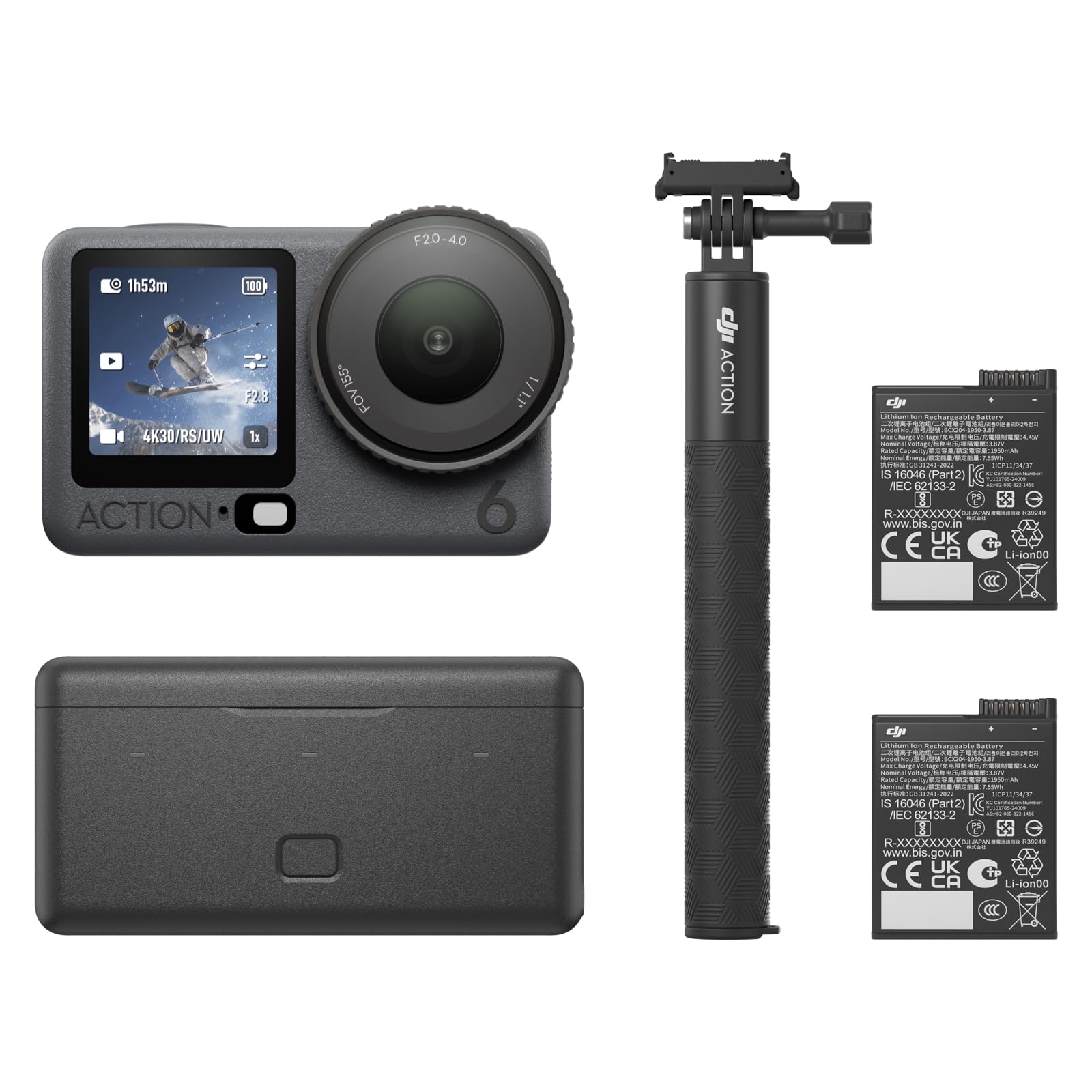
The Osmo Action 6 stakes its claim with a 1/1.1-inch square sensor that is larger than the HERO13’s sensor and enables a mechanical variable aperture ranging from f/2.0 to f/4.0. This is the first action cam to offer a true aperture iris, giving you direct control over depth of field and exposure without relying solely on ND filters. The square sensor also allows reframing into multiple aspect ratios without losing resolution, making it a solid choice for social media content creators who repurpose footage across platforms.
Underwater performance is where the Action 6 shines — the 1/1.1-inch sensor delivers true color reproduction down to 20 meters without a housing, and the gimbal-level HorizonSteady keeps the horizon locked even when the camera rolls 360 degrees during spins or drops. The Enhanced Combo includes two 1950mAh Extreme Batteries, a multifunctional battery case, and a 1.5-meter extension rod. The 50GB built-in storage is a thoughtful safety net for days when you forget your microSD card.
The internal microphone quality is noticeably average; wind noise reduction works aggressively but can make audio sound thin. For crisp vocal capture, a separate external microphone is almost mandatory. The camera also lacks the depth of field flexibility of 1-inch sensor competitors despite the larger square sensor, and some users report slight autofocus hunting in very low-contrast scenes. The variable aperture mechanism adds mechanical complexity that may concern long-term durability buyers.
Why it’s great
- First action cam with a true variable aperture lens for exposure control
- 1/1.1-inch square sensor captures rich colors underwater without white balance drift
- HorizonSteady maintains level during 360-degree camera rotation
- 50GB internal storage provides a reliable backup recording buffer
Good to know
- Built-in microphone audio quality is mediocre; external mic recommended
- Autofocus hunts in low-contrast or dimly lit scenes
- Complex variable aperture mechanism may be less robust than fixed-lens designs
4. GoPro MAX2
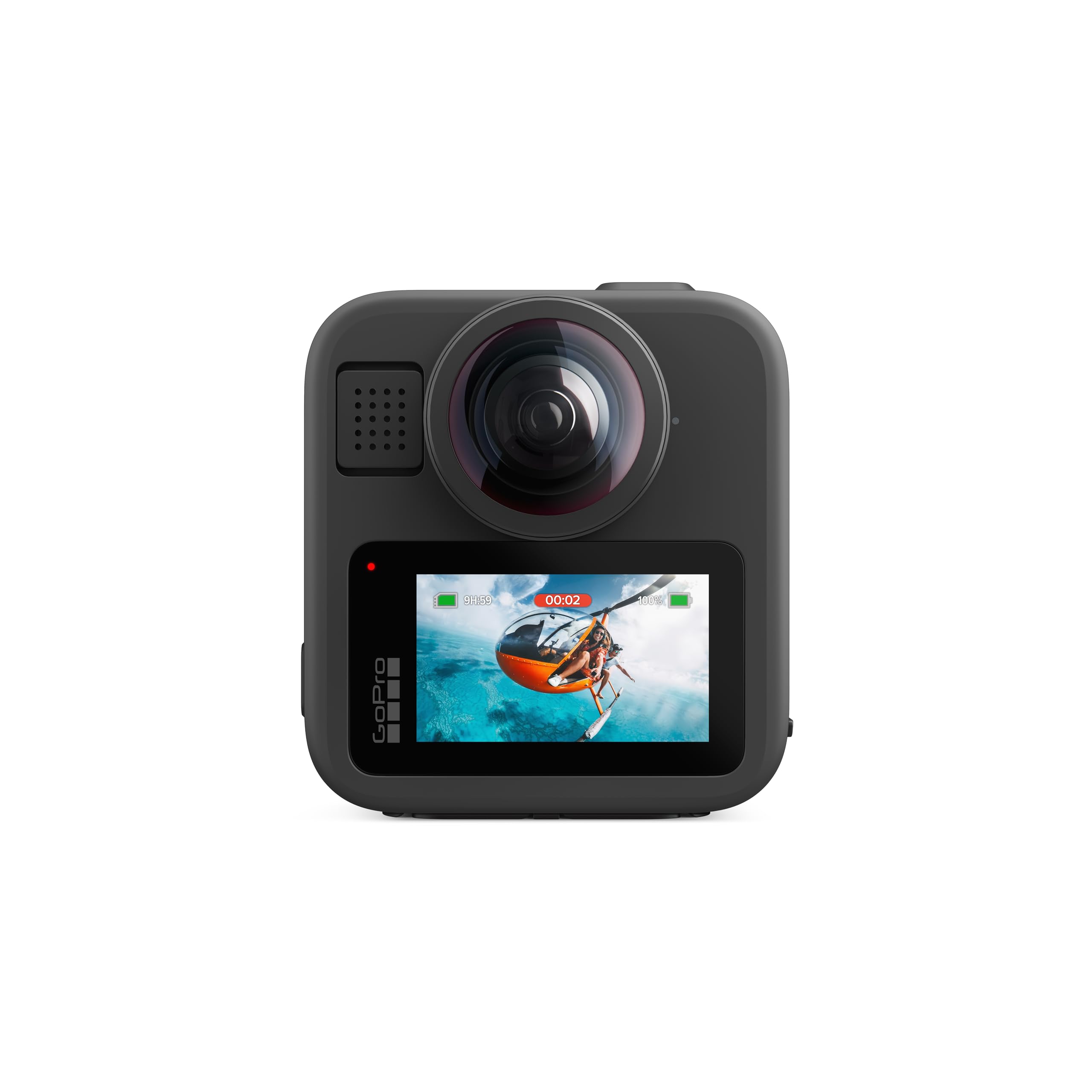
The MAX2 solves the biggest pain of action cameras — aiming. By recording an 8K spherical video, you never need to frame a shot; you point the camera in the general direction and reframe later in the GoPro Quik app. This “shoot now, frame later” workflow is invaluable for capturing fast-moving subjects like kids at a birthday party or a mountain bike descent where you can’t predict the action. The 29-megapixel 360 stills have impressive dynamic range, and the invisible mount effect — where the selfie pole vanishes from the final footage — is genuinely magical for clean follow-cam shots.
Build quality is classic GoPro: rugged, waterproof without a housing, and capable of surviving drops that would shatter a pocket gimbal camera. The replaceable glass lenses relieve the stress of scratches, and the six-microphone array captures ambisonic audio that shifts perspective as you reframe the footage. HyperSmooth horizon leveling keeps the horizon locked even if the camera rotates fully, and the toggle between 360 and traditional Hero mode is instant and intuitive.
The 360 workflow does add a post-production step — every clip requires processing through the Quik app, and the 8K 360 files are large enough that a fast microSD card and monthly cloud storage fees become practical necessities. Battery life is the weakest point: a heavy morning of 8K 360 recording drains roughly 50% per hour, which limits all-day outings without spare batteries. The camera also runs warm during extended recording, though not to the shutdown level seen on the HERO13.
Why it’s great
- True 8K 360 captures every direction; no need to aim during recording
- Invisible mount creates clean follow-cam footage with no pole visible
- Replaceable glass lenses extend the camera’s usable lifespan significantly
- Six-microphone system delivers ambisonic audio that follows reframed perspective
Good to know
- Battery drains quickly; spare batteries essential for day trips
- Large file sizes require fast SD cards and cloud storage fees
- Post-processing required for every clip; not a simple point-and-shoot workflow
5. Xtra Muse Pocket Gimbal
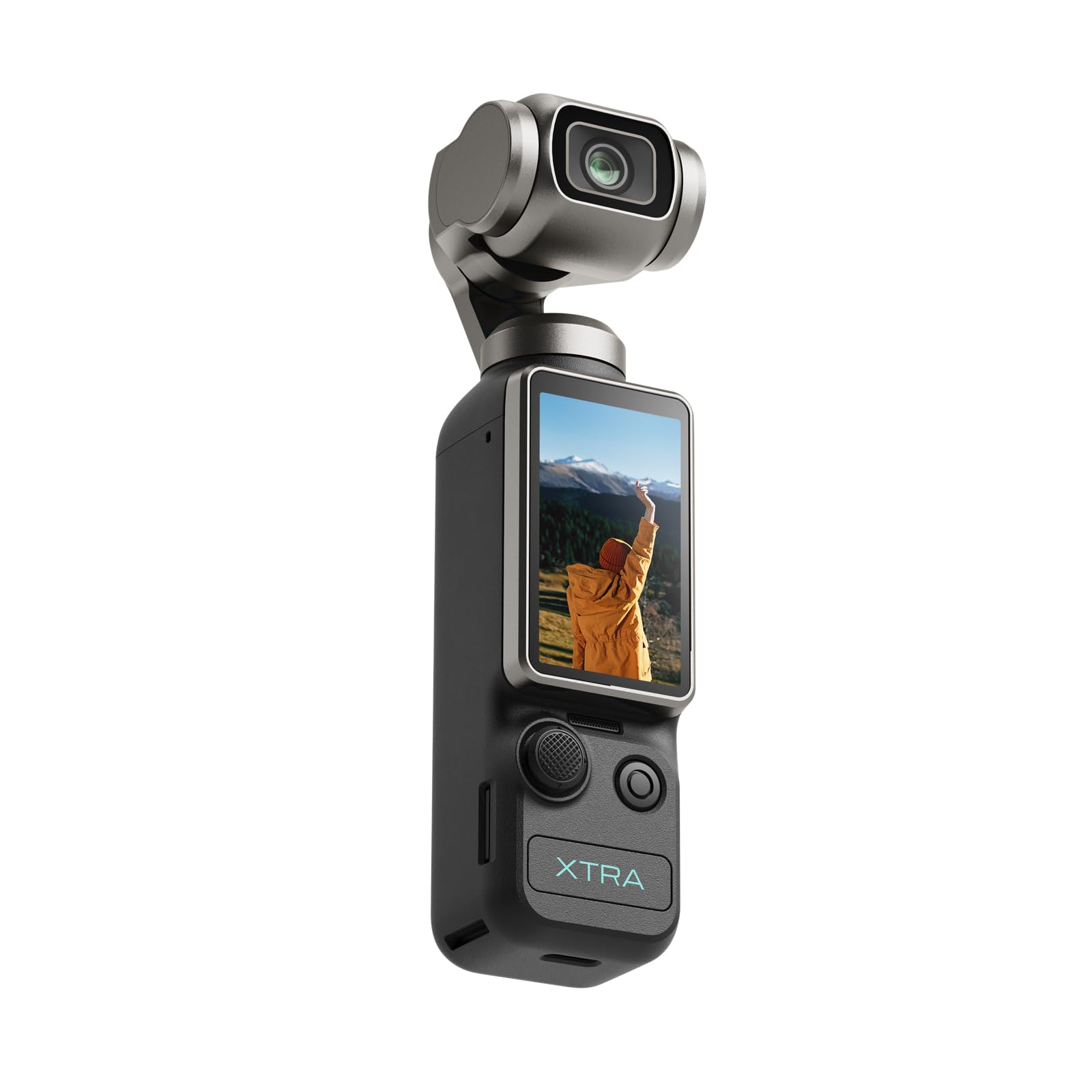
The Xtra Muse directly competes with the DJI Osmo Pocket 3 at nearly half the price, offering the same 1-inch CMOS sensor and 3-axis gimbal stabilizer. For budget-conscious vloggers who want the smooth walking shots and face tracking that make gimbal cameras so effective, this is a compelling entry point. The Master Follow feature keeps the subject centered even while you jump, dance, or spin, and the 2-inch touchscreen flips between horizontal and vertical composition just like the more expensive DJI competitor.
Video output is genuinely impressive for the price bracket: 4K at 120fps delivers smooth slo-motion, and the 10-bit X-Log color mode records up to one billion colors for robust post-production grading. The battery averages 161 minutes, slightly better than the Pocket 3’s internal battery, and the camera can be charged via USB-C PD for external power banks. The bundle includes a carrying bag, handle with a 1/4-inch thread, and wrist strap — practical accessories that add real value.
Where the Xtra Muse falls short is the fine-grain image processing. Color science is less consistent than DJI’s, with occasional magenta casts in mixed lighting and slightly less aggressive highlight recovery in sunset scenes. Users also note that the touch screen interface is not as fluid as the Pocket 3’s, with occasional lag when switching modes quickly. The gimbal lock feels less precise after repeated use, suggesting the motors may not have the same long-term durability as DJI’s fully sealed gimbal.
Why it’s great
- Same 1-inch CMOS and 3-axis gimbal hardware as more expensive competitors
- 10-bit X-Log color mode allows serious video color grading
- Superior battery life at 161 minutes for extended shooting sessions
- Exceptional value for beginners wanting gimbal-smooth footage
Good to know
- Color processing inconsistent; occasional magenta casts in mixed light
- Touch screen interface lags during rapid mode switches
- Gimbal motor feels less robust than DJI’s; durability unproven over heavy use
6. Sony FDR-AX43 UHD 4K Handycam

The FDR-AX43 represents the traditional camcorder form factor that many buyers still prefer: a handheld body with a 20x optical zoom lens and a dedicated viewfinder. The Balanced Optical SteadyShot image stabilization is a hybrid gimbal system that physically moves the entire lens unit, not just the sensor, providing smooth zoom shots at the telephoto end. The 1/2.5-inch Exmor R CMOS sensor uses Sony’s BIONZ X processor to clean up noise, though the smaller sensor means less low-light ability compared to the 1-inch sensor competition.
The Fast Intelligent AF system tracks faces reliably, making this a strong option for family events and school recitals where the subject is moving unpredictably. The 26.8mm wide-angle lens is genuinely wide, fitting large groups into the frame without stepping backward. The included battery is large and can be charged while the camera operates, eliminating downtime during long events. The onboard Wi-Fi and NFC simplify sharing clips to a smartphone for quick social uploads.
This camera is physically larger than any other unit in this guide — the battery protrudes from the back, making it awkward for one-handed use or gimbal mounting. The lens also has a slow maximum aperture at the telephoto end, meaning you will need good light to maintain 4K resolution without noise.
Why it’s great
- 20x optical zoom provides real reach without digital cropping penalties
- Balanced Optical SteadyShot is genuinely effective at full telephoto extension
- Fast Intelligent AF locks onto faces reliably during events
- Can be charged and operated simultaneously for unlimited recording time
Good to know
- Physically large; battery hump makes one-handed operation clumsy
- 1/2.5-inch sensor struggles in dim lighting compared to 1-inch alternatives
- Date/time settings reset if battery is removed; requires frequent re-setting
7. Canon VIXIA HF G70 4K Camcorder
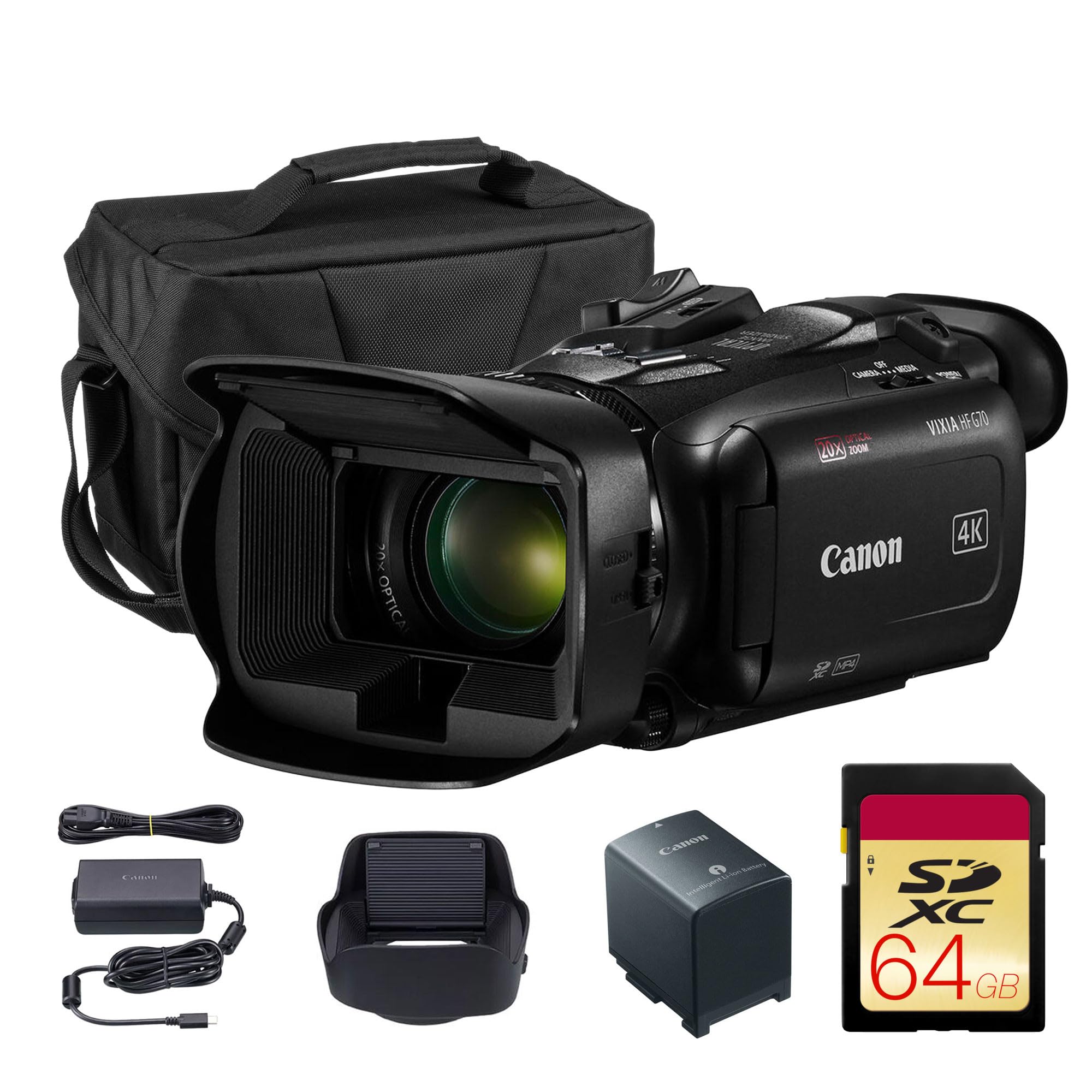
The Canon VIXIA HF G70 is the traditionalist’s choice for weddings, interviews, and documentary work where the camera must run for hours without interruption. Its 20x optical zoom lens delivers clean 4K UHD footage with excellent Canon color science that renders skin tones naturally — a significant advantage when the subject is people. The DIGIC DV 6 processor powers a sharp image pipeline that handles motion well, making this camera popular among high school sports videographers despite listing above the budget cap in its full bundle.
Dual SD card slots allow relay recording so that when one card fills, the camera seamlessly switches to the second, or redundancy recording for backup security on irreplaceable footage. The touchscreen interface enables intuitive focus pulls, and the manual control ring on the lens barrel gives experienced shooters immediate access to focus, zoom, or iris adjustments. The included shoulder bag and 64GB memory card provide a solid out-of-box working kit.
The number one complaint is the slow startup time — roughly 7-8 seconds from power on to recording. Users filming spontaneous moments report missing shots because the camera takes too long to wake. Image stabilization is also a weak link; user feedback specifically cites unacceptable shake when filming from moving vehicles or during walking shots. The fixed viewfinder is also impossible to use in bright sunlight, making outdoor use reliant on the main display’s brightness.
Why it’s great
- Canon color science produces natural skin tones, ideal for people-focused events
- Dual SD card slots enable relay recording for unlimited shoot times
- 20x optical zoom with manual control ring gives precise on-the-fly adjustments
- Includes carry bag and 64GB card for immediate professional use
Good to know
- 7-8 second startup time causes missed spontaneous shots
- Image stabilization is weak; walking footage shows noticeable shake
- Viewfinder unusable in direct sunlight; relies entirely on screen brightness
8. XbotGo Falcon All-in-One AI Action Camera
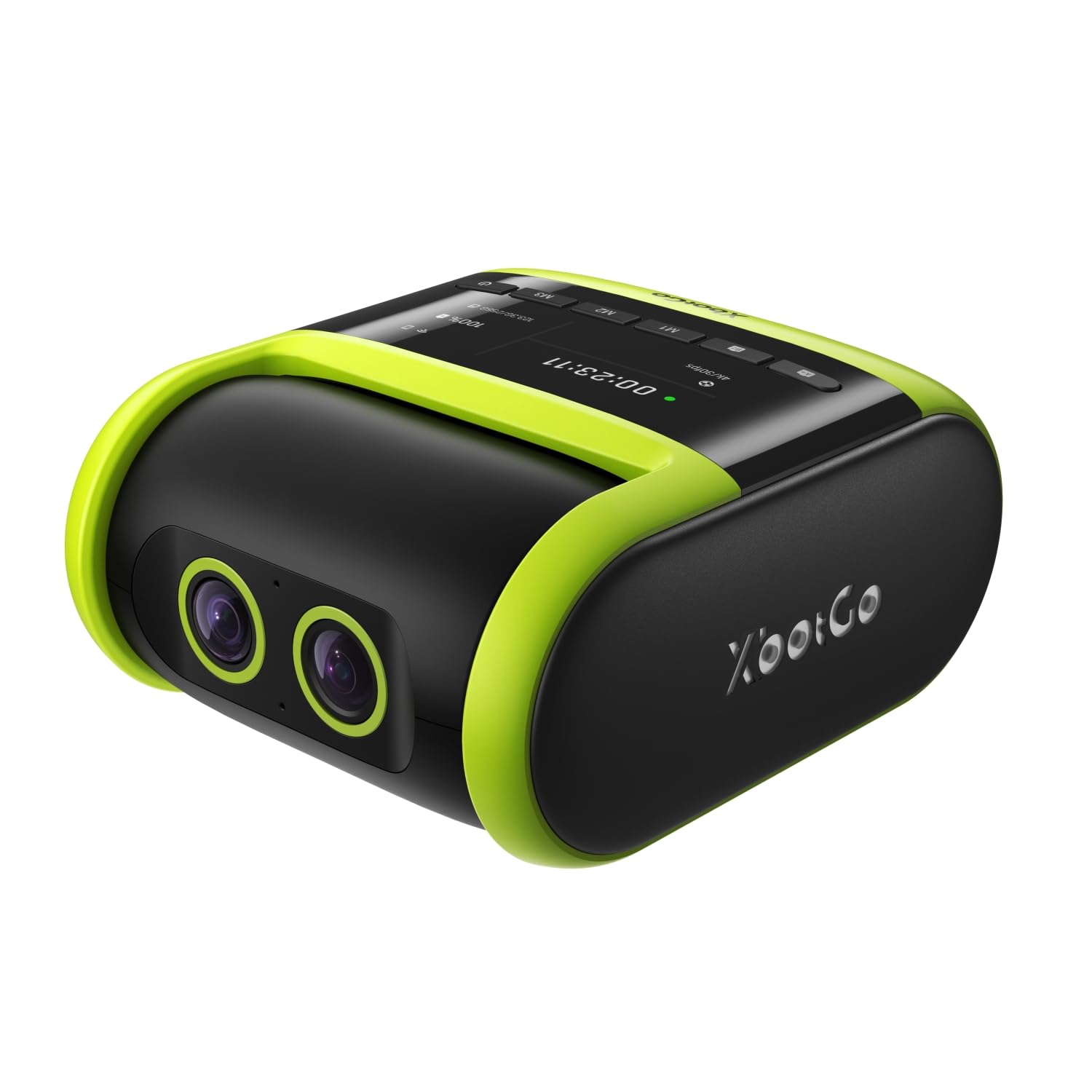
The XbotGo Falcon targets a very specific buyer: the parent or coach who needs to record an entire soccer, basketball, or football game without hiring a cameraperson. The integrated AI auto-tracking system uses 6 TOPS of neural processing to follow players and the ball, adjusting the digital frame within its dual-lens 4K field. This all-in-one package requires no separate gimbal or tracking device — just a tripod, and it runs for the duration of a full match without needing a subscription for the tracking feature.
The camera body is IPX5 water-resistant, meaning it can survive rain and sideline splash, and it mounts on any standard 1/4-inch tripod thread. Setup is straightforward: place the camera on the tripod, select your sport from the companion app, and the AI takes over. The 4K output is sharp enough for game review and highlight reels, and the built-in Wi-Fi enables live streaming directly to social platforms without a separate encoder.
Reliability concerns emerge from user reports of the camera shutting down mysteriously after 30 minutes of recording even with a full battery. Live streaming is reported as glitchy with pixelation in the streamed feed, and the AI tracking can lag during very fast plays, requiring manual intervention to reacquire the subject. The camera is also heavier than expected and needs a beefy tripod to stay stable — a cheap lightweight tripod will tip. Tech support response is slow, which is frustrating for event-day troubleshooting.
Why it’s great
- AI auto-tracking operates without subscription fees for ongoing costs
- All-in-one design eliminates need for separate gimbal or tracking hardware
- IPX5 water resistance suits real sideline weather conditions
- Live streaming capability without external encoders or PCs
Good to know
- Heavy body requires a sturdy tripod; cheap tripods will tip over
- AI tracking struggles with very fast plays; subjects may be lost temporarily
- Some units shut down after 30 minutes despite full battery charge
9. Canon PowerShot V10 Compact Vlogging Camera

The PowerShot V10 shrinks the camcorder concept down to something that fits in a fanny pack, yet it packs a 1-inch back-illuminated CMOS sensor that outperforms virtually any action camera in low light. The fixed 19mm wide-angle equivalent lens (f/2.8) captures expansive vlogging shots and landscape scenes, and the retractable stand folds into both front and rear positions, enabling hands-free shooting on any flat surface. This makes it a natural tool for the first-time vlogger who wants high image quality without the learning curve of a gimbal system.
Canon updated the V10 with three image stabilization modes (Off, On, Enhanced) via firmware 1.2.0, and the built-in stereo microphone array effectively reduces ambient noise for clean vocal capture. The 8-bit 4K at 30fps frame rate is sufficient for web delivery and social media, and the 14 movie color filters allow quick mood setting in-camera. The USB-C PD charging means a power bank can keep the camera running through a day of sightseeing without swapping batteries.
The V10 has no zoom whatsoever — digital or optical. You are locked to a single wide-angle focal length, which is fine for selfie vlogging but limiting for any subject more than about 10 feet away. Battery life is shorter than the competition; users report the battery drains quickly during 4K recording, and the camera takes a while to fully recharge. The lack of a lens cover or built-in wind screen is an oversight for an outdoor vlogging camera, and the custom case purchase feels like a hidden cost.
Why it’s great
- Pocket-sized body with a genuine 1-inch CMOS sensor for superior low-light video
- Integrated stand enables hands-free recording on any flat surface
- Stereo microphone with noise reduction captures clean vlogging audio
- USB-C PD charging allows extended use via power bank
Good to know
- No zoom of any kind; completely fixed wide-angle focal length
- Battery life is short; frequent charging needed during extended outings
- No included lens cover or wind screen; protective case is a separate purchase
FAQ
Why does a 1-inch sensor matter more than 4K resolution in this price bracket?
Can I use a pocket gimbal camera for professional paid work?
How does action camera stabilization compare to a pocket gimbal camera?
Should I buy a 360 camera or a traditional action camera for travel?
Final Thoughts: The Verdict
For most users, the camcorder under $1000 winner is the DJI Osmo Pocket 3 Creator Combo because it combines a large 1-inch sensor with real mechanical 3-axis stabilization, a rotating screen, and a professional mic kit — deliverable footage quality that rivals cameras costing twice as much. If you want extreme wide-angle action and underwater versatility, grab the DJI Osmo Action 6 Enhanced Combo. And for traditional zoom-based event shooting like recitals or family gatherings, the Sony FDR-AX43 remains the reliable workhorse that fits the budget.

Mo Maruf
I created WellFizz to bridge the gap between vague wellness advice and actionable solutions. My mission is simple: to decode the research and give you practical tools you can actually use.
Beyond the data, I am a passionate traveler. I believe that stepping away from the screen to explore new environments is essential for mental clarity and physical vitality.