Our readers keep the lights on and my smoothie glass nicely filled. As an Amazon Associate, I earn from qualifying purchases.
The hard, yellowed buildup on your heels and the balls of your feet isn’t just unsightly—it can actually become painful to walk on. A proper callus remover gel dissolves the keratin protein that binds dead skin cells together, letting you wipe away years of rough, cracked skin in a single treatment without the abrasive damage of a pumice stone.
I’m Mohammad Maruf — the founder and writer behind WellFizz. My research focuses on analyzing the chemical formulations, active ingredient concentrations (urea, lactic acid, salicylic acid), and real-world application protocols that separate an effective callus softener from a glorified lotion.
To cut through the marketing fluff and find the formulas that actually digest tough tissue, I’ve evaluated the top contenders to deliver a definitive guide to the best callus remover gel for restoring healthy, touchable feet.
How To Choose The Best Callus Remover Gel
Not every gel that says “callus remover” on the label has the chemical muscle to actually dissolve thick skin. Many products are simply thick moisturizers that soften the surface without breaking the keratin bond. To get a true remover, you need to understand the active ingredient tier, the pH and dwell time, and the convenience of the packaging for your routine.
Active Ingredient: Urea vs. Lactic vs. Proprietary Blends
Urea at concentrations of 10% or higher works by breaking down the protein structure of dead skin while simultaneously drawing moisture into the deeper layers. Lactic acid (typically 5-10%) exfoliates by dissolving the “glue” between dead skin cells, offering a more gentle chemical peel effect. Professional salon gels often use a proprietary blend of potassium hydroxide or sodium hydroxide — these are powerful keratolytics that can dissolve tissue in minutes, but require strict timing to avoid irritation on healthy skin.
Dwell Time and Application Safety
A gel you leave on for 30 seconds is a splash-and-dash; one you leave on for 15 minutes is serious chemical work. Faster-acting formulas often rely on stronger alkalizing agents that can burn if left on too long or if they contact broken skin. Slower, daily-use creams build results over a week but carry almost zero risk. Decide which trade-off matches your callus severity and your patience level before you buy.
Quick Comparison
On smaller screens, swipe sideways to see the full table.
| Model | Category | Best For | Key Spec | Amazon |
|---|---|---|---|---|
| Lee Beauty 8oz Professional Gel | Gel | Spa-level immediate results | Fast-acting 3-7 min dwell | Amazon |
| SPA REDI Mint & Eucalyptus | Professional Gel | Salon bulk treatment | 128 oz industrial volume | Amazon |
| Peppermint Foot Cream 5% Lactic | Cream | Gentle daily exfoliation | 5% lactic acid + aloe | Amazon |
| Organic Tea Tree Foot Balm | Balm | Overnight cracked heel repair | Shea butter barrier | Amazon |
| Dermatonics Sakura Blossom Balm | Balm | Light daily maintenance | 10% urea + shea butter | Amazon |
In‑Depth Reviews
1. Lee Beauty 8oz Professional Gel Callus Remover

This is the gold standard for home users who want salon-grade callus dissolution without a salon price. The proprietary fast-acting formula (many users report skin melting within 3 to 7 minutes of application) targets the keratin structure directly, breaking down the toughest heel cracks and ball-of-foot calluses into a texture that a foot file or pumice stone can wipe away in seconds. The 8-ounce bottle is generous, and because a thin layer is all that’s needed, one bottle lasts months even with weekly treatments.
The formulation contains active ingredients that work aggressively—this is not a daily moisturizer. User feedback consistently notes that soaking feet in warm water for 15 minutes before application amplifies the gel’s penetration, and that careful timing prevents irritation on adjacent healthy skin. Several long-term users confirm that 3 to 4 treatments over 48 hours can eliminate calluses that foot files alone never touched.
One caveat: the gel has a strong chemical odor that lasts during the application window, so using it in a well-ventilated bathroom is wise. A small number of users with sensitive skin report a tingling or mild burning sensation if the gel contacts cracks or cuts; applying a thin barrier cream around calluses before using the gel mitigates this risk entirely.
Why it’s great
- Works visibly within a single 3-7 minute session on moderate calluses
- Concentrated gel formula stretches product use far longer than watery lotions
- Consistent professional-grade results that rival salon pedicures
Good to know
- Strong chemical smell requires a ventilated room
- Can irritate open cracks or cuts—use a barrier cream first
- Smart application timing is critical to avoid over-dissolving healthy tissue
2. SPA REDI Callus Remover Gel, Mint and Eucalyptus
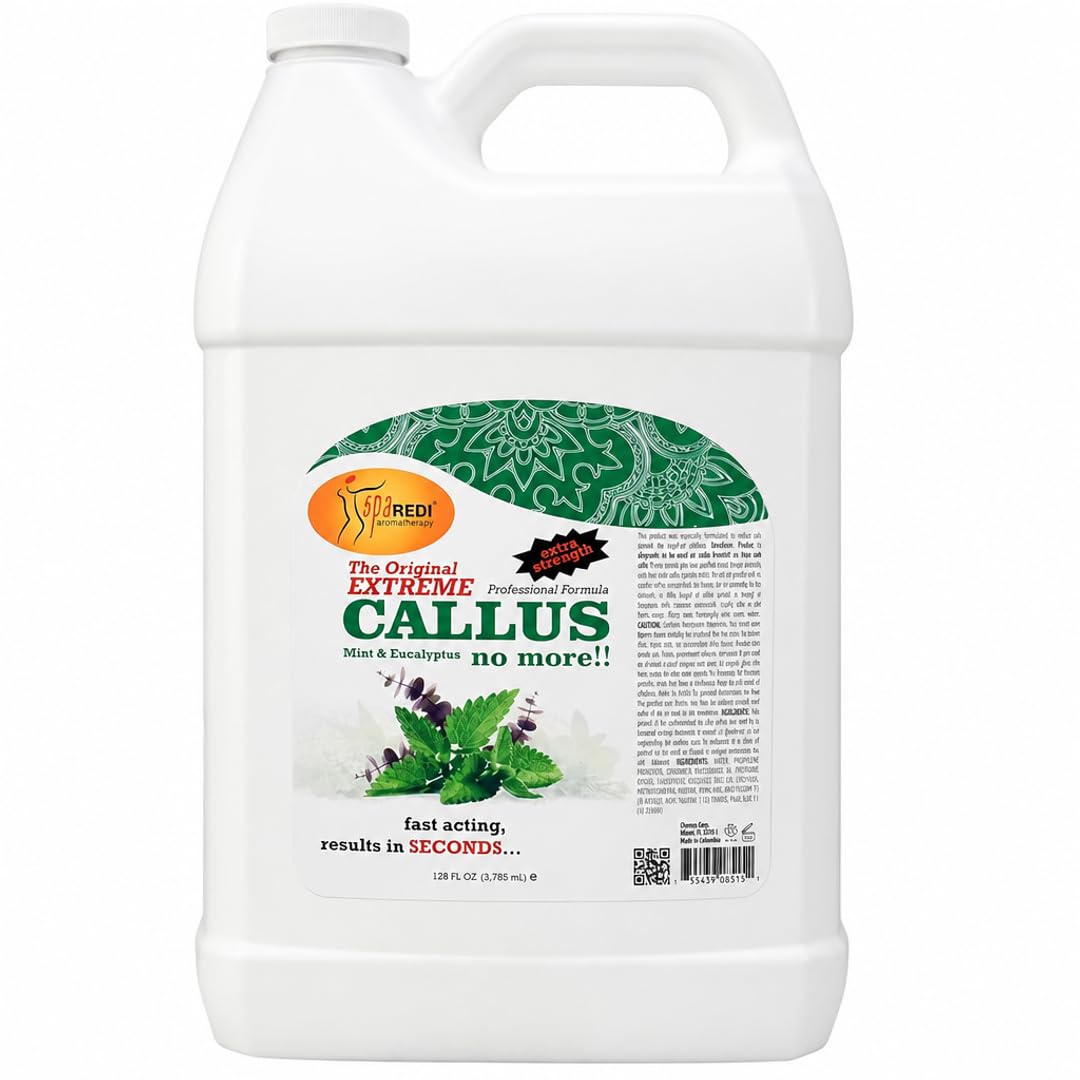
SPA REDI is the dark horse of the professional pedicure world—a 128-ounce jug of gel that has been used by actual salon workers for over eight years. This is a no-dilution, high-potency keratolytic formula designed to melt the toughest calluses in seconds, not minutes. Several verified review threads from nail technicians confirm that a quarter-sized amount applied to the bottom of the foot (and only the bottom—it will burn on the upper skin) yields immediate dissolution of hard tissue that a cheese-grater-style foot file can then remove entirely.
The mint and eucalyptus infusion is not just fragrance; the menthol provides a cooling sensation that helps offset the aggressive chemical action, and the eucalyptus offers mild anti-inflammatory properties for sore feet. The sheer volume of this container makes it an economical choice for families or individuals who treat calluses weekly, but the primary audience remains those who want a single purchase that lasts years. The gel is sulfate-free, alcohol-free, silicone-free, and cruelty-free, which is notable for a product with such aggressive tissue-dissolving power.
One review notes that SPA REDI “works almost too well,” and this is a fair warning. Because it acts so fast, new users must be extremely precise about application. Getting it on healthy skin, especially between toes or on the top of the foot, produces a burning sensation that rinsing immediately resolves. The product is also thick enough that it stays put where applied, which helps limit accidental spread.
Why it’s great
- Immediate results—calluses dissolve visibly in under a minute
- Massive 128-ounce container offers the lowest per-use cost
- Trusted by salon professionals for years of consistent performance
Good to know
- Extremely strong formula requires precise, careful application
- Burns immediately on healthy skin if contact occurs
- Huge container is impractical for small storage spaces
3. Peppermint Foot Cream with 5% Lactic Acid
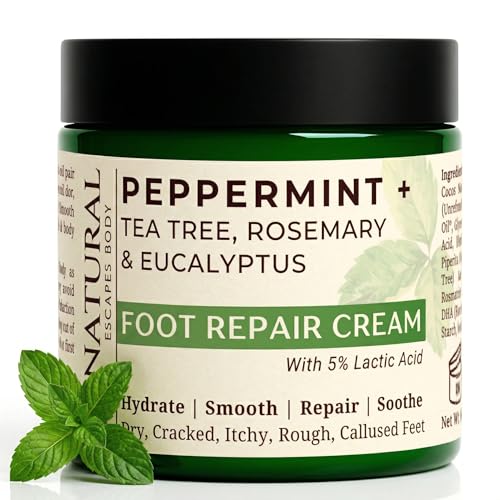
This product takes a fundamentally different approach—it uses 5% lactic acid, a gentle alpha-hydroxy acid, to chemically exfoliate dead skin over a period of daily use rather than melting tissue aggressively in one session. The base formula is built on aloe vera juice (listed as the first ingredient, not water), which means the cream moisturizes deeply while the lactic acid works on loosening the bonds between dead skin cells. Many users report visible softening of calluses and cracked heels within seven days of consistent overnight use.
The peppermint, tea tree, eucalyptus, and rosemary essential oil blend is not synthetic fragrance—these are therapeutic-grade oils that provide a cooling sensation, mild analgesic relief for tired feet, and natural antimicrobial protection to combat odor. The cream is surprisingly non-greasy despite its rich composition; it absorbs in minutes, so it won’t stain sheets if used as an overnight treatment with cotton socks. Multiple reviews on the thread call it “the best foot cream” they’ve ever used, emphasizing the genuine essential oil aromatherapy experience alongside the exfoliation.
The trade-off is speed. If you have massive, thick calluses that are years old, this cream will soften them over weeks, but it won’t dissolve them in one night. It is also packaged in a 4-ounce jar rather than a tube, which some users find less hygienic for scooping. However, the thick consistency means a dime-sized amount covers one foot completely, so the jar still lasts through a full month of nightly applications.
Why it’s great
- Safe for daily use with virtually zero irritation risk
- Aloe-first base provides superior hydration compared to water-based creams
- Genuine essential oils offer a spa-like sensory experience with therapeutic benefits
Good to know
- Lactic acid works gradually over days/weeks, not minutes
- Wide-mouth jar requires clean fingers or a spatula for each use
- Not ideal for thick, neglected calluses needing instant removal
4. Organic Tea Tree Foot Balm for Cracked Heels
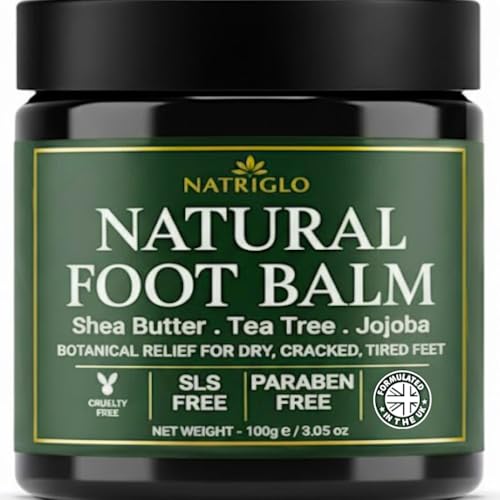
Where the previous products chemically dissolve tissue, this organic tea tree foot balm uses a physical strategy: it creates a thick, emollient barrier (rich in shea butter and organic tea tree oil) that softens rock-hard calluses and cracked heels by locking in moisture for hours at a time. Multiple reviewers with severe, long-term cracked heels report that after two nights of applying this balm before bed and wearing cotton socks, their heels went from “hard and sharp” to “baby-smooth.” The balm does not sting or tingle, which makes it ideal for users whose feet are already sensitive or cracked.
The organic tea tree oil content is high enough to provide notable antimicrobial benefits—important for anyone with deep heel fissures that can trap bacteria. The texture is noticeably oilier than the lactic acid cream or the urea balm, but that oiliness is the key to its effectiveness; it sits on the skin all night, continuously softening the keratin until morning. Users who tried scrubs and pumice stones for years without success found that a week of nightly balm application transformed their foot texture completely.
The main limitation is that it does not actively dissolve calluses; it softens them so a foot file or pumice stone can remove them more easily during the day. This means you must pair it with manual exfoliation to get the full effect. Additionally, the oily residue means it’s not ideal for daytime use unless you plan to wear socks or slippers. The 3.53-ounce tin is smaller than it looks, but a pea-sized amount covers one heel, so it still offers solid longevity.
Why it’s great
- Zero risk of irritation—safe for cracked, sensitive skin
- Organic tea tree oil provides natural antimicrobial protection for deep fissures
- Intensive overnight softening transforms even severe calluses in 1-2 nights
Good to know
- Requires pairing with manual exfoliation for best results
- Oily texture makes daytime use impractical without socks
- Smaller tin size relative to price per ounce
5. Dermatonics Hard Skin & Callus Removing Balm

Dermatonics takes a measured approach with 10% urea—a concentration that is high enough to begin breaking down the protein structure of calluses but gentle enough for daily application on hands, elbows, and feet. The sakura blossom fragrance is genuinely pleasant and perfume-like, which sets it apart from the medicinal scents of other removers. Several user reports confirm that it eliminated severe winter dryness on feet within two days when used every other day, and one reviewer with a rough, scarring elbow patch saw almost complete healing after three uses.
The balm is plant-based, paraben-free, sulfate-free, and absorbs quickly without a greasy afterfeel—you can apply it and put socks on immediately without a sticky residue. The formula includes shea butter and Swedish oat lipids, which provide the moisturizing repair component alongside the urea’s chemical softening. For people whose callus problems are more about thick, dry skin buildup than deep, fissured cracks, this balm offers a balanced solution that maintains results over time.
The most consistent criticism from the review thread is that at 10% urea, this product softens skin but does not strongly remove established calluses. Multiple users who used it for two weeks or longer reported that their feet felt temporarily softer but the calluses did not dissolve or disappear. This means Dermatonics works best as a maintenance balm for people who already remove calluses mechanically, or for those with mild dryness who want to prevent callus formation rather than treat severe cases.
Why it’s great
- Pleasant sakura blossom scent masks the typical medicinal foot cream smell
- Quick-absorbing, non-greasy formula works well for daytime application
- Plant-based ingredients list is clean and gentle for sensitive skin
Good to know
- 10% urea softens but does not reliably remove thick, established calluses
- Works best as a daily maintenance lotion, not a spot treatment
- Small 2.37 oz tube may run out quickly with daily full-foot application
FAQ
Can I use a callus remover gel if my heels have open cracks?
How often should I use a callus remover gel for maintenance?
Why does my foot skin feel sticky after using a peel-off type callus remover?
Final Thoughts: The Verdict
For most users, the best callus remover gel winner is the Lee Beauty 8oz Professional Gel because it delivers salon-grade callus dissolution at home with a fast 3-7 minute dwell time that actually breaks down keratin instead of just moisturizing it. If you want a gentle daily exfoliant that also hydrates, grab the Peppermint Foot Cream with 5% Lactic Acid. And for deep overnight repair of cracked heels without any chemical sting, nothing beats the Organic Tea Tree Foot Balm.

Mo Maruf
I created WellFizz to bridge the gap between vague wellness advice and actionable solutions. My mission is simple: to decode the research and give you practical tools you can actually use.
Beyond the data, I am a passionate traveler. I believe that stepping away from the screen to explore new environments is essential for mental clarity and physical vitality.