Our readers keep the lights on and my smoothie glass nicely filled. As an Amazon Associate, I earn from qualifying purchases.
Thick, cracked heel calluses don’t give way to pumice stones or cheap metal scrapers — they require a controlled, mechanical approach that removes dead skin without tearing healthy tissue. The difference between a tool that smooths and one that just abrades comes down to motor stability, grit consistency, and how the device handles the contours of your heel and ball of the foot.
I’m Mohammad Maruf — the founder and writer behind WellFizz. I research consumer wellness devices by analyzing motor torque, rotational precision, and the abrasion chemistry of sandpaper discs to find which models actually solve the problem of chronic dry skin and callus buildup.
After reviewing five of the most-discussed options on the market, I found the models that balance speed control, disc quality, and ergonomic grip deliver professional-level results without the salon price. Here is the definitive analysis of the best callus remover for feet.
How To Choose The Best Callus Remover For Feet
Not every electric foot file delivers the same result. The ones that work well share a few design decisions that matter more than brand name or price. Here is what separates an effective tool from a skin-irritating mistake.
Motor Power and RPM Range
The rotation speed, measured in revolutions per minute (RPM), determines how aggressively the tool abrades dead skin. Low-end models cap at 500–600 RPM, which works for light maintenance but stalls on thick heel calluses. Premium units reach 1200 RPM with variable speed control, letting you dial in the exact aggression level. A variable-speed trigger or dial gives you the control to start slow on sensitive arches and increase speed only on the heel.
Abrasive Quality and Disc Compatibility
Sandpaper grit is the actual cutting surface. Coarse 60–80 grit discs remove thick callus fast but can damage healthy skin if you linger. Fine 180–240 grit discs polish and maintain. The best units include multiple grit options in one package — typically 30 coarse and 30 fine discs — and use a hook-and-loop or adhesive system that stays locked during rotation. Discs that slip or peel mid-use create uneven pressure and reduce effectiveness.
Wired vs. Cordless Power
Corded units deliver consistent high torque without battery fade, making them ideal for tackling severe calluses in one session. Cordless models offer bathroom freedom and are easier to store, but their motor output drops as the battery drains. If you have neuropathy, thick calluses, or plan to use the tool weekly for maintenance, a corded device removes the variable of dying power halfway through a foot.
Build Quality and Ergonomics
Plastic-bodied files often develop wobble over time, which translates to uneven pressure and skin irritation. Aluminum alloy housings stay rigid and transmit motor torque efficiently without vibration. Look for a textured grip surface and a shape that lets you reach the lateral heel edge and the space between your toes without twisting your wrist awkwardly. A lightweight unit under 6 ounces reduces hand fatigue during a full foot session.
Quick Comparison
On smaller screens, swipe sideways to see the full table.
| Model | Category | Best For | Key Spec | Amazon |
|---|---|---|---|---|
| I.B.N Upgraded Callus Remover | Premium | Severe calluses, podiatrist-grade power | 0-1200 RPM variable speed | Amazon |
| APRELM E7 Rechargeable | Mid-Range | Cordless freedom, 120-min runtime | 1000 RPM, 1500mAh battery | Amazon |
| HayZBao FSA&HSA Callus Remover | Mid-Range | Controlled, low-speed precision | 0-600 RPM adjustable, aluminum alloy | Amazon |
| Dermawave Electric Foot File | Budget-Friendly | Powerful corded value, 800 RPM | 800 RPM, 60 sandpaper discs | Amazon |
| LIYUJSDZ Rechargeable File | Budget-Friendly | Ultra-light entry-level, 2-speed | 2000 max strokes/min, 5.3 oz | Amazon |
In‑Depth Reviews
1. I.B.N Upgraded Electric Callus Remover for Feet

The I.B.N unit tops the list because it delivers the widest RPM range — 0 to 1200 — in a category where most competitors cap at 800 or 1000. This variable-speed dial allows you to work at a crawl on the sensitive ball of the foot and dial up to full aggression on the heel without swapping tools. The aluminum alloy body stays rigid under load, and users with thick, years-old calluses report the same results they get from a podiatrist’s drill.
The plug-in design ensures consistent torque. Unlike rechargeable units that lose power as the battery depletes, this unit maintains full rotational force from start to finish. The 60 included sandpaper discs (coarse and fine) provide months of use, and the adhesive system holds the discs flat at full RPM — a failure point on cheaper models where discs peel mid-stroke.
One consideration: the unit warms up during extended sessions, which is normal for a high-torque motor at 1200 RPM. Users with neuropathy should take short breaks between passes. The ergonomic grip is well-shaped for maneuvering around the heel edge, though it is slightly heavier than cordless competitors due to the corded transformer in the handle.
Why it’s great
- 0-1200 RPM variable speed for total control
- Aluminum alloy body eliminates wobble
- Podiatrist-level effectiveness on severe calluses
Good to know
- Motor warms up during extended use
- Must be used near an outlet
2. APRELM Rechargeable Electric Foot Callus Remover (E7)
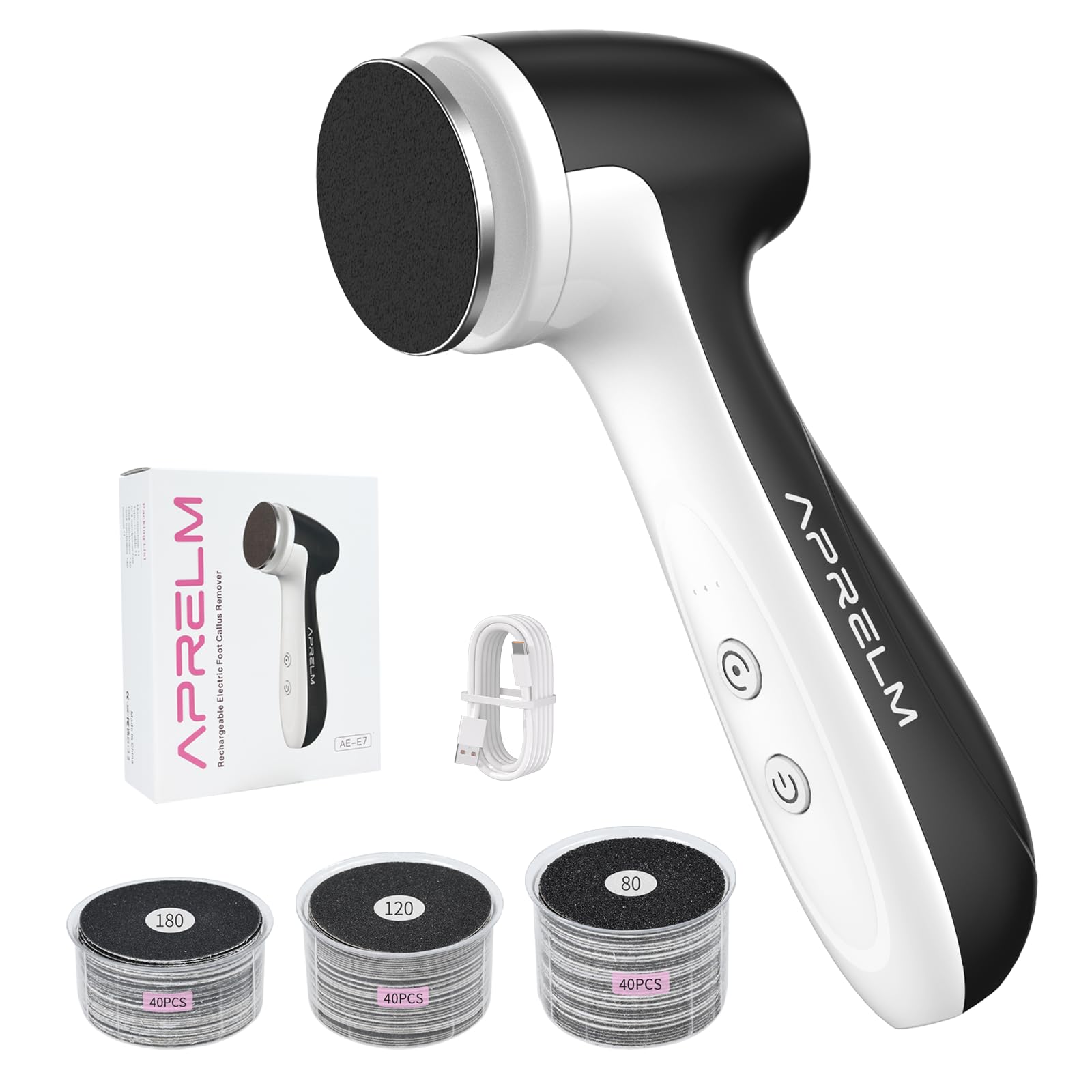
The APRELM E7 solves the cordless compromise better than any model in this class. Its 1500mAh battery delivers up to 120 minutes at full 1000 RPM, enough for about 5 to 8 full foot sessions before needing a recharge. The three-speed control (600/750/1000 RPM) gives a surprising range, and the 120-piece sandpaper kit — 40 discs each of 80#, 120#, and 180# grit — means you can match grit to callus thickness without running out.
The metal drum head is a noticeable upgrade over plastic-gear competitors. Users who switched from older units report less vibration and more direct power transfer. The disc change system uses a simple adhesive backing that aligns easily, and the discs hold firm even at 1000 RPM. The unit is lightweight at 13.4 ounces and fits naturally in the hand, making it easy to reach the lateral heel and arch without hand cramping.
The primary weakness is the plastic body, which, while rigid enough for home use, does not have the long-term durability feel of the aluminum-alloy corded units. Overuse at high speed on thick calluses can cause minor irritation — the tool is powerful enough that a light touch is required. Still, for anyone who wants cordless convenience without sacrificing speed, the E7 is the strongest option.
Why it’s great
- 120-minute runtime at 1000 RPM
- 120 discs in 3 grits for tailored exfoliation
- Metal drum head reduces vibration
Good to know
- Plastic body feels less premium than corded units
- Overuse at high speed can irritate sensitive skin
3. HayZBao FSA&HSA Electric Foot Callus Remover

HayZBao takes a different approach by capping its maximum speed at 600 RPM, significantly lower than the competition. This is not a flaw — it is a deliberate design for people who want precise, controlled exfoliation without the risk of over-sanding. The variable-speed dial from 0 to 600 RPM lets you find the exact rotation speed that removes callus without creating heat or friction irritation, making it ideal for seniors, diabetics, or anyone with thinner skin.
The aluminum alloy body is compact (1.7 x 1.7 x 4.7 inches) and lightweight at 5.4 ounces. The plug-in power ensures the motor never fades, and the small form factor makes it easy to store in a medicine cabinet. The 60 included sandpapers (30 coarse, 30 fine) are standard adhesive-backed discs that install cleanly. Users report it cuts their soak-and-scrape routine time in half.
The downside is obvious: you cannot use it for thick, rock-hard calluses that require aggressive 1000+ RPM torque. If your calluses are moderate and you value safety over speed, this is the right choice. The noise level is also slightly higher than some competitors due to the smaller motor housing, though it is not loud enough to be disruptive during a bathroom routine.
Why it’s great
- 0-600 RPM variable speed for gentle control
- Aluminum alloy body in a compact size
- Low risk of over-exfoliation for sensitive skin
Good to know
- Too slow for severe, thick calluses
- Slightly noisier at full speed
4. Dermawave Electric Foot File Callus Remover
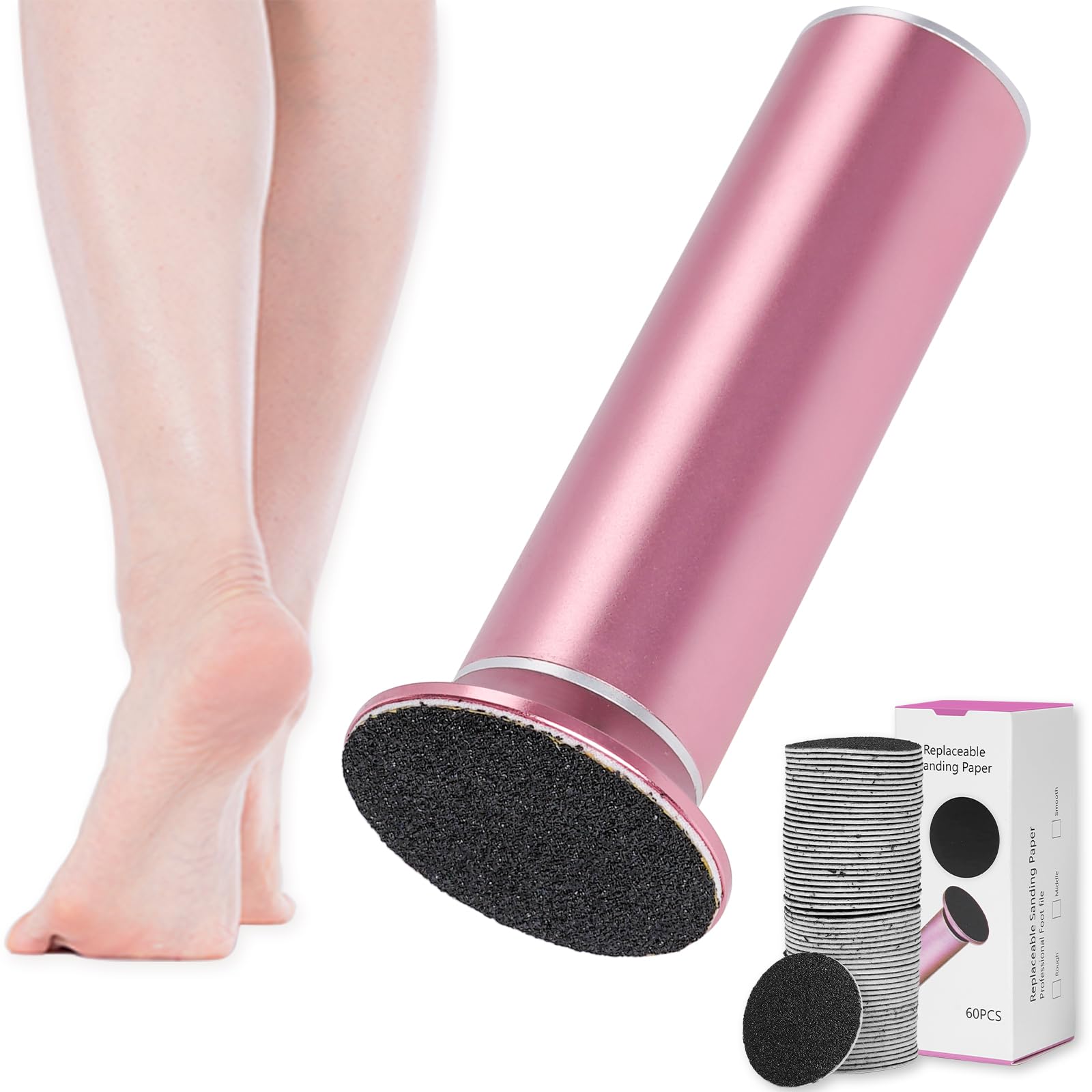
The Dermawave delivers 800 RPM from a corded motor at a price point that undercuts most competitors by a significant margin. It includes 60 discs (30 coarse, 30 fine) and a durable aluminum shell that resists the wobble common in plastic-bodied entry-level units. The 360-degree rotation works in both directions, making it equally comfortable for left-handed and right-handed users — a rare feature in this price range.
Users consistently report it removes severe calluses, bunions, and thick toenails more effectively than any manual file or scrubber they have tried. The four-speed dial provides enough range to switch between light arch maintenance and heavy heel work. The plug-in power means you never worry about charging, and the cylindrical body is easy to grip even with wet hands.
The trade-off is that the included discs are the standard stick-on style, which can wear out faster than the thicker hook-and-loop discs on premium units. Some users note the cord is shorter than ideal, requiring proximity to an outlet. At this price, however, the Dermawave offers the best power-to-cost ratio in the category for anyone who does not need cordless mobility.
Why it’s great
- 800 RPM corded motor at an entry-level price
- Aluminum shell prevents wobble
- Bi-directional rotation for ambidextrous use
Good to know
- Stick-on discs wear faster than hook-and-loop types
- Short cord limits outlet placement
5. LIYUJSDZ Rechargeable Electric Foot File
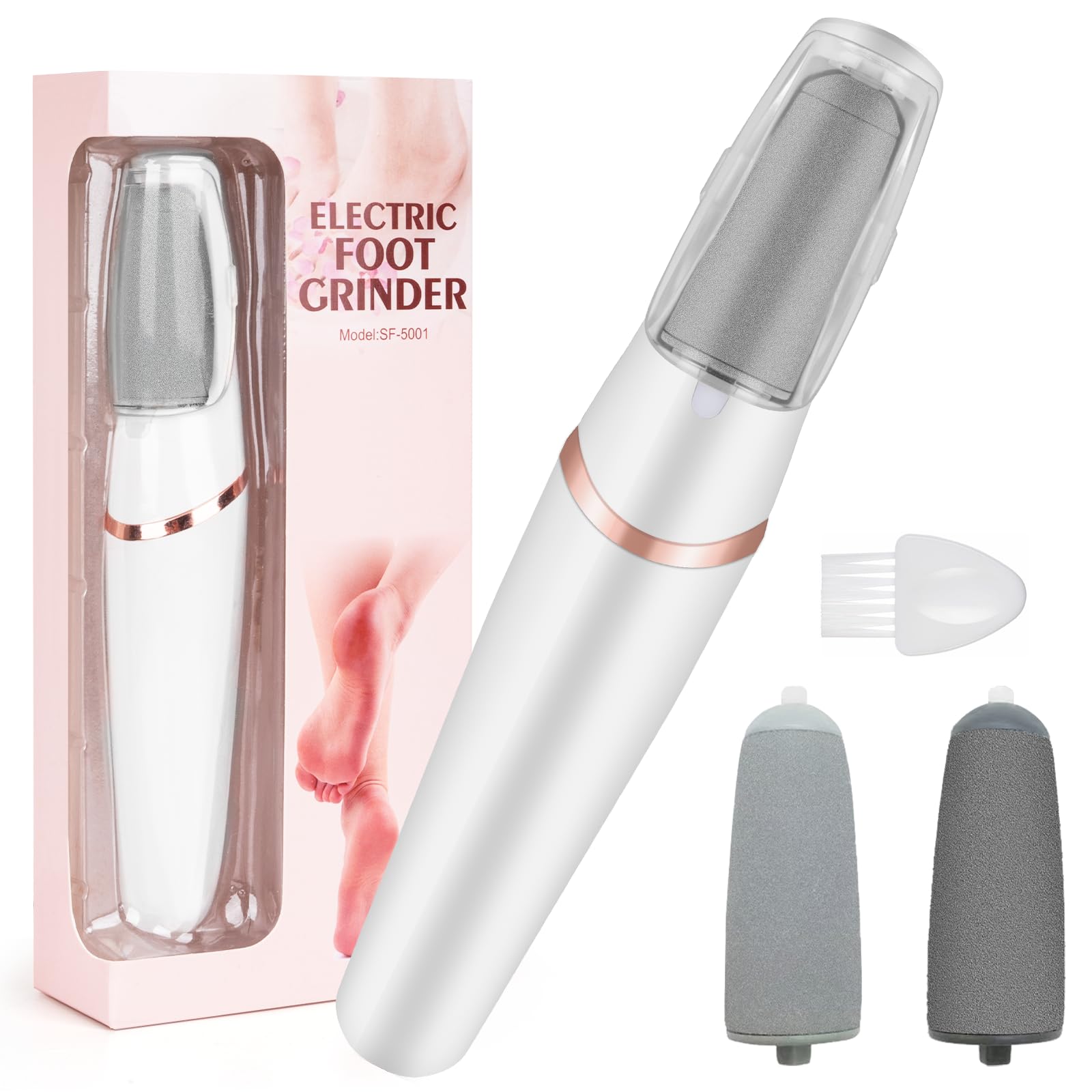
The LIYUJSDZ is the lightest and most portable model in this roundup at just 5.3 ounces. It uses a rechargeable lithium-ion battery with a USB charging cable and offers two speed settings (1700 and 2000 strokes per minute — note these are oscillation frequencies, not traditional RPM). The two included grinding heads — fine for daily maintenance and coarse for stubborn calluses — snap on and off easily for cleaning.
Users with dry winter skin and moderate calluses report visible results after a single 20-minute session. The cordless design makes it convenient to use in any room, and the included cleaning brush helps remove dead skin dust from the grinding head crevices. The one-year warranty and free replacement service from the manufacturer add peace of mind at this entry-level price point.
The limitations become apparent with severe calluses. The motor lacks the torque of the corded units, and the oscillation design does not have the same cutting precision as a rotating drum. Some units arrived with charging issues, though the seller quickly replaced them. This is a capable entry-level tool for maintenance, but those with thick, chronic calluses should invest in one of the higher-torque models above.
Why it’s great
- Ultra-light 5.3 oz for easy handling
- Two grinding heads for different callus levels
- USB rechargeable with one-year warranty
Good to know
- Oscillation motor lacks torque for thick calluses
- Some units have charging defects (seller replaces)
FAQ
Can I use an electric callus remover on wet skin right out of the shower?
How often should I use an electric foot file for maintenance?
Is a corded or cordless callus remover better for diabetic foot care?
How do I clean and maintain the sandpaper discs?
Final Thoughts: The Verdict
For most users, the best callus remover for feet is the I.B.N Upgraded Electric Callus Remover because its variable-speed 0-1200 RPM motor and aluminum body deliver podiatrist-grade performance for severe calluses without battery dependency. If you want cordless freedom and long runtime, grab the APRELM E7 Rechargeable. For sensitive skin or diabetic-friendly gentle exfoliation, nothing beats the controlled precision of the HayZBao FSA&HSA Callus Remover.

Mo Maruf
I created WellFizz to bridge the gap between vague wellness advice and actionable solutions. My mission is simple: to decode the research and give you practical tools you can actually use.
Beyond the data, I am a passionate traveler. I believe that stepping away from the screen to explore new environments is essential for mental clarity and physical vitality.