Our readers keep the lights on and my smoothie glass nicely filled. As an Amazon Associate, I earn from qualifying purchases.
That rough, hardened skin on your heels isn’t just a cosmetic issue. It catches on socks, snags on sheets, and can eventually crack deep enough to become painful. A dedicated treatment formulated with high-concentration active ingredients is the only reliable way to dissolve and remove callus tissue while rehydrating the underlying skin.
I’m Mohammad Maruf — the founder and writer behind WellFizz. I spend my research hours analyzing chemical exfoliant percentages, humectant profiles, and fatty-acid compositions to separate genuinely effective foot creams from glorified hand lotions in fancy jars.
This guide breaks down the top-tier formulas for softening hard skin, including my findings on the best callus foot cream for different types of dryness and callus severity.
How To Choose The Best Callus Foot Cream
Not all foot creams are formulated to tackle hard, built-up callus tissue. You need an active ingredient — typically a high percentage of urea or an alpha-hydroxy acid like lactic acid — that chemically breaks down the bonds holding dead skin cells together. Here is how to pick the right one.
Urea Percentage: Low, Medium, or High
Urea is a keratolytic agent that softens and dissolves the protein structure of calluses. A 10% concentration works for mild rough spots and daily maintenance. A 20% to 30% formula targets moderate calluses. At 40% to 50%, you get maximum-strength softening for thick, neglected patches. The trade-off: higher percentages can sting on cracked or broken skin.
Lactic Acid and Other AHAs
Lactic acid exfoliates by dissolving the intercellular glue between dead skin cells. A 5% concentration provides gentle nightly exfoliation without the sting of higher urea levels. Creams that list aloe vera juice as the first ingredient (instead of water) deliver deeper hydration alongside the exfoliation.
Base Texture and Greasiness
Thick balms with shea butter or petrolatum create an occlusive layer ideal for overnight wear under cotton socks. Lighter creams with oat lipids or glycerin absorb faster and work better for daytime application. If you hate greasy feet, prioritize formulas that advertise “non-greasy” in the description and use fast-absorbing oils.
Quick Comparison
On smaller screens, swipe sideways to see the full table.
| Model | Category | Best For | Key Spec | Amazon |
|---|---|---|---|---|
| Grocerism 50% Urea Cream | Ultra-Strength | Maximum softening for neglected calluses | 50% Urea + 2% Salicylic Acid | Amazon |
| Natural Escapes Peppermint Cream | AHA Exfoliator | Gentle nightly exfoliation with cooling sensation | 5% Lactic Acid | Amazon |
| O’Keeffe’s Healthy Feet Cream | Moisture Lock | Deep hydration for extremely cracked feet | Hypoallergenic, Non-Greasy | Amazon |
| Puregliss Organic Tea Tree Balm | Intensive Balm | Overnight repair with organic oils | Shea Butter + Tea Tree Oil | Amazon |
| Dermatonics Hard Skin Balm | Lightweight Care | Daily maintenance with floral scent | 10% Urea + Shea Butter | Amazon |
In-depth Reviews
1. Grocerism 50% Urea Cream with Oat
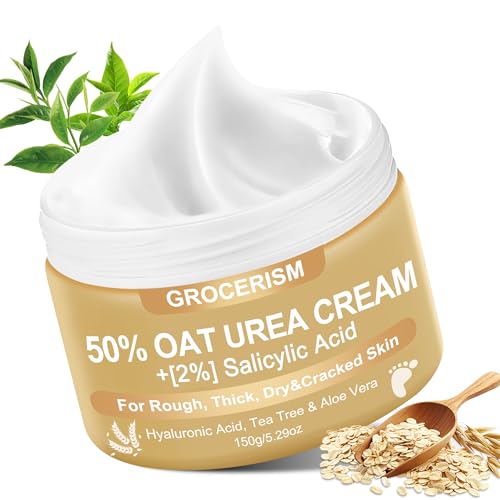
This formula packs the highest active concentration of any product in this lineup. The 50% urea content chemically dissolves even the most stubborn callus layers, while the added 2% salicylic acid accelerates the exfoliation process. The inclusion of oat provides gentle saponin-based cleansing at a cellular level, which explains why multiple users reported seeing results within three to seven days on moderate dryness.
Texture-wise, this is a rich, thick cream that benefits from being applied with a drop of warm water for easier spreading. The natural oat and plant extract profile means the scent is mild and earthy — a notable advantage if you dislike strong floral or synthetic fragrances. Many reviewers noted that a small amount covers both feet thoroughly, and the moisturizing effect from the hyaluronic acid persists through the morning after overnight application.
The trade-off with any 50% urea formulation is that it can sting if your skin is already cracked or broken. For users with severely neglected calluses but intact skin, this is the fastest-softening option tested. Those with sensitive or cracked skin may need to start with a lower concentration and work up.
Why it’s great
- Highest urea concentration for rapid callus dissolution
- Contains salicylic acid and hyaluronic acid for dual exfoliation and hydration
- Non-greasy, quick-absorbing formula reported by most reviewers
Good to know
- Can cause stinging on cracked or broken skin
- Very thick consistency requires a bit of water to spread easily
2. Natural Escapes Peppermint Foot Cream
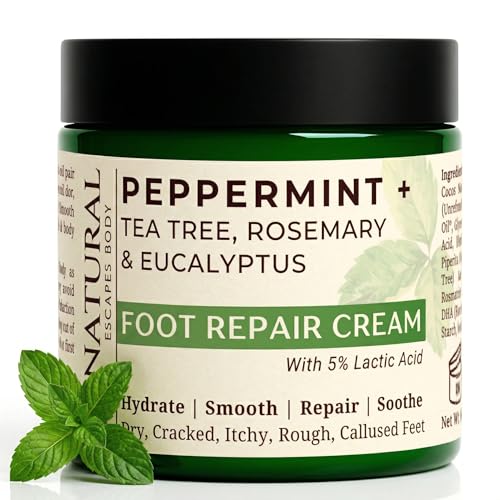
This cream takes a different approach by using 5% lactic acid — an alpha-hydroxy acid — instead of urea to dissolve callus tissue. Lactic acid works by breaking the bonds between dead skin cells, making it a gentler option than high-percentage urea creams. The formula’s base ingredient is pure aloe vera juice rather than water, which means the hydration component is significantly richer than most competing creams.
Five individual reviewers specifically called out the cooling effect from the peppermint and tea tree essential oils as a relief for tired, achy feet after long days on their feet. The blend also includes eucalyptus for soothing and rosemary for circulation support. The texture is thick and concentrated, but it absorbs quickly enough to avoid leaving a slippery residue on sheets when applied before bed.
The primary downside is the jar format — you have to dip your fingers in, which can introduce bacteria over time. The concentrated formula means a small jar lasts a while, but it’s less hygienic than a tube. Some users who prefer unscented products may find the herbal essential oil blend too strong.
Why it’s great
- Gentle lactic acid exfoliation suitable for sensitive or cracked skin
- Aloe vera as the primary ingredient provides superior hydration
- Cooling essential oils relieve tired, achy feet
Good to know
- Jar packaging is less hygienic than a tube
- Essential oil scent may not suit everyone
3. O’Keeffe’s for Healthy Feet Foot Cream

O’Keeffe’s is the most widely recognized brand in this category, and for one reason: the concentrated formula creates a protective moisture barrier on the skin’s surface that prevents transepidermal water loss. While this cream does not contain a high percentage of urea or lactic acid for chemical callus removal, it excels at rehydrating extremely cracked, dry skin to help it heal naturally. The 2-pack provides excellent coverage for consistent nightly use.
Multiple reviewers reported that severely cracked, bleeding heels showed visible improvement after just one or two nights of application. The cream is unscented and non-greasy, making it a safe choice for people with diabetes who need to be careful about foot moisturizers. The thick, waxy texture spreads smoothly and absorbs fully within a few minutes, so it won’t stain socks or sheets.
Where this cream falls short is on active callus removal. If you have a thick, yellowed callus pad that needs to be dissolved, this formula lacks the keratolytic power of a 50% urea cream or a 5% lactic acid cream. It is a maintenance and repair product for already-cracked skin, not a callus dissolver.
Why it’s great
- Unmatched for healing severely cracked, bleeding skin overnight
- Unscented and hypoallergenic, safe for diabetic foot care
- Non-greasy, fast-absorbing texture
Good to know
- Not formulated for chemically dissolving thick callus tissue
- Requires consistent daily application to maintain results
4. Puregliss Organic Tea Tree Foot Balm
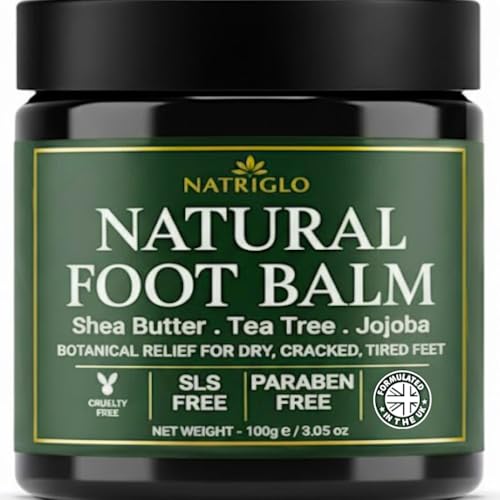
Puregliss builds its callus treatment around organic shea butter and tea tree oil rather than high-concentration chemical exfoliants. Shea butter provides deep, long-lasting moisturization through its high fatty acid content, while tea tree oil offers antimicrobial and anti-inflammatory benefits — especially useful if your calluses trap bacteria or develop a minor odor. The balm creates a moisture-locking barrier designed for overnight wear.
User reviews are overwhelmingly positive, with multiple people reporting that the rough texture on their heels was noticeably smoother after two to three nights of use. One reviewer specifically noted that the effect lasted for days without reapplication, suggesting the penetrating action of the shea butter is particularly effective for deeply dehydrated skin. The scent is natural and herbal, aligning with the organic positioning.
The formula is undeniably oily upon initial application. It requires about ten minutes to absorb fully, and the manufacturer recommends wearing socks to avoid transferring the balm to bedding. This product is better suited to overnight treatment than quick morning application. It also lacks the high urea or AHA concentration needed for dissolving substantial callus mounds.
Why it’s great
- Organic shea butter provides deep, long-lasting hydration
- Tea tree oil offers antimicrobial and odor-control benefits
- One application can keep feet soft for multiple days
Good to know
- Oily texture; best used overnight with socks
- Not designed for aggressive chemical callus removal
5. Dermatonics Hard Skin & Callus Removing Balm

Dermatonics uses a moderate 10% urea concentration paired with shea butter and Swedish oat lipids to soften mild calluses and maintain already-treated feet. The 10% level is ideal for daily maintenance because it provides enough chemical exfoliation to prevent buildup without the sting or intensity of higher concentrations. This balm is also one of the few in the category with a strong, pleasant floral fragrance — sakura blossom — which several reviewers praised as a spa-like sensory experience.
User feedback is split between those who found it effective for softening rough patches within days and those who expected stronger callus removal. One reviewer noted that after two weeks of use, their calluses were softened but not removed — consistent with the moderate 10% urea level. This is not a product for dissolving thick, neglected callus pads, but it works well for keeping skin smooth once you have already cleared the buildup.
The tube format is practical and hygienic, and the non-greasy, quick-absorbing texture means you can apply it in the morning without waiting around. The small tube size (2.37 ounces) means you will use it up faster than larger jars, but for a maintenance product, that also means fresher ingredients with each purchase.
Why it’s great
- Pleasant sakura blossom scent and quick-absorbing texture
- Good for daily maintenance of already-softened feet
- Contains shea butter and oat lipids for added skin repair
Good to know
- 10% urea is too low for removing established callus mounds
- Small tube size may require frequent repurchase
FAQ
Will a 50% urea cream burn if I apply it to cracked skin?
How long does it take for lactic acid to reduce a thick callus?
Can I use O’Keeffe’s Healthy Feet on active diabetic foot ulcers?
Final Thoughts: The Verdict
For most users, the best callus foot cream winner is the Natural Escapes Peppermint Foot Cream because the 5% lactic acid provides effective yet gentle exfoliation suitable for nightly use, even on skin that might not tolerate high urea. If you want maximum callus-dissolving power for neglected feet, grab the Grocerism 50% Urea Cream. And for healing deep cracks and maintaining moisture long-term, nothing beats the O’Keeffe’s for Healthy Feet Cream.

Mo Maruf
I created WellFizz to bridge the gap between vague wellness advice and actionable solutions. My mission is simple: to decode the research and give you practical tools you can actually use.
Beyond the data, I am a passionate traveler. I believe that stepping away from the screen to explore new environments is essential for mental clarity and physical vitality.