Our readers keep the lights on and my smoothie glass nicely filled. As an Amazon Associate, I earn from qualifying purchases.
A thick, stubborn callus isn’t just a cosmetic issue — it’s a pressure point that can crack, split, and turn every step into a painful reminder that your skin needs real intervention. The right callus cream works chemically, not abrasively, using active ingredients like urea or lactic acid to break down the keratinized buildup that scrapers and pumice stones can’t fully remove.
I’m Mohammad Maruf — the founder and writer behind WellFizz. I’ve spent hundreds of hours analyzing the chemical formulations, concentration levels, and absorption mechanics behind the most effective callus creams to give you a guide based on real biochemical data.
After reviewing dozens of options and cross-referencing ingredient lists with customer recovery timelines, I’ve narrowed the field to five standout formulas. This is your definitive resource for finding the best callus cream to repair, soften, and maintain healthy feet without the guesswork.
How To Choose The Best Callus Cream
Selecting a callus cream is about understanding the chemistry of keratin. Commercial moisturizers simply hydrate the top layer, while effective callus creams use keratolytic agents to dissolve the protein bonds holding dead skin together. Here are the three spec-level factors that separate a true repair cream from a basic lotion.
Active Ingredient and Concentration
The two most proven keratolytics for callus creams are urea and lactic acid. Urea, at a concentration of 10% or higher, acts as a humectant and mild keratolytic — drawing moisture into the stratum corneum while gently dissolving the intercellular matrix that binds dead cells. Lactic acid, typically used at 5-15%, works as an alpha hydroxy acid (AHA) that breaks the bonds between corneocytes through enzymatic hydrolysis. If your calluses are thick and longstanding, a 10% urea formula or a lactic acid cream with at least 5% will show visible softening within a week. Concentrations below these thresholds function more like maintenance moisturizers than active callus removers.
Emollient Base and Absorption Profile
The delivery vehicle matters as much as the active. A cream that feels greasy for 20 minutes after application is hard to maintain as a daily habit, especially if you need to wear socks or shoes immediately. Look for oil-in-water emulsions that allow the active ingredients to penetrate while the fatty components (shea butter, oat lipids, coconut oil) lock in moisture without leaving a tacky film. Non-greasy formulas with quick absorption rates encourage consistent night-time use, which is when the most significant callus softening occurs during the 6-8 hour occlusion under cotton socks.
Scent Profile and Additive Transparency
Many callus creams rely on synthetic fragrances to mask the natural odor of urea or lactic acid. For users with sensitive skin, fragrance-free options or those using pure therapeutic essential oils (peppermint, tea tree, eucalyptus) reduce the risk of contact dermatitis. Avoid products with paraben preservatives, petroleum derivatives, and dye additives if you have cracked skin — open fissures absorb these chemicals rapidly and can exacerbate irritation. A clean label with botanical oils and vitamin E provides ancillary antioxidant benefits while keeping the formulation stable.
Quick Comparison
On smaller screens, swipe sideways to see the full table.
| Model | Category | Best For | Key Spec | Amazon |
|---|---|---|---|---|
| O’Keeffe’s for Healthy Feet | Premium | Extreme cracking & overnight repair | Concentrated, forms protective moisture barrier | Amazon |
| Kerasal Intensive Foot Repair | Mid-Range | Balanced exfoliation with relaxation scent | 15% Lactic Acid, Lavender & Eucalyptus | Amazon |
| Peppermint Foot Cream | Mid-Range | Natural formula with cooling sensation | 5% Lactic Acid, Aloe Vera Base | Amazon |
| Eucerin UreaRepair Plus | Mid-Range | Sensitive skin & fragrance-free therapy | 10% Urea, Oil-in-Water Emulsion | Amazon |
| Dermatonics Hard Skin Balm | Entry-Level | Light daily maintenance with floral scent | 10% Urea, Sakura Blossom | Amazon |
In‑Depth Reviews
1. O’Keeffe’s for Healthy Feet Foot Cream

O’Keeffe’s doesn’t follow the urea-and-lactic-acid playbook — instead it uses a concentrated glycerol and paraffin-based formulation that creates a semi-occlusive barrier on the skin. This barrier traps the skin’s natural moisture and allows the existing hydration to re-soften the keratinized callus from within. The 6.4-ounce jar offers the most volume per unit in this comparison, and the dense, balm-like texture means a pea-sized amount is sufficient for both heels.
Customer reports show that severe cracked heels — the kind that bleed and cause pain during walking — show visible closure and reduced tenderness after just two to three nights of application under socks. The formula is fragrance-free and hypoallergenic, making it safe for diabetic users who need to avoid any irritants on compromised skin. The cream absorbs within about 60 seconds, leaving a matte finish that doesn’t transfer to bedding.
The trade-off is that this is not a chemical exfoliant — it won’t peel off thick callus layers. Instead, it softens the skin sufficiently that dead layers slough off naturally during the day without manual scraping. Users who need active keratolysis to dissolve existing buildup may find it slower than lactic acid alternatives, but for maintenance and deep moisturization, it’s unmatched in the category.
Why it’s great
- Rapidly seals and heals cracked, bleeding heels overnight
- Non-greasy finish absorbs in under a minute, safe for sock wear
- Fragrance-free formula is ideal for sensitive or diabetic skin
Good to know
- No keratolytic agent; works by moisture occlusion rather than chemical exfoliation
- Requires consistent nightly use to maintain results
2. Kerasal Intensive Foot Repair Cream
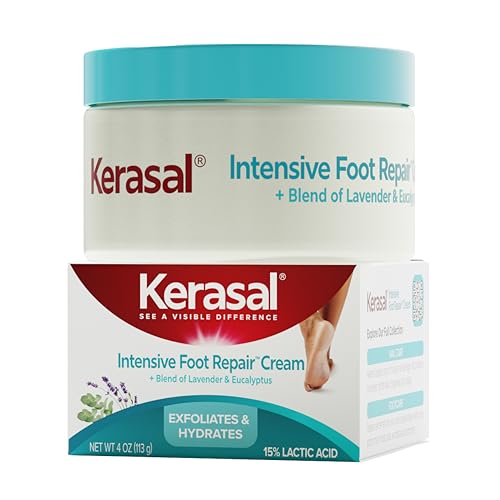
Kerasal stakes its claim on a 15% lactic acid concentration — the highest in this review — which makes it the most potent keratolytic chemical exfoliator in the group. Lactic acid at this level actively hydrolyzes the corneodesmosome bonds that hold dead cells together, meaning it chemically dissolves callus tissue rather than just softening it. The addition of lavender and eucalyptus essential oils transforms the application into a sensory ritual rather than a medical chore.
Real-world user feedback confirms that this cream produces visible softening after a single overnight application, with full callus reduction occurring within three to five nights. The texture is thick and emollient, but it absorbs completely within about three minutes, leaving a faint herbal scent that dissipates quickly. A little goes a long way — a dime-sized amount is sufficient to cover both heels and the ball of one foot.
The primary drawback is the greasiness during the first few minutes after application, which virtually requires wearing cotton socks to avoid residue on sheets. Some users with particularly sensitive skin may experience mild tingling from the lactic acid, though this typically subsides after the first two uses. For those who prioritize exfoliation speed over scent neutrality, this is the most effective formula in the mid-range.
Why it’s great
- High 15% lactic acid concentration delivers rapid callus dissolution
- Calming lavender and eucalyptus scent enhances the self-care experience
- Cost-effective per ounce given the potency of the active ingredient
Good to know
- Initial greasiness requires wearing socks overnight for absorption
- May cause mild stinging on skin with open cracks or fissures
3. Peppermint Foot Cream for Cracked Heels
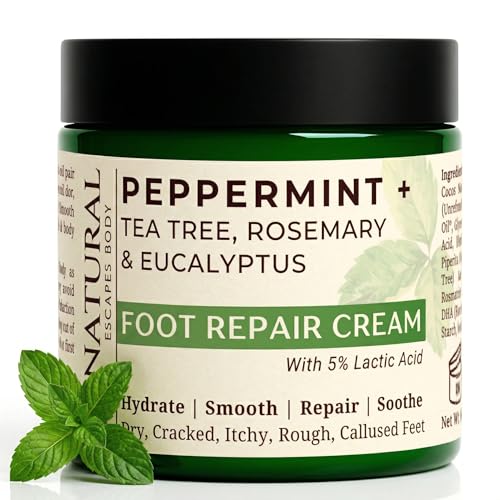
This cream breaks away from water-first formulations by using pure aloe vera juice as its primary base. This choice delivers a cooling, anti-inflammatory delivery system that soothes tired feet while the 5% lactic acid works on callus buildup. The peppermint, tea tree, eucalyptus, and rosemary essential oils provide a natural antiseptic effect that helps control foot odor — an often overlooked benefit for users who wear closed shoes for extended hours.
User reports highlight the immediate cooling sensation upon application, which is particularly welcome after long shifts on concrete floors or intensive gym sessions. The cream absorbs within 90 seconds and leaves no greasy residue, making it suitable for daytime use without sock coverage. Customers who switched from petroleum-based creams noted that their sheets stayed cleaner and their feet felt less suffocated during sleep.
The lower 5% lactic acid concentration means this cream is better suited for maintenance and mild calluses rather than thick, established buildup. Users with heavy callus layers reported needing a higher-concentration product for initial removal, then switching to this formula for daily upkeep. The wide-mouth jar packaging makes scooping easy, but the 4-ounce size is smaller than the premium options, so heavy users will repurchase more frequently.
Why it’s great
- Aloe vera base provides cooling relief and anti-inflammatory benefits for achy feet
- Natural essential oils offer odor control without synthetic fragrances
- Absorbs quickly with zero greasy residue, ideal for daytime use
Good to know
- 5% lactic acid is too mild for heavy, established callus removal
- Smaller 4-ounce jar requires more frequent repurchase for daily users
4. Eucerin UreaRepair Plus Foot Cream
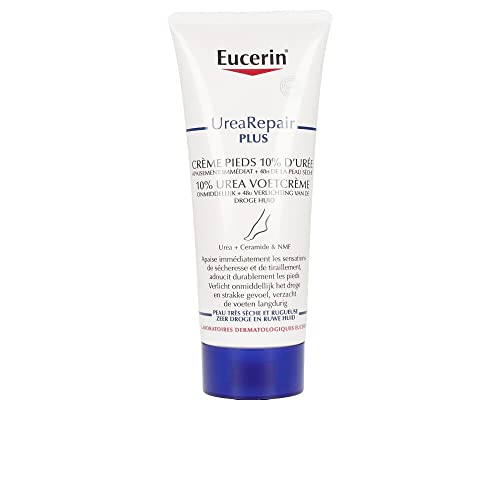
Eucerin brings dermatological credibility with a 10% urea formula that sits at the sweet spot between effective keratolysis and skin tolerance. Urea at this concentration both hydrates and gently dissolves the intercellular matrix of callused skin without the stinging potential associated with high-concentration AHAs. The oil-in-water emulsion ensures that the cream layers smoothly over dry skin without pilling, and the absence of fragrance and colorants makes it a reliable choice for chemotherapy patients, pregnant women, and anyone with reactive skin.
Clinical studies backing the formula show measurable improvement in skin hydration and trans-epidermal water loss reduction after two weeks of daily use. Customer reviews from users with specific medical needs — pregnant women with swollen, calloused feet and chemotherapy patients managing xerosis — confirm that the cream restores suppleness without causing irritation. The 100ml tube is travel-friendly and the screw-top cap prevents contamination between uses.
The catch is that the 10% urea concentration, while effective, works more slowly than the 15% lactic acid in the Kerasal cream for initial callus removal. Users with extremely thick heel calluses reported that the Eucerin softened the skin but did not fully dissolve the hard outer layer within the first week. It excels as a long-term maintenance cream and is the best option for those who need to avoid chemical sting or strong scents.
Why it’s great
- Dermatologist-developed 10% urea provides reliable keratolysis with minimal irritation
- Fragrance-free and colorant-free, safe for sensitive and compromised skin
- Clinically proven to improve skin barrier function over two weeks
Good to know
- Slower callus removal compared to 15% lactic acid alternatives
- Tube packaging can be difficult to fully empty; wide jar format would improve access
5. Dermatonics Hard Skin & Callus Removing Balm

Dermatonics enters the entry-level tier with a 10% urea formulation that competes directly with Eucerin on active percentage but distinguishes itself through a plant-based, floral-scented profile. The addition of shea butter and Swedish oat lipids creates a creamy, spreadable texture that softens hard skin on feet, hands, and elbows. The sakura blossom aroma is the strongest scented option in this lineup, appealing to users who want their foot care routine to feel more like a spa treatment than a medical regimen.
User feedback is split between those who saw rapid results — with dry patches resolving within two days of every-other-day use — and those who found the cream softened skin without removing established calluses after two weeks. This discrepancy tracks with the fact that 10% urea, while effective for maintenance and mild dryness, is not a strong enough keratolytic to dissolve thick calluses that have built up over months. The non-greasy claim holds true; the balm absorbs within about two minutes and leaves a light, powdery finish.
The main limitation is the small 2.37-ounce tube, which provides fewer applications per dollar compared to the Eucerin or O’Keeffe’s offerings. Heavy users will need to repurchase at a higher frequency. The balm works well as a daily moisturizer for preventing callus formation, but users seeking aggressive callus reduction should pair it with a higher-concentration product for initial treatment.
Why it’s great
- 10% urea with shea butter and oat lipids provides solid moisturization for mild dry skin
- Pleasant sakura blossom scent makes daily application enjoyable
- Plant-based and paraben-free formulation suits clean-beauty preferences
Good to know
- Insufficient keratolytic strength for thick, established callus removal
- Small tube size requires more frequent replacement for consistent use
FAQ
How long does it take for a callus cream to show visible results?
Can I use a callus cream if my heel skin is already cracked and bleeding?
Should I use a pumice stone with callus cream or let the cream do all the work?
Final Thoughts: The Verdict
For most users, the best callus cream winner is the Eucerin UreaRepair Plus Foot Cream because its 10% urea concentration hits the perfect balance of effective keratolysis and skin tolerance, backed by clinical data and a fragrance-free profile that works for sensitive, pregnant, or medically compromised skin. If you need rapid callus dissolution and enjoy a sensory experience during application, grab the Kerasal Intensive Foot Repair Cream with its 15% lactic acid and lavender aromatherapy. And for those whose calluses have cracked to the point of bleeding and need immediate relief without chemical sting, nothing beats the O’Keeffe’s for Healthy Feet Foot Cream for overnight healing and long-term maintenance.

Mo Maruf
I created WellFizz to bridge the gap between vague wellness advice and actionable solutions. My mission is simple: to decode the research and give you practical tools you can actually use.
Beyond the data, I am a passionate traveler. I believe that stepping away from the screen to explore new environments is essential for mental clarity and physical vitality.