Our readers keep the lights on and my smoothie glass nicely filled. As an Amazon Associate, I earn from qualifying purchases.
For the ADHD brain, a standard calendar is often a source of stress rather than structure. Too many boxes, too much visual noise, and zero forgiveness for skipped days — it’s a system designed against how you actually process time and tasks. The right paper-based system acts as an external scaffold, reducing the cognitive load of remembering and sequencing your day without demanding rigid perfection.
I’m Mohammad Maruf — the founder and writer behind WellFizz. I’ve spent years analyzing paper-based productivity tools, cross-referencing layout psychology with real user feedback to identify which formats actually reduce friction for neurodivergent thinkers rather than adding to it.
After reviewing dozens of undated planners, hourly breakdowns, and activity log pads, I’ve narrowed the field to the systems that genuinely support executive function. This guide is your clear path to finding the best calendar for adhd whether you need micro-hourly tracking or a flexible weekly brain dump.
How To Choose The Best Calendar For ADHD
Not every planner labeled “ADHD-friendly” actually reduces overwhelm. You need to look past the marketing and examine the specific layout structure, paper feel, and flexibility a system offers. A truly helpful calendar works with your brain’s natural tendencies — like seeking novelty, avoiding deadweight tasks, and needing visual clarity.
Undated vs Dated: Flexibility Is Non-Negotiable
An undated calendar removes the single biggest source of planner guilt: skipped days. If you miss a week, you simply turn the page. There are no blank spaces staring back at you, no reminder of failure. For ADHD users, this forgiveness directly sustains the habit over months rather than days. A dated system demands rigid daily use, which rarely survives a real-world fluctuation in focus or energy.
Hourly Time-Blocking to Fight Time Blindness
Many adults with ADHD struggle to gauge how long tasks actually take — a phenomenon sometimes called time blindness. A layout that breaks the day into hourly or half-hourly slots forces a realistic assessment of duration. Instead of writing “work on project,” you block 9:00 to 10:30. This shift from vague intention to concrete scheduling dramatically improves follow-through. Look for planners with a vertical timeline from early morning to late evening, even if you don’t use every slot.
Brain Dump Space: The External Memory
The ADHD brain generates a constant stream of ideas, worries, and reminders. Without a dedicated space to offload them, these thoughts interrupt whatever you’re doing. A good calendar provides a clear “brain dump” zone — either a weekly notes column, a dedicated journal section, or even a full-page activity log. This external memory system prevents mental clutter from derailing your planned tasks.
Paper Quality and Binding Matter for Daily Carry
Thin paper that bleeds through with a gel pen creates frustration. A binding that won’t lay flat makes writing awkward. For a calendar to become a daily habit, it needs to feel satisfying to use. Look for 100 GSM paper or higher to prevent bleed-through, and a binding that allows the planner to stay open on your desk without you holding it down. Spiral or lay-flat stitch binding is ideal.
Quick Comparison
On smaller screens, swipe sideways to see the full table.
| Model | Category | Best For | Key Spec | Amazon |
|---|---|---|---|---|
| Life Charge Task Planner | Activity Log + Task Pad | Reducing sticky-note chaos | 8.5×11 tear sheets, 60 pages | Amazon |
| CHUNART ADHD Planner | Weekly + Daily Combo | A structured brain dump system | 216 pages, 32-week undated | Amazon |
| Asten Undated Daily Planner | Hourly Time-Blocking | Beating time blindness | 6am-11pm hourly slots, 366 days | Amazon |
| THiNKABLE Daily Planner | Premium Spiral-Bound | Luxurious writing feel | 120 GSM paper, 160 pages | Amazon |
| Roterunner Purpose Planner | All-in-One System | Multi-month goal planning | 89 dotted notes pages, lay-flat | Amazon |
In‑Depth Reviews
1. Life Charge Task Planner & Activity Log Notepad
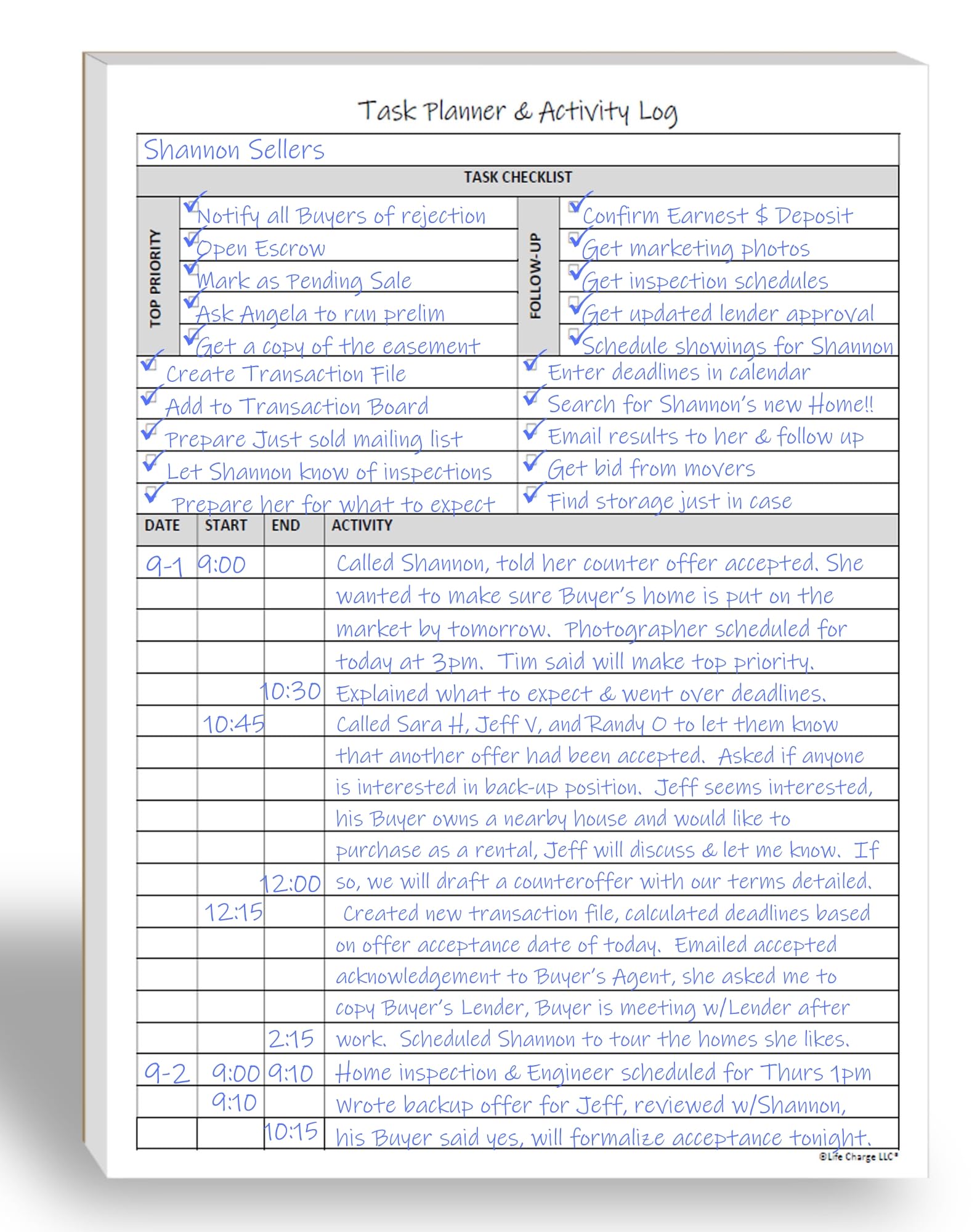
This dual-purpose pad works as both a structured task organizer and an open-ended activity log, making it a rare find for ADHD users who need a flexible system. The left side features a three-tier to-do list (Top Priority, Follow-Up, General Tasks) while the right side provides a freeform area for tracking time, phone calls, or brain dumps. The undated design means you start any day without guilt, and the 8.5 x 11 size offers generous writing space without feeling cramped.
Customer reviews consistently highlight how this simple layout reduces the infamous sticky-note explosion on desks. One verified buyer said it “cut down on my sticky note craziness,” while another noted it boosted productivity awareness in a fast-paced office. The tear-away sheets make it easy to remove a completed day for filing or discarding, keeping the pad fresh and uncluttered.
At 60 pages, this is not a year-long planner — it’s a heavy-use daily tool for professionals, students, or anyone who needs to offload thoughts quickly. The paper quality is solid with no bleed-through, and the flexibound cover protects the sheets during transport. For those who prefer a non-digital time tracking system, this pad is a direct, friction-free solution that actually gets used.
Why it’s great
- Dual layout: structured to-do list + freeform activity log
- Undated tear-sheets eliminate skipped-day guilt
- Large 8.5×11 size provides ample writing space
Good to know
- Only 60 pages — not a full-year planner
- No weekly or monthly overview sections
2. CHUNART The ADHD Planner for Adults (6-Month)

This planner was designed from the ground up with the ADHD brain in mind, and it shows in every section. Rather than overwhelming you with excessive structure, it strikes a deliberate balance between guided planning and open space. The weekly spread includes a dedicated brain dump zone, a weekly review section, and a “carry forward” motivator that helps you move incomplete tasks without guilt. It also includes daily gratitude prompts and mood/energy trackers — small anchoring points that build consistency.
The faux leather cover feels durable and professional, and the flexibound binding allows it to lay relatively flat on a desk. Users praise the layout for being “helpful without being overwhelming,” with one reviewer noting that the three-tier task system (immediate, secondary, delegate) effectively prevents the paralysis of an endless to-do list. The included guide on how to use the planner is a thoughtful touch, especially for those new to structured planning.
One minor caveat: a few users reported the QR code for additional downloads didn’t work. However, the core planner functions are fully self-contained and don’t require any digital component. If you need a structured weekly system that actively encourages brain dumps rather than punishing them, this is a strong mid-range contender that feels far more premium than its entry-level price suggests.
Why it’s great
- Dedicated weekly brain dump and review sections
- Mood and energy trackers build awareness
- Durable faux leather cover with 216 pages
Good to know
- QR code for digital extras may not work
- No hourly time-blocking for detailed scheduling
3. Asten Undated Daily Planner (365 Days)
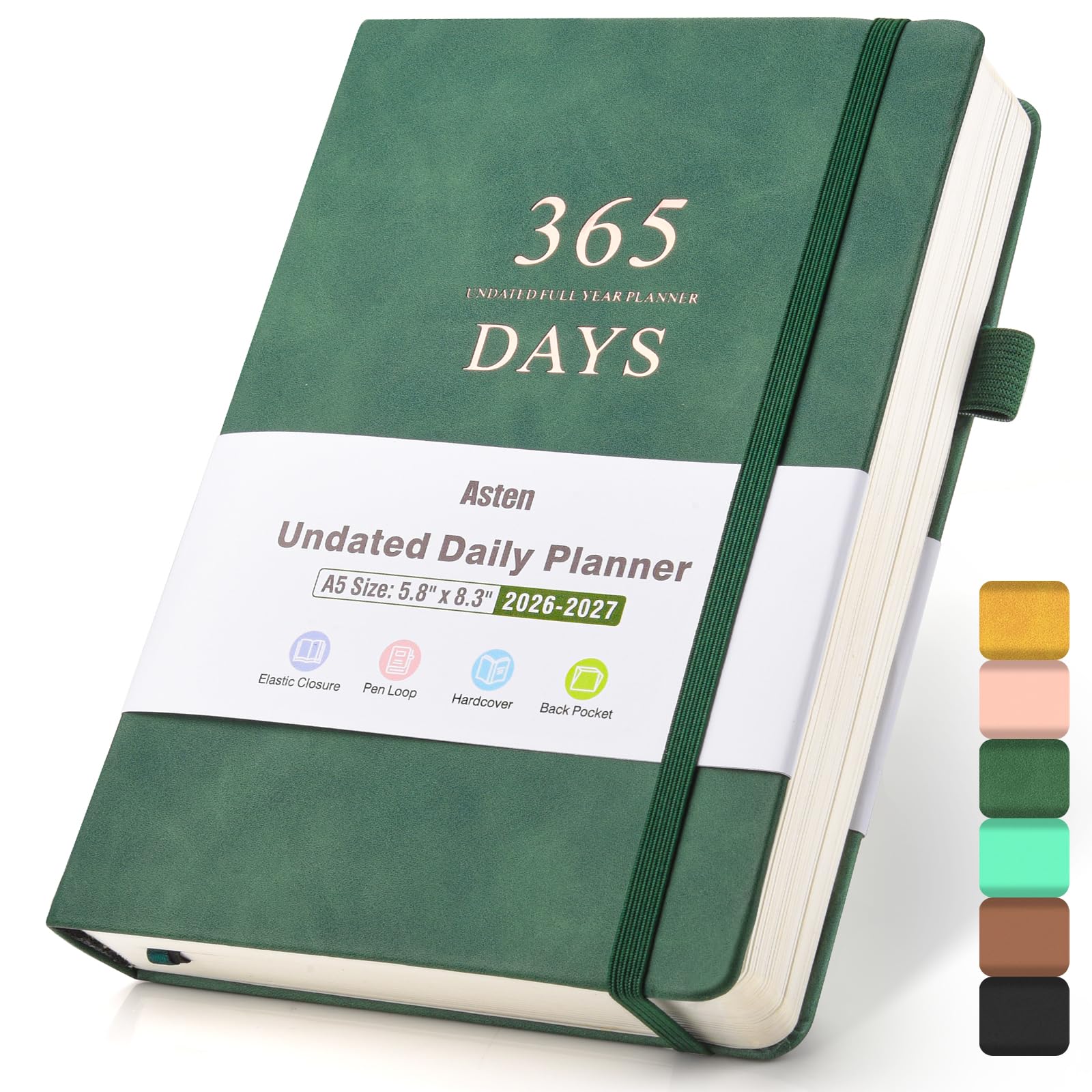
If time blindness is your primary struggle, this planner offers the most granular hourly breakdown in the lineup. Each daily page splits the schedule from 6am to 11pm into half-hour increments, forcing you to reckon with how long tasks actually take. Beyond the timeline, it includes spaces for 5 top priorities, 3 reminders, an 8-item to-do list, water intake tracking, health and fitness logging, and a notes section. It also opens with yearly goal pages and monthly calendars, providing a high-level framework that supports the daily detail work.
The A5 format (5.8 x 8.3 inches) is portable enough for daily carry yet large enough for comfortable writing. The 100 GSM paper is bleed-resistant and cream-colored for eye comfort. Two ribbon bookmarks let you mark both the current month and day, and the pen loop keeps your writing tool attached. Customers with ADHD specifically praised the hourly layout, with one reviewer noting it “improves time realism” and helps avoid the trap of under-scheduling.
At 366 daily pages, this is a full-year system in a compact package. The undated format means you can start mid-year without wasting pages. The only drawback is the lack of dedicated notes or journal pages — if you need extensive free-form writing space, you may need a separate notebook. But for a focused, detailed daily scheduler that builds time awareness, this is an exceptional value.
Why it’s great
- Full 6am-11pm hourly schedule counters time blindness
- 366 undated pages for a full year of daily use
- 100 GSM bleed-resistant paper with dual ribbon markers
Good to know
- No dedicated journal or notes pages
- A5 size may feel small for large handwriting
4. THiNKABLE Undated Daily Planner Notebook (7.75×10)

This planner elevates the daily scheduling experience with thick 120 GSM paper — the heaviest in this review — which virtually eliminates bleed-through even with wet fountain pens or heavy markers. The 7.75 x 10 inch size offers a spacious layout with an hourly schedule, to-do list, meal tracker, and daily reflection section. The hardcover with dual spiral binding allows it to lay completely flat, making it comfortable to write in anywhere — on a desk, on your lap, or at a coffee shop.
At 160 pages, it covers roughly five to six months of daily use, and the undated format gives you full control over when you start. The design is intentionally cute without being distracting — a soft green and pink palette with occasional inspirational quotes. Users consistently praise the paper quality as “thick and shiny,” with one reviewer saying they “absolutely love this planner” for keeping them on track with daily reminders. The layout is simple enough not to overwhelm but structured enough to provide real guidance.
This is a premium-feeling tool at a mid-range price point. The spacious pages are ideal for those who write large or need room for multiple task categories. However, the 160-page count means you’ll finish it faster than a full-year system, so factor that into your planning. If tactile satisfaction and bleeding-free writing are non-negotiable for your daily routine, this is the best-feeling option here.
Why it’s great
- Thickest paper in the group at 120 GSM — zero bleed-through
- Dual wire binding lays completely flat
- Spacious 7.75×10 inch pages for large handwriting
Good to know
- Only 160 pages — shorter lifespan than full-year planners
- Meal tracker section may be unused by some
5. Roterunner Purpose Planner Notebook A5
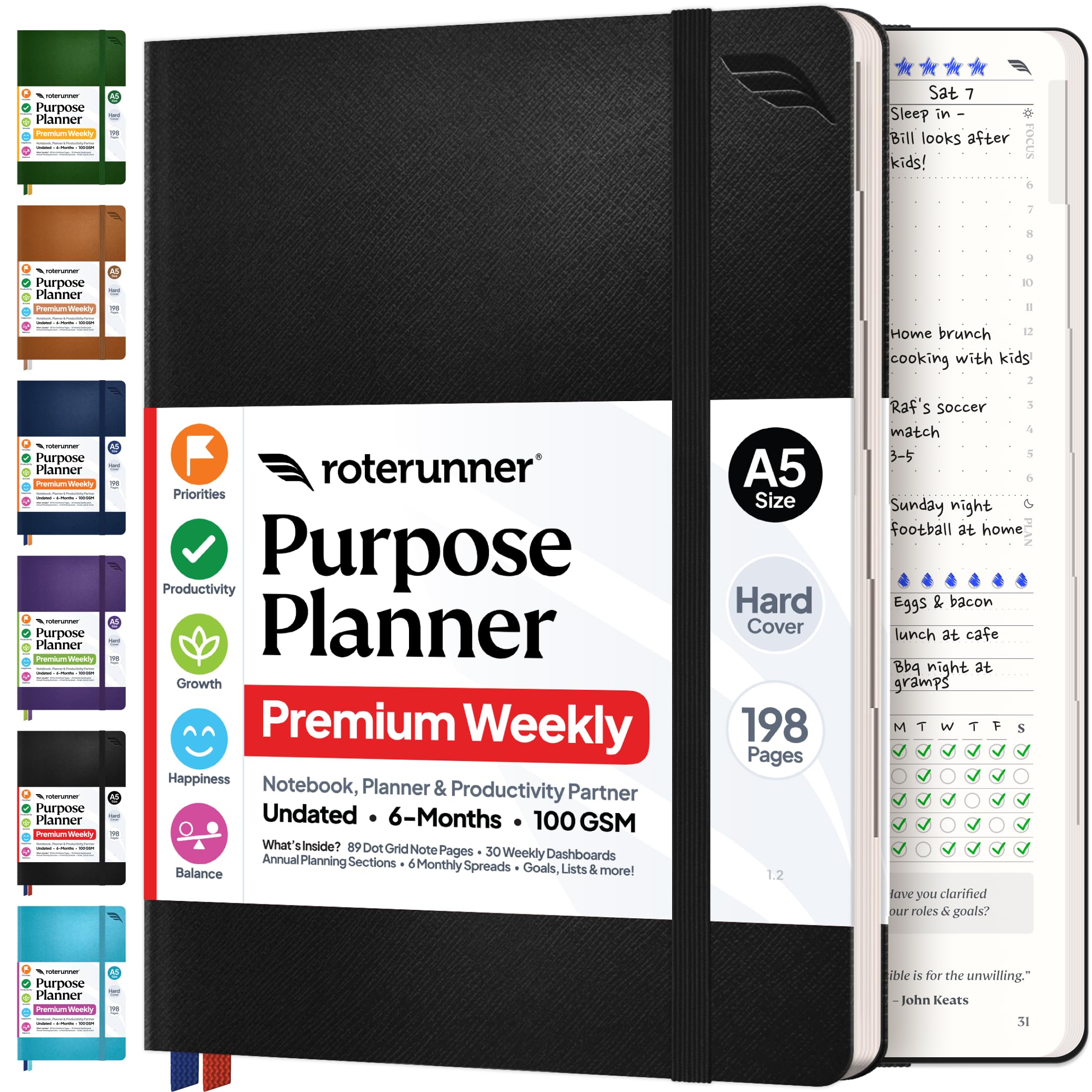
The Roterunner Purpose Planner is the most comprehensive system in this roundup, combining a structured planner with a full dotted journal. It includes annual calendar pages, monthly dashboards, weekly to-do lists, and 89 numbered dotted note pages for expanded task lists, sketches, or brain dumps. This hybrid format is ideal for ADHD users who need both guided planning and open-ended creative space — you never have to choose between scheduling and journaling.
Created by someone with ADHD, this planner was designed specifically to reduce overwhelm. The layout focuses on 5 roles and goals templates, helping you align daily tasks with larger life priorities. It also includes AM/PM routine trackers, habit tracking, and a self-care journal section. The 100 GSM paper prevents bleed-through, and the stitch-bound lay-flat binding means it stays open at any page. Two ribbon bookmarks and an elastic closure add to the polished, durable feel. NY Magazine’s Strategist even voted it the Best Time-Management Weekly Planner.
The A5 size (5.8 x 8.3 inches) is portable, though a few users with large handwriting found the dotted notes pages a bit cramped. Also, the planner covers roughly six months rather than a full year, so you’ll purchase a new one twice a year. Despite that, the depth of included sections — from goal setting to habit tracking — makes it the best all-in-one option for those who want their entire planning system in a single book.
Why it’s great
- 89 numbered dotted pages for freeform notes and sketches
- AM/PM routine trackers and self-care journal included
- NY Magazine voted best time-management planner
Good to know
- Six-month duration means semi-annual repurchase
- Smaller A5 pages may feel tight for large handwriting
FAQ
Why do ADHD planners need hourly time-blocking?
Are undated planners really better for ADHD than dated planners?
Final Thoughts: The Verdict
For most users, the calendar for adhd winner is the Life Charge Task Planner & Activity Log Notepad because it offers the simplest, most friction-free transition from digital distraction to paper-based focus. If you need a full weekly brain dump system with mood tracking, grab the CHUNART ADHD Planner. And for defeating time blindness with granular hourly scheduling, nothing beats the Asten Undated Daily Planner.

Mo Maruf
I created WellFizz to bridge the gap between vague wellness advice and actionable solutions. My mission is simple: to decode the research and give you practical tools you can actually use.
Beyond the data, I am a passionate traveler. I believe that stepping away from the screen to explore new environments is essential for mental clarity and physical vitality.