Our readers keep the lights on and my smoothie glass nicely filled. As an Amazon Associate, I earn from qualifying purchases.
Winter storms don’t care about your schedule, and a sheet of black ice on your driveway turns a morning commute into a genuine safety hazard. The chemistry of ice melt has evolved, moving beyond basic rock salt to compounds that generate their own heat on contact, cutting through thick ice in minutes rather than hours. The key difference lives in the active ingredient: calcium chloride, a hygroscopic salt that releases heat as it dissolves, driving a melting action that works far below freezing.
I’m Mohammad Maruf — the founder and writer behind WellFizz. I spend my time digging through chemical composition data, melting temperature thresholds, and real-world application reports to separate effective deicers from products that just scatter white dust on your pavement.
For homeowners dealing with repeated freeze-thaw cycles, choosing a calcium chloride formulation means faster melting at lower temperatures, less product per application, and reduced damage to concrete surfaces compared to sodium chloride alternatives. This guide breaks down the performance specs to help you find the right best calcium chloride ice melt for your driveway, walkway, and patio surfaces this winter.
How To Choose The Best Calcium Chloride Ice Melt
Not all deicers perform the same when the thermometer drops. Calcium chloride blends offer a distinct advantage in extreme cold, but the formulation, crystal size, and additive profile determine whether you get fast melting or a messy residue that damages your concrete and irritates your pets. Focus on four key variables before you buy.
Melting Temperature Floor
Standard rock salt (sodium chloride) stops working around 15°F. Calcium chloride extends that working range down to -25°F or even -30°F depending on the blend purity. If your winters see sustained sub-zero temperatures, choose a product that explicitly lists its effective low range — a 94% calcium chloride pellet will outperform a blended product with lower active concentration once the mercury drops past 0°F.
Crystal Size and Application Control
Fine powders scatter easily and can blow into vegetation or accumulate in uneven patches. Larger, uniform pellets stay where you apply them, reducing waste and preventing over-saturation of sensitive lawn areas. Some premium blends optimize crystal geometry to minimize bounce and roll on sloped driveways, giving you better coverage per pound and less product lost to gutters or grass.
Surface and Vegetation Safety Profile
Calcium chloride is generally less corrosive to concrete than sodium chloride or magnesium chloride, but not all formulations are equal. Some blends include corrosion inhibitors or are labeled as “safer for concrete.” For brick pavers, stamped concrete, or metal surfaces near your driveway, look for a product that explicitly states non-corrosive properties. If you have pets or children, a chloride-free variant like Safe Paw offers a different chemistry that avoids paw irritation while still melting ice effectively down to -2°F.
Residual Control and Refreeze Prevention
Some calcium chloride formulations continue working for 24 to 72 hours after application, preventing refreeze between storm cycles. This residual effect reduces the number of applications needed over a winter and keeps surfaces safer during temperature swings that hover near freezing. Check product descriptions for “long-lasting” or “residual control” language if you want fewer trips outside with the spreader.
Quick Comparison
On smaller screens, swipe sideways to see the full table.
| Model | Category | Best For | Key Spec | Amazon |
|---|---|---|---|---|
| Snow Joe MELT8CCP-J | Calcium Chloride Blend | Fast melting down to -25°F | 94% pure calcium chloride pellets | Amazon |
| Heat Negative 30 Degrees | Premium Calcium Blend | Ultra-cold climates | Melts to -30°F, includes spot spreader | Amazon |
| Maple99 Ice Melt | Concrete-Safe | Driveways and concrete surfaces | Effective to -15°F, 20-lb bag | Amazon |
| Safe Paw Pet-Safe | Chloride-Free | Pet-friendly, multi-surface use | Effective to -2°F, non-corrosive | Amazon |
| Scotwood Road Runner | Budget-Friendly | General walkway and porch use | 20-lb bag, standard calcium blend | Amazon |
In-Depth Reviews
1. Snow Joe MELT8CCP-J
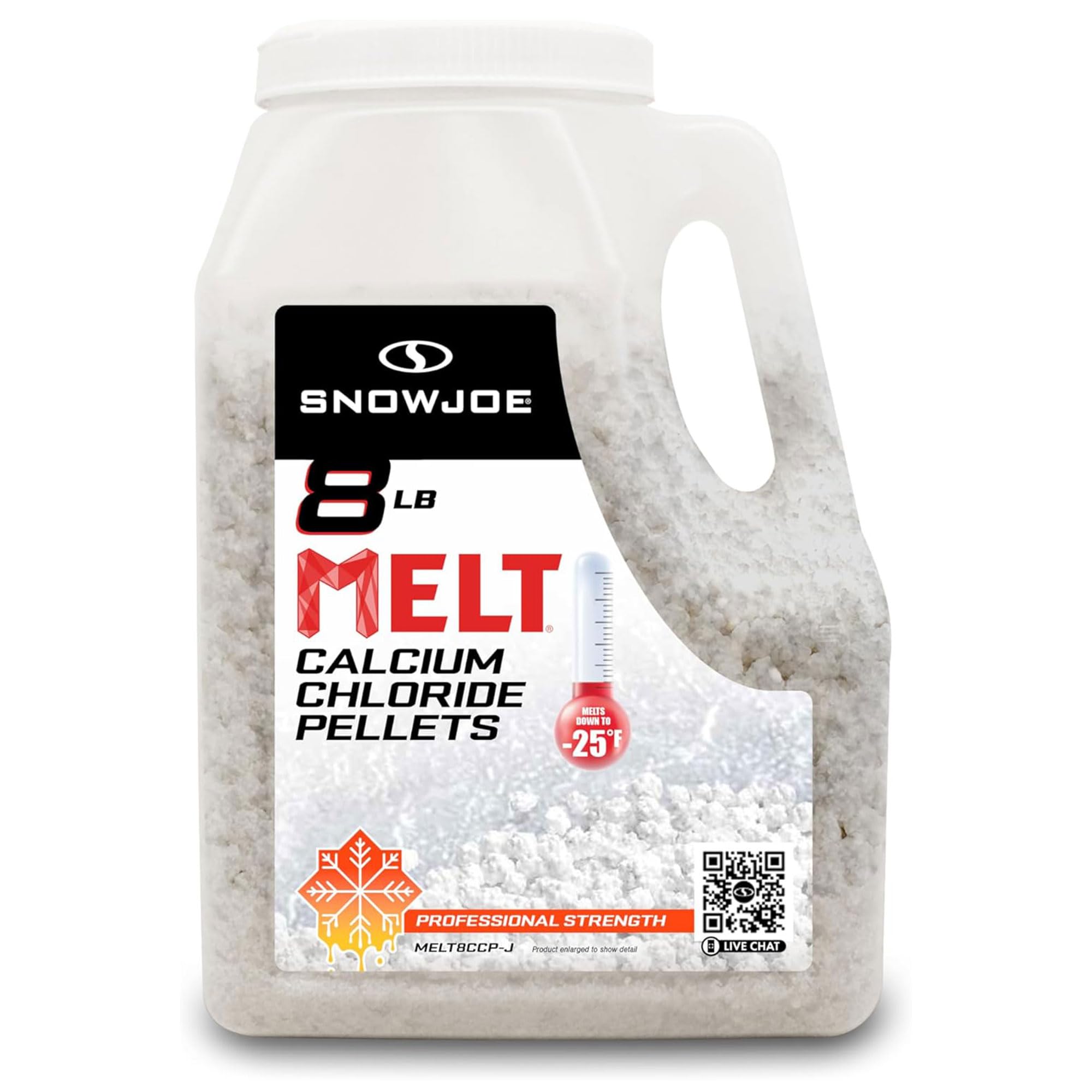
The Snow Joe MELT8CCP-J delivers a 94% pure calcium chloride pellet formulation that generates heat on contact, penetrating ice up to three times faster than standard rock salt. The 8-pound bag is a manageable size for spot treatments on driveways, sidewalks, and brick patios, and the crystals spread evenly without excessive bounce or scatter. Users consistently report effective melting even when temperatures drop well below zero, with the product softening thick ice slabs for easy shoveling within an hour of application.
This blend works down to -25°F, making it a reliable choice for regions that see sustained deep-freeze conditions. The calcium chloride content produces an exothermic reaction that doesn’t rely on sunlight or traffic to activate — it starts working the moment it contacts moisture and ice. Reviewers note that it works particularly well on brick pavers, where the chemical composition avoids the surface damage that aggressive sodium-based melts can cause over repeated freeze-thaw cycles.
One common observation is that the pellets can clump and solidify if the bag is exposed to humidity during storage. Keeping the bag sealed in a dry location between storms prevents this issue. Some users also note that the 8-pound size may require multiple bags for large driveways, but the concentrated coverage means you use less product per application compared to rock salt.
Why it’s great
- Exothermic reaction activates instantly at low temperatures
- Works effectively on brick pavers without causing damage
- Concentrated formula requires less product per application
Good to know
- Pellets can clump in humid storage conditions
- 8-pound bag may be small for covering large driveways
2. Heat Negative 30 Degrees

The Heat Negative 30 Degrees formula is engineered for the harshest winter conditions, with a rated melting point of -30°F that exceeds the capability of standard calcium chloride blends. The 25-pound resealable bag includes a spot spreader, allowing for precise application on driveways, sidewalks, and parking lots without the need for separate equipment. The proprietary calcium chloride blend uses optimized crystal geometry to reduce bounce and scatter, keeping product on the pavement rather than blowing into adjacent vegetation.
Users report that a single application lasts noticeably longer than standard rock salt or lower-concentration calcium blends, with the residual melting effect persisting through multiple freeze-thaw cycles. The larger crystal size promotes even coverage while using up to 35% less product by volume compared to traditional salt. This makes the 25-pound bag surprisingly economical for covering medium to large areas over the course of a winter season.
Some reviewers note that the bag’s resealable closure is effective when properly pressed shut, but the 25-pound weight can make it awkward to handle for individuals with limited mobility. The included spot spreader is a helpful addition for targeted application on steps and narrow walkways, though it’s not designed for covering wide driveways without refilling multiple times.
Why it’s great
- Works at -30°F, outperforming most competitors
- Optimized crystal size reduces scatter and waste
- Residual effect lasts through multiple freeze cycles
Good to know
- 25-pound bag is heavy and can be awkward to carry
- Spot spreader is small and requires frequent refills for large areas
3. Maple99 Ice Melt
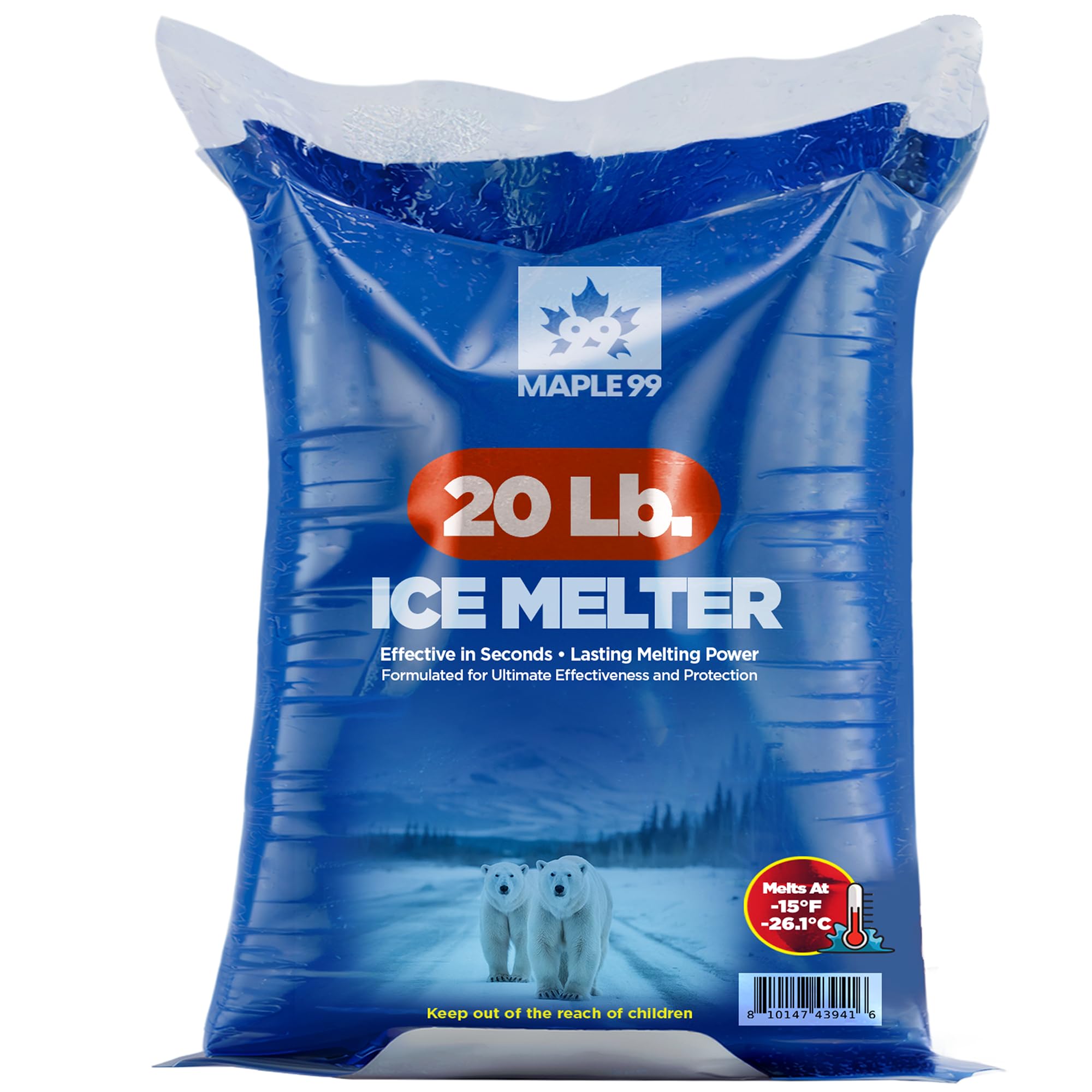
The Maple99 Ice Melt is formulated specifically for concrete surfaces, with a low-corrosion chemistry that aims to minimize pitting and scaling over repeated winter applications. The 20-pound bag delivers coverage for standard residential driveways and sidewalks, with an effective temperature range down to -15°F that handles most winter storms outside of extreme polar vortex events. The safety-max formulation includes anti-refreeze properties that keep cleared surfaces from glazing over again between snow cycles.
Users report that the granules spread evenly without clumping, even when the bag has been opened and stored for several weeks. The product works quickly on contact, breaking up ice without requiring heavy mechanical chipping that risks damaging concrete surfaces. Several reviewers specifically mention that their driveways showed no signs of surface deterioration after a full winter season of use, a notable advantage over high-sodium blends that accelerate freeze-thaw damage.
The recommended application rate of 2 to 4 ounces per square yard makes this a concentrated product that goes further than standard rock salt. Some users feel the per-bag price sits on the higher side compared to basic calcium chloride blends, but the reduced frequency of application and the concrete protection factor offset the upfront cost for homeowners with expensive paved surfaces.
Why it’s great
- Low-corrosion formula protects concrete from pitting
- Anti-refreeze properties prevent ice reformation
- Granules spread evenly without clumping in storage
Good to know
- Higher per-bag cost compared to basic blends
- Effective only to -15°F, not suited for extreme arctic conditions
4. Safe Paw Pet-Safe Ice Melt
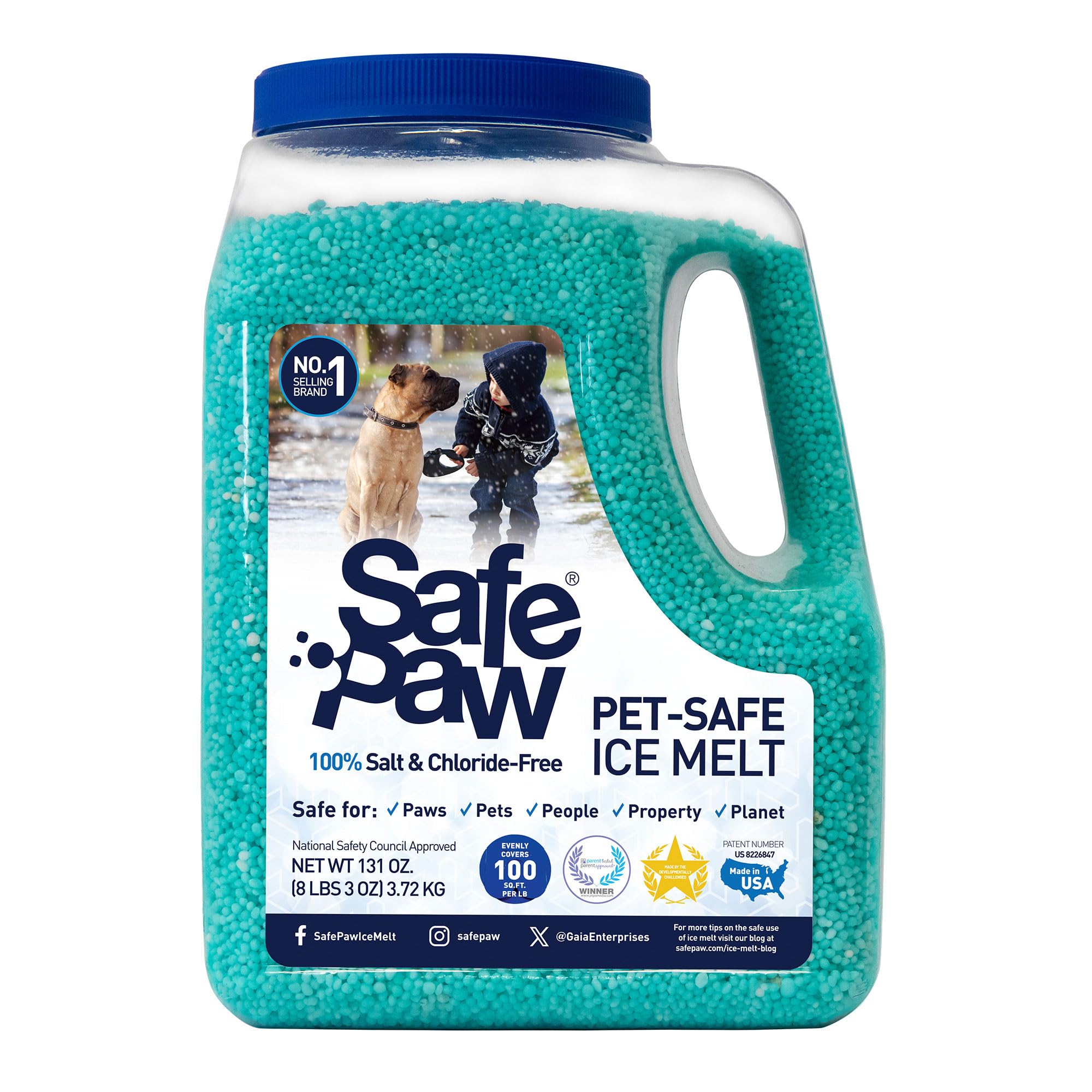
Safe Paw takes a fundamentally different approach to ice melting by using a chloride-free, salt-free formula that eliminates the paw irritation and concrete damage associated with traditional deicers. The 8-pound jug is compact and easy to store, and the blue-tinted granules provide visual feedback so you can see exactly where you’ve applied the product. While it operates through a different chemical mechanism than calcium chloride, it still provides effective melting down to -2°F with residual control that can prevent refreeze for up to 72 hours under the right conditions.
Pet owners consistently highlight the absence of chemical burns on their dogs’ paws as the primary reason for choosing Safe Paw over calcium-based alternatives. The formula is also non-corrosive to properly cured concrete, asphalt, brick, pavers, metal, and wood decks, making it one of the most versatile surface-safe options on the market. The concentrated formula requires about half the amount compared to rock salt, so the 8-pound jug delivers more coverage than its compact size suggests.
The melting temperature floor of -2°F means Safe Paw isn’t designed for the same deep-freeze conditions that calcium chloride can handle. For regions where temperatures regularly drop below -10°F, this product may struggle to keep up with thick ice accumulation. Some users also note that the per-ounce cost is higher than calcium chloride blends, though the trade-off in pet safety and surface protection justifies the premium for households with animals.
Why it’s great
- Completely chloride-free, safe for pet paws and children
- Non-corrosive formula protects all common outdoor surfaces
- Concentrated application reduces overall product usage
Good to know
- Only effective down to -2°F, not for extreme cold
- Higher per-ounce cost than calcium chloride blends
5. Scotwood Road Runner Premium Ice Melter

The Scotwood Road Runner is a straightforward, no-frills calcium chloride ice melter aimed at homeowners who need reliable performance for standard winter conditions without paying for premium additives or branding. The 20-pound bag provides enough volume for multiple applications on porches, walkways, and small driveways. The calcium chloride formulation works faster than rock salt and leaves less residue indoors when tracked in on shoes, a benefit noted by several users who applied it near entryways.
Users report that the product effectively tackles ice buildup on concrete and asphalt surfaces, with most reviewers noting that it “does the job” without complications. The granules dissolve relatively cleanly compared to sodium chloride products, reducing the white residue that typically gets tracked through the house during winter. Several buyers mention that the Road Runner arrived quickly via Amazon, a critical factor when you’re already snowed in and local stores have sold out of their seasonal stock.
The Road Runner doesn’t include the advanced crystal optimization or corrosion-inhibiting additives found in the premium-tier products in this guide. Some users who compared it to larger bags from big-box home improvement stores noted that the per-pound cost is slightly higher on Amazon, especially outside of seasonal sales. For basic winter maintenance on small surfaces where extreme cold isn’t a factor, this product provides a dependable entry-level option without overcomplicating the chemistry.
Why it’s great
- Affordable entry point for calcium chloride performance
- Leaves less messy residue compared to rock salt
- Quick shipping when local stores are sold out
Good to know
- Per-pound cost is higher than bulk store options
- Lacks premium crystal optimization or corrosion inhibitors
FAQ
Can calcium chloride ice melt damage my concrete driveway?
How does calcium chloride compare to magnesium chloride for ice melting?
Will calcium chloride ice melt hurt my dog’s paws?
Final Thoughts: The Verdict
For most users, the best calcium chloride ice melt winner is the Snow Joe MELT8CCP-J because its 94% pure calcium chloride formulation delivers fast, exothermic melting down to -25°F in a manageable bag size that works on brick pavers and concrete without damage concerns. If you live in a region where winter temperatures routinely drop below -25°F, grab the Heat Negative 30 Degrees for its extended cold-weather performance and included spot spreader. And if you have pets or children who play near treated surfaces, nothing beats the Safe Paw Pet-Safe Ice Melt for its chloride-free chemistry that protects paws while still melting ice effectively down to -2°F.

Mo Maruf
I created WellFizz to bridge the gap between vague wellness advice and actionable solutions. My mission is simple: to decode the research and give you practical tools you can actually use.
Beyond the data, I am a passionate traveler. I believe that stepping away from the screen to explore new environments is essential for mental clarity and physical vitality.