Our readers keep the lights on and my smoothie glass nicely filled. As an Amazon Associate, I earn from qualifying purchases.
Choosing an air purifier based on marketing claims rather than on a single, verifiable performance metric is a recipe for disappointment. The Clean Air Delivery Rate, or CADR, cuts through the noise, telling you exactly how many cubic feet of particle-free air a unit delivers per minute for smoke, pollen, and dust. Without this number, you are guessing at performance, not guaranteeing it.
I’m Mohammad Maruf — the founder and writer behind WellFizz. My research focuses on third-party lab certifications and quantitative filtration data to separate legitimate hardware from marketing gloss.
Whether you are battling wildfire smoke, seasonal allergies, or persistent indoor dust, understanding CADR is the only reliable way to match a machine to your room. This guide breaks down the top performers to help you find the best cadr air purifier for your home without wasting money on inadequate fan power.
How To Choose The Best CADR Air Purifier
The CADR rating is published by the Association of Home Appliance Manufacturers (AHAM) and is the only standard that allows you to compare one purifier to another on a level playing field. Ignore vague “covers up to X sq ft” marketing and look for the three AHAM-verified numbers.
Match CADR to Your Room Volume
A common mistake is buying a unit with a CADR that is too low for the space. The rule of thumb is that the Smoke CADR should be at least two-thirds of your room’s square footage. For a 300 sq ft room, you want a Smoke CADR of at least 200 CFM. For open-concept layouts, measure the entire connected area, not just the living room portion.
Look Beyond the Peak Turbo Number
Most units advertise their CADR on the highest fan speed, which is often too loud for daily use. Check if the manufacturer provides CADR data for medium or low speeds. A purifier that maintains 70% of its peak CADR on a quieter setting is far more valuable than one that drops to 30% effectiveness the moment you switch off turbo.
Consider the Filter Replacement Cadence
A high CADR is useless if replacement filter costs force you to run the unit with a clogged filter. Calculate the total cost of ownership over two years by checking the filter change interval (usually every 6 to 12 months) and the price of genuine replacements. Washable pre-filters extend HEPA life and lower annual expenses.
Quick Comparison
On smaller screens, swipe sideways to see the full table.
| Model | Category | Best For | Key Spec | Amazon |
|---|---|---|---|---|
| Coway Airmega AP-1512HH | Mid-Range | Best overall balance of CADR and noise | Smoke CADR: 233 CFM | Amazon |
| PuroAir 400 | Mid-Range | Budget-friendly for large rooms | Coverage: 2,000 sq ft | Amazon |
| LG PuriCare 360 | Mid-Range | 360-degree intake for open layouts | PM 1.0 sensor | Amazon |
| Nuwave Forever Smart | Mid-Range | Zero recurring filter costs | Washable 7-stage system | Amazon |
| Blueair Blue 211+ | Premium | Ultra-quiet high CADR for large spaces | Smoke CADR: 350 CFM | Amazon |
| Sans True HEPA | Premium | Pet dander and odor control | UV-C light layer | Amazon |
| AirDoctor AD3500 | Premium | Hospital-grade UltraHEPA filtration | Captures 0.003 micron particles | Amazon |
| Coway Airmega 400S | Premium | Smart home integration with large coverage | Coverage: 3,120 sq ft | Amazon |
| Puraclenz Core C750 | Premium | Air and surface mold/microbe defense | PCO + H13 HEPA | Amazon |
In‑Depth Reviews
1. Coway Airmega AP-1512HH
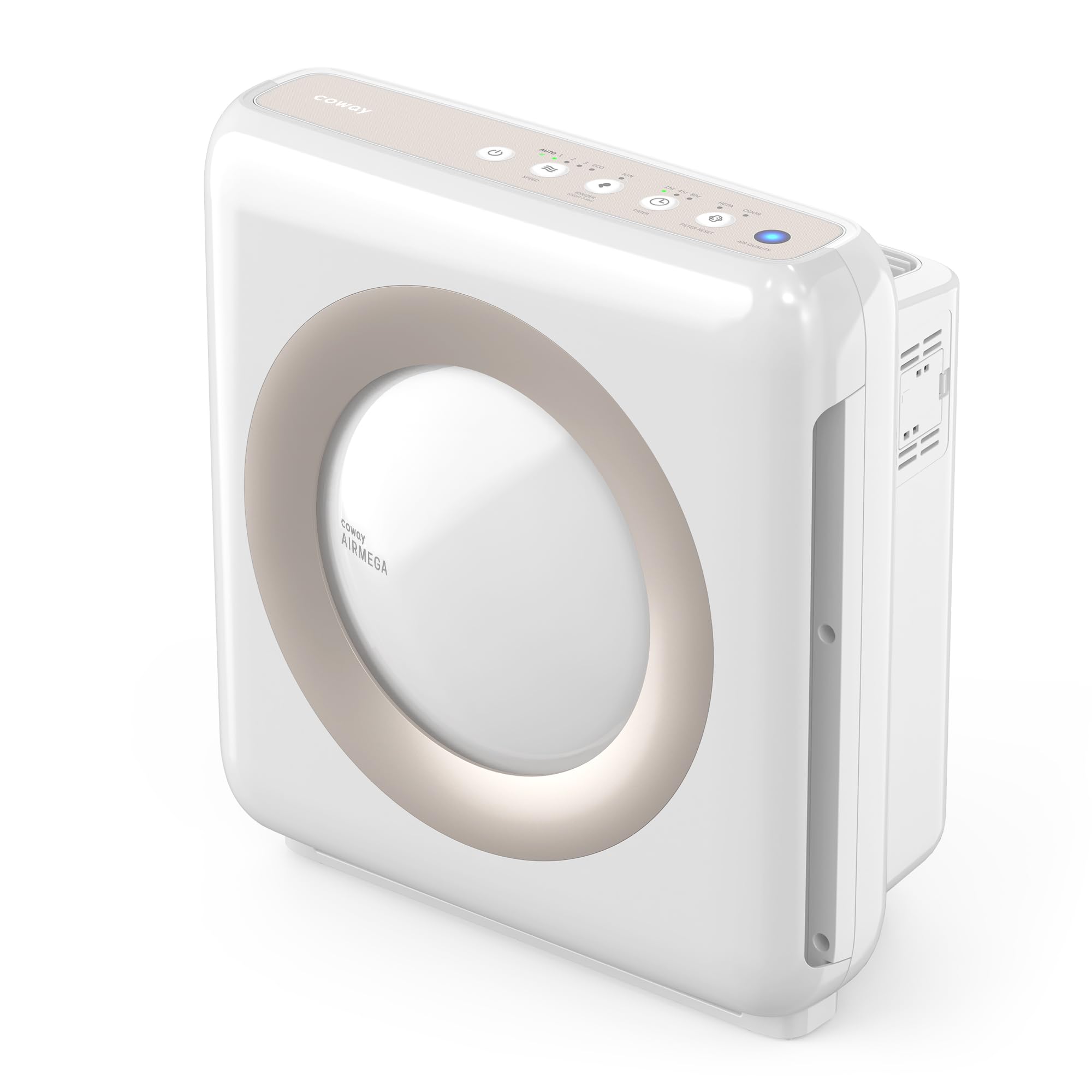
The Coway Mighty remains a reference standard because its Smoke CADR of 233 CFM is exceptionally high for its physical footprint. In a 361 sq ft room, this unit achieves over 4 air changes per hour on max speed, yet it drops to a whisper-quiet 24.4 dB on low, making it viable for continuous bedroom use. The 4-stage filtration includes a washable pre-filter that catches large debris before it reaches the True HEPA layer, extending the life of the main filter and keeping annual costs manageable.
Real-world testing shows the pollution sensor responds rapidly to cooking events and wildfire smoke, transitioning from green to red within seconds and ramping fan speed to clear the room. The auto mode works reliably, and the Eco feature shuts the fan off after 30 minutes of clean air, saving electricity. The build quality is solid, with intuitive button controls and a filter replacement indicator that tracks both pre-filter and HEPA status separately.
Users consistently note that the medium speed provides an effective white noise for sleep while maintaining strong particle capture. The only common complaint is the lack of an app or WiFi connectivity, but for those who prefer a set-and-forget mechanical device, this is a strength rather than a weakness. Given its Wirecutter and TopTenReviews pedigree, this is the value benchmark every other purifier must beat.
Why it’s great
- Industry-leading CADR-to-footprint ratio
- Whisper-quiet low speed for undisturbed sleep
- Washable pre-filter reduces long-term filter costs
Good to know
- No WiFi or app-based controls
- Auto mode cannot be set to default medium speed
2. Blueair Blue 211+
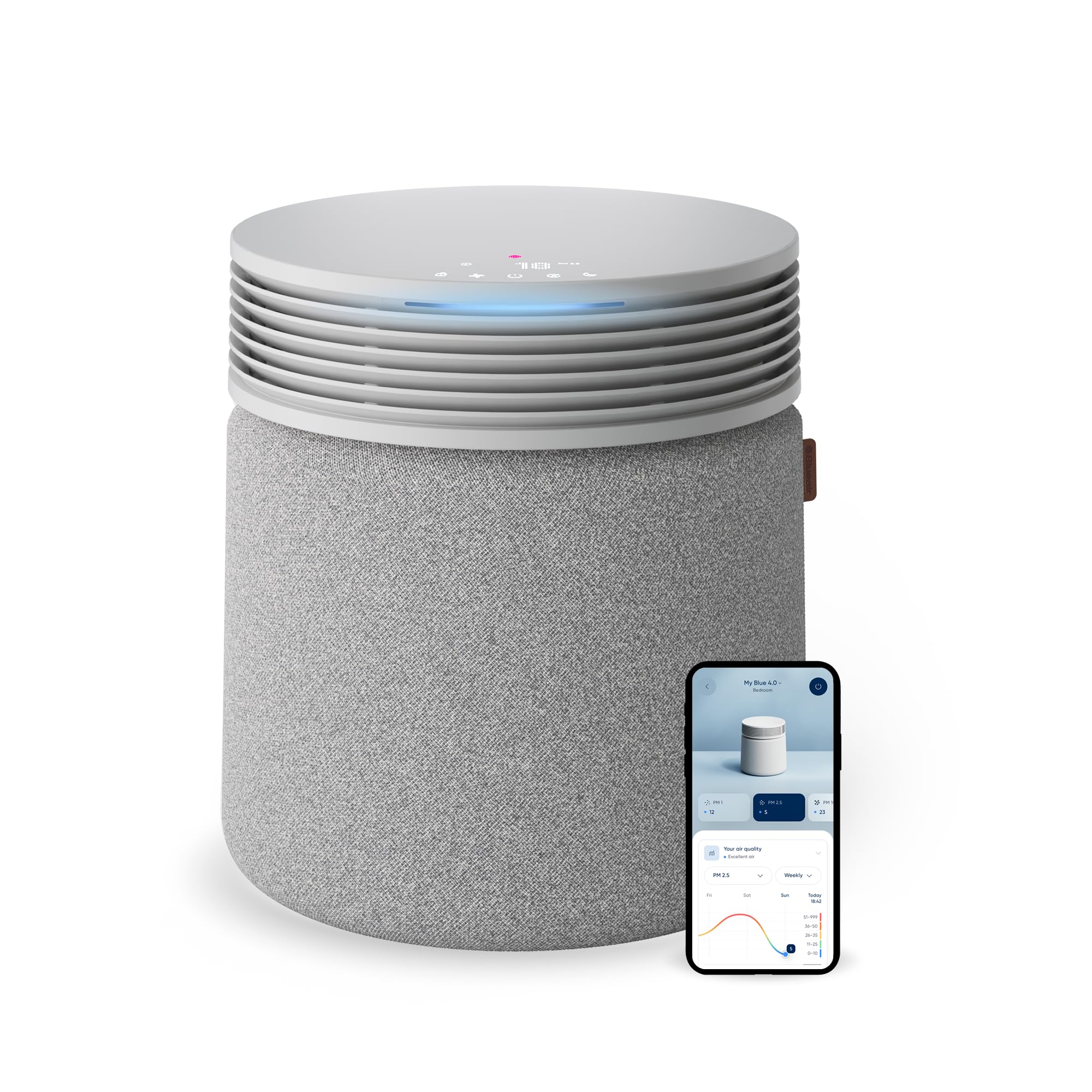
The Blueair Blue 211+ leverages the brand’s proprietary HEPASilent technology, which combines electrostatic charging with mechanical filtration to achieve a Smoke CADR of 350 CFM while maintaining a remarkably low noise floor of 23 dB. This combination makes it one of the quietest high-CADR units available, ideal for open-concept living areas where noise travels. The OdorFence carbon layer handles VOCs and cooking smells effectively, and the unit’s design doubles as a side table, saving floor space.
Smart features include WiFi connectivity via the Blueair app, allowing scheduling and remote fan speed adjustment. The auto mode uses a real-time particle sensor to adjust airflow, and the color-coded air quality indicator provides at-a-glance feedback. The unit covers up to 3,385 sq ft at one air change per hour, but for allergy-level filtration (4.8 ACH), it effectively handles about 705 sq ft. The washable pre-filter and long filter life (6 months for carbon, 12 months for HEPA) keep operating costs predictable.
Customer feedback consistently praises the unit’s modern aesthetic and near-silent low-speed operation. The main trade-off is the cost of replacement filters, which are proprietary and higher than generic alternatives. Some users report the app connection can be slow, but the auto mode works independently of the app once configured. For those prioritizing a high CADR combined with furniture-grade design, this is a top contender.
Why it’s great
- Exceptional 350 CFM Smoke CADR at 23 dB
- Furniture-inspired design with interchangeable pre-filters
- WiFi and app control with auto mode
Good to know
- Proprietary replacement filters are expensive
- App connectivity can be inconsistent
3. PuroAir 400
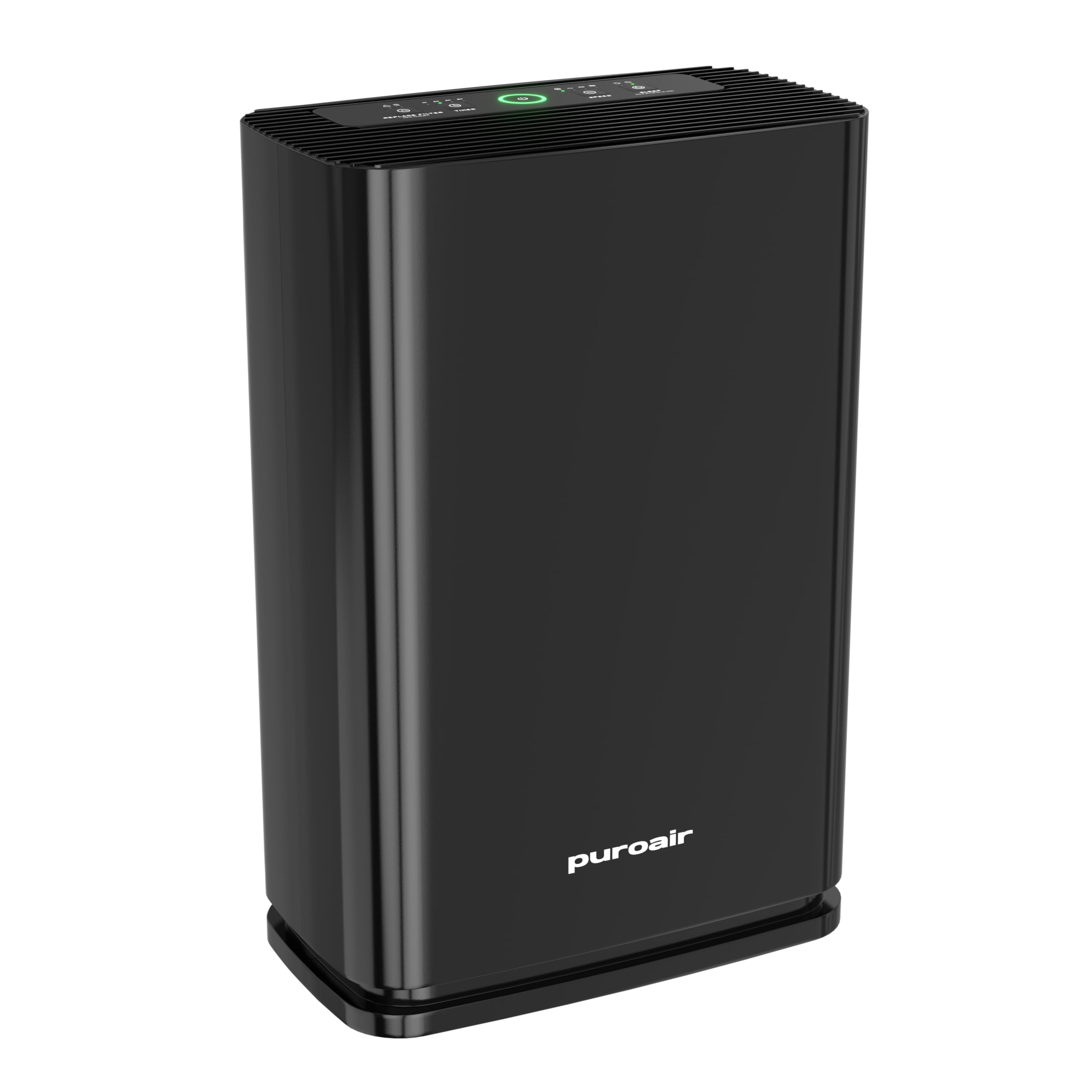
PuroAir 400 positions itself as a budget-friendly option that does not compromise on core filtration performance. Its 3-layer system—pre-filter, True HEPA, and activated carbon—captures 99.9% of particles down to 0.1 microns, and the unit has an AHAM-verified CADR that effectively covers rooms up to 2,000 sq ft at one air change per hour. The built-in particle sensor automatically increases fan speed when it detects a spike in pollutants, such as from cooking or a bathroom remodel, and returns to quiet mode when air clears.
The sleep mode dims all indicator lights and drops the noise level to near inaudible, making it suitable for bedrooms. Users report a dramatic reduction in allergy symptoms within three weeks of continuous operation, and the small footprint (17.5 x 10.6 x 12.5 inches) allows it to fit on a counter or floor without dominating the space. The 2-year risk-free warranty from a US-based company adds confidence for first-time buyers.
Where the PuroAir 400 cuts corners is in the build materials—the plastic housing feels less substantial than premium competitors, and the highest fan speed is noticeably louder, though still within acceptable range for short-term use. The carbon filter is thinner than the heavy-duty carbon beds found in units costing twice as much, so odor removal is adequate but not exceptional. For the price, however, the CADR-per-dollar ratio is hard to beat.
Why it’s great
- High coverage-to-price ratio
- Smart sensor with effective auto mode
- Very quiet on low and sleep settings
Good to know
- Plastic build is less premium than mid-range units
- Carbon layer is thinner for heavy odor loads
4. LG PuriCare 360
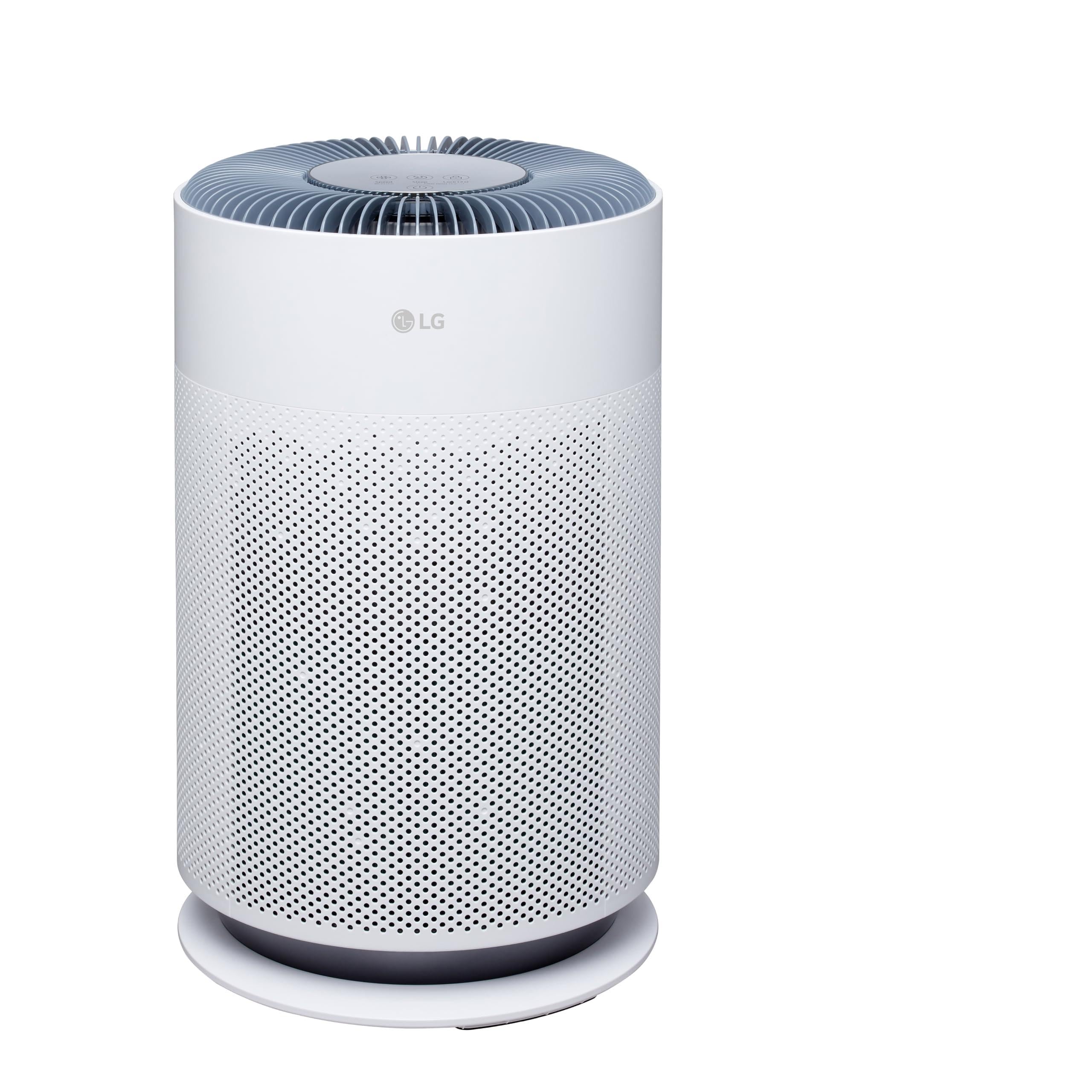
LG’s PuriCare 360 distinguishes itself through a cylindrical design that draws air from every direction, effectively eliminating dead zones in open rooms. The NanoFiber True HEPA filter traps 99.97% of 0.3-micron particles, and the PM 1.0 sensor detects particles as small as one micron, giving it a finer sensitivity than many competitors that only track PM 2.5. The unit covers up to 2,059 sq ft at one ACH, but for serious allergy control (4.8 ACH), it handles 429 sq feet.
The LED indicator system transitions from red to green as air quality improves, and the auto mode intelligently adjusts fan speeds based on real-time readings. Users consistently report that the unit is whisper-quiet on low and moderate speeds, with the turbo mode reserved for rapid odor removal after cooking. The LG ThinQ app adds remote control, schedule setting, and filter life monitoring, with voice compatibility through Alexa and Google Home.
One standout feature is the removable pre-filter that captures large particles before they reach the main filter, and it can be vacuumed or washed. The 360-degree intake means the unit does not need to be placed against a wall, giving flexibility in furniture arrangement. The only drawbacks are the relatively high price for the mid-range tier and the fact that replacement filters are proprietary and moderately priced. For those who value design flexibility and smart home integration, this is a strong mid-range pick.
Why it’s great
- 360-degree intake for flexible placement
- PM 1.0 sensor for finer particle detection
- Very quiet operation with smart app control
Good to know
- Proprietary filters with moderate annual cost
- Turbo mode is loud, though effective
5. Nuwave Forever Smart

The Nuwave Forever Smart is engineered to eliminate the single largest ongoing cost of air purification: replacement filters. Instead of disposable paper-like media, it uses stainless-steel pre-filters and a Bio-Guard 360 system that can be washed with water and reused indefinitely. The 7-stage filtration process includes an ozone removal layer that reduces ambient ozone to 1 ppb, making it CARB-compliant, and Intertek certification confirms it captures 100% of particles down to 0.1 microns.
Coverage is rated at 2,002 sq ft in one hour, and the adjustable flow panel lets you direct airflow upward or outward depending on the room layout. The WiFi app provides real-time air quality monitoring, schedule setting, and fan speed adjustment. Users with multiple pets report that the washable filters catch fine dust and dander effectively, eliminating the wet dog smell and leaving air feeling crisp.
The trade-off for the washable filter system is the upfront cost, which is higher than a comparable mid-range unit with disposable filters. The fan is noticeably loud above level 3, and the auto mode is very sensitive to cooking odors, which some users find overly aggressive. The washable filters also require thorough drying (up to 24 hours) before reinstallation, so having a spare set is advisable. For anyone tired of recurring filter purchases, the long-term savings justify the initial investment.
Why it’s great
- Zero replacement filter costs forever
- Captures 100% of particles down to 0.1 microns
- WiFi app with real-time monitoring
Good to know
- High upfront price compared to disposable-filter units
- Filters need 24-hour drying after washing
6. Sans True HEPA

The Sans True HEPA purifier combines medical-grade True HEPA filtration with a UV-C light layer to address both airborne particles and microbial growth on the filter itself. The 3-in-1 system captures 99.9% of particles down to 0.1 microns, and the heavy-duty activated carbon bed is thicker than most mid-range units, making it particularly effective at absorbing stubborn pet odors and cooking smells. The coverage of 1,854 sq ft suits extra-large rooms and open floor plans.
The smart auto mode uses a particle sensor that adjusts fan speed based on real-time air quality, and users report that it detects even subtle changes like a shower drain smell or kitchen cooking, kicking into high gear and clearing the air within an hour. The sleep mode drops noise to a whisper and dims all indicator lights. The 5-year warranty (registered with Sans) provides long-term peace of mind.
Customer feedback highlights the unit’s ability to almost eliminate dust accumulation in bedrooms and its effectiveness for households with multiple animals. The only notable downside is the price point, which places it in the premium tier. Replacement filters are available on an auto-ship program, and the filter change indicator ensures you never run the unit with a saturated filter. For those needing robust odor control plus HEPA-grade particle capture, this is a specialized tool.
Why it’s great
- UV-C light inhibits filter microbial growth
- Thick carbon bed for strong odor absorption
- Very quiet sleep mode at 35 dB
Good to know
- Premium price point
- Filter replacement reminders are manual
7. AirDoctor AD3500
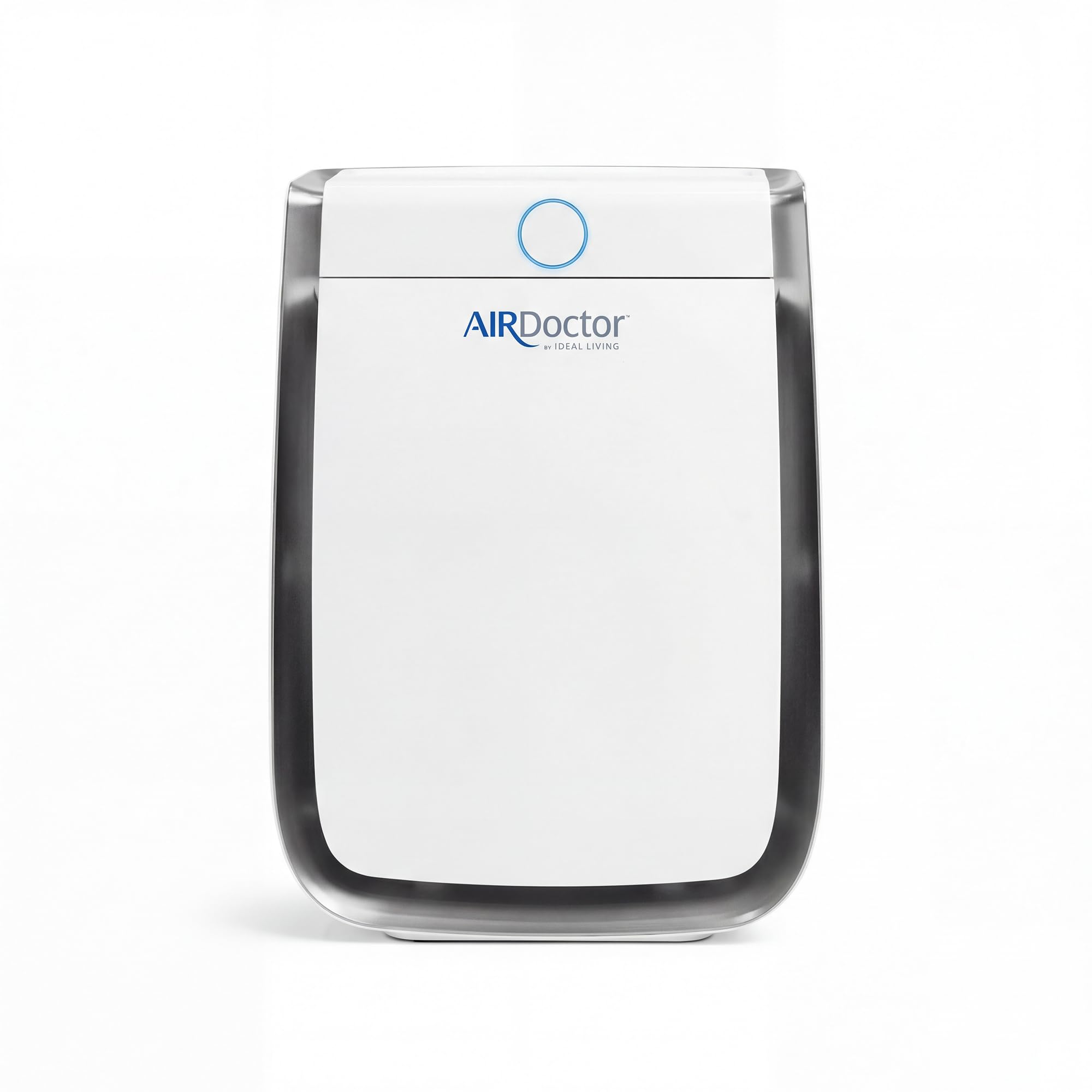
AirDoctor’s AD3500 takes filtration beyond the HEPA standard by using UltraHEPA media that captures 99.99% of particles at 0.003 microns—100 times smaller than the standard HEPA threshold. This makes it effective against bacteria and viruses, not just pollen and dust. The 3-stage system includes a pre-filter, a premium activated carbon filter infused with potassium permanganate for gas absorption, and the UltraHEPA filter. Coverage is rated at 2,520 sq ft at one ACH, with a 630 sq ft effective range at higher air change rates.
The Halo display shows color-coded PM 2.5 levels, and the auto mode adjusts fan speeds dynamically, including a Boost function for rapid cleaning. Users report that the unit detects events like nebulizer use, dishwasher steam, and cooking smoke, ramping up automatically and clearing the air quickly. The quiet operation on low speed makes it suitable for bedrooms, and the 4-speed manual control gives flexibility for those who prefer manual adjustment.
The main trade-off is the cost of the genuine replacement filters—carbon every 6 months and UltraHEPA every 12 months—which adds up over time. However, the FSA/HSA eligibility offsets some of the expense for those with flexible spending accounts. The build quality is excellent, with a 24-pound weight that feels substantial and stable. For those with serious respiratory concerns or medical-grade requirements, the AD3500’s filtration depth is unmatched in this price range.
Why it’s great
- UltraHEPA captures 0.003 micron particles
- Effective against bacteria and viruses
- Auto mode with real-time PM 2.5 monitoring
Good to know
- Expensive replacement filters
- Unit is heavy at 24 pounds
8. Coway Airmega 400S
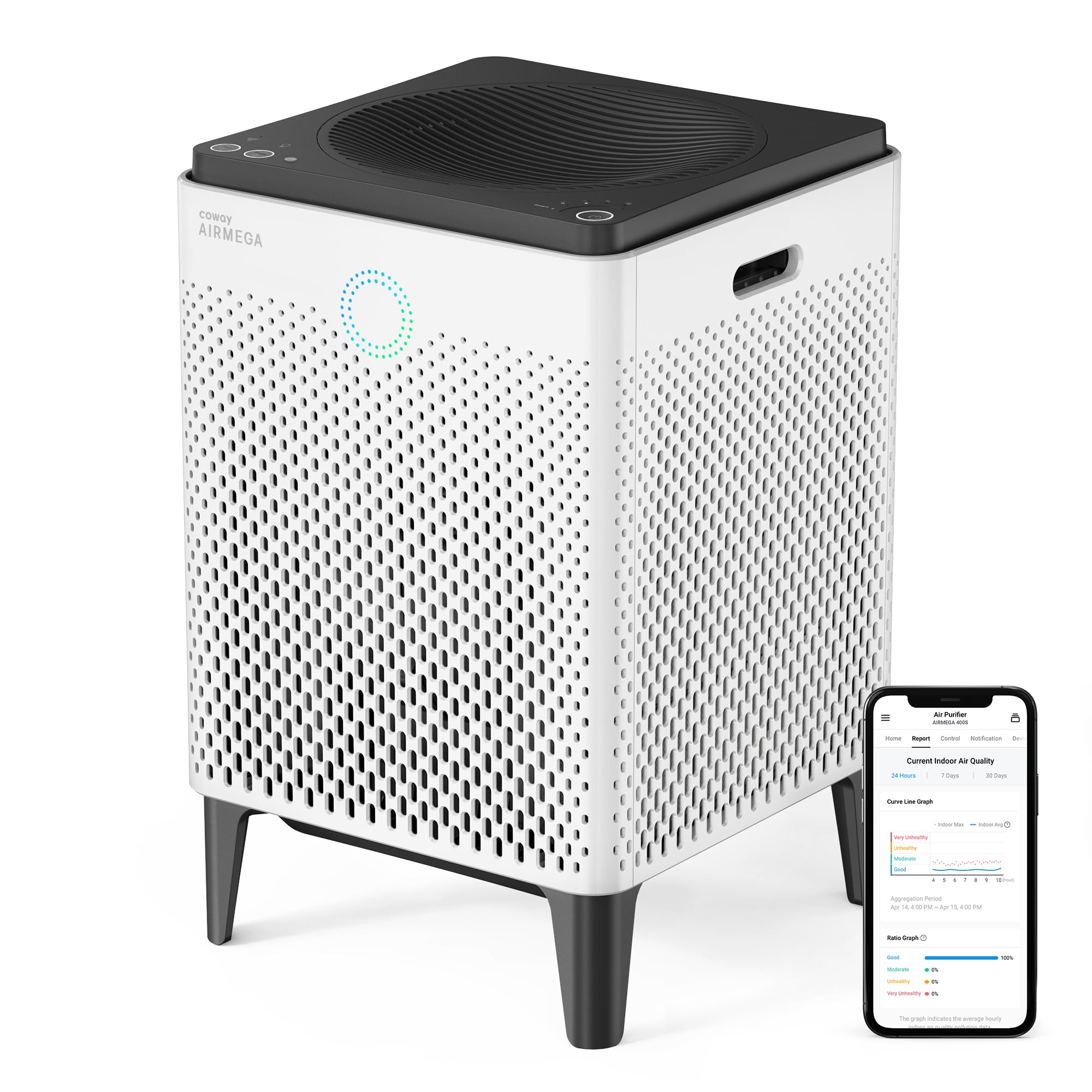
The Coway Airmega 400S extends the proven Airmega platform to handle large spaces up to 3,120 sq ft at one air change per hour. The HyperCaptive filtration system combines a pre-filter, active carbon filter, and True HEPA to reduce 99.97% of 0.3-micron particles. The smart mode adjusts fan speed based on real-time air quality, and the Eco mode shuts the fan off after 30 minutes of clean air to save energy, reactivating automatically when pollution is detected.
WiFi connectivity through the IoCare app enables indoor and outdoor air quality monitoring, filter replacement notifications, scheduling, and voice control via Amazon Alexa and Google Home. The Dash Replenishment feature automatically orders filters when they are low. Users consistently report that the particle sensor is highly sensitive, picking up cooking smoke from across the house and even detecting sneezes, automatically ramping up fan speed.
The build quality is excellent, with a solid 24.7-pound chassis and easy-to-access controls. The main concerns are the high initial price and the cost of replacement filters. Some users find the mode-change beep annoying and the app’s notifications overly frequent. The pre-filter needs washing every 2-3 weeks in dusty environments. For large open-plan homes where smart integration is a priority, the 400S is a powerhouse, but the non-WiFi version offers the same filtration at a lower cost.
Why it’s great
- Massive 3,120 sq ft coverage
- Very sensitive particle sensor with auto mode
- Full smart home integration with Dash Replenishment
Good to know
- High upfront and ongoing filter costs
- App can send excessive alerts
9. Puraclenz Core C750
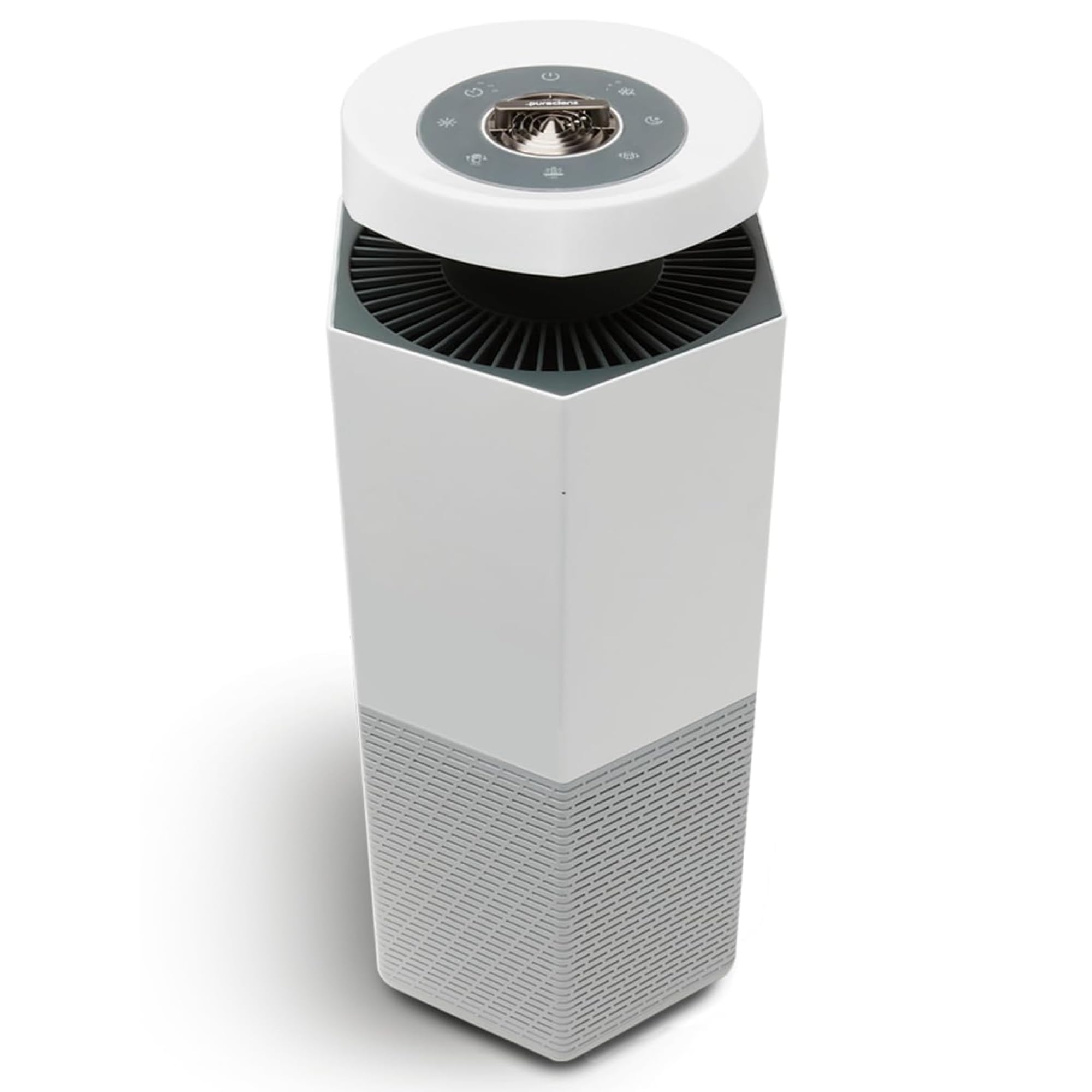
The Puraclenz Core C750 uses a two-pronged approach that separates it from standard purifiers: mechanical H13 True HEPA filtration for airborne particles plus Photocatalytic Oxidation (PCO) technology that emits ozone-free ions to neutralize pollutants on surfaces. This makes it effective against mold spore growth on surfaces (99.75% success rate against Candida albicans) and reduces mycotoxins that standard HEPA filters cannot capture. The HEPA side covers up to 1,575 sq ft, while the PCO extends surface coverage to 3,000 sq ft.
The 5-stage system includes a pre-filter, activated carbon, H13 HEPA, UV-C germicidal light, and the PCO recharge cell. The smart sensor displays real-time air quality and adjusts fan speed automatically. Sleep mode operates at only 23 dBA, making it one of the quietest units in this tier. The dark mode turns off all indicator lights for uninterrupted sleep. Energy Star certification ensures it runs 24/7 without a noticeable electricity bill impact.
User experiences are mixed regarding sensor reliability—some report it fails to detect nearby smoke or VOCs, while others praise its effectiveness against persistent mold smells. The PCO technology requires periodic replacement of the recharge cell, adding a maintenance step beyond filter changes. The unit is tall (27.3 inches) but slim, with a footprint of 12 x 10.5 inches. For those battling mold issues or wanting surface-level pathogen reduction, the Core C750 offers a capability no standard HEPA-only purifier can match.
Why it’s great
- PCO technology neutralizes surface mold and bacteria
- Ozone-free certified for safe 24/7 operation
- Very quiet sleep mode at 23 dBA
Good to know
- Particle sensor reliability is inconsistent
- Recharge cell adds periodic maintenance cost
FAQ
Can I use a CADR rating to compare purifiers from different brands?
What Smoke CADR do I need for a 500 sq ft open-plan room?
Does a higher CADR always mean better performance?
How often should I replace the filters to maintain CADR performance?
Final Thoughts: The Verdict
For most users, the best cadr air purifier winner is the Coway Airmega AP-1512HH because it delivers an exceptional Smoke CADR of 233 CFM in a compact, whisper-quiet package with a washable pre-filter that lowers long-term costs. If you want ultra-quiet high CADR for large open rooms, grab the Blueair Blue 211+. And for eliminating recurring filter expenses with a zero-cost washable system, nothing beats the Nuwave Forever Smart.

Mo Maruf
I created WellFizz to bridge the gap between vague wellness advice and actionable solutions. My mission is simple: to decode the research and give you practical tools you can actually use.
Beyond the data, I am a passionate traveler. I believe that stepping away from the screen to explore new environments is essential for mental clarity and physical vitality.