Our readers keep the lights on and my smoothie glass nicely filled. As an Amazon Associate, I earn from qualifying purchases.
Indoor cactus care has a reputation for being foolproof, yet most newcomers end up with a shriveled, discolored stump within months. The problem isn’t your light or your schedule—it’s that many houseplant brands ship stressed, under-rooted specimens that never adapt to indoor conditions. A genuine indoor cactus needs a mature root system and a well-draining soil mix from day one.
I’m Mohammad Maruf — the founder and writer behind WellFizz. I’ve spent years dissecting cactus sourcing, potting mediums, and real-world survivability data to separate the genuinely resilient indoor cactus from the ones that fail under living-room conditions.
After reviewing dozens of listings and analyzing true customer feedback, the best cactus for indoors must balance mature roots, compact growth, and immediate adaptability to low-humidity homes while arriving ready to thrive without a rehabilitation period.
How To Choose The Best Cactus For Indoors
Selecting an indoor cactus goes beyond picking a fun shape. The most critical factor is the root-to-soil ratio the plant ships with. A top-heavy cactus in a tiny pot with loose sandy soil often fails to anchor itself after repotting. Look for listings that specify “fully rooted” or “established in a 4-inch grower pot” rather than bare-root options unless you have experience with initial potting stress.
Number of Offsets and Cluster Density
A single, lonely nopal is harder to arrange into a visually appealing display than a clump of 3–6 rooted offsets. Multiple stems per pot create immediate fullness and reduce the need to wait months for new growth. The best options for beginners contain at least 2–3 rooted stems per container.
Dormant Season Hardiness
Indoor cacti entered from a greenhouse need to tolerate reduced light during short winter days without etiolating (stretching into thin, pale growth). Varieties like Bunny Ear, Boobie Cactus, and certain Euphorbia hold their shape well even when light intensity drops. Avoid tall columnar types unless you have a south-facing window with direct sun year-round.
Quick Comparison
On smaller screens, swipe sideways to see the full table.
| Model | Category | Best For | Key Spec | Amazon |
|---|---|---|---|---|
| Bunny Ear Cactus (4-inch) | Mid-Range | Immediate visual fullness | 3 rooted offsets per pot | Amazon |
| Assorted 2-Inch Cactus Set (6-pack) | Mid-Range | Variety and variety pack display | 6 unique species per set | Amazon |
| Altman Plants Assorted Cactus (4-pack) | Mid-Range | Labeled identification | 2.5-inch nursery pots | Amazon |
| Euphorbia Crown of Thorns | Premium | Year-round flowering indoors | Pre-bloomed pink flowers | Amazon |
| Boobie Cactus Myrtillocactus | Premium | Unique sculptural shape | 5-6 inch bare-root height | Amazon |
In‑Depth Reviews
1. Live Succulents ‘Bunny Ear Cactus’ (4-inch)

This Bunny Ear Cactus arrives with three fully rooted nopal offsets packed into a standard 4-inch grower pot, giving you an instant cluster rather than a single lonely stem. The well-draining sandy soil mix is already appropriate for indoor conditions, so you can skip the urgent repotting that stresses most new cactus owners. Multiple customer reports confirm the plant survived three days in a mailbox without damage, thanks to dense foam and polyfill padding inside the box.
The pads develop the classic bunny-ear silhouette within two weeks of acclimation, and the cactus responds to bright indirect light with a subtle reddish blush along the edges. Watering once every seven to ten days when the soil feels completely dry is sufficient — this is a genuinely low-maintenance specimen for a desk or windowsill. The overall height at delivery is approximately 4 inches, but each pad can extend another 2–3 inches over a growing season.
One tradeoff is the fragility of the young ears: three separate customers noted that light handling during USPS transit caused a few ears to detach. The detached pads root easily if placed on dry soil, but they arrive separately. If you want an immediate showpiece with minimal rearranging, this is the most reliable entry point into indoor cactus ownership.
Why it’s great
- Three rooted stems per pot for instant fullness
- Sandy soil mix reduces overwatering risk
- Padding in packaging prevents most shipping damage
Good to know
- Ears detach easily during handling
- Hairy spines can cause minor skin irritation
2. Cactus Plants Live – Small Assorted 2-Inch (6-pack)

If you want to build a mini desert landscape without committing to one species, this six-pack from SucculentMarket delivers six distinct fully rooted cacti, each in its own 2-inch nursery pot. The assortment typically includes a mix of globular and columnar shapes — some customers reported receiving a blooming specimen with opening buds on one of the plants. Each cactus is harvested from the greenhouse the same day it ships, which explains the consistent reports of healthy green tissue and firm stems upon arrival.
The small pot size (2 inches) means these are true baby cacti — expect them to take six to twelve months before they outgrow their containers. That slow growth is actually ideal for indoor settings where you want controlled size. The sandy soil in each pot is identical to what the grower uses in its California greenhouse, so no immediate repotting is necessary unless you want to group them into a larger display. Watering every two to three weeks is sufficient because the small pot volume dries faster than larger nursery pots.
A few early reviews noted that a couple of plants arrived looking slightly wilted, but those same reviewers confirmed recovery after a week of indirect light. The main weakness here is the shipping speed — several buyers mentioned longer-than-expected transit times. Still, at six plants per order, the variety-to-cost ratio is hard to beat for anyone starting an indoor cactus collection from scratch.
Why it’s great
- Six different species in one order
- Same-day greenhouse harvest ensures freshness
- Small pots allow controlled indoor growth
Good to know
- Transit time can be longer than expected
- A few plants may arrive slightly wilted
3. Altman Plants Assorted Cactus (4-pack)

Altman Plants has been in the nursery business for decades, and it shows in the attention to detail. This 4-pack comes in 2.5-inch nursery pots with individual identification labels on each pot — a small feature that makes a big difference when you’re learning names. The assortment typically includes four different genera, from barrel-like forms to taller columnar types, all in a natural black nursery container that looks clean on any shelf. Several buyers noted that one of the four arrived already blooming, which is uncommon for mass-shipped cactus packs.
The sandy soil mix is pre-moistened to greenhouse levels, so let it dry out completely before your first watering — that could take ten to fourteen days depending on your room’s humidity. After six months of indoor growth, one reviewer reported the cacti were “performing great” and had visibly increased in size, which confirms the potting medium supports root expansion without staying soggy. The 2.5-inch pot size strikes a good balance between stability for the plant and portability for rearranging.
One minor consideration is that the assortment can vary — you might get a duplication of shape if you order multiple packs. The plastic pot is basic and doesn’t include drainage holes, so you’ll want to either drill small holes or plan to repot into a container with drainage after the first few weeks. For someone who values knowing exactly what species they own, the included labels make this the most educational indoor cactus set available.
Why it’s great
- Every pot comes with a species identification label
- Proven growth performance six months in
- Often includes a blooming plant
Good to know
- Nursery pots lack drainage holes
- Assortment may repeat shapes across orders
4. Euphorbia Crown of Thorns Plant Decor

This Euphorbia Crown of Thorns from Plants for Pets is technically a succulent rather than a true cactus, but it behaves identically for indoor care while offering something most cacti don’t: continuous pink blooms. Every single verified review mentions the plant arrived full of flowers, and multiple buyers reported the blooms persisted for two months or longer. The 4-inch pot contains a plant that is often larger than expected — 7 pounds of well-rooted growth with thick, woody stems and lush green leaves.
The pink flowers emerge from the leaf axils in clusters and keep coming as long as the plant receives at least six hours of bright, direct sunlight per day. Unlike many flowering indoor plants, this Euphorbia does not drop its blooms when moved or repotted. The stems are covered with sharp thorns — the “crown of thorns” namesake is literal — so place it where you won’t brush against it daily. Water when the top inch of soil is dry, typically every seven to ten days.
One unique element is that a portion of every purchase goes toward shelter animal adoption, which adds a feel-good layer to the transaction. The plant is also drought-tolerant and can survive a missed watering without leaf drop. The only real downside is that the soil it ships in is dense for a succulent, so repotting into a grittier mix after a few weeks will improve long-term health and bloom frequency.
Why it’s great
- Arrives already blooming with pink flowers
- Blooms persist for two months or more
- Purchase supports animal shelter adoption
Good to know
- Sharp thorns require careful placement
- Shipping soil is denser than ideal for succulents
5. Boobie Cactus Live Plant – Myrtillocactus Geometrizans Fukurokuryuzinboku
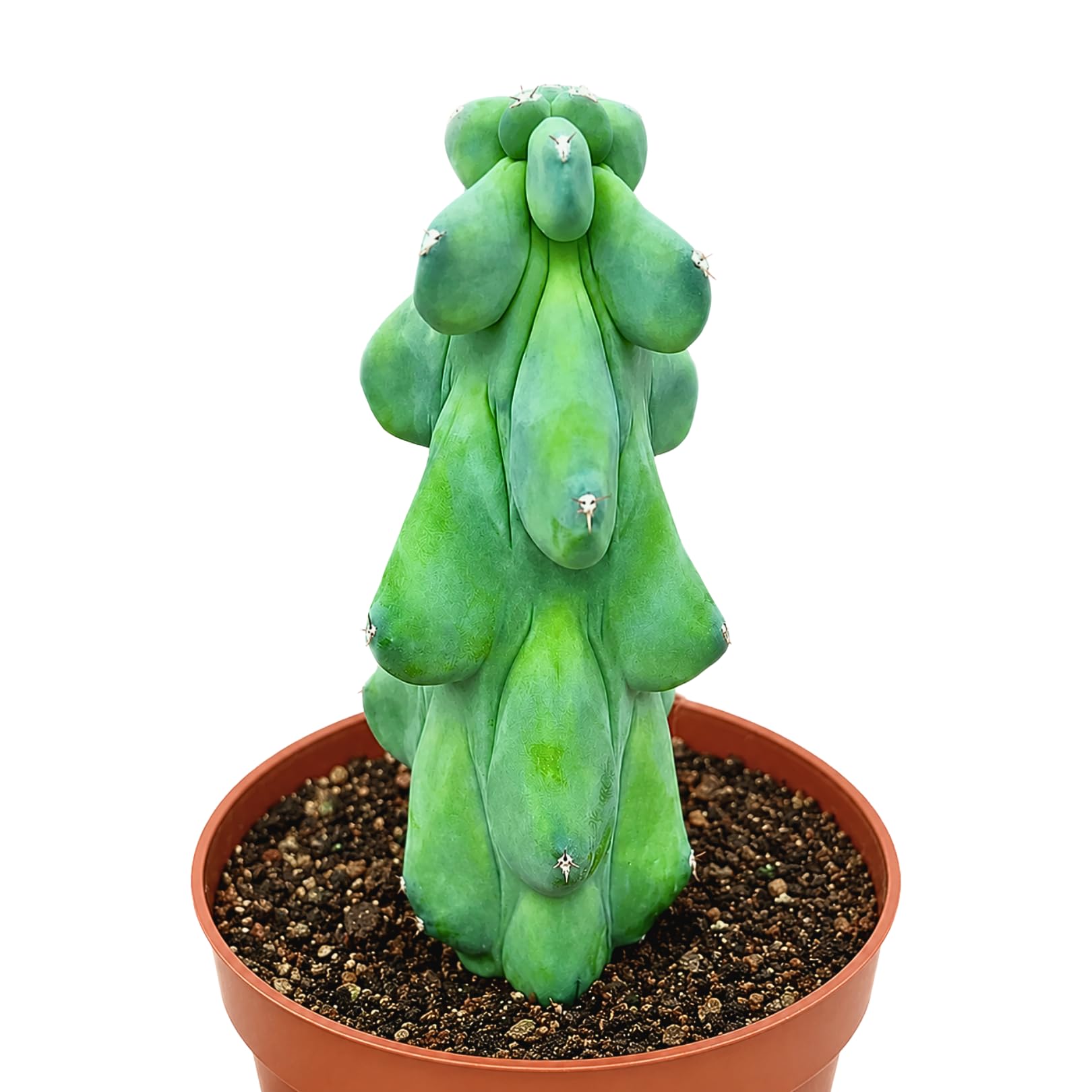
The Boobie Cactus — also known by the botanical mouthful Myrtillocactus geometrizans fukurokuryuzinboku — is the most conversation-starting indoor cactus available right now. Its unusual shape features round, protruding lobes along the stem, giving it a sculptural quality that stands out on any shelf or desk. 1am Succulents, a California-registered nursery, ships this plant bare-root at 5 to 6 inches in height, which means it arrives without soil or a pot. The bare-root method reduces soil waste and pest risk, but it requires you to pot it immediately upon arrival.
Customer feedback consistently praises the health of the plant — reviewers call it “larger than expected” and “very healthy” — but note that the root system is small for the height. This is typical for columnar Myrtillocactus, but it means you need a well-draining gritty soil mix and a pot with drainage holes to prevent rot during the establishment period. The spines are soft compared to traditional cactus, so handling is easier, but the plant still prefers bright indirect light. Water sparingly: once every two to three weeks during active growth, and almost nothing in winter.
The biggest practical consideration is the bare-root shipping. The plant arrives loose in the box with wrapping but no soil, so minor cosmetic damage to the tips is possible. One reviewer noted a small root system, and another reported slight cosmetic marks that did not affect health. If you are comfortable potting your own cactus, the unique geometry of this cultivar makes it a standout addition. If you prefer a ready-to-display experience, the potted options above will be less hassle.
Why it’s great
- Unique lobed shape is a genuine conversation piece
- California nursery ensures healthy stock
- Bare-root shipping reduces pest risk
Good to know
- Requires immediate potting upon arrival
- Small root system for the plant height
FAQ
Should I repot my indoor cactus immediately after it arrives?
Why did my indoor cactus turn brown at the base?
Final Thoughts: The Verdict
For most users, the best cactus for indoors winner is the Bunny Ear Cactus because its three rooted offsets and well-draining sandy soil deliver immediate visual density with zero repotting hassle. If you want a year-round pop of color, grab the Euphorbia Crown of Thorns for its persistent pink blooms. And for a truly unique sculptural specimen, the Boobie Cactus is the indoor conversation piece that demands second looks.

Mo Maruf
I created WellFizz to bridge the gap between vague wellness advice and actionable solutions. My mission is simple: to decode the research and give you practical tools you can actually use.
Beyond the data, I am a passionate traveler. I believe that stepping away from the screen to explore new environments is essential for mental clarity and physical vitality.