Our readers keep the lights on and my smoothie glass nicely filled. As an Amazon Associate, I earn from qualifying purchases.
The difference between a cutting board that protects your knives and one that blunts them lies entirely in the wood species, grain orientation, and thickness. Many cooks discover this only after their expensive chef’s knife starts needing sharpening every few weeks. A proper butcher block cutting board is not just a prep surface — it is the interface between your blade and your counter, and choosing wrong costs you time, money, and frustration.
I’m Mohammad Maruf — the founder and writer behind WellFizz. I’ve spent countless hours analyzing wood density ratings, grain construction methods, and real-user durability reports across dozens of models to find which boards actually deliver on the promise of a soft knife-safe surface that resists warping.
This guide breaks down the five most compelling options on the market right now, from edge-grain maple to acacia slabs, so you can match the right board to your kitchen style and cutting habits. Below you’ll find the best butcher block cutting board for high-volume prep, for knife preservation, and for tight budgets.
How To Choose The Best Butcher Block Cutting Board
A butcher block cutting board is a long-term investment in your knives and your workflow. Three factors separate a board that lasts from one that warps, splits, or eats your blades.
Grain Construction: Edge-Grain vs End-Grain
Edge-grain boards are cut so the wood fibers run parallel to the surface, offering a good balance of durability and knife-friendliness at a mid-range price. End-grain boards expose the fiber ends, creating a surface that is gentler on knives and self-healing after cuts, but they cost more and require more oil. For most home cooks, edge-grain maple provides the best real-world compromise between cost and blade protection.
Wood Species: Hardness and Grain
Maple is the commercial standard because its closed grain resists moisture absorption and its Janka hardness rating (around 1450) is soft enough to protect knife edges while hard enough to avoid excessive scoring. Acacia, slightly harder at around 1800 Janka, offers a denser surface and more dramatic grain patterns but can be marginally harder on knives over time. Bamboo is harder still and can dull blades faster, though it is budget-friendly and highly sustainable.
Thickness and Weight
Boards under 1.5 inches thick are prone to warping under heavy chopping and may slide on the countertop. A 1.75-inch or thicker board adds mass that absorbs impact, stays put without a towel underneath, and resists cupping as it dries. Weight also matters — a 6-pound board is portable, while a 17-pound slab stays anchored through the most aggressive cleaver work.
Quick Comparison
On smaller screens, swipe sideways to see the full table.
| Model | Category | Best For | Key Spec | Amazon |
|---|---|---|---|---|
| Winco WCB-1824 | Premium | High-volume prep, large cuts | 1.75 in thick, 17.8 lbs | Amazon |
| WoodForChef Canadian Maple | Mid-Range | Knife preservation, juice groove | Edge grain, 1.5 in thick | Amazon |
| John Boos B12S Square Maple | Premium | Compact countertop, charcuterie | 12×12 in, edge grain | Amazon |
| FANICHI XL Acacia Wood | Mid-Range | Serving + cutting versatility | 20×15 in, reversible | Amazon |
| Socisen 3-Piece Bamboo Set | Budget | Multi-kitchen needs, value | 5-layer laminated, 3 sizes | Amazon |
In‑Depth Reviews
1. Winco WCB-1824 Wooden Cutting Board

At 18 by 24 inches and nearly 18 pounds, this rubberwood slab from Winco is the closest thing to a professional butcher-block station you can install on a home countertop. The 1.75-inch thickness provides enough mass to absorb cleaver blows without vibration, and the rubberwood construction sits in a sweet spot — harder than maple for long-term durability, yet still gentle enough to avoid accelerated knife wear. Users consistently report zero warping or splitting even after months of heavy daily use, and the large surface area accommodates whole rib racks, multiple prep zones, or even covers an entire sink to create temporary counter space.
What sets this board apart from competitors in the same size class is its consistent flatness out of the box. Unlike some massive boards that arrive slightly bowed, the Winco sits flush on the counter immediately. The tan color and subtle wood grain give it a clean, commercial-kitchen appearance that does not compete with your cookware. A few users noted minor corner damage during shipping, likely due to the size and weight of the package, but the board itself is a single solid piece with no lamination lines to separate.
If you process large quantities of meat, regularly break down whole chickens, or simply want a board that never shifts during use, this is the one. It requires hand washing and periodic oiling, but the care routine is straightforward. The only real consideration is table space — you need a clear 24-inch run to store it. For anyone who values prep speed and stability above all else, the Winco delivers professional-grade function at a fraction of commercial pricing.
Why it’s great
- Massive 18×24 inch surface handles whole cuts and multi-prep
- 1.75-inch thickness and 17.8 lbs ensure zero counter movement
- Rubberwood resists warping better than many domestic hardwoods
Good to know
- Requires significant counter space for storage
- Shipping damage risk on corners due to size and weight
2. WoodForChef Canadian Maple Cutting Board

This 16x12x1.5-inch edge-grain maple board from WoodForChef nails the sweet spot between a knife-friendly surface and practical size for everyday meal prep. Maple at a Janka of 1450 is the industry standard for butcher blocks precisely because it absorbs blade impact without chipping or blunting — and this board proves it. Users report that their knives stay sharp noticeably longer compared to bamboo or glass boards, and the deep juice groove along one side effectively channels liquid away from your cutting zone, keeping the workstation cleaner when slicing tomatoes, citrus, or cooked meats.
The board arrives pre-seasoned with food-grade mineral oil and beeswax, so it is ready for immediate use straight out of the box. That pre-treatment also means the surface looks rich and dark from day one, unlike unfinished boards that need multiple oil soaks before they develop any luster. At 8 pounds, it is heavy enough to stay planted during chopping but light enough to lift and rinse without straining. The reversible design lets you flip to a flat side for bread or cheese when you do not need the groove.
Where this board really earns its place is in the balance of maple hardness against maintenance. Maple requires less frequent oiling than acacia because its closed grain resists moisture penetration, and the edge-grain orientation minimizes the deep scoring that end-grain boards can accumulate. The only minor trade-off is that the 1.5-inch thickness, while sufficient, does not have the anchor weight of thicker boards — very aggressive mincing may cause slight sliding on a smooth countertop.
Why it’s great
- Edge-grain maple preserves knife edges better than bamboo or plastic
- Deep juice groove keeps messy prep contained
- Pre-seasoned with mineral oil and beeswax for immediate use
Good to know
- 1.5-inch thickness may slide slightly under heavy mincing
- Needs a stand for upright storage (sold separately)
3. John Boos B12S Square Maple Cutting Board
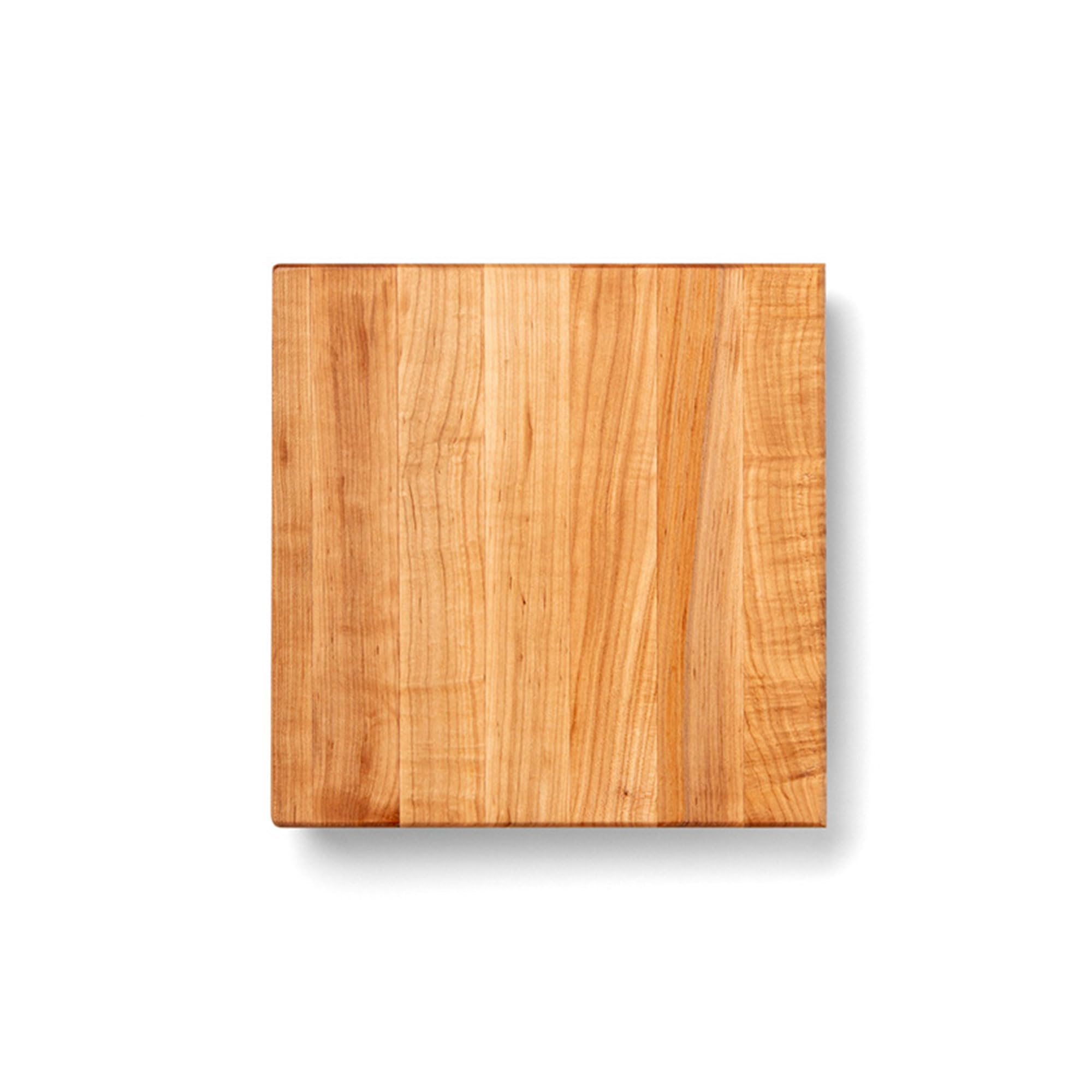
John Boos has been a reference name in commercial butcher blocks since the late 1800s, and this 12-inch square board distills that heritage into a compact home kitchen form factor. The edge-grain maple construction uses the same wood and craft as the brand’s professional counters, but the 1.5-inch thickness and raised bun feet make it equally suited for chopping and for presenting charcuterie. The feet elevate the board slightly, allowing air to circulate underneath and preventing moisture from pooling between the wood and the counter — a subtle design detail that significantly reduces the risk of mold or cupping over time.
At just 6 pounds, this board is the most portable premium option in this guide, yet it still feels substantial under the knife. Multiple users report that it sits perfectly flat and does not rock, which is a common issue with smaller boards that are not machined to tight tolerances. The maple surface is closed-grain and smooth, so it resists absorbing juices from vegetables or fruits, and the included packet of Boos Board Cream gives you a head start on the initial oiling. The square shape is particularly useful if you do mise-en-place prep, letting you rotate the board 90 degrees to align with your cutting motion without adjusting your stance.
The main consideration is size — if you regularly break down large roasts or whole chickens, the 12-inch width may feel cramped. This board is optimized for vegetable prep, fruit slicing, and small-to-medium protein work. It also requires a bit more oiling frequency than thicker boards because the thinner profile can dry out faster in a dry climate. But for anyone with limited counter space who still wants a legitimate Boos-quality surface, this square board delivers without taking over your kitchen.
Why it’s great
- Bun feet allow air circulation to prevent moisture damage
- Compact square shape fits small counters and doubles as serving board
- John Boos craftsmanship with professional-grade edge-grain maple
Good to know
- 12-inch surface too small for large roasts or whole birds
- Thinner profile may require more frequent oiling in dry environments
4. FANICHI XL Acacia Wood Cutting Board
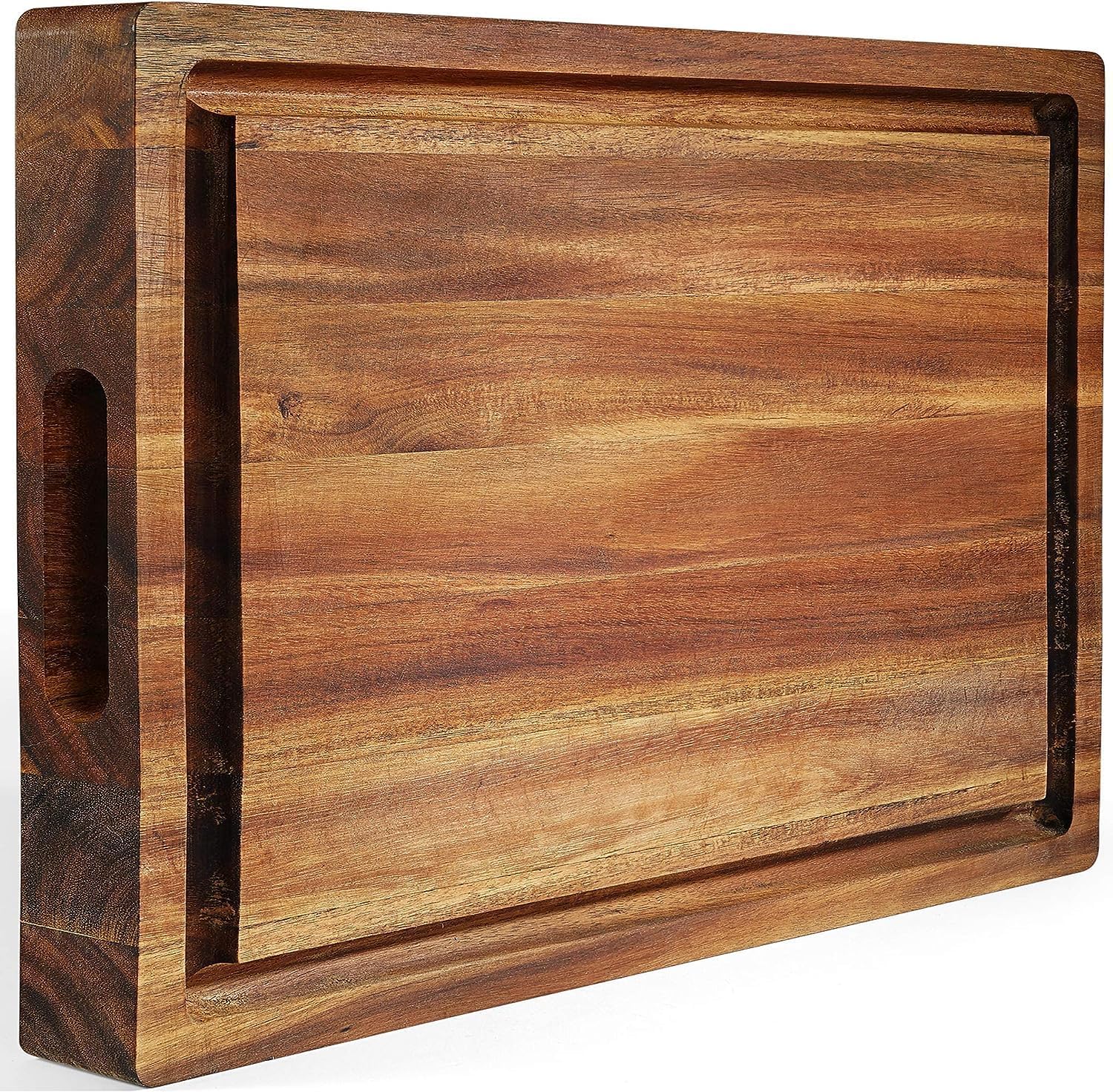
This oversized 20×15-inch acacia board from FANICHI stands out for its reversible design and thoughtful features that bridge the gap between a prep board and a serving platter. One side is carved with a juice groove around the perimeter to catch liquids from meat or fruit, while the reverse side has a long recessed holder perfect for lining up crackers, breadsticks, or cheese slices during charcuterie service. The inner cut-out handles on both sides make it easy to lift and carry even with the board loaded, which is a practical upgrade over solid slabs that need two hands and a towel grip.
Acacia is a dense tropical hardwood with a Janka rating around 1800, which means it is harder than maple and will show fewer cut marks over time. The trade-off is that the extra hardness can be very slightly less forgiving on knife edges, though most home users will not notice a practical difference between this and a maple board for daily slicing and dicing. The board arrives pre-oiled and the natural wood grain varies beautifully from board to board — each piece has a unique figure with dark brown streaks running through a golden base, giving it an almost furniture-grade appearance on the counter.
At 1.5 inches thick and nearly 9 pounds, the board feels solid without being immovable. A few users noted that the surface can be slightly slick, requiring a damp towel underneath to prevent shifting during heavy chopping, and the acacia should never be submerged or run through a dishwasher — wood fibers absorb water quickly and will crack. But for a board that does double duty as a heavy-duty prep surface and a showpiece serving tray, the FANICHI offers enormous value for the price point.
Why it’s great
- Reversible with juice groove on one side and cracker holder on the other
- Acacia is denser than maple, resisting deep cut marks
- Inner cut-out handles make carrying easy even when loaded
Good to know
- Harder acacia surface can be slightly less knife-friendly than maple
- Surface may feel slick without a damp towel underneath for stability
5. Socisen 3-Piece Bamboo Cutting Board Set

This three-piece set from Socisen brings genuine utility to a budget-friendly bamboo option by including three different board sizes, each with non-slip rubber feet and built-in side handles. The large board handles full meal prep, the medium board is ideal for fruits and vegetables, and the smallest board works well for quick tasks like slicing limes or garlic. Having dedicated size options prevents cross-contamination between raw proteins and produce without needing to scrub a single board between tasks, which is a real workflow advantage that single-board solutions cannot match.
The 5-layer bamboo splicing construction gives each board a thickness that rivals single-piece hardwood boards, and the laminate structure is engineered to resist warping better than thinner bamboo planks. Bamboo is approximately 25 percent harder than maple, which means these boards will resist scoring exceptionally well over years of use. The trade-off is that the harder surface can accelerate knife dulling compared to end-grain maple, though at this price point the value proposition is clear — you get three serviceable boards that look attractive and function reliably for the cost of a single premium board. Users consistently praise the packaging and presentation, making this set a strong option for gift gifting.
The rubber feet are a genuine improvement over flat-bottom boards, keeping each board planted even during fast chopping. The juice groove on the largest board handles drips from meat well, though some users noted the groove depth is modest and can overflow if a large steak rests too long. Hand washing is essential — the layered construction will delaminate in a dishwasher. For a household that needs multiple cutting surfaces without spending money per board, this set delivers dependable performance at a remarkably low entry cost.
Why it’s great
- Three dedicated sizes reduce cross-contamination between food types
- 5-layer laminated bamboo resists warping effectively
- Non-slip rubber feet keep each board stable during use
Good to know
- Bamboo is harder than maple and may dull knives faster over time
- Juice groove is shallow and may overflow with large portions of resting meat
FAQ
How often should I oil a butcher block cutting board?
Can I use a butcher block board for raw meat?
Final Thoughts: The Verdict
For most users, the best butcher block cutting board winner is the Winco WCB-1824 because its 1.75-inch rubberwood slab provides professional-grade stability and a massive work surface at a mid-range price point. If you want a board that is optimized for knife preservation and includes a deep juice groove, grab the WoodForChef Canadian Maple. And for a compact, high-quality solution that serves as both a prep board and a serving tray, nothing beats the John Boos B12S Square Maple.

Mo Maruf
I created WellFizz to bridge the gap between vague wellness advice and actionable solutions. My mission is simple: to decode the research and give you practical tools you can actually use.
Beyond the data, I am a passionate traveler. I believe that stepping away from the screen to explore new environments is essential for mental clarity and physical vitality.